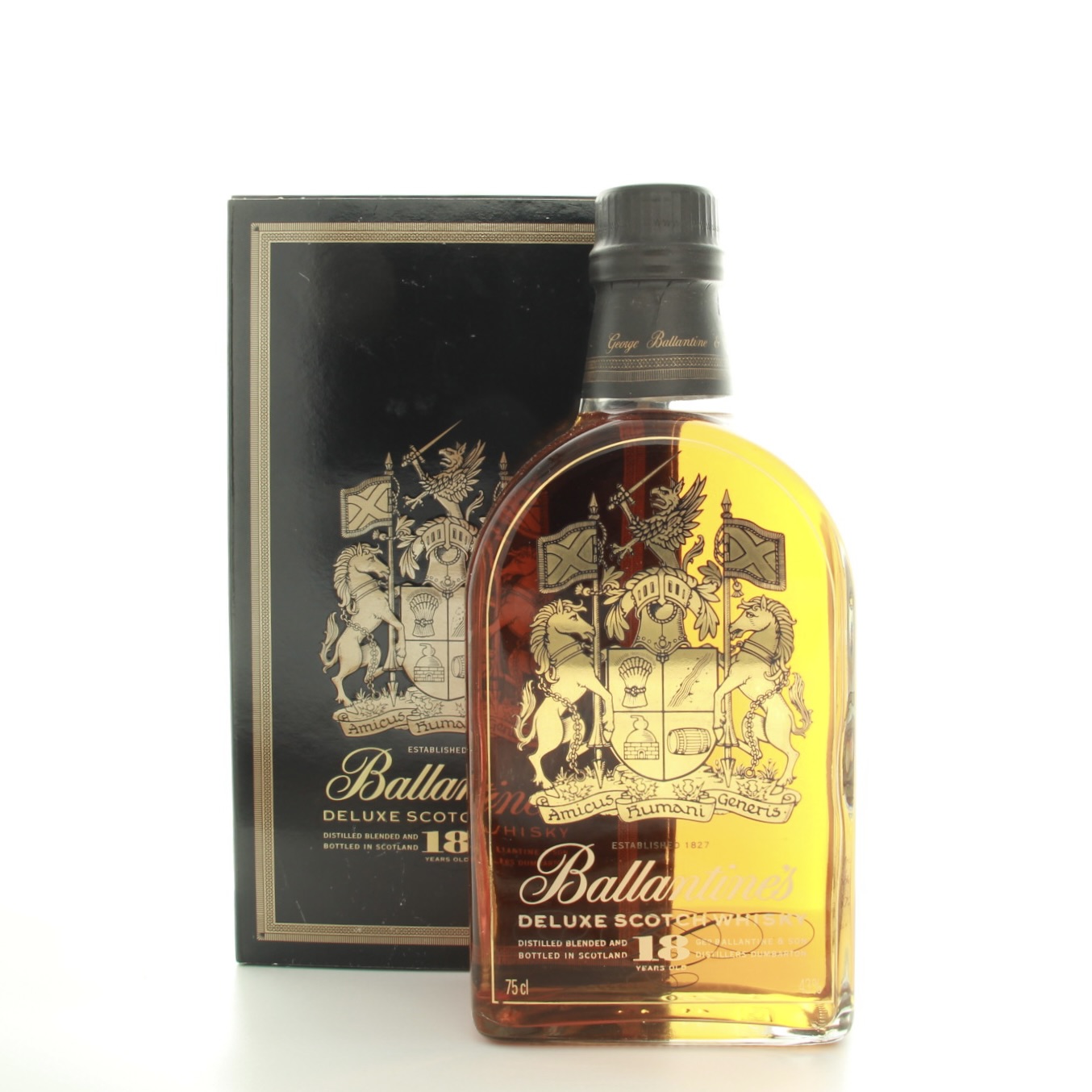
Ballantine’s 18 Year Old (1980s Edition)
75cl / 43%
£159.00

- Malt type: Blended
- Region: Scotland
Tasting Notes

Woody, Buttery and Chocolate

Herbal Nettle, Cream and Peaty Bitterness

Short Finish , Chocolate, Aniseed and Seafood Vinegar
If you like this whisky, you will also like these
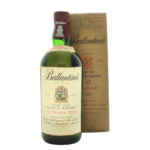
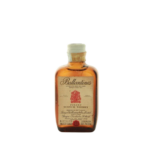
The Ballantine’s 18 Year Old Deluxe Scotch Whisky is a classic aged blended Scotch from George Ballantine & Son Ltd., blended and bottled in Dumbarton, Scotland. This bottling dates to the 1980s, a period when the blending composition may have offered a profile distinct from modern iterations.
The expression guarantees a minimum age of 18 years. It is composed of a marriage of over 50 different single malts and 4 single grain whiskies, with Miltonduff and Glenburgie being prominent malt contributors.
Ballantine’s has historically been defined by its smooth, aged blends. The 18 Year Old sat firmly in the upper echelon of the range during the 1980s, serving as a pillar of quality and consistency. The blend’s complexity stems from the large number of constituent whiskies.
Vintage bottlings from this era, particularly high-aged blends, are valued because the flavour profile is often intrinsically different from modern expressions. Changes in cask availability, blending recipes, and filtration standards over the decades mean that the 1980s liquid may contain flavour markers absent today. However, this age also introduces substantial risk. The existence of highly negative and unusual descriptions in critical reviews—such as notes of "vinegar," "seafood," and extreme bitterness—is a critical factor. This divergence from the expected "extremely rich and very balanced" profile strongly indicates that liquid degradation, likely due to oxidation from a compromised seal or ullage issue, is a major commercial risk when sourcing this particular vintage.
Technical Specification & Variant Map
The technical foundation of the Ballantine's 18 Year Old is the guarantee of 18 years of maturation. The blend’s structure relies on the marriage of over 50 malts and 4 grains. While the specific ABV for 1980s UK domestic bottling is often 40.0% ABV, global export strength at the time frequently dictated a 43.0% ABV. As with the Desmond & Duff blend, the higher strength (43% ABV) is generally regarded as the preferred specification for long-term preservation and flavour delivery.
Documented variants
Specific 1980s ABV/Volume is not documented in the provided data. Assume primary 75cl/750ml format at 40% or 43%.
Variant Matrix
| Field | Details |
| Distillery / Bottler / Country & Region | George Ballantine & Son Ltd. / Dumbarton / Scotland |
| Category | Deluxe Blended Scotch Whisky |
| Age / Vintage / Bottled | 18 Years Old / Bottled c. 1980s |
| ABV & Size(s) | 40.0% vol. or 43.0% vol. (Inferred) / 75cl or 750ml (Inferred) |
| Cask / Treatment | Combination of over 50 malts (Miltonduff, Glenburgie prominent) and 4 grains, matured in oak casks. |
| Natural Colour | Not stated by the producer (Likely coloured) |
| Non-Chill-Filtered | Not stated by the producer (Implied likely chill-filtered at 40% ABV) |
| Cask Strength | No |
| Bottle count / Outturn | High volume blend (Historical). |
| Intended channel | Global Deluxe Market, Duty-Free |
| Packaging | 1980s era bottle style; specific capsule/closure design. |
| Notes on discrepancies | Tasting notes are highly polarized, suggesting high variability due to condition or original composition. |
| ABV | Volume |
| 40% (Inferred) | 75cl/750ml |
| 43% (Inferred) | 75cl/750ml |
Packaging & authenticity checklist
Condition is the paramount factor for sourcing the 1980s Ballantine’s 18 Year Old. Given the age and the observed risks of oxidation, a rigorous inspection of the ullage (fill level) is mandatory. Only bottles exhibiting high neck fill (HN) or high shoulder fill (HS) should be considered for premium placement. A fill level below the shoulder should be treated with extreme caution, as it is highly correlated with the reported off-notes. Verification must also ensure the 18 Year Old statement and the label design are accurate for the specific 1980s era. The integrity of the closure and capsule must be thoroughly checked for any sign of seepage or tampering.
Regulatory/terminology notes
The term ‘Deluxe’ officially guarantees the minimum 18 years of maturation required for the age statement. Given that the bottling strength is often 40% ABV, it is highly probable that the liquid underwent chill-filtration to ensure clarity and consistency, although this is Not stated by the producer. The base requirement for Scotch Whisky—distillation and maturation entirely within Scotland—is met by the George Ballantine & Son operation.
Liquid Profile (from verifiable notes)
The liquid profile represents a risk spectrum, ranging from expected excellence to potential fault.
Nose: The expected aroma is very pleasant, featuring woody, buttery, and chocolate notes.
Palate: Generally described as extremely rich and very balanced in flavour. Specific, unusual details include herbal nettle, cream, and a distinct peaty bitterness.3
Finish: Typically described as quite rich and lovely smooth texture. The compromised profile includes a short finish with notes of chocolate, aniseed, and a highly undesirable "seafood vinegar".
With water: Tasting notes specifically detailing the addition of water are Not stated by the producer.
Distillery/Bottler Snapshot
Ballantine's remains a global powerhouse in blended Scotch, relying on the quality and vast inventory established decades ago, which allowed them to consistently maintain high-aged expressions like the 18 Year Old. The inclusion of core malts like Miltonduff and Glenburgie guarantees a characteristic flavour foundation of fruit and richness.
Sourcing
Sourcing must prioritise the physical condition above all else to mitigate liquid degradation risk.
Target formats/eras: Bottles authenticated as 1980s production, preferably 43% ABV if verifiable, and fundamentally required to have exceptional fill levels.
Red flags to avoid: Low fill levels (mid-shoulder or lower) are absolute red flags. Avoid any bottles displaying signs of seepage, or those with labels that show evidence of past liquid contact. The potential for the 'seafood vinegar' fault must be assumed unless condition is pristine.
Condition thresholds: High condition—defined as high shoulder fill or better—is essential for justifying premium valuation and ensuring liquid quality.
Margin/velocity expectations: Velocity is low to moderate. High margins are achieved only by ensuring the provenance and liquid integrity of the sourced bottle, transforming a risky vintage blend into a quality collectible.