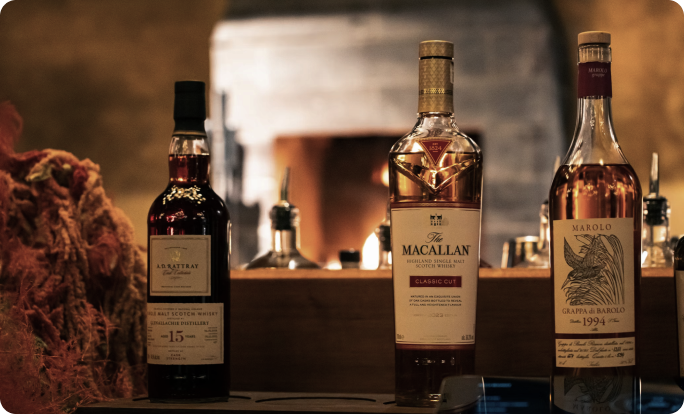
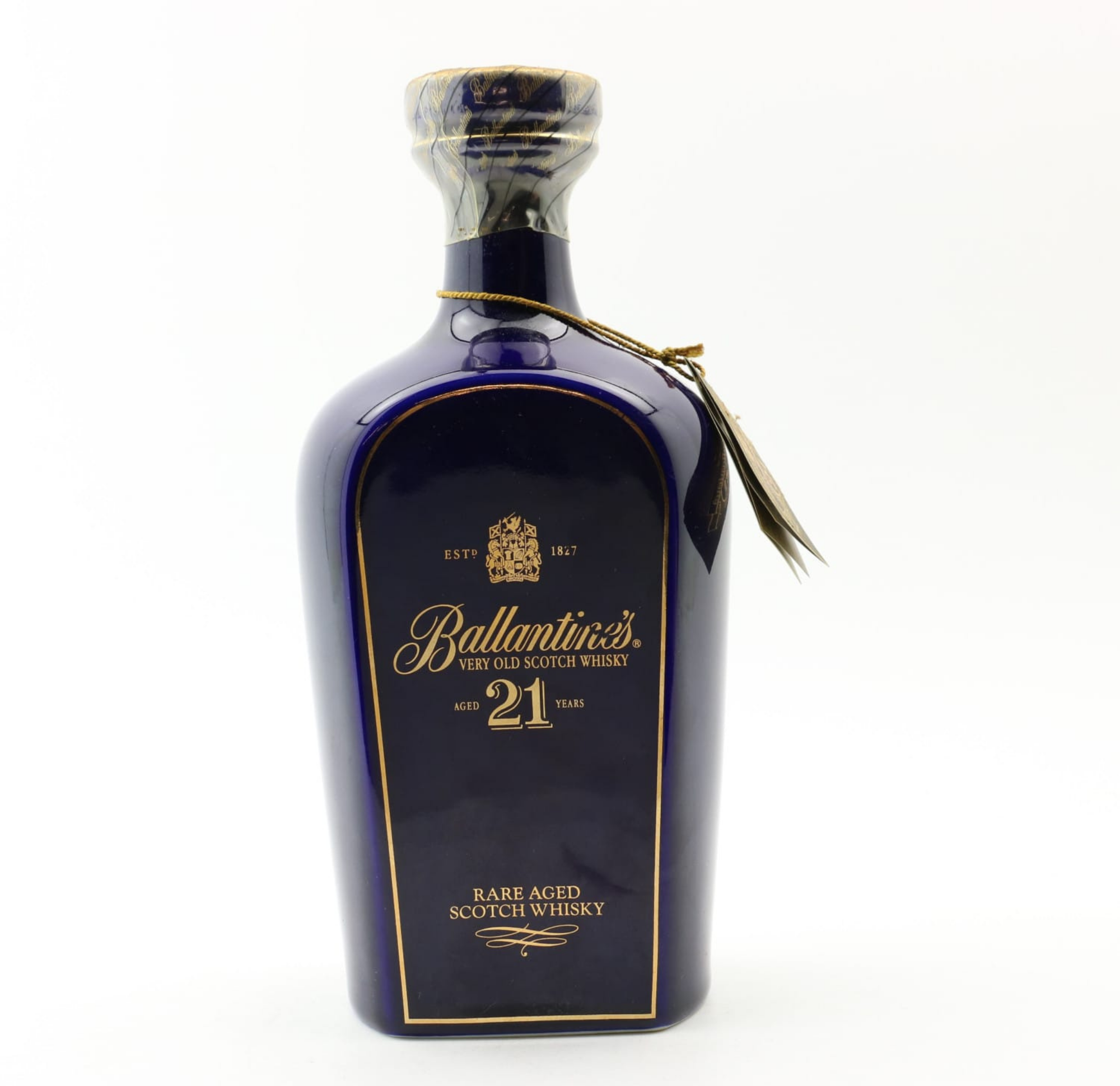
Ballantine’s 21 year old
70cl / 43%
£199.00

- Region: Scotland
If you like this whisky, you will also like these
A rich, complex blend introduced by Master Blender Jack Goudy, distinguished by its high proportion of flavourful European oak matured whiskies.
| Field | Details |
| Distillery / Bottler / Country & Region | George Ballantine & Son Ltd. / Scotland, Blended Scotch |
| Category | Premium Aged Blended Scotch Whisky |
| Age / Vintage / Bottled | Minimum 21 Years Old / Continuous Bottling |
| ABV & Size(s) | 40% ABV / 70cl (UK/EU Standard) |
| Cask / Treatment | Blended from whiskies matured primarily in refill American Oak, with a notably higher proportion finished in European Oak casks. |
| Natural Colour | Assumed Colour Added (E150a), consistent with category. |
| Non-Chill-Filtered | No (Chill-Filtered, consistent with high-volume blend production at 40% ABV). |
| Cask Strength | No |
| Bottle count / Outturn | Standard Core Range Expression (Continuous) |
| Intended channel | Prestige Retail, Travel Retail (Duty Free), High-end On-trade |
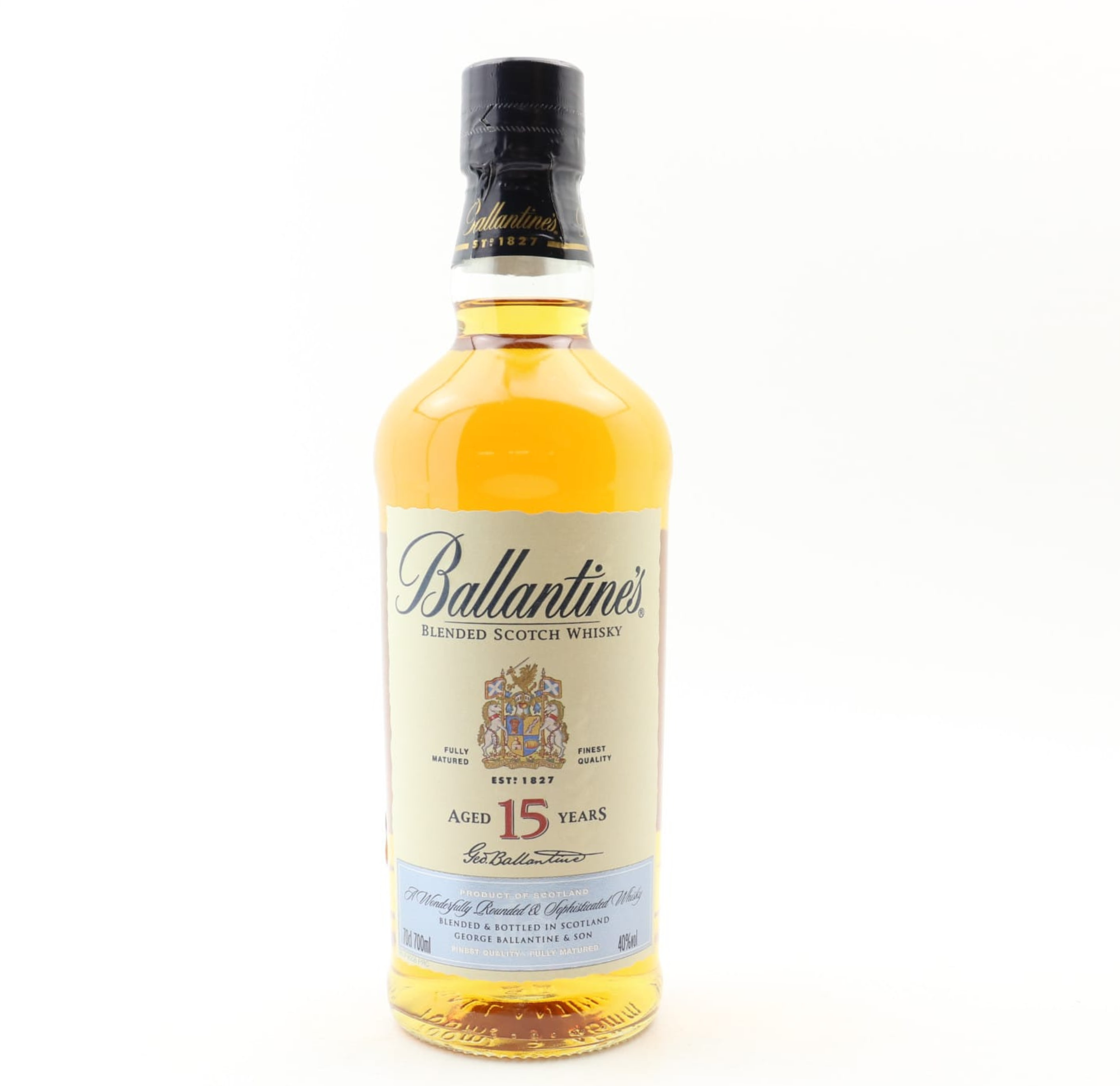
| Packaging | Traditional Ballantine's bottle with T-top cork closure, presented in a presentation box. |
| Notes on discrepancies | Historical and specific export market bottlings were commonly at 43% ABV, which is perceived by connoisseurs as delivering greater structural integrity and flavour concentration than the modern 40% ABV standard. |
Historical Context
The Ballantine's 21 Year Old expression entered the portfolio in 1993, introduced by Master Blender Jack Goudy, aiming to position the brand in the ultra-premium aged segment. The blend’s complex character is reliably built upon three foundational Speyside malts: Glenburgie (fruitiness, honeyed sweetness), Miltonduff (warmth, structure), and Glentauchers (smooth, delicate finish).
Technical Specification & Variant Map
The defining characteristic is the maturation regimen: the inclusion of a notably higher proportion of whiskies matured in European oak barrels. This deliberate structure is crucial for achieving the blend's richer, spicier, and more intense flavour profile, contrasting with the lighter character of younger blends. The European oak contributes nutty influences and greater intensity of dried fruit and aromatic spice.
| ABV | Volume | Market | Era cues | Relative desirability |
| 40% | 70cl | UK, EU, Global Retail | Modern (Post-c. 2000s reduction) | Standard Premium |
| 43% | 70cl/75cl | Vintage Export / Older Bottlings | Pre-c. 2000s standard bottling strength | High (Higher strength enhances flavour) |
Packaging & authenticity checklist
The standard presentation features a robust T-top cork closure, which helps mitigate risks associated with long-term storage. For potential buyers, especially those acquiring vintage 43% ABV bottles, verifying the condition of the external presentation box is essential, as the box often constitutes a significant component of the item's perceived value.
Regulatory/terminology notes
Scotch regulations dictate that all components must be aged for a minimum of 21 years in oak casks in Scotland. The industry standard for mass-market blends bottled at 40% ABV involves the use of E150a caramel for colour consistency and chill-filtration to prevent haze formation.
Liquid Profile (from verifiable notes)
- Nose: Rich, intense, and honey-sweet, featuring distinctive hints of red apple and floral aromas. Complemented by creamy vanilla, oak, and subtle spicy liquorice depth.
- Palate: A full and complex sensation characterised by vibrant honey sweetness and deep creamy vanilla flavours. The texture is smooth, giving way to a rich balance of liquorice and pronounced aromatic spice. The European oak contributes a distinct nutty core.
- Finish: Long, sweet, and exceptionally smooth. Mellow, featuring definitive notes of dried fruit and a sustained hint of spice.
- With water: Generally deemed unnecessary for consumption at 40% ABV, as dilution risks compromising the expertly integrated flavour structure.
Distillery/Bottler Snapshot
Ballantine’s is a key strategic brand within the Chivas Brothers division of Pernod Ricard. The operational philosophy is centred on absolute quality consistency, maintained by Master Blender Sandy Hyslop. The brand’s enduring appeal rests upon its ability to deliver a dependable profile of honey, fruit, and sweet grain notes, sourced primarily from the Glenburgie, Miltonduff, and Glentauchers distilleries.
Sourcing
Target formats/eras: Standard 70cl, 40% ABV modern bottlings are suitable for high-velocity inventory. The slightly rarer 43% ABV older bottlings, often 75cl, should be targeted on the secondary market for specialist clientele who prioritise historical liquid quality.
Red flags to avoid: Heavy damage to the outer presentation box is a considerable detriment to value.
Condition thresholds: Mint condition external packaging is mandatory for new retail stock. Secondary market purchases must maintain high fill levels.
Margin/velocity expectations: High velocity in both retail and travel retail segments. Auction purchases allow for attractive arbitrage opportunities.