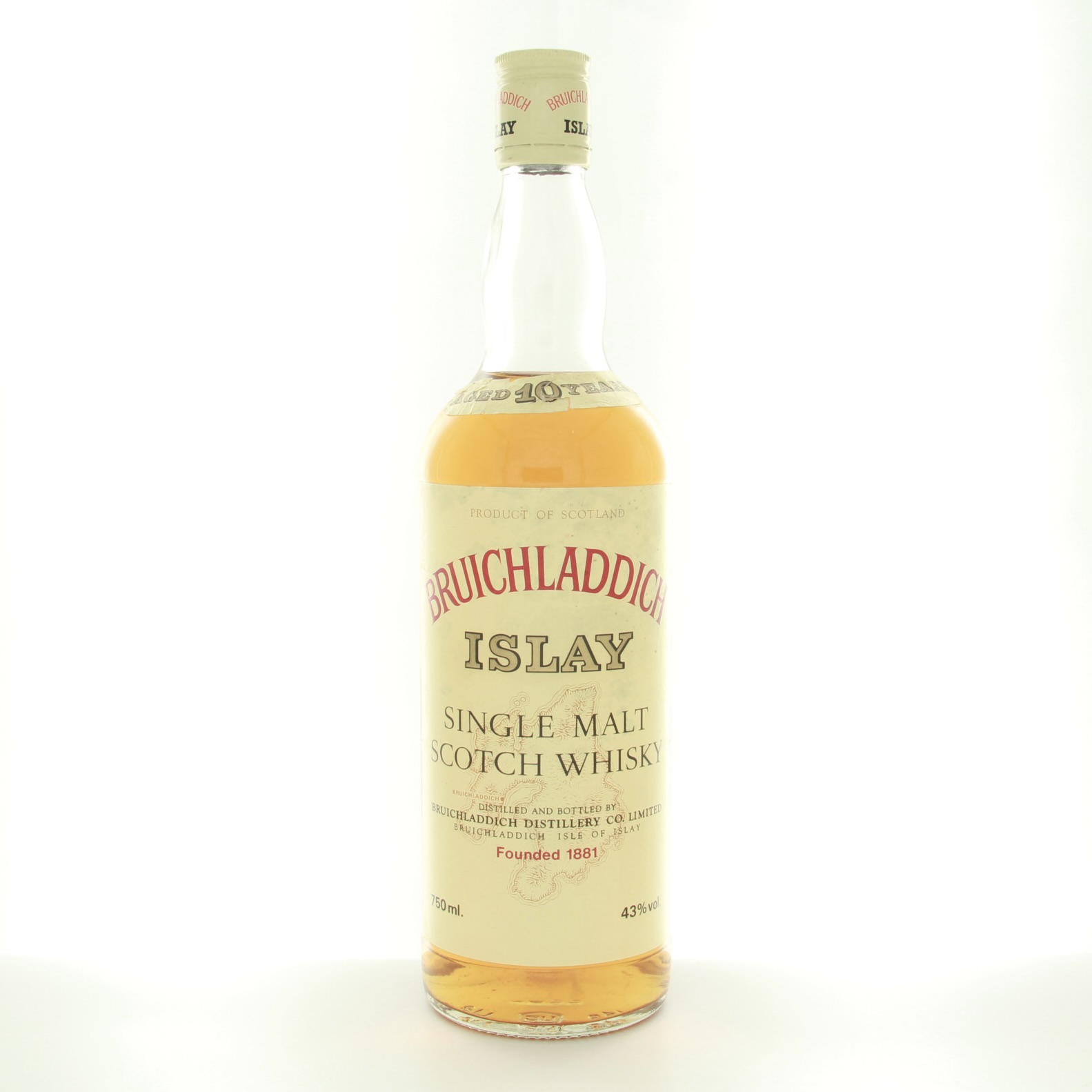
Bruichladdich 10 Year Old (1980s Edition)
75cl / 43%
£209.00
- Malt type: Single Malt
- Region: Scotland
- Chilfiltered: No
- Coloring: No
Tasting Notes

Tropical Fruit, Marzipan and Smoke

Almonds, Honeycomb, Custard, and Sea Air

Medium Finish, White Pepper, Almonds and Oak
If you like this whisky, you will also like these
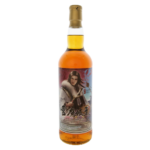
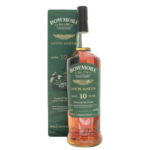
A rare encapsulation of Bruichladdich's pre-modern, lighter Islay style, bottled before the long silence.
At-a-Glance
This vintage bottling provides a crucial perspective on Bruichladdich’s historical character, predating the distillery's contemporary revival and philosophical shift toward full-strength, non-chill-filtered whiskies.
| Field | Details |
| Distillery / Bottler / Country & Region | Bruichladdich Distillery / Official Bottling / Islay, Scotland |
| Category | Single Malt Scotch Whisky |
| Age / Vintage / Bottled | 10 Years Old / Distilled Early 1970s / Bottled 1980s 1 |
| ABV & Size(s) | 40% ABV (75cl/750ml) and 43% ABV (75cl) variants exist 2 |
| Cask / Treatment | Matured in Oak (Refill American and European Oak estimated) 1 |
| Natural Colour | Not stated by the producer |
| Non-Chill-Filtered | Not stated by the producer |
| Cask Strength | No |
| Bottle count / Outturn | Not stated by the producer (Standard commercial release) |
| Intended channel | Domestic and International Export retail |
| Packaging | Glass bottle with carton, or rare Blue Ceramic Decanter variant 4 |
| Notes on discrepancies | Significant ABV and volume variations (40% vs 43%, 75cl vs 750ml) linked to specific export markets. |
Historical Context
This 10 Year Old expression is historically essential as it was distilled during the early 1970s and represents the standard distillery bottling available throughout the 1980s. During this era, Bruichladdich operated under the ownership of the Invergordon Distillers Group, which later became part of Whyte & Mackay. Production during this period was managed with a focus on consistency, standardisation, and volume, primarily for blending purposes and mass-market single malt sales, a common industry practice that contrasted with the later artisan approach.
The pre-revival Islay profile captured here is a vital historical artefact, having been produced years before the distillery was mothballed in 1994, remaining silent until 2001. The sensory analysis of the liquid, which describes it as soft, fruity, and balanced, demonstrates that even during this era of industrialisation, the distillery maintained a characterful malt.1 This evidence provides a tangible counterpoint to the often-perpetuated modern narrative that all Scotch produced under large conglomerates in the 1980s lacked complexity, thereby adding a compelling layer of provenance and quality validation to the bottling.
Technical Specification & Variant Map
The 10-year age statement was the staple release, matured in oak casks, likely refill American and European oak, chosen to preserve the distillery's unpeated, light spirit character. The critical technical differentiator for collectors is the variance in alcohol content. Two primary bottling strengths are verified: 40% ABV (80 Proof), often in 750ml format aimed at high-volume markets, particularly the US, and 43% ABV (75cl). The 43% ABV version is frequently documented with specific European import stamps, such as Rinaldi in Italy.2 The 43% ABV bottling typically commands a premium because portfolio specialists view the marginally higher strength as indicative of less dilution, preserving a higher concentration of the original distillate’s flavour compounds.
Documented variants
40% ABV, 750ml/75cl, Standard Label.
43% ABV, 75cl, Standard Label (often with European importer stamp).
Blue Ceramic Decanter, likely 40% ABV, 50cl or 70cl.
Variant Matrix
| ABV | Volume | Market | Era cues | Relative desirability |
| 40% | 75cl / 750ml | UK / US / Standard Export | Standard industry strength and volume | Standard |
| 43% | 75cl | European Import (e.g., Italy) | Higher proof retention often preferred by connoisseurs | High |
| 40% | Ceramic Decanter (50cl/70cl) | Limited/Gifting | Rare packaging, but high condition risk 4 | High (Collectible Packaging) |
Packaging & authenticity checklist
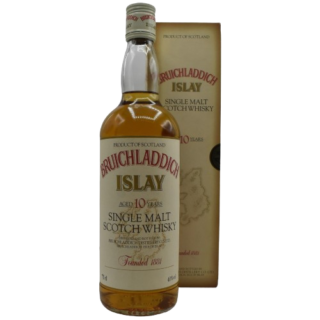
For the standard glass bottling, authentication relies on verifying the label design typical of the 1980s and confirming the integrity of the fill level. Given the age and common cork degradation risks, the level should be high shoulder or above. The presence of an original carton adds demonstrable value and helps authenticate the era. The rare Blue Ceramic Decanter variant presents a unique assessment challenge. Ceramic bottling prevents visual inspection of the liquid level, and seals are highly susceptible to leakage and evaporation over decades. Valuation for decanters must rely on undisputed provenance and physical weight verification to confirm liquid volume, as failure to guarantee high fill levels severely reduces the bottle’s standing.
Regulatory/terminology notes
This bottling was produced under the prevailing standards of the 1980s, an era that predates modern consumer demands for transparency regarding technical specifications. The whisky is analytically presumed to have been both chill-filtered and likely coloured with E150 caramel, consistent with standard industry practice for the era. This technical specification distinguishes it fundamentally from the distillery’s contemporary, transparent philosophy.
Liquid Profile (from verifiable notes)
The sensory profile of this 10 Year Old bottling is noted for its quality and complexity, often exceeding expectations set by its production context.
Nose: The aroma is pleasant, soft, and distinctly fruity, featuring notes reminiscent of tinned fruits, particularly peaches, alongside honey and vanilla. Further analysis detects underlying complexity including liquorice, nutmeg, ginger, and a faint dusty, charred wood note.
Palate: The flavour is described as balanced and rich. The texture is noted as being thinner than modern, high-ABV Bruichladdich, yet it remains flavourful, offering digestive biscuits, mint, honey, and vanilla. There is a balance of sweetness combined with a slightly bitter, woody component.
Finish: The conclusion is reported to be short but transitions to a spicier and more prickly profile. Expect peppercorns, almonds, and an astringent, dry oakiness.
Distillery/Bottler Snapshot
Bruichladdich is currently owned by Rémy Cointreau and is renowned for its transparency and high-proof, NCF Islay whiskies.3 This 1980s bottling is important as it offers insight into the distillery’s operational history before its profound contemporary philosophical reboot, providing a direct contrast to the current house style.
Sourcing
Target formats/eras: Prioritise the 43% ABV 75cl version, especially those with verified European import labels. The 40% version is more accessible but less sought after by dedicated connoisseurs.
Red flags to avoid: Any bottle with fill level below the high shoulder. Ceramic decanters are high-risk due to potential ullage.
Condition thresholds: Original carton is highly preferred. Label condition should be Very Good or better.
Margin/velocity expectations: Medium velocity, with high margin potential achievable if the 43% ABV variant is sourced through competitive channels.