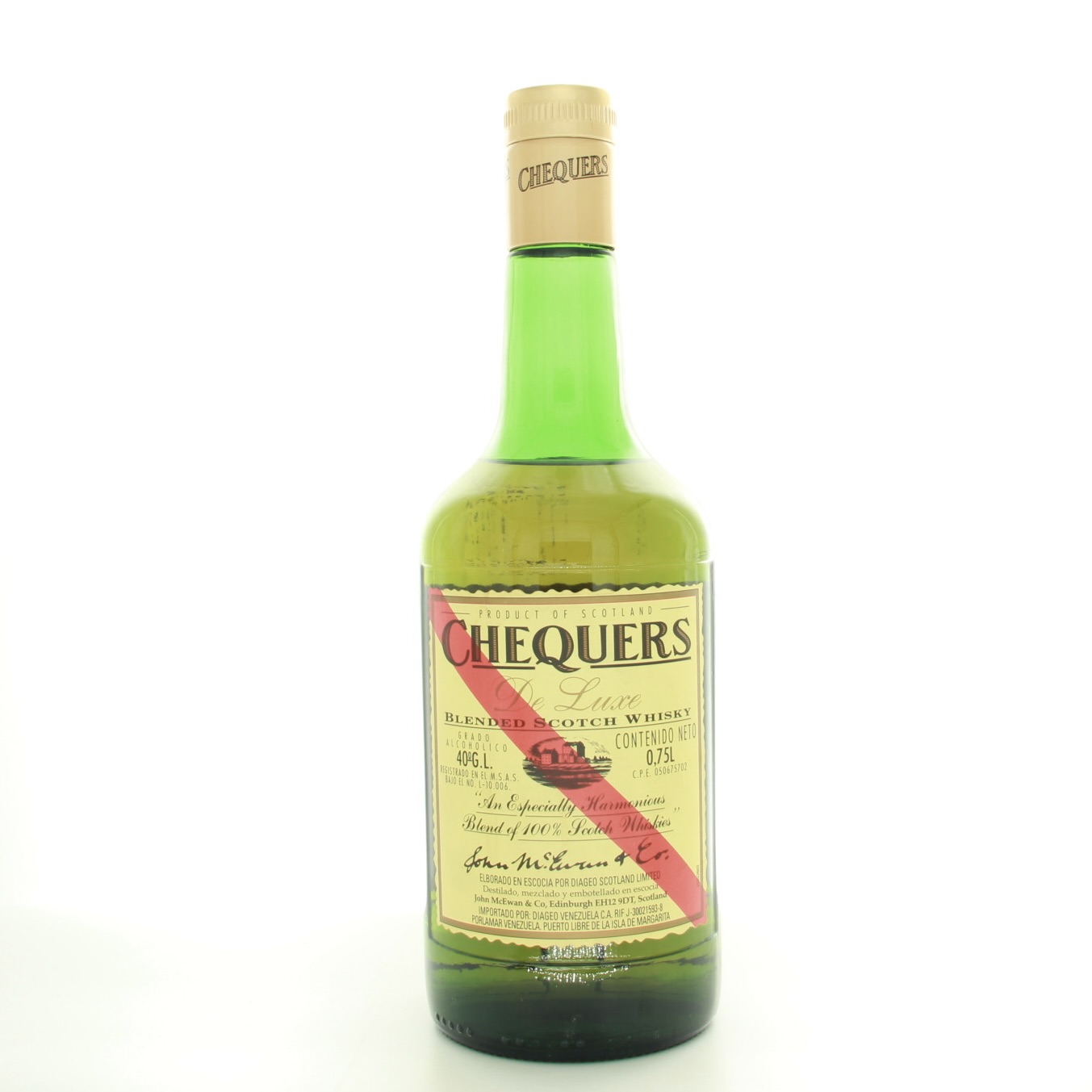
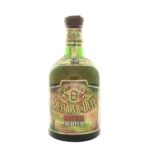
Chequres De Luxe 1980’s
75cl / 40%
£99.00

- Malt type: Blended
- Region: Scotland
Tasting Notes

Caramel, Vanilla, Oak

Cereal, Vanilla, Lite Hint of Smoke

Short Finish, Warm
If you like this whisky, you will also like these
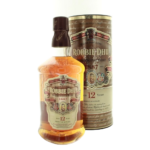
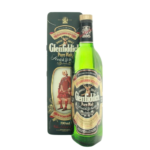

A vintage, de luxe blended Scotch from a defunct John McEwan brand, often featuring malt from Speyside's Linkwood distillery.
| Field | Details |
| Distillery / Bottler / Country & Region | John McEwan & Co. Ltd. (Proprietors) / Brand now owned by Diageo / Scotland, Blended Scotch |
| Category | Blended Scotch Whisky (Superb De Luxe) |
| Age / Vintage / Bottled | Non-Age-Statement (NAS) / Component whiskies vintage of the 1970s / Bottled in the 1980s |
| ABV & Size(s) | 40% ABV / 75cl (or 75.7cl for old export bottles) |
| Cask / Treatment | Oak casks / Malt component likely high proportion of ex-Bourbon, possibly some sherry for depth |
| Natural Colour | Not stated by the producer (Assumed: Caramel added) |
| Non-Chill-Filtered | Not stated by the producer (Assumed: Chill-filtered) |
| Cask Strength | No (Bottled at 40% ABV) |
| Bottle count / Outturn | Not stated by the producer (High-volume international blend) |
| Intended channel | Export markets (US, Latin America) and UK retail |
| Packaging | Often presented in a distinctive green porcelain flagon/ceramic decanter with a cork stopper, or a standard glass bottle. |
| Notes on discrepancies | The name is often spelled "Chequers De Luxe." The core malt source is highly likely to be Linkwood Distillery. |
Historical Context
Chequers De Luxe is a historic blended Scotch whisky brand tracing its lineage back to John McEwan & Co. Ltd, a Leith-based blending firm founded in 1863. John McEwan became part of The Distillers Company Limited (DCL) in 1937, though the brand name continued to be used for commercial blends. The significance of Chequers lies in its connection to the Speyside distillery of Linkwood, which DCL acquired in 1932. John McEwan & Co. subsequently held the distilling license for Linkwood, strongly suggesting that Linkwood malt became a core component—the "heart"—of the Chequers blends, distinguishing it from standard mass-market offerings.
The brand gained significant international traction, particularly in the United States during the late 1960s and early 1970s, and later in key Latin American markets like Venezuela, where blended Scotch holds a high cultural status. Advertisements from the era alluded to its Speyside origins, referring to its malt source as "our distillery by Elgin in Morayshire."
The 1980s bottlings of Chequers De Luxe (or Chequers Superb De Luxe) emerged during a transitional period for the Scotch industry. This era precedes the major boom in single malt appreciation and represents a time when Blended Scotch often contained older, higher-quality malt components due to the surpluses accrued during the 1970s downturn. The ‘De Luxe’ designation implied a superior blend compared to the standard Chequers expression, frequently featuring whisky aged over 12 years (as noted by the "Mas de 12 años" label variant found in Latin markets). The packaging choice of the distinctive green ceramic flagon/decanter, popular for blends during the 1970s and 1980s, was a key marketing differentiator, elevating its visual appeal beyond a simple glass bottle.
Technical Specification & Variant Map
The 1980s Chequers De Luxe is a standard 40% ABV Blended Scotch Whisky. As a "De Luxe" product, it is expected to contain a greater proportion of malt whisky relative to grain whisky compared to the standard blend. The malt component, heavily influenced by the fruity, nutty, and delicate Speyside character of Linkwood, likely lends it a notable complexity superior to modern entry-level blends. The liquid was aged entirely in oak casks, a blend of refill casks that would preserve the Linkwood character and possibly some rejuvenated or sherry-seasoned casks for complexity and colour. The components would have been aged for a minimum of three years, but likely significantly longer.
2.1 Documented variants
Chequers existed in several iterations, often tied to packaging format, strength, and age statement depending on the destination market and era of bottling.
- Chequers De Luxe (1980s, 40% ABV): NAS, standard export/UK blend, often found in ceramic flagons or glass bottles.
- Chequers Superb De Luxe (1960s-1970s, 70° Proof / 40% ABV): Earlier iterations, sometimes found in different bottle shapes, including larger formats up to 200cl.
- Chequers 12 Year Old (The Superb De Luxe): Age-stated version, often found in ceramic decanters, indicating the minimum age of the components.
Due to the brand's long history and international scope, collectors may encounter minor variations in fill volume (75cl vs. 75.7cl) and proof/ABV (70 Proof vs. 40% ABV) across the 1980s.
| Variant Matrix | ||||
| ABV | Volume | Market | Era cues | Relative desirability |
| 40% | 75cl (or 75.7cl) | UK / Export | Non-Age-Statement, 1980s label/flagon style | Medium (Good entry into older blended Scotch) |
| 40% | 70cl (or 75cl) | Latin America | "Mas de 12 años" on label | Higher (Age-stated component, rarer export bottling) |
| 40% | 5cl | Global | Miniature bottling (useful as sample/authenticity reference) | Low |
2.2 Packaging & authenticity checklist
The collectable value is highly concentrated in the ceramic flagon variant, which is the most common format sought from the 1980s.
- Flagon/Decanter Material: The vessel is typically a green porcelain or ceramic flagon with a cork stopper, often sealed with wax or a foil capsule. The bottle should be inspected for chips or cracks.
- Closure/Seal: Integrity of the capsule/wax seal is paramount. For older ceramic flagons, evaporation can occur through the seal and the porous ceramic itself, leading to reduced volume.
- Lead Risk: As with many ceramic decanters from the 1970s and 1980s, there is an industry-wide acknowledged caution that the glaze or printing pigments used inside the vessel may contain trace levels of lead. This is Not stated by the producer, and consumption of the liquid is at the buyer's discretion.
- Condition Thresholds (Fill): A good fill level for a ceramic flagon of this age is measured by total weight (around 1.4kg to 1.5kg total weight for a 75cl bottle) rather than visible liquid, as the ceramic prevents inspection. The bottle should feel heavy for its size.
2.3 Regulatory/terminology notes
The label as Blended Scotch Whisky confirms it contains a mixture of malt and grain whiskies, all matured in Scotland for at least three years. The "De Luxe" term is commercial only, indicating a higher quality blend, typically achieved through either older component whiskies or a higher malt-to-grain ratio.
- Proof/ABV: Bottles labelled 70° Proof are equivalent to the modern 40% ABV standard, reflecting the shift from imperial to metric measurements.
- Natural Colour/NCF: Like most commercial blends, the liquid's presentation is likely enhanced by E150a caramel colouring, and it is highly likely to be chill-filtered to prevent hazing, although these facts are Not stated by the producer on the packaging.
Liquid Profile (from verifiable notes)
The profile benefits from the vintage nature of the underlying stocks, offering a depth rarely seen in modern standard blends.
Nose: Deep golden amber in colour. The nose is invitingly mellow and spicy, featuring notes of caramel, soft vanilla, and cinnamon. Raisins and general dried fruit suggest the influence of sherry-seasoned wood, providing a honeyed cake or rich, sweet character.
Palate: Oily and full-bodied on the palate, starting with thick honey and caramel. The flavour profile quickly evolves with distinct spice (black pepper), dried apricot, and vanilla. There are classic aged notes of oak, old leather, and a hint of tobacco, balanced by an unexpected flash of floral character like rose or jasmine.
Finish: Peppery and oak-driven. The finish is long, characterised by a mix of spice, old leather, and a lingering sweetness. The complexity speaks to a richer malt constituency typical of pre-1990s deluxe blends.
With water: Not stated by the producer. Given the already low 40% ABV, water is unlikely to be necessary. Any attempt to dilute further would likely dull the delicate balance of leather and spice that defines its aged character.
Distillery/Bottler Snapshot
John McEwan & Co. Ltd. was historically significant as a prominent Leith blender that supplied premium stock to international markets. The blend's strength was derived from the malt stock of the Linkwood Distillery in Speyside. Linkwood is characterised by light, floral, fruity, and slightly nutty spirit, which provides elegance and depth. After DCL acquired the blender and Linkwood, Chequers became a reliable, high-volume deluxe offering within the corporate portfolio until it was eventually discontinued or retired by Diageo.
Sourcing
The most desirable format is the ceramic flagon with an intact, original stopper and presentation box. Buyers should target bottles that explicitly reference "John McEwan & Co. Ltd" and "De Luxe," or the "12 Year Old" age statement for the most premium liquid.
Avoid flagons that feel light, indicating a significant loss of liquid through evaporation, which severely compromises the contents. Any mention of cracking or damage to the ceramic should be a deterrent due to potential contamination risks.
For glass bottles, the fill level must be high (high-shoulder or above). For ceramic flagons, integrity of the seal and heavy weight are the only reliable measures of quality.
Velocity is slow. Margin is moderate to high only if acquiring a ceramic flagon at the low end of auction prices and reselling to a ceramics/memorabilia collector.