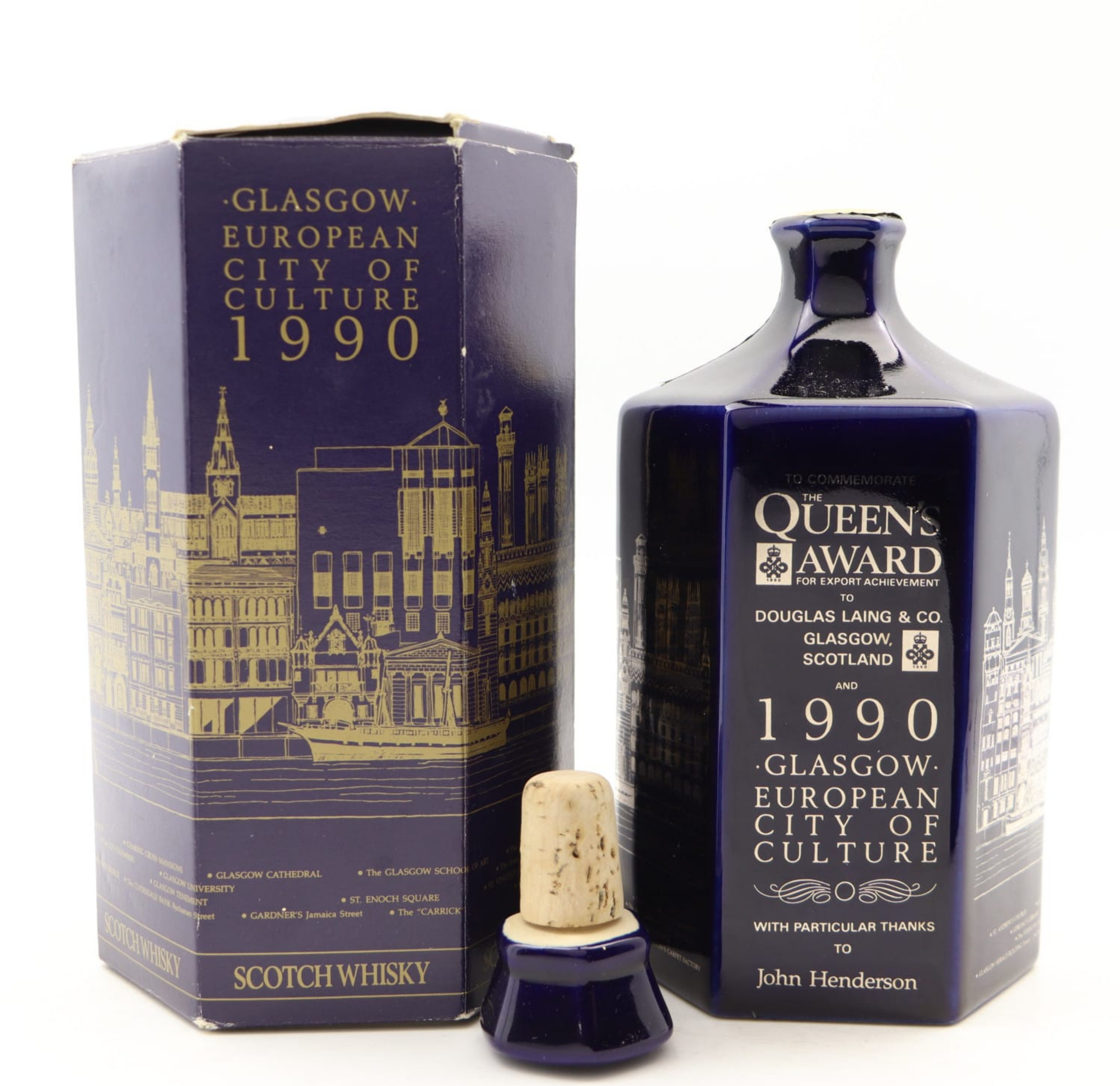
Douglas Laing Glasgow European City Of Culture 1990
75cl / 40%
£119.00

- Region: Scotland
If you like this whisky, you will also like these
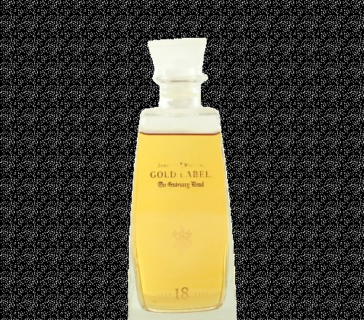

A limited-edition Premium Reserve Blended Scotch in a distinctive porcelain decanter celebrating Glasgow's 1990 cultural honour.
| Field | Details |
| Distillery / Bottler / Country & Region | Douglas Laing and Co Ltd (Blender/Bottler) / Scotland (All of Scotland) |
| Category | Premium Reserve Blended Scotch Whisky (Commemorative Decanter) |
| Age / Vintage / Bottled | Non-Age-Statement (NAS) / Bottled Circa 1990 |
| ABV & Size(s) | 40% ABV, 75cl |
| Cask / Treatment | Not Stated (Standard refill cask blending for Blended Scotch) |
| Natural Colour | Not Stated (Likely Coloured) |
| Non-Chill-Filtered | Not Stated (Likely Chill-Filtered at 40% ABV) |
| Cask Strength | No |
| Bottle count / Outturn | Limited Edition (Specific count not stated) |
| Intended channel | Giftware / Commemorative Retail |
| Packaging | Ceramic decanter (white porcelain with gold print) and separate ceramic stopper. |
| Notes on discrepancies | The valuation is highly stratified: low auction prices (£25–£40) reflect the liquid's commodity value, while high specialist retail prices (£325–£499) reflect the value of the intact ceramic artifact. |
Historical Context
The Douglas Laing Glasgow European City Of Culture 1990 bottling marks Glasgow receiving the prestigious designation of European City of Culture in 1990.
Douglas Laing & Co. utilized their "Premium Reserve" blend, positioning it within a successful line of decorative whiskies and giftware that proved popular in the late 20th century. The primary intended value was its status as a decorative, high-quality gift piece celebrating a civic event.
The bottle size as 75cl is crucial evidence confirming its bottling date around 1990, prior to the adoption of the 70cl standard across the European Union.
Technical Specification & Variant Map
The spirit is categorised as a Premium Reserve Blended Scotch Whisky, bottled at a standard minimum alcoholic strength of 40% ABV. Given the bottling year (circa 1990) and strength, the blend would typically have been chill-filtered and likely coloured. The focus is on achieving a smooth, accessible flavour profile suitable for broad consumer appeal.
| ABV | Volume | Market | Era cues | Relative desirability |
| 40% | 75cl | UK Commemorative | Porcelain decanter with gold print, 1990 event, pre-70cl standard. | Moderate (Valued primarily for commemorative decanter status). |
Packaging & authenticity checklist
The presentation is a distinctive, heavy ceramic decanter decorated with gold-printed illustrations depicting famous Glasgow landmarks.
Decanter Risks: A significant risk is liquid evaporation. Since the ceramic is opaque, buyers must carefully inspect for evidence of low fill levels (potential leakage around the closure), as any drop in level greatly diminishes the collectible value.
Regulatory/terminology notes
The 75cl volume is an important historical artifact marker, confirming bottling occurred before the standardisation to 70cl. The 'Premium Reserve' designation identifies it as a higher quality blend within the Douglas Laing portfolio of the late 20th century.
Liquid Profile (from verifiable notes)
Specific tasting notes are unavailable, but the liquid is the Douglas Laing Premium Reserve blend. Proxy notes from the contemporary McGibbon’s Premium Reserve suggest:
- Nose (Inferred/Proxy): Characterised by a combination of burnt sugar, soft vanilla, and bright citrus notes.
- Palate (Inferred/Proxy): Expected to be smooth and medium-bodied at 40% ABV. Typically delivers layers of runny honey and sweet malt, accented by notes of subtle dark fruit.
- Finish (Inferred/Proxy): A medium, smooth conclusion, often displaying a milk chocolate and coconut character.
Distillery/Bottler Snapshot
Douglas Laing & Co. has a long-standing history, evolving from a blender to a leading independent bottler. Their work in the 1980s and 1990s, including this decanter, showcases their strategic expertise in market segmentation, successfully coupling accessible blended whisky with high-quality, event-specific presentation pieces.
Sourcing
Target formats/eras: The target is the 75cl, 40% ABV porcelain decanter sealed with the original security band.
Red flags to avoid: The most critical red flag is damage to the gold paint or the ceramic itself. Avoid any indication of liquid seepage or severe low-fill levels (especially important in opaque decanters).
Condition thresholds: Pristine (A) condition of the ceramic and the gold print is essential for market desirability and for realizing specialist retail pricing. Fill levels should be high.
Margin/velocity expectations: Velocity is slow due to the niche collector audience. Margin potential is significant if lots are purchased at the low auction hammer price range (c. £40) and subsequently marketed to the artifact collector market (c. £300+).