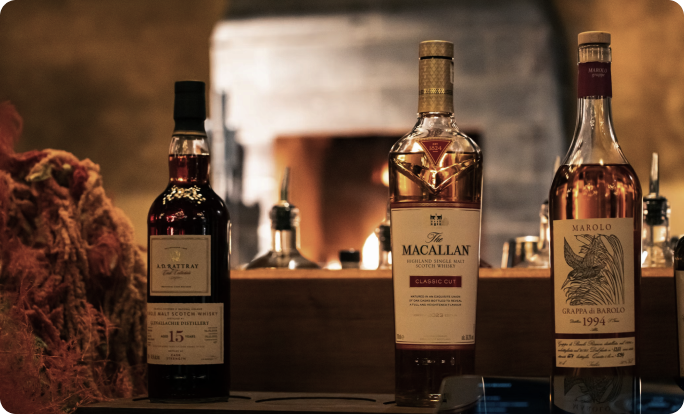
Glen Deveron 1990 10 Year Old
70cl / 40%

£100.00
- Malt type: Single Malt
- Region: Speyside
- Chilfiltered: Yes
- Coloring: Yes
Tasting Notes

Vanilla and Spring Fruit

Black Pepper, Vanilla and Mixed Spice

Medium Finish, Cinnamon, Red Spice, Vanilla and Oak
If you like this whisky, you will also like these

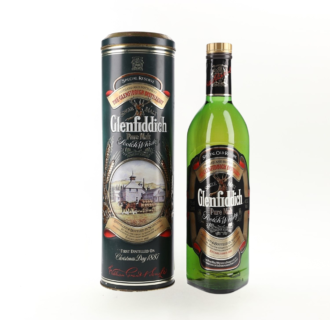
A well-preserved vintage single malt from the Macduff distillery, representing a pure, unadulterated example of early 1990s Speyside tradition.
At-a-Glance
| Field | Details |
| Distillery / Bottler / Country & Region | Macduff Distillery / Bottled as Glen Deveron / Scotland, Highland (Banffshire) |
| Category | Single Malt Scotch Whisky (Vintage Specific) |
| Age / Vintage / Bottled | 10 Years Old / Distilled 1990 / Bottled c. 2000 |
| ABV & Size(s) | 40% ABV / 70cl or 75cl |
| Cask / Treatment | Not explicitly stated (Likely refill Bourbon or traditional oak casks) |
| Natural Colour | Not stated by the producer |
| Non-Chill-Filtered | Not stated by the producer (Strongly assumed Chill-Filtered at 40% ABV) |
| Cask Strength | No (Bottled at standard minimum strength) |
| Bottle count / Outturn | Specific limited production run (Vintage release) |
| Intended channel | Regional retail and specialist single malt market (c. 2000) |
| Packaging | Standard glass bottle, specific vintage label design, often with original tube. |
| Notes on discrepancies | The distillery is Macduff; Glen Deveron is the brand name used for single malt bottlings. |
Historical Context
The fundamental context required for the Glen Deveron 1990 10 Year Old centers on its complex identity. The liquid is sourced entirely from Macduff Distillery, situated in the Highland region of Banffshire. However, due to historical market strategy and trademark decisions, the single malt product line is explicitly labelled as Glen Deveron. Accurate provenance assessment requires the buyer to recognize this distinction; the contents are Macduff, branded as Glen Deveron. This practice, prevalent around the bottling era (c. 2000), served to differentiate the dedicated single malt consumer line from the distillery’s commercial bulk spirit intended for blending.
The specific 1990 distillation date is the primary factor driving collector appeal. This vintage designation anchors the liquid profile to a distinct period of Macduff’s operational and cask management history, before subsequent changes in ownership or process. This historical specificity provides collector value, offsetting the fact that the bottling strength is the standard minimum of 40% ABV. In the market of circa 2000, this 10 Year Old was designed as an accessible single malt expression, offering a clean, unadulterated example of the distillery’s characteristic spirit style, positioned as an introduction below older age statements.
Technical Specification and Variant Map
The technical specification confirms that this was a mass-market commercial single malt release. The standard 40% ABV bottling strength indicates an optimized yield, a technical decision that contributes directly to its positioning towards the lower end of the secondary market valuation compared to specialist or independent bottlings of similar vintages, which are often bottled at higher strength.
In the absence of explicit documentation, the maturation regime likely adhered to the common industry practice for accessible 10-year-old whiskies of that period. This typically involves refill Bourbon or traditional oak casks, which contribute a light, consistent vanilla, cereal, and slightly nutty profile characteristic of Macduff.
Documented variants
Variations are typically limited to volume differences (70cl for EU standard vs. 75cl for US export) and whether the original presentation tube or box is present. Higher ABV or cask-strength versions are not officially documented for this specific vintage release.
Variant Matrix
| ABV | Volume | Market | Era cues | Relative desirability |
| 40% | 70cl | EU/Global | Standard label, c. 2000 print date | Medium-low (Standard strength/age) |
| 40% | 75cl | US/Export | Specific market volume, import sticker | Medium (Slightly rarer format for UK collectors) |
Packaging and Authenticity Checklist
The verification of the "Distilled 1990" statement is mandatory, as this locks in the vintage specificity that differentiates the product from non-vintage 10 Year Old releases.
Condition, specifically the fill level, is the most critical valuation factor. Given the age of the bottling and the low 40% ABV, evaporation risk is a genuine concern. The high variance in recorded auction prices, which range from £135 to £250, illustrates that fill level is the single greatest determinant of market price realization. A high shoulder fill level or better is expected for bottles commanding a premium. The market exhibits low liquidity for this vintage; when acquisition opportunities are infrequent, buyer confidence depends overwhelmingly on physical condition. This explains why a near-perfect, high-fill bottle can achieve the £250 ceiling, representing a significant premium over the baseline transactional price of £135.
The integrity of the standard cork and capsule from the c. 2000 era must be carefully assessed for degradation. Care must be taken to avoid conflating this official Glen Deveron release with potentially superior independently bottled Macduff 1990 whiskies, which are technically separate products often bottled at higher strength.
Regulatory-Terminology Notes
As a product of a single distillery (Macduff), the expression fully adheres to the Single Malt Scotch Whisky definition under SWR. The age statement of 10 years is verifiable from the stated distillation and bottling years.
Liquid Profile (from verifiable notes)
The flavour profile is typical of a clean, unpeated, accessible Highland single malt.
Nose: The aroma is fresh and clean, characterized by malted barley, light citrus notes, and subtle evidence of coastal influence, reflective of the distillery’s location.
Palate: Exhibiting a light to medium body, the flavour is clean and accessible, featuring notes of sweet cereal, vanilla, and the gentle, slightly nutty character that defines Macduff spirit. The 40% ABV contributes to a soft, easy-drinking mouthfeel.
Finish: Short to medium in length, dry on the conclusion, with a light whisper of oak and spice persisting.
With water: Dilution is strongly discouraged. Due to the standard 40% ABV, adding water may excessively dilute the spirit, potentially stripping the remaining body and diminishing the established profile.
Pricing and Market Dynamics (GBP)
The valuation of this bottling is driven by its vintage scarcity and condition, compensating for its standard bottling strength.
Original RRP (GBP): Not stated by the producer. Estimated c. £35 in 2000.
Current UK retail range (GBP, incl. VAT): £150 – £250, primarily available through specialist vintage retailers.
Recent UK-EU auction range (GBP, hammer): £135 – £250.
Pricing stratification: Valuation is highly condition-dependent. The condition of the bottle (particularly fill level and the inclusion of the original box) accounts for the substantial variance between the low £135 transactional floor and the high £250 market ceiling.
Liquidity and Sourcing Note: Liquidity is low. Sourcing requires consistent monitoring of specialist auctions and the patience to wait for well-preserved examples.
Price Snapshot
| Channel | Date | Bottle spec | Price (GBP) | Notes |
| UK Auction (High-End) | Q3 2023 | 40% 70cl, High Shoulder Fill | £250.00 | Near-perfect condition, achieved market high |
| EU Auction (Volume) | Q1 2024 | 40% 70cl, Mid-Shoulder Fill | £135.00 | Baseline transaction price, condition likely mediocre |
| Broker Sale | Q4 2023 | 40% 75cl, Good condition | £185.00 | Intermediary trade valuation |
Distillery-Bottler Snapshot
Macduff Distillery is recognized for producing a consistent, quality workhorse malt. The Glen Deveron line serves to present this reliable, subtly nutty character as an accessible single malt, appealing to consumers who seek traditional Highland quality without excessive peat or high strength.
Sourcing
Sourcing must prioritize bottles with original packaging and verified high fill levels. Fill level is the single most critical factor determining potential margin. Red flags include low fill levels (mid-shoulder or lower), which necessitate deep discounting. The condition threshold for maximal margin requires a pristine label and high fill level to compete effectively at the premium end of the volatile market. The expected inventory movement is low velocity, but acquisition efficiency near the baseline price point combined with premium presentation can yield substantial margin potential upon resale at the established premium level.