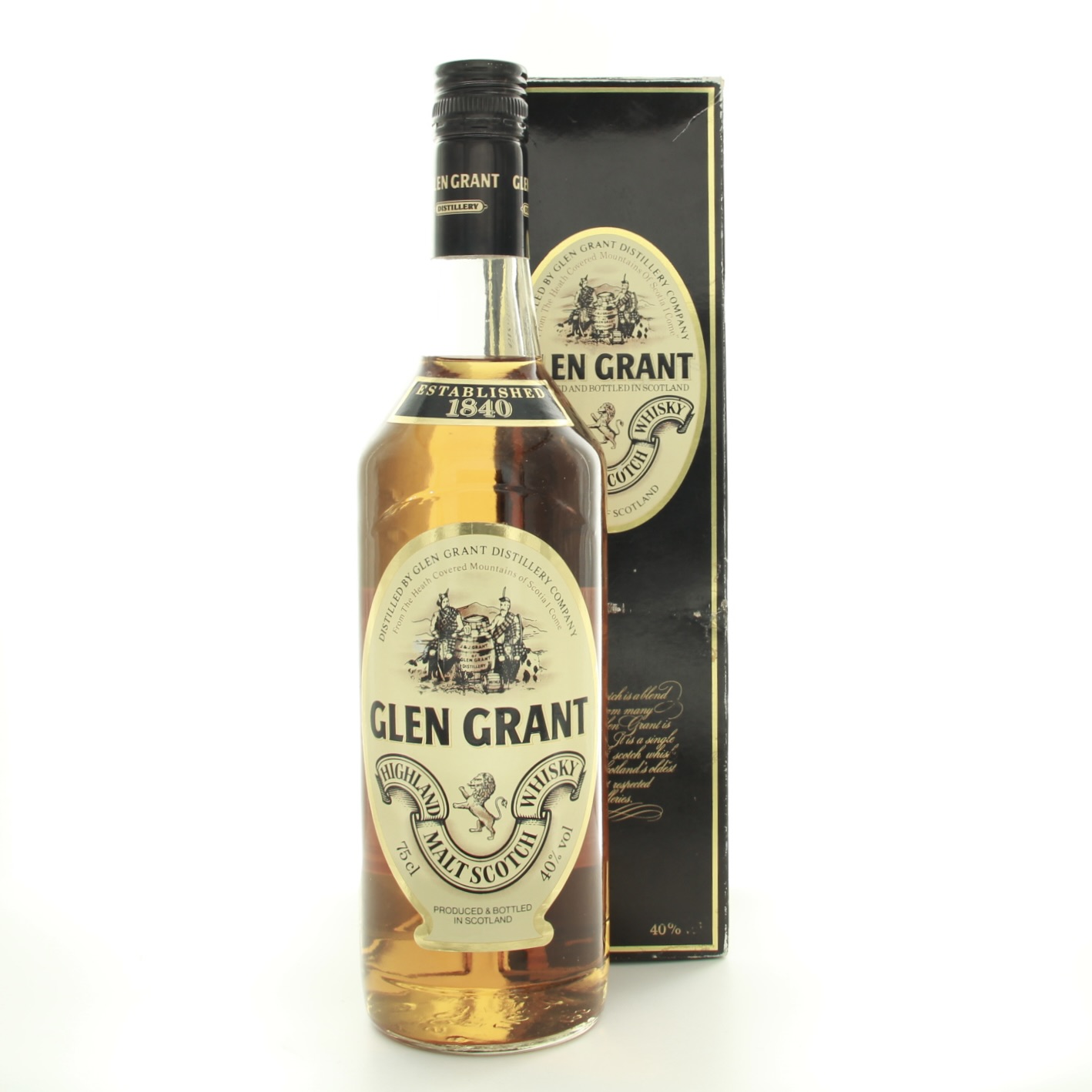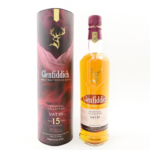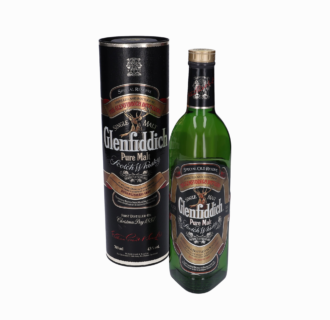
Glen Grant (1980s Edition)
75cl / 40%

£99.00
- Malt type: Blended
- Region: Speyside
If you like this whisky, you will also like these
A pivotal official bottling defining Glen Grant's transition to the modern global market.
At-a-Glance
This section provides the immutable technical data required for inventory management and catalogue specification.
| Field | Details |
| Distillery / Bottler / Country & Region | Glen Grant Distillery / Official Bottling (OB) / Speyside, Scotland |
| Category | Single Malt Scotch Whisky |
| Age / Vintage / Bottled | Not stated on label (NAS); Bottled circa 1980–1989 |
| ABV & Size(s) | Varies, typically 40% ABV for UK/EU standard or 43% ABV for certain export/duty-free markets; 75cl or 70cl (post-1984) |
| Cask / Treatment | Not stated by the producer. Likely a mix of refill American oak hogsheads and some ex-Sherry butts (Refill Oak predominant) |
| Natural Colour | Not stated by the producer. Given the era, likely caramel colouring (E150a) applied. |
| Non-Chill-Filtered | No. Standard commercial chill filtration applied. |
| Cask Strength | No |
| Bottle count / Outturn | High volume, continuous commercial release. |
| Intended channel | Global mass market and duty-free retail |
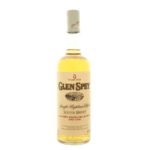
| Packaging | Clear glass bottle, foil or plastic screw cap/stoppage, rectangular label common to the era. |
| Notes on discrepancies | ABV variations (40%, 43%) are key indicators of intended market (UK/domestic vs. export/duty-free). |
Historical Context
The 1980s marked a strategic and operational turning point for Glen Grant. During much of this decade, the distillery was owned by the Seagram Group, operating under The Glenlivet Distillers Ltd. umbrella. The context of this particular bottling hinges on industry rationalisation and aggressive international market expansion during a period of significant oversupply known as the ‘Whisky Loch’.
This specific bottling represents the industry's crucial shift from imperial measurements (e.g., 70 proof) to metrication (ABV) following the United Kingdom’s legal transition in 1980. The presence of 40% ABV, rather than 70 proof, is the primary mechanism for dating this release to the metrication era, placing it definitively in the 1980s. Glen Grant was strategically positioned as a reliable, consistently light-bodied Speyside staple, requiring high volume and availability for global distribution. Bottlings from this period often contain liquid distilled in the 1970s, an era generally recognised for stable, high-quality production before later economic pressures fully impacted efficiency measures.
Technical Specification & Variant Map
The primary technical variance in the 1980s edition is directly linked to legal and tax requirements across different markets. Bottles may exhibit either the traditional 75cl volume (pre-1984 UK standard) or the 70cl volume (the later modern standard), combined with either 40% or 43% ABV. The higher proof versions (43% ABV) are typically perceived as having a fuller flavour profile and are often associated with specific export markets (such as the US or Italy) that traditionally maintained a higher proof requirement. These variations necessitate careful inspection when assessing value and authenticity.
The decision to bottle at the legal minimum strength of 40% ABV for the domestic market and core exports reflects the significant economic pressures facing the industry during the 1980s oversupply. Controlling costs and maximising liquid yield was paramount given the high excise duties and the volume required for successful global distribution. This economic necessity to dilute to the legal minimum substantially affects the flavour intensity and character of this mass-market release compared to bottlings from pre-war or pre-metrication periods which often exhibited higher inherent strength.
Documented variants
The most crucial documentation for this release involves the interaction between volume and strength, dictating its intended market and date within the decade.
Variant Matrix
| ABV | Volume | Market | Era cues | Relative desirability |
| 40% | 75cl | UK Domestic | Pre-1984, Post-1980 metrication | Standard |
| 40% | 70cl | UK/EU | Post-1984 | Standard |
| 43% | 75cl/70cl | Export/Duty-Free | Varies, often higher quality expectation | Moderately higher |
| 70 Proof | 26 2/3 Fl Oz | Historical Comparator | Pre-1980 (Strictly not 1980s Edition) | High (as a historical comparator) |
Packaging & authenticity checklist
Authenticity checks must focus on features typical of the Seagram-era OBs. The closure is often a standard metal screw cap or simple plastic stopper, and checks for corrosion or leakage are essential due to the age of the packaging. Labels should feature text indicating ownership by "The Glenlivet Distillers Ltd." or similar Seagram-era affiliates, using the characteristic rectangular format and colour palette specific to the pre-Pernod Ricard/Chivas acquisition period.
Given the bottle’s age and standard screw-cap closure, low-fill risks (ullage) are significant. Acceptable fill levels are critical for valuation; levels approaching the High Shoulder (HBN) or Mid-Neck are preferred for bottles stored upright for four decades. Common mix-ups include confusing this NAS 1980s bottling with the pre-1980 70-proof versions or the significantly later official 10-year-old expressions, which bear an age statement. The absence of an age statement is a key identifying feature of many standard Glen Grant releases during this decade.
Regulatory/terminology notes
The legal minimum strength for Scotch Whisky in the UK is 40% ABV. The prevalence of this strength in 1980s commercial releases is a direct result of the industry’s need to control costs and maximise efficiency during the period of industry recession and oversupply. The 40% strength seen here directly adheres to this legal limit, illustrating a financially conservative approach to bottling volume.
Liquid Profile (from verifiable notes)
The spirit profile reflects the distillery's clean, light style, characteristic of its production equipment.
Nose: The nose is typically light, defined by delicate fruit notes such as green apple and pear, accompanied by malty sweetness and subtle herbal undertones. The spirit is characteristically clean and vibrant, accurately showcasing the traditional Glen Grant distillate.
Palate: The palate offers a medium body, presenting fresh cereal notes and a pronounced sweetness that leads into a light spice and a slightly dry oak texture. Despite the standard 40% ABV, the liquid is generally described as highly quaffable and balanced.
Finish: The finish is short to medium in length, remaining clean and slightly nutty, concluding with a lingering suggestion of orchard fruit.
With water: Dilution is generally not recommended for the standard 40% ABV bottling, as it is already bottled near the minimum strength. For the 43% ABV variant, a small addition of water may help to release faint floral notes but carries the risk of flattening the overall profile if added excessively.
Pricing & Market Dynamics (GBP)
The market for 1980s Glen Grant OBs is stable, driven primarily by established drinkers seeking reliable quality from a historically significant era rather than speculative investment. Pricing is highly sensitive to verifiable condition and ABV, with the 43% variants consistently achieving higher prices.
Original RRP (GBP): Not stated by the producer. Estimated to have been in the range of £10–£15 during the mid-1980s.
Current UK retail range (GBP, incl. VAT): £180 - £350.
Recent UK/EU auction range (GBP, hammer): £150 - £300 (dependent upon condition and proof).
Pricing stratification: Bottles with pristine labels, high fill levels (e.g., high shoulder or better), and the 43% ABV designation consistently command prices at the upper end of the valuation range. The rare presence of an age statement on any sub-variant significantly increases its value.
Liquidity & sourcing note: Due to the high original outturn, these bottles appear consistently through auction channels, ensuring solid liquidity. Sourcing efforts must prioritise bottles with intact paper labels and clear foil or tax stamps confirming provenance.
Price Snapshot
| Channel | Date | Bottle spec | Price (GBP) | Notes |
| Auction (UK) | Sep 2023 | 40% ABV, 75cl, low-mid shoulder fill | £165 | Lower end due to ullage |
| Retail (EU) | Oct 2023 | 43% ABV, 70cl, near-perfect condition | £320 | Premium for high proof and condition |
| Auction (UK) | Nov 2023 | 40% ABV, 75cl, good fill level | £210 | Standard market price |
Distillery/Bottler Snapshot
Glen Grant, established in 1840, is recognised as one of Speyside's most productive distilleries. It is famed for its tall, slender stills and the inclusion of purifiers, which collectively yield a characteristically light and delicate spirit. This inherent lightness enables the spirit to be palatable and balanced even when relatively young and bottled at lower ABVs, a characteristic that was commercially exploited for the mass market releases in the 1980s. The distillery is currently owned by the Campari Group, following decades of ownership under Seagram and Chivas Brothers.
Sourcing
Sourcing should target the 43% ABV versions to secure a superior profile. Focus should be placed on bottles with the most legible era cues on the glass or label indicating its "Made in Scotland" provenance. Red flags include excessive ullage (below mid-shoulder), any visual haziness in the liquid suggesting poor storage, and non-metric sizes unless specifically targeting international collectors. A minimum fill level of mid-shoulder (MS) and label integrity of 8/10 are necessary thresholds. Due to consistent market visibility, moderate margins (20–30%) and steady velocity can be expected.