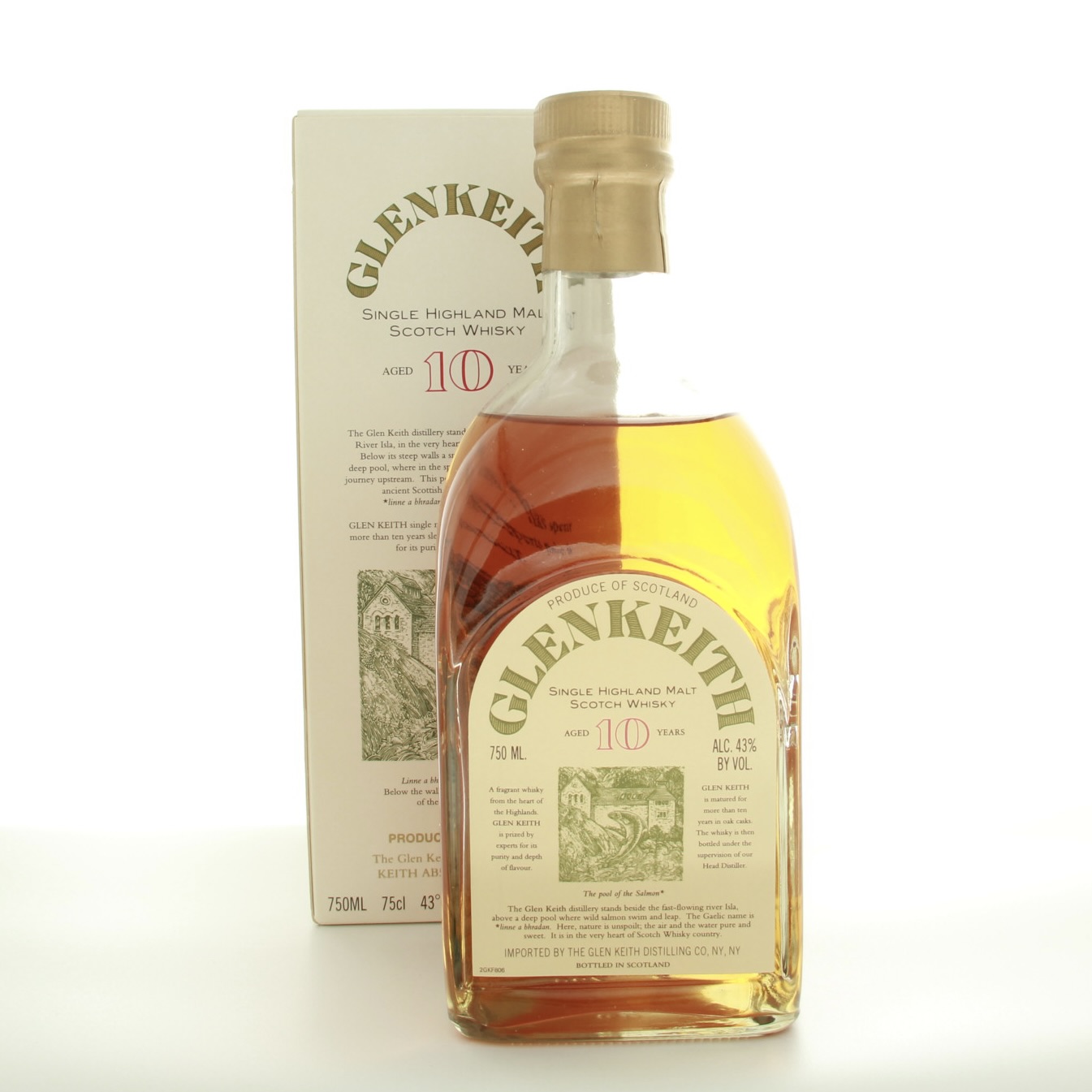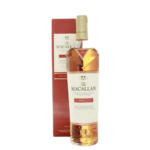
Glen Keith 10 Year Old 1990s
70cl / 43%

£99.00
- Cask type: Oak
- Malt type: Single Malt
- Region: Speyside
- Chilfiltered: Yes
- Coloring: Yes
Tasting Notes
Citrus, Tree Sap and Flower Meadows
Caramel, Honey, Oak, Ginger and Chilli Spice
Medium Finish, Leather, Oak and Grapefruit
If you like this whisky, you will also like these
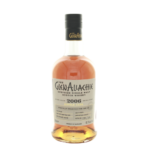
An early Speyside single malt, defined by a transitional decade between blending dominance and independent bottling visibility.
At-a-Glance
| Field | Details |
| Distillery / Bottler / Country & Region | Glen Keith Distillery / Proprietary bottling (Seagram ownership era) / Speyside, Scotland |
| Category | Single Malt Scotch Whisky |
| Age / Vintage / Bottled | 10 Years Old / Distilled likely late 1980s / Bottled 1990s |
| ABV & Size(s) | Typically 43% ABV / 70cl (Standard domestic format) |
| Cask / Treatment | Combination of traditional oak bourbon barrels and sherry casks |
| Natural Colour | Not stated by the producer |
| Non-Chill-Filtered | No (Standard practice of the era for 43% ABV) |
| Cask Strength | No |
| Bottle count / Outturn | Not stated by the producer (Likely significant volume) |
| Intended channel | Domestic and specialist retail; early push into single malt market |
| Packaging | Clear glass bottle, likely featuring the stylized distillery illustration common to the era. |
| Notes on discrepancies | Must be verified against later 1990s/2000s revisions under different ownership structures. |
Historical Context
The Glen Keith distillery, established in 1957 by Seagram, was initially conceived and operated as a vital research and development facility for the group. Its primary function was the production of sophisticated, floral new-make spirit intended for use as a premium blending component, particularly within flagship brands such as Chivas Regal.
The release of the Glen Keith 10 Year Old in the 1990s represents a pivotal strategic moment for the distillery’s owners. Prior to the full commercial maturity of the single malt category, this bottling serves as an early, defined age statement offering. It reflects the distillery's attempt to capitalise directly on the growing consumer demand for quality single malts by leveraging its high-quality spirit. This expression is highly significant to collectors as it contains liquid distilled and bottled during the distillery’s original operational period, preceding its temporary closure in 1999. The inherent value of this bottling is intrinsically linked to its status as a highly sought-after ‘pre-closure’ artefact.
Technical Specification & Variant Map
The core expression of the Glen Keith 10 Year Old during the 1990s was consistently presented at 43% Alcohol by Volume (ABV) in the standard 70cl format. Regional variations are minor, usually limited to differences in local import strip labels or specific tax indications required for export markets.
The defined maturation strategy involves a careful combination of traditional oak bourbon barrels and sherry casks. This dual-cask approach for what was essentially an entry-level single malt is evidence of a specific strategic decision. As Glen Keith’s primary role was ensuring versatility and consistency within blending, introducing a single malt in the increasingly competitive 1990s market required a universally appealing profile. Blending the typical vanilla and malty notes derived from Bourbon casks with the richer, dried fruit characteristics imparted by Sherry casks successfully creates a highly balanced and texturally deep profile. This choice contrasts with other contemporary competitors who often favoured maturation heavily reliant on a single cask type, confirming a risk-mitigation strategy aimed at establishing a broad market base for their nascent single malt offering.
Documented variants of the 10 Year Old are limited primarily by format and ABV concentration, reinforcing the consistent positioning of the product during this era.
Variant Matrix
| ABV | Volume | Market | Era cues | Relative desirability |
| 43% | 70cl | UK/EU/Specialist Retail | Seagram-era label design, 10YO age statement | High, due to historical significance and pre-closure liquid |
| 43% | 1 Litre | Travel Retail (Hypothetical/Rare) | Requires verification; if found, extremely scarce format | Very High, due to scarcity and format |
Packaging & authenticity checklist
Authentication of the 1990s bottling relies heavily on adherence to the design language employed during the Seagram ownership era (pre-2001). Verification often necessitates cross-referencing specific import agent markings or dated duty stamps, which were prevalent features of 1990s whiskies. Closure integrity is paramount; the bottle typically employs a standard screw-cap or high-quality cork, and the condition of this seal is crucial given the liquid's age.
A frequent sourcing error involves the misidentification of 1990s independent bottlings (which are often released at higher strengths, 46% ABV or higher) as the official proprietary 10 Year Old expression. Genuine official bottlings must be authenticated by verifying the proprietary bottle shape and the distinct official distillery branding.
Given the standard bottling materials and the 43% ABV of the liquid, maintenance of the fill level is essential. Fill levels must be at High Shoulder (HS) or above. Any fill level below this critical threshold suggests potential cork failure or long-term evaporative loss, known as ullage, thereby significantly impacting both the value and the physical integrity of the spirit over time.
Regulatory/terminology notes
The '10 Year Old' statement is a regulated age claim under the Scotch Whisky Regulations, which guarantees that the youngest spirit component contributing to the blend is a minimum of ten years of age. This provides a level of technical precision often absent in modern non-age-statement (NAS) releases. Although the producer did not formally state "Natural Colour" or "Non-Chill-Filtered," the combination of the 43% ABV and the commercial bottling standards prevalent in the 1990s makes the use of E150a colouring and aggressive chill filtration highly probable. This was standard industry practice designed to ensure product stability and consistent visual presentation across diverse markets.
Liquid Profile (from verifiable notes)
The liquid profile is characterised by the distillery's signature floral and fruit-forward spirit.
Nose: The aroma is clean, fresh, and predominantly driven by orchard fruit. Distinct notes of ripe apples and pears intermingle with a classic vanilla sweetness, derived specifically from the bourbon maturation component.
Palate: The body presents as medium weight, ensuring high approachability. The flavour landscape is defined by the complex, balanced interplay between initial sweet vanilla, light honeyed characteristics, and the well-integrated notes of dried fruit originating from the sherry cask maturation component. A defined, subtle malty backbone provides necessary structure and depth.
Finish: The finish is of medium duration and clean in character, concluding with a persistent, comforting malty sweetness and a touch of light, warming spice.
Distillery/Bottler Snapshot
Glen Keith maintains a reputation for producing a notably floral, fruit-forward, and exceptionally consistent spirit. Historically, it was pivotal as a source of premium component malts for Chivas Brothers’ blends. The distillery is also historically linked to innovation, having conducted early experiments with triple distillation techniques. This 10 Year Old expression serves as the benchmark for the traditional distillery output prior to its period of temporary closure (1999–2013), rendering it a crucial reference point for collectors interested in the pre-modernisation Speyside profile.
Sourcing
Target formats/eras: Focus should be exclusively on the 70cl 43% ABV official release bottles from the 1990s. Priority must be assigned to bottles verifiable as being filled pre-1999.
Red flags to avoid: Primary concerns include the common misidentification of independent bottlings as official releases. Additionally, poor fill levels (below High Shoulder) and any instances of severe discoloration of the liquid or foxing (browning/spotting) on the label should be treated as major quality defects.
Condition thresholds: A High Shoulder (HS) fill level is the required minimum standard for marketable condition. While the packaging is simple, the presence of the original carton or tube, even if simple, is highly recommended as it establishes provenance and reliably commands a market premium.
Margin/velocity expectations: This expression offers a moderate margin and demonstrates stable market velocity. As a key collector’s piece tied to significant distillery history, its demand is assured in the long term, positioning it for stable appreciation rather than rapid short-term speculation.