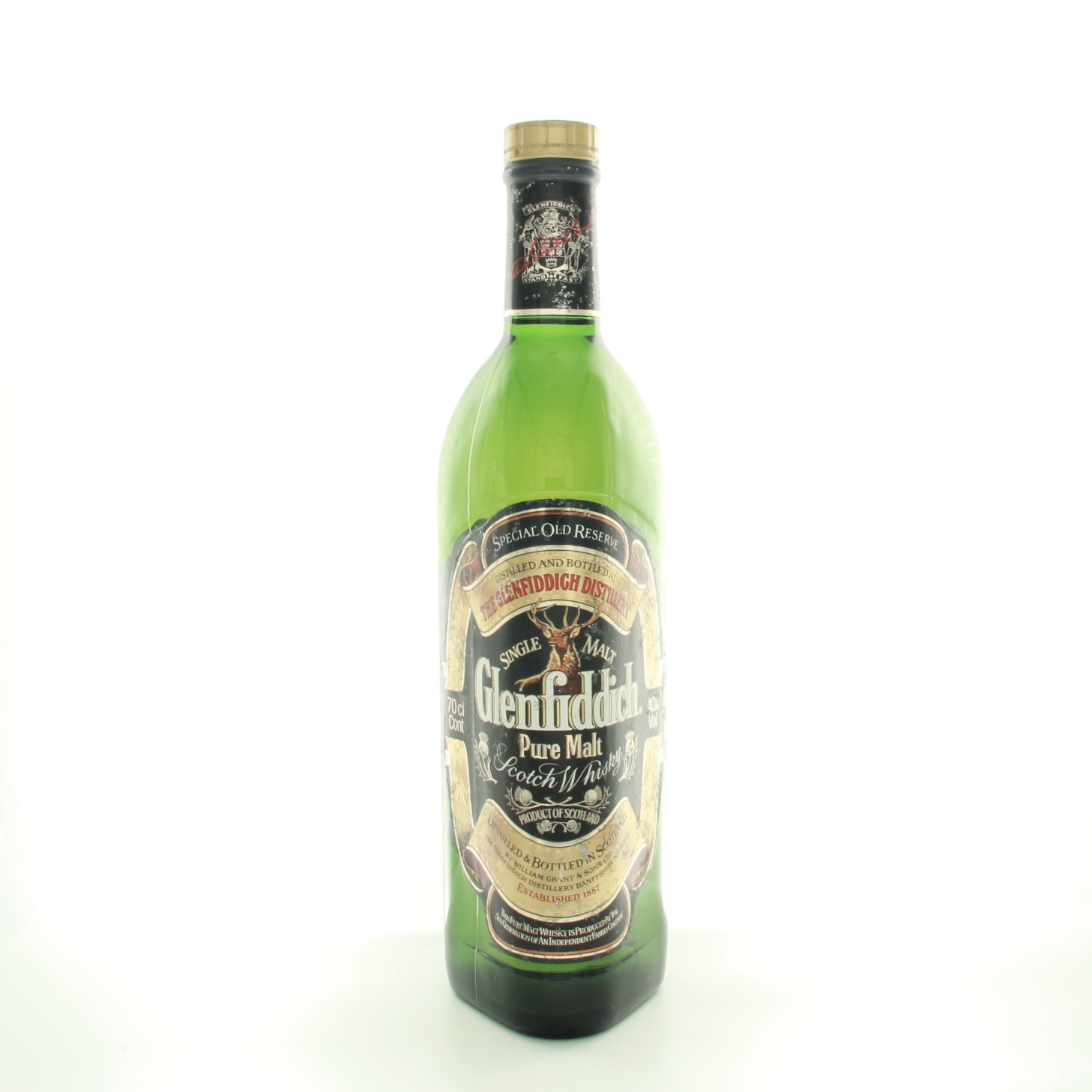
Glenfiddich Special Old Reserve Pure Malt 1980s
70cl / 40%
£99.00

- Malt type: Single Malt
- Region: Speyside
- Chilfiltered: No
- Coloring: No
Tasting Notes

Fresh and fruity notes with hints of nuts and coconut

Sweet, slight herbal hints and bitter oak notes

Long dusty finish with licorice aftertaste
If you like this whisky, you will also like these
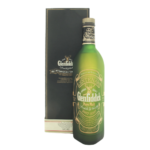

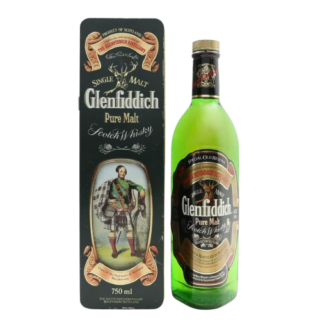
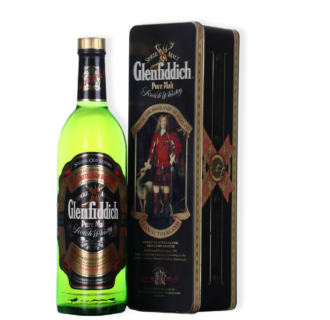
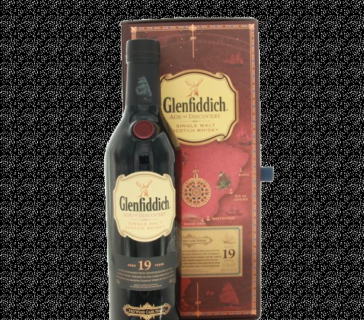


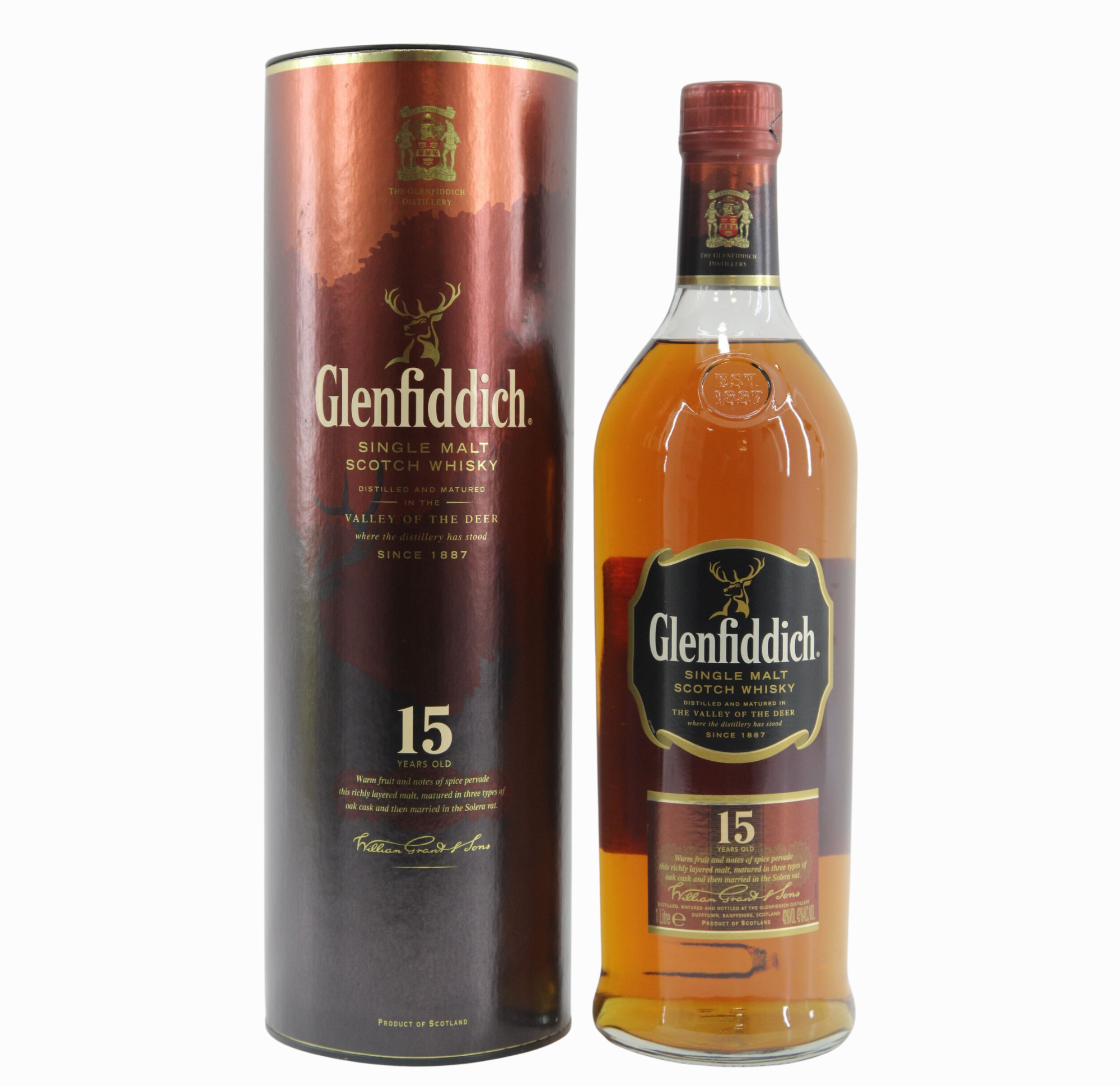
A crucial 1980s bottling demonstrating Glenfiddich's defining early commitment to the Single Malt category under the historical 'Pure Malt' designation.
At-a-Glance
| Field | Details |
| Distillery / Bottler / Country & Region | Glenfiddich Distillery / William Grant & Sons Ltd. / Speyside, Scotland |
| Category | Single Malt Scotch Whisky (Historical "Pure Malt" designation) |
| Age / Vintage / Bottled | Not explicitly age-stated (Implied 8-12 YO profile) / Bottled 1980s |
| ABV & Size(s) | 40% ABV / 70cl and 75cl formats |
| Cask / Treatment | Not stated by the producer |
| Natural Colour | Not stated by the producer (Likely E150a added) |
| Non-Chill-Filtered | Not stated by the producer (Likely chill-filtered) |
| Cask Strength | No |
| Bottle count / Outturn | Not stated by the producer (Large, general release) |
| Intended channel | Global export and domestic retail |
| Packaging | Green glass bottle, period-specific label, frequently sold with metal tins |
| Notes on discrepancies | ABV is consistently 40%, but capacity varies between 70cl (EU) and 75cl (US/Export). |
Historical Context
The Glenfiddich Special Old Reserve Pure Malt 1980s bottling is a cornerstone of the brand's global success and represents a pivotal moment in the development of the consumer-facing single malt category. Glenfiddich Distillery was founded in 1886 by William Grant in Dufftown, Scotland, and has remained under the ownership of William Grant & Sons since its inception.
Glenfiddich was a pioneer in advocating for its spirit as a distinct single malt product. This strategic foresight enabled the brand to solidify its status as one of the world's best-selling Scotch brands. This 1980s release solidified the brand's position as a dependable, globally available product.
The bottling served as the primary entry-level expression during the decade, preceding the formal establishment of the 12 Year Old Special Reserve as the codified core offering. The combination of its consistent 40% ABV, accessible profile, and broad distribution strategy ensured its reliability across diverse international markets. This high-volume presence during the 1980s, when many competitors faced financial strain due to the "whisky loch," ensured Glenfiddich maintained crucial market traction and visibility.
Technical Specification & Variant Map
The 1980s bottling adhered to a specification designed for global consistency, primarily featuring a 40% alcohol by volume (ABV), which translates to 80 Proof. The core variance in specification exists only in the presentation volume, which was dictated by the regulatory requirements of different export markets.
Documented variants
There are three key volume variants documented for this period, all maintaining the 40% ABV:
40% ABV, 70cl: This metric volume was the standard for the United Kingdom and much of the European Union, typically presented in standard retail packaging.
40% ABV, 75cl: This size was standard for importation into the North American market and often featured specific export-oriented packaging or corresponding duty markings.
40% ABV, Miniature (5cl): Smaller format bottles were used extensively for promotional activities and sampling sets.
Variant Matrix
| ABV | Volume | Market | Era cues | Relative desirability |
| 40% | 70cl | UK/EU | Standard label, cylindrical tube/box | Standard availability |
| 40% | 75cl | US/Export | US import stickers, possibly 'Clans of the Highlands' Tin | Slightly higher due to tin presentation and specific market history |
| 40% | Miniature | Global | Promotional packaging (e.g., golf theme) | Niche collectible, condition dependent |
Packaging & authenticity checklist
Authenticating the 1980s Special Old Reserve involves examining the distinct period packaging. The bottle itself is typically squat and made of green glass. The integrity of the closure system is crucial for vintage expressions of this type.
Given its high-volume, core range status, many 1980s bottlings utilised a metal screw cap underneath a foil seal, rather than a cork closure. The completeness and unbroken state of the seal and foil remain paramount for confirming the bottle's integrity. The primary labels must clearly and accurately bear the 'Special Old Reserve' and 'Pure Malt Scotch Whisky' designations.
The glass is often embossed with the iconic stag logo—a direct reference to the Gaelic Gleann Fhiodhaich, meaning "valley of the deer"—or William Grant & Sons lettering.
A critical consideration is the risk of low fill levels (ullage). Bottles with fill levels significantly below the shoulder are susceptible to oxidation and consequential flavour degradation.
Bottles originally sold in promotional packaging, such as the metal tins featuring the 'Clans of the Highlands,' are frequently traded. These complete presentation sets typically command a premium.
Regulatory/terminology notes
The most important historical technical detail of this bottling is the use of the term 'Pure Malt.' Glenfiddich was instrumental in establishing the term in the consumer sphere specifically to mean Single Malt Scotch Whisky—a spirit distilled at a single location and not blended with grain whisky. The presence of 'Pure Malt' on this 1980s label therefore dates the bottling definitively to this regulatory era and confirms the liquid's provenance as exclusively distilled at Glenfiddich. The absence of statements regarding Non-Chill-Filtered (NCF) status or Natural Colour is standard for high-volume 40% ABV releases of this period, where chill-filtration and the addition of spirit caramel (E150a) were routine practices.
Liquid Profile (from verifiable notes)
The flavour profile of the 1980s Pure Malt adheres closely to the globally recognisable, approachable, and fruit-driven Glenfiddich house style.
Nose: The initial aromatic impression is consistently described as pleasant, delightful, and immediately fresh and fruity. Beneath the characteristic fruitiness, secondary notes of coconut shavings and a general nuttiness develop.
Palate: The mouthfeel is reported as rich, complex, and notably smooth. The core taste is sweet, balanced by underlying herbal hints and a light, perceptible bitterness from oak influence.
Finish: The conclusion of the tasting experience is an elegant, long-lasting aftertaste. Specific descriptions include a 'dusty' note and a distinct, pleasant licorice or aniseed characteristic.
With water: Tasting notes regarding the addition of water are not stated by the producer.
Distillery/Bottler Snapshot
Glenfiddich, located in Dufftown, Speyside, operates with an exceptionally high production capacity. The house style is intentionally light, fresh, and fruity. The distillery’s role as an early, consistent purveyor of single malt ensures that its historical bottlings are essential benchmarks for collectors and trade.
Sourcing
Target formats/eras: The highest value formats are those presented in their original decorative tins. Focus should be on verifying the 1980s typography.
Red flags to avoid: The most critical flaw is a low fill level (ullage). Bottles with levels significantly below the shoulder are at high risk of oxidation.
Condition thresholds: Excellent condition requires clear, untorn labels; an intact seal or foil; and a fill level that remains high into the shoulder or neck.
Margin/velocity expectations: Velocity is consistently high due to global brand recognition. Expected acquisition margins must account for the substantial market appreciation evidenced since 2016.