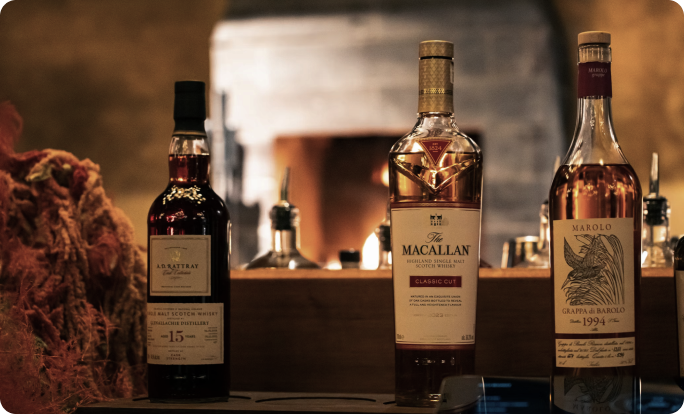
Gordon’s Special Dry London Gin (1960s Edition)
75cl / 70 Proof% (OUT OF STOCK)

If you like this whisky, you will also like these
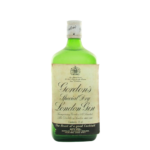
- Region: London
The definitive pre-metric, high-proof edition, representing the brand at the apex of the cocktail era.
At-a-Glance
| Field | Details |
| Distillery / Bottler / Country & Region | Tanqueray Gordon & Co. Ltd. / London (Goswell Road era) or Linden, NJ / UK, US |
| Category | London Dry Gin, Distilled |
| Age / Vintage / Bottled | Unaged / Circa 1960–1969 |
| ABV & Size(s) | Typically 47.3% ABV (94.4/94.6 Proof); Common sizes: Imperial Pint, Imperial Quart, 26 2/3 Fl. Oz (approx. 757ml) |
| Cask / Treatment | None (Unaged spirit) |
| Natural Colour | Yes (Colourless) |
| Non-Chill-Filtered | Not applicable (Gin is not subject to chill filtration) |
| Cask Strength | No (Bottled at specified high proofs) |
| Bottle count / Outturn | Not stated by the producer. Mass market production. |
| Intended channel | Domestic (UK/US) and International Export (Pre-1971 standard) |
| Packaging | Green glass (UK Domestic), Clear glass (Export); Potential Spring Cap closure |
Notes on discrepancies: Specifications are universally imperial (Proof, Fl. Oz), providing clear pre-metric dating cues.
Historical Context
The 1960s represent a stable and high-quality period for Gordon's, preceding the extensive metrication and the decentralisation of distillation that occurred in the subsequent decade. This period stands as the last full decade of imperial measurement and traditional UK packaging standards before the official 1970s metric transition.
During this time, production was largely centralised by DCL through Tanqueray Gordon & Co. Ltd., primarily operating from the Goswell Road site in London, before the facility was relocated in 1984. The spirit’s high-proof nature (around 47.3% ABV) was standard for this era, reflecting the prevailing cocktail culture that demanded a robust spirit capable of dominating heavy dilution, particularly in popular recipes like the Martini and Gimlet.
The historical ubiquity of the brand, enhanced by its association with the Royal Navy, which carried bottles globally, ensured that high-strength, imperial-era bottlings were widely distributed and remain accessible to collectors today. A key observation for collectors is the presence of specific packaging features, such as the rare ‘Spring Cap’ closure. The existence of such historical, premium closures acts as a critical signal of superior collectibility and provenance, leading to significantly higher valuation compared to standard screw-cap variants.
Technical Specification & Variant Map
The technical specification of the 1960s bottling is distinguished by its use of imperial measures, marking it as a pre-decimal and pre-metric spirit.
Documented variants
Specifications rely heavily on the imperial Proof system and fluid ounces for volume. The most common and highly desirable strength remains the high-proof bottling, typically listed as 94.4 Proof or 94.6 Proof, equating to approximately 47.3% ABV. Historical records also indicate an older, pre-1964 export variant at 45% ABV.
Volume markings are distinctly non-metric, including Imperial Quart and 26 2/3 Fl. Oz, which approximated 757ml. Packaging differentiation by market continued, with green glass generally used for UK domestic sales, while clear glass was frequently used for export formats.
Variant Matrix
| ABV | Volume | Market | Era cues | Relative desirability |
| 47.3% (94.4 Proof) | 757ml (26 2/3 Fl. Oz) | UK Domestic / Export | Imperial markings, high proof | High (Quintessential high-proof pre-metric profile) |
| 47% (Spring Cap) | 75cl (Est. Imp. size) | High-End Export | Spring Cap closure | Very High (Rarity based on closure type) |
| 45% | 94.6cl (Est.) | Export (Pre-1964) | Historical ABV variance | High (Historical interest, rarity) |
Packaging & authenticity checklist
Authenticating a 1960s bottle is straightforward due to the reliance on imperial units; the presence of Proof and fluid ounce markings provides clear pre-metric dating. The presence of a Spring Cap is a major positive feature that should be verified.
The stability of gin over time means that condition—specifically the fill level—is the primary valuation concern. Aesthetic elements, such as the period-specific labels (often featured in 1960s advertisements), are secondary to the liquid’s integrity. Because gin does not improve with age, collectors must be wary of oxidation. Any cloudiness, flocculation, or visible particulates indicate flavour degradation and contamination, severely diminishing the spirit’s value.
Regulatory/terminology notes
Understanding the Proof system is crucial for evaluating these bottles. During the 1960s, labels often used the term ‘Proof.’ It must be remembered that UK Proof (where 100 Proof is 57.1% ABV) differs from US Proof (where 100 Proof is 50% ABV). The common 94.4 Proof seen on many vintage bottlings corresponds to the high-strength 47.3% ABV standard adopted by the UK and in export markets.
Because gin’s volatile botanical components fade and oxidise over time, vintage collectors should accept a degree of flavour alteration. The difference between a highly valued collectible spirit and a severely degraded one is often entirely determined by the quality of the bottle's storage conditions.
Liquid Profile (from verifiable notes)
This era is consistently associated with an exceptionally juniper-focused, potent, and classical gin profile, which is typically regarded as superior to many lower-ABV post-2000 versions.
Nose: The aroma should be intense and defined by powerful juniper, complemented by earthy spice and angelica. Ideally, well-preserved samples maintain the structural depth of the original botanical recipe.
Palate: Characterised by being dry, robust, and exceptionally clean. The high proof ensured that notes of baking spice, citrus rind, and a persistent botanical structure were evident, traits often masked in modern, lower-strength gins.
Finish: The finish is noted for being long, exceptionally dry, and providing an undeniable juniper burst. This assertive structure made it the ideal base for the period's classic, spirit-forward cocktails.
With water: While no specific notes are provided for water addition, the inherent high strength ensured that the flavour profile remained dominant and highly effective for high-dilution cocktail preparation.
Pricing & Market Dynamics (GBP)
The 1960s bottling is highly desirable both for its historical place and its superior strength. Liquidity exists primarily among spirits historians and specialist cocktail venues.
Original RRP (GBP): Not stated by the producer.
Current UK retail range (GBP, incl. VAT): Up to £325 (75cl/47% Spring Cap).
Recent UK/EU auction range (GBP, hammer): £40.00 (Recent 75cl), £92.50 (2018 sale, likely superior condition/format), £20.00 (Imperial Quart, high wear/low bid).
Pricing stratification: A clear pricing gap exists between standard condition bottles (often selling for £30–£50 hammer price) and exceptional examples, particularly those with the rare Spring Cap closures, which command prices in excess of £300. Condition is the paramount factor for this era, as the high ABV is common.
Liquidity & sourcing note: Velocity is slow for common examples. However, pristine bottles, particularly those with rare closures, secure high retail margins and are considered an investment-worthy "time capsule".
Price Snapshot
| Channel | Date | Bottle spec | Price (GBP) | Notes |
| Retail (UK) | Current | 75cl / 47% (Spring Cap) | £325.00 | Premium specialist listing, exceptional rarity |
| Auction (UK) | Jan 2024 | 1960s Dry Gin | £40.00 | Hammer price |
| Auction (UK) | Oct 2018 | 1960s Dry Gin | £92.50 | Higher hammer price suggests better condition/spec |
| Auction (UK) | Recent | 83 Proof / Imperial Quart (US Import) | £20.00 | Low hammer price indicates poor condition |
Distillery/Bottler Snapshot
The 1960s represented a highly consistent era for Gordon's production under DCL, operating before the major facility moves in the UK. The commitment to the London Dry standard ensured the maintenance of its heavy, juniper-forward house style. The brand’s market dominance at this time solidified the reputation for quality that collectors now seek in this vintage.
Sourcing
Target formats/eras to prefer: Collectors should primarily seek high-proof (94 Proof) bottlings with high fill levels. Prioritising the rare Spring Cap closures offers the greatest potential for high margin and investment return.
Red flags to avoid: Any degradation of the liquid, such as cloudiness or sediment. Bottles must have fully intact seals to mitigate the risk of oxidation and flavour loss.
Condition thresholds (fill/box/labels): Fill level should be at least High Shoulder. The integrity of the paper labels and tax strips adds significant value, reflecting the bottle's provenance from this pre-decimal era.
Margin/velocity expectations — qualitative: High margins are expected on pristine and rare-format examples. Standard condition bottles exhibit lower margins and slower velocity due to the availability of comparable later vintages.