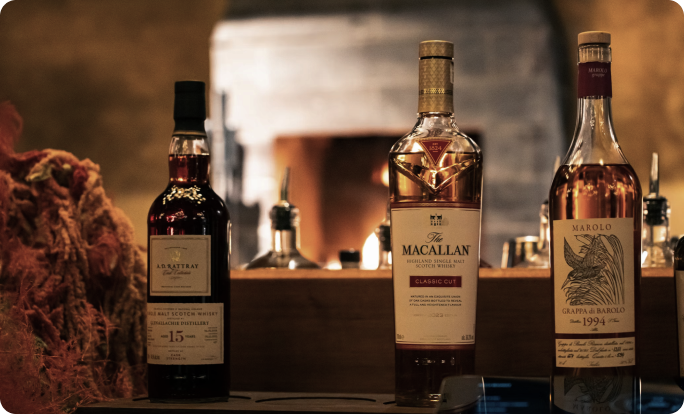
Gordon’s Special Dry London Gin (1970s Edition)
75cl / 40%
£60.00
- Region: London
If you like this whisky, you will also like these
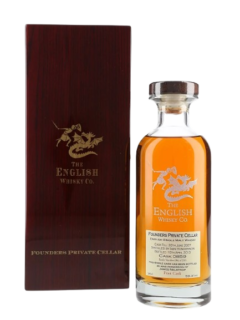
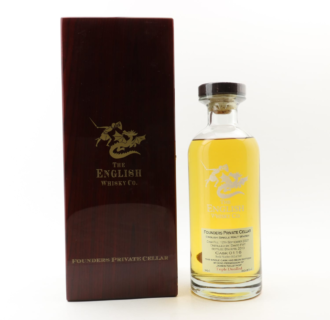
A technical time capsule capturing Gordon's during its peak global expansion and the crucial transition to metric measurement.
At-a-Glance
| Field | Details |
| Distillery / Bottler / Country & Region | Tanqueray Gordon & Co. Ltd. (London/Laindon), DCL/Diageo (post-1998) / UK or US (Linden/Union City) |
| Category | London Dry Gin, Distilled |
| Age / Vintage / Bottled | Unaged / Circa 1970–1979 |
| ABV & Size(s) | Typically 40% or 47.3% ABV (Export Strength); common sizes 70cl, 75cl, 100cl (1 Litre) |
| Cask / Treatment | None (Unaged spirit) |
| Natural Colour | Yes (Colourless) |
| Non-Chill-Filtered | Not applicable (Gin is not subject to chill filtration) |
| Cask Strength | No (Bottled at specified ABVs) |
| Bottle count / Outturn | Not stated by the producer. Mass market production. |
| Intended channel | Domestic (UK/US) and International Export |
| Packaging | Clear glass (Export) or Green glass (UK Domestic); Boar's head on cap |
Notes on discrepancies: ABV and volume vary significantly by market during this era of metric transition. US production differs from UK/Export.
Historical Context
The 1970s marked a complex and transformative period for Gordon’s Gin, a brand which had already secured its position as the world's highest-selling gin by 1962. Owned by The Distillers Company (DCL), this decade was defined by massive logistical expansion intended to serve global demand, particularly in North America.
To manage significant US demand, Gordon's expanded its production footprint. While a distillery had operated in Linden, New Jersey since 1934, a new facility was established in Union City, California, commencing production in 1971. This geographical separation is critical for collectors. The Union City distillery, documented in a 1975 report, used imported botanicals, including juniper and coriander, alongside neutral grain spirits pumped from large storage tanks. Two copper pot stills, styled after the original Scottish equipment, were imported for the new US facility. Bottles specifically referencing Union City production can be dated to post-1971.
This multi-site production means that not all 1970s 'London Dry' Gordon's was distilled in the UK. While the botanical recipe was famously unchanged since 1769, the spirit base (Neutral Grain Spirit, or NGS) and water source inevitably differed across the Atlantic. This differentiation creates a variant map where UK or international export versions, distilled by Tanqueray Gordon & Co. Ltd. (before the 1984 move to Laindon, Essex), are often regarded as superior collector items compared to US domestic bottlings, which may exhibit subtle flavour deviations due to local sourcing of the base spirit. This geographical difference is a key variable in assessing vintage bottle quality and desirability.
Technical Specification & Variant Map
The 1970s bottling captures the spirits industry during a period of sweeping standardisation and measurement reform. This era encompasses the formal introduction of metrication in the UK, which began to mandate metric units for pre-packed goods.
Documented variants
The transition from Imperial fluid ounces and quarts to metric centilitres (cl) or litres results in a diverse range of documented volumes for this decade, including 70cl, 75cl, and the popular 100cl (1 Litre) format.
Beyond volume, ABV provides the most significant distinction. Gordon's was commonly released in a 40% ABV version, often targeting the UK domestic market. Conversely, the Export Strength variant, frequently sought by collectors, maintained a high proof of 47.3% ABV, sometimes listed by its imperial equivalent, 94.6 Proof. This stronger version often presented in 100cl clear glass bottles intended for international distribution.
Packaging also signalled the intended market. The UK domestic market retained the distinctive square-faced green glass bottle, a tradition established in 1904. However, the clear glass bottle, typically paired with the yellow label, continued its role as the primary format for the export markets.
Variant Matrix
| ABV | Volume | Market | Era cues | Relative desirability |
| 47.3% | 75cl, 100cl | Export (EU/Global) | Clear bottle, high proof labelling | High (Superior botanical profile, strong mixer) |
| 40% | 70cl, 75cl, 100cl | UK Domestic, US Domestic | Green bottle, metric volume (cl) | Medium (Common standard) |
| 40% (US Distilled) | 75cl, 1 Litre | US Domestic | Union City/Linden reference, US tax strips | Medium-Low (Specialist US history collecting) |
Packaging & authenticity checklist
Authentication relies heavily on regulatory markers and specific packaging details. The most practical dating cue is the presence of metric volumes (cl) rather than imperial units (fl. oz or quart), confirming a bottling later than the 1960s.
Regardless of market, all authentic bottlings should bear the boar's head crest on the closure, a reference to the Gordon clan legend. For buyers seeking the highest quality, the integrity of the fill level is paramount. Gin stability is highly dependent on a good seal, as the volatile botanical compounds are susceptible to oxidation and evaporation over decades. Fill levels dipping to the low shoulder or below indicate significant spirit loss and flavour degradation.
Collectors must scrutinise the label for tell-tale signs of counterfeiting, such as inconsistent fonts, smudged or faded colours, or the absence of vital information like batch numbers or manufacturing details. Furthermore, any cloudiness or visible sediment in the clear liquid is a strong indicator of spoilage or adulteration.
Regulatory/terminology notes
The classification of Gordon's as a 'London Dry' Gin is a process standard, meaning the spirit's flavouring must occur exclusively through redistillation with natural botanicals, without any post-distillation flavour additions. This designation permitted the spirit to be distilled internationally, as was the case in Union City, while maintaining the London Dry nomenclature, provided the exact recipe was followed.
Labels from this era may display a mix of modern ABV percentages and older Proof designations (e.g., 94 Proof). The UK transition toward metric percentage labelling throughout the 1970s provides additional secondary dating markers.
Liquid Profile (from verifiable notes)
The flavour profile of the 1970s bottling, particularly the 47.3% Export strength, offers a glimpse into a period before modern stylistic changes softened the category.
Nose: The aroma is intensely defined by juniper, described as resinous and sometimes abrasive. Well-preserved examples reveal deep earthy spice and notes of angelica. However, improperly stored bottles often suffer from degradation, manifesting acute notes of acetone, resinous pine branches, and green juniper berries.
Palate: Robust, dry, and distinctly juniper-forward. Tasting experiences of quality samples highlight complexity, including faint hints of baking spice and licorice. Conversely, degraded spirits may be dominated by harsh off-citrus notes and aggressive resin.
Finish: The finish is medium-long, clean, and dry, marked by a persistent juniper burst. This assertive structure was highly valued for its performance in classic cocktails.
With water: The higher strength 47.3% ABV variant is specifically preferred for mixing, as its structural integrity ensures the flavour profile remains dominant in dilution. It allows underlying notes of nutmeg and anise to emerge, offering character that some describe as occupying a middle ground between bitter and fruit-forward cocktails.
Pricing & Market Dynamics (GBP)
Original RRP (GBP): Not stated by the producer.
Current UK retail range (GBP, incl. VAT): £79.95 (75cl/40% standard) to £150 (100cl/47.3% Export).
Recent UK/EU auction range (GBP, hammer): £60.00 (100cl/47.3% Export, good condition), £20.00 (100cl/Italian Import, upper shoulder fill/wear), £15.00 (UK domestic 1970s, low bid).
Pricing stratification: Value is heavily skewed by strength and condition. The 47.3% Export strength commands a significant premium, reflecting the collector desire for the most intense and best-preserved botanical concentration. Condition is a profound determinant of price; heavily worn or low-fill bottles sell for minimal amounts.
Liquidity & sourcing note: Liquidity is niche but stable. The highest demand comes from specialist vintage cocktail bars seeking full cases or pristine single bottles of the 47.3% variant, which exhibit faster velocity due to superior perceived drinking quality.
Price Snapshot
| Channel | Date | Bottle spec | Price (GBP) | Notes |
| Retail (UK) | Current | 100cl / 47.3% (Export) | £150.00 | Premium collector listing |
| Retail (UK) | Current | 75cl / 40% | £79.95 | Credible specialist listing |
| Auction (UK) | Recent | 100cl / 47.3% (Export) | £60.00 | Winning hammer bid, good condition |
| Auction (UK) | Recent | 100cl / Import, label wear | £20.00 | Hammer price reflects poor condition/fill |
Distillery/Bottler Snapshot
Throughout the 1970s, DCL ensured Gordon's maintained its position as the global benchmark for London Dry Gin. The core house style is defined by a rigorous, heavy juniper focus. The operational challenge of producing this consistent style across multiple international facilities (UK and US) successfully highlights the strict industrial control maintained over botanical sourcing and distillation protocols during this era.
Sourcing
Target formats/eras to prefer: The highest value and best drinking experience reside in high-fill, 47.3% Export Strength (clear bottle) examples. Bottles sourced from smaller European markets, such as the Belgian market, are sometimes sought for their rarity.
Red flags to avoid: Low fill levels, defined as anything below the upper shoulder, and any bottles showing signs of cloudiness or sediment, which signify flavour degradation. Unless seeking specific US historical artefacts, buyers often avoid known US-distilled batches due to the variable quality of the neutral grain spirit base.
Condition thresholds (fill/box/labels): Excellent fill is essential for gin. Labels must be intact for verifying specific market and ABV/volume specifications, as these factors critically affect valuation.
Margin/velocity expectations — qualitative: Moderate margin potential is achievable. Velocity remains slow to moderate, severely constrained by the bottle's condition; a compromised fill level can instantly halve the obtainable sale value.