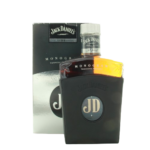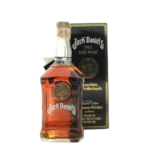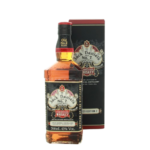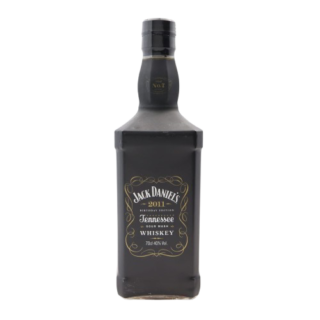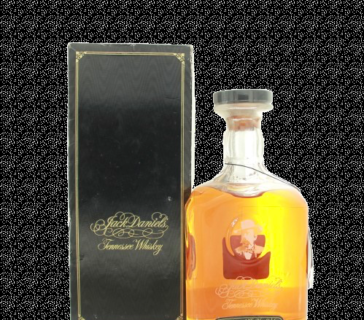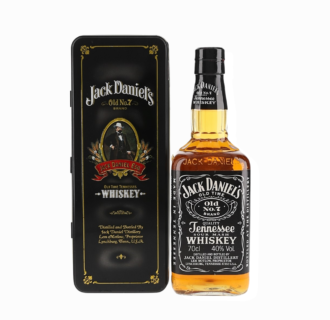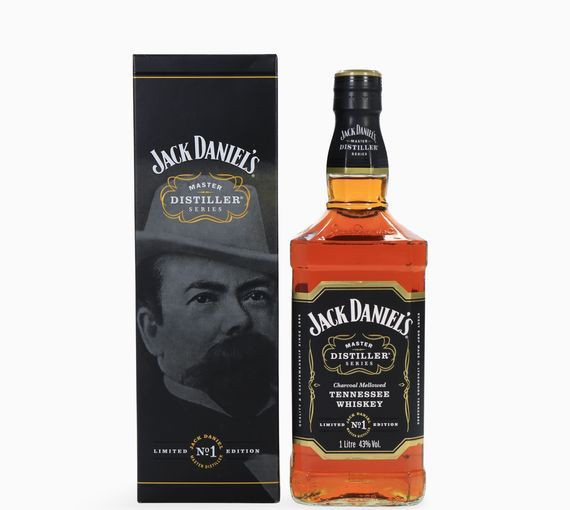
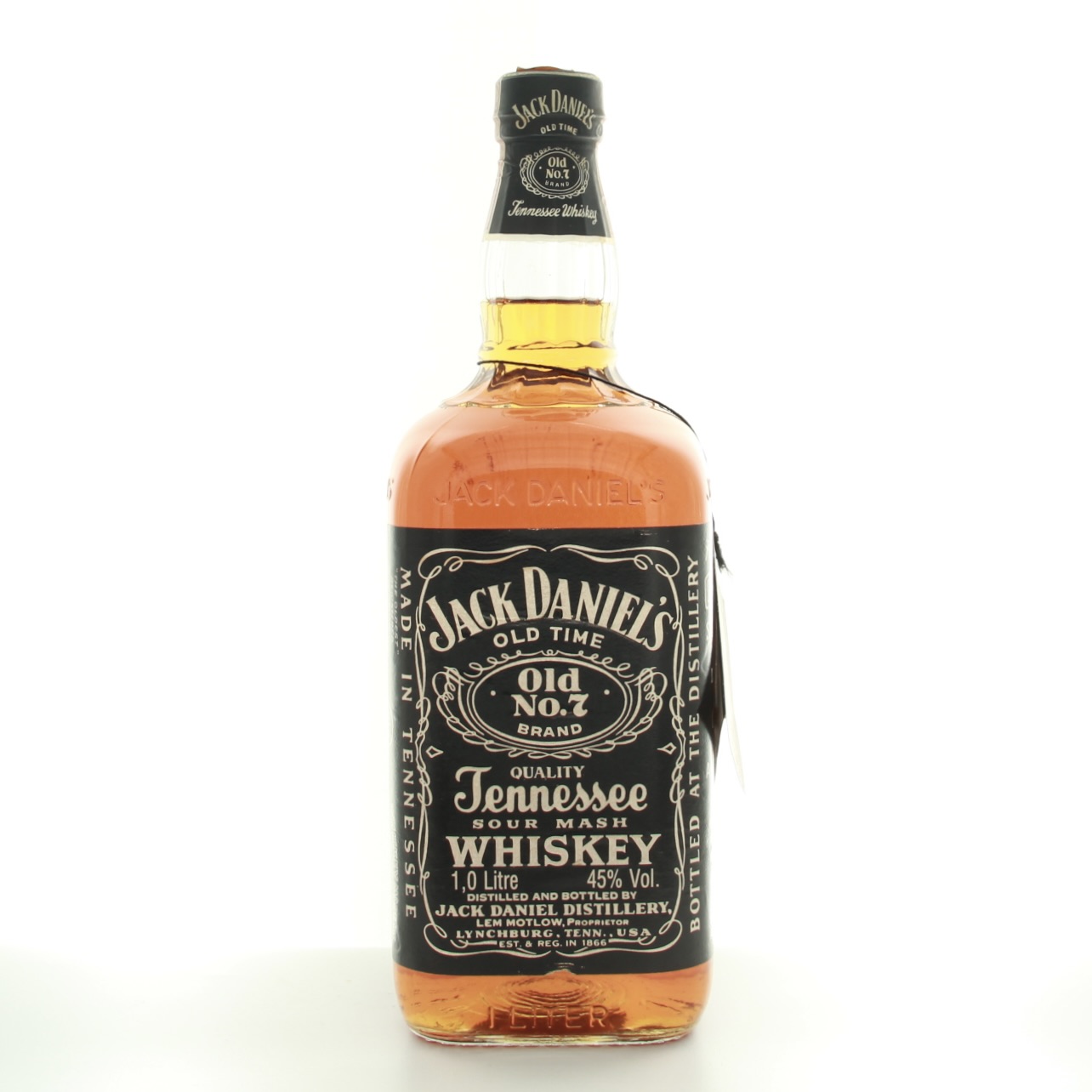
Jack Daniel’s Old No.7 1lt (1980s Edition)
100cl / 45%
£159.00

- Malt type: Tennessee
- Region: USA
If you like this whisky, you will also like these
A vintage export bottling of the iconic Tennessee Whiskey, offering a historical perspective on proof and volume.
At-a-Glance
| Field | Details |
| Distillery / Bottler / Country & Region | Jack Daniel Distillery (Lynchburg, Tennessee) / USA |
| Category | Tennessee Whiskey |
| Age / Vintage / Bottled | No Age Statement / Distilled and Bottled Circa 1980-1989 |
| ABV & Size(s) | Varies (Typically 40% or 43%) / 1 Litre (Export format) |
| Cask / Treatment | Virgin American Oak (Mellowed via Lincoln County Process) |
| Natural Colour | Yes (Caramel colouring potentially used, standard for the era) |
| Non-Chill-Filtered | No (Standard filtered product) |
| Cask Strength | No |
| Bottle count / Outturn | Not applicable (Mass market production) |
| Intended channel | Export/Duty-Free (The 1L size is indicative of this channel) |
| Packaging | Clear glass bottle, black metal screw cap, paper labels, US tax strip (may be absent on export versions). |
| Notes on discrepancies | ABV (Proof) varies significantly during the 1980s depending on the specific export market. |
Historical Context
The 1980s represent a historically crucial, albeit technically complex, era for Jack Daniel’s vintage bottlings. This decade marked a significant shift in American whiskey production, moving towards global standardization and, critically, reductions in bottling proof. Throughout the 1980s, JD transitioned proof levels, reducing them from the traditional 90 proof down to 86 proof (43%) and often further to 80 proof (40%). This reduction strategy was frequently implemented first in high-volume export and Duty-Free markets, making verification of the precise ABV essential for authentication and valuation.
Vintage JD is highly sought after by collectors who believe the spirit profile from this pre-standardization era is richer, exhibiting a more pronounced interaction with the barrel than many contemporary 40% expressions. The 1 Litre (1L) size is the primary indicator that this bottling was intended for the Export or Travel Retail channel, further distinguishing it from standard domestic formats.
Technical Specification & Variant Map
The most important technical variant map revolves around the alcoholic strength. The 1980s 1L export bottles are typically found at either 43% ABV (86 proof) or 40% ABV (80 proof). For collectors, the 43% expression is significantly more desirable due to its higher flavour concentration and fidelity to the spirit’s older profile. Confirming the proof requires meticulous inspection of the paper labels or any surviving portions of the US Federal tax strip. The metal screw cap used during this era is a key physical marker for dating, although it also poses the single greatest risk to the liquid’s long-term integrity.
Documented variants
| ABV | Volume | Market | Era cues | Relative desirability |
| 43% (86 Proof) | 1L | Export/Duty Free | Metal cap, tax strip type | High (Preferred proof for collectors) |
| 40% (80 Proof) | 1L | Export/Duty Free | Metal cap, tax strip type | Moderate (Common, lower concentration) |
Packaging & authenticity checklist
Condition assessment is paramount. The integrity of the metal screw cap is highly critical, as these closures are notoriously susceptible to failure, leading to leakage and evaporation (ullage) over several decades. Consequently, the fill level is the defining metric for valuation. Buyers must ensure the fill level is at High Shoulder (HS) or better. Bottles falling to Mid-Shoulder (MS) or lower suffer severe value penalties, as this indicates significant liquid loss and potential oxidation.
Verification of the 1980s vintage relies on the presence of the appropriate paper labels and the metal cap design. The presence of a US Federal tax strip is an auxiliary dating tool, though its application was inconsistent on export formats, complicating precise year identification. This bottling should be strictly differentiated from 1990s versions that began incorporating plastic caps and altered neck designs.
Regulatory/terminology notes
Jack Daniel’s is classified as Tennessee Whiskey, legally defined by its mandatory use of the Lincoln County Process, a charcoal mellowing filtration that occurs before maturation in new, charred oak barrels. This process gives the product its characteristic smoothness. As an American straight whiskey, it is released without an age statement (NAS), typically aged between four to seven years during the 1980s. The product is standard-filtered, meaning it is not Non-Chill-Filtered.
Liquid Profile (from verifiable notes)
Nose: Classic Jack Daniel’s profile, dominated by assertive estery notes (often described as banana), profound vanilla, sweet maple sugar, and a strong aromatic char smoke derived from the virgin oak barrels and the charcoal process. The 43% proof variants offer greater intensity of oak interaction.
Palate: Smooth and textural, characteristic of the charcoal mellowing. The flavour delivers concentrated caramel, rich toasted oak, subtle liquorice, and pronounced spice. Vintage bottlings from this era are perceived as possessing a more complex, less homogenous richness than many contemporary 40% export releases.
Finish: Medium length, dominated by sweet spice, dry oak tannins, and a characteristic lingering charcoal note.
With water: Due to the modest proofs (40% or 43%), dilution is rarely required. If used, it may slightly enhance the maple and vanilla notes.
Pricing & Market Dynamics (GBP)
The original sale was duty-free only, thus an RRP is inapplicable. Current pricing is dictated entirely by proof and physical condition.
- Original RRP (GBP): Not applicable (1980s Duty-Free exclusive).
- Current UK retail range (GBP, incl. VAT): £300–£500 (For verified high-fill, 43% bottles).
- Recent UK/EU auction range (GBP, hammer): £180–£400. A High Shoulder 43% bottle achieves prices near the upper limit (e.g., £385), while a Mid-Shoulder 40% bottle falls to the lower end (e.g., £190).
- Pricing stratification: Severe stratification exists based on fill level and proof. A 43% ABV bottle at High Shoulder commands the highest premium; any sign of ullage drastically reduces value.
Liquidity is robust due to the iconic status of the brand. Sourcing must prioritize physical condition above all else to mitigate severe inventory risk associated with evaporation.
Price Snapshot
| Channel | Date | Bottle spec | Price (GBP) | Notes |
| Auction (UK) | 2023 Q4 | 1L, 43%, High Shoulder | £385 | Excellent condition, preferred proof |
| Auction (EU) | 2024 Q1 | 1L, 40%, Mid-Shoulder | £190 | Reflects significant ullage/lower proof discount |
Distillery/Bottler Snapshot
Jack Daniel’s is the cornerstone of the Tennessee Whiskey category. While production is vast, vintage bottlings are desirable because they offer a tangible link to the distillery’s production history, particularly concerning proof levels and flavour evolution. These pre-standardization expressions are perceived by collectors as providing a richer, often higher-proof profile than is commonly available in modern export markets.
Sourcing
Target formats/eras: Exclusive focus on 1L bottlings confirmed to be 1980s vintage, prioritizing the 43% proof expression.
Red flags to avoid: The highest risk factors are visible seepage, rusted metal caps, or any fill level below the High Shoulder mark.
Condition thresholds: The absolute minimum acceptable condition threshold is High Shoulder (HS) fill level, accompanied by intact label and closure integrity.
Margin/velocity expectations: Velocity is moderate. Margins are directly tied to successful risk mitigation regarding ullage; high-fill bottles guarantee stability and justify premium margins.