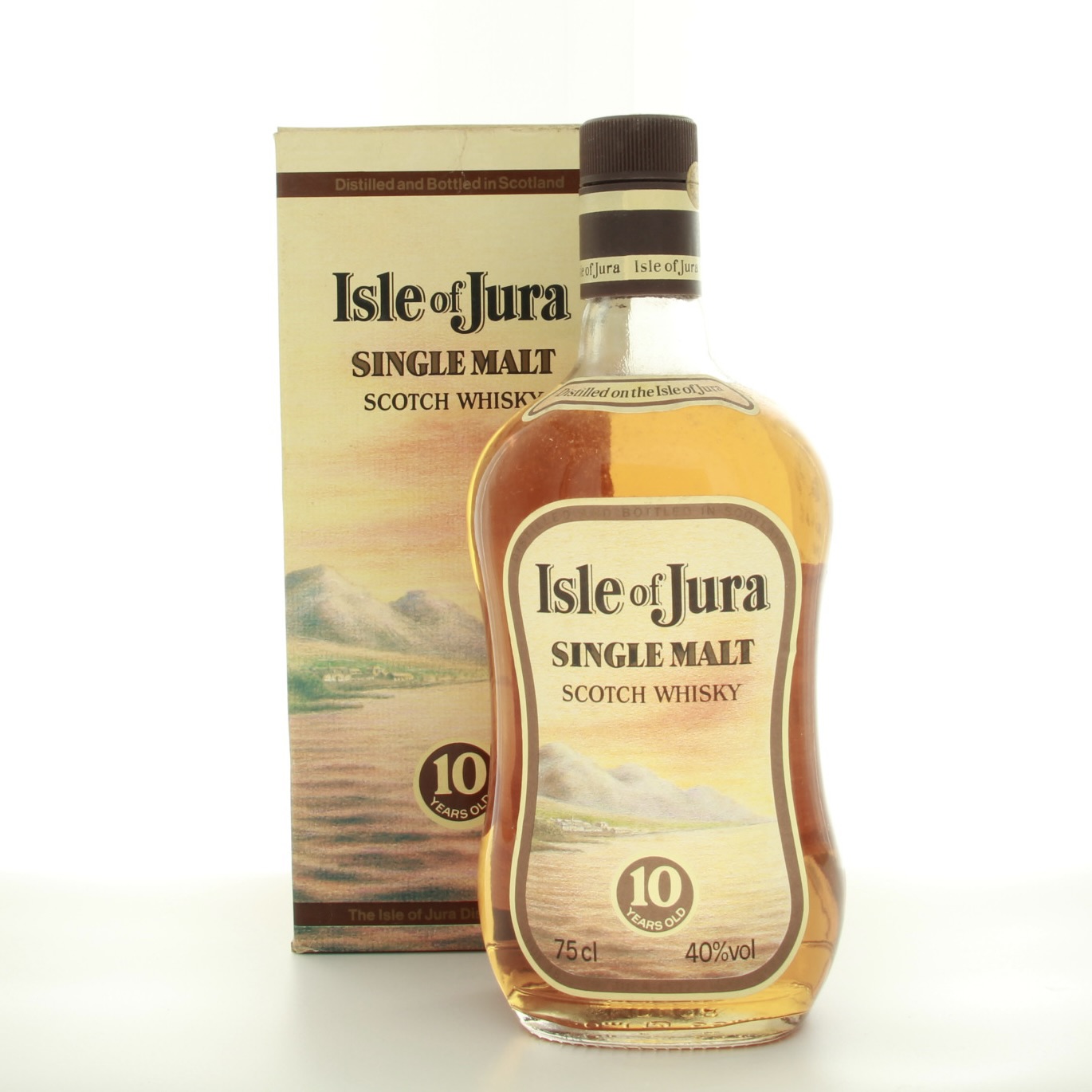
Jura 10 Year Old 1980s Bottling
75cl / 40%
£89.00

- Cask type: Oak
- Malt type: Single Malt
- Region: Scotland
Tasting Notes

Earth, Cereals, Summer Fruit and Sea Breeze

Earthy, Root Vegetables, Apple, and Oak

Short Finish, Vanilla, Carrot, Gooseberries and Oak
If you like this whisky, you will also like these
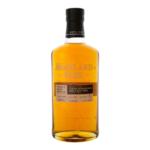
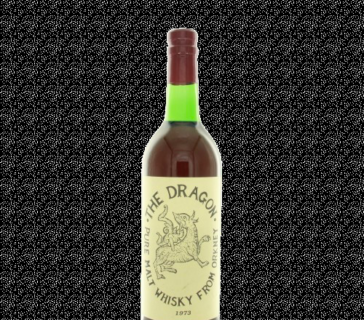
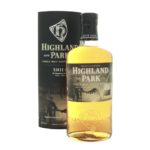
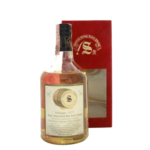
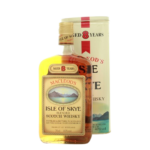
A genuine snapshot of 1980s Isle of Jura, embodying the gentle, pre-modernisation island spirit.
At-a-Glance
| Field | Details |
| Distillery / Bottler / Country & Region | Isle of Jura / Distillery Bottling / Scotland, Islands |
| Category | Single Malt Scotch Whisky, Age Stated |
| Age / Vintage / Bottled | 10 Years Old / Distilled early-to-mid 1970s / Bottled 1980s |
| ABV & Size(s) | 40% ABV (70cl/100cl) or 43% ABV (100cl) |
| Cask / Treatment | Unstated, likely ex-Bourbon casks predominantly (standard for the era). |
| Natural Colour | Not explicitly stated. Likely E150a for 40% bottling consistency. |
| Non-Chill-Filtered | Not stated by the producer. Assumed chill-filtered at 40% ABV. |
| Cask Strength | No |
| Bottle count / Outturn | Standard core range production, high volume for the period. |
| Intended channel | Domestic UK retail and some GTR/Export markets. |
| Packaging | Clear glass bottle, distinctive 'old oval label', sometimes issued with an original metal tin. |
| Notes on discrepancies | 43% ABV variants are known but less common than 40%. |
Historical Context
This 10 Year Old bottling captures a pivotal moment in the distillery's modern history. Having been resurrected in 1963, Jura expanded its production capacity in 1978, doubling the number of stills. This 1980s expression utilizes spirit distilled shortly after this capacity upgrade. The bottling also spans a key corporate transition, as Invergordon Distillers acquired the distillery in 1985. Therefore, the whisky represents the production style under Invergordon’s initial management, predating the hostile takeover by Whyte & Mackay in the early 1990s.
The character of this 1980s Jura is highly valued by whisky historians for its representation of the island malt before widespread flavour modernizations. The profile is often noted for its lack of intensity, which reflects the traditional, lighter spirit character and more modest maturation practices common to the era. This historical expression provides a crucial benchmark against which modern, often more aggressively marketed Jura expressions are measured.
Technical Specification & Variant Map
The primary technical detail governing the desirability of this 1980s Jura bottling is the bottling strength. While the widely available version for the UK and export markets was bottled at 40% ABV, collector analysis confirms the existence of a 43% ABV variation. This higher strength is critical for enthusiasts, as it provides a tangible improvement in liquid integrity, often resulting in a superior mouthfeel and better flavour retention.
The spirit was likely matured predominantly in ex-Bourbon casks. The physical marker identifying this specific era is the distinctive "old oval label." The 100cl (1 Litre) format confirms specific packaging for Global Travel Retail or specific high-volume export markets.
Documented variants
The core variants are defined by strength and volume, due to varying international market regulations and consumer preferences of the time. The 43% ABV is highly prized for liquid quality.
Variant Matrix
| ABV | Volume | Market | Era cues | Relative desirability |
| 40% | 70cl | Domestic UK/Export | Oval label, standard fill | Standard, most common variant |
| 40% | 100cl | Global Travel Retail/Export | Oval label, 1 Litre marking | Standard |
| 43% | 70cl/100cl | UK/Specific Export | Oval label, higher strength statement | High, sought after for superior liquid integrity |
Packaging & authenticity checklist
Authenticity relies entirely on the presence of the "old oval label," which immediately dates the bottle to the correct era. These bottles were frequently sold in original metal tins.
Given that these bottles are now approximately four decades old, the condition of the closure (typically a standard screw cap) and the resultant fill level are paramount. Due to decades of potential evaporation, low-fill levels (below the high shoulder, HS) are common. The presence of the original metal tin significantly enhances the presentation value.
Regulatory/terminology notes
Bottled at 40% ABV, this expression was certainly subject to chill filtration, a necessary process to prevent haziness. The lack of a "Non-Chill-Filtered" statement confirms the use of standard industry clarification methods. Furthermore, the use of E150a spirit caramel is assumed to ensure consistent colour. The tasting profile often includes complex, non-flavour-specific notes such as "dusty cereals" and "old books", which are frequently attributed to the interaction between the spirit and the environment within older warehouse conditions.
Liquid Profile (from verifiable notes)
The 1980s Jura 10 Year Old is characterized by a delicate, traditional profile, contrasting sharply with the richer, more assertive bottlings released in later decades.
Nose: The initial aroma is narrow, requiring patience to open up. It begins with clear notes of dusty cereals, old books, hay, and a hint of cardboard. As the spirit breathes, it develops into softer, sweeter elements: light honey, custard, marmalade, and orange peels. Some accounts note a pleasant, slightly tropical fruitiness, such as banana chips.
Palate: The taste is perceived as simple but honest, noted for its lack of intense flavour concentration. The primary flavours are dominated by sweetness, including sweetened tea, breakfast cereals, and honey. Subtle hints suggesting ale and light cake are also discernible.
Finish: The conclusion is typically short, a trait common among 40% ABV whiskies of this era. It consists primarily of vague honey sweetness combined with lingering cereal and hay notes.
With water: Due to the already low bottling strength (minimum 40% ABV), the addition of water is generally ill-advised.
The Isle of Jura Distillery, re-established in 1963, represents the distillery’s early post-resurrection phase, characterized by large, tall stills designed to produce a light, non-peated spirit. The house style of this era is gentle, cereal-driven, and lightly coastal. This expression serves as a crucial reference point for the distillery’s heritage character.
Sourcing
The highest priority target is the 43% ABV bottling, which offers the best chance for pristine liquid quality, regardless of volume (70cl or 100cl). Secondary focus should be on the 40% ABV bottles accompanied by the original protective metal tin.
A major red flag is any retail listing attempting to achieve prices exceeding GBP 150.00. Buyers must reject bottles with fill levels falling below the high shoulder (HS) or those with severe label or seal damage.
Acceptable condition requires a fully legible "old oval label" and HS or better fill.
Expected velocity is satisfactory, and satisfactory margins can be achieved if procurement is disciplined, focusing on securing the bottles via auction at or below GBP 50.00 hammer price. The product should be positioned as an affordable piece of pre-1990s Scotch history.