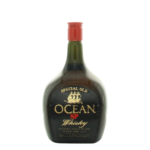
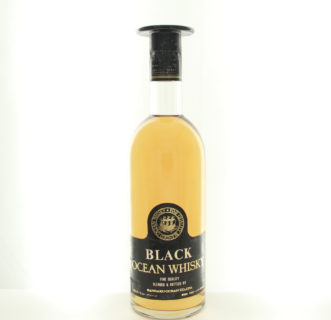
Karuizawa Ocean 12 Year Old 1980s
76cl / 43%

£119.00

- Malt type: Blended Malt
- Region: Japan
Tasting Notes

Maritime motives with minty and peppery notes

Fruity with pepper and herbs notes, slight bitterness

Medium finish with licorice hints
If you like this whisky, you will also like these
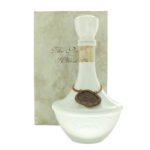

Karuizawa Ocean 12 Year Old: This is classified as a Provenance Asset. Its exceptional value is almost entirely detached from its classification as a blended whisky, relying instead on its association with the Karuizawa distillery, which is now defunct and heavily mythologized. Its scarcity is a direct result of the distillery’s closure and subsequent demolition.
The Cult of Karuizawa: Ocean 12 Year Old (1980s Blended Whisky)
The Karuizawa Ocean 12 Year Old is perhaps the most historically significant bottle of the three, drawing its immense value from its inextricable link to a now-legendary "lost distillery."
A. Historical Context: The Ocean/Mercian Era (1962–1990)
The Karuizawa distillery, established in 1955, began operations in 1956. A crucial turning point occurred in 1962 when it was acquired by Sanraku-Ocean, a company later known as the Mercian Corporation. Throughout the 1970s and 1980s, Karuizawa's primary function was to supply the malt component for the company's blended whiskies, notably the "Ocean" blend.
The global whisky depression of the 1980s proved devastating for Ocean. Unlike Japanese competitors such as Suntory and Nikka, which possessed resilient beer production arms to offset the downturn, Ocean relied heavily on its less popular wine production portfolio. This commercial vulnerability forced a severe scaling back of whisky production throughout the 1980s and 1990s. Ultimately, Karuizawa was mothballed in 2000, and its distilling license was finally returned in 2011. The closure was made permanent with the complete demolition of the distillery buildings and equipment by 2016. This finality ensures that all remaining Karuizawa stock is finite, establishing its status as a piece of "liquid history" and explaining why this blend is one of the rarest bottles available today.
B. Product Specifications and Blend Composition
The Karuizawa Ocean 12 Year Old is stated as a 12-year-old blended whisky, typically bottled at 43% ABV. A notable feature of 1980s Japanese releases is the bottle capacity, often 0.76 L (760ml), rather than the modern 70cl standard.
The composition of this blend is a key element of its historical distinction. During the 1970s and 1980s, Sanroku-Ocean utilized the high-quality malt whisky from Karuizawa and combined it with grain whisky produced at their Kawasaki distillery.
An advanced analytical consideration reveals that this 1980s blend possesses an extremely rare characteristic: it is an artifact composed entirely of components from distilleries that are now defunct. The Kawasaki grain facility closed its doors in 1987. This "Double-Defunct" status, combining Karuizawa malt with Kawasaki grain, significantly compounds the historical significance and rarity of the Ocean 12 Year Old, elevating its status far beyond standard vintage blends.
C. Authentication and Historical Markers
Provenance verification for the Karuizawa Ocean 12 Year Old can involve scrutinizing specific historical labeling conventions. Some bottlings from this era feature the phrase "Karuizawa & Yamanashi" on the cap. This designation is highly significant because the Yamanashi distillery was closed in 1969, prior to this 1980s bottling, having been deemed the inferior facility to Karuizawa.
The appearance of Yamanashi on the cap two decades after its closure indicates a critical lineage marker, likely signifying a legacy bottling convention linked back to the 1962 merger. While records show no surviving stocks of Yamanashi were found later, its inclusion suggests that the original blending formulas or concepts maintained ties to that specific heritage. This marker is vital for collectors attempting to place specific bottle batches within the shifting production and blend history of the Mercian era.
D. Tasting Profile and Market Valuation
The tasting profile for the Karuizawa Ocean Special Old 12 Year Old is distinctive. Tasting notes include "Maritime motives with minty and peppery notes," alongside fruity characteristics, a slight bitterness, and a medium finish with licorice hints. This lighter profile reflects the necessary integration of the Kawasaki grain component, distinguishing it from the later, intense, single-cask sherry bombs for which Karuizawa malt is now most famous.
The valuation of this bottle presents a compelling market anomaly. Although blended whisky production is inherently less expensive and typically yields lower prices than single malt , the Karuizawa Ocean 12 Year Old achieves extremely high valuations. This confirms that the liquid’s value is entirely decoupled from its classification as a blend; instead, it is driven by the scarcity and historical mystique of the Karuizawa malt contained within. Auction outcomes can be volatile, with reserve prices set high, illustrating the speculative and provenance-driven nature of this asset.
Conclusions and Future Market Outlook
The value of the Karuizawa blend is entirely decoupled from traditional blend economics. It functions as a historical marker, validated by the fact that its components (Karuizawa malt and Kawasaki grain) originated from two now-defunct distilleries. This "Double-Defunct" status guarantees the finite nature of the liquid, a factor that will continue to drive parabolic demand. As the remaining single malt stocks are released—such as the final "Once In A Lifetime" vatting—the emphasis on the end of the supply chain will likely push secondary market values for all Karuizawa-associated assets, including this blend, to consistently higher thresholds. Authentication, especially concerning the bottle’s size and cap markings (e.g., the presence or absence of "Yamanashi"), remains paramount for confirming provenance.