Laphroaig Triple Wood
70cl / 48% (OUT OF STOCK)

If you like this whisky, you will also like these
- Cask type: Sherry
- Malt type: Single Malt
- Region: Scotland
- Chilfiltered: Yes
Tasting Notes

Peat Smoke, Chocolate, Sherry and Oak

Vanilla, Dark Chocolate, Peat and Oak

Long Finish, Smoke, Oak and Sherry
A complex, layered expression of Islay peat, refined by triple maturation in bourbon, quarter, and Oloroso sherry casks.
At-a- Glance
| Field | Details |
| Distillery / Bottler / Country & Region | Laphroaig / Official Bottling / Scotland, Islay |
| Category | Single Malt Scotch Whisky (Heavily Peated) |
| Age / Vintage / Bottled | No Age Statement (NAS) / Ongoing Release |
| ABV & Size(s) | 48% ABV / 70cl (Also 1 Litre for Travel Retail) |
| Cask / Treatment | Triple Matured: Ex-Bourbon Barrels, Quarter Casks, and Oloroso Sherry Casks |
| Natural Colour | Yes (Full sparkling gold) |
| Non-Chill-Filtered | Yes (Bottled without chill filtration) |
| Cask Strength | No (Bottled at 48% ABV) |
| Bottle count / Outturn | High volume, continuous production. |
| Intended channel | Global Premium Retail (Initially GTR exclusive, now standard retail) |
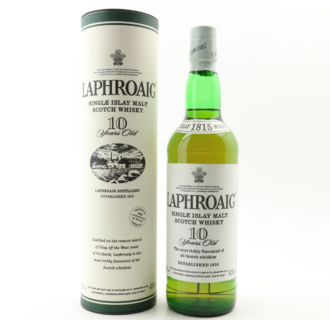
| Packaging | Standard Laphroaig bottle, cardboard tube presentation |
| Notes on discrepancies | While Laphroaig is known for medicinal peat, the Triple Wood is softer, creamier, and more fruit-forward due to the triple cask influence. |
Historical Context
Laphroaig Triple Wood was developed as an extension of the hugely successful Quarter Cask expression, aiming to add further complexity and richness by introducing sherry wood influence to the already robustly peated Islay spirit. Laphroaig, located on the island’s southern coast, is famous for its unique, pungent, and heavily peated single malt.
The creation of the Triple Wood profile is a technical statement. It utilizes a three-step maturation process designed to compress the benefits of varied oak interactions into an approachable, yet complex, Non-Age Statement (NAS) product. This process starts with American oak ex-Bourbon barrels, moves to small Quarter Casks to dramatically increase the wood-to-spirit contact and accelerate maturation, and concludes with a final marrying period in Oloroso Sherry casks. This final sherry element provides the sweet, creamy dimension that tames the medicinal edge typically found in the core 10 Year Old.
Technical Specification & Variant Map
The spirit is bottled at an elevated strength of 48% ABV, a necessary midpoint that preserves the textural benefits of non-chill filtration while maintaining consumer accessibility. The commitment to a minimum of 48% ABV, Non-Chill Filtration, and Natural Colour ensures that the Triple Wood adheres to the highest modern standards of spirit integrity.
The cask recipe is fixed and deliberate: ex-Bourbon for structure, Quarter Casks for maturation acceleration, and Oloroso Sherry casks for the finishing period. The Oloroso wood specifically imparts the characteristic sweet raisins, creamy apricots, and nutty notes.
Documented variants
The Triple Wood expression is available in both 70cl (standard retail) and 1 Litre (Travel Retail) formats, both at the mandatory 48% ABV.
Variant Matrix
| ABV | Volume | Market | Era cues | Relative desirability |
| 48% | 70cl | Global Premium Retail | Three cask types listed on label | High |
| 48% | 1 Litre | Travel Retail | Larger volume, consistent liquid | Very High (Volume premium) |
Packaging & authenticity checklist
Authentication checks are primarily aimed at verifying the 48% ABV and the "Triple Wood" designation on the label. The liquid colour is a "Full sparkling gold," indicative of the spirit’s natural hue derived from the casks. Given its status as a modern, high-volume product, fill levels should be high (Into Neck/Base of Neck). Inspection of the closure should verify the seal integrity.
Regulatory/terminology notes
The term "Triple Wood" accurately describes the unique three-stage maturation process. Crucially, the spirit is bottled without chill filtration, preserving its natural texture. The 48% ABV meets the premium strength standard for Laphroaig's specialist NAS expressions. The final presentation is certified as Natural Colour.
Liquid Profile (from verifiable notes)
The profile is dominated by the complex interplay between the dry peat smoke and the sweet, rich influence of the sherry and quarter casks.
Nose: Warm and moist, with notes of wet wood and pencil shavings. A complex sweet element includes sweet raisins and creamy apricots. The peat is present as bonfire ash and coal smoke, complemented by nutty sherry and dried apricots.
Palate: Rich, oily, and salty. It is full of sweet and fruity smoke, with creamy vanilla flavours and a suggestion of sherry sweetness. Further complexity includes aromatic spice, charcoal, and citrus.
Finish: Extremely long and mouth-filling. The moist texture dries out in a sweet and peaty finish, leaving notes of dried fruit and smooth caramel.
With water: Not explicitly stated by the producer. However, the 48% ABV allows for a slight addition of water, which should help to open the complex wood and peat notes without compromising the core flavour concentration.
Pricing & Market Dynamics (GBP)
The Triple Wood maintains a stable pricing model consistent with its premium positioning. The Original RRP (GBP) was 53.90 for the 70cl bottle. The Current UK retail range (GBP, incl. VAT) is GBP 60.00 – GBP 75.00 for the 70cl bottle; the 1 Litre format retails around GBP 80 – GBP 90. Recent UK/EU auction range (GBP, hammer): GBP 45.00 – GBP 60.00.
Price Snapshot
| Channel | Date | Bottle spec | Price (GBP) | Notes |
| Original RRP | Undisclosed | 70cl, 48% ABV | 53.90 | Original retail price |
| Auction (Hammer) | Current | 70cl, 48% ABV | 45.00 | Lowest recorded auction bid |
| Retail (Estimated) | Current | 70cl, 48% ABV | 65.00 | Typical specialist retail price |
Pricing stratification: Pricing is highly stable and reflective of the mass-premium category. The higher hammer price floor compared to generic blends indicates its consistent liquid quality.
Liquidity & sourcing note: Liquidity is high due to ongoing production. Competitive sourcing through auction is recommended to achieve the most beneficial retail margin.