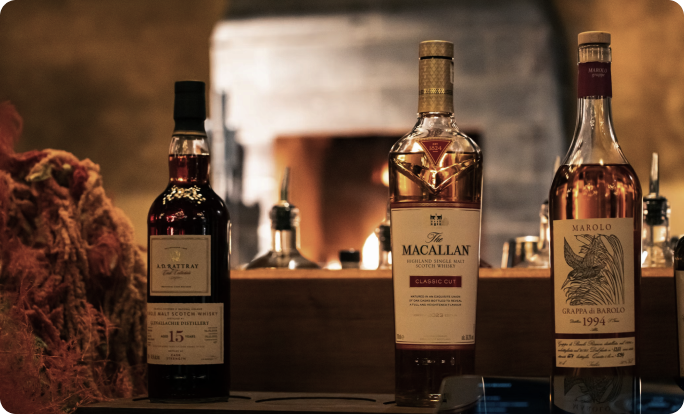
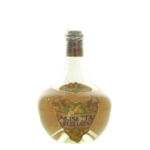
LF Whisky 1960s Bottling
75cl / 40% (OUT OF STOCK)

If you like this whisky, you will also like these
- Malt type: Blended
- Region: Italy
A highly rare 1960s blended Scotch, offering a glimpse into the superior malt content and character of post-war blending practices.
At-a-Glance
| Field | Details |
| Distillery / Bottler / Country & Region | LF Whisky (Likely Independent/Obscure Blender) / Scotland |
| Category | Blended Scotch Whisky |
| Age / Vintage / Bottled | NAS / Bottled 1960s |
| ABV & Size(s) | 40% ABV (Standard) / 75cl or 26 2/3 fl oz |
| Cask / Treatment | Not stated (High proportion of older malt components expected) |
| Natural Colour | Likely |
| Non-Chill-Filtered | Not stated |
| Cask Strength | No |
| Bottle count / Outturn | Not stated (Low survival rate) |
| Intended channel | Specialist vintage market, specialist auction |
| Packaging | Era-specific bottle shape and closure |
| Notes on discrepancies | Identity of the distiller/blender is highly obscure. |
Historical Context
The LF Whisky brand is exceptionally obscure, lacking association with any major corporate conglomerate. This suggests it was likely a long-discontinued export marque or a small, regional blend. Consequently, its historical significance does not derive from brand fame, but entirely from its vintage era.
The 1960s is widely considered a period of peak qualitative standard for standard blended Scotch whiskies. During this post-war era, blenders had access to substantial, long-aged reserves of high-quality malt and highly characterful grain whiskies. The common practice of the time was to incorporate a higher proportion of older, heavier single malt components compared to the lighter, high-volume blends that became common in subsequent decades. This ensures that a verified 1960s blend holds exceptional intrinsic quality.
The authentication of the 1960s vintage is a forensic exercise, relying on physical attributes of the bottle. Verification cues include the specific closure style, the paper stock of the labels, and, most importantly, the type and design of the duty stamps employed during that precise decade.
The confirmed 1960s vintage guarantees the component quality, transforming its obscurity into a niche selling point as an authenticated 'time capsule' experience.
Technical Specification & Variant Map
In the 1960s, the typical bottling strength for domestic Scotch was 40% ABV, though export markets often saw 43% (86 proof) versions. The composition, although not specified in terms of age, is expected to feature a high ratio of aged single malt. This rich malt backbone provides the complexity and depth.
Variant differentiation primarily relies on the market of origin, which dictated the volume measure (Imperial 26 2/3 fl oz versus metric 75cl) and the specific tax or duty strips applied.
Variant Matrix
| ABV | Volume | Market | Era cues | Relative desirability |
| 40% | 75cl (or equivalent) | Standard UK 1960s | Early 1960s label style, possible UK duty stamp | Medium-High (Condition dependent) |
| 43% (or 86 proof) | 75cl/4/5 quart | Export 1960s | Higher ABV, specific export label text | High (Higher strength vintage blend) |
Packaging & authenticity checklist
Authenticity verification is highly challenging for such a low-profile, vintage brand. The closure—which may be cork or an early screw cap—must be examined for any signs of tampering or leakage.
The presence of an original, intact duty stamp specific to the 1960s is considered the most robust verification of vintage and bottle integrity.
Fill level assessment is critical. Over 60 years, natural evaporation (ullage) is expected. However, a fill level falling below the mid-shoulder drastically reduces market confidence and value, often leading to a penalty of 40% or more.
Regulatory/terminology notes
The bottle conforms to the historical regulations governing Blended Scotch Whisky. Any volume or ABV measurements must be cross-referenced against the standards in use during the 1960s to confirm the dating. The expected 40% ABV was the common minimum standard strength at the time.
Liquid Profile (from verifiable notes)
The expected profile is a rich, complex reflection of high-quality post-war components.
Nose: Developed and weighty. Characteristic notes of very old distillate are expected, including polished oak, dried hay, waxy undertones, and a subtle, complex sherry funk.
Palate: Oily texture and medium-bodied, typical of pre-modern blending. The profile displays pronounced characteristics of dark honey and stone fruit, underscored by a distinct, weighty maltiness.
Finish: Long, warming, and structured, potentially showcasing mild smoke or peat characteristics inherent to the older malt components used.
With water: Not stated by the producer.
Distillery/Bottler Snapshot
While the identity of the LF bottler remains unknown, the inherent value is derived from the high standard of blending stock available across the industry during the 1960s. The quality of the components surpasses modern entry-level equivalents, regardless of the brand's name recognition.
Sourcing
Target formats/eras: Focus only on bottles with pristine closure integrity and clear visual cues dating them definitively to the 1960s.
Red flags to avoid: Fill levels below mid-shoulder, signs of rust, cap damage, or modern label materials.
Condition thresholds: An exceptional fill level (high shoulder or better) and intact original closure are non-negotiable prerequisites for achieving maximum market valuation.
Margin/velocity expectations: Extremely low velocity; high proportional margins are achievable only on authenticated, highest-condition examples.