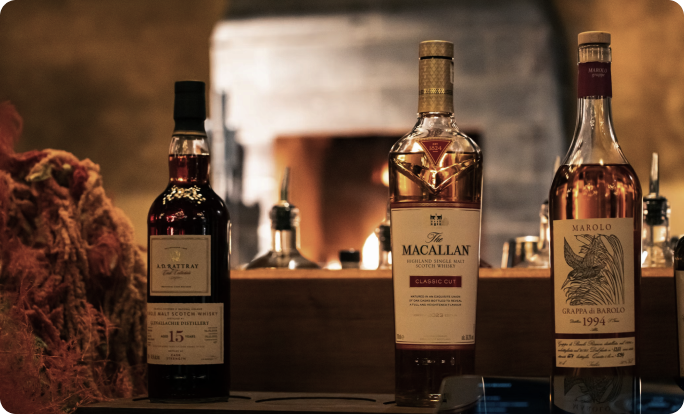
Long John Special Reserve (1970s Edition)
75.7cl / 70 Proof%

£99.00

- Malt type: Blended
- Region: Scotland
If you like this whisky, you will also like these
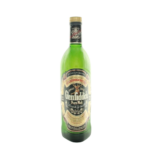
A true vestige of the 1970s blending industry, defined by guaranteed aged malt components from the Seagram empire.
At-a-Glance
| Field | Details |
| Distillery / Bottler / Country & Region | Blended Scotch Whisky. Bottled by Long John International Ltd., Glasgow. Scotland. |
| Category | Blended Scotch Whisky |
| Age / Vintage / Bottled | No Age Statement (NAS). Bottled circa 1970–1979. |
| ABV & Size(s) | 40% ABV. 75 cl (most common for UK/EU). |
| Cask / Treatment | Not stated by the producer. Components likely aged in refill ex-bourbon and various sherry casks. |
| Natural Colour | Not stated by the producer (likely E150a added, typical of Blends). |
| Non-Chill-Filtered | Not stated by the producer (likely chill-filtered, typical of high-volume Blends). |
| Cask Strength | No. Standard bottling strength. |
| Bottle count / Outturn | High Volume release; number of bottles not recorded. |
| Intended channel | Standard domestic retail and licensed premises. |
| Packaging | Clear glass bottle, usually with a screw cap (metal or plastic). Distinctive shield label design. |
| Notes on discrepancies | Must be verified as pre-barcode (pre-1980s). ABV may vary slightly by market (e.g., 43% for some US exports). |
Historical Context
The Long John brand was established in the early 20th century, positioned as a reliable, quality blend aiming for mass-market appeal while maintaining a reputation for consistent constituent quality. The pivotal period that defines the collectibility of the 1970s edition was the ownership of the brand by Seagram. This ownership provided unparalleled access to high-quality, aged malt stocks from some of Scotland’s most respected distilleries.
The Seagram corporate portfolio, during this era, included powerhouse malt distilleries such as Laphroaig and Tormore. Crucially, the Long John blends of the 1970s benefitted from the economic structure of that time, which guaranteed the inclusion of significant proportions of well-aged Laphroaig and Tormore malts. This guaranteed high-quality sourcing is the primary driver of current enthusiast demand, establishing the 1970s bottling as a notable period for the blend's specification, differentiating it significantly from later formulations. Following the dismantling of the Seagram empire and subsequent ownership transfers, the consistency and quality of the blend's components gradually diminished, confirming the 1970s era as a historical zenith for the blend's internal composition.
Technical Specification & Variant Map
The high value assigned to this specific iteration derives directly from its age and component sourcing. The blend prominently featured malt whisky from Laphroaig, Tormore, Balblair, Glenburgie, and Macduff. The inclusion of Laphroaig is particularly significant, as it imparts a signature light phenolic or medicinal quality that defined the 1970s expression, a characteristic largely absent in modern versions.
The epoch-defining specification of the standard 1970s bottling was 75cl volume and 40% ABV. Verification of this specific volume and alcoholic strength pairing is essential for ensuring the bottle is not a later 1980s or 1990s release. Following the introduction of metric standardisation, many bottlings transitioned to 70cl and sometimes 37.5% ABV, releases which are viewed as substantially less desirable by collectors.
Documented variants
Verified ABVs, sizes, markets, and packaging years include: 40% ABV, 75cl (UK/EU standard, 1970s); 43% ABV, 75cl or 1 Litre (various export markets, often US/Duty-Free); and 37.5% ABV, 70cl (Post-1990s EU standardization), which is generally deemed undesirable.
Variant Matrix
| ABV | Volume | Market | Era cues | Relative desirability |
| 40% | 75 cl | UK/Europe | Pre-barcode, specific paper label, metal cap | High (Target bottling) |
| 43% | 75 cl | Export/US | Clear paper label variants, sometimes different cap | Medium-High |
| 37.5% | 70 cl | EU | Barcoded, modern volume standard | Low (Avoid) |
Packaging & authenticity checklist
Authenticity relies heavily on visual cues corresponding to the non-metric, pre-barcode era. The absence of a barcode is the primary 1970s visual identifier on the label. Labels must confirm the bottling entity as "Long John International Ltd., Glasgow." Verification should also extend to checking for UK duty strips or customs markings that are consistent with the era of production.
1970s versions commonly feature a metal or plastic screw cap beneath a foil capsule. For this product, the integrity of the capsule seal is crucial. Due to the high liquidity and relatively lower hammer prices of this blend compared to single malts, the risk is often less about sophisticated forensic fraud and more about commonplace refilling. A major red flag includes any bottle exhibiting clear signs of seal tampering, incorrect fill level relative to the capsule/cork, or suspicious sediment.
Regulatory/terminology notes
The term "Blended Scotch Whisky" requires a minimum age of three years. However, the collectibility and desirability of this specific 1970s iteration is underpinned by the verifiable assumption of significantly older components (Laphroaig/Tormore) dictated by the economic structure and stock availability during the Seagram ownership period.
Liquid Profile (from verifiable notes)
The liquid profile reflects the quality of its historical components, particularly the Islay malt contribution.
Nose: Soft, creamy malt base with notes of vanilla and shortbread. There is a subtle, light medicinal or phenolic smokiness present, a characteristic directly attributed to the inclusion of Laphroaig.
Palate: Medium body and structure. The initial taste is smooth and approachable, featuring balanced notes of sweet grain, honeyed oak, mild spice, and the background hint of delicate peat smoke.
Finish: Short to medium, clean, slightly drying with lingering vanilla and wood spice.
With water: Dilution is generally not applicable or recommended for this specification, as the ABV is already at the standard bottling strength of 40%.
Distillery/Bottler Snapshot
Long John International, particularly under the tenure of Seagram ownership in the 1970s, represented an era of high-standard, industrial-scale blending quality. The key attribute for current buyers is the knowledge that this era’s formulation benefits directly from high-quality, aged malt component sourcing, particularly Laphroaig and Tormore, positioning it as a verifiable exemplar of pre-modern-era blend standards.
Sourcing
The sourcing strategy for this blend should prioritize technical verification over presentation aesthetics. The focus must exclusively be on 75cl, 40% ABV bottlings featuring the 1970s shield label and, crucially, lacking a barcode. Red flags to avoid include bottles exhibiting signs of refilling, such as mismatched capsule components or suspicious sediment. Specifically, stock sold with a genuinely low fill level (VLS, low shoulder) should be flagged, as the low hammer price often reduces the viability of justified high-end sourcing margin. Condition thresholds mandate a minimum of High Shoulder (HS) or Very High Fill (VHF) level for viable inventory. Label condition tolerance can be moderate, given its volume market status. Due to the low price point and high demand for accessible vintage drinking whisky, the velocity is high. A target margin of 50–100% is achievable due to the aggressive retail pricing above auction hammer prices.