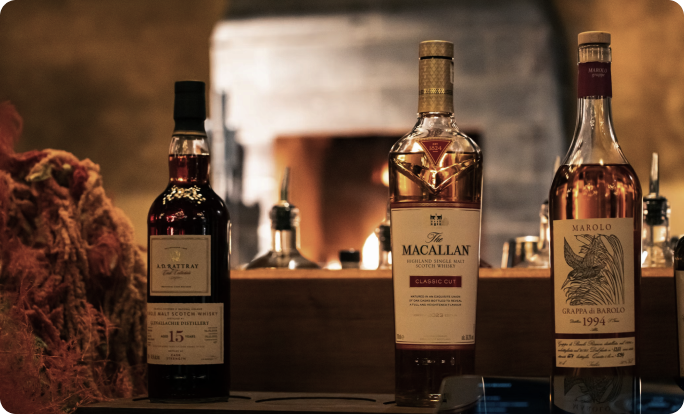
Whyte & Mackay Short Eared Owl 1980s
20cl / 40%
£79.00

- Malt type: Blended
- Region: Scotland
- Chilfiltered: No
- Coloring: No
If you like this whisky, you will also like these
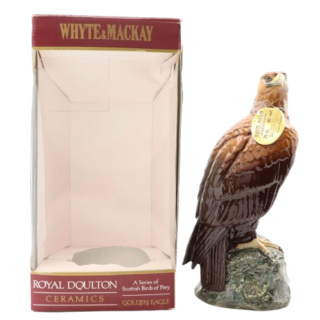
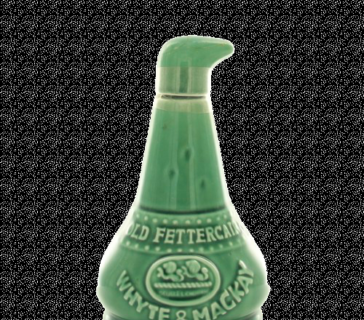
A highly collectible ceramic decanter from the Royal Doulton Scottish Owls series, bottled in the 1980s.
At-a-Glance
| Field | Details |
| Distillery / Bottler / Country & Region | Whyte & Mackay / Scotland, All Regions (Blended) |
| Category | Blended Scotch Whisky (Decanter Series) |
| Age / Vintage / Bottled | No Age Statement (NAS) / Bottled c. 1980s |
| ABV & Size(s) | 40% ABV / 20cl |
| Cask / Treatment | Blended (Likely Ex-Bourbon and Sherry components) |
| Natural Colour | Not stated by the producer (Likely E150a) |
| Non-Chill-Filtered | Not stated by the producer (Likely Chill Filtered) |
| Cask Strength | No |
| Bottle count / Outturn | Collectible series (Outturn Not Stated by the producer) |
| Intended channel | Gift/Collectibles Market |
| Packaging | Royal Doulton Ceramic Decanter (Short Eared Owl model) |
| Notes on discrepancies | Some versions were produced by Peter Thompson Ltd. (1979 design), while the Royal Doulton association dates the decanter series to 1984. |
Historical Context
Whyte & Mackay, a long-established Scottish company founded in 1844 in Glasgow, is renowned for its blended Scotch whiskies. During the 1970s and 1980s, the company engaged heavily in the collector market by releasing various themed ceramic decanter series, a common practice among blenders to add perceived value and exclusivity to standard blends. The Short Eared Owl is a component of the popular Scottish Owls series.
The design itself has a complex origin: while the series is often attributed to Royal Doulton, with specific models produced in 1984, other sources indicate the design was modelled by D Lyttleton in 1979 and produced by Peter Thompson Ltd.. Regardless of the specific ceramic maker for an individual lot, the spirit was bottled by Whyte & Mackay, and the decanters are highly characteristic of the era's collectible blending strategy. Furthermore, variants of this series were sometimes branded as 'Beneagles,' a subsidiary blend name owned by Whyte & Mackay, further reflecting the bottler's diverse marketing approach.
Technical Specification & Variant Map
The Short Eared Owl decanter is intended primarily as a collectible item, containing a small volume of 20cl of blended Scotch whisky. The bottling strength is the standard 40% ABV, typical for commercial blended Scotch products of the 1980s. Given the age and opacity of the container, technical specifications regarding filtration and colouring are difficult to verify definitively, but it is standard practice for 1980s blends to be chill-filtered and contain E150a caramel colouring, details which are Not stated by the producer.
A key element in assessing the technical integrity of this specific format is the established weight of the ceramic itself. The empty decanter weighs approximately 440g. This physical metric is crucial because the opaque nature of the ceramic decanter prevents visual inspection of the fill level. Consequently, buyers must rely on the total weight (approximately 640g for a full bottle, including packaging allowance) to estimate the degree of evaporation or leakage over the intervening decades. Significant evaporation poses a high risk to the liquid's quality.
Documented variants
The main documented variants for the Short Eared Owl are based on external manufacturing and branding: 20cl at 40% ABV is standard. Variants include those explicitly marked as Royal Doulton or Peter Thompson Ltd., and those carrying the ‘Beneagles’ brand name.
Variant Matrix
| ABV | Volume | Market | Era cues | Relative desirability |
| 40% | 20cl | Global (Collectibles) | Royal Doulton/Beneagles marking, 1980s date | High (Condition and Decanter integrity are paramount) |
Packaging & authenticity checklist
Authentication relies heavily on confirming the integrity of the ceramic itself. Essential checks include verifying the presence and security of the stopper, examining the ceramic surface for cracks, chips, or fine spiderweb crazing, and ensuring the markings (Royal Doulton or Peter Thompson/1979 design) are present and legible on the base. The closure, typically a cork under the stopper, is vulnerable to drying out and shrinking, increasing the risk of leakage and evaporation.
Because the fill level is not visible, the most reliable verification method beyond seller assurances is comparing the measured weight to the expected full weight, compensating for any known packaging. Auction houses typically note that the condition of old corks and closures cannot be guaranteed against leakage during transit, a risk compounded by the fragile nature of the ceramic container.
Regulatory/terminology notes
The decanter's status as an aged collectible means that issues related to sediment precipitation are possible, as with any older bottling. The high fragility of ceramic decanters in transit necessitates careful consideration; the collectible value often outweighs the liquid value, yet severe liquid loss negates both.
Liquid Profile (from verifiable notes)
The 40% ABV blended Scotch within the decanter is intended to represent Whyte & Mackay's characteristic profile of the 1980s. As the product’s appeal is almost exclusively aesthetic and historical, documented tasting notes for this specific 20cl blend are not prominent, and the flavour profile is often secondary to the condition of the ceramic container.
Distillery/Bottler Snapshot
Whyte & Mackay is a blended Scotch producer based in Glasgow, with large inventories of malt and grain whiskies used in their eponymous blend. The company is now owned by Philippines-based interests. During the era of this decanter bottling, the focus was on delivering a robust, approachable blended profile, with the packaging serving as the key differentiator for the collector market.
Sourcing
Target formats/eras to prefer: Decanters that have been verified by the seller or auctioneer to possess a high liquid fill level, ideally still sealed in original packaging. The premium is applied to full sets or immaculately preserved singles.
Red flags to avoid: Ceramic flaws such as crazing or chipping; decanters showing significant weight loss, indicating extensive evaporation or leakage.
Condition thresholds (fill/box/labels): Fill level confirmation (often via weight check) is the single most important factor. Original box presence significantly enhances value.
Margin/velocity expectations - qualitative: Margin potential is high for stock with verifiable integrity; velocity is generally slow, reflecting specialised collector demand.