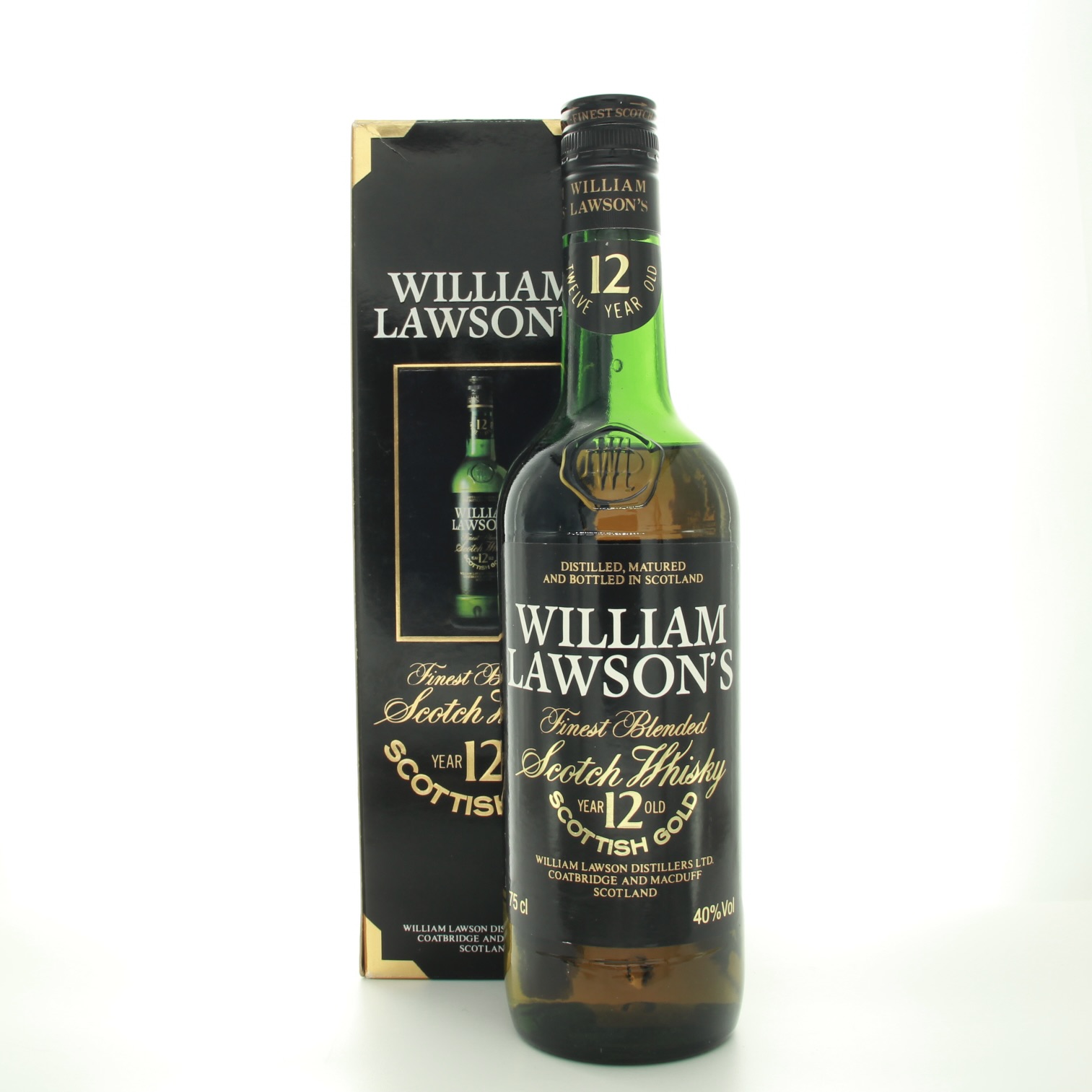
William Lawsons 12 Year Old Scottish Gold
75cl / 40%
£59.00

- Malt type: Blended
- Region: Scotland
If you like this whisky, you will also like these

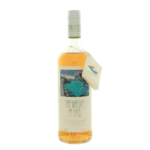

This vintage 12-year-old blended Scotch, rooted in Highland malt, epitomised value and approachability across global markets in the 1980s.
At-a-Glance
| Field | Details |
| Distillery / Bottler / Country & Region | Original Bottling / William Lawson Distillers Ltd. / Scotland, Blended Scotch |
| Category | Blended Scotch Whisky |
| Age / Vintage / Bottled | 12 Years Old / Produced primarily late 1980s-1990s |
| ABV & Size(s) | 40% ABV (Standard) / Typically 70cl, 75cl, 750ml |
| Cask / Treatment | Not stated by the producer. Typical blending casks (ex-bourbon and refill sherry). |
| Natural Colour | Not stated by the producer. Highly likely coloured (E150a). |
| Non-Chill-Filtered | Not stated by the producer. Highly likely chill-filtered. |
| Cask Strength | No |
| Bottle count / Outturn | Not stated by the producer (High volume commercial release) |
| Intended channel | Global mass-market retail, highly successful in European markets |
| Packaging | Clear glass bottle, often with foil capsule and minimalist label design. |
Notes on discrepancies: While the brand uses Macduff malt, the key malt component is marketed as Glen Deveron.
Historical Context
The William Lawson's brand traces its origins to a blending company founded in Dundee in 1849 by William Lawson himself. Although Lawson's original enterprise did not achieve lasting success, the name and reputation were revived following the Second World War as the designation for a blending and export operation based in Liverpool. By 1967, the successful, eponymous company relocated to Coatbridge, Scotland, firmly establishing its modern production base.
The 12 Year Old Scottish Gold expression gained significant prominence during the 1980s, capitalising on its approachable flavour profile and competitive value proposition. This period marked a crucial acceleration in the brand's growth, especially within the European market. During this decade, William Lawson's solidified its position as one of the fastest-growing blended Scotch whisky brands globally, largely due to effective marketing and widespread accessibility.
A vital element in the blend's distinct profile is the consistent sourcing of its malt component. The core malt is derived from Macduff Distillery, situated in the Highlands. This single malt is often bottled and sold under the name Glen Deveron. The reliance on Glen Deveron provides the Scottish Gold blend with a solid Highland backbone, differentiating it from competitor blends that often rely on lighter, less characterful grain and malt whiskies. The brand is currently held under the ownership of Bacardi.
Technical Specification & Variant Map
This bottling is classified as a premium, age-stated Blended Scotch Whisky. By regulation, every component spirit—both the malt whiskies and the grain whiskies—must have been matured in oak casks for a minimum of 12 years. The standard bottling strength for this era and product category is 40% alcohol by volume (ABV).
While the exact ratio of malt to grain content is a proprietary formulation, historical notes suggest that the distinct, approachable profile of Scottish Gold implied a higher proportion of quality malt whisky relative to the non-age-statement blends prevalent during the same period. The blend relies on standard practices typical of high-volume commercial production; therefore, the use of E150a spirit caramel for colour uniformity and chill-filtration for clarity at lower temperatures are highly likely, although these specifics are "Not stated by the producer."
Documented variants
The primary variations observed in the secondary market relate to volume changes mandated by differing global export standards. The standard UK/European volume is 70cl at 40% ABV. Older bottlings, particularly those destined for US and older international markets, are commonly found in 75cl or 750ml sizes at 40% ABV. Differentiation between production batches generally relies on subtle label iterations, the presence of specific export stamps, or taxation seals, which act as crucial indicators for dating the precise vintage of the bottling.
Variant Matrix
| ABV | Volume | Market | Era cues | Relative desirability |
| 40% | 70cl | UK/EU (Modern) | Standard bar-code label | Low (Modern standard) |
| 40% | 75cl/750ml | International/Vintage | Older foil/paper labels, duty stamps | Moderate (Nostalgic value, higher fill expectation) |
Packaging & authenticity checklist
Authenticating and valuing vintage Scottish Gold relies on careful inspection of the physical components. Collectors should look for vintage cues such as older typography and, occasionally, label text referencing imperial measurements. Fill levels are paramount for secondary market interest. Because blended whiskies of this nature carry a low hammer price, bottles with exceptionally low fills or significant label degradation offer minimal utility beyond consumption. A fill level of Base of Neck (BON) is considered the minimum acceptable standard.
The risk of outright counterfeiting is extremely low due to the product’s commercial price point. The primary risk to the liquid’s quality is oxidisation, typically resulting from long-term storage under suboptimal conditions or compromised cork integrity. Auction records frequently confirm that minor cosmetic damage to the outer packaging or box is common for surviving vintage examples.
Regulatory/terminology notes
The descriptor "Finest Blended Scotch Whisky" confirms the liquid is a composite of various mature grain and malt whiskies. For bottles of this age and commercial intent, and bottled at the Minimum Bottling Strength (MBS) of 40% ABV, it is generally assumed that the spirit has been chill-filtered to prevent clouding when served cold. The status regarding Natural Colour is "Not stated by the producer," but colouring agent E150a is often used in high-volume blends to ensure batch consistency.
Liquid Profile (from verifiable notes)
The flavour profile of William Lawson's 12 Year Old Scottish Gold is complex for a standard blend, reflecting its emphasis on quality Highland malt.
Nose: The aroma is defined by prominent malty cereal notes, frequently complemented by sweet vanilla undertones and definite tropical fruit aromas. The overall impression is one of sweetness and richness.
Palate: The taste echoes the nose with a distinct malty cereal sweetness, rich vanilla, and a clear tropical fruit core. This accessible sweetness is subsequently balanced by more complex counter-notes: subtle nuances of buttery tar, wood spice, and smoked currants. This sophisticated interplay between sweet malt, fruit, and restrained smoke is indicative of a quality blend of that era.
Finish: The conclusion is medium in length, maintaining the dominant notes of cereal and vanilla. The finish smoothly transitions to tar and concludes with definite warmth derived from cinnamon and nutmeg spice.
With water: Detailed tasting notes regarding the addition of water are "Not stated by the producer."
Pricing & Market Dynamics (GBP)
The William Lawson's 12 Year Old occupies a position in the secondary market defined by high volume and lower collector scarcity.
Original RRP (GBP): Historical pricing information suggests an original retail price equivalent to £59.00 for a vintage bottle.
Current UK retail range (GBP, incl. VAT): Specialist vintage listings typically place the price between £45.00 and £60.00.
Recent UK/EU auction range (GBP, hammer): Prices are consistently at the entry level of the collectible market, signifying low scarcity value but demonstrating the baseline value of the 12-year age statement. Specific hammer prices recorded include £16.00 for a bottle with a base of neck fill level, and a separate auction result confirming a winning bid of £20.00.
Pricing stratification: Value is predominantly driven by nostalgia and fill level, with volume or label variation offering only negligible stratification.
Liquidity & sourcing note: Availability is moderate, reflecting its high commercial production volume in the 1980s. Liquidity is low among serious collectors but moderate for buyers seeking a straightforward, good-value vintage daily dram.
Price Snapshot
| Channel | Date | Bottle spec | Price (GBP) | Notes |
| Auction (Hammer) | Not specified | 70cl/40% (Base of neck fill) | £16.00 | Sold online auction |
| Auction (Hammer) | Not specified | 12 Years Old - Scottish Gold | £20.00 | VAT applied to hammer price |
| Retail (Vintage Listing) | Current | 70cl/40% | £59.00 | Specialist vintage retailer |
Distillery/Bottler Snapshot
William Lawson Distillers maintains a commercial focus on delivering accessible blended Scotch. Its strategy is centred on utilising the reliable and consistent spirit from Macduff Distillery, often marketed as Glen Deveron. Macduff produces a spirit that is generally light, fruity, and highly approachable, which is crucial for achieving the Scottish Gold blend's smooth and uncomplicated character that was essential for its widespread commercial triumph in global markets.
Sourcing
Target formats/eras to prefer: Preference should be given to 75cl or 750ml bottles from the late 1980s or early 1990s that exhibit verifiable high fill levels. These formats often indicate early export runs and superior presentation.
Red flags to avoid: Collectors should actively avoid bottles falling below the mid-shoulder fill level. Given the low secondary market valuation, the risk of significant quality degradation from poor seals or oxidisation makes such acquisitions economically inefficient.
Condition thresholds (fill/box/labels): The minimum acceptable fill level is Base of Neck (BON). While the box is a minor value additive, its integrity should be assessed for complete collector value.
Margin/velocity expectations — qualitative: The product offers high velocity due to its low acquisition cost in the secondary market. However, profit margins for high-end resellers remain marginal.