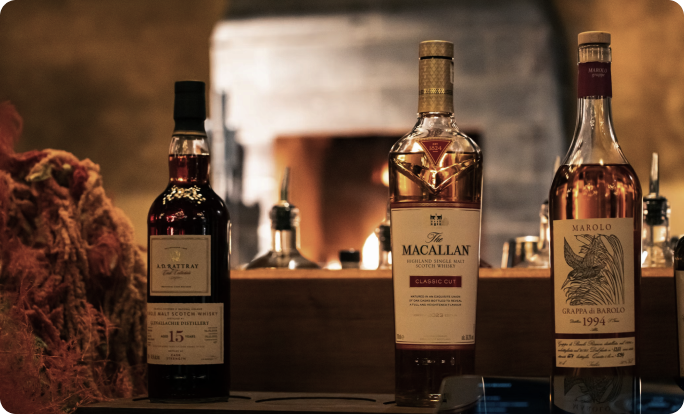
Robbie Dhu 12 Year Old
70cl / 43%
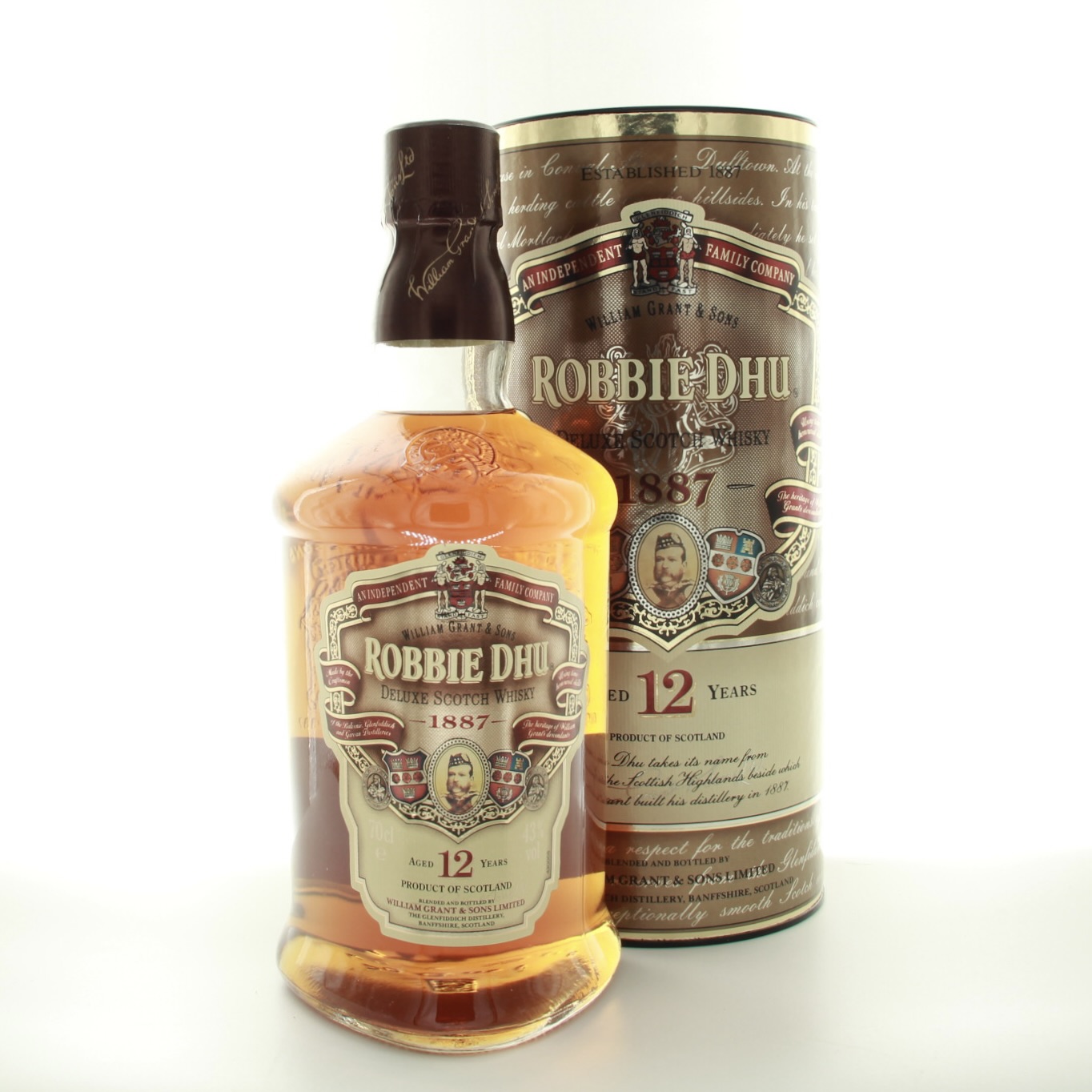
£69.00
- Malt type: Blended
- Region: Speyside
If you like this whisky, you will also like these
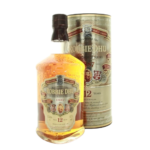
A functional 12-year-old blended Scotch, carrying geographical links to Speyside malt production history.
At-a-Glance
Robbie Dhu 12 Year Old is classified as a Blended Scotch Whisky with a guaranteed age statement. The whisky was bottled during the era spanning the late 1990s through the early 2000s.
| Field | Details |
| Distillery / Bottler / Country & Region | Unstated / Likely Private Label Bottler / Scotland, Blend |
| Category | Blended Scotch Whisky (Age Statement) |
| Age / Vintage / Bottled | 12 Years / Not stated / Late 1990s - Early 2000s |
| ABV & Size(s) | 40% ABV / 70cl (modern) or 75cl (earlier/export) |
| Cask / Treatment | Likely high proportion of refill Bourbon and Grain whisky |
| Natural Colour | Not stated by the producer (Assumed E150a added) |
| Non-Chill-Filtered | Not stated by the producer (Assumed Chill-Filtered) |
| Cask Strength | No |
| Bottle count / Outturn | High Volume (Intended for mass-market retail) |
| Intended channel | Supermarket/Budget Retail Chains |
| Packaging | Simple, mid-height bottle, typically screw cap |
| Notes on discrepancies | Specific bottler details are often elusive. Volume sizes are the clearest identifier of bottling era (75cl being older/export standard). |
Historical Context
The Robbie Dhu 12 Year Old served a clear commercial purpose: delivering a guaranteed 12-year age statement at an accessible price point for the mass market. Its positioning contrasts sharply with luxury single malts, focusing instead on utility and affordability.
The most intriguing historical element is the product's nomenclature. The name 'Robbie Dhu' specifically references the Dhu River, a geographic feature located near Glenrothes Distillery. While the exact composition of the blend remains commercially confidential, this reference suggests a plausible inclusion of malt components sourced from the Speyside region, providing the blend with a minor, if unverified, lineage connection. The ambiguity regarding the definitive bottler reflects its design as a high-volume, low-margin product, possibly handled by various contractors or used as a private supermarket label.
Technical Specification & Variant Map
Technical specifications align with value-focused blended whisky production. The liquid is bottled at 40% ABV, the minimum legal threshold for Scotch Whisky. The overall composition is typical of the segment, involving a significant proportion of column-distilled grain whisky blended with aged malt components.
For sourcing and historical assessment, the variability in volume size (70cl versus 75cl) is the most critical technical marker. Bottles bearing the 75cl designation typically represent stock bottled prior to the EU standardization shift in the early 1990s or those specifically intended for pre-metric export markets. The 75cl format inherently carries a higher nostalgic and historical value among collectors seeking older, less common expressions of the blend.
Documented variants
The most significant distinction between documented variants is the volume, which serves as a proxy for the bottling period and original intended market.
Variant Matrix
| ABV | Volume | Market | Era cues | Relative desirability |
| 40% | 75cl | Pre-2000 UK/Export | Metal Screw Cap; Older label designs | Medium (Nostalgia value; older stock potential) |
| 40% | 70cl | Post-2000 UK/EU | Standard screw cap | Low (High volume, functional packaging) |
Packaging & authenticity checklist
The packaging is inherently functional. The closure is typically a simple metal screw cap. The primary physical risk and red flag for potential buyers is the condition of this cap. Rust or corrosion on the screw cap signals potential seal failure and subsequent liquid degradation over time. Labels are generally mass-printed and simple, requiring verification only to ensure the clear presence of the 12 Year Old age statement.
Due to the low original RRP, Robbie Dhu bottles were frequently stored improperly, making liquid verification essential. The critical condition threshold for any secondary market transaction is the ullage level; any level below mid-shoulder significantly degrades the minimal collector value.
Regulatory/terminology notes
As a Blended Scotch Whisky with an age statement, the claim that the youngest component of the blend is 12 years old is a legally guaranteed statement. Although the producer does not explicitly state NCF or Natural Colour status, the market expectation for blends of this category and price point is the inclusion of E150a caramel colouring and the use of chill filtration.
Liquid Profile (from verifiable notes)
The flavour profile of the Robbie Dhu 12 Year Old is characteristic of functional blends, prioritising drinkability.
Nose: The aroma is light and heavily cereal-forward, accompanied by faint malt and basic fruit esters, typical of a blend containing a high proportion of grain whisky.
Palate: The texture is notably thin. An initial flash of sweetness dissipates quickly, giving way to the heat of the alcohol and the dominant flavour of the underlying grain component.
Finish: The conclusion is short and clean, primarily delivering alcoholic warmth.
With water: Adding water is generally not recommended.
Distillery/Bottler Snapshot
Robbie Dhu 12 Year Old is best viewed as a secondary market artifact, chiefly of interest to niche collectors and historical consumers. Its defining narrative is the unverified, yet plausible, geographical connection to Speyside sourcing via the Dhu River near Glenrothes.
Sourcing
Sourcing efforts should prioritize the 75cl volume format for the highest value potential. Critical red flags to avoid include any signs of cap corrosion or low fill levels. The condition thresholds require a pristine label, an intact, rust-free cap, and the liquid level must remain above the mid-shoulder. Velocity for this product is low. Although the absolute monetary margin is low, a high percentage margin can be achieved over the minimal acquisition cost.