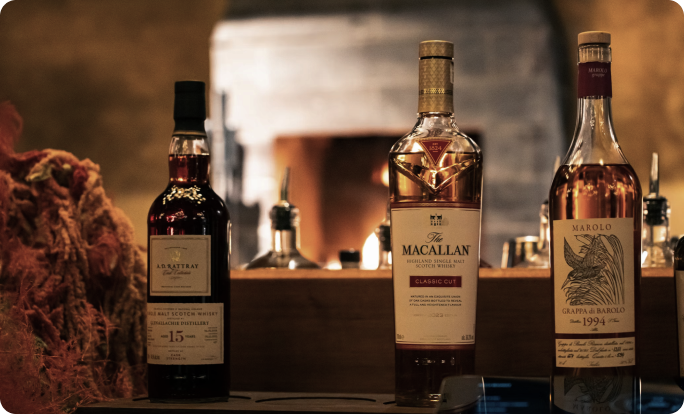
Seagram’s – Five Star – Rye Whisky
75cl / 40%
£149.00

- Malt type: Rye
- Region: Canada
If you like this whisky, you will also like these
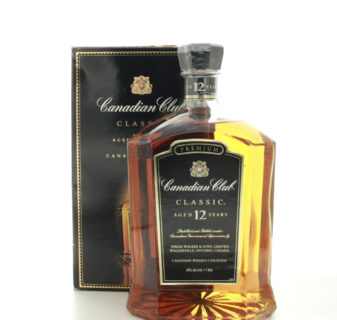
A highly sought-after vintage expression of Canada's definitive blended rye tradition, distilled before the corporate restructuring.
| Field | Details |
| Distillery / Bottler / Country & Region | The Seagram Company / Seagram's / Canada & Ontario/Quebec (Historical) |
| Category | Canadian Rye Whisky (Blended Canadian Whisky) |
| Age / Vintage / Bottled | No Age Statement on label; Distilled 1988 (for this variant) / Bottling date implied post-1991 |
| ABV & Size(s) | 40% ABV / 75cl (Historical standard) |
| Cask / Treatment | Aged in "small wood vessels" (under 700 litres), likely used American oak (Regulatory standard) |
| Natural Colour | Caramel permitted (Regulatory standard) |
| Non-Chill-Filtered | Not stated by the producer; likely chill-filtered to maintain clarity at 40% ABV |
| Cask Strength | No |
| Bottle count / Outturn | Not stated by the producer; historically high volume |
| Intended channel | Mass-market retail; Vintage expression now collector channel |
| Packaging | Standard glass bottle with label variation based on vintage/market |
| Notes on discrepancies | The 1988 distillation variant commands an approximate 800% premium (£150.00) over the NAS modern liquid (£14.22), necessitating its treatment as a distinct, premium collectible entity. |
Historical Context
The Seagram Company, once a corporate behemoth under Samuel Bronfman, was historically the largest global distiller. This 1988 distillation date holds critical significance as it places the spirit squarely within the era predating the company's dissolution, which commenced around 2000. Whiskies produced and aged before this major corporate consolidation are valued for their adherence to original blending recipes and access to older, proprietary blending stocks, which differ significantly from post-acquisition formulations. The ‘Five Star’ expression was established as a dependable, classic Canadian blend.
Technical Specification & Variant Map
The Seagram's Five Star expression is consistently bottled at the regulatory minimum of 40% ABV. For collectors, the definitive technical variant is the specific vintage documentation, such as the verified 1988 distillation year.
| ABV | Volume | Market | Era cues | Relative desirability |
| 40% | 75cl | Collector/Vintage | Distilled 1988, potentially older label styles | High (Due to historical scarcity and vintage premium) |
| 40% | 750ml/1L | Standard/Current | Modern branding, plastic closures | Low (Standard mixing grade) |
| 40% | 1.14L | Canadian Retail | Modern branding, large format | Low (Volume consumption) |
Packaging & authenticity checklist
Vintage bottlings from the 1980s or earlier often display era-specific packaging, potentially including US tax stamps or unique import labels. Authentication requires careful inspection of the closure mechanism, label condition, and fill level. For a whisky aged over 30 years, slight low-fill levels (ullage) are anticipated, though high shoulder (HS) or better is preferred.
Regulatory/terminology notes
Under Canadian law, "Canadian Rye Whisky" and "Rye Whisky" are legally interchangeable designations, regardless of the actual percentage of rye grain used in the mash bill.1 The product must be mashed, distilled, and aged entirely in Canada for a minimum of three years in "small wood vessels" and bottled at no less than 40% ABV. The "Rye" label signifies a traditional Canadian flavour profile where rye spirit is blended in for character, resulting in the typically lighter and smoother Canadian style.
Liquid Profile (from verifiable notes)
The tasting profile is characteristically smooth and accessible, designed for widespread appeal.
- Nose: Light and approachable, with pronounced notes of vanilla, caramel, and oak.2 Subtle complements of spice and cocoa dustings.
- Palate: Smooth and mellow. Core flavours include toffee, sweet grain characteristics, and a gentle rye spice. The mid-palate can be relatively hollow, finishing with a mild, anise-like, fruity cereal element.
- Finish: Clean and lightly warming. Resolves quickly, leaving a soft spice, vanilla, and a distinctly dry, spicy rye aftertaste.
- With water: Not recommended due to the low bottling strength (40% ABV), which risks over-diluting the spirit.
Distillery/Bottler Snapshot
Seagram’s historically defined Canadian whisky's commercial success, known for its lightness and smoothness.3 The significance of a vintage bottle is its tangible link to this powerful corporate history, preceding the brand's eventual division among several modern global spirits conglomerates.
Sourcing
- Target formats/eras: Priority should be given to bottles explicitly labelled with a distillation year (e.g., 'Distilled 1988') or older 75cl formats with verifiable historical tax stamps.
- Red flags to avoid: Contemporary lightweight glass, plastic closures, or modernised labels lacking specific vintage documentation.
- Condition thresholds: A fill level of mid-shoulder (IMS) to high shoulder (HS) is considered acceptable. Pristine label and capsule condition are required to justify the existing collector premium.
- Margin/velocity expectations: Low velocity, driven by niche collector demand for historical provenance. High margins are possible if sourced below the established secondary market price threshold.