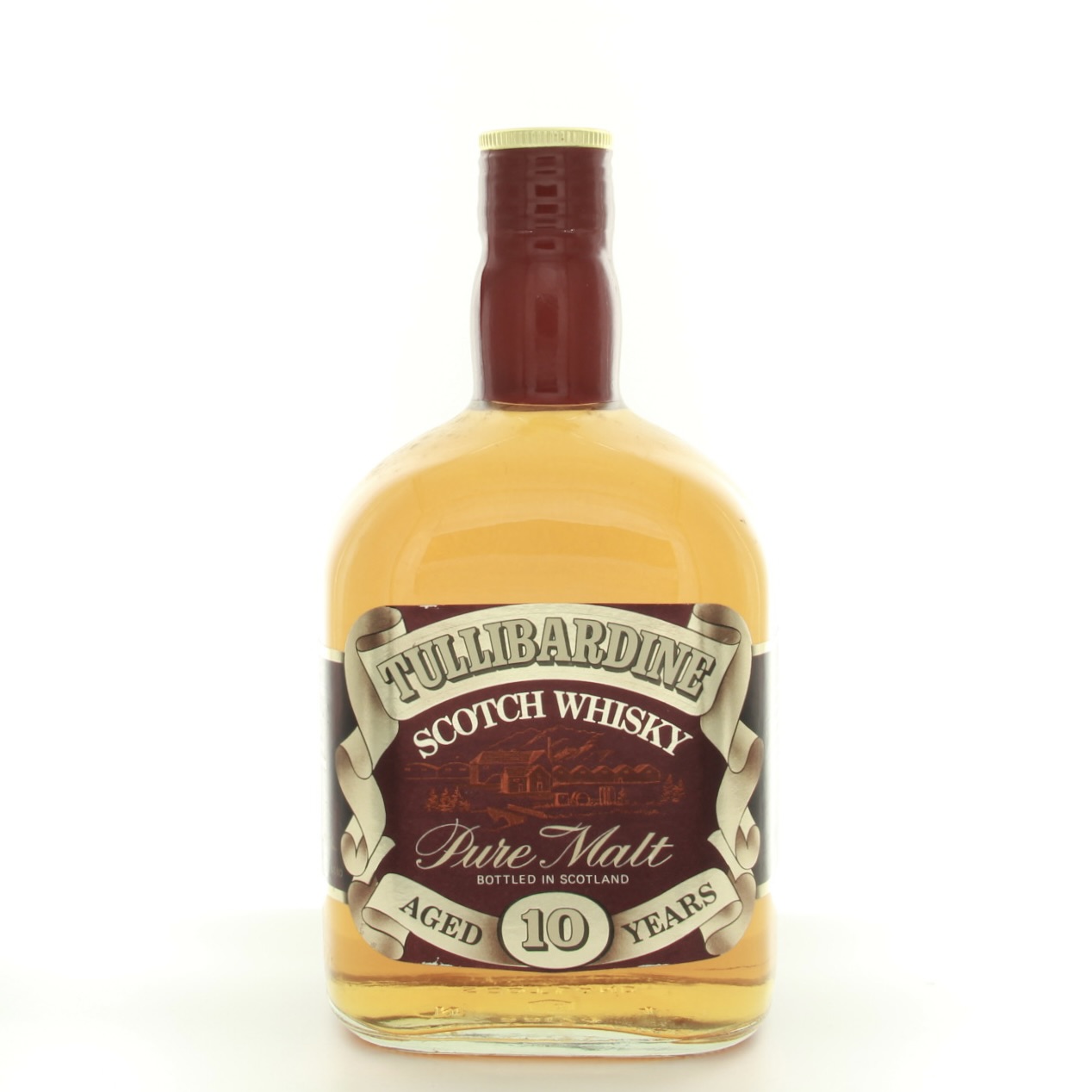
Tullibardine 10 Year Old Pure Malt (1980s Edition)
75cl / 40%
£99.00

- Malt type: Single Malt
- Region: Scotland
- Coloring: Yes
If you like this whisky, you will also like these
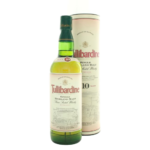
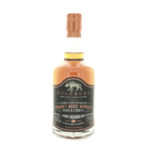
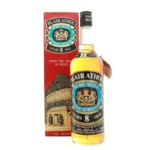
This bottle captures the soft, cereal-driven Highland style of Tullibardine before its 1993 closure and subsequent remodernisation.
At-a-Glance
| Field | Details |
| Distillery / Bottler / Country & Region | Tullibardine Distillery / Distillery Bottling / Scotland, Highland |
| Category | Single Malt Scotch Whisky (labelled Pure Malt) |
| Age / Vintage / Bottled | 10 Years Old / Not Vintage Specific / Circa 1980s |
| ABV & Size(s) | 40.0% ABV / 75cl (also 70cl and 50ml miniature variants) |
| Cask / Treatment | Not stated by the producer (likely standard refill ex-bourbon) |
| Natural Colour | Not stated by the producer |
| Non-Chill-Filtered | Not stated by the producer (likely filtered at 40.0% ABV) |
| Cask Strength | No (40.0% ABV) |
| Bottle count / Outturn | Not applicable (Core Line Release) |
| Intended channel | Retail/Export (notably Italy) |
| Packaging | Dumpy-style bottle, front/back label set |
| Notes on discrepancies | 75cl was a standard export size for this era; 70cl also seen in later 1980s/early 1990s releases. |
Historical Context
This bottling represents a snapshot of Tullibardine’s production prior to a significant hiatus in the distillery’s history. The facility lay silent between 1993 and 2003.1 The spirit contained within this 1980s release was produced and bottled during the era preceding this extensive closure.
The liquid thus carries a premium derived from historical scarcity. This pre-closure liquid is therefore considered non-replicable, appealing to collectors who value historical authenticity and a spirit profile defined by older industry practices.
The commercial positioning of the 1980s bottling focused heavily on export markets. This is exemplified by the common 75cl volume, a size frequently favoured in the United States and older European export regions. Evidence suggests this particular expression was specifically marketed in Italy, which accounts for the prevalence of the 75cl format in current secondary markets.
Technical Specification & Variant Map
The technical data confirms this expression was reduced to the standard minimum bottling strength of the time, 40.0% ABV. This strength was typical for mass-market core releases in the 1980s.
The bottling series is referred to as "Pure Malt." In the context of 1980s Scotch whisky, the ‘Pure Malt’ designation indicated that the contents were 100% malted barley. Since this is a distillery bottling, it is functionally equivalent to the modern regulatory term, Single Malt Scotch Whisky. The term ‘Pure Malt’ became obsolete after regulatory changes in 2005.
The primary format of the 1980s release is the 75cl bottle.2 However, there is verification of other volumes, including 70cl bottles, likely representing later 1980s or early 1990s production runs, and 50ml miniatures, which are highly sought after by collectors aiming for a complete variant set.
Variant Matrix
| ABV | Volume | Market | Era cues | Relative desirability |
| 40.0% | 75cl | Export (e.g., Italy, US) | Dumpy bottle style, Pure Malt designation | High (Classic format) |
| 40.0% | 70cl | UK/EU (Late 80s/Early 90s) | Dumpy bottle style, Pure Malt designation | Moderate (Less common in this specific era) |
| 40.0% | 50ml | Varies | Pure Malt designation, often sold alongside larger bottle | High (Rarity/Set completeness) |
Packaging & authenticity checklist
The primary visual identifier for authentic 1980s Tullibardine is the short, rounded, ‘dumpy’ bottle design. The label must clearly display the ‘Pure Malt’ designation alongside the 10-year age statement. Confirmation of specific duty or import stickers, such as Italian import markers, can strongly reinforce provenance.
Due to the age of the liquid, the condition threshold for acquisition is stringent. Premium pricing is reserved for bottles maintaining a fill level of High Shoulder (HS) or above. The closure mechanism, often a simple screw cap for this era, requires careful inspection. Lower fill levels are considered significant detractions in value.
Regulatory/terminology notes
The "Pure Malt" term is historically important but obsolete, confirming the product's Single Malt nature. Standard industry practice in the 1980s dictated that core line releases reduced to 40.0% ABV were invariably chill-filtered to prevent hazing or clouding.
Liquid Profile (from verifiable notes)
The tasting profile is indicative of a classic, light, cereal-driven Highland style, suggesting minimal intrusion from active wood. The colour is generally described as a rich golden hue.
Nose: The aroma is defined as light and airy, dominated by a simple, untaxing maltiness. There are clear notes of malty sweetness, complemented by subtle floral dimensions and hints of orange. The aging process may have imparted a faint touch of oakiness, but the profile remains focused on the distillate.
Palate: The mouthfeel is described as smooth and complex. Initial flavours are lusciously sweet, evolving into a chewy toffee depth. Traditional malt flavours form the foundation, supported by a gentle interplay of fruits and spices.
Finish: The finish is reported as lingering, with light oak and rich malt notes persisting, completing the classic, understated Highland character.
With water: Not stated by the producer.
Distillery/Bottler Snapshot
Tullibardine is a Highland distillery known for its periods of closure and subsequent modernisation.3 This 1980s expression reflects the older, light, and elegant malt profile. The current house style tends toward a richer, more wood-influenced profile, creating a significant point of distinction between the two eras.
Sourcing
Target formats/eras: Acquisition should prioritise the 75cl 'Dumpy' bottle style, confirming the ‘Pure Malt’ designation to verify the specific 1980s pre-closure inventory.
Red flags to avoid: Buyers must be vigilant against attempts to market later, post-1990s 70cl bottlings with different bottle shapes as the more historically valuable 1980s version. Fill levels below High Shoulder (HS) must be strictly avoided.
Condition thresholds: High Shoulder (HS) fill level is the mandated minimum standard for premium acquisition. The presence of the original presentation packaging adds substantial value.
Margin/velocity expectations: Acquisition should target auction hammer prices in the GBP 100–GBP 120 range to ensure a competitive retail margin above 20%. Velocity is moderate, aligning with niche historical demand.