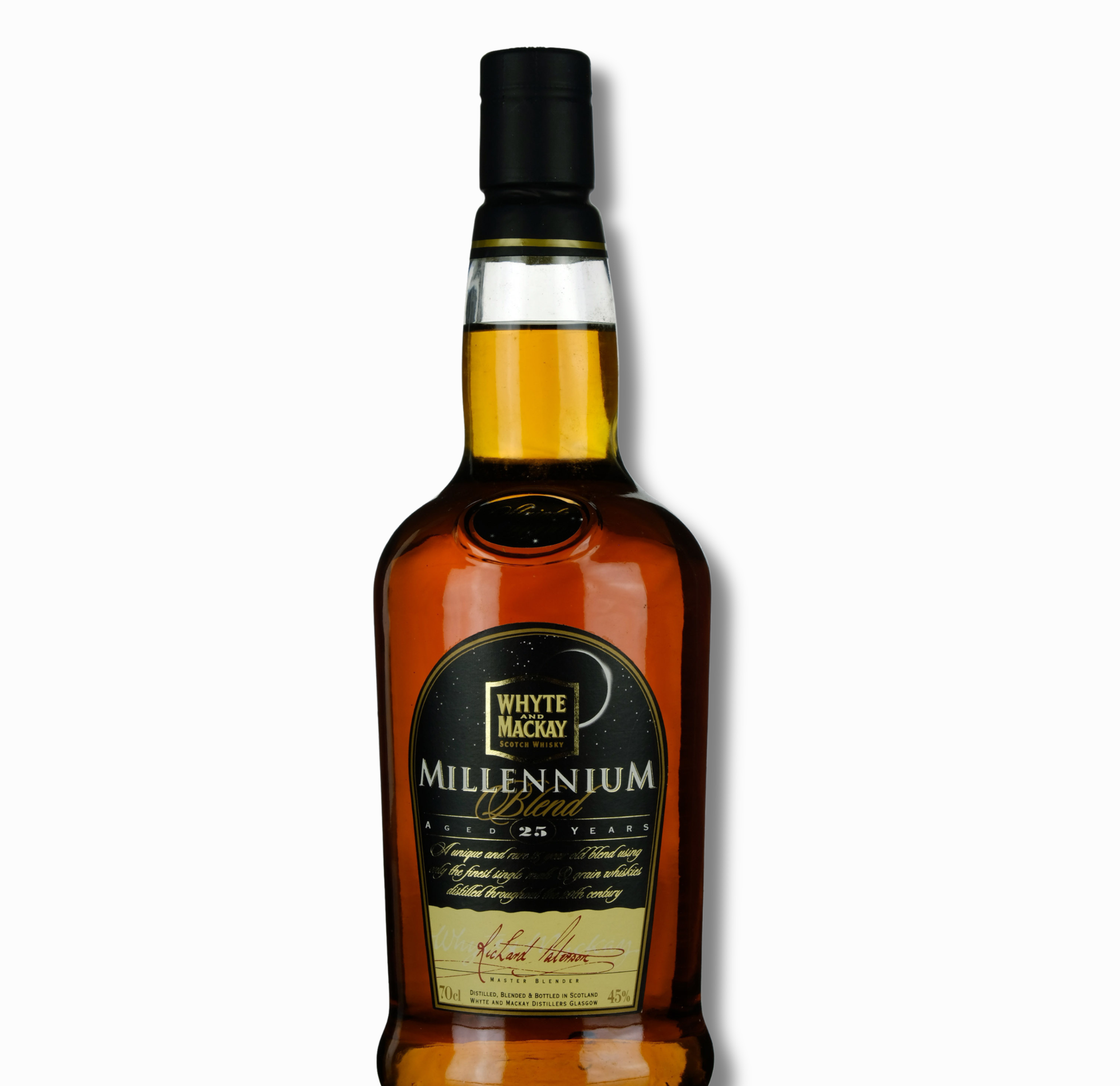
Whyte & Mackay 25 Years Old Millennium
70cl / 45%
£199.00
- Malt type: Blended
- Region: Scotland
If you like this whisky, you will also like these
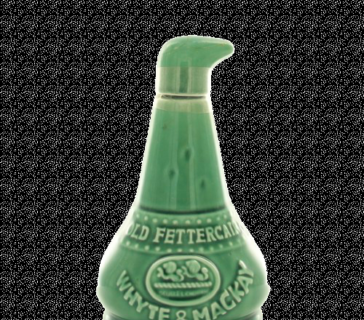
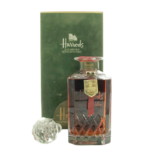
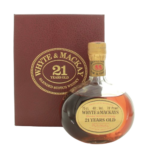
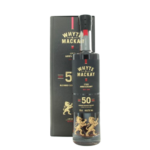
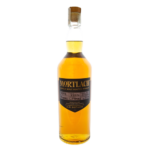
A highly decorative luxury blended Scotch, the Millennium 25 Year Old is valued primarily as a pristine commemorative decanter set from a pivotal era for premium blends.
At-a-Glance
| Field | Details |
| Distillery / Bottler / Country & Region | Whyte & Mackay / Whyte & Mackay Group / Scotland (Blended) |
| Category | Blended Scotch Whisky |
| Age / Vintage / Bottled | 25 Years Old / Pre-1975 Component Stock / Bottled 1999/2000 |
| ABV & Size(s) | 40% ABV; 70cl |
| Cask / Treatment | Component malts rely heavily on aged sherry wood, particularly those sourced from Dalmore and Jura. |
| Natural Colour | Not stated by the producer (E150 caramel assumed permitted) |
| Non-Chill-Filtered | No (Chill filtration assumed, standard practice for 40% ABV blends) |
| Cask Strength | No |
| Bottle count / Outturn | Limited Edition, frequently identified by serial numbers |
| Intended channel | Ultra-Premium Commemorative Retail (Luxury Segment) |
| Packaging | Ornate crystal decanter, housed within a specific wooden presentation case, often accompanied by serialization. |
| Notes on discrepancies | The completeness and integrity of the presentation packaging (case, decanter, seal) is the single most important factor determining secondary market valuation. |
Historical Context
The Whyte & Mackay 25 Year Old Millennium was strategically conceived and executed as a prestige bottling, timed to capture the significant consumer interest surrounding the turn of the century in 1999/2000. This release was critical in advancing Whyte & Mackay’s positioning within the ultra-premium blended sector.
The blend's quality is guaranteed by the 25-year age statement, confirming that the youngest constituent spirits were distilled no later than 1975. The blend benefited substantially from the company's proprietary holdings of exceptional aged malt whiskies, notably drawing on stocks from the company's owned distilleries, Dalmore and Jura. The use of a crystal decanter and bespoke, serialised wooden case further elevated its status. The market has consistently rewarded the completeness of this set. The value is anchored more to its artifact status—the perfect preservation of the complete commemorative set—than to the intrinsic value of the liquid alone.
Technical Specification & Variant Map
The technical specifications for the Millennium 25 Year Old are strictly standardized to 40% ABV and 70cl. The defining characteristics are the high age and the deliberate use of mature, sherry-seasoned malt stock.
Documented variants
There are virtually no technical variants recorded for this specific Millennium release. The only variance of importance to collectors relates to the specific details of the presentation, such as the completeness of the outer packaging, the inclusion of the certificate, and the presence of a unique serial number stamped on the decanter or case.
Variant Matrix
| ABV | Volume | Market | Era cues | Relative desirability |
| 40% | 70cl | Global | Complete decanter, serialised box, certificate | Highest (Investment/Collector Grade) |
| 40% | 70cl | Global | Decanter only, no outer case or serialisation | Low (Consumption Grade) |
Packaging & authenticity checklist
Authenticity confirmation for this product is inseparable from verification of the full set's completeness and condition.
Closure: The decanter utilizes a crystal stopper and cork. It is imperative to inspect the wax or plastic seal surrounding the stopper for any evidence of cracking or tampering.
Decanter Integrity: The highly ornate crystal decanter must be free from chips or scratches. Serialization numbers should be confirmed on the base.
Presentation Case: The bespoke, high-quality wooden case must be fully intact. Damage to the presentation case is documented to result in severe and disproportionate price reductions.
Common Mixups: Care must be taken to ensure the bottle is verified as the specific Millennium edition, distinct from subsequent standard Whyte & Mackay 25 Year Old releases.
Decanter/Low-Fill Risks: Due to the superior quality of the crystal stopper used in high-end decanters, the risk of significant ullage or low fill is minimal, although long-term seepage is a rare, documented risk factor.
Regulatory/terminology notes
The 25 Year Old age statement provides the necessary guarantee of extensive maturity. Bottled at 40% ABV, the whisky is designed for maximum integration, smoothness, and approachability, aligning with luxury blend specifications.
Liquid Profile (from verifiable notes)
The profile is intentionally engineered for extreme smoothness and complexity, characterized by deep sherry influence and significant maturity.
Nose: Displays intense aromas of dried fruit, notably raisins and sultanas, complemented by dark chocolate, sweet baking spices, and the characteristic scent of old, polished leather.
Palate: Unctuous, full-bodied, and profoundly smooth. It features complex layers of fig, raisin, roasted coffee bean, and a depth of pronounced oak flavour that remains fully integrated.
Finish: Exceptionally long, highly elegant, and persistent, concluding with residual notes of spice and dark, caramelized sugar.
With water: The addition of water is generally not recommended, as the 40% ABV is already fully integrated.
Distillery/Bottler Snapshot
Whyte & Mackay is recognized as a leader in blending expertise, possessing extensive internal stocks of aged single malts, primarily drawn from its owned distilleries, Dalmore and Jura. The foundation of this blend's quality lies in these consistent, high-quality malt components, which guarantee a luxurious and predictable consumer experience.
Sourcing
Target formats/eras: Focus exclusively on complete, sealed presentation sets bottled in 1999/2000, 40% ABV, 70cl.
Red flags to avoid: The absence of the original presentation box, any physical damage to the crystal decanter, or evidence suggesting the cork or seal has been compromised.
Condition thresholds: Mint (M) or Near Mint (NM) condition is the required standard. The structural and aesthetic condition of the bespoke wooden case is the singular most critical element for valuation.
Margin/velocity expectations: Moderate margins are achievable with steady velocity, entirely dependent on securing perfect condition examples.