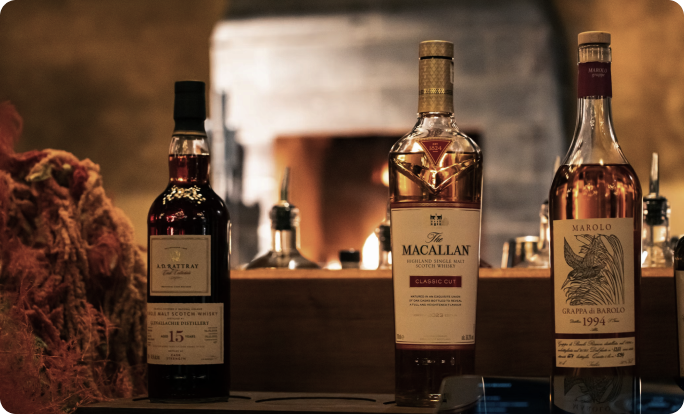
The difference between a casual drinker and a serious collector is rarely the bottles — it’s the network. The right community tells you about the allocation before it sells out.
There are roughly 20,000 distinct bottles of Scotch whisky in production at any one time. Knowing which ones matter — which distilleries are releasing festival expressions, which independent bottlings are undervalued, which closed-distillery stocks are drying up — requires more than Google searches.
It requires the right rooms.
This guide covers the best whisky collecting communities, societies, events and data resources available in 2026. We have assessed each one against the same criteria: quality of information, access to rare bottles, community signal-to-noise ratio, and genuine value for collectors at every level. Whether you are curating your first serious collection or managing a cellar of fifty bottles, these are the networks worth your time.
Here is what we found after researching more than thirty platforms, societies and events.
Not all whisky communities are created equal. We assessed each entry against four criteria:

The result is a list organised by category — online communities, societies, events, data resources and auction platforms — with a verdict on who each suits best.
These two subreddits together form the largest free whisky community on the internet, and the combined subscriber base of several million makes them impossible to ignore.
r/Scotch skews towards Scotch-specific discussion — distillery news, independent bottlings, secondary market opinions, and the frequent “what should I buy next” threads that are surprisingly useful when filtered for experienced contributors. r/whisky casts a wider net across all whisky styles, which matters if your collection extends beyond Scotland.
The signal-to-noise ratio varies. Threads about rare Karuizawa or closed distillery releases attract knowledgeable contributors who genuinely understand secondary market dynamics. General tasting threads can be thinner. The trick is to follow the right commenters over time and treat the upvote count as a rough quality filter.
What collectors use it for:
What could be better:
Best for: Collectors at all levels who want a broad daily feed of whisky news and community opinion at zero cost. Use it as a discovery layer alongside more specialist resources.
Whisky Connosr operates as a crowdsourced tasting note database with genuine community depth — closer to a specialist reference tool than a general forum.
Members write detailed reviews organised by distillery, expression and region. The rating system aggregates community scores across thousands of expressions, making it genuinely useful when researching whether a specific bottle is worth pursuing. The cabinet and wish-list features let you track your own collection alongside community benchmarks.
The platform also maintains a Discord server for real-time discussion — a more immediate channel for the kind of quick questions that get buried in forum threads.
What collectors use it for:
Best for: Collectors who want structured data alongside community opinion. Particularly useful for researching independent bottlings and older expressions where professional reviews are limited.
For collectors operating in the UK secondary market specifically, this Facebook group provides a direct window into what is changing hands and at what prices.
Facebook groups occupy a specific niche that Reddit and forums do not: they combine real-name accountability (which raises the quality of discussion) with a format that works well for photo-led posts — bottle collections, recent acquisitions, and the “is this worth buying at X price” posts that generate fast, practical responses.
Rare Whisky Collectors UK attracts a membership base that includes serious collectors, independent retailers and a fair number of people who actually know what bottles are worth. The discussion quality is higher than most open forums precisely because Facebook’s social graph creates mild accountability.
What collectors use it for:
Best for: UK-based collectors looking for market intelligence and community connection within a geographically specific context.
The Whisky Wire operates more as a curated newsletter and release tracker than a traditional forum, but its community layer has grown into a genuinely useful space for UK-focused collectors.
The platform aggregates release news from distilleries, independent bottlers and retailers, meaning regular readers rarely miss a notable UK release. The editorial layer adds context that raw RSS feeds cannot — brief assessments of whether a release is worth pursuing and at what price point.
Best for: Time-poor collectors who want a filtered view of UK whisky releases rather than the unfiltered volume of general forums.

The Scotch Malt Whisky Society is the original whisky collector’s society, and its numbered bottle system remains the most distinctive approach to rare Scotch in any membership organisation.
Founded in Edinburgh in 1983, the SMWS bottles single casks directly from distilleries and independent stocks, releasing them under a numerical code rather than the distillery’s own brand. The first number identifies the distillery (Distillery 1 is Glenfarclas, Distillery 29 is Laphroaig, and so on — the full list is available to members); the second identifies the specific cask release. The result is a bottle that carries no distillery branding but can be traced precisely by anyone who knows the system.
This matters for collectors for two reasons. First, the bottles are often genuinely rare — a single cask yields perhaps 200 to 400 bottles depending on size and strength, and SMWS releases sell out quickly. Second, the cask-strength, non-chill-filtered approach means you are drinking — or cellaring — the whisky as it came from wood.
Now: the membership structure gives members first access to new releases through a rolling allocation system, access to SMWS members’ rooms (Edinburgh and London are the main UK venues), and invitations to tasting events throughout the year.
What members get:
What could be better:
Pricing: Individual membership is available at multiple tiers. Check smws.com for current pricing — fees have historically sat between £70 and £130 annually depending on tier. All fees change periodically; always verify current rates and terms directly with SMWS before purchasing.
Best for: Collectors who want access to genuinely scarce single-cask releases and are willing to engage with the Society’s release schedule. The numbered bottle system also creates a secondary market of its own — certain SMWS releases trade well above original price.
Disclaimer: Membership costs, tiers and benefits listed here are indicative based on publicly available information and may have changed. Always confirm current pricing and terms with the society directly before joining.
The Friends of Laphroaig programme is the model that most distillery ambassador schemes have since tried to replicate, and for Islay collectors it remains the most meaningful of its kind.
Membership is free. You receive a lifetime lease on one square foot of Laphroaig’s peat bog on Islay — a piece of theatre, certainly, but one that comes with a genuinely useful benefit: access to the Friends bottling, a cask-strength, age-stated expression released periodically as a members-exclusive. Annual visiting rights entitle you to a dram of Laphroaig taken from your “own” peat.
The broader point is that most of the major Scotch distilleries now run some form of ambassador or friends programme, and collectively they are worth joining for any collector focused on specific distilleries. Glenfiddich’s Explorers Club, Ardbeg’s Committee, Bruichladdich’s Bruichladdich Society, and Bowmore’s equivalent all grant priority access to limited releases.
Here’s the deal: distillery programmes vary enormously in value. Some offer meaningful early access to allocated expressions; others are primarily marketing databases. The ones worth joining are those attached to distilleries with genuine collector demand — Laphroaig, Ardbeg, Bruichladdich, and the major Speyside houses among them.
Best for: Collectors building distillery-focused collections who want the access advantage that comes with being inside the mailing list.
The Whisky Exchange’s Whisky Show is the largest consumer whisky event in the UK, and early-access membership is the sensible way to attend.
The annual show, held in London each autumn, brings together over a hundred distilleries and independent bottlers for a multi-session tasting event. Early access passes — available through TWE’s mailing list and loyalty scheme — allow entry before general sale tickets, which matters for the rarer expressions where table queues form quickly.
The Whisky Exchange’s own club membership also provides first access to their online limited releases, which is arguably the more valuable day-to-day benefit for most collectors outside London.
Best for: London-based collectors and those willing to travel for the most comprehensive single-event tasting in the UK calendar.
Fèis Ìle is the collector’s event of the year — ten days on Islay each May when every major distillery on the island releases a festival-exclusive bottling that cannot be obtained anywhere else.
The 2026 festival runs from 22 to 31 May. The official Fèis Ìle site confirms participating distilleries and ticketed events as they are announced in the months prior.
The festival releases are the reason serious collectors make the trip. Ardbeg, Bowmore, Bruichladdich, Caol Ila, Lagavulin, Laphroaig and the island’s other producers each release a single bottling — typically cask strength, often with no age statement, and always in quantities that make them scarce almost immediately. These expressions routinely reach two to three times their retail price on the secondary market within months of release.
The logistics matter: distillery day events sell out well in advance, often within minutes of going on sale. The broader festival — beaches, ceilidhs, distillery tours — requires no ticket, but the tasting and exclusive release events do. Setting calendar reminders for the booking window (typically January to March for a May festival) is not optional.
What collectors attend for:
Best for: Any collector with Islay distilleries as a focus. The festival releases from Lagavulin, Ardbeg and Laphroaig have an established secondary market track record.
Spirit of Speyside brings together the region’s distilleries across a long weekend each spring, with a mix of distillery tours, masterclasses and exclusive releases that rivals Fèis Ìle for depth.
The festival covers the full range of Speyside distilleries — from the major houses (Glenfiddich, Balvenie, Macallan, Glenfarclas) to smaller producers whose visitor centres rarely see the collector crowds that headline names attract. The practical value for collectors is access to distillery shop exclusives and vatted expressions made specifically for the festival.
Speyside does not attract the same secondary market premiums as Islay festival releases, but the collector community present at the festival is substantial, and the buying opportunities across distillery shops in a concentrated geographic area are considerable.
Best for: Collectors focused on Speyside and those who want to explore the full range of Scotland’s most productive whisky region in a single trip.
The Whisky Show run by The Whisky Exchange is the most comprehensive tasting event in the UK calendar — an opportunity to taste bottles that rarely appear in any other public setting.
Held annually in London, the show features over a hundred exhibitors across multiple sessions. The Old and Rare room — a ticketed premium session within the show — brings together vintage expressions and closed-distillery bottlings that are otherwise inaccessible for tasting purposes outside serious collector circles.
For collectors researching bottles they intend to buy, this is genuinely useful: tasting a 1980s Rosebank or a Port Ellen expression before deciding whether to pursue a specific bottling at auction is a kind of due diligence that most resources cannot provide.
Best for: Collectors who want to build tasting experience with rare and vintage expressions, particularly those researching closed distilleries.
Whisky Live events operate as broad-based discovery shows — less focused on rare and vintage than the TWE show, but excellent for exploring new releases and independent bottlings across a wide range of distilleries.
The London and Glasgow editions attract a mix of major distilleries, craft producers and independent bottlers. For collectors at earlier stages of building their knowledge base, the breadth of what is available to taste in a single session is unmatched. For more advanced collectors, the independent bottler stands often yield interesting single-cask expressions not widely available at retail.
Best for: Collectors building tasting breadth, particularly those exploring independent bottlers and new distilleries.
The Edinburgh Whisky Festival has grown into a significant fixture on the Scottish whisky calendar, combining distillery showcases with independent bottler presence in a city with genuine collector infrastructure.
Edinburgh’s concentration of specialist retailers, auction houses and the SMWS headquarters makes it uniquely valuable as a base for whisky activity — the festival layers a formal event on top of the permanent collector infrastructure that exists in the city year-round.
Best for: Collectors based in Scotland or those who combine a festival trip with buying activity in Edinburgh’s specialist retail sector.
Rare Whisky 101 operates the most comprehensive public dataset for Scotch whisky valuations in existence, and for any collector with an eye on the secondary market it is essential.
The platform tracks open-market values across 235 distilleries, 89,496 individual bottles and 1.5 million price records. Their Icon 100 Index provides a benchmark equivalent to a stock market index for rare Scotch — tracking the 100 most sought-after expressions by secondary market activity and price trajectory.
The data has been built over more than a decade and serves private collectors, insurance companies, banks and legal estates. That breadth of client base is a signal of data quality — these are users for whom inaccuracy has financial consequences.
What collectors use it for:
Visit rarewhisky101.com for current market data and index performance.
Best for: Collectors treating their cellar as a serious asset who need objective valuation data rather than auction estimate ranges.
Whiskybase functions as the Wikipedia of whisky bottles — a community-maintained database of expressions, vintages, distillery releases and independent bottlings that is both broader and more detailed than any commercial alternative.
The platform catalogues bottles across every major producing country, with community-contributed tasting notes, bottle images and release information. For collectors trying to identify an unlabelled bottle, verify a vintage, or research an independent bottler’s track record, Whiskybase is typically the first port of call.
What collectors use it for:
Best for: Collectors who encounter unfamiliar bottles regularly — particularly those buying from private collections or auctions where provenance documentation is incomplete.
Whisky Magazine has been the print record of the Scotch industry since 1998, and its awards data — the Icons of Whisky and World Whiskies Awards — carries genuine weight in the secondary market.
A bottle that wins a major Whisky Magazine award typically sees a secondary market response within weeks. For collectors, the awards calendar is therefore worth tracking as an early-warning system for price movement on specific expressions.
The editorial content — distillery profiles, blending house histories, collector interviews — provides depth that forum discussion rarely matches. The website carries digital versions of major features alongside the print archive.
Best for: Collectors who want the long-form context behind distillery and expression decisions, and those who track awards as a secondary market signal.
The Whisky Exchange blog and Malt Review together represent the most read independent whisky criticism in the UK, and both are worth following for pre-purchase research.
The TWE blog covers new releases with editorial opinion that is unusually candid for a retailer — the team does not uniformly praise everything they sell, which makes the positive assessments more credible. Malt Review operates independently, with a rotating roster of contributors covering a wider range of expressions than any single-author blog could sustain.
Best for: Pre-purchase research on specific expressions, particularly newer releases where auction data does not yet exist to indicate secondary market performance.
Auction platforms serve two functions for collectors: as buying channels and as market data sources. The latter is underused. Every completed lot is a data point — a real-world transaction price for a specific bottle at a specific point in time. Tracking completed auction prices across platforms gives a more accurate picture of a bottle’s current value than any list price.
Whisky Auctioneer is the highest-volume online whisky auction platform in the UK, and its completed lot archive is among the most useful free data sources available to collectors.
The platform runs monthly auctions with several thousand lots each cycle. The breadth of bottles through any given auction — from entry-level collectibles to serious closed-distillery expressions — makes the completed price data a useful benchmark across the full market, not just the premium segment.
Best for: Establishing market rates for mid-range to high-value bottles. The search function on completed lots is worth bookmarking as a regular reference tool.
Scotch Whisky Auctions operates as a specialist platform with strong presence in the Scottish collector market and a particularly useful selection of older and more obscure expressions.
The platform tends to attract consignors from Scottish estates and private collections, meaning the lot selection skews towards expressions that rarely appear through English auction houses. For collectors researching pre-1990 distillery releases, the completed lot archive is particularly informative.
Best for: Research into older Scottish expressions and the collector market north of the border.
McTear’s auction house in Glasgow operates traditional auction sessions with a specialist whisky department that handles premium and vintage lots with serious provenance documentation.
Unlike online-only platforms, McTear’s physical auction format attracts institutional buyers and serious private collectors willing to bid at premium price points. The provenance standards are correspondingly higher, which makes their completed lot data a reliable benchmark for trophy bottles.
Best for: Research into premium and vintage bottle valuations where provenance documentation matters.
Bonhams’ whisky sales provide a benchmark for the international collector market — the prices achieved at Bonhams reflect global demand rather than the domestic UK market alone.
For collectors holding bottles with genuine international appeal — closed distillery expressions, very old single malts, complete series sets — the difference between domestic auction data and Bonhams’ international buyer base can be substantial. Using both as reference points gives a more complete picture of a bottle’s realistic selling range.
Best for: Collectors researching the upper end of the market, particularly for bottles with established international collector appeal.
The right entry point depends on where you are in your collecting journey.
Are you building knowledge before buying seriously? Start with r/Scotch and Whisky Connosr. Both are free, both reward engagement, and the quality of information available across thousands of threads will accelerate your understanding faster than any book.
Are you ready for structured access to rare releases? SMWS membership is the single highest-value paid option for collectors at this stage. The combination of first access to single-cask releases, tasting events and the members’ room network represents genuine purchasing advantage, not just a social benefit.
Do you collect specific distilleries? Join those distilleries’ ambassador programmes and set calendar reminders for their festival release booking windows. The cost is zero; the access advantage can be considerable.
Are you managing a collection with financial value? Rare Whisky 101 for valuations, Whiskybase for identification and the major auction platforms for secondary market benchmarking should all be active tools in your research process. Our guide on what makes a whisky bottle valuable covers the fundamentals that underpin secondary market pricing.
Do you want the event circuit? Fèis Ìle for Islay, Spirit of Speyside for the region’s major houses, The Whisky Show (TWE) for vintage access, and Edinburgh Whisky Festival for Scottish infrastructure. Most serious collectors attend at least one per year; some attend all four.
For a broader framework on building a collection from scratch, our ultimate whisky collecting guide and the how to start a whisky collection piece cover the full process. Those researching which distilleries repay attention will find distilleries worth collecting a useful companion read. And if you want to avoid the decisions that cost collectors most, the common whisky collecting mistakes article is worth reading before you commit significant budget.
SMWS membership is most valuable once you have enough experience to recognise a good single-cask release when you see one. If you are still building your palate, the free resources — r/Scotch, Whisky Connosr, Whiskybase — provide a better foundation. Return to SMWS membership once you are confident assessing single-cask expressions without a distillery name on the label.
Each SMWS bottle carries two numbers separated by a decimal point. The first number identifies the distillery — Distillery 1 is Glenfarclas, Distillery 29 is Laphroaig, and so on through a list of over 130 producers. The second number identifies the specific cask release from that distillery. The full distillery code list is available to members, and the system creates a secondary market in its own right for collectors who know what they are looking for.
Fèis Ìle offers the most direct access to bottles that cannot be obtained elsewhere — the festival-exclusive distillery releases are genuinely scarce and have a well-established secondary market track record. For breadth and the chance to taste before you buy, The Whisky Show (TWE) in London is unmatched, particularly the Old and Rare session.
The completed lot archive on platforms such as Whisky Auctioneer is one of the best free sources of real-world transaction prices. Searching for a specific bottle and reviewing prices achieved over the past twelve months gives a far more accurate picture of current value than any list price or retailer estimate.
The quality varies considerably, but Rare Whisky Collectors UK and a small number of similar groups attract membership with genuine market knowledge. The real-name accountability of Facebook improves the discussion quality compared to anonymous forums for specific subjects like valuation and authentication.
Whiskybase is a community-maintained bottle database — useful for identifying expressions, reading tasting notes and researching release information. Rare Whisky 101 is a market intelligence and valuation platform — useful for tracking secondary market prices, understanding long-term value trends, and obtaining formal valuations. They serve different purposes and most serious collectors use both.
The value varies significantly by distillery. Ardbeg’s Committee, Friends of Laphroaig and Bruichladdich’s member programme all provide priority access to genuinely limited releases. Others function primarily as marketing email lists. As a rule, programmes attached to distilleries with consistent secondary market demand for their limited releases are worth joining; those attached to distilleries where limited releases rarely achieve secondary market premiums offer less practical advantage.
Speyside festival releases do not command the same secondary market premiums as Islay equivalents, so the buying case is weaker. The value lies in distillery access, the collector community concentrated in one area, and the opportunity to buy distillery-exclusive expressions through visitor centre shops. For collectors building Speyside holdings — Glenfarclas Family Casks, Glenfiddich Grand Series, Balvenie exclusives — the access is meaningful.
Completed auction lot data from Whisky Auctioneer and Scotch Whisky Auctions provides the most accurate free benchmark for current secondary market values. Rare Whisky 101’s public index data is also valuable for understanding broader market trends, even before accessing their full valuation service.
Distillery day event tickets typically go on sale between January and March for a May festival, and popular events — particularly those at Ardbeg, Lagavulin and Laphroaig — sell out within minutes of the booking window opening. Sign up to the mailing lists of individual distilleries and the official Fèis Ìle site in advance, and set calendar reminders for the booking announcement. The broader festival — the island itself, the ceilidhs, the public areas — requires no ticket at all.
Private sales within trusted community networks do happen, and they can represent genuine value for both buyer and seller by avoiding auction commission. The Facebook collector groups, SMWS members’ networks and festival communities are all channels where private transactions occur. Exercise appropriate due diligence — provenance documentation, bottle authentication, and knowledge of the seller’s reputation within the community — before completing any private purchase.
SMWS member networks and the more specialist Facebook collector groups tend to attract the most experienced voices for UK Scotch collecting specifically. For breadth of international whisky knowledge, r/whisky has more contributors than any other single forum. For structured tasting intelligence, Whisky Connosr’s rating system and review quality is consistently strong.
The whisky collecting community is larger, better connected and more information-rich than at any previous point. The challenge for collectors in 2026 is not finding information — it is filtering it.
Here is how to think about it: use the free online resources (r/Scotch, Whisky Connosr, Whiskybase) for discovery and research. Use Rare Whisky 101 and completed auction data for valuation and market intelligence. Join SMWS membership once you are ready to act on single-cask releases. Build distillery-specific access through ambassador programmes for the distilleries that matter most to your collection. And put Fèis Ìle in the diary — there is no substitute for the island in May.
The bottles that define a serious collection rarely turn up by accident. They arrive because someone was in the right room at the right time. These communities, societies and events are those rooms.
If you are looking to add specific bottles to your collection — closed distillery expressions, independent bottlings, or distillery exclusives that circulate privately — Glenbotal sources rare whisky from private collectors across the UK and Europe. See the current collection to find expressions that rarely reach the open market.
Explore the full collection at Glenbotal — rare whisky sourced from private collectors across the UK and Europe.