
Scotland exported over £6 billion worth of Scotch whisky in 2022 — and the rare end of the market has consistently outperformed traditional asset classes over the past decade.
This guide is for anyone who wants to collect whisky seriously — whether you’re buying your first bottle with intention, or you’re ready to turn a growing shelf into a curated collection with real value. By the end, you’ll understand how the rare whisky market works, what to buy, where to buy it, and how to protect what you’ve built.
There are very few things in life that reward patience the way a great bottle of Scotch does. A cask laid down in 1984, forgotten in a warehouse in Speyside, can emerge forty years later as something extraordinary — a liquid time capsule that no amount of money can recreate. That irreversibility is at the heart of whisky collecting.
But the appeal is layered. For some, it is purely sensory: the hunt for increasingly complex drams, the pleasure of a dram opened on a meaningful occasion. For others, it is historical — owning a bottle distilled in the year of your birth, or a limited release from a distillery that no longer exists, connects you to something permanent. And for a growing number of serious collectors, rare whisky has proven to be one of the most interesting alternative assets available.
The whisky collecting community has grown sharply since the mid-2010s. Today it spans enthusiastic amateurs buying their first distillery annual release, to institutional collectors managing six-figure portfolios across multiple auction houses. Understanding which kind of collector you want to be — or what combination — is the first step.
The Gifter buys rare or personalised whisky for others — birth year bottles, milestone anniversaries, retirement gifts. The goal is emotional resonance rather than personal consumption or investment. Gifters tend to prioritise presentation and provenance.
The Distillery Collector pledges allegiance to one house — Macallan, Glenfarclas, Springbank, Glenfiddich — and pursues complete sets: every annual release, every limited edition, every cask strength variant. The satisfaction is in completeness and depth of knowledge.
The Memory Chaser collects around personal meaning: the year they were born, the year they married, the distillery they visited on honeymoon. The bottles are biographical. Value is emotional first, financial second.
The Investment-Minded Collector approaches whisky the way others approach fine wine or art: with research, patience, and an exit strategy. They track auction results, follow distillery production decisions closely, and think in horizons of five to fifteen years.
Most serious collectors are some combination of all four. The craft is in knowing which motivation is driving each purchase.
The rare whisky market operates on a set of principles that are surprisingly logical once you understand them — supply and demand, scarcity, and the long runway of maturation. Unlike equities, whisky cannot be manufactured faster when demand increases. Once a cask is bottled, that run is permanent.
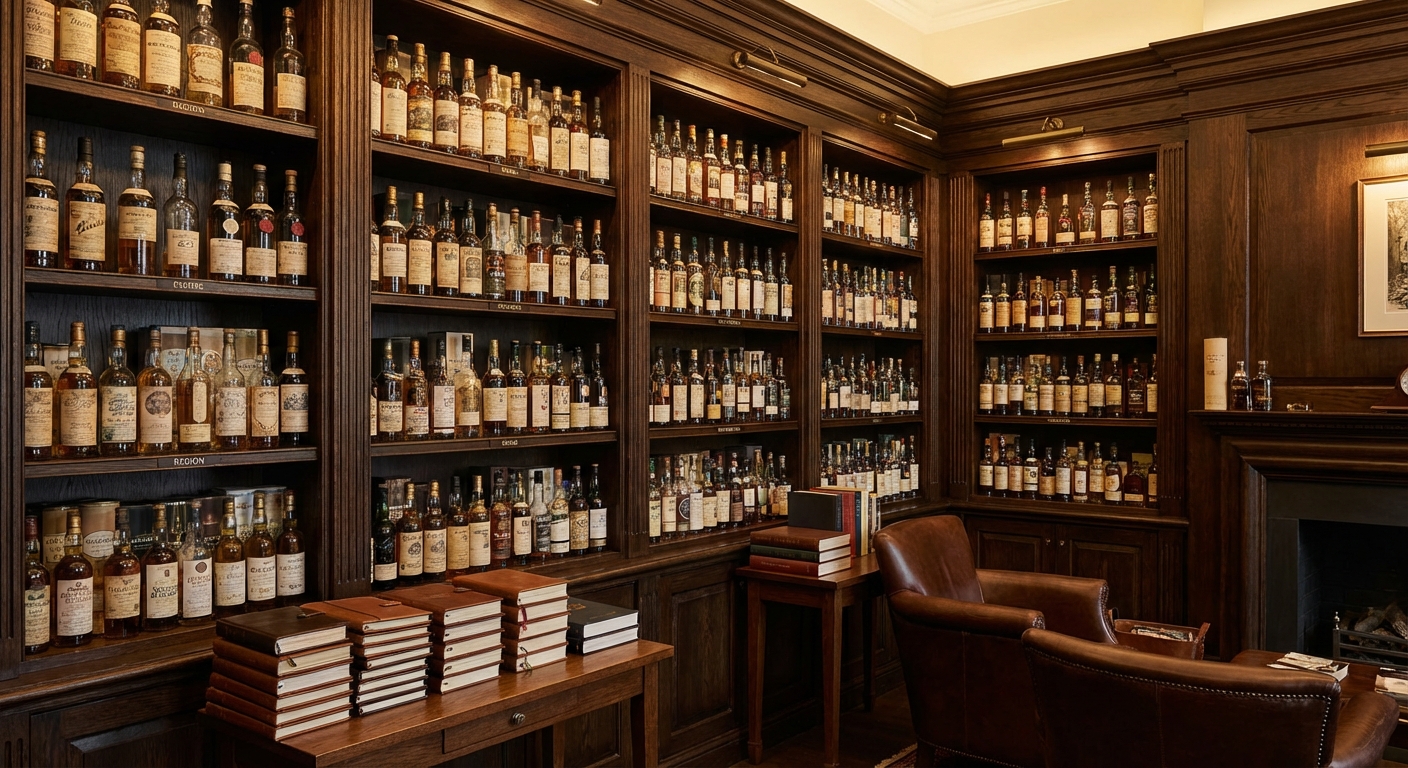
Retail price at launch is only the starting point. A bottle released by Macallan at £250 might trade at multiples of that on the secondary market within months if the release was limited and demand was high. The secondary market — comprising auction houses, specialist retailers, and private sales — is where true market value is discovered.
Several factors drive secondary market pricing:
Retail — whether high street, specialist, or online — offers convenience, immediate availability, and often verified provenance. The price includes a margin, but you know exactly what you are getting. For sought-after releases that arrive via allocation, having relationships with specialist retailers is often the only reliable route.
Auction is where the secondary market sets its prices. Houses such as Whisky Auctioneer, Scotch Whisky Auctions, and Bonhams run regular sales with thousands of lots. Auction is ideal for sourcing specific older or rarer bottles at market rates — but buyers pay a buyer’s premium (typically 15–22.5%), and sellers pay commission on realised value. For very high-value bottles, specialist auction houses provide global reach to buyers who would not otherwise be accessible.
Scotland’s 151 operating distilleries (as of 2024) produce whisky consumed in over 180 countries. Scotch whisky exports exceeded £6 billion in 2022, the first time the industry had crossed that threshold. The US market alone accounts for over £1 billion of that value. The wider collector and investment community — those buying bottles rather than consuming them — represents a growing slice of a very large industry.
Whisky values can rise and fall. This is not financial advice — this article is for informational purposes only.
The single most common mistake new collectors make is buying whatever is available rather than whatever is worth owning. The two are very different lists.
Building depth around a single distillery is one of the most satisfying and commercially logical approaches. When you know one house intimately — its production history, its master distillers, which years produced exceptional spirit, which releases were underproduced — you develop an edge that casual collectors do not have.
Distilleries with established collector followings include Macallan (particularly the Edition series, Fine & Rare range, and older 18-year bottlings), Glenfarclas (especially the Family Casks series, a near-unbroken run of single cask vintages from the 1950s onwards), Springbank (known for small production runs and fierce collector loyalty), and closed distilleries such as Port Ellen and Brora, where no new stock will ever be made.
The Macallan Edition Series is a good case study in how a well-executed limited series can generate sustained collector interest: each release has a defined creative identity, a controlled print run, and broad international recognition that supports secondary market liquidity.
Annual limited releases and named series — distillery exclusives, travel retail exclusives, charity bottlings, distillery manager’s drams — often represent the best combination of accessible entry price and strong long-term appreciation potential. The key is identifying releases before they become sought-after, which requires staying close to distillery news and building relationships with retailers who receive allocations.
Named series also provide natural completionist logic: collectors who own editions one through four will almost always pursue edition five, creating a reliable base of motivated buyers on the secondary market.
Collecting around personal dates — your own birth year, a partner’s, a significant anniversary — creates a highly personal collection with obvious gifting applications. Birth year whisky collecting is one of the fastest-growing segments of the market, driven by its emotional clarity and the finite supply of bottles from any given year.
A bottle of single malt distilled in 1975 cannot be reproduced. As those bottles leave the market — consumed, damaged, or locked in collections — genuine scarcity increases. For birth years in the 1950s, 1960s, and early 1970s, examples of well-preserved bottles have become genuinely difficult to source. Our vintage Scotch whisky guide covers the most collectible decades in detail.
Independent bottlers — companies that purchase casks from distilleries and bottle under their own label — represent some of the most undervalued territory in whisky collecting. Names like Gordon & MacPhail, Berry Bros. & Rudd, Cadenhead’s, and Signatory Vintage have been bottling exceptional casks, often from distilleries that no longer exist or that no longer release at certain ages, for decades.
Because independent bottlings lack the marketing budgets of the major distilleries, they often reach market at prices that understate their quality and rarity. For the educated collector, this gap represents opportunity.
Mass-produced “collector” editions: Bottles marketed primarily on their packaging — decorative decanters, ceramic bottles, novelty shapes — rarely appreciate and are often difficult to sell. The whisky inside is rarely exceptional; the bottle is the product.
Unnamed blends at low price points: Standard blended Scotch without a named distillery or a verifiable provenance has almost no secondary market. Supermarket shelf fillers are for drinking, not collecting.
Overcrowded releases: Some releases are produced in such volume that any scarcity premium evaporates quickly. High street annual releases from very large distilleries in the mid-price range often fall into this category — pleasant to drink, modest to collect.
Anything bought purely on hype without research: Hype-driven purchases at elevated retail prices carry real downside risk if the secondary market corrects.
A collection is not an accumulation. It is a series of deliberate decisions with a coherent logic connecting them. The collectors with the most satisfying (and valuable) cellars are those who started with intent.
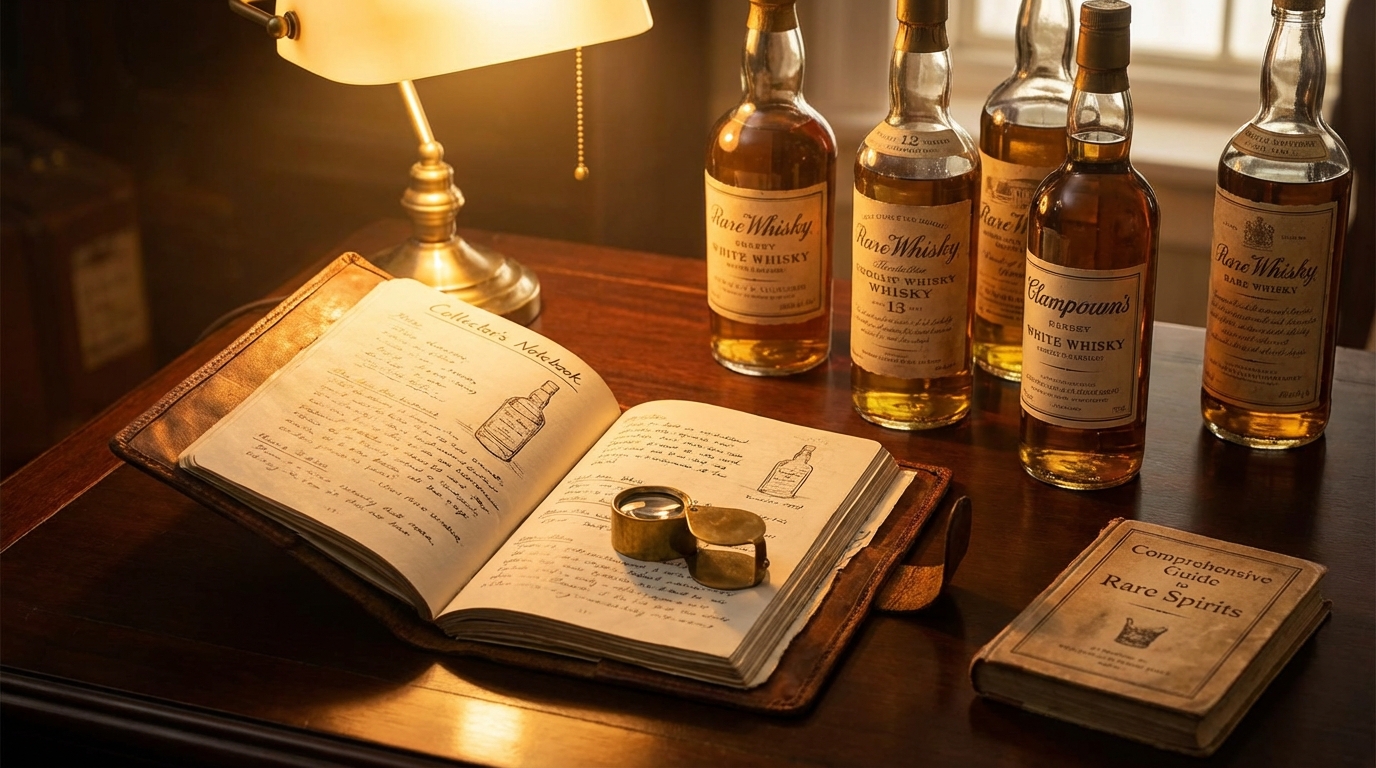
The most practical first step is to define one axis around which your collection will cohere. This could be a single distillery, a format (single cask bottlings), a region (Speyside, Campbeltown, Islay), a period (bottles distilled in the 1980s), or a personal date anchor. Without focus, collections sprawl into random assemblages that are difficult to value, difficult to curate, and difficult to sell.
Focus does not mean constraint forever. Many collectors start narrow and expand thoughtfully as their knowledge deepens. Starting narrow means you become genuinely expert in your chosen area, which is commercially and intellectually valuable.
There is no minimum for serious collecting, but budget clarity prevents regret. A few useful frameworks:
The budget per bottle matters less than budgeting for consistency. Collectors who buy one considered bottle per month for five years build something far more interesting than those who spend the same total on impulse purchases.
Skim Stopper: The sweet spot for most new collectors is £150–350 per bottle — enough to access genuinely rare and interesting whisky, without requiring specialist storage or insurance from day one.
When a release arrives that you find compelling, the question is whether to buy one bottle or multiples. The argument for multiples is that one bottle can be opened and enjoyed while the rest appreciate. The argument for one is capital efficiency — diversification across more releases often outperforms concentration in any single one.
A practical rule: buy one of anything you are unsure about. Buy two or three of releases from distilleries you know well, where you have conviction in both the quality and the market dynamics.
Allocation releases from popular distilleries — where demand reliably exceeds supply — should be acted on immediately. Waiting rarely produces lower prices; it typically produces unavailability. For older bottles on auction, patience is more rewarding: the same bottle tends to reappear across auction cycles, and watching several sales before buying gives you accurate price benchmarks.
The channel you buy through affects price, authenticity risk, and the range of bottles available. Experienced collectors use all of the options below — at different moments, for different bottles.
Specialist retailers are the most reliable channel for sourcing specific bottles with confidence. Unlike auction, you know the price before you commit. Unlike generalist retailers, specialists have curated stock, deep product knowledge, and typically offer services beyond the transaction — valuations, sourcing requests, and guidance on what is genuinely worth buying.
Glenbotal sources rare and elusive bottles directly from private collectors across the UK and Europe, maintaining a curated inventory of 800+ bottles across Scottish single malts, independent bottlings, and sought-after vintage expressions. Over six years in the market, with access to a private collector network and a track record reflected in 100+ Trustpilot reviews, the team offers free valuations alongside every purchase inquiry. For collectors who want specific bottles sourced without the uncertainty of auction, specialist retailers with active sourcing networks are often the fastest route.
Specialist whisky auction houses — Whisky Auctioneer, Scotch Whisky Auctions, Bonhams, Christie’s, and Sotheby’s for the very top of the market — are the primary mechanism for price discovery in the rare whisky market. Auctions are particularly useful for:
The costs of buying at auction add up: buyer’s premiums of 15–22.5% on the hammer price are standard, plus any applicable VAT and shipping. Budget these in when comparing auction prices to retail.
Platforms such as Whisky.auction and Master of Malt’s marketplace list both new and secondary market bottles. Convenience is high; authenticity verification is more variable. For bottles under £200, the risk profile is manageable. For higher-value purchases, the lack of professional authentication that specialist retailers and major auction houses provide becomes a meaningful consideration.
The most interesting bottles often never reach auction or public retail. They move through private collector networks — WhatsApp groups, forum trades, and introductions made by trusted intermediaries. Access to these networks requires time in the market, relationships with retailers and auction specialists, and a reputation as a serious buyer.
For collectors who are new to the market, a specialist retailer with an established private network — like Glenbotal’s sourcing connections across UK and European private collections — effectively provides access to stock that would otherwise be invisible.
How you store your collection determines whether it maintains or loses value over time. Whisky in bottle is generally stable if kept away from the four enemies: heat, light, humidity fluctuations, and vibration.
The ideal storage temperature for bottled whisky is between 15°C and 20°C, with consistency more important than the precise figure. Dramatic temperature swings cause the liquid to expand and contract, which can drive alcohol through the cork over time. A cellar, a climate-controlled cabinet, or a cool internal room away from radiators is preferable to a kitchen shelf or a south-facing room.
Freezing temperatures are unlikely to damage the spirit itself (alcohol does not freeze at whisky strengths), but repeated freeze-thaw cycles in a garage or outbuilding will gradually degrade the seal.
UV light degrades whisky over time, breaking down colour compounds and affecting flavour. Direct sunlight is the worst offender, but sustained fluorescent light exposure also causes damage. Keep bottles away from windows and, where possible, store in dark conditions. If bottles are on display, LED lighting with UV filtering is the safest option.
Corks require moderate humidity to remain functional — roughly 50–70% relative humidity is ideal. Too dry, and corks shrink and allow air ingress; too humid, and mould can form on labels and capsules, affecting presentation and value.
Skim Stopper: Unlike wine, whisky bottles should be stored upright. High-alcohol spirits degrade natural corks when in prolonged contact — horizontal storage is for wine cellars, not whisky collections.
Display adds aesthetic pleasure to a collection but creates ongoing risk from light and temperature fluctuation. For bottles you intend to hold for value, dark cellar or cabinet storage is preferable. For display, rotate bottles regularly and keep them out of direct light. Very high-value bottles (£1,000+) are better stored in proper conditions and represented on display by less significant pieces.
For collectors with extensive holdings, professional third-party storage — bonded warehouses used by auction houses and some specialist retailers — offers climate control, insurance, and provenance records that are difficult to replicate at home.
Counterfeiting is a real and growing problem in the rare whisky market. As prices have risen — bottles of very old Macallan or Karuizawa changing hands for tens of thousands of pounds — the economic incentive to fake them has increased proportionally. The good news is that most fakes can be identified with careful inspection if you know what to look for.
Original labels on rare bottles have specific characteristics that are difficult to replicate exactly: the weight and texture of the paper, the precision of the print registration, the aging of the ink, and the style of fonts and wording used in specific production eras. Comparing a bottle against known authentic examples — reference photographs from specialist sources, or the bottle in person at a reputable retailer — is the most reliable method.
Look for inconsistencies: bleeding ink, slightly off-registration text, modern-style fonts on supposedly old labels, and any signs that a label has been removed and reapplied (bubbling, misalignment, adhesive residue at edges).
Every bottle loses a small amount of liquid to evaporation over time — this is normal and expected. However, a fill level that is dramatically lower than expected for the stated age of the bottle raises questions. An unusual fill level can indicate tampering: a bottle refilled with inferior spirit, or one where the original liquid was partially consumed and replaced.
Established terminology describes fill levels — Original Tin Capsule (OTC), Into Neck (IN), Upper Shoulder (US) — and each carries expected associations with age and handling history.
Original capsules (the foil or wax seal over the cork) should show appropriate ageing: slight oxidation of metal capsules, wax that has not been touched since application. Any signs that a capsule has been cut and resealed, or that a modern capsule has been applied to an old bottle, are red flags.
The strongest protection against fakes is documented provenance: who has owned the bottle, where it was purchased originally, and whether it has been through a recognised auction house. Original receipts, auction house certificates of sale, and retailer documentation all add layers of verification that are difficult for counterfeiters to replicate.
Skim Stopper: When spending over £500 on a single bottle, always buy from a retailer or auction house that stands behind their authentication. A legitimate seller will welcome questions about provenance; an evasive one should give you pause.
For very high-value bottles, scientific authentication is available. Services offered by research groups have used carbon dating and chemical analysis to verify (or refute) the stated age of spirits. A notable case saw several “rare” Macallan bottles fail scientific authentication — a reminder that the highest end of the market requires the highest level of scrutiny.
Knowing what your collection is worth is useful whether you intend to sell or not — for insurance purposes, estate planning, or simply the satisfaction of understanding what you have built. The first step is getting an accurate, current valuation from someone with real market knowledge.
Any collection that has grown beyond ten or fifteen bottles of meaningful value — say, an aggregate replacement value above £2,000–3,000 — warrants a formal valuation. This applies particularly if:
Glenbotal offers free whisky valuations — a practical first step for collectors who want to understand what they have without any obligation to sell. With six years of market experience and direct knowledge of current auction prices and private sale benchmarks, an informed valuation typically takes less time than most collectors expect. You can also read our detailed guide on how much your whisky is worth.
Not all bottles in a collection are equally liquid (in the commercial sense). Some factors that support strong sale prices:
Bottles with all of these attributes in good order regularly achieve 20–40% more at auction than equivalent bottles in poor condition. Condition management during storage pays dividends at sale.
Direct to a specialist retailer is the fastest route. Retailers like Glenbotal who buy directly from private collectors can complete transactions quickly, without the waiting period of an auction cycle, and without commission deductions for the seller. For collections where liquidity matters — an estate sale, or a collector who needs to release capital — this is often the most practical option. Our guide to how to sell rare whisky in the UK walks through the full process.
Auction is appropriate for very high-value individual bottles where the global reach of a major auction house will maximise the sale price. For a bottle expected to achieve £5,000+, the difference in hammer price between a niche domestic sale and a Bonhams or Sotheby’s specialist sale can more than offset the commission cost.
Private sale through your own collector network can yield the best net price — no commissions, buyer and seller both benefit — but requires time, trust, and an established reputation in the market.
Strategy is what separates a collection from a stockpile. The collectors with the most coherent, valuable cellars think explicitly about depth versus breadth, time horizon, and the relationship between what they love to drink and what they want to hold.
A collection with twenty bottles from one distillery — spanning thirty years of annual releases, several independent bottlings, and a couple of exceptional casks — tells a story. A collection with twenty bottles from twenty different distilleries, each a single example, tells less of one. Depth creates expertise, narrative, and often better secondary market outcomes: serious buyers for that distillery will pay more for a curated set than for individual bottles sourced at random.
Breadth has its own logic — diversification reduces the impact of any one distillery’s market fluctuations, and broad exposure develops faster general knowledge. Many collectors start broad to identify where their genuine interest lies, then pivot to depth once a focus emerges.
How long you intend to hold has significant implications for what you should buy. A three-to-five-year horizon favours currently popular distilleries with active secondary markets and recent limited releases that have already demonstrated demand. A ten-to-fifteen-year horizon opens up currently overlooked distilleries, undervalued independent bottlings, and birth year bottles from years still within reach at reasonable prices.
The longer the horizon, the more you benefit from buying ahead of consensus — identifying what the market will value in fifteen years, not just what it values today.
The healthiest collections are ones where every bottle was bought with at least some genuine appreciation for what it is, not solely for what it might be worth. Collectors who enjoy what they hold are more patient sellers, less susceptible to panic moves, and more knowledgeable about their own stock. Some of the most commercially successful collectors are also some of the most genuinely enthusiastic drinkers — the knowledge that comes from tasting extensively is the same knowledge that identifies good buying opportunities early.
Build a collection you would be proud to explain to another serious collector. The financial outcomes tend to follow from that.
Experience in the market — from six years of working with private collections across the UK and Europe — produces a clear view of where new collectors consistently go wrong. Most mistakes are avoidable with a small amount of prior knowledge.
The market rewards knowledge. Buying a bottle because it looks impressive, or because a retailer says it is rare, without independently verifying the current secondary market price and the production history, is how collectors overpay consistently. Before any significant purchase, spend fifteen minutes checking recent auction results for the same bottle.
A bottle of 1970s Macallan with a torn label and a below-shoulder fill level is not the same asset as one in pristine condition. Many collectors focus entirely on what is inside and overlook condition — which the secondary market prices aggressively. Buy the best condition you can find, and store what you have with the same discipline.
Forty different distilleries across forty different bottles is a whisky education, not a collection strategy. Early over-diversification prevents the development of genuine expertise in any area, which is the core competitive advantage available to private collectors.
Bottles stored in warm, bright conditions lose value over time — both in terms of the spirit itself and in label and capsule condition. The investment in proper storage (a dark, temperature-stable space, upright bottles, monitored humidity) is minimal relative to the value it protects.
Rare bottles do not wait. Particularly for limited releases and birth year bottles from sought-after years, the cost of hesitation is often unavailability rather than a lower price. When something compelling becomes available from a trusted source, deliberating for too long usually means someone else buys it.
The most common financial regret among whisky collectors is selling too soon. Bottles from distilleries that later became closed or dramatically restricted production have sometimes multiplied tenfold or more in value over two decades. Selling after a modest early gain, before the longer-term appreciation has run its course, is a pattern that experienced collectors recognise and try to avoid.
Any collection with an aggregate value above £5,000–10,000 warrants dedicated insurance. Standard home contents policies rarely cover rare collectibles at full market value. Specialist collectibles insurance — which covers breakage, theft, and loss at current market replacement values — is affordable relative to what it protects.
You can begin a serious collection with as little as £100–150 per bottle if you focus on independent bottlings and distillery standard releases that have genuine collector merit. The key is not the budget per bottle but the intention behind each purchase. Many collectors who started with modest budgets have built substantial holdings over five to ten years by being disciplined and knowledgeable.
Rare Scotch whisky has demonstrated strong long-term appreciation, consistently appearing in luxury investment indices alongside fine wine and art. However, it is an illiquid asset, and individual bottles can fall in value as well as rise. The collectors who do best financially are those who also love whisky — their knowledge gives them an edge in identifying what will be valuable before the market catches up. This is not financial advice — whisky values can rise and fall.
There is no single answer, but Macallan, Glenfarclas, Springbank, and the closed distilleries Port Ellen and Brora have demonstrated the most sustained collector demand over the longest periods. For collectors with a ten-plus-year horizon, currently undervalued distilleries with high spirit quality — Tomatin, Benrinnes, Longmorn — may represent better forward value. The best distillery to collect is the one you know best.
Store bottles upright, in the dark, at a stable temperature between 15°C and 20°C, and at moderate humidity (50–70%). Avoid kitchens, garages, and any location with significant temperature swings. For collections above £10,000 in value, purpose-built wine and spirits storage cabinets are worth the investment. Do not store whisky on its side — unlike wine, prolonged cork contact with high-proof spirit degrades the seal.
For any collection with an aggregate value above £5,000–10,000, yes. Standard home insurance rarely covers rare collectibles at current market values, and a single broken or stolen bottle can represent a significant loss. Specialist collectibles or fine wine and spirits insurers — including those offered through some auction houses — provide coverage that is typically more affordable than collectors expect.
Yes, though the range of genuinely collectable bottles at under £100 is narrower than it once was, given market price growth over the past decade. Independent bottlings from respected houses, distillery-only expressions, and some entry-level limited releases still appear at this price point. At £100 per bottle, focus on quality over quantity and prioritise bottles with a documented production context rather than generic shelf fillers.
Several bottles claim this title. The Macallan 1926 (60 Year Old) has sold for over £2.7 million at auction. A Yamazaki 55-Year-Old achieved ¥27.5 million (approximately £180,000) at Japanese auction in 2020. Bottles from closed distilleries — particularly Karuizawa (Japan) and Port Ellen (Scotland) in older vintages — command extraordinary premiums due to finite stock. For most collectors, these are price reference points rather than realistic targets; the more relevant “rare” is whatever sits at the top end of their personal market knowledge.
This is one of the most personal decisions in collecting. A bottle that has been opened — even to a small degree — loses a meaningful portion of its secondary market value. If a bottle has significant financial value, the answer is generally no: keep it sealed, and if you want to taste the expression, buy a second bottle for that purpose. If the bottle is primarily for personal pleasure and its value is moderate, opening it on a significant occasion is exactly what it was made for.
The most reliable method is a valuation from someone with current market knowledge and access to recent auction data. Glenbotal offers free valuations for private collections — you can submit your bottles for assessment with no obligation to sell. You can also check recent sold prices on auction platforms like Whisky Auctioneer, or read our guide to what makes a whisky bottle valuable to assess your bottles against the key value drivers.
Glenbotal provides free, no-obligation valuations for private collectors across the UK. With six years of specialist market experience, access to current auction data, and a private collector network spanning the UK and Europe, valuations reflect real market conditions rather than optimistic estimates. Submit details of your collection online or get in touch directly through the site.
Single malts — produced at a single distillery from malted barley — dominate the collector market. They carry distillery identity, vintage specificity, and the possibility of single cask bottlings, all of which are central to collector value. Blended Scotch — produced by combining malt and grain whiskies from multiple distilleries — has a smaller but real collector market, focused primarily on very old expressions and prestigious names like Royal Salute 62 Gun Salute or Johnnie Walker Blue Label Ghost and Rare series. For new collectors, single malts are the more legible starting point.
For birth years in the 1980s and 1990s, a reasonable range of well-preserved bottles remains available at under £200–400. For 1970s birth years, expect to pay significantly more, and for 1960s, availability is limited and prices reflect genuine scarcity. Specialist retailers with active private sourcing networks — like Glenbotal — are often the most reliable route to specific birth years, as they source bottles that never reach public auction. Our birth year whisky guide covers what to look for year by year.
Whisky collecting rewards knowledge, patience, and intent. The collectors who build the most satisfying and valuable cellars are those who decide early what they are trying to achieve — whether that is a complete run of one distillery’s annual releases, a curated set of birth year bottles for a milestone occasion, or a diversified portfolio of rare expressions held across a long time horizon — and then pursue it with discipline.
The market is large, global, and increasingly sophisticated. But it still rewards the individual collector who is willing to do the work: learning the provenance, understanding the production history, sourcing thoughtfully, and storing well. The bottles you buy with genuine knowledge almost always outperform the ones you buy on impulse.
If you are ready to start or grow a serious collection, Glenbotal sources rare, hard-to-find, and elusive bottles from private collectors across the UK and Europe — with free valuations, no-obligation sourcing inquiries, and a track record built over six years in the specialist market. Get Started with a free valuation, or browse the current collection to find what you are looking for.
Explore the full collection at Glenbotal — rare whisky sourced from private collectors across the UK and Europe.