
In November 2023, a single bottle of 1926 Macallan sold at Sotheby’s for £2.1 million — a world record. Most bottles won’t reach that number, but the principle holds: the right bottle, properly valued, can be worth far more than you think.
Most people who discover an old bottle of whisky — whether in an attic, an inherited collection, or at the back of a cabinet — have no idea what they’re holding. It could be worth £30. It could be worth £3,000. The difference lies in details most people don’t know to look for. At Glenbotal, we’ve spent six years sourcing rare and hard-to-find bottles from private collectors across the UK and Europe, and we offer free bottle valuations to help owners understand exactly what they have. Here’s exactly how to find out what your whisky is worth — and what to do with that information.
Here’s the deal: whisky doesn’t follow simple rules.
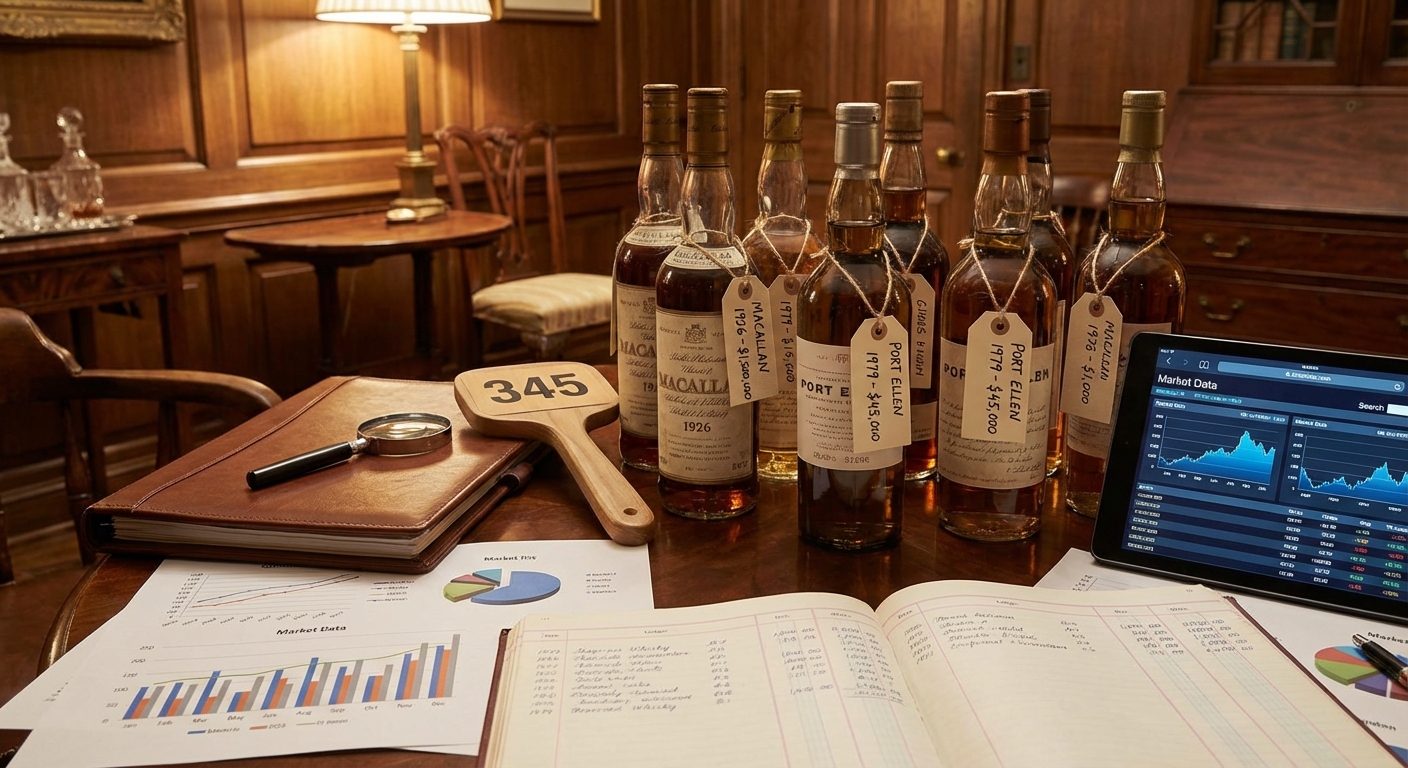
Age does not equal value. This is the single most common misconception in whisky collecting. A 12-year-old limited-edition release from a closed distillery can fetch thousands at auction, while a standard 25-year-old from a major producer might sit at £200. The market doesn’t reward age alone — it rewards rarity, provenance, and demand.
Distillery closures, for example, create permanent scarcity. When a distillery shuts, no new stock can ever be produced. Every bottle that exists is all that will ever exist. That scarcity drives prices upward — sometimes dramatically — over time.
Then there’s the condition problem. Two bottles of the exact same expression can differ in value by 40% or more based on fill level, label condition, and whether the original box is present. A pristine bottle with full packaging is a fundamentally different asset from a damaged one — even if the liquid inside is identical.
This is why online tools and rough estimates so often miss the mark. Accurate valuation requires knowledge of the specific bottle, current market demand, and recent comparable sales. Without all three, you’re guessing.
Scotland is home to more than 140 malt and grain distilleries — the world’s largest concentration of whisky production. The volume of collectible whisky in circulation is enormous, but genuinely rare bottles represent a tiny fraction of that market.
Every valuation — whether from an auction house, a specialist retailer, or a collector — comes down to these seven variables. Understanding them will help you make sense of any price you’re given.
Not all distilleries carry the same weight with collectors. Names like Macallan, Springbank, Bowmore, Port Ellen, and Karuizawa command premiums simply because of their reputation for quality and — in some cases — their closure. Closed distilleries are permanently constrained in supply, which tends to support long-term value.
A bottle from a well-regarded, still-operational distillery will have strong value if it’s from a desirable period or limited run. A bottle from an anonymous blending distillery, no matter how old, may not attract the same interest.
Age matters — but it’s one factor among many, not the defining one. Generally, older age statements command higher prices because of the cost of warehousing stock for decades. A 30-year-old single malt has been occupying barrel space for three decades before it ever reached the bottle.
The exception is when a distillery produces consistently strong young releases (some Islay malts, for example) or when a non-age-statement expression from a notable distillery becomes highly sought after. Read our vintage Scotch whisky guide for a deeper breakdown of how age interacts with other value factors.
Limited editions, single cask releases, and distillery exclusives are where serious collector value is built. A bottle produced in a run of 500 is inherently more scarce than a standard production expression, regardless of age.
Watch for: distillery anniversary bottlings, independent bottler releases (Gordon & MacPhail, Berry Bros & Rudd, Signatory), single sherry cask expressions, and any bottle released in a numbered series. These almost always command premiums over standard releases from the same distillery.
Condition is the most underestimated value factor among first-time sellers. A torn label can reduce value by 10–25%. A scratched or damaged bottle may cut value further. Collectors and auction buyers pay for pristine presentation — anything less requires a discount.
Examine the label for tears, water stains, fading, or peeling. Check the capsule and cork area for any signs of leakage. A bottle in excellent condition has significantly more market appeal — and that translates directly into price.
The original box, tube, or presentation case matters more than most people expect. Many rare expressions were issued with elaborate packaging — wooden cases, metal tins, crystal decanters, or branded presentation boxes — and collectors want the complete package.
A bottle with its original box will consistently outperform the same bottle without it. In some cases, particularly for prestige expressions like Johnnie Walker Blue Label King George V or high-end Dalmore releases, the absence of original packaging can reduce value by 15–30%.
Whisky in sealed bottles evaporates slowly over decades. This is measured against the neck of the bottle: “upper shoulder” fill is considered excellent for an old bottling; “mid-shoulder” is acceptable; anything below shoulder level raises questions about seal integrity and may significantly reduce value.
For relatively modern bottles (post-1990s), a full fill is expected. Any notable evaporation on a recent bottle suggests a compromised seal — which is a red flag for buyers.
The rare whisky market, like any collectibles market, moves in cycles. Certain distilleries experience surges of interest driven by media coverage, new releases, or award wins — and prices follow. Timing your sale to coincide with peak demand for a particular style or distillery can make a meaningful difference.
Now: this doesn’t mean you should try to time the market perfectly. But it does mean that getting a current valuation — rather than relying on a figure you read two years ago — is essential before making any decision.
Whisky values can go up as well as down. This article is for informational purposes only and does not constitute financial advice.
There are four concrete steps to establishing what your bottle is worth. Follow them in order.
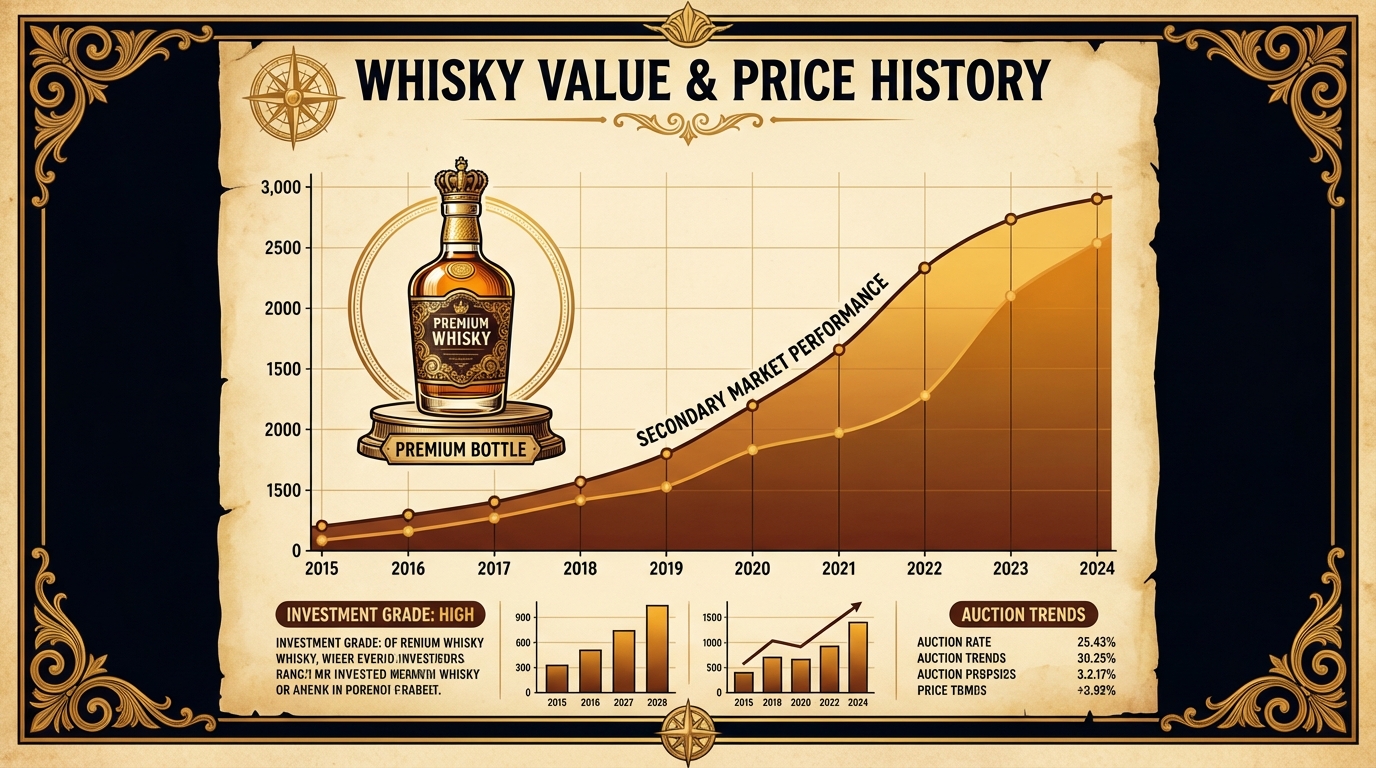
Before you can research a price, you need to know precisely what you have. This sounds obvious — but the details matter enormously.
Note down: the distillery name, the age statement (if any), the bottler (distillery-own or independent), the bottling year, the specific edition name or series, the cask type (sherry, bourbon, port, etc.), the cask number if stated, and the ABV. Even small differences — a 40% ABV vs 46.3% cask strength, for example — can separate a common bottling from a collectible one.
Photograph the label front and back, the capsule, any box or packaging, and the fill level. You’ll need these for any professional valuation service.
Auction results are the most reliable indicator of real-world market value, because they reflect what an actual buyer paid on an actual date. The key sources for UK auction data include Whisky Auctioneer, Scotch Whisky Auctions, and Bonhams for high-value bottles.
When searching, filter for results from the last 12 months — the market moves, and a sale from three years ago may not reflect current demand. Compare multiple results if available, noting the condition described in each listing. A result for a bottle in “excellent” condition isn’t directly comparable to one described as “fair.”
Question is: what if your bottle doesn’t appear in auction records? That could mean it’s relatively common and not frequently auctioned — or it could mean it’s rare enough that few examples have come to market. Either conclusion changes your strategy.
While auction results reflect buyer demand, specialist retailer prices reflect what the market considers retail value. Checking what specialist retailers are asking for your bottle gives you a useful upper bound.
Be aware that retail prices include a margin — what you’d receive for selling your bottle is typically 50–70% of the retail asking price, depending on the channel and the bottle. This is why direct comparison between auction results and retail prices requires adjustment.
Explore our guide to what makes a whisky bottle valuable for a detailed breakdown of how retail and auction values relate to each other.
For any bottle you believe may be worth more than £100 — and especially for anything you’re considering selling — a professional valuation is the right next step.
Glenbotal offers free whisky bottle valuations with no obligation to sell. Our team has six years of experience in the rare whisky market and works with a private collector network across the UK and Europe. We can tell you what your bottle is worth in the current market, what the best route to sale would be, and what realistic expectations look like. Submit your bottle details at glenbotal.co.uk to get started.
Here’s a practical comparison table to illustrate how specific attributes push value in each direction:
| Factor | Adds Value | Reduces Value |
|---|---|---|
| Distillery status | Closed distillery; cult following | Active distillery; mass-market production |
| Edition | Single cask; limited run; numbered series | Standard expression; widely available |
| Age statement | 18 years+; well-regarded age for that distillery | NAS (non-age-statement) from lesser-known producer |
| Label condition | Mint; no fading, tears, or marks | Torn; water-stained; peeling |
| Packaging | Original box, tube, or presentation case present | Box missing; damaged packaging |
| Fill level | Upper neck or above | Below shoulder; signs of evaporation |
| Seal | Intact capsule; no signs of leakage | Compromised or replaced capsule |
| Provenance | Documented purchase history; collector provenance | Unknown history; no documentation |
| Cask type | Sherry cask; sought-after finish | Plain bourbon cask without notable characteristics |
| Bottling strength | Cask strength (57%+ ABV) | Diluted to standard 40% ABV |
The presence of all positive factors can place a bottle in an entirely different value tier. Conversely, a bottle that might otherwise command a premium can be significantly devalued by a single issue — particularly label damage or missing packaging.
For a comprehensive look at what drives premium pricing, our guide to the ultimate whisky collecting guide covers the collector mindset and market dynamics in detail.
This is the question most people actually want answered.
The case for selling now: If you have a bottle you’re not planning to drink and you need the capital, or if the distillery’s recent output has become widely available (reducing scarcity), selling sooner rather than later is often sensible. Markets can shift — a surge in a distillery’s popularity that raises prices can just as easily reverse.
The case for holding: Bottles from closed distilleries, or from distilleries whose remaining stock is genuinely finite, tend to appreciate over time simply because the supply never grows. If your bottle is from a distillery that has been silent for 20+ years, the pool of available stock only shrinks.
Bottles that were produced in small runs and are now hard to find — particularly independent bottlings of classic vintages — often command more today than they would have five years ago. If you’re in no hurry, holding can be a legitimate strategy.
Now: none of this is a guarantee. Whisky is a collectibles market, and collectibles markets can be unpredictable. Fashions change, new releases can cannibalize demand for older ones, and economic conditions affect what buyers will pay.
Whisky values can go up as well as down. This article is for informational purposes only and does not constitute financial advice.
For a full breakdown of timing and strategy, see our dedicated guide to how to sell rare whisky in the UK.
Six years working with private collections has shown us the same errors repeated by first-time sellers. Avoid them.
1. Using retail price as the measure. The price a retailer charges includes their margin. What you’ll actually receive — through auction or direct sale — is typically less. Don’t anchor your expectations to retail.
2. Relying on outdated auction results. A sale from 2019 tells you what someone paid in 2019. The market has moved substantially since then in both directions for different categories. Always use recent comparable sales.
3. Overvaluing age. As covered above, age alone doesn’t drive value. A common 21-year-old blended Scotch is not inherently worth more than a rare 12-year-old single malt. The market values scarcity and provenance more than age statements.
4. Undervaluing condition factors. Sellers often dismiss label damage or missing boxes as minor cosmetic issues. They’re not — these are meaningful value deductions for serious collectors.
5. Only checking one source. A single auction result isn’t a valuation. One result could reflect a bidding war on the day, or a lack of competition. Multiple comparable results give a more reliable picture.
6. Attempting to open or re-seal the bottle. An opened bottle is worth considerably less than a sealed one for almost all collectible expressions. If you’re unsure of the value, do not open it before getting a valuation.
7. Not getting a professional opinion for anything over £100. The cost of a professional valuation is zero with Glenbotal. The cost of selling a £500 bottle for £80 at a car boot sale because you didn’t know what you had is real.
The most important step you can take right now is getting an accurate, current valuation for your bottle — before you make any decision about selling, gifting, or drinking it.
Glenbotal offers free whisky bottle valuations for UK collectors. Our team has six years of experience in the rare and hard-to-find bottle market, access to a private collector network across the UK and Europe, and a clear understanding of where the current market sits. We hold thousands of bottles in stock and buy regularly from private collections — which means we can give you a realistic picture of what your bottle is worth and what the best route to sale looks like.
You can submit your bottle details at glenbotal.co.uk. There’s no cost, no obligation, and no hard sell. Just an honest answer to the question: how much is my whisky worth?
If your bottle turns out to be a birth year release, you may also want to read our birth year whisky guide — birth year bottles carry their own unique market dynamics and often surprise their owners with their value.
Submit your bottle details — including the distillery, age statement, bottling year, edition, and photos — to glenbotal.co.uk. Glenbotal offers free bottle valuations with no obligation to sell. The service is available to collectors and private owners across the UK.
The key factors are distillery reputation, rarity of the specific release, age statement, bottle condition, original packaging, fill level, and current market demand. A limited-edition single cask expression from a closed distillery in pristine condition with original box will command a significant premium over a standard expression from a common producer.
Yes — but considerably less than a sealed equivalent. For most collectible expressions, an opened bottle will sell for 30–60% of what the sealed version would achieve. Some very rare expressions retain value even opened, but the reduction is almost always material. If you’re unsure of a bottle’s value, do not open it before getting a valuation.
With Glenbotal, valuations are typically returned within a few working days of receiving your submission. For particularly rare or complex bottles requiring additional research, it may take slightly longer. You’ll receive a clear written estimate of the bottle’s current market value.
You don’t need formal documentation, but the more detail you can provide the better. Useful information includes: distillery name, age statement (if any), bottling year, edition or series name, ABV, cask type, cask number (if stated), and condition notes. Clear photographs of the front label, back label, capsule, and fill level are very helpful.
Yes, significantly. Original boxes, tubes, presentation cases, and any accompanying materials (certificates, tasting notes, pouches) add meaningful value. For prestige expressions — high-end Dalmore, Macallan, Glenfarclas, or distillery-exclusive releases — the absence of original packaging can reduce value by 15–30% or more.
A bottle of 1926 Macallan sold at Sotheby’s in November 2023 for £2.1 million, setting the current world record for the most expensive bottle of whisky sold at auction. Prior to that, the same vintage achieved £1.5 million at Sotheby’s in 2019. Both sales highlight the extraordinary value that can attach to iconic vintage expressions from celebrated distilleries, particularly in pristine condition with documented provenance.
Online tools and price databases can give a useful starting point, but they have real limitations. They typically rely on historical auction data that may be months or years old, they can’t account for your specific bottle’s condition, and they don’t reflect private sale markets where many of the highest prices are achieved. For any bottle worth more than £100, a professional valuation is more reliable.
There’s no single right answer — it depends on the bottle, your circumstances, and the current market. Bottles from closed or silent distilleries tend to appreciate over time as remaining stock diminishes, which may favour holding. Bottles from active distilleries where new supply is available may face more pricing pressure. A professional valuation can give you a sense of current market conditions for your specific bottle. See our guide to how to sell rare whisky in the UK for a detailed breakdown.
Some do — particularly limited editions, single cask releases, and bottles from closed distilleries. Scotland’s Scotch Whisky Association notes that 43 bottles of Scotch are exported every second globally, underlining the scale of the market, but genuinely collectible bottles represent a tiny fraction of that output. Bottles that are truly rare, in excellent condition, and from desirable producers have historically shown price appreciation over time. However, this is a collectibles market and values can also decline. There are no guarantees, and whisky should not be purchased solely as a financial investment. Always seek independent financial advice if making investment decisions.
Generally, yes — closed distilleries create permanent supply constraints. Once a distillery closes, no new make spirit enters maturation, which means the pool of available bottles can only shrink over time. Distilleries like Port Ellen, Brora, Rosebank, and Littlemill command significant premiums for this reason. The extent of the premium depends on the distillery’s reputation and the specific release.
Yes. Glenbotal buys directly from private collectors and considers bottles of all values. If your free valuation reveals a bottle of interest, our team will make a direct offer. Many sellers prefer this route over auction as it is faster, simpler, and carries no auction commission fees.
Explore the full collection at Glenbotal — rare whisky sourced from private collectors across the UK and Europe.