
A bottle of Scotch distilled in the same year someone was born is one of the few gifts that genuinely cannot be replicated. It carries the weight of a specific moment in time — a season, a harvest, a distillery at work — and it arrives decades later still sealed, still evolving.
This guide covers everything you need to know: what birth year whisky actually means, how to find one from a specific year, what to look for when you’re buying, what to expect to pay, and which decade is likely to yield the best results for the person you have in mind.
Start here if you’re new to this. Every section links to a deeper resource if you want to go further.
A birth year whisky is a bottle of Scotch (or Irish, American, or Japanese) whisky that was distilled in the same calendar year as the recipient’s birth. The liquid itself was made that year — not simply bottled, labelled, or blended that year, but actually created from malted barley, water, and yeast and placed into oak casks to mature.
The distillation date is everything. A bottle with a distillation date of 1972 and a bottling date of 1998 is a 1972 birth year whisky. A bottle distilled in 2000 and released in 2025 is a 2000 whisky. This distinction trips up a lot of first-time buyers, so it is worth being clear from the outset.
Most Scotch single malts carry an age statement — “15 Year Old”, “25 Year Old”, “40 Year Old” — which tells you how long the whisky spent in cask before bottling. You can work backwards from the bottling year to confirm the distillation year, or forward from the distillation year to find which bottlings fall in the right window.
For the full mechanics of tracking down a specific year, see our dedicated guide: How to Find a Whisky Bottle from Someone’s Birth Year.
The appeal operates on several levels at once.
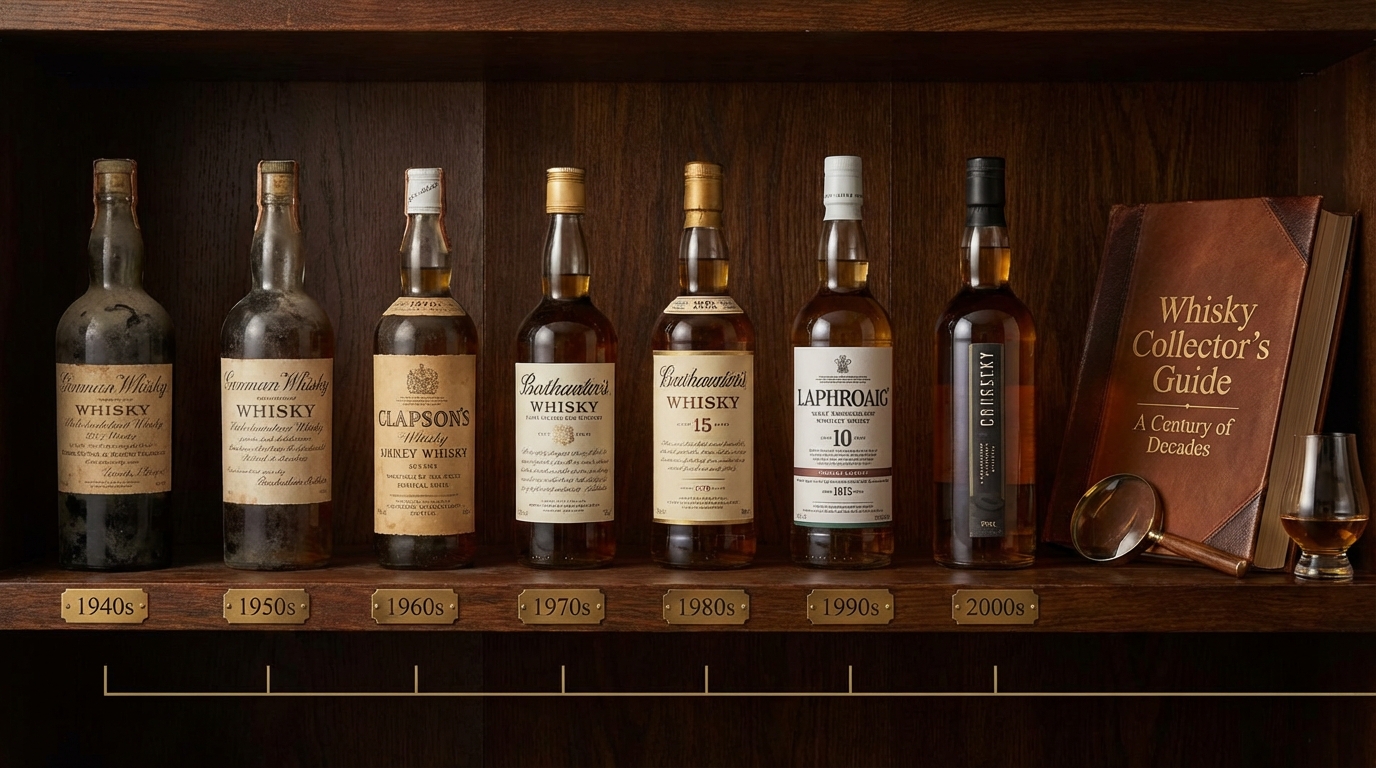
For gifters, a birth year bottle solves the hardest problem in gift-giving: how do you find something genuinely personal for someone who already has everything? A bottle distilled in 1968 cannot be found in any high street shop. It takes knowledge, access, and patience — which is precisely why it communicates something a voucher or a standard retail whisky cannot.
For the recipients, it connects to something primal. The idea that this liquid has been quietly ageing in a Scottish warehouse since the year they were born — often for longer than they have been an adult — is quietly astonishing to most people when they first encounter it.
For collectors, birth year whiskies occupy a distinct and defensible niche within the broader rare whisky market. According to the Knight Frank Luxury Investment Index, rare whisky has outperformed most traditional asset classes over the past decade as a collectible category. Birth year bottles from distilleries with strong global reputations — Macallan, Springbank, Glen Grant, Bowmore — tend to hold and appreciate in value when stored correctly.
“A bottle distilled in 1965 has aged through every year that its owner has been alive. There is no other object you can give someone that carries quite that weight.”
Occasions tend to be milestone birthdays — 50th, 60th, 40th — and significant anniversaries. These are moments where the usual gift register falls short, and where provenance genuinely matters.
This is the single most important concept for anyone buying a birth year whisky for the first time.
When a distillery produces a whisky, it is filled into oak casks and left to mature. During that time — which might be anywhere from ten years to fifty years — it is not available to buy. It becomes available only when it is drawn from cask and bottled, either by the distillery itself or by an independent bottler.
This means a whisky from, say, 1975 might have been bottled in 1990 (as a 15-year-old), in 2000 (as a 25-year-old), in 2010 (as a 35-year-old), or even later. All of these are valid 1975 birth year whiskies. The older the bottling, the richer and more evolved the liquid — and, typically, the rarer and more expensive the bottle.
Independent bottlers — companies like Gordon & MacPhail, Signatory Vintage, and Berry Bros & Rudd — have been filling casks from distilleries for decades and releasing them at various ages. This network of independent releases substantially expands what is available for any given birth year, well beyond what official distillery bottlings alone would offer.
When you see a birth year bottle for sale, always check:
Whisky distilled in the 1960s is now sixty years old or more. Very little of it remains available, and what does exist commands prices that reflect its scarcity.
The 1960s were, paradoxically, a golden era for Scotch production. Distilleries operated at full capacity to meet export demand, filling hundreds of casks per week. Many of those casks have since been depleted — either bottled as standard releases, consumed, or simply lost to the angel’s share (the portion of liquid that evaporates through the cask over decades). What remains is genuinely rare.
Distilleries that produced exceptional spirit in this era include Macallan, Springbank, Bowmore, Glenlivet, and Glen Grant. Independent bottlers Gordon & MacPhail have some of the deepest stocks from this period, having filled casks directly from distilleries throughout the 1960s.
For a buyer, expect to pay significantly more for a 1960s bottle than any other decade — not just because of age, but because of genuine scarcity. Even partial bottles or less prestigious distilleries carry price tags that reflect the era.
Explore the best birth year whiskies from the 1960s →
Anyone born between 1975 and 1979 will be turning 50 between 2025 and 2029 — making 1970s whiskies one of the most sought-after categories right now.
The 1970s saw some of the finest production in Scotch whisky history. Distilleries in this era used techniques — longer fermentations, direct-fired stills, a higher proportion of sherry casks — that have since been largely abandoned or scaled back in the interest of efficiency. The result is that 1970s whiskies often carry a richness, weight, and complexity that modern expressions cannot easily replicate.
Availability is tighter than it was a decade ago, but bottles from the 1970s do still surface regularly through specialist retailers, auction houses, and private collections. Key distilleries to look for include Macallan, Springbank, Talisker, Caol Ila, and Highland Park.
Discover the best birth year whiskies from the 1970s →
The 1980s represent the most accessible birth year decade for buyers, with a wider range of bottles available across a broader price spectrum.
The Scotch whisky industry experienced a significant contraction in the early-to-mid 1980s — overproduction in the 1970s led to a glut, and many distilleries mothballed or closed entirely. This is relevant because it affected which distilleries were filling casks at which points in the decade. Spirit from the very early 1980s from active distilleries can be excellent; mid-decade requires more careful selection.
By the late 1980s, quality had stabilised and several distilleries were producing spirit that has aged beautifully. For anyone born in the 1980s approaching their 40th or turning 40, there is a strong selection of bottles available at a range of price points.
Browse the best birth year whiskies from the 1980s →
Whisky from the 1990s is increasingly being recognised as a high-quality vintage category in its own right. It is now old enough — 25 to 35 years in many cases — to carry genuine complexity, and the best examples are beginning to climb in price as collectors take notice.
For recipients born in the 1990s turning 30 or celebrating early milestones, a 1990s birth year bottle is a meaningful and increasingly smart choice. The selection is broader, prices are generally lower than earlier decades, and the quality ceiling — particularly from distilleries like Ardbeg, Springbank, and Bruichladdich — is impressively high.
Find the best birth year whiskies from the 1990s →
The 50th birthday is the most common occasion for a birth year whisky purchase. A bottle distilled in the mid-1970s, now properly aged at 45–50+ years old, carries real weight — in provenance, in rarity, and in what it communicates to the recipient.
For a 50th, the expectation is typically a premium bottle: something from a recognised distillery, with a clear age statement, well-presented. This is not the occasion for a bottom-shelf independent bottling. Look for official distillery releases or respected independents like Gordon & MacPhail, Berry Bros & Rudd, or Signatory.
Read the dedicated guide: Birth Year Whisky as a 50th Birthday Gift →
For a 60th birthday, you are searching for whisky from the mid-1960s — among the most storied and sought-after bottles in the rare Scotch market. Expect a significantly higher price point and a smaller pool of available stock.
The effort and cost involved in sourcing a genuine 1960s birth year bottle are themselves part of the gift. If you find one from a distillery the recipient admires, it will almost certainly be one of the most memorable presents they have ever received.
The 40th birthday has become an increasingly popular occasion for birth year whisky, particularly as 1980s bottles come into focus. The good news: 1980s whiskies offer strong availability and a wider range of price points, making it easier to find something excellent without breaking the bank.
A birth year whisky tied to the year of a couple’s wedding — or to the year they met — carries its own particular resonance. This use case works equally well with Scotch, Irish whiskey, or American bourbon depending on the couple’s preferences.
An age statement tells you how long the whisky matured in cask. For birth year purchases, the age statement is also your primary means of confirming that the liquid was actually distilled in the right year.
Longer age statements generally (though not always) mean greater complexity, depth, and rarity. A 40-year-old single malt has been transforming in oak since the late 1970s or early 1980s — the result is something that a 12-year-old expression simply cannot replicate.
The cask in which a whisky matures has a profound effect on its character. The two dominant cask types are:
For many collectors and gifters, sherry-casked expressions from the 1960s and 1970s represent the pinnacle of what Scotch can achieve. They are also harder to find and more expensive.
Not all distilleries command the same secondary market value or carry the same cultural weight. For a birth year gift — particularly a milestone one — the name on the label matters.
Distilleries with the strongest recognition for age-worthy, collectable birth year whiskies include:
For older bottles, condition is critical. Check the fill level (how much liquid remains in the bottle), the label condition, and whether any provenance documentation exists. A bottle with a lower fill level, damaged label, or unknown storage history carries greater uncertainty — which should be reflected in the price.
The following ranges are approximate market guides only and reflect the general secondary market at time of writing. Prices fluctuate based on distillery, age statement, condition, and availability. This is not financial advice, and past performance of whisky as an investment does not guarantee future returns.
| Decade | Entry Level | Mid-Range | Premium |
|---|---|---|---|
| 1990s | £80–£200 | £200–£600 | £600–£2,000+ |
| 1980s | £150–£400 | £400–£1,200 | £1,200–£5,000+ |
| 1970s | £400–£900 | £900–£3,000 | £3,000–£15,000+ |
| 1960s | £900–£2,500 | £2,500–£8,000 | £8,000–£40,000+ |
The ranges are wide because condition, distillery, age statement, and cask type all influence price substantially. A 1970s Springbank from a prestigious cask will command more than a generic 1970s blended Scotch. A 1965 Macallan in exceptional condition bears no comparison to a 1965 lowland expression in average condition.
For context on what the broader rare whisky market looks like, Scotch Whisky Association market data and the Rare Whisky 101 Apex 1000 Index provide useful benchmarks.
| Decade | Distilleries to Seek | Style Profile | Price Range |
|---|---|---|---|
| 1960s | Macallan, Springbank, Glen Grant, Bowmore | Rich sherry, deep fruit, weight | £900–£40,000+ |
| 1970s | Macallan, Springbank, Highland Park, Talisker | Complex, layered, often sherried | £400–£15,000+ |
| 1980s | Highland Park, Ardbeg, Glenfarclas, Caol Ila | Varied — peated, fruity, spiced | £150–£5,000+ |
| 1990s | Ardbeg, Springbank, Bruichladdich, Glenlivet | Fresher, lighter, growing complexity | £80–£2,000+ |
Genuine birth year bottles are rarely found in standard retail channels. The reliable routes are:
The Scotch Whisky Association’s guidance on buying rare Scotch is a useful reference for understanding what labelling requirements apply to age statements and distillation date claims.
Avoid unverified sellers on general marketplace platforms. For bottles over a few hundred pounds, provenance documentation is not optional.
Learn what birth year whisky actually means, how distillation and bottling dates work, and how to navigate the secondary market with confidence.
2 Resources
Understand what was being distilled in each era, which distilleries were producing the best spirit, and which expressions are worth seeking out today.
4 Resources
Choose the right bottle for a specific occasion — with practical guidance on age statements, presentation, and what makes a birth year whisky feel genuinely special rather than simply expensive.
1 Resource
For those who want to move beyond a single purchase and build a broader understanding of rare and collectible Scotch.
1 Resource
Birth year whisky is one of the few gifts that carries genuine, verifiable history. When you hand someone a bottle distilled in the year they were born, you are giving them a piece of time — something made before they could speak, quietly ageing in an oak cask while they grew up, went to school, built a career, started a family.
The search is part of what makes it meaningful. Finding the right bottle — the right distillery, the right decade, the right cask — takes knowledge and effort. That is why it lands differently from anything off a shelf.
Use the guides in this hub to navigate the full picture. Start with the decade that matches your recipient’s birth year, work through what to look for, and get in touch if you want help tracking down something specific.
Start Exploring the Birth Year Collection at Glenbotal →
Birth year whisky is a bottle of whisky — most commonly Scotch single malt — in which the liquid was distilled in the same calendar year as the recipient’s birth. The key is the distillation date: the year the spirit was made and placed into cask, not the year it was bottled or released.
Start by working out the distillation year you need. Then search for bottles with an age statement that, combined with the bottling year, confirms the right distillation date. Specialist retailers, independent bottlers, and whisky auction houses are the most reliable sources. Our dedicated guide covers the full process: How to Find a Whisky Bottle from Someone’s Birth Year.
Yes — if a whisky was distilled in 1995 and bottled in 2025 with a 30-year age statement, it is a 1995 birth year whisky. The distillation year (1995) is what matters for birth year purposes, regardless of when it was bottled.
The distilled date is when the spirit was created — fermented, distilled, and filled into cask. The bottled date is when it was drawn from cask, reduced to bottling strength, and sealed. For birth year purposes, the distilled date is the one that counts. Some bottles only show a bottling date, in which case you need the age statement to calculate back to the distillation year.
It depends on the milestone. For a 50th birthday (born mid-1970s), look at 1970s whiskies — widely regarded as a golden era for Scotch. For a 60th (born mid-1960s), 1960s bottles are rarer and more expensive but deeply impressive. For a 40th (born mid-1980s), the 1980s offer the best balance of availability and quality at reasonable price points.
Prices vary considerably by decade and distillery. As a rough guide: 1990s bottles start from around £80–£200 for quality examples; 1980s from around £150–£400; 1970s from around £400 upward; 1960s from around £900 and considerably higher for prestigious distilleries. For a milestone 50th or 60th birthday, most buyers spend between £300 and £1,500. See the price guide section above for full ranges. Price ranges are approximate and for guidance only — not financial advice.
Some do, particularly bottles from prestigious distilleries in earlier decades with dwindling available stock. However, whisky should be bought to be gifted or enjoyed rather than primarily as an investment. The rare whisky market has shown strong historical performance, but past trends do not guarantee future returns. This is not financial or investment advice.
Confirm the distillation date (or calculate it from the age statement and bottling year). Check the age statement, the distillery name, who bottled it (official distillery or independent bottler), the cask type if stated, and the fill level for older bottles. For bottles over £500, look for a receipt of purchase or storage history.
Most distilleries do not hold stocks going back more than 20–30 years in their standard retail ranges. For earlier decades, you need a specialist rare whisky retailer, an independent bottler with archival casks, or a reputable auction house. Gordon & MacPhail is one of the few independent bottlers with documented stocks reaching back to the 1950s and 1960s.
Yes — provided it is stored correctly. Keep the bottle upright (unlike wine, whisky is stored standing to prevent the high-ABV spirit from degrading the cork), away from direct light, and at a stable temperature. A sealed bottle of quality Scotch can hold its value and condition for decades when stored well.
The combination of distillery reputation, cask quality, age, fill level, label condition, and provenance documentation. Bottles from distilleries with strong global profiles (Macallan, Springbank, Bowmore) that were filled into premium sherry casks and are in excellent condition with full documentation command the highest collector interest. Scarcity of the specific vintage year also plays a significant role.
Specialist rare whisky retailers — those who actively source from private collections and can verify provenance — offer the most reliable route for genuine birth year bottles. Reputable auction houses are also a good source, though buyer’s premiums typically add 20–25% to the hammer price. Glenbotal sources rare and vintage bottles directly from private collections across the UK and Europe. See the current collection at glenbotal.co.uk.
Explore the full collection at Glenbotal — rare whisky sourced from private collectors across the UK and Europe.