
The rare whisky market has seen exceptional growth over the past decade, with sought-after single malts regularly fetching multiples of their original retail price at auction and through specialist channels. Yet many private collectors in the UK leave significant money on the table — simply by skipping one critical step before they sell.
Selling a rare whisky bottle in the UK should be straightforward — but for most private collectors, it isn’t. The market is fragmented across auction houses, specialist retailers, online platforms, and private buyers, each with different fees, timelines, and best-fit bottle types. Without knowing where to start, it’s easy to accept a price well below what your bottle could realistically achieve. This guide walks you through every option available to UK sellers in 2025, explains exactly what to expect at each stage, and shows you why getting a professional valuation before you do anything else is the single most important step you can take.
The rare whisky market rewards knowledge. Sellers who understand what they have, who the likely buyers are, and which channel suits their bottle will consistently achieve better returns than those who list blindly or accept the first offer they receive.
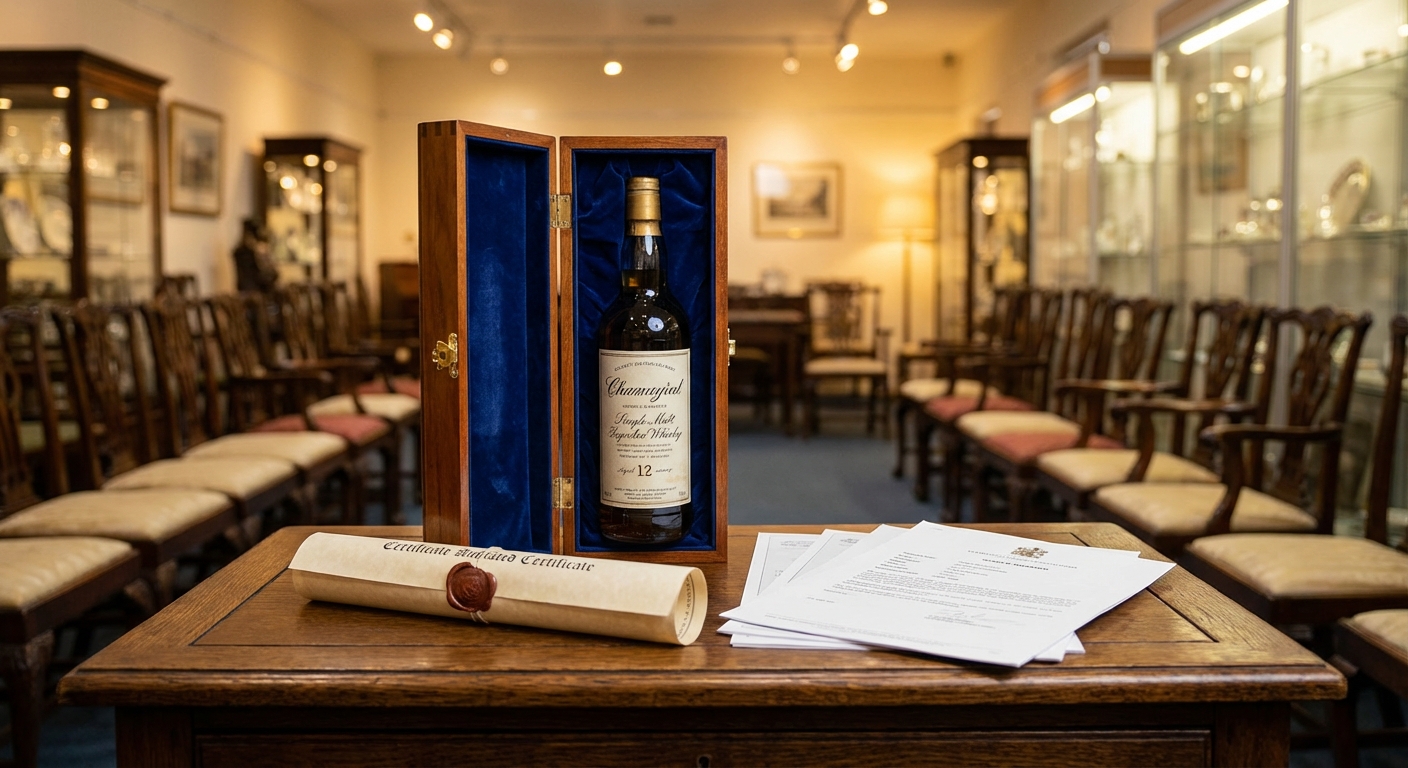
The most common mistake is simply not knowing what a bottle is worth before agreeing to sell it. Without a current market valuation, you have no benchmark. You can’t evaluate whether an offer is competitive, whether an auction estimate is fair, or whether the timing is right. You’re negotiating without a position.
A second problem is channel mismatch. Not every bottle suits every selling route. An ultra-rare limited release from a sought-after distillery may achieve its best price at specialist auction, while a quality standard-range expression might sell faster and with less hassle through a specialist retailer. Choosing the wrong channel doesn’t just cost you time — it can cost you a meaningful percentage of the final sale price.
Here’s the deal: the whisky market has never been more accessible to private sellers, but that accessibility has also created more complexity. This guide removes that complexity.
Before you contact an auction house, post on a forum, or list anything online, get a professional valuation. This is non-negotiable if you want to sell at the right price.
A valuation tells you three things: what your bottle is currently worth on the open market, which selling channel is most appropriate for it, and what a realistic minimum price looks like before fees. Without all three, you’re guessing.
Glenbotal offers free valuations on rare and collectable whisky bottles. The process is simple: send photographs and basic details about your bottle — distillery, age statement, fill level, box and paperwork condition — and their team of specialists will provide a current market assessment at no cost. There’s no obligation to sell, and no pressure. It’s simply the smartest first step any UK seller can take.
For context on what factors influence a bottle’s value, see our guide to what makes a whisky bottle valuable. If you’re unsure whether your bottle is worth selling at all, how much is my whisky worth covers the key indicators in detail.
Getting a valuation from a specialist who actively buys bottles — rather than an auction house estimating for their own sale purposes — gives you a genuinely independent data point. That matters when you’re comparing options.
There are four realistic routes for selling a rare whisky bottle in the UK. Each has genuine advantages and real trade-offs. Here’s an honest look at all of them.
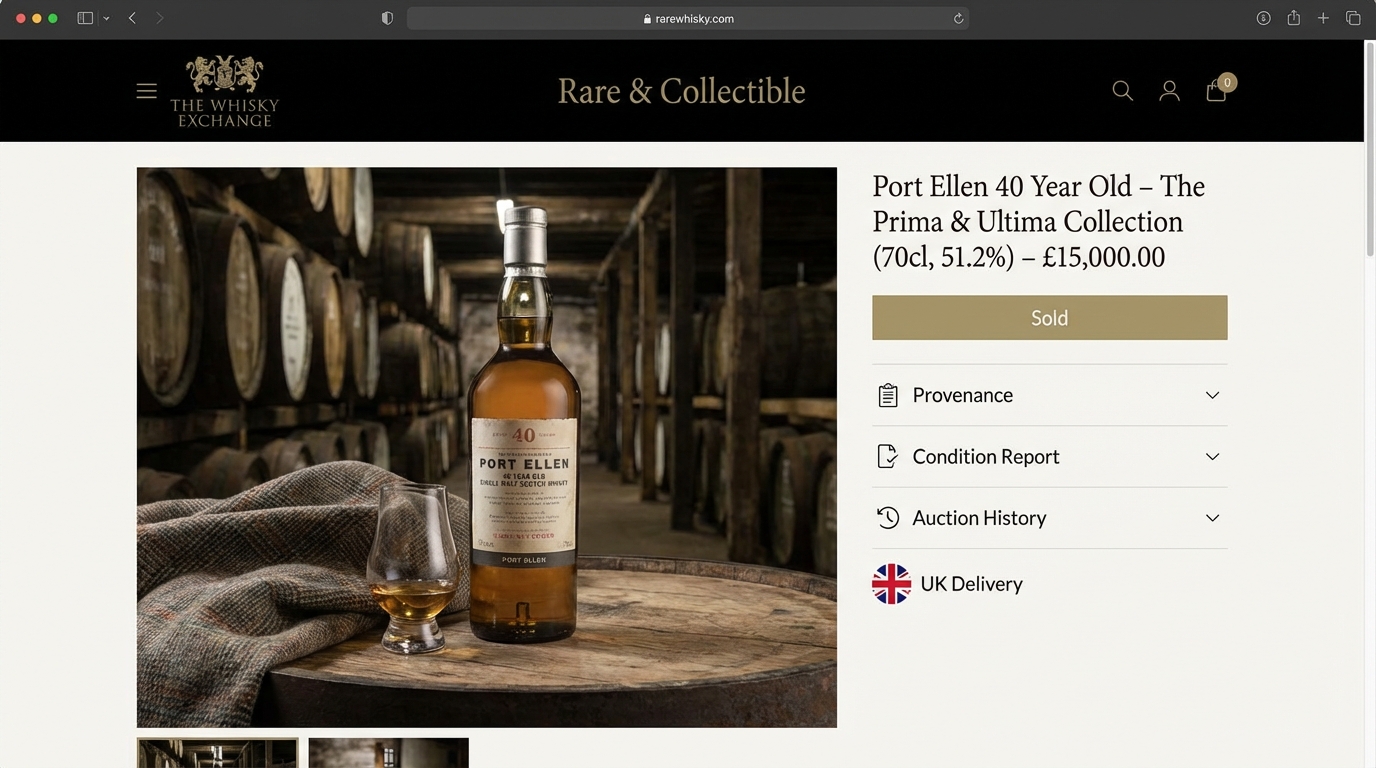
Specialist retailers buy bottles directly from private collectors and resell them through their own channels — typically online, to a network of collectors and enthusiasts across the UK and Europe.
The main advantages are speed and simplicity. A direct sale to a specialist retailer typically completes within days rather than weeks. There are no seller’s fees or auction commissions to account for, and the process involves minimal administration. For sellers who want a clean, straightforward transaction without waiting for an auction cycle, this is often the most practical route.
Glenbotal has been buying rare and sought-after whisky from private collectors for over six years, with a private collector network spanning the UK and Europe. Their team understands current market values and pays competitive prices — not because they have to, but because their sourcing model depends on private sellers choosing to come back.
This route works particularly well for: single bottles or small collections, sellers who need a quick turnaround, and bottles where the retail demand is strong and predictable.
The UK has several reputable whisky auction platforms, including Scotch Whisky Auctions, Whisky Auctioneer, and Whisky Hammer. These platforms run regular monthly auctions and are particularly well suited to high-value or highly collectable bottles where competitive bidding can push prices above standard retail.
What sellers need to know about auction fees: Fee structures vary between platforms. Scotch Whisky Auctions, for example, currently charges £8 per bottle plus a £10 reserve fee per lot if required, with 0% seller’s commission — making them competitive on cost. Other auction platforms charge seller’s commission in the range of 10–20%, which directly reduces your net return. Always check the current fee structure before committing, as these change.
The timeline is longer than a direct sale. Depending on when you submit relative to the next auction cycle, you may wait two to four weeks before your bottle goes live, with payment typically processed within 14 days of the auction closing. End-to-end, expect four to eight weeks from submission to cash in hand.
Auction houses will generally not accept: unsealed or leaking bottles, bottles with severely compromised fill levels (below approximately three-quarters full), or certain decorative decanters with limited collector appeal.
General marketplaces such as eBay, Facebook Marketplace, or specialist whisky forums allow private sellers to list bottles directly. The appeal is obvious: no intermediary, no commission (beyond platform listing fees), and full control over pricing.
The reality is more mixed. Reaching serious whisky collectors through general platforms requires patience and strong photography. Prices achieved on open marketplaces are often lower than specialist channels because the buyer pool is less targeted. Listing fees, PayPal or payment processing costs, and postage all erode margins. And selling alcohol online in the UK carries legal restrictions — you must be over 18, the buyer must be over 18, and certain platform rules around alcohol listings apply.
For common, widely available bottles, online marketplaces can work. For genuinely rare or high-value expressions, they are rarely the optimal channel.
If you already know a collector who wants your bottle, a private sale is the simplest transaction of all — no fees, no intermediaries, and price agreed between two parties. The challenge is finding that buyer. Unless you’re already part of an active collector community, private buyers are hard to locate, and the process of verifying their interest, negotiating a fair price, and completing a secure transaction takes time and carries risk.
Private sale is best suited to sellers who have an existing network of collectors or who are selling a bottle with a very specific, niche appeal that suits a particular buyer they already know.
Regardless of which channel you choose, how you present your bottle affects the price it achieves. This isn’t about making something look better than it is — it’s about presenting it accurately and completely.
Condition is everything. Check your bottle carefully before sale. Note the fill level (ullage), the condition of the label (any tears, staining, or fading), and whether the cap or cork seal is intact. Be honest about any damage — specialist buyers will spot issues immediately, and misrepresenting condition damages trust and can lead to disputes.
Original packaging significantly increases the value of collectable bottles. If you have the original box, tube, or presentation case, include it. If you have certificates of authenticity, distillery letters, or purchase receipts, locate them before you make contact with a buyer or auction house. For a deeper look at what affects value, our vintage Scotch whisky guide covers distillery provenance, age statements, and packaging in detail.
For photography, natural light and a clean neutral background are sufficient. Capture: the front label, back label, fill level against the light, the seal, and the box if you have it. Good photographs speed up the valuation process and demonstrate that you’re a credible seller.
Storage matters too. If your bottle isn’t yet sold, store it upright in a cool, dark location away from direct sunlight and temperature fluctuations. Heat and UV light degrade whisky over time and can affect both the liquid and the label condition.
Once you’ve received a valuation and decided on a channel, the final stage is agreeing terms and completing the transaction. What this looks like depends on your chosen route.
Direct sale to a specialist retailer is the most streamlined process. Once Glenbotal confirms a price following valuation, you agree terms, arrange secure delivery or collection, and receive payment — typically by bank transfer — once the bottle is received and verified. The whole process from valuation to payment can be completed in a matter of days.
Auction house sales involve submitting your bottle to the platform, waiting for the next available auction slot, and then waiting for the auction to close and payment to be processed. Scotch Whisky Auctions, for example, processes payments within 14 days of buyer confirmation. Factor the full timeline into your planning if you need funds by a specific date.
For any sale, confirm the following before you commit: the exact price or reserve, any fees that will be deducted, the payment method and timeline, who is responsible for shipping insurance, and what happens if the bottle doesn’t sell (relevant for auctions with reserves).
Keep records of your sale for tax purposes. HMRC requires auction platforms to report sales data under DAC7 regulations (in force from 2024), and capital gains rules may apply if your bottle has appreciated significantly. This doesn’t necessarily mean you owe tax — but you should be aware that transaction data is now being reported to HMRC and it’s worth seeking appropriate advice if you’re selling a high-value collection.
| Method | Speed | Fees | Best For | Typical Return |
|---|---|---|---|---|
| Specialist retailer (e.g. Glenbotal) | Fast — days | None | Single bottles, quick sale, competitive market value | Competitive |
| Auction house | 4–8 weeks | £8/bottle + optional reserve fee; 0–20% commission depending on platform | High-value bottles, competitive bidding potential | Market rate |
| Online marketplace | Variable — days to weeks | Listing fees + payment processing (typically 5–15%) | Common bottles, existing audience | Lower |
| Private sale | Variable | None | Known buyers, niche appeal | Variable |
A few notes on reading this table honestly:
The “typical return” for auctions depends enormously on the bottle and the timing. A rare, sought-after expression hitting the market when collector demand is strong can achieve exceptional prices. The same bottle in a quiet auction with low bidder interest may fall short of expectations. Auctions carry more variability than direct sales — which is a feature if conditions are right, and a risk if they’re not.
For most private sellers with one to five bottles, the combination of speed, simplicity, and no fees makes a specialist retailer the most practical and financially sound option — particularly once you factor in the time value of waiting six to eight weeks for an auction cycle to complete.
Skipping the valuation. Accepting the first price you’re offered without knowing the current market value is the single most common error. A free valuation takes minutes to request. There’s no good reason not to get one.
Choosing the wrong channel for the bottle. An everyday blended Scotch is unlikely to generate competitive bidding at a specialist auction. A rare, limited-release single malt from a closed distillery deserves a channel that puts it in front of serious collectors. Match the channel to the bottle.
Ignoring fees until after the sale. Auction commissions, listing fees, and payment processing costs all reduce your net return. Always calculate your actual take-home figure — not the hammer price — when comparing options.
Poor timing. The whisky secondary market has seasonal patterns. Auction activity and collector spending typically increase in the run-up to Christmas and around major whisky events. If your bottle isn’t time-sensitive, getting the timing right can make a meaningful difference.
Selling a collection piecemeal without a plan. If you have multiple bottles, think about whether they should be sold together or separately, through one channel or several, and in what order. A good specialist retailer or auction house will help you think through this — but only if you ask.
Overlooking storage and presentation. A bottle stored poorly, photographed badly, or submitted without its original box will achieve a lower price than it deserves. Take an hour to do this properly before you sell.
For a broader perspective on the collector market, our ultimate whisky collecting guide covers how serious collectors think about provenance, condition, and value.
Selling rare whisky in the UK is not complicated — but doing it well requires a few minutes of preparation and an understanding of your options. The sellers who consistently achieve the best prices are those who start with a professional valuation, match their bottle to the right channel, and present their collection honestly and completely.
The easiest first step is a free valuation from Glenbotal. Send your bottle details — photographs, distillery, age statement, condition notes — and their specialist team will give you a current market assessment with no obligation to sell and no fees. From there, you’ll have the information you need to make a confident, informed decision about how and where to sell.
Get your free whisky valuation at glenbotal.co.uk — and find out what your bottles are really worth.
You can also explore where to sell rare whisky in the UK for a fuller comparison of platforms and buyers currently active in the market.
It depends on the channel. A direct sale to a specialist retailer like Glenbotal can complete within days from valuation to payment. An auction house sale typically takes four to eight weeks end-to-end, accounting for the submission deadline, auction cycle, and post-auction payment processing window.
Fee structures vary between platforms. Scotch Whisky Auctions currently charges £8 per bottle with 0% seller’s commission, plus a £10 reserve fee per lot if required. Other auction platforms charge seller’s commission ranging from approximately 10% to 20% of the hammer price. Always check the current fee schedule before committing — structures change, and the difference significantly affects your net return.
In most cases, no — at least not through reputable channels. Auction houses will typically decline bottles with broken seals or compromised fill levels below approximately three-quarters full. Specialist retailers apply similar standards. A significantly opened bottle has limited secondary market value. If you have a partly consumed bottle, it’s worth asking a specialist, but manage expectations accordingly.
Yes, meaningfully so for collectable and rare expressions. The original box, tube, or presentation case is part of the complete package that serious collectors expect. For high-value bottles, the presence or absence of original packaging can affect the sale price by 10–30% or more. Always include original packaging and any accompanying documentation when selling.
Key indicators include: distillery (closed or highly sought-after distilleries command premiums), age statement (older expressions are generally more valuable), limited release or special edition status, bottling strength and independent bottler provenance, fill level and label condition, and original packaging. Our guide to what makes a whisky bottle valuable covers each factor in detail. When in doubt, request a free valuation — it costs nothing.
There’s no absolute minimum, but transaction costs (shipping, time, auction fees) make it less worthwhile to sell bottles below approximately £50–100 in value through specialist channels. For lower-value bottles, online marketplaces or local sales may be more practical. Glenbotal’s free valuation will tell you quickly whether a bottle is worth pursuing through a specialist route.
Send photographs of your bottle — front label, back label, fill level, seal, and original packaging if available — along with basic details about the distillery, age statement, and any known provenance. Glenbotal’s specialist team will review the submission and provide a current market valuation at no cost and with no obligation to sell. The process typically takes one to two business days.
No, you don’t need a receipt to sell. However, any documentation that establishes provenance — purchase receipts, distillery certificates, gift letters, or auction purchase records — adds to the bottle’s credibility and can support a stronger price. For very high-value bottles, provenance documentation is increasingly expected by serious buyers.
Yes, and in many cases selling a collection is more efficient than selling individual bottles. Glenbotal regularly purchases collections from private sellers across the UK. If you have multiple bottles, a single valuation consultation can cover the whole collection and help you decide whether to sell together or separately, and which route suits each piece.
Damage — torn labels, leaking seals, significant ullage, or cracked packaging — will reduce the bottle’s value and may make it unsaleable through specialist channels. Be honest about any damage when requesting a valuation. In some cases, a damaged bottle from a highly sought-after distillery still has collector value; in others, it may not be worth the effort of selling through a specialist route. A frank assessment from a specialist is the fastest way to find out where you stand.
Potentially. Since 2024, HMRC receives transaction data from online auction platforms under DAC7 reporting regulations. If your bottle has appreciated significantly since purchase, capital gains tax may apply — though there are annual allowances and exceptions. This is a complex area that depends on your individual circumstances, the purchase price, and the sale price. If you’re selling a high-value collection, seek advice from a tax professional before completing sales.
Single malt Scotch whisky consistently drives the strongest secondary market demand, particularly from distilleries with limited output, closed operations, or a strong collector following — Macallan, Port Ellen, Brora, Karuizawa, and independent bottlings from prestigious cask series among them. Age statements of 18 years and above, cask-strength bottlings, and numbered limited editions from well-regarded distilleries all attract premium interest. For a broader view of what drives collector demand, our vintage Scotch whisky guide is a good starting point.
Explore the full collection at Glenbotal — rare whisky sourced from private collectors across the UK and Europe.