
Five aged expressions. Five extraordinary cask finishes. One of the most ambitious premium series ever produced by a Scottish distillery.
The Glenfiddich Grand Series is the distillery’s most prestigious collection — a range of extended-aged single malts, each finished in an exceptional and unusual cask sourced from a completely different corner of the world. From Caribbean rum barrels to Japanese awamori vessels to rare French Cognac casks, every release in the Grand Series carries a flavour story that no other whisky on earth can replicate. Whether you’re a serious collector building a complete set, a drinker searching for something genuinely rare, or simply curious about what separates a 31-year-old Bordeaux-finished Scotch from the bottle on your shelf — this guide covers everything you need to know.
The Grand Series is Glenfiddich’s answer to a single question: what happens when you take a long-aged Speyside single malt and finish it in the finest casks money can source?
Every expression in the series begins with Glenfiddich’s characteristic house spirit — the light, fruited, elegant Speyside style that has made it the world’s best-selling single malt for decades. That spirit is matured for an extended period in traditional American and European oak, before being transferred to a carefully selected finishing cask for a final period of development. The finishing cask is the defining feature of each release, and each one is deliberately chosen to add a layer of flavour complexity that could not be achieved through conventional maturation alone.
The Grand Series is not a core range in the traditional sense. These are premium releases — aged longer, finished in harder-to-source casks, produced in smaller volumes, and priced accordingly. They sit at the top of Glenfiddich’s portfolio and are aimed squarely at the collector, the connoisseur, and anyone who understands that the most interesting whiskies are never found on a supermarket shelf.
What distinguishes the Grand Series from other premium releases is that the individual expressions form a coherent collection with a shared identity. Each carries the “Grand” naming convention. Each tells a story about an exceptional cask from a specific part of the world. And each builds on the same base character — Glenfiddich’s signature fruit-forward Speyside style — while pushing that character in a clearly distinct direction.
That coherence makes the Grand Series unusually compelling for collectors. Unlike one-off limited releases, which stand alone as individual objects of desire, the Grand Series rewards being considered as a whole. Acquiring all five expressions is a project that takes time and patience — and that is part of the appeal.
The expressions in the Grand Series are not standard 12 or 15-year whiskies. The youngest entry — Gran Reserva — carries 21 years of maturation. The oldest, Grand Château, has spent 31 years developing in barrel before being released. These are not bottles that can be quickly restocked. Every year a cask sits in the warehouse, the whisky inside it is ageing toward something rarer and more singular — and that scarcity is baked into the product at a fundamental level.
For serious collectors, the age statements matter. A 29-year-old or 31-year-old single malt finished in an exotic cask represents a very particular convergence of time, craft, and sourcing expertise. That combination does not come cheaply, and it does not come often.
Glenfiddich was founded in 1886 by William Grant, who built the distillery himself — stone by stone, with his own hands and those of his seven sons.
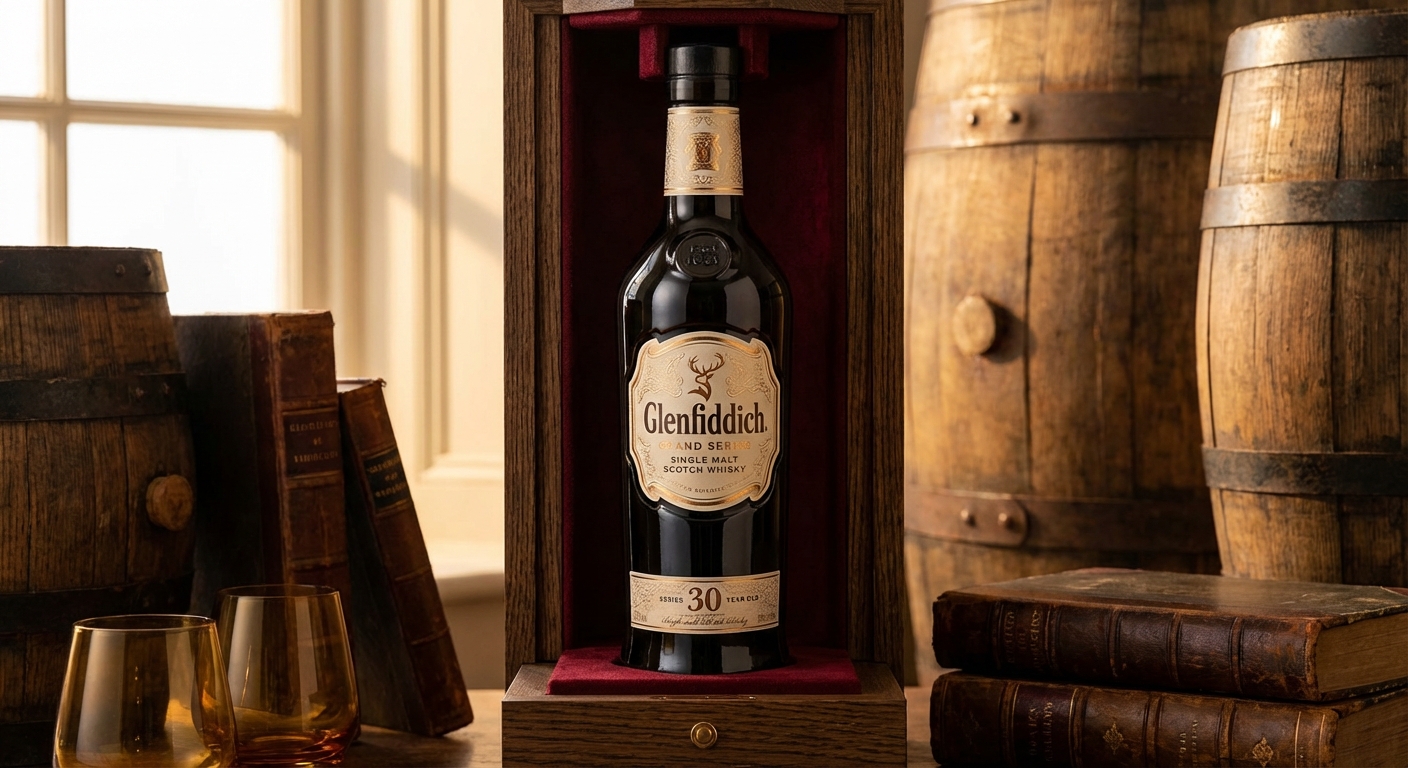
The distillery sits in Dufftown, in the heart of Speyside, Scotland’s most celebrated whisky-producing region. It draws water from the Robbie Dhu springs, uses its own cooperage, and employs a team of coppersmiths to maintain the distinctive shape of its stills — the unusually small, pear-shaped pot stills that are credited with producing Glenfiddich’s signature light, delicate spirit character.
William Grant & Sons, the family business established with that founding distillation on Christmas Day 1887, remains entirely family-owned to this day. That independence is not incidental. It gives Glenfiddich the freedom to mature whisky for decades, to invest in long-term cask programmes, and to release expressions like the Grand Series without the quarterly profit pressures that govern publicly traded drinks corporations.
Glenfiddich holds a distinction that no other single malt distillery can claim: it has been the world’s best-selling single malt Scotch whisky for more decades than most collectors have been alive. That commercial success is not built on compromises — it is built on consistent quality across a vast range, from the entry-level 12 Year Old to the Grand Series releases that can command four-figure prices in the secondary market.
That breadth of range matters for collectors because it means Glenfiddich has always maintained production volume. The distillery has the capacity, the inventory depth, and the multi-generational cask management programme to produce extended-aged releases without depleting its core range. The Grand Series exists because decades of careful planning made it possible, not despite the scale of the distillery but because of it.
Speyside whiskies are known for their elegance, their fruit-forward character, and their relative lack of peating or smokiness. Within Speyside, Glenfiddich occupies a particularly light, clean register — pear, apple, honey, gentle vanilla — that makes it an ideal candidate for cask finishing. The base spirit brings its own distinct personality to every finish, and that personality is attractive enough not to be overwhelmed by even the boldest cask influence.
That balance between a recognisable house character and an exotic cask finish is what makes the Grand Series work. These are still, unmistakably, Glenfiddich whiskies. They are just Glenfiddich taken to places it has never been before. For collectors exploring what makes a whisky worth collecting, that combination of familiar provenance and extraordinary development is a significant part of the appeal.
Cask finishing is the art of transferring a matured whisky into a second cask — typically one that previously held wine, rum, sherry, Cognac, or another spirit — and allowing it to develop for an additional period before bottling.
The practice is well-established in Scotch whisky. Distilleries have been finishing whiskies in sherry butts, Port pipes, and Madeira drums for generations. What makes the Grand Series different is the choice of finishing casks — not the usual suspects, but genuinely rare, hard-to-source vessels from the most unexpected corners of the world, from Okinawan awamori distillers to premier cru Bordeaux châteaux.
When a whisky is transferred to a finishing cask, it enters a period of reactive maturation. The spirit draws compounds from the wood — tannins, vanillins, colour, and flavour congeners that originate in whatever liquid previously filled the cask. A rum cask contributes tropical sweetness, dried fruit, and a characteristic brightness. A Cognac cask adds café crème, brown sugar, and the opulent stone-fruit character of aged brandy. A Bordeaux wine cask introduces dark fruit, cassis, and the bold tannin structure of a full-bodied red.
The duration of the finish matters enormously. A short finish of a few months adds a whisper of influence — a subtle background note. An extended finish of several years fundamentally reshapes the whisky’s character. Glenfiddich uses both approaches within the Grand Series, and the difference is audible in the flavour profile of each expression.
The quality of the finishing cask determines the quality of the finished whisky. A mediocre cask produces a mediocre result regardless of how long the whisky sits in it. Glenfiddich’s sourcing operation — building relationships with Cognac houses, Bordeaux estates, and Okinawan distillers — is the invisible infrastructure that makes the Grand Series possible.
Most distilleries source their finishing casks from well-trodden suppliers: Spanish sherry bodegas, Bourbon distilleries in Kentucky, Port producers in the Douro Valley. Glenfiddich has done something different with the Grand Series — it has sought out cask types that have rarely, if ever, been used for Scotch whisky finishing before.
The awamori casks used for Grand Yozakura are not a readily available commodity. Awamori is a distilled Ryukyuan spirit made from long-grain Thai rice, produced exclusively in Okinawa, Japan. The earthen vessels traditionally used to age it are not interchangeable with bourbon barrels. Sourcing them for use in Scotland — and producing the first single malt Scotch ever finished in ex-awamori casks — required a sustained and specific effort. That exclusivity is part of what gives the Grand Series its particular character in the premium whisky landscape.
Here is a complete guide to all five expressions currently in the Glenfiddich Grand Series, with verified tasting notes drawn from Glenfiddich’s own product pages, cask details, and what each bottle means for collectors.
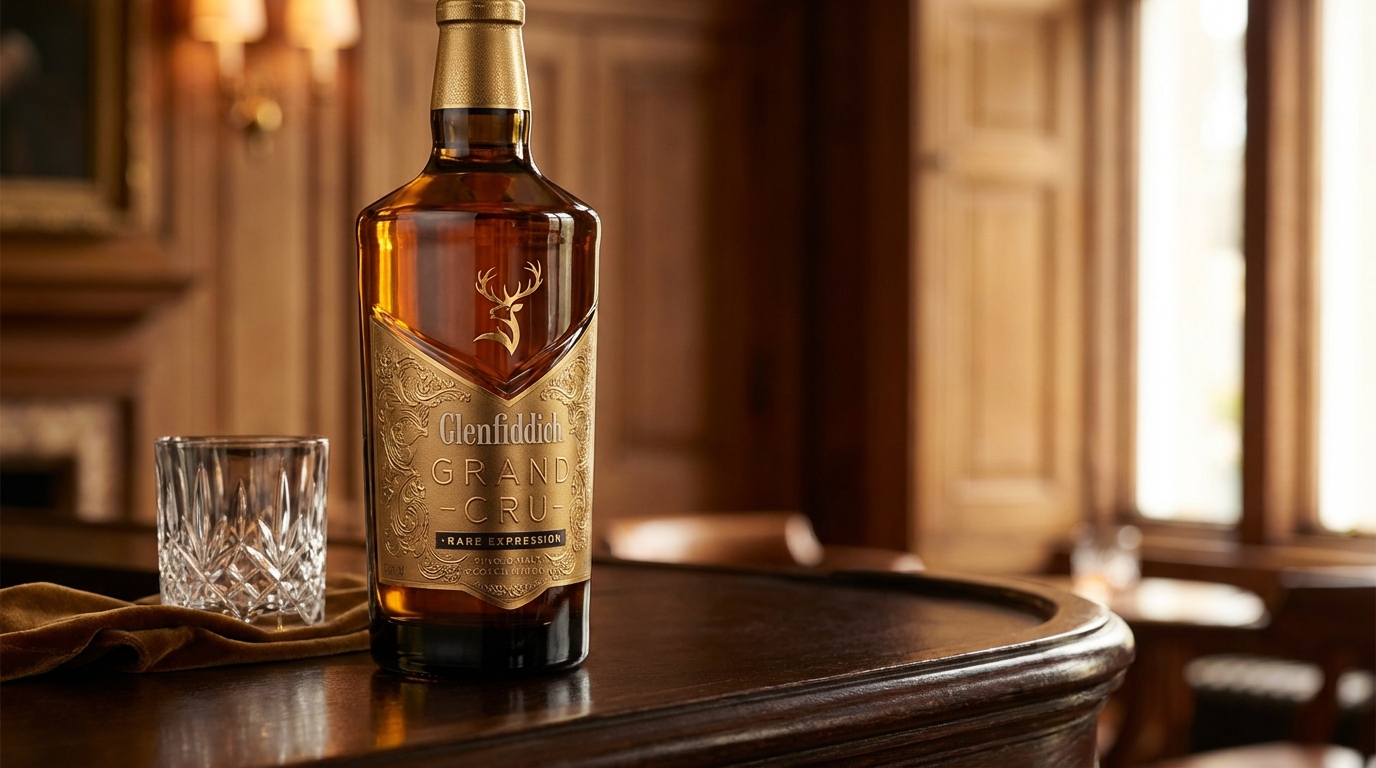
Age: 21 years
ABV: 40%
Cask: Matured in American and European oak, finished in Caribbean reserva rum casks
Colour: Dark Gold
Gran Reserva is the entry point to the Grand Series, and it sets the series’ tone immediately: this is whisky that has been somewhere interesting.
The rum cask finish is probably the most accessible of the series’ finishing choices — rum and whisky are natural companions, both grain-derived spirits with an affinity for oak sweetness and tropical warmth. But Glenfiddich has not chosen an ordinary rum cask. The Caribbean reserva barrels used here are selected for their quality, and the result is a 21-year-old Speyside malt that carries tropical weight alongside its characteristic elegance.
The nose is intense and vanilla-sweet, with floral notes, banana, rich fig, and new leather over a base of oak. On the palate the whisky opens softly before becoming brisk and vibrant — peppery, drying, with notes of lime, ginger, and spice building toward a long, warming, dry finish.
For collectors: Gran Reserva is the most widely available expression in the Grand Series and is the natural starting point for anyone building a complete set. It also serves as the flavour benchmark against which all the other expressions can be assessed — how does a Cognac finish compare to a rum cask? How does awamori differ from Cuvée? Gran Reserva gives you the baseline.
Age: 23 years
ABV: 40%
Cask: Matured in American and European oak, finished in rare French Cuvée casks
Colour: Deep Gold
Released: 2019
Grand Cru takes Glenfiddich’s Speyside fruit and marries it with the refined, mineral world of French sparkling wine — with results that surprised many serious reviewers on its 2019 release.
The finishing casks for Grand Cru previously held Cuvée — the blended base wine used in traditional-method sparkling wine production in the Champagne and Crémant regions of France. These casks are rare: they represent a very specific and limited production stream from French wine regions, and sourcing them in quantity requires established relationships with specific producers.
The nose is generous and bakery-fresh: apple blossom, freshly baked bread, candied lemon. The palate layers rich vanilla oak with sweet brioche, sandalwood, pear sorbet, and white grape — a combination that is genuinely unusual and genuinely delicious. The finish is long, opulent, and sweet.
Grand Cru regularly features on lists of the best-value aged single malts on the market. For its combination of age, finishing complexity, and the recognisability of the Glenfiddich house character, it represents a compelling entry point into older-aged Speyside collecting.
For collectors: Released in 2019, Grand Cru has had time to establish a secondary market track record. It is currently the most prominent entry-level Grand Series bottle — widely cited, well-reviewed, and available through specialist retailers like Glenbotal. It is the Grand Series expression most likely to introduce a new collector to the series as a whole.
Age: 26 years
ABV: 40%
Cask: Matured in American and European oak, finished in rare French Cognac casks
Colour: Antique Gold
Grande Couronne means “the great crown” in French — and with 26 years of maturation followed by an extended finish in rare Cognac casks, the name is earned.
Cognac casks are among the most celebrated finishing vessels in the world of aged spirits. The finest Cognac is itself a barrel-aged product — distilled from wine, matured for decades in French Limousin oak, developing complex notes of dried fruit, café crème, oxidised wood, and the brandy character known as rancio. When a mature Glenfiddich meets a properly seasoned Cognac cask, the result is layered in a way that simpler finishes cannot replicate.
The nose is vibrant and toasty: French pâtisserie notes, freshly baked Tarte Tatin, buttery choux pastry. On the palate, the Cognac influence adds velvety café crème, brown sugar, and soft spice to Glenfiddich’s underlying fruit and oak structure. The finish is very long and sweet, with toasted oak sustaining through to the very end.
For collectors: At 26 years old and finished in rare Cognac casks, Grande Couronne sits at the more exclusive end of the Grand Series. It is less widely distributed than Gran Reserva and Grand Cru, and less surprising than Grand Yozakura — but as an expression of pure luxury, of maximum wood complexity applied to exceptional aged spirit, it is arguably the Grand Series at its most opulent.
Age: 29 years
ABV: 45.1%
Cask: Matured in American and European oak, finished in Japanese ex-awamori casks
Colour: Deep Amber
Grand Yozakura — named for the Japanese tradition of nocturnal cherry blossom viewing — is the most unusual expression in the Grand Series, and arguably the most collectible.
Here’s the deal: this was the first single malt Scotch whisky in history to be finished in Japanese ex-awamori casks. Awamori is a distilled spirit unique to Okinawa, Japan’s southernmost island chain, made from long-grain indica rice and aged in traditional clay pots and earthenware vessels. The flavour character it imparts to wood — herbal, earthy, with a particular spiced warmth — is unlike anything produced by any other spirit in the world.
The Grand Yozakura is also the strongest expression in the series at 45.1% ABV, and at 29 years old it is the second oldest. The combination of great age, high strength, and completely novel cask type makes it the most technically ambitious release in the collection.
The nose offers zesty ripe fruits, caramelised almonds, rich oak with cinnamon and a distinctive herbal zing. On the palate: toasted oak, creamy vanilla toffee, silky tannin, bursts of spice, sherbet lemons, green apple, and an earthy warmth that has no parallel in European cask-finished whisky. The finish is long-lasting and oak-driven, with the herbal character of the awamori persisting well after the last sip.
For collectors: Grand Yozakura is the Grand Series expression that most serious collectors prioritise. The combination of factors — historical first, exotic cask, 29-year age statement, higher ABV, limited volume — makes it the most distinctive bottle in the series. Secondary market interest is strong, and finding an undamaged bottle at a fair price requires specialist sourcing. At Glenbotal, bottles from our private collector network are available; availability at this rarity level is never guaranteed.
Age: 31 years
ABV: To be confirmed (varies by bottling)
Cask: Matured in American and European oak, finished in Bordeaux Château red wine casks for an extended 9 years
Colour: Dark Gold
Grand Château is the oldest and most structurally bold release in the Grand Series — a 31-year-old Glenfiddich that spent nine of those years in Bordeaux Château wine casks.
The extended nine-year finish is extraordinary even by Grand Series standards. Most cask finishes are measured in months. Nine years in a finishing cask is not a finish in any conventional sense — it is a co-maturation, a fundamental reshaping of the whisky’s character over a period almost as long as a standard 12-year-old expression has been alive. The casks used are from named Bordeaux châteaux in the traditional wine-growing regions of southwestern France — among the most prestigious wine vessels in the world.
The nose opens with warm vanilla, ripe cassis berry, and nutty aromas. On the palate, slowly caramelised cherries and apples emerge alongside warming spice and toasted oak. The finish has lasting depth — it carries both the age of a 31-year-old Speyside malt and the boldness of nearly a decade of Bordeaux influence.
Grand Château was created in collaboration with French artist André Saraiva, whose distinctive graphic work appears on the packaging. This is not merely a marketing detail — Glenfiddich’s Artists in Residence programme is a genuine part of the distillery’s identity, and the collaboration adds a collectible dimension that extends beyond the whisky itself.
For collectors: Grand Château is the crown of the collection. The 31-year age statement alone would make it rare. The nine-year Bordeaux finish makes it genuinely singular. It is the hardest to source in the Grand Series and commands the highest prices on the secondary market. If you are building a complete set, this is the expression you plan around, not the one you stumble upon.
| Expression | Age | ABV | Cask Finish |
|---|---|---|---|
| Gran Reserva | 21 years | 40% | Caribbean rum |
| Grand Cru | 23 years | 40% | French Cuvée |
| Grande Couronne | 26 years | 40% | French Cognac |
| Grand Yozakura | 29 years | 45.1% | Japanese Awamori |
| Grand Château | 31 years | TBC | Bordeaux Château wine |
Glenfiddich runs two premium series simultaneously, and they have almost nothing in common beyond the distillery that made them.
The Experimental Series — which includes expressions like IPA Experiment, Project XX, Winter Storm, and Fire & Cane — is built around creative freedom and unconventional ideas. It is Glenfiddich without a rule book: what happens if you finish a whisky in American IPA casks? What if twenty Glenfiddich Malt Masters each select their own cask and you blend the results? These are whisky experiments in the truest sense, and they are priced to be accessible.
The Grand Series operates on a completely different philosophy. Where the Experimental Series asks “what if?”, the Grand Series asks “how far can great whisky go?” Every expression starts from a position of unambiguous quality — years, sometimes decades, of patient maturation — and then adds the best available finishing cask in a specific category. The question is not whether it will be good. The question is which version of exceptional you prefer.
| Grand Series | Experimental Series | |
|---|---|---|
| Philosophy | Luxury and refinement | Creative freedom |
| Age statements | 21–31 years | Varies (mostly NAS) |
| Pricing | Premium to rare | Accessible to mid-range |
| Cask type | Rare, exotic, sourced globally | Unconventional but accessible |
| Collector appeal | Strong secondary market | Lower secondary market activity |
| Best for | Collectors, connoisseurs | Curious drinkers, gifters |
Now: if you are buying whisky primarily to drink and you want something genuinely unusual without spending a significant sum, the Experimental Series is a compelling choice. Project XX in particular is a fascinating exercise in blending philosophy.
But if you are buying with an eye on collection value, drinking quality at the premium end, or building an asset portfolio in rare whisky, the Grand Series is where the conversation starts. The age statements, the rarity of the cask types, and the overall prestige of the collection give Grand Series bottles a staying power in the secondary market that Experimental Series releases cannot match.
For a deeper comparison of how Glenfiddich stacks up against the other great Speyside collector’s distillery, see Macallan vs Glenfiddich: Which Is the Better Collector’s Whisky?
A complete Grand Series set — all five expressions, in original condition, with boxes — is one of the most coherent collection projects available in the premium single malt market today.
Each expression is an individual achievement. Together, they form a narrative: Glenfiddich’s house character carried through five distinctly different finishing environments, from Caribbean sunshine to Japanese tradition to the grand châteaux of Bordeaux. That narrative has value beyond the individual bottles, and collectors who understand that are already building complete sets.
Grand Château is the rarest by virtue of its 31-year age statement and nine-year extended finish — it takes the longest to produce and is released in the smallest volumes. Grand Yozakura follows closely: the awamori cask finish is a genuine historical first, the cask type is extremely limited in supply, and the 29-year age statement restricts production further.
Grande Couronne, at 26 years, occupies the middle ground: rarer than Gran Reserva and Grand Cru, but not at the extreme scarcity level of the two oldest expressions.
Secondary market pricing for the Grand Series fluctuates with availability, but approximate ranges as of early 2026 are as follows:
These are indicative ranges. Individual bottles from private collections — particularly those with original boxes and seals intact — can command premiums above the upper end. At Glenbotal, we price Grand Series bottles based on current market data and our knowledge of comparable recent transactions. Get a free valuation at Glenbotal — it can tell you exactly what your bottle is worth, whether you’re buying or selling.
Disclaimer: All secondary market price ranges quoted above are indicative estimates based on recent observed transactions and are not a guarantee of future sale prices. Whisky values can fall as well as rise. Always seek independent advice before making significant purchase or investment decisions.
Here’s the approach that works:
Start with what’s available. Gran Reserva and Grand Cru appear most regularly on the secondary market and through specialist retailers. Secure these first while you locate the rarer pieces.
Prioritise condition. A Grand Château in a damaged or faded box is worth meaningfully less than one in pristine condition. The same whisky, same bottle, same fill level — condition alone can represent a 20–30% difference in secondary market value. Refer to our guide on what makes a whisky bottle valuable for the full breakdown.
Treat Grand Yozakura and Grand Château as long-term acquisitions. These do not appear frequently. When they do, act — because the next opportunity may be six months away. At Glenbotal, our private collector network across the UK and Europe is specifically how we source bottles that are genuinely rare; they do not come through conventional wholesale channels.
Document your collection properly. For insurance, resale, and provenance purposes, photograph each bottle and its box when acquired. Keep purchase receipts. For broader guidance on building and managing a rare whisky collection, our comprehensive guide covers storage, valuation, and long-term collection strategy.
The honest answer is: it depends on the expression and your time horizon.
Grand Yozakura and Grand Château have the strongest fundamentals — fixed supply, increasing age, exotic cask types that cannot be replicated, and a series that is still building its reputation. These bottles have very limited downside and a credible appreciation case over a 5–10 year horizon.
Gran Reserva and Grand Cru are more widely distributed and therefore less likely to generate the kind of scarcity-driven premium that drives secondary market returns. They are exceptional whiskies and will retain their value, but they are not the bottles you would stake an investment thesis on.
For serious collectors considering the Grand Series as part of a broader rare whisky portfolio, our complete guide to whisky collecting addresses diversification, liquidity, and the key factors that determine long-term value in this market.
There are currently five expressions in the Glenfiddich Grand Series: Gran Reserva (21 years, rum cask), Grand Cru (23 years, Cuvée cask), Grande Couronne (26 years, Cognac cask), Grand Yozakura (29 years, awamori cask), and Grand Château (31 years, Bordeaux wine cask). Glenfiddich may release further expressions over time, but as of 2026 the series comprises these five releases.
No. Each expression carries a different age statement. The youngest is Gran Reserva at 21 years old, and the oldest is Grand Château at 31 years old. The full range spans: 21 years (Gran Reserva), 23 years (Grand Cru), 26 years (Grande Couronne), 29 years (Grand Yozakura), and 31 years (Grand Château).
Grand Château and Grand Yozakura are the two most collectible expressions on the secondary market. Grand Château is the oldest at 31 years, has the most extraordinary finish (nine years in Bordeaux Château casks), and is released in the smallest volumes. Grand Yozakura holds the distinction of being the first single malt Scotch whisky ever finished in Japanese ex-awamori casks — a historical first that cannot be repeated and that drives sustained collector demand.
Awamori is a traditional distilled spirit produced exclusively in Okinawa, Japan. It is made from long-grain indica rice using black koji mould and is often aged in clay pots or ceramic vessels, which impart a distinctive herbal, earthy, spiced character to the casks. When Glenfiddich’s 29-year-old Speyside spirit spent time in ex-awamori casks, it became the first single malt Scotch whisky ever finished in these vessels. The unique character of awamori casks — nothing quite like them exists in European spirits production — makes Grand Yozakura a genuinely unrepeatable whisky.
They are fundamentally different projects with different philosophies. The Experimental Series is about creative innovation — unconventional cask types (IPA casks, ice wine casks), unusual blending approaches, and accessible price points. The Grand Series is about luxury and refinement — extended age statements, rare globally sourced casks, and premium pricing that reflects the rarity and quality of what is in the bottle. The Experimental Series is whisky that challenges expectations; the Grand Series is whisky that fulfils them at the highest possible level.
The Grand Series is available through specialist rare whisky retailers. Glenbotal sources Grand Series expressions directly from private collectors across the UK and Europe, making it possible to find bottles — particularly the rarer expressions like Grand Yozakura and Grand Château — that are no longer available through conventional retail channels. Browse the current stock or contact the team directly for sourcing enquiries.
For Grand Yozakura and Grand Château specifically, the investment case is credible: fixed and declining supply, increasing collector awareness, exotic cask types that cannot be replicated, and long age statements that took decades to produce. Gran Reserva and Grand Cru are more widely available and therefore less likely to appreciate significantly, though they remain exceptional whiskies that will hold their value. Any rare whisky investment should be considered over a long time horizon and with proper storage conditions. Secondary market prices are indicative only and not a guarantee of future value. Whisky investment carries risk; values can fall as well as rise. Glenbotal offers free bottle valuations if you want an expert view on a specific bottle.
This depends entirely on your flavour preferences. Grand Cru (23yr, Cuvée cask) is the most elegant and food-friendly — sweet brioche and apple blossom, excellent with dessert or aperitif occasions. Grande Couronne (26yr, Cognac cask) is the most opulent — café crème and Tarte Tatin in a glass. Grand Yozakura (29yr, awamori cask) is the most distinctive — herbal, earthy, spiced, with a complexity unlike anything else in Scotch whisky. Gran Reserva (21yr, rum cask) is the most approachable. Grand Château (31yr, Bordeaux cask) is the most architecturally complex — for patient drinking with full attention.
No. Four expressions — Gran Reserva, Grand Cru, Grande Couronne, and Grand Château — are bottled at 40% ABV. Grand Yozakura stands apart at 45.1% ABV, which is notably higher than the others and reflects the more robust character of the awamori-finished spirit. The higher ABV also makes Grand Yozakura more amenable to adding a small splash of water, which can open up the nose and release additional herbal complexity.
Two things set the Grand Château’s Bordeaux finishing apart. First, the source: these casks come from named Bordeaux Châteaux in France’s most prestigious wine-growing region, carrying the structure, tannin, and dark fruit character of classified Bordeaux red wines. Second, the duration: the finishing period lasted nine years — an extraordinarily extended interaction between the wood, the residual wine compounds, and Glenfiddich’s 31-year-old spirit. Most cask finishes are counted in months. Nine years of Bordeaux wine cask influence fundamentally reshapes the whisky’s architecture in a way that shorter finishes simply cannot.
Store Grand Series bottles upright (not on their sides, as the high alcohol content can degrade corks over time if in constant contact), away from direct sunlight, at a stable cool temperature between 10–18°C, with consistent humidity. The original packaging box provides significant UV protection and should always be retained — particularly for the Grand Château, where the André Saraiva artwork packaging is itself a collectible artefact. Never remove a bottle from its box if you intend to resell it, as original-in-box condition commands a meaningful premium.
Yes. Glenbotal offers free bottle valuations — simply contact the team via glenbotal.co.uk with details and photographs of your bottle. This service is available to anyone, whether you are looking to sell, insure your collection, or simply understand what your bottle is worth in the current market. Glenbotal has been active in the rare whisky market for over six years and has built the market knowledge and collector network to give you an accurate and honest assessment.
The Grand Series sits alongside programmes like the Macallan Edition Series and Glenfarclas Family Casks as one of the most coherent premium limited release programmes from a major Speyside distillery. What distinguishes it is the breadth of its cask sourcing — no other premium series draws finishing casks from as geographically and culturally diverse a range of sources. For collectors who care about provenance and the stories behind their bottles, the Grand Series has few rivals.
The Glenfiddich Grand Series is the most consistently impressive premium series released by any Speyside distillery in the last decade — and it is still unfolding.
Each expression is a standalone achievement: a carefully aged Glenfiddich whisky finished in one of the world’s most unusual and prestigious cask types, bearing an age statement that reflects real time and real craft. Together, they form a collection that is coherent, ambitious, and increasingly sought-after by the collectors and connoisseurs who understand what they represent.
If you are starting your Grand Series journey, Grand Cru is the natural entry point — well-reviewed, available, and immediately impressive. If you are building a complete set, prioritise Grand Yozakura and Grand Château while they can still be found at fair prices. And if you already own one or more Grand Series expressions and want to understand what they are worth, Glenbotal’s free valuation service gives you an expert, no-obligation answer.
These are not the bottles you find by accident. They are the bottles you find when you know where to look — and after six years in the rare whisky market, sourcing from private collectors across the UK and Europe, Glenbotal knows exactly where to look.
Get Started — Browse the Grand Series collection at Glenbotal →
Results may vary. Secondary market values quoted throughout this guide are indicative estimates based on observed transactions and are not financial advice. Whisky values can fall as well as rise.
Explore the full collection at Glenbotal — rare whisky sourced from private collectors across the UK and Europe.