
A bottle of 1926 Macallan sold at auction in November 2023 for £2.1 million — the most expensive whisky ever auctioned. The collectors who bought the earlier releases in that lineage paid a fraction of that sum. Single-distillery focus is how they got there.
Most whisky collectors eventually reach the same conclusion — breadth is interesting, but depth is where things get genuinely compelling. A single-distillery collection tells a story that a shelf of mixed expressions never can: the evolution of a house style over decades, the differences between one cask type and another, the year a production change shifted the character of every bottle that followed.
This guide is for intermediate collectors who have moved past their first few bottles and want to go deeper with one producer. These are the exact steps serious collectors use to build focused, coherent, and genuinely valuable single-distillery collections — from choosing the right distillery to storing and insuring what you build.
Here is exactly what I am going to show you.
Most collectors fall into the same trap: they buy what catches their eye.
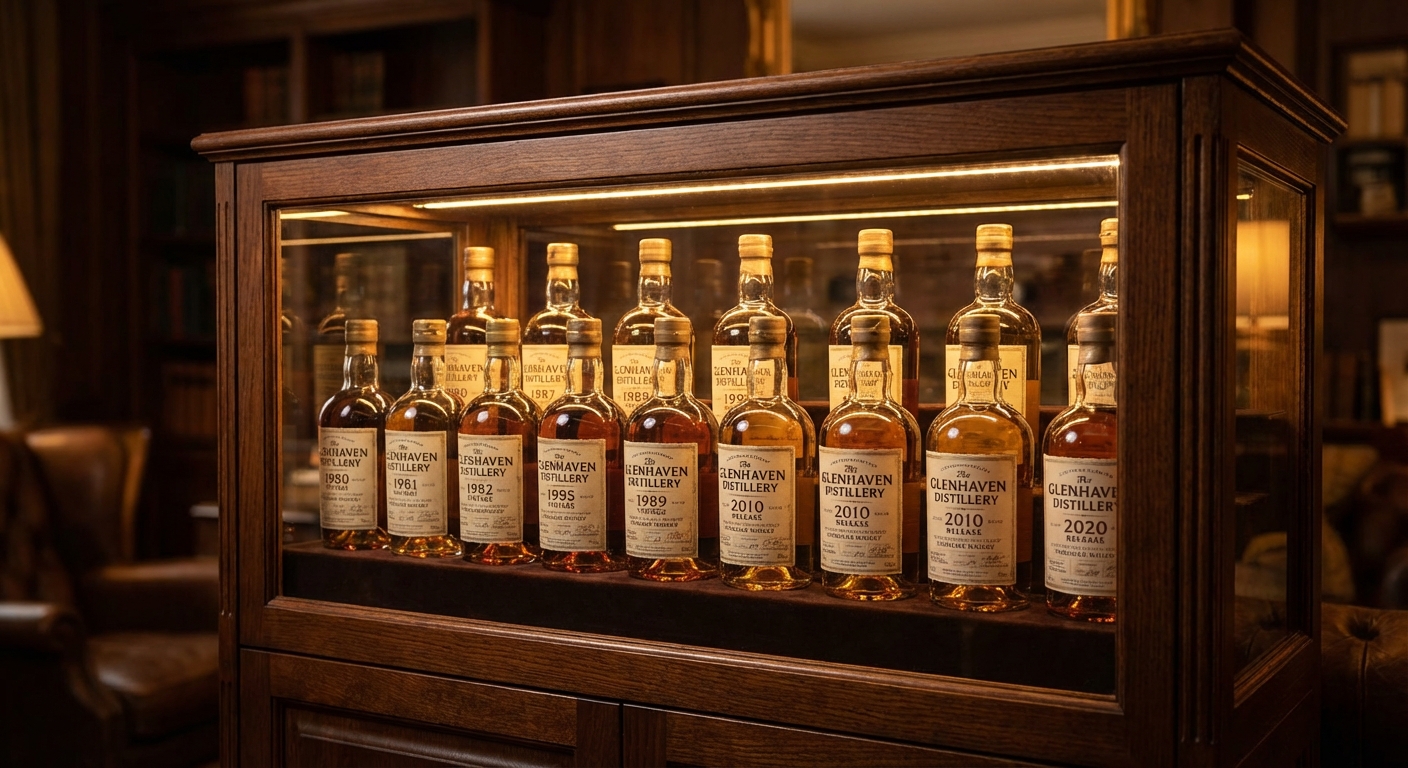
A Speyside 18 here. An Islay limited release there. Something from a festival, something from an auction, a bottle a friend recommended. After a few years, they have two dozen interesting bottles and no coherent collection at all.
The problem is not the bottles — it is the absence of a framework.
A single-distillery approach solves this completely. Every purchase decision has a clear reference point. You know the house style. You know the range. You know what you have, what you need, and what is genuinely rare versus merely hyped. Your collection develops a logic that makes it greater than the sum of its parts.
The collectors who build remarkable single-distillery collections are not necessarily richer or better connected than casual buyers. They are simply more deliberate. They chose a producer, learned it properly, and bought with intention from that point forward.
The right distillery for a single-distillery collection is one you are genuinely curious about — not one you have been told is prestigious.
That said, some producers reward long-term focus more than others. Here is how to think about the choice.
The Macallan is the most obvious starting point for collectors with access to capital. Its range spans entry-level expressions to bottles worth tens of thousands, and the brand’s auction history is better documented than almost any other producer. The Sherry Oak series — 12, 18, 25, 30, and 40-year expressions — provides a natural collecting ladder. The limited releases (Fine & Rare, Red Collection, Masters of Photography series) are among the most sought-after bottles in any category. The downside: popular expressions attract premium prices, and getting ahead of the curve requires active market watching. For a deep guide to building in this space, see our guide to collecting Macallan whisky.
Glenfiddich is the world’s best-selling single malt, with roughly 35% of global single malt sales — which means secondary market liquidity is strong and documentation is excellent. The core range (12, 15, 18, 21-year expressions) is accessible, and the Grand Series and Experimental Series provide genuinely interesting collector targets. The 50 Year Old releases command prices well into five figures. If you want a producer with the deepest possible pool of historical bottles and price data, Glenfiddich is a sound choice. Explore the full range in our guide to collecting Glenfiddich whisky.
Glenlivet has one of the longest and most documented histories in Scotch whisky — the distillery was the first legally licensed in the Highlands in 1824. The Cellar Collection and Nàdurra series attract collector interest, and the older age-stated expressions (18, 21, 25-year) have performed well at auction. See our Glenlivet collecting guide for the specific bottles worth targeting.
Springbank is, for many serious collectors, the most interesting distillery in Scotland. Family-owned since 1837, it performs every stage of production in-house — from floor malting to bottling — a distinction almost no other Scottish distillery can claim. Three expressions emerge from the same site using different production methods: Springbank (lightly peated, 2.5 distillations), Longrow (heavily peated, double-distilled), and Hazelburn (unpeated, triple-distilled). Annual limited releases sell out within hours. Single cask bottlings from independent bottler William Cadenhead — also owned by the same family — add another layer of depth. The community around Springbank is among the most knowledgeable and passionate in whisky collecting.
Bruichladdich rewards collectors who enjoy a philosophy as much as a product. Reopened in 2001 after years of closure, the Islay distillery operates three distinct lines: the unpeated Classic Laddie range, Port Charlotte (heavily peated), and Octomore — described as the most heavily peated single malt whisky in the world. Octomore releases are numbered sequentially, which creates a natural series structure for collectors. Acquired by Rémy Cointreau for £58 million in 2012, the distillery’s artisan credentials remain intact: all production uses Scottish barley, often traceable to specific farms on the label. The challenge is that Octomore series bottles appreciate quickly, which means building a complete run requires getting in early.
Daftmill is at the opposite end of the scale. The Fife farm distillery has a maximum production capacity of just 20,000 litres per year — making it one of Scotland’s smallest producers. It released its first whisky commercially in 2018, a 2005 vintage that generated immediate collector interest. Production volumes are so small that each annual release is genuinely scarce. For collectors willing to work on a long time horizon, Daftmill is one of the most interesting emerging names in the market.
Now:
When selecting your distillery, also consider which distilleries are worth collecting from a long-term perspective — our full analysis covers production volumes, secondary market data, and what separates a collecting opportunity from a marketing story.
Before you buy a single bottle, understand what the full range actually looks like. This prevents expensive gaps and stops you from overpaying for something that is more available than it appears.
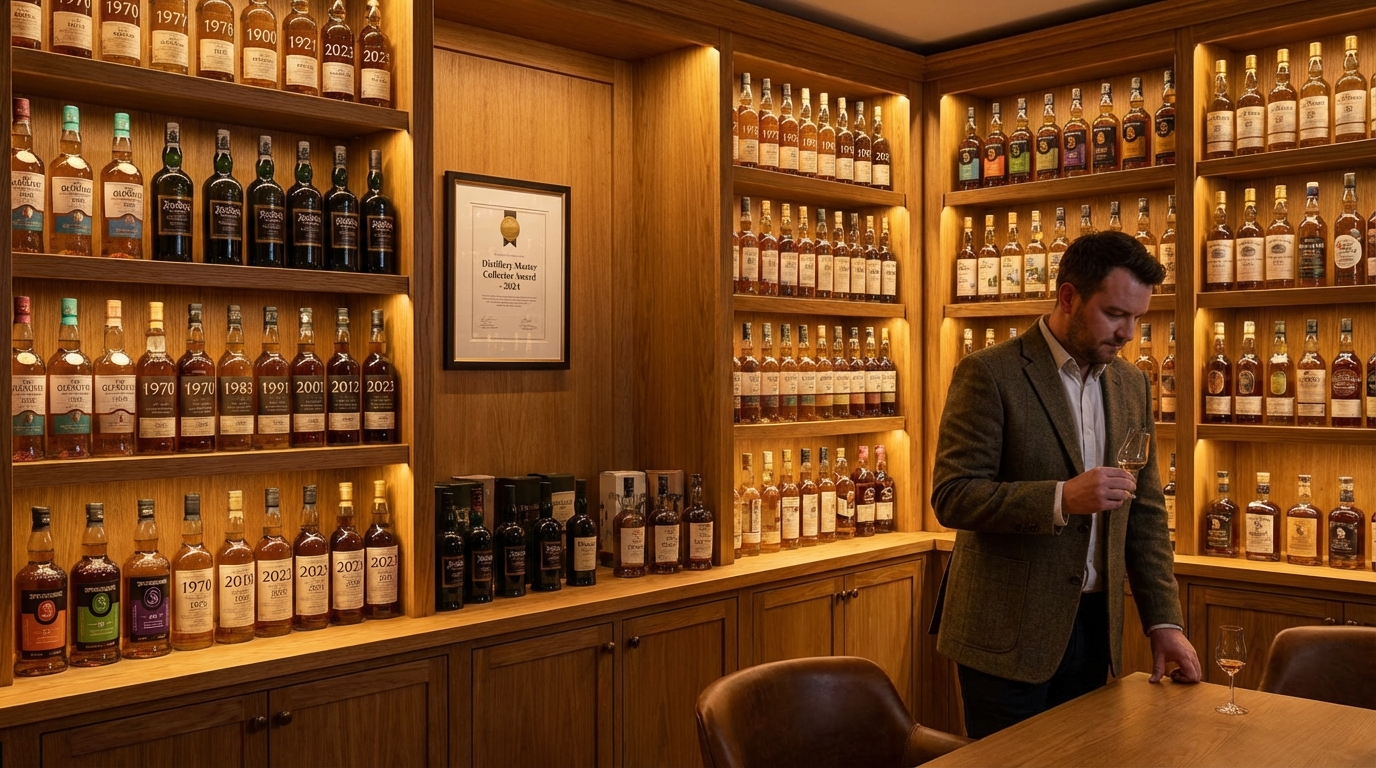
Every distillery’s output falls into three categories: core expressions, limited releases, and single casks.
The core range is what the distillery produces year after year. For Macallan, this is the Sherry Oak 12, 18, and 25 — always available, with relatively stable pricing. For Glenfiddich, it is the 12, 15, 18, and 21-year expressions. For Springbank, it is the 10, 12, and 15-year bottlings.
Core expressions are the foundation of a single-distillery collection. They anchor your collection chronologically (by age statement) and help you build genuine taste memory for the house style. Do not treat them as unimportant because they are not rare — understanding them thoroughly is what lets you properly evaluate everything else.
Limited releases are where single-distillery collecting gets interesting. These are expressions produced in finite quantities: annual releases (Bruichladdich’s Octomore series, Glenfiddich’s Grand Series), special editions tied to specific casks or finishes, and commemorative or anniversary bottlings.
The Macallan Red Collection is a good example of how limited release strategy works at scale. Launched in 2020, the collection spans expressions from 12 to 78 years old, with prices ranging from approximately £2,000 to over £150,000. The older expressions were produced in such limited quantities that allocation was tightly controlled — only collectors with existing relationships with approved retailers had realistic access.
Limited releases require you to be on mailing lists, maintain relationships with specialist retailers, and act quickly when something surfaces. This is where your focus on a single distillery pays off most: you know what is coming, why it matters, and what it should cost.
Single cask bottlings are the rarest and most individual expressions any distillery produces. Each bottle in a run comes from a single cask — often 200–600 bottles total — meaning no two bottles in the collection are identical in the precise technical sense.
For Springbank collectors, single cask releases from William Cadenhead are particularly sought after. Each is numbered, dated, and traceable to a specific fill date and cask type. For Bruichladdich, distillery-bottled single casks periodically appear with full provenance documented on the label.
Single casks are typically the final layer a collector adds — once you understand the house style deeply enough to appreciate why a specific cask from a specific year is notable.
Once you know the full range, the next decision is focus within that range. Most serious single-distillery collectors choose one of four approaches.
Age-stated expressions over NAS.
Age-stated bottles — where the label declares the minimum number of years the whisky matured — are generally more collectible than No Age Statement (NAS) expressions. The age statement represents a guarantee of maturation time, which is a direct production cost commitment by the distillery. NAS expressions can be excellent whiskies, but at auction and in the secondary market, age-stated bottles consistently attract stronger demand and better documentation.
The exception: some NAS expressions from specific producers have developed strong collector followings on their own merits. Bruichladdich’s Classic Laddie and Port Charlotte expressions fall into this category — the brand’s transparency about barley provenance and production methods creates a different kind of documented value.
Annual releases versus one-off bottlings.
Annual releases — the Octomore series, the Glenfiddich Grand Series, the Springbank 10-year annual releases — have a natural series logic. Collecting every year of an ongoing series gives your collection a narrative structure: you can watch how the distillery’s approach evolves, compare vintages, and work toward a complete run that has real collector appeal as a set.
One-off bottlings (commemorative editions, single casks, collaboration releases) are individual opportunities. They require more active hunting but often represent some of the most interesting bottles in any single-distillery collection.
Specific series.
The most disciplined approach is to define a specific series and collect it completely. Examples: every Macallan Edition Series from Edition No. 1 through the current release. Every Bruichladdich Octomore from the first release. Every Glenfiddich Grand Series expression.
Series collecting has a natural completionist logic that makes every purchase decision clear: either it is part of the series or it is not. This is the approach most likely to produce a collection that is genuinely compelling as a complete set — and that commands a premium when (if) you ever choose to sell.
Never buy a bottle without checking what the secondary market says it is worth.
This sounds obvious, but it is the step most collectors skip in the excitement of finding something they want. The result is overpaying on bottles that are more available than they appear, and missing the significance of bottles that are genuinely scarce.
Whisky auction platforms are the most reliable source of real-world pricing data. Scotch Whisky Auctions and Whisky Hammer run regular UK auctions and maintain searchable archives of past results. Search the specific bottle you are considering — include the exact age statement, bottling year if known, and condition. Look at the last six to twelve months of results, not just the most recent hammer price.
Whisky Auctioneer runs some of the largest online whisky auctions globally and provides sold price histories that allow you to track trends over time. If a specific expression has been appearing more frequently in auction catalogues, that tells you something about supply. If hammer prices are climbing despite increasing supply, that tells you something about demand.
Whiskybase is a community database of bottles with user ratings, bottle details, and some pricing data. It is particularly useful for identifying variations within a single distillery’s range — different label versions, different batch numbers, different bottling years of nominally the same expression — which can affect value significantly.
Understanding what makes a whisky bottle valuable in concrete terms is essential before you start spending meaningfully. Read that guide before your first significant purchase.
When you check auction archives, you are looking for three things: the range of hammer prices for the specific expression (not just the average), the trend over the last year (rising, stable, or falling), and the frequency of appearance (how often does this bottle surface?).
A bottle that appears rarely and commands consistently rising hammer prices is genuinely scarce. A bottle that appears often but still commands high prices has strong demand relative to supply. A bottle that appears regularly at declining prices is losing collector interest — regardless of what the retail price suggests.
Note: Whisky values can rise and fall. Past auction performance does not guarantee future results. This is not financial advice.
Knowing what to buy is half the challenge. Knowing what to buy first — and what to pursue over time — is what separates a coherent collection from an expensive habit.
Start with the foundation, then hunt the edges.
Here is how serious collectors approach this in practice, using specific examples.
A systematic Macallan collection typically starts with the core Sherry Oak age statement ladder: 12, 18, and if budget permits, 25-year. These establish your taste reference points and are reliably available from specialist retailers, meaning you can acquire them at fair market prices without competition. Once the foundation is in place, the focus shifts to the Edition Series (Editions No. 1 through the current release), then to specific limited releases — the Rare Cask, the Estate, and eventually the Fine & Rare vintage expressions. Single casks and investment-grade pieces (the Red Collection older expressions, for example) are the final layer, acquired selectively when provenance and condition are impeccable.
Springbank is built differently. The three expressions (Springbank, Longrow, Hazelburn) each have their own age-stated core range, so the foundation alone requires nine to twelve bottles across different ages and expressions. Annual releases are time-sensitive — the Springbank 10-year annual release and similar bottlings sell quickly and resurface on the secondary market at significant premiums. The key is being on the distillery mailing list and maintaining a relationship with a specialist retailer who has allocation. Single cask and independent bottler expressions (through Cadenhead’s) are then the long game.
Octomore is the natural focus for a Bruichladdich collection. Released in numbered batches (Octomore 10.1, 10.2, 12.1, 12.2, etc.), each expression documents its peat level in parts per million on the label — a level of transparency unusual in whisky production. Building a complete Octomore run requires acquiring each new release when it launches, since older batches quickly disappear from retail and resurface on the secondary market at premiums. Port Charlotte series bottles are a complementary focus, with their own numbered series logic.
Daftmill is a patience play. The distillery releases small annual batches — typically a summer release and a winter release — each time. Given production volumes of around 20,000 litres per year, bottles are genuinely scarce. The approach is straightforward: get on every available mailing list, work with a specialist retailer who has allocation, and buy consistently each release year. Early releases (the 2018 inaugural and the subsequent annual batches) are already trading well above original retail on the secondary market.
A collection that is not properly stored and documented is not an asset — it is a liability. This step is unglamorous but essential.
The fundamentals are straightforward: cool, stable temperature (15°C–20°C), dark conditions, upright position, moderate humidity (60–70%), and away from strong odours.
The upright position matters more for a whisky collection than for wine. High-alcohol spirits can degrade natural corks if the liquid is in sustained contact with them — store bottles standing vertically, and if a bottle will sit undisturbed for years, consider giving it a brief inversion once a year to keep the cork from drying completely.
Light is a silent enemy. Ultraviolet radiation fades labels and can affect the spirit over time. If you are displaying bottles, UV-filtering glass is worth the investment. If bottles are not on display, a dark cupboard, a dedicated cabinet, or a temperature-controlled cellar works well.
For a collection beyond twenty to thirty bottles, a dedicated wine or spirits cabinet with temperature and humidity control is a sensible step. The cost is modest relative to what you are protecting.
Our dedicated guide on how to store whisky bottles covers every aspect of long-term storage in detail — consult it before your collection grows beyond a single shelf.
Every bottle in your collection needs a record. A simple spreadsheet is sufficient when starting out; dedicated apps and collector tools are useful once the collection grows.
Record for each bottle: the full name and expression (distillery, age statement, bottling year or vintage if stated, cask type if known), purchase date, purchase price including any fees or shipping, source (retailer name, auction platform, private sale), condition notes at time of acquisition (fill level, label condition, capsule, packaging), and at least two photographs — front label and fill level.
Update estimated values periodically by checking recent comparable auction results. This discipline transforms your spreadsheet from a purchase log into a portfolio document.
Standard home contents policies frequently exclude or significantly under-value collectibles. Once your collection reaches meaningful value — a reasonable threshold to consider is £3,000–£5,000 — investigate specialist coverage. High-net-worth home insurance policies and specialist collectibles insurers will cover a whisky collection at declared value, provided you can document it.
Your records and photographs are the documentation insurers require. This is why keeping them from the very first bottle matters.
The collectors who build the most interesting single-distillery collections do not operate in isolation. Community engagement accelerates knowledge, surfaces buying opportunities, and makes the whole pursuit considerably more enjoyable.
Reddit’s r/whisky and r/scotch have hundreds of thousands of members and searchable archives of genuine expertise. For distillery-specific depth, Facebook groups dedicated to individual producers — Springbank collectors’ groups in particular have active and knowledgeable memberships — offer a level of specificity that broader forums rarely match.
The Whisky Magazine forums and specialist collecting communities on platforms like Discord offer structured conversation between serious collectors. These communities surface news about upcoming releases, flag secondary market anomalies, and provide context that no amount of solo research replicates.
The Scotch Malt Whisky Society (SMWS) offers members access to single cask bottlings from distilleries across Scotland — numbered to preserve anonymity but documented for members who know the coding system. For collectors focused on a specific producer, SMWS membership is a meaningful way to access expressions that never appear in standard retail.
Many independent bottlers — Murray McDavid, Gordon & MacPhail, Berry Bros & Rudd — offer collector clubs or mailing lists that provide early access to limited releases. For Springbank-focused collectors, the Cadenhead’s mailing list is essential.
Most distilleries maintain mailing lists for limited releases and allocations. Getting on these lists early — before a distillery becomes fashionable — is one of the most consistently effective strategies for acquiring bottles at original retail rather than secondary market premiums.
For producers like Daftmill, where production volumes are genuinely tiny, distillery relationships are close to the only reliable way to secure allocation at reasonable prices. Visit when possible — distillery tours build relationships that mailing lists do not.
A specialist retailer with genuine private collector sourcing is not just a shop — it is an intelligence network. The Glenbotal team sources rare bottles directly from private collectors across the UK and Europe, which means bottles surface that never appear at auction or in standard retail channels. For collectors building a focused single-distillery collection, maintaining a relationship with a retailer who knows your focus turns up opportunities that would otherwise be invisible.
Even focused, well-intentioned collectors make predictable errors. These five are the most costly.
Buying everything the distillery releases. Single-distillery collecting is not completionism for its own sake. Some releases are genuinely significant; others are commercial exercises. Apply the same value discipline to your focus distillery as you would to any other purchase.
Ignoring condition on secondary market purchases. A damaged label, a low fill level, or a missing box can reduce a bottle’s value by 20–50% depending on the expression. Never buy without a clear condition assessment, and never pay premium prices for anything less than premium condition.
Neglecting the secondary market education phase. Jumping straight to buying before spending meaningful time watching auction results produces expensive mistakes. Spend three to six months observing auction cycles for your chosen distillery before committing significant capital.
Missing annual releases because of slow decision-making. Limited releases from Springbank, Bruichladdich, and Daftmill sell quickly. Collectors who have not prepared — no mailing list registration, no retailer relationship, no capital ready — consistently miss the releases that define a great single-distillery collection.
Storing bottles on their sides. Whisky is not wine. Horizontal storage puts high-alcohol spirit in direct contact with natural corks, accelerating degradation. Always store upright.
A single-distillery whisky collection is one of the most intellectually satisfying projects in collecting. It demands genuine curiosity, patient research, and buying discipline — but the collection it produces is coherent, meaningful, and in the right cases, genuinely valuable.
The seven steps in this guide are exactly how serious collectors approach it: choose deliberately, learn the full range, decide your focus, research before buying, build systematically, protect what you build, and engage with the community around you.
If you are ready to start — or want to add a specific expression to an established collection — Start exploring the Glenbotal collection. Every bottle is sourced from private collectors across the UK and Europe and assessed before listing. If you want guidance on where to start with a specific distillery, the team is there to help.
For those just beginning to build their collecting foundation, our guide on how to start a whisky collection covers the essentials before you narrow your focus to a single producer.
Start with producers you already enjoy drinking. Cross-reference that personal interest against the practical factors: range depth (does the distillery produce enough variety to build an interesting collection?), secondary market activity (are bottles from this producer well-documented at auction?), and availability (can you realistically acquire key expressions at reasonable prices?). Macallan, Glenfiddich, and Springbank score well on all three. Daftmill and Bruichladdich offer more specialised appeal with steeper access challenges.
There is no minimum — a collection of six well-chosen expressions from a single distillery is more coherent than thirty bottles from thirty producers. That said, a meaningful single-distillery collection typically reaches genuine depth at twelve to twenty bottles: enough to represent core expressions across different ages, at least one annual limited release, and ideally a single cask or notable individual expression. From there, it grows organically as buying opportunities arise.
Age-stated expressions are generally more collectible and better documented at auction. The age statement represents a direct production cost commitment — warehousing spirit for 18 or 25 years is expensive — and provides a clear framework for building a chronological collection. NAS expressions from producers like Bruichladdich have developed strong collector followings, but they require deeper knowledge of specific releases and batch variations to collect effectively.
This depends entirely on the distillery. A meaningful Daftmill collection can be built for £1,500–£3,000, since most releases are modestly priced at original retail. A focused Springbank collection built around the core range and a few annual releases requires £2,000–£5,000. A serious Macallan collection — covering the Sherry Oak ladder, the Edition Series, and key limited releases — can run to £15,000–£30,000 or more. Set a budget per bottle and a total annual budget, then build consistently rather than making occasional large purchases.
At auction and in private sales, coherent collections with a clear focus attract more interest than mixed assortments of similar total value. A complete Bruichladdich Octomore run is more compelling to serious buyers than twelve bottles from twelve different distilleries. That said, value is not the only reason to collect in a focused way — the knowledge depth and collecting satisfaction from understanding one producer intimately are rewards in their own right.
Scotch Whisky Auctions, Whisky Auctioneer, and Whisky Hammer all maintain searchable archives of past hammer prices. Search the specific expression — including age statement, bottling year, and condition notes — and review the last six to twelve months of results. Whiskybase provides community documentation on specific bottles and batch variations. For specialist valuation of bottles you already own, a free valuation from Glenbotal gives you an independent current-market assessment.
Springbank is entirely vertically integrated — from malting the barley to bottling the spirit — which is unique among Scottish distilleries. It produces three distinct expressions from one site using different production methods, giving collectors genuine variety within a single producer. Annual releases sell out quickly and consistently trade above original retail on the secondary market. The family ownership and traditional production methods give the bottles a provenance story that resonates strongly with serious collectors.
For any bottle with collector potential, keeping it sealed preserves both the full range of enjoyment (you cannot revisit a bottle you have opened) and its market value — opened bottles are worth a fraction of sealed ones at auction. Bruichladdich Octomore expressions are bottled at cask strength with documented peat levels, making each batch genuinely distinct. If you want to understand the series, buy two of any given release: one to open and one to keep sealed.
Register for the distillery’s own mailing list as early as possible — Springbank, Bruichladdich, and Daftmill all notify registered customers of new releases before they go on general sale. Build a relationship with a specialist retailer who has allocation: when demand exceeds supply (which it does for the most sought-after releases), retailers prioritise customers they know. Whisky societies like the SMWS and independent bottlers’ clubs also provide access to expressions that never reach general retail.
The Scotch Whisky Association publishes annual statistics on industry-wide production, exports, and market data. For 2022, Scotch whisky exports totalled £6.2 billion in value — a record at that time — reflecting sustained global demand that drives collector interest in limited supply expressions. Individual distillery production volumes are not published as public data, but capacity figures are sometimes disclosed by producers. Glenfiddich, for example, has a documented capacity of approximately 21 million litres per year; Daftmill produces a maximum of 20,000 litres — illustrating the spectrum of scale across the industry and why scarcity varies so dramatically between producers.
Yes — and there is an argument that starting focused from the beginning produces better outcomes than building broadly first. The discipline of learning one distillery intimately develops taste memory, market knowledge, and buying judgment faster than spreading attention across multiple producers. Start with the core expressions to establish your reference points. Read the distillery’s history. Watch auction results before you buy. The collectors who build the best single-distillery collections are not always those who have been collecting longest — they are those who have been most deliberate about it.
Explore the full collection at Glenbotal — rare whisky sourced from private collectors across the UK and Europe.