
Single Malt Scotch Whisky exports topped £2 billion for the first time in 2023 — yet most private collectors have no accurate idea what their bottles are worth right now.
Most people who own a valuable whisky bottle have no idea what it is actually worth — and that gap between assumption and reality costs them money every year. Whether it was a gift, part of an inherited collection, or a bottle you bought years ago thinking it might appreciate, the honest answer is: you need a professional eye before you make any decisions. Glenbotal has been handling free whisky valuations for private collectors across the UK and Europe for over six years, with thousands of bottles assessed and a deep network of serious buyers. In this guide, you will learn exactly how the valuation process works, what to prepare, and what your options are once you have a number in hand.
Many people skip the valuation step entirely. They post a photo in a Facebook group, accept a rough figure from a neighbour, or simply list on a general marketplace with a price they guessed from a quick search. This is the single most expensive mistake a whisky seller can make.
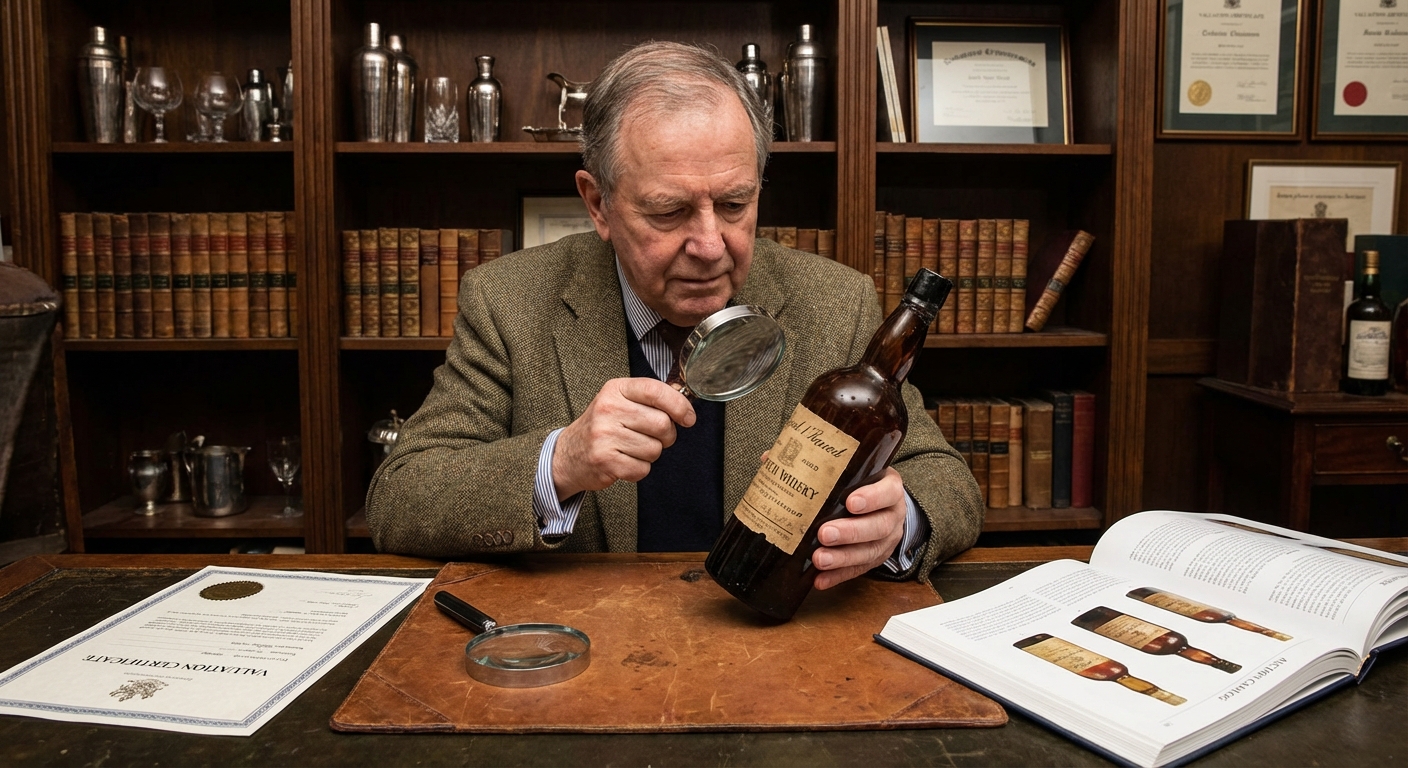
Whisky values are highly specific. Two bottles from the same distillery, both labelled “18 Year Old,” can have dramatically different market values depending on the era of bottling, the independent bottler, fill level, label variation, and whether the original box and packaging are present. A bottle that looks unremarkable to an untrained eye might fetch several hundred pounds. A bottle that looks impressive might be a standard release that peaked five years ago.
Getting a valuation first costs you nothing and commits you to nothing. It simply ensures that whatever you decide to do next — sell, auction, insure, or keep — you are doing it with accurate information. That is the only sensible starting point.
The Scotch Whisky Association reported that Scotch whisky exports reached £5.6 billion in 2023, with single malt alone crossing the £2 billion mark for the first time. The secondary market for rare bottles tracks this demand closely. In a market this active, guessing at a price is not a strategy — it is a liability.
Before you contact anyone for a valuation, spend five minutes collecting the basic information that will make the process faster and more accurate.
Note the distillery name as it appears on the label. Also check whether it was bottled by the distillery itself (an official bottling) or by an independent bottler such as Gordon & MacPhail, Cadenhead’s, or Berry Bros & Rudd. Independent bottlings can carry significant premiums, and the bottler’s name matters as much as the distillery name.
Look for an age statement on the label — “12 Year Old,” “25 Year Old,” and so on. If there is no age statement, look for a distillation year and a bottling year, often found on the back label or neck tag. Older bottlings from closed or silent distilleries, such as Port Ellen or Brora, attract serious collector interest and require precise dating. Understanding what makes a whisky bottle valuable often comes down to these specifics.
Hold the bottle up to a good light source and note where the liquid sits relative to the neck. The standard terms are: into-neck, upper shoulder, mid-shoulder, low shoulder, and below shoulder. Any fill below mid-shoulder on an older bottle raises questions and affects value; fill level into the neck on a sealed antique bottle is a genuine mark of quality.
Is the label clean, stained, faded, or torn? Is the foil capsule intact, or is it damaged or missing? These are not deal-breakers — some collectors specifically seek antique bottles in worn condition — but they are factors the valuation will account for.
If you have the original box, tube, case, or any accompanying certificates or documents, set them aside and note what is present. Original packaging can meaningfully increase a bottle’s value, particularly for limited releases and distillery exclusives.
Take clear photographs in natural light: front label, back label, the fill level, the capsule, any damage, and the box if you have it. Good photographs are the single biggest factor in the speed and accuracy of a remote valuation. More on this in the section on better valuations.
Once you have your information and photographs ready, submitting a valuation request to Glenbotal is straightforward.
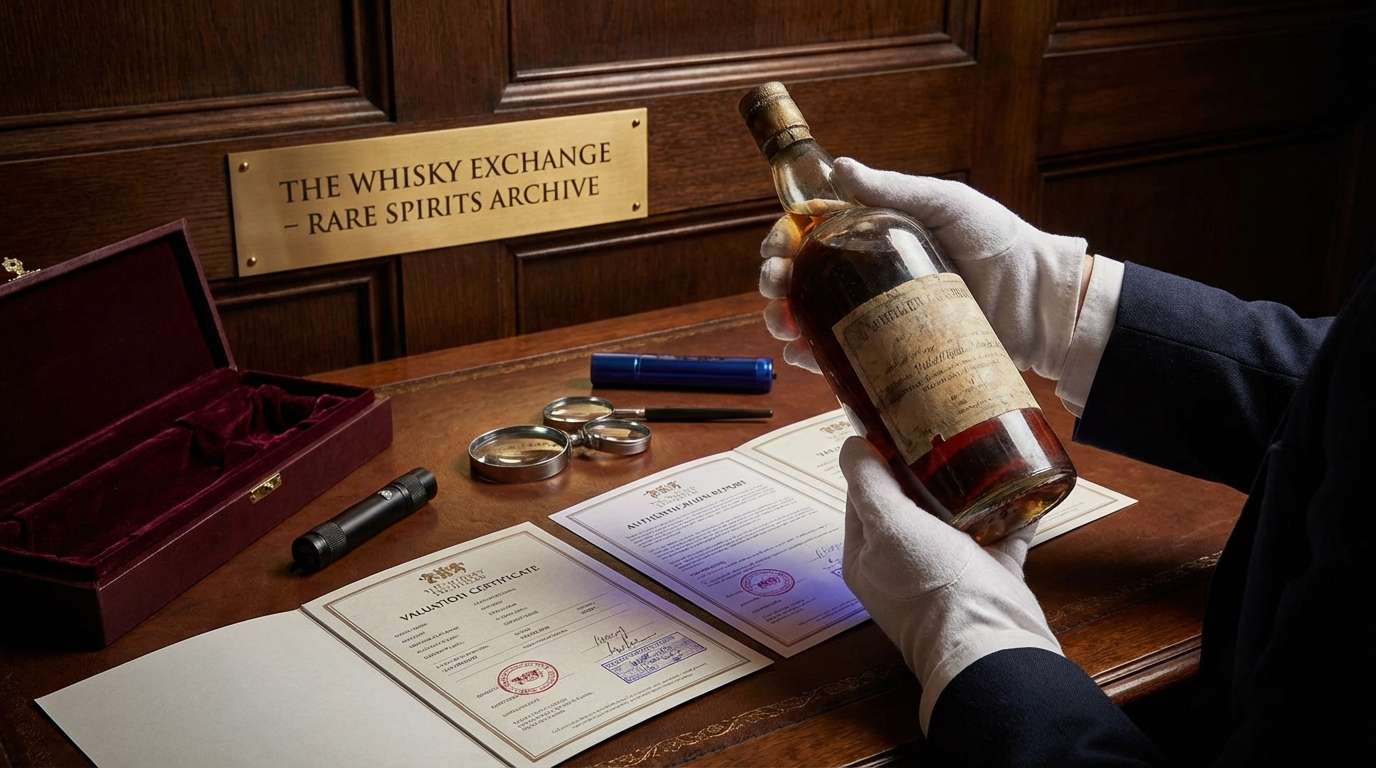
Visit glenbotal.co.uk and use the valuation enquiry form or the contact details on the site. There is no fee, no obligation, and no requirement to send the bottle anywhere. The entire initial process is handled remotely.
A good submission includes: the distillery name and bottler, the age statement or distillation and bottling years, a brief description of condition (label, capsule, fill level), whether the original packaging is present, and your photographs. If you have multiple bottles, you can submit them together — note each one separately with its own photographs and description rather than grouping everything into a single message.
The more specific you are, the faster and more accurate your valuation will be. Vague submissions like “old bottle of Macallan, maybe 1980s?” take longer to assess because they require follow-up questions. A submission that includes a clear fill-level photograph, both label sides, and the bottling date from the back label can often be assessed on the same day.
If you are unsure about any detail — the age statement is obscured, you cannot find a date — say so clearly rather than guessing. An experienced valuer will know how to interpret a partial submission, and honesty about gaps in information is always more useful than an inaccurate guess.
After your submission arrives, the valuation process begins. Understanding what happens on the other side helps set realistic expectations.
Your submission is reviewed against Glenbotal’s records of past sales, current buyer demand, and the live secondary market. With six years of specialist experience and thousands of bottles handled, the team has a genuine depth of reference for rare and collectable releases — far beyond what a general retailer or auction house could offer on a casual basis.
The valuer will cross-reference your bottle against recent auction results, current private sale activity, and Glenbotal’s own network of serious collectors across the UK and Europe. This is not a database lookup — it is an active market read. A bottle’s value is not fixed; it is a reflection of what a motivated buyer will pay in the current market, and that changes. This is exactly why a recent, informed valuation is more useful than a two-year-old auction result you found with a quick search.
Most valuations are returned within one to two business days. More unusual or complex bottles — rare independent bottlings, pre-1970s expressions, or very large collections — may take slightly longer, but Glenbotal will let you know if that is the case.
The valuation result is a professional, market-informed assessment of what your bottle is worth right now.
You will receive a current market value figure for your bottle — what it could realistically achieve in a private sale or at auction at this moment. Where relevant, you will also receive context: what drives the value, whether the market for this bottle has been rising or falling, and whether condition factors meaningfully affect the figure.
This is not a retail price (what it would cost to buy the same bottle in a shop) and it is not an insurance replacement value (which is typically higher). It is an honest assessment of current market value — the number that matters most if you are considering your options.
If the valuation comes back higher than expected, resist the urge to assume the bottle will only keep rising. Whisky markets are active and unpredictable. If you are thinking of selling, the right time is when you have an accurate value and a motivated buyer — not when you are waiting for a theoretical peak. If the valuation is lower than you hoped, take it seriously rather than dismissing it; valuers with years of active market experience are rarely far off. Reading about how much your whisky is worth can help you understand the broader factors at play.
No. A valuation is an assessment of market value, not a purchase offer. It gives you information. What you do with that information is entirely your decision, and you are under no obligation whatsoever to sell.
A valuation is the beginning of a decision, not the end. Once you have an accurate market value, you have several clear paths forward.
If you decide to sell, Glenbotal offers direct purchase from private collectors. This is the fastest route to a clean sale — no waiting for auction cycles and no uncertainty about whether the bottle will sell or at what price. Our fee is 15% of the final sale price plus £15 for shipping, charged only when your bottle sells. Glenbotal’s private collector network across the UK and Europe means motivated buyers are already in place. If you are ready to sell, read the full guide on how to sell rare whisky in the UK to understand exactly what that process involves.
Auction is a legitimate option, particularly for bottles with strong, broad collector appeal where competitive bidding is likely to push the price. However, it is worth understanding the cost structure: most UK whisky auction houses charge sellers a listing fee plus a buyer’s premium that typically ranges from 15% to 22.5% on top of the hammer price. That premium is paid by the buyer, but it caps the effective price you can achieve because buyers factor it into their bids. The result is that your net return at auction is often lower than a direct private sale, and you will wait several weeks for the auction cycle to complete. Knowing where to sell rare whisky in the UK means understanding the full picture of both channels.
If the valuation confirms your bottle is significantly valuable and you intend to keep it, you now have the information your insurer needs. Many household policies either exclude high-value collectables entirely or dramatically undervalue them in the event of a claim. A documented professional valuation protects you. Check with your insurer about specialist curation cover — and keep your valuation on file.
There is no rule that says you must act on a valuation immediately. If the market for your specific bottle is strong and you are not motivated to sell, you can keep the bottle and request a fresh valuation in a year or two. Markets shift, and an annual reassessment costs nothing.
The quality of the information you provide directly affects the speed and accuracy of the valuation. These are the factors that make the biggest difference.
A clear, well-lit photograph of the label is worth more than a paragraph of description. Shoot in natural daylight rather than artificial light to avoid glare. Photograph the front label, the back label, the fill level against a light background, the capsule or cork closure, any notable condition issues (staining, tears), and the box or tube if present. Aim for in-focus, well-framed shots — you do not need professional equipment, just a steady hand and adequate light.
Fill level is assessed by where the liquid surface sits in the bottle. The key reference points, from best to worst, are: upper/into neck, lower neck, top shoulder, upper shoulder, mid shoulder, and below shoulder. For sealed antique bottles, fill level is a direct indicator of evaporation over time and affects value accordingly. Hold the bottle up to natural light and photograph the shoulder area clearly so the level is unambiguous.
The original box, tube, or case is not merely cosmetic. For many limited releases and distillery exclusives, the packaging is part of the collectable. A bottle of a high-demand release in its original fitted wooden case can be worth meaningfully more than the same bottle without it. Always mention and photograph any original packaging, including inner inserts, certificates, or booklets.
If you have purchase receipts, cellar records, or any documentation showing where and when the bottle was acquired, include this information. Provenance matters most for very high-value bottles and for releases where authentication is a genuine concern — but even basic documentation can give a valuer additional confidence in their assessment.
It can be tempting to present a bottle in the best possible light, but the most useful thing you can do for your own interests is to be accurate about condition. An honest assessment of a chip, a stained label, or a slightly damaged capsule means the valuation you receive is accurate — and accurate is exactly what you need before making any decisions.
Do I need to send the bottle anywhere?
No. The valuation is conducted remotely, based on photographs and the information you provide. Glenbotal does not require you to ship or transport your bottle for an initial valuation.
What if I have several bottles?
Submit them together. Provide separate photographs and descriptions for each bottle rather than grouping them. There is no additional charge for multiple bottles.
Does having a collection versus a single bottle change anything?
A larger collection may require slightly more time to assess, but it is handled through the same process. Collectors with significant private cellars can discuss their full inventory with the team directly. The ultimate whisky collecting guide covers the broader question of how to manage, value, and plan for a serious collection.
What if my bottle has no label?
Missing or severely damaged labels do affect value, but they do not make a valuation impossible. Photograph the bottle carefully, including any embossing, capsule markings, or other identifiers, and describe what you know about the bottle’s origin. The team will work with what is available.
Can I get a valuation for an opened bottle?
Yes. An opened bottle can still have market value, particularly for very rare or old expressions where even a partial measure is desirable to serious collectors. Fill level is simply the starting point of the assessment rather than a mark against it.
If you have a whisky bottle that might be valuable — and the market right now suggests many bottles are worth far more than their owners realise — the only intelligent first step is to find out what it is actually worth. Glenbotal’s free valuation service exists precisely for this: to give private collectors honest, market-informed information with no strings attached and no fee.
Prepare your photographs, note the details in Step 1, and submit your request. You will have a professional assessment within one to two business days, and from there, every option remains open to you.
Get your free whisky valuation at glenbotal.co.uk.
Yes, completely. Glenbotal’s valuation service costs nothing and carries no obligation. There are no hidden fees, no listing charges, and no requirement to sell. The service exists to help collectors make informed decisions — whatever they ultimately choose to do.
Most valuations are returned within one to two business days of a complete submission. Submissions that include clear photographs and accurate bottle details are processed fastest. Unusually rare bottles or large collections may take a little longer, but you will be kept informed.
The essentials are: distillery name, bottler (official or independent), age statement or bottling year, fill level, condition of the label and capsule, whether the original packaging is present, and clear photographs. The more specific and complete your submission, the faster and more accurate the valuation.
No. The valuation is carried out remotely based on photographs and the information you submit. You do not need to transport or ship your bottle at any stage during the valuation process.
Submit them together and provide separate photographs and descriptions for each bottle. There is no additional charge for multiple bottles, and Glenbotal regularly works with collectors who have significant private inventories.
Yes, condition is a genuine factor. Label quality, fill level, capsule integrity, and the presence of original packaging all affect market value to varying degrees. A worn label on a very rare bottle is treated differently from a worn label on a standard release — context matters, and the valuation will reflect this honestly.
Older bottlings and bottles from closed or silent distilleries — such as Port Ellen, Brora, or Rosebank — can attract serious collector premiums. These bottles benefit most from a specialist valuation rather than a general estimate, because their value depends on highly specific factors that a generalist is unlikely to assess accurately.
Yes. An opened bottle can still hold genuine market value, particularly if it is a rare or old expression and the remaining volume is substantial. The fill level is simply noted as part of the assessment — it is not an automatic disqualifier.
No. A valuation is an assessment of current market value, not a purchase offer. It gives you an accurate figure to work with, but you are under no obligation to sell and Glenbotal is not committed to buying at that price. If you do wish to sell following a valuation, a separate conversation about a purchase offer takes place.
Nothing. There are no penalties, follow-up obligations, or pressure. You received useful information about your bottle — what you do with it is entirely your choice. Many collectors use a valuation to update their insurance, satisfy personal curiosity, or simply plan ahead, with no intention of selling in the near term.
A valuation is a professional opinion based on current market data and experience. If you have reason to believe a different figure is more accurate — a recent comparable auction result, for example — share it. A good valuer will consider additional information. That said, valuations grounded in six years of active market experience and thousands of bottles assessed are rarely significantly off.
Yes. Glenbotal sources bottles from private collectors across the UK and Europe, and valuations are conducted remotely regardless of location. International collectors are welcome to submit enquiries through the website.
Explore the full collection at Glenbotal — rare whisky sourced from private collectors across the UK and Europe.