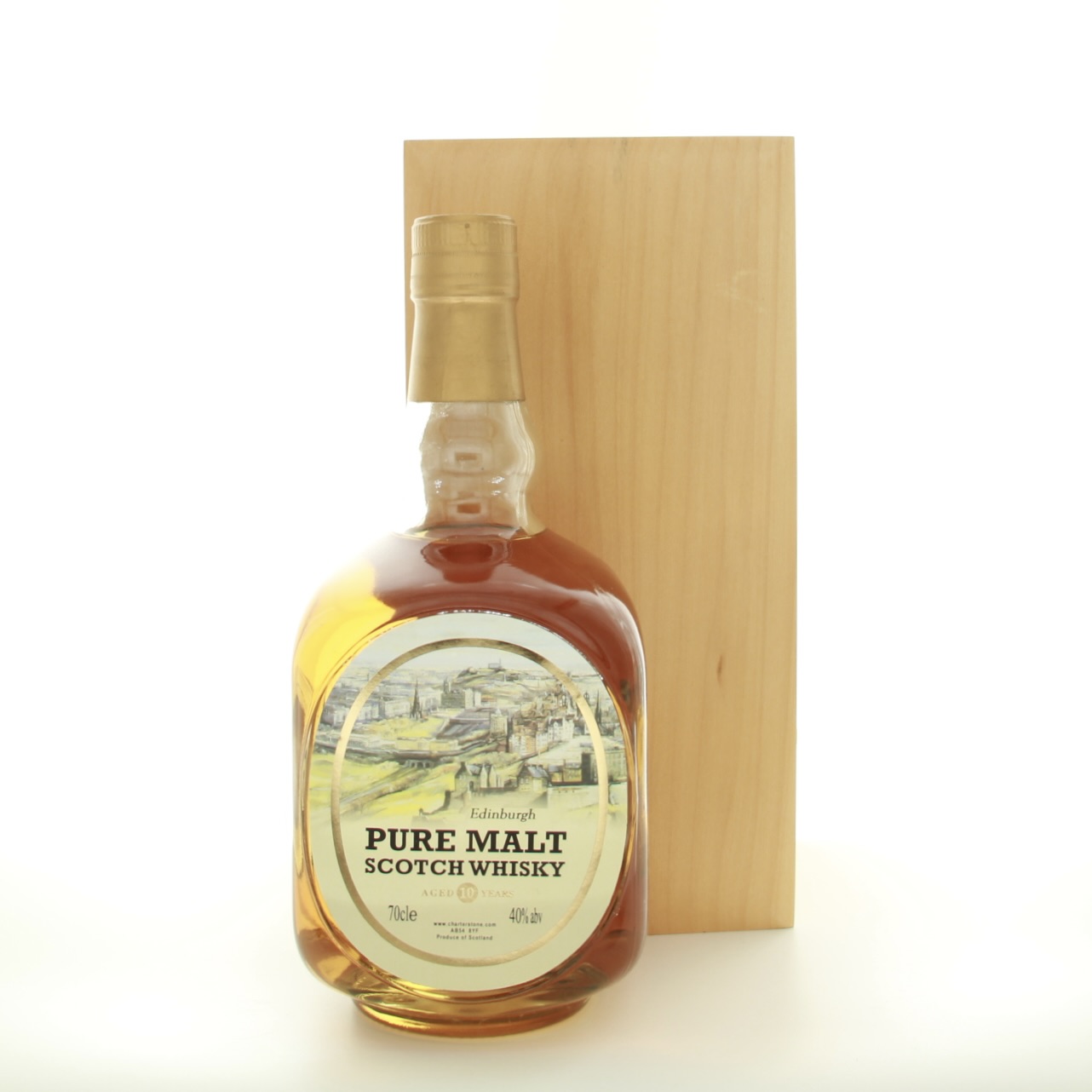
Charterstone Group Edinburgh 10 Year Old Pure Malt
70cl / 40%
£69.00

- Malt type: Blended Malt
- Region: Scotland
If you like this whisky, you will also like these

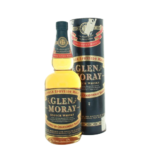
A decade-aged relic of Scotch history, showcasing the richness of the pre-2005 "Pure Malt" designation from an obscure Edinburgh bottler.
At-a-Glance
| Field | Details |
| Distillery / Bottler / Country & Region | Multiple Distilleries / Charterstone Group, Edinburgh (Independent Bottler) / Scotland |
| Category | Pure Malt Scotch Whisky (Historical Blended Malt) |
| Age / Vintage / Bottled | 10 Years Old / Circa 1990s (Inferred) / Pre-2005 |
| ABV & Size(s) | 40% or 43% ABV (Varies) / 70cl (Assumed metric era) |
| Cask / Treatment | Mixture of ex-Bourbon and ex-Sherry (Inferred) |
| Natural Colour | Not stated by the producer. |
| Non-Chill-Filtered | No (Assumed filtered due to 40% ABV standard) |
| Cask Strength | No |
| Bottle count / Outturn | Unknown (Commercial IB volume) |
| Intended channel | Independent Retailer / Export Market |
| Packaging | Standard bottle, minimalist label design |
| Notes on discrepancies | ABV variance (40% vs 43%) is market-dependent. Bottling date confirmed pre-2005. |
Historical Context
The Charterstone Group 10 Year Old is historically significant due to its classification as "Pure Malt". This technical designation, meaning a blend of only single malts (Blended Malt), was mandatory prior to a pivotal ruling by the SWA. In 2005, the SWA prohibited the use of the term "Pure Malt". Therefore, the existence of the "Pure Malt" label, combined with the 10-year age statement, decisively dates the bottling to the 1990s or the early 2000s.
The Charterstone Group, an obscure and now defunct Edinburgh-based independent bottler, operated by opportunistically sourcing excess aged stocks from larger distilling corporations. This suggests potential procurement linkages to major stock holders, such as the Invergordon group (Dalmore). This provides a qualitative assurance: the component malts likely originate from reputable Highland or Speyside stocks.
The market value of this bottle is driven primarily by the historical category ("Pure Malt") and the specific age statement (10 years), rather than any enduring brand recognition. It is valued as a historical commodity defined by its era and content guarantee.
Technical Specification & Variant Map
Technical variance in the Charterstone Group bottling is primarily restricted to the presentation strength.
Documented variants
The most important variants are the 40% and 43% ABV iterations. The 43% ABV version is inherently more desirable because the slightly higher strength retains greater flavour concentration. Historically, the 43% ABV was often employed for premium export markets, such as the United States, signifying a higher-tier offering than the standard 40% UK/EU market release.
The obscure nature of the bottler means that market valuation is driven by the age and the historical category, not brand equity.
Variant Matrix
| ABV | Volume | Market | Era cues | Relative desirability |
| 40% | 70cl | UK/EU Standard | Pure Malt Terminology (Pre-2005) | Standard |
| 43% | 70cl | US/Specific Export | Higher Strength Premium | Higher (Preferred collector spec) |
Packaging & authenticity checklist
As a 1990s bottling, the condition risk of ullage is high. A perfect fill level, minimum High Shoulder (HS) or Neck, is mandatory for achieving premium valuation. Given the minimalist label design, label integrity is a critical authentication point. The capsule and seal must show no signs of compromise, re-corking, or cap replacement, reflecting the standard material integrity of a 1990s release.
Regulatory/terminology notes
The most important technical note is the use of the term "Pure Malt." This designation, regulated out of use in 2005, confirms the bottle's historical age and its contents as a Blended Malt, guaranteeing that no grain whisky is included. This categorical distinction elevates its quality and market standing above standard blends.
Liquid Profile (from verifiable notes)
The liquid profile is inferred from the Blended Malt category and the 10-year age statement, suggesting a composite malt character, likely dominated by Speyside/Highland malts.
Nose: Expect a mature, malt-driven character, displaying integrated notes of stewed fruits, honey, and light confectionery sweetness, consistent with a full decade of cask integration.
Palate: The taste is rounded and smooth. The absence of grain whisky provides a richer, fuller mouthfeel than standard blends. Core flavours include vanilla, baked goods, and a subtle influence of oak spice.
Finish: Clean, medium persistence, concluding with persistent malt sweetness.
With water: Not applicable, and generally not recommended for the 40% ABV bottling.
Distillery/Bottler Snapshot
The Charterstone Group serves as a historical case study representing 1990s independent bottlers. The primary value driver is the 10-year age statement and the guaranteed contents under the "Pure Malt" designation. These bottles are valued for their specific historical composition.
Sourcing
Target formats/eras to prefer: Target only the higher 43% ABV specification with a mandatory fill level of High Shoulder (HS) or better.
Red flags to avoid: Any damage to the paper label, which is the sole visible form of provenance verification for this obscure bottler.
Condition thresholds (fill/box/labels): High Shoulder fill (HS) is mandatory. The box is irrelevant unless specific historical packaging is located.
Margin/velocity expectations—qualitative: Velocity is low, reflecting the niche collector appeal. High margins are possible if a pristine, high-spec example is secured through opportunistic sourcing.