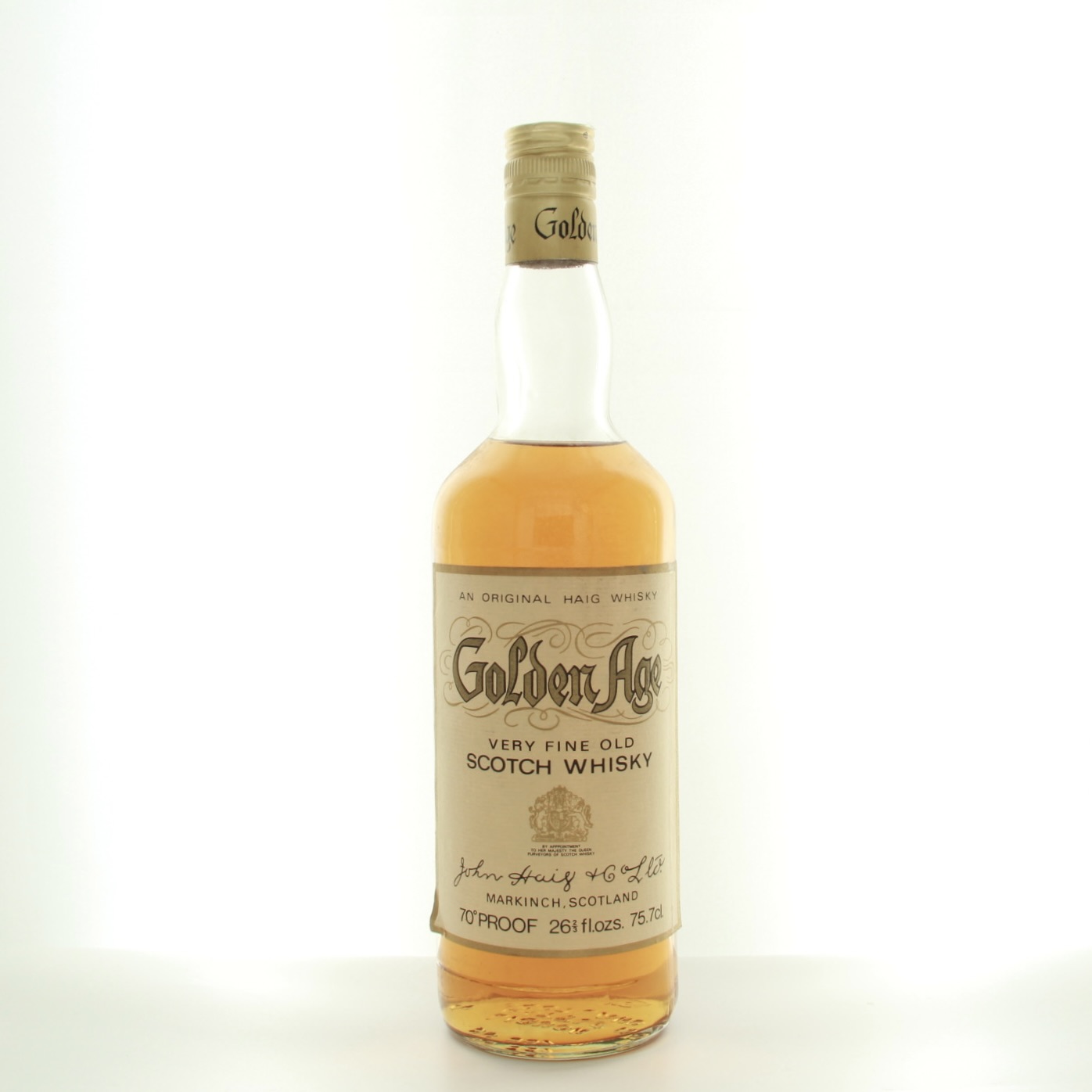
Golden Age Very Fine Old Scotch Whisky (1970s Edition)
75.7cl / 70 Proof%
£139.00

- Malt type: Blended
- Region: Scotland
If you like this whisky, you will also like these

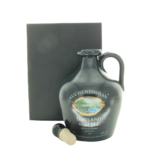
A highly sought-after, historical blended Scotch from the 1970s, prized for its high presumed malt content and vintage Speyside components.
At-a-Glance
| Field | Details |
| Distillery / Bottler / Country & Region | Not stated by the producer / Likely UK-based blending house / Scotland |
| Category | Blended Scotch Whisky |
| Age / Vintage / Bottled | Not stated / Circa 1970–1980 |
| ABV & Size(s) | Varies (e.g., 43%, 40%) / 75cl (typical) |
| Cask / Treatment | Not stated by the producer (Assumed high ratio aged refill cask) |
| Natural Colour | Not stated by the producer |
| Non-Chill-Filtered | Not stated by the producer |
| Cask Strength | No |
| Bottle count / Outturn | Standard volume release for the era |
| Intended channel | Retail/Export |
| Packaging | Standard glass bottle, high risk of closure failure |
| Notes on discrepancies | High value driven by the historical ‘Very Fine Old’ (VFO) designation. |
Historical Context
This Golden Age blend originates from the 1970s or early 1980s, a period now recognized as a "golden age" for blending in Scotland. This era predated the industry’s widespread move toward minimal age statements and reduced malt content in blends. At the time of bottling, aged malt stocks were comparatively plentiful, allowing blenders to use high-quality, mature components.
The designation 'Very Fine Old' (VFO) was a historical, qualitative, commercial term that implied the inclusion of significantly aged malt and/or high-quality grain components, positioning it distinctly above standard blends of the contemporary market. Market desirability is further amplified by persistent speculation, although unverified, that the blend contains highly valued, pre-consolidation Speyside malts, potentially including spirit from distilleries like Glenfarclas or Macallan. The high current auction price, typically ranging from £180 to £250, is exceptional for a blended Scotch. This cost is justified because the bottle functions as liquid archaeology, providing current buyers with access to the flavour profiles of 1970s malt stocks which are now exponentially more expensive as single malts.
Technical Specification & Variant Map
Accurate dating of this vintage blend relies heavily on physical cues, including specific label syntax, importer details, and the appearance of UK duty or tax stamps corresponding to the 1970s decade. As with other vintage expressions, the 43% ABV versions are generally preferred by collectors for their perceived integrity and strength retention over the decades compared to 40% export-strength bottlings.
Variant Matrix
| ABV | Volume | Market | Era cues | Relative desirability |
| 43% | 75cl | UK/EU | Dated UK tax stamps, VFO designation | High (Preferred ABV, optimal dating) |
| 40% | 75cl | Export | US/Export strip label | Moderate |
Packaging & authenticity checklist
Condition assessment is critical. Due to the rudimentary cork and seal technology utilized in the 1970s, closure failure is a primary concern. This structural weakness leads to a high risk of evaporation (ullage) and potential oxidation. Therefore, the fill level is paramount. Bottles presenting below the upper shoulder (U/S) must be approached with caution, as they carry a significantly increased risk of oxidation and corresponding reduced market value. Authentication efforts must include confirming the presence of verifiable 1970s tax stamps or importer labels to establish accurate provenance and assurance of the correct bottling era.
The term "Very Fine Old" is not protected by current SWR terminology, but its historical usage serves as a strong market indicator of superior quality for its production period.
Liquid Profile (from verifiable notes)
The verified notes suggest a highly rich and developed profile, indicating a successful survival of the spirit over time. The nose is characterized by dominant notes of dried fruit, a mature sherry influence, gentle spice, and vanilla. Hints of old oak and leather also appear.
The palate is reported to be smooth and medium-bodied, consistent with the inclusion of a high ratio of aged malt components. Flavours include honey, sultanas, and gentle cinnamon spice. Notably, there is a remarkable lack of youthful grain character, supporting the blend’s premium designation. The finish is medium length, rich, and warming. The documented richness and fruit profile after nearly 50 years strongly implies that the blend was formulated with highly robust, stable, and likely very old components at the time of bottling. This inherent robustness explains why well-preserved examples maintain such high secondary market value, despite the liquid being a blend.
Distillery/Bottler Snapshot
The significance and subsequent market value of this release stem directly from its historical context, representing the blending expertise and depth of stock available during the 1970s. The value is intrinsically tied to the historical promise of "fine old" components and the resulting flavour profile that cannot be replicated today.
Sourcing
Sourcing must maintain a strict focus on 1970s or early 1980s bottlings, verifiable by stamps and labels. Primary red flags to avoid include low fill levels (below Upper Shoulder); any signs of capsule damage or leakage; and labels that do not explicitly state "Very Fine Old." The minimum acceptable condition threshold is Upper Shoulder (U/S) fill, with Neck fill preferred. The sourcing strategy should target moderate velocity, focusing on achieving high margins when pristine examples are successfully sourced, capitalizing on condition-driven scarcity.