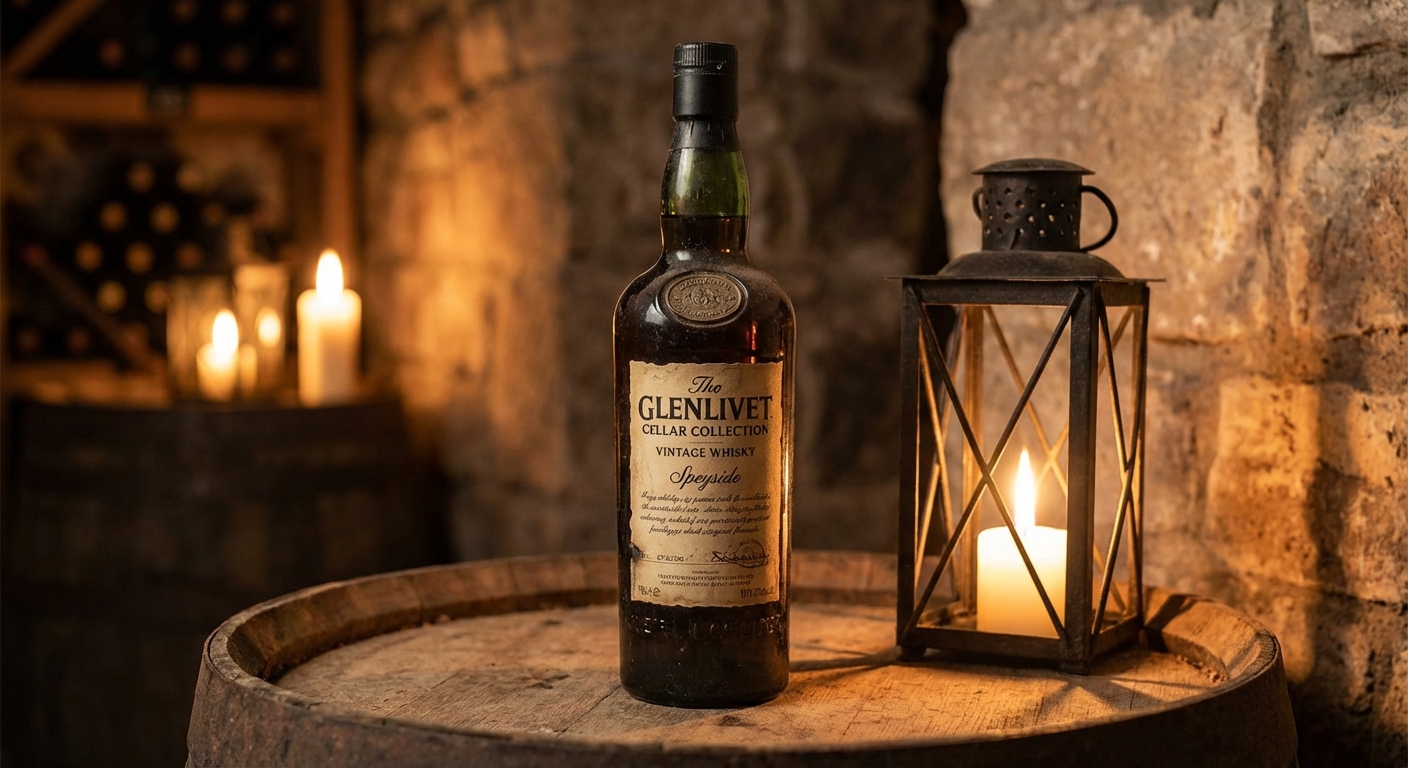
The oldest bottles in the Glenlivet Cellar Collection were distilled more than six decades ago — placing them among the rarest single malt expressions ever to leave a Scottish warehouse.
The Glenlivet Cellar Collection is one of the most coveted series in the history of Scotch whisky. Launched at the turn of the millennium to showcase decades-old single-vintage spirit slumbering deep in the Minmore warehouses, each release is drawn from a single year’s distillation, bottled at cask strength without chill-filtration, and limited to a handful of individually numbered bottles. For serious collectors, these are not simply whiskies — they are time capsules.
The Glenlivet Cellar Collection is a series of ultra-limited, single-vintage single malt Scotch whiskies released by the Glenlivet distillery under Chivas Brothers (Pernod Ricard). Each expression is drawn from a specific distillation year — not a blended age statement, but a precise point in time when a particular batch of new-make spirit filled a cask at Minmore. That distinction matters enormously to collectors.
Unlike the core Glenlivet range — familiar expressions such as the 12, 15, 18, and 25 Year Old — the Cellar Collection releases are bottled at natural cask strength and left unchillfiltered, preserving every compound that decades of oak maturation have coaxed from the spirit. No water addition, no cold-filtering to remove the haze-forming esters that carry so much flavour. What you receive is the whisky exactly as the cask held it.
The series was introduced around the year 2000 and has yielded a carefully curated sequence of releases spanning distillation years from the late 1950s through to the mid-1980s. Individual bottlings have been limited to as few as a couple of hundred numbered bottles, with some runs reaching five hundred. Once released, they rarely stay in retail channels for long — and once sold out, they migrate to private cellars and auction rooms where their prices have climbed substantially.
The Glenlivet holds a distinction that no other Scottish distillery can claim: it was the first to obtain a licence to distil legally in the Livet valley following the Excise Act of 1823. George Smith, a tenant farmer and illicit distiller at Upper Drumin, applied for his licence in 1824 — a decision that made him deeply unpopular with the valley’s many illegal operators, who viewed licensed production as a betrayal. Smith reportedly carried pistols for protection for years afterwards.
That act of commercial courage proved visionary. The Glenlivet’s reputation for quality grew so swiftly that by the mid-nineteenth century, dozens of other distilleries were appending “Glenlivet” to their names to borrow its prestige. A court ruling in 1884 finally established that only Smith’s distillery could call itself The Glenlivet — all others had to hyphenate the suffix.
The distillery sits at the head of the Livet valley in Speyside, one of Scotland’s most celebrated whisky regions, at an elevation that brings long, cold winters and pure mountain water from the Josie’s Well spring. The surrounding landscape — rolling moorland, ancient pine forest, and the Cairngorm plateau beyond — contributes to conditions that make Speyside maturation distinctive: cool, relatively stable temperatures that allow spirit to develop slowly and with great complexity.
The Smith family retained control of The Glenlivet from 1824 until 1952, when a series of acquisitions began. By 1978 the distillery had passed into the Seagram empire, and in 2001 Pernod Ricard acquired Seagram’s Scotch assets, placing The Glenlivet firmly within the Chivas Brothers portfolio — where it remains today. Under Chivas stewardship the distillery has become the world’s best-selling single malt Scotch whisky by volume, recording more than a million nine-litre cases in annual sales.
The Cellar Collection represents the other side of that commercial success: a quiet acknowledgement that before the brand became ubiquitous, its spirit was being laid down in casks that nobody then imagined would one day command four-figure price tags.
The Cellar Collection has released bottlings from numerous distillation years since its inception. The five vintages covered in depth below — 1959, 1964, 1967, 1972, and 1983 — represent the breadth of the series: from the oldest and rarest expressions to the relatively more accessible later releases. Each tells a different story of wood, time, and the character of a specific era at Minmore.
Distilled: 1959
Age at bottling: Approximately 40–45 years
Approximate ABV: Cask strength (mid-to-high 40s)
Availability: Extremely limited; believed to be one of the earliest and rarest releases in the series
The 1959 vintage sits at the apex of the entire Cellar Collection. Spirit distilled that year would have filled casks when Harold Macmillan was Prime Minister, when the Macallan’s warehouses held stock now worth thousands of pounds per bottle, and when Scottish distilleries operated in a world without stainless steel washbacks or computerised cut points. Production methods were more artisanal by necessity: worm tubs for condensation, open cast iron mash tuns, and direct coal or coke-fired stills at many sites.
Skim Stopper: A whisky distilled in 1959 and bottled after four decades of slow Speyside maturation represents approximately twice the age of most premium single malts on the market today — and the production methods of its era are now irrecoverably lost.
By the time the 1959 spirit was considered ready for the Cellar Collection, it had lived through more than four decades of seasonal cycling in the Minmore warehouses. With each winter contraction and summer expansion of the wood, vanillin, lactones, and tannins were drawn into and released from the spirit. The result, in a whisky of this age and provenance, is typically a deep amber colour, a nose of dried orchard fruits, old beeswax, and a trace of sandalwood, and a palate of stewed stone fruit, dark chocolate, and a long, gently spiced finish. Bottles from this vintage are exceptionally elusive on the secondary market and command prices that reflect their scarcity.
For context, independent bottlers have released Glenlivet spirit from the late 1950s and early 1960s that has drawn scores in the low-to-mid nineties from leading critics — testimony to the quality of the distillate produced in that era. The Cellar Collection 1959, bottled by the distillery itself, is the definitive institutional statement of what that period produced.
Distilled: 1964
Bottled: 2001 (approximately 37 years old)
ABV: 49%
Cask reference: #2LBF901
Series position: One of the earliest Cellar Collection releases
The 1964 vintage was bottled in 2001 as one of the inaugural expressions of the Cellar Collection series, making it a foundational release for collectors who followed the programme from its launch. At 49% ABV it sits in a compelling sweet spot: genuinely cask strength in character, yet approachable enough that the complexity of three-and-a-half decades in oak is fully legible without the heat that higher-strength bottlings can bring.
Whisky produced at Glenlivet in 1964 would have been made during the distillery’s tenure under the George and J.G. Smith Ltd ownership, before the first major acquisition phase began. The house style of the era leaned towards lighter, more delicate spirit — classic Speyside elegance — which in long maturation translates to nuanced complexity rather than the big, assertive flavours associated with heavily sherried or peated whiskies. Collectors who have encountered the 1964 speak of honeyed citrus on the nose, a core of gentle cereal sweetness, and a finish that carries dried apricot and subtle spice.
Distilled: 1967
Age at bottling: Approximately 35–40 years
ABV: Cask strength
Notes: One of the middle-era vintage releases in the Cellar Collection programme
The 1967 vintage occupies a fascinating position in the Cellar Collection timeline. By the mid-1960s, The Glenlivet had already established its reputation as a benchmark Speyside style, and production was running at a scale that allowed careful selection of individual casks for long ageing. The spirit distilled in 1967 benefited from the technical continuity of the Smith family era, when the same families of workers tended the same stills through the same seasonal rhythms year after year — producing a consistency that modern production at industrial scale struggles to replicate.
After three-and-a-half to four decades in American oak or refill casks, the 1967 spirit would have developed the characteristic Glenlivet combination of tropical fruit and floral notes typical of the distillery’s Speyside heritage, overlaid with the richer, more complex register that only genuinely long maturation delivers: wax polish, roasted almonds, a strand of coconut from the seasoned oak, and a finish that lingers far longer than a whisky’s age would conventionally predict.
Distilled: 1972
Bottled: 2005 (33 years old)
ABV: 52.3%
Series position: Mid-programme release
The 1972 Cellar Collection, bottled in 2005 at 52.3% ABV, is one of the most sought-after expressions in the series on the secondary market. This is in part because 1972 is a vintage year that collectors across multiple categories hold in high regard — a year of exceptional growing conditions in many parts of Europe, and one whose whisky distillations have consistently yielded distinguished results from a number of Scottish producers.
At 52.3% ABV this is a full-force cask strength release: add a splash of mineral water and the whisky opens dramatically, releasing layers of ripe stone fruit, warm vanilla, and a spice signature that lingers. Independent bottler releases from Glenlivet 1972 casks — such as Gordon & MacPhail’s 1972 Vintage bottled at 54.3% — have confirmed that the distillate from this year is among the finest the distillery has produced. The officially bottled Cellar Collection version, drawn from selected house casks, represents the distillery’s own curated statement of what 1972 means at Minmore.
Distilled: 1983
Bottled: 2003 (20 years old)
ABV: 46%
Finish: French oak
Notes: Unique within the series for its cask finishing
The 1983 Cellar Collection stands apart from the other releases through a notable distinction: a French oak finish. While the older vintages in the series are aged entirely in American oak casks — the dominant maturation wood at Glenlivet — the 1983 expression was transferred for a period into French oak before bottling, adding a dimension of fine-grained tannin, subtle red-fruit character, and a drier, more wine-influenced texture to the traditional Glenlivet profile.
Skim Stopper: The 1983 Cellar Collection is the only expression in the series to incorporate a French oak finish — making it the most structurally distinct release and a particular collector’s item for those interested in the intersection of whisky and European wine-cask culture.
At 46% ABV the 1983 is the most approachable expression in the classic Cellar Collection range, making it a logical entry point for those new to the series. Its 20-year age at bottling meant the spirit retained more of its youthful distillery character — floral, grassy Speyside notes intact alongside the developing complexity of two decades in oak. The French oak contribution adds a layer of sophistication and differentiation that has made the 1983 a recurring subject of discussion among collectors.
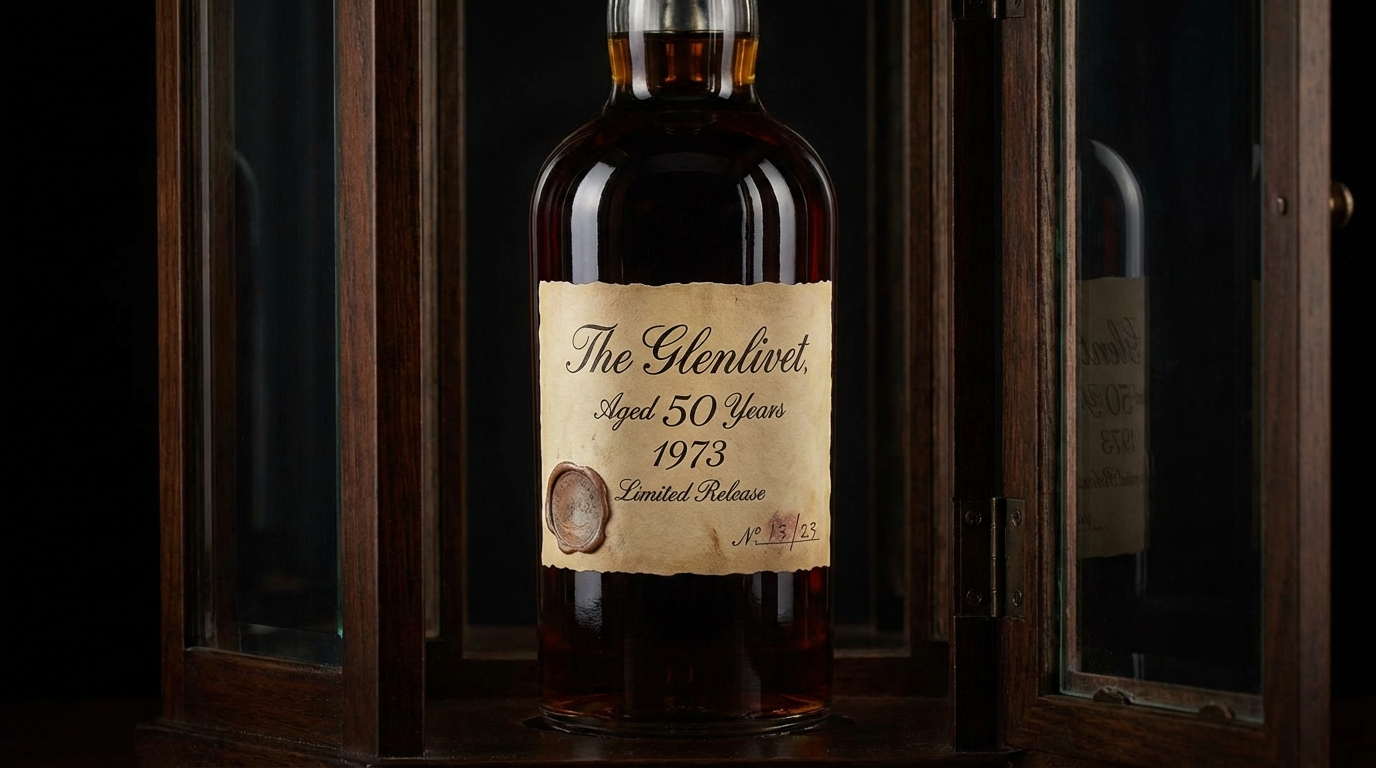
Every one of the vintage years in the classic Cellar Collection — 1959, 1964, 1967, 1972, 1983 — belongs to a production era that is now irretrievably past. The stills at Minmore in the early 1960s were direct-fired; the worms were copper and long; the barley was malted locally using practices that have since given way to industrial maltings. Even the water source’s character and the ambient microbiology of the warehouses in those decades contributed to a flavour profile that modern production, however precise, cannot replicate.
This is not romanticism — it is chemistry. The cut points operated by a distillery in 1964 were determined by the judgement and experience of the stillman, not by computer sensors. The resultant spirit retained a broader range of congeners. Over forty years in wood, those congeners developed into the dense, layered complexity that sets old Glenlivet apart from younger releases of even the finest quality.
Modern premium expressions are almost universally bottled at reduced strength and often chillfiltered — a process that removes certain fatty acid esters to prevent clouding when ice is added. In doing so, filtration strips out compounds that carry legitimate flavour. The Cellar Collection releases eschew both interventions, presenting the spirit with complete fidelity to the cask.
At the ABVs in question — 46%, 49%, 52.3%, and higher — these are whiskies with real presence and texture. They coat the glass, cling to the palate, and evolve as air finds them. Diluting with a few drops of water is worthwhile and reveals layers that would otherwise remain locked at barrel strength.
A distillery cannot manufacture more old whisky. The casks that yielded the 1964 Cellar Collection are gone. The 1972 stocks that hadn’t been allocated by 2005 were either blended or passed into other channels. What the Cellar Collection bottled represents a deliberate, curatorial choice to preserve the finest individual casks for their own merits — and once those bottles sold, the opportunity closed permanently.
Bottle counts for Cellar Collection releases are very small — typically in the range of a few hundred per vintage. The 1980 Cellar Collection, for reference, was limited to 500 numbered bottles globally. Earlier releases with older vintages were likely even more constrained. Finding any of the classic Cellar Collection expressions (1959–1983) in the primary market today is essentially impossible — these were sold through specialist retailers, travel retail, and select international markets at the time of release and have long since dispersed into private hands.
Secondary market activity through specialist whisky auction houses is the realistic route for today’s collector. Platforms that focus specifically on rare and collectable whisky, as well as private treaty sales through dealers such as Glenbotal, offer access to bottles that may have been cellared by private collectors for a decade or more.
Pricing varies significantly by vintage, condition, and channel. As a general framework:
Whisky values can rise and fall. This is not financial advice.
As with all vintage collectables, condition is critical. For Cellar Collection bottles, look for: fill level above the shoulder; intact, undamaged labels; original presentation packaging where supplied; and the presence of the bottle’s individual number. Bottles presented in their original wooden or luxury outer cases command a meaningful premium over unboxed examples.
Glenbotal’s private collector network — built over six years of trading and spanning collectors across the UK and Europe — is one of the most productive routes to sourcing rare Cellar Collection bottles outside the auction ecosystem. Our team offers free valuations and can advise on fair market pricing before any purchase is committed. See how much your whisky is worth if you are holding Cellar Collection bottles and considering their position in your collection.
For a broader framework of what drives value in rare whisky, our guide to what makes a whisky bottle valuable provides useful context alongside the Cellar Collection.
Two series dominate the conversation when serious collectors discuss officially bottled vintage single malts from major Scottish distilleries: the Glenlivet Cellar Collection and the Glenfarclas Family Casks. They represent philosophically different approaches to the same challenge — how to share the contents of decades-old warehouses with the world.
The Glenfarclas Family Casks series, released by the independent Grant family distillery in Speyside, takes a deliberately comprehensive approach. Launched in 2007 to celebrate George Grant’s birthday, the Family Casks presented single sherry cask bottlings from every year of production from 1952 onwards — a systematic excavation of the distillery’s history. Subsequent releases have added more recent vintages, and the series continues to grow. Bottle counts vary by cask size and yield; some runs stretch to several hundred bottles, others to fewer than a hundred.
The Family Casks are defined by Glenfarclas’s unwavering commitment to sherry cask maturation. Every bottle in the series carries the hallmark of first-fill or refill sherry butts: deep mahogany colour, rich dried fruit, Christmas cake, and the warming, resinous character of long European oak contact. If you love sherried whisky and vintage provenance, the Family Casks deliver it comprehensively across an extraordinary breadth of years.
The Glenlivet Cellar Collection is more selective and more varied in character. Rather than covering every distillation year systematically, it presents curated releases from chosen vintages — each chosen because the casks in question had developed something exceptional. The result is a series that feels more like an exclusive private reserve than an archive, with each bottle carrying a sense of deliberate editorial judgement.
Where the Family Casks lean decisively towards European oak and sherry influence, the Cellar Collection is rooted in American oak maturation, producing that classic lighter Speyside profile of vanilla, orchard fruit, and delicate florality, with decades of age adding depth and texture without overwhelming the distillery’s fundamental character. The 1983’s French oak finish is a notable exception — but even there, the underlying Glenlivet spirit remains recognisable beneath the wine-cask influence.
Neither series is objectively superior; they serve different collecting sensibilities. Those drawn to breadth, completeness, and the sherry-dominated Speyside style will gravitate towards the Family Casks. Those who value editorial scarcity, the lighter Speyside house style in deep age, and the prestige of a major distillery’s own hand-selected releases will find the Cellar Collection more compelling.
Many serious collectors hold bottles from both series as complementary expressions of what vintage Speyside whisky can become given enough time and the right cask. Our vintage Scotch whisky guide explores how to think about building a collection that spans multiple distilleries and styles.
The Cellar Collection series spans distillation years from the late 1950s through the 1980s. Confirmed vintage releases include 1959, 1964, 1967, 1969, 1972, 1973, 1980, and 1983, among others. The 1959, 1964, 1967, 1972, and 1983 represent the most widely discussed releases and are considered the cornerstone vintages of the classic programme.
Secondary market prices vary substantially by vintage. The 1983 Cellar Collection typically trades in the mid-to-high hundreds of pounds; the 1972 regularly exceeds £1,000; the 1964 and older vintages command four figures and above. Provenance, condition, completeness of packaging, and current market demand all affect the final price. Always obtain a current valuation before buying or selling.
Bottle counts were very small across the series. The 1980 Cellar Collection was confirmed at 500 numbered bottles globally. Earlier and older vintages — including the 1959, 1964, and 1967 — are believed to have been limited to comparable or smaller quantities, with specific numbers varying by the cask(s) selected. This extreme scarcity is a primary driver of their collectability.
The 1959 Cellar Collection is almost certainly the oldest official Glenlivet distillery bottling ever released commercially. Spirit distilled in 1959 and held in Minmore’s warehouses for approximately four decades represents production from an era of hand-managed, direct-fired distillation using production methods that no longer exist. It is a genuinely irreplaceable artefact of mid-twentieth-century Scotch whisky making.
Primary market stock is exhausted — these bottles were sold through specialist retailers and travel retail at the time of release. For secondary market access, specialist rare whisky dealers such as Glenbotal, whisky auction houses, and private collector networks are the realistic options. Glenbotal offers a private collector network and free valuations to help source specific bottles.
ABVs across the series range from 46% (the 1983 French oak finish) to over 52% (the 1972 at 52.3% ABV) and beyond for some older expressions. All releases are bottled at natural cask strength without dilution, and all are unchillfiltered. The 1964 was released at 49% ABV; the 1980 at 43.3% ABV.
The original programme produced releases over approximately a decade from around 2000 onwards. Whether additional Cellar Collection bottles will be released under future curated series from Glenlivet’s current ownership is uncertain. The classic vintages covered in this guide are long sold out and exist only on the secondary market.
Independent bottlers such as Gordon & MacPhail, Signatory Vintage, Berry Bros & Rudd, and Cadenhead have all released old Glenlivet from casks acquired over many years. These releases are often superb and sometimes represent better value than official distillery bottlings. The Cellar Collection’s distinction is that it represents the distillery’s own curated selection — the casks that Glenlivet itself considered most representative and most exceptional — bottled with the full weight of provenance that an official release carries.
Collectors who purchased Cellar Collection bottles at release prices have generally seen significant appreciation, particularly for the oldest vintages. The fundamental scarcity — irreplaceable spirit, small bottle counts, a globally growing collector base — supports long-term value. However, whisky is an illiquid asset and values are subject to market conditions. Whisky values can rise and fall. This is not financial advice.
The 1959 Cellar Collection is the oldest vintage in the classic series, making it the oldest official Glenlivet release in the programme. When bottled, this spirit would have been approximately four decades old — placing it in extremely rare company among officially bottled Scotch whiskies of any provenance.
The majority of Cellar Collection releases matured in American oak casks — the standard maturation vessel for Glenlivet over most of its history. The notable exception is the 1983 vintage, which incorporated a French oak finish prior to bottling. The 1980 release used three first-fill American oak casks. Specific cask references for other vintages include #2LBF901 for the 1964 bottling.
Store upright (unlike wine, whisky does not benefit from cork contact with spirit over the long term), away from direct light, at a stable temperature between 15°C and 20°C. Avoid locations with significant temperature swings. For long-term cellaring, retaining the original outer packaging protects the label and maintains presentational value.
The Glenlivet Cellar Collection represents the definitive official statement of what this legendary Speyside distillery can produce given enough time. These are not commercial releases dressed up in luxury packaging — they are genuinely scarce, genuinely old, and genuinely irreplaceable expressions of mid-to-late twentieth-century Scottish whisky-making at one of the country’s most storied addresses.
From the extraordinarily elusive 1959 — a whisky that predates the Beatles, the moon landing, and the entire modern single malt revival — to the more approachable 1983 with its distinctive French oak signature, the Cellar Collection tells the story of a distillery confident enough in its own heritage to let time do the talking.
For collectors building a serious rare Scotch portfolio, a Cellar Collection bottle anchors a collection in a way that few other releases can. For those exploring the category for the first time, our vintage Scotch whisky guide is a useful place to begin, alongside a read of the best vintage whiskies from the 1960s for broader context on what that era produced.
If you have Glenlivet Cellar Collection bottles in your possession and want to understand their current market value, Glenbotal’s team offers free, no-obligation valuations drawn from six years of private collector transactions across the UK and Europe. If you are looking to acquire specific vintages, our private collector network is one of the most productive sources outside the public auction ecosystem.
Explore what’s currently available at Glenbotal — and speak to our team about sourcing the Cellar Collection vintage you’re looking for.
Explore the full collection at Glenbotal — rare whisky sourced from private collectors across the UK and Europe.