
Since 2009, Glenmorangie has released one Private Edition per year — each a controlled experiment in cask, grain, and fermentation science. Twelve releases in, they remain among the most consistently interesting annual bottlings in Scotch whisky.
This guide covers every named Glenmorangie Private Edition from Sonnalta PX to Moralta and beyond — who made them, how they were made, why each one mattered, and which bottles collectors still seek today. Whether you are tracking down a discontinued edition or simply want to understand what separates Companta from Bacalta, this is the reference you need.
The Private Edition is Glenmorangie’s annual limited release — one whisky per year, each exploring a single creative idea that would never fit into the standard range.
Launched in 2009 with Sonnalta PX, the programme was designed as an open laboratory. Each bottling investigates something specific: an unusual cask type, a forgotten barley variety, a wild yeast strain, an unconventional wood combination. The result is a named expression that stands apart from the core range yet carries the distillery’s unmistakable house character — that tall-still elegance, that floral-fruity lift, that silk-and-cream weight on the palate.
Every Private Edition is bottled at 46% ABV and is non-chill-filtered, which preserves the natural oils and texture that make these whiskies worth collecting. Bottle quantities are limited — typically somewhere between 10,000 and 30,000 cases globally, though some editions have been considerably smaller — and once they sell out, they do not return.
Each release carries a Gaelic name that describes its character or concept. Sonnalta means “sociable.” Ealanta means “skilled” or “talented.” Allta means “wild.” These are not marketing affectations — they are precise descriptions of what is inside, chosen by the people who made the whisky. Understanding the name is a useful first step to understanding the dram.
One detail that sets the Private Edition apart from comparable annual series at other distilleries: Glenmorangie releases exactly one per year. There is no secondary tier, no companion piece, no rush of variants. The discipline of one release — fully realised, fully bottled, given its own moment — is itself part of the philosophy.
The programme has maintained that discipline since 2009, which means the archive of named releases is now a coherent catalogue. Collectors who have tracked them from the beginning hold something rare: a sequential record of one distillery’s experimental thinking across more than a decade.
Dr Bill Lumsden is Glenmorangie’s Head of Whisky Creation, and understanding his background is essential to understanding why the Private Edition tastes the way it does.
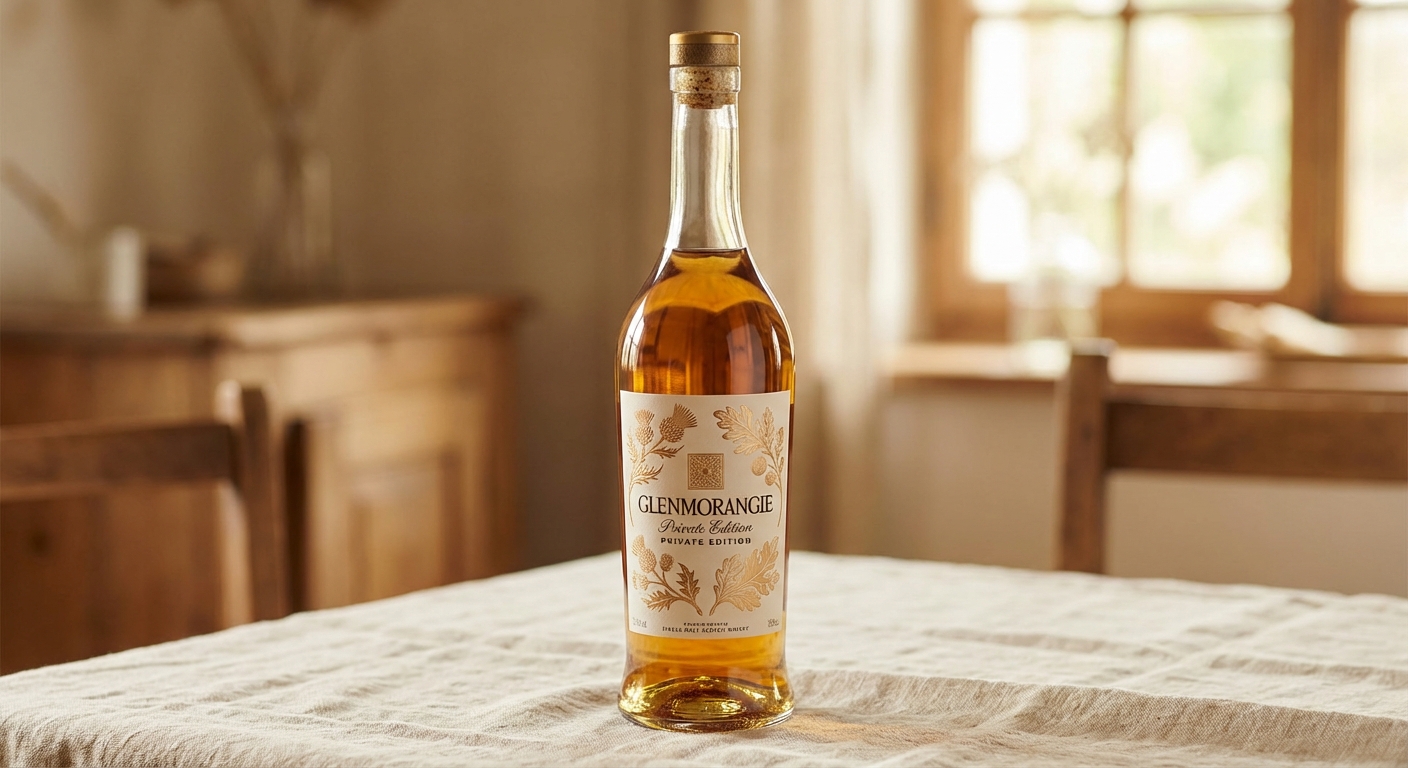
Lumsden holds a doctorate in biochemistry and joined the Glenmorangie Company in 1995. Before moving into distilling, he worked in fermentation science — a background that shows clearly in the Private Edition’s recurring interest in yeast, fermentation time, and grain variety. Where many master blenders approach whisky creation through the lens of cask management alone, Lumsden approaches it as an end-to-end biochemical system.
His most famous early contribution to Scotch whisky was pioneering the use of exotic cask finishing at Glenmorangie during the 1990s — a practice that is now industry-wide but was genuinely novel at the time. The Sauternes finish (Nectar d’Or) and the Port finish (Quinta Ruban) both came from his research into how secondary wood maturation could complement rather than overwhelm a delicate new-make spirit.
Think of each Private Edition as Lumsden’s published findings for that year. When he aged whisky in rye barrels and released it as Spìos, he was demonstrating something he had spent years proving: that American rye wood imparts a very different flavour profile from bourbon wood, even when the underlying spirit is identical. When he used wild yeast for Allta, he was testing whether fermentation character could persist through distillation and maturation strongly enough to define the finished whisky.
The answer, repeatedly, is yes — and the Private Edition is the vehicle through which those answers become drinkable.
One principle Lumsden has stated publicly in multiple interviews: every Private Edition must be driven by something real, not by branding or trend. If the concept is a cask finish, the finish must be dominant enough to change the whisky’s profile meaningfully. If the concept is a grain variety, the grain must express itself clearly in the glass. This discipline is why the Private Edition range has maintained critical credibility even as comparable “annual experiments” from other distilleries have sometimes drifted toward marketing exercises.
Here is the complete Private Edition archive from release one through to the tenth expression — every cask, every concept, every notable detail.
Concept: Pedro Ximénez sherry cask finish
Released: 2009
ABV: 46%
Sonnalta PX launched the Private Edition and set the template for everything that followed. The whisky spent its primary maturation in American white oak ex-bourbon casks — Glenmorangie’s standard — before being finished in casks that had previously held Pedro Ximénez sherry, one of the richest, sweetest fortified wines in Spain.
PX sherry is made from sun-dried Palomino Fino grapes (the same grape as dry fino), dried until they are almost raisin-like before pressing. The resulting wine is black, syrupy, and intensely sweet. Casks that held PX carry that sweetness directly into any spirit that subsequently matures in them.
The result in Sonnalta was a Glenmorangie transformed: all the floral top notes of the distillery’s house character were still present, but beneath them sat waves of dark fruit — dried figs, dates, Medjool raisins — and a deep, spiced richness that felt almost dessert-like. Tasting notes commonly cite dark chocolate, espresso, Christmas pudding, and candied orange peel.
Collector interest: As the first in the series, Sonnalta PX has strong symbolic value. Bottles have appeared at UK auction in the £80–£150 range depending on condition, though this fluctuates. It is not the rarest Private Edition, but its position as No. 1 gives it consistent demand from collectors building a complete set.
Concept: Oloroso sherry cask finish with peated whisky component
Released: 2010
ABV: 46%
Finealta — meaning “elegant” or “refined” in Gaelic — was the first Private Edition to incorporate a peated component. This was notable because Glenmorangie is not a peated distillery; its standard production is unpeated, and its house character leans toward floral and orchard fruit rather than smoke.
For Finealta, Lumsden used a recipe that drew on historical records of how Glenmorangie was produced in the nineteenth century, when some light peating was common across the Highlands. The whisky was a marriage of lightly peated and unpeated Glenmorangie, finished in oloroso sherry casks.
Oloroso is a dry fortified wine, but one that has been oxidatively aged — it develops rich, nutty, dried-fruit character over time in cask. Combined with the gentle smoke from the peated component, Finealta offered a more complex, layered profile than Sonnalta: vanilla and orchard fruit from the standard spirit, dried fruit and walnut from the oloroso, and a subtle smoky undercurrent that caught the back palate by surprise.
Collector interest: Finealta is one of the harder Private Editions to source today, particularly in original packaging. Its unusual construction — peated Glenmorangie, something few people knew existed — makes it a talking point among collectors interested in the distillery’s historical range.
Concept: Super-Tuscan wine cask finish
Released: 2011
ABV: 46%
Artein means “stone” in Gaelic — a reference to the stony, mineral character Lumsden was attempting to coax from the whisky through its unusual cask choice.
The Super-Tuscan category of Italian wine occupies an interesting position: officially classified as table wine under Italian law (because the wines blend non-native grape varieties like Cabernet Sauvignon with Sangiovese), they are in practice some of the most celebrated and expensive reds in the world. The casks that held these wines carry a very particular flavour signature — dark red fruit, tobacco, leather, mineral tannin — quite different from the French or Spanish wine casks more commonly used in Scotch whisky finishing.
Artein was the first Scotch whisky to be finished in Super-Tuscan wine casks at any meaningful scale, which gave it genuine pioneering status. On the palate: red and black fruit from the wine wood, a firm tannic structure, dark cocoa, and hints of dried herbs and leather underneath the distillery’s characteristic floral-vanilla base.
Collector interest: Artein is sought after both for its place in the series and for its status as an early experiment with Italian wine wood — a technique that has since been replicated by other producers.
Concept: Virgin American white oak cask maturation
Released: 2012 (2013 in some markets)
ABV: 46%
Age: 19 years
Ealanta is arguably the most celebrated Private Edition ever released, and for a concrete reason: it won the title of World Whisky of the Year at the World Whiskies Awards in 2013 — a remarkable achievement for a limited edition from what was then considered a mid-tier Highland distillery.
The concept was as simple as it was bold. Rather than using casks that had previously matured bourbon (as is standard practice across Scotch whisky), Ealanta was matured entirely in freshly charred virgin American white oak — the same type of cask used for bourbon itself, but never before used for Scotch whisky at this scale. Virgin oak imparts colour, tannin, and flavour far more aggressively than ex-bourbon casks. The challenge was to use it without the spirit becoming over-oaked and astringent.
Lumsden solved this by using 19-year-old spirit. The slow, gentle integration over nearly two decades meant the virgin oak had softened and the flavours had fully married. The result was extraordinary: coconut cream, vanilla pod, sweet oak, beeswax, and a depth of colour more typical of a heavily sherried whisky than a bourbon-wood maturation.
Ealanta’s World Whisky of the Year win in 2013 was a turning point — it confirmed that the Private Edition was not a marketing exercise but a genuine pursuit of flavour excellence.
Collector interest: High and sustained. Ealanta regularly appears at auction and consistently achieves prices well above its original retail, with bottles often selling for £200–£400 depending on condition and provenance. As one of only a handful of whiskies ever to win World Whisky of the Year, its collectability is firmly established.
Concept: Clos de Tart Grand Cru Burgundy and sweet Côtes du Rhône cask finish
Released: 2013 (2014 in some markets)
ABV: 46%
Companta means “friendship” — a reference to the collaboration between Glenmorangie and the Burgundy estate Clos de Tart, a Grand Cru vineyard with roots in the twelfth century. The name also nods to the partnership between the two wine cask types used: Grand Cru red Burgundy and sweet Côtes du Rhône.
The combination was deliberately constructed to create complexity through contrast. Burgundy wine casks — particularly from a Grand Cru estate — impart delicate red fruit, floral violet notes, and a certain silky, high-acid structure. The sweet Côtes du Rhône casks brought darker fruit, more body, and a confected sweetness. Together, they produced a whisky that was unusually fragrant for the series — dried rose petals, red cherry, raspberry, and a long, warm finish with subtle tannin.
Collector interest: Companta occupies a sweet spot for collectors: the Burgundy wine connection gives it a compelling provenance story, and the collaboration with a medieval Grand Cru estate is the kind of detail that stands up to dinner-party scrutiny. Auction prices are steady in the £100–£200 range.
Concept: Maris Otter heritage barley variety
Released: 2014 (2015 in some markets)
ABV: 46%
With Tùsail (meaning “original”), Lumsden turned away from cask experimentation and directed his focus to the grain itself. The question he was asking: does the variety of barley used to make Scotch whisky have a measurable, perceivable impact on the finished dram?
The industry answer at the time was broadly “not really” — most commercial distillers use whatever high-yield barley variety is available, since the flavour differences were considered too subtle to justify the additional cost of heritage varieties. Lumsden disagreed.
Tùsail was made using Maris Otter, a winter barley variety developed in 1965 that had largely fallen out of commercial use in whisky by the time Lumsden took an interest in it. Maris Otter was — and remains — widely used by craft brewers, who credit it with producing a richer, nuttier malt character than modern high-yield varieties.
In the finished whisky, the Maris Otter character was described as a deep, cereal richness — biscuit, oat bread, digestive, and a roundness on the mid-palate that felt distinct from the standard Glenmorangie house style. Tùsail was, in effect, the proof-of-concept that became the seed for Lumsden’s broader research into grain variety — research that would eventually produce Allta.
Collector interest: Growing, particularly among collectors who followed the “grain” thread of the series through Tùsail to Allta. The heritage barley angle also gives it appeal with the craft-beer-crossover audience increasingly present in whisky collecting.
Concept: Toasted ex-Portuguese wine casks (sweet wine finish)
Released: 2015 (2016 in some markets)
ABV: 46%
Milsean means “sweet things” — a deliberately playful name for what Lumsden described as a confected, almost candy-like whisky experience. The finishing casks had previously held Portuguese sweet wines, and they were given an additional layer of toasting before being filled with Glenmorangie spirit.
The toasting process — applying heat to the inside of a cask — caramelises the wood sugars in the staves, creating a charred inner surface that imparts vanilla, caramel, and toffee notes more readily than an untoasted cask. Combined with the residual sweet wine character, the result was unusually rich and dessert-forward: crystallised ginger, lemon sherbet, barley sugar, Turkish delight, and a creamy vanilla finish.
Milsean divided opinion more than most Private Editions. Some tasters found it genuinely distinctive and playful. Others felt it leaned too far toward sweetness at the expense of complexity. That division is itself a mark of an interesting whisky — it had a clear character and a clear point of view.
Collector interest: Moderate. Milsean is more readily available at auction than some of its predecessors, partly because it had wider distribution and partly because the more polarising reception meant fewer buyers held on to bottles. That makes it an interesting entry point for collectors building the full series without paying premium prices across the board.
Concept: Malmsey Madeira cask finish
Released: 2016 (2017 in some markets)
ABV: 46%
Bacalta means “baked” — a reference to the estufagem process unique to Madeira wine production, in which the wine is deliberately heated in large steel tanks or, in traditional production, left in barrels in warm attic rooms called lodges. This heating process caramelises the wine’s sugars and imparts a distinctive, almost baked toffee character that is impossible to replicate with other fortified wine types.
Malmsey is the sweetest style of Madeira — dense, brown-sugar-rich, with notes of dried fruit, coffee, and a characteristic oxidised tang. Casks that held Malmsey Madeira carry that unique combination of sweetness, nuttiness, and heat-treated character directly into whatever spirit they subsequently mature.
In Bacalta, the result was warm and rich: honey roasted nuts, tarte Tatin, brown sugar, dried apricot, and a long, gently smoky finish. The “baked” quality was perceptible in the glass — a warmth that felt different from the warmth of alcohol, more like the warmth of a pastry fresh from the oven.
Collector interest: Strong. Madeira wood is rarely used in Scotch whisky finishing, and Bacalta remains one of the few commercial single malts to use it at scale. Its distinctiveness makes it a fixture in collections focused on unusual cask types.
Concept: American rye whiskey cask finish
Released: 2017 (2018 in some markets)
ABV: 46%
Spìos means “spice” — and this was the release that introduced many Scotch whisky drinkers to the idea that American rye whiskey casks produce a very different flavour profile from American bourbon casks, even though both are made from American white oak.
The difference lies in what previously occupied those casks. Bourbon is made from a mash bill of at least 51% corn, which produces a spirit rich in vanilla, caramel, and sweet cereal notes. American rye whiskey is made from a mash bill of at least 51% rye grain — a cereal that is drier, spicier, and more assertive, producing a spirit with notes of black pepper, dried herbs, and cloves rather than sweetness.
When Glenmorangie spirit was matured in ex-rye casks, the rye character transferred with remarkable clarity. Spìos was one of the most assertively spiced whiskies Glenmorangie had ever produced: cardamom, black pepper, dried orange peel, cinnamon, and a kind of dry, cracked-black-pepper finish that sat in contrast to the distillery’s usual floral softness. The Scotch Whisky Association defines rye as a permitted grain in Scotch whisky production, which gave Lumsden the regulatory latitude to pursue this experiment.
It was also notable for being, to Lumsden’s knowledge at the time of release, the first Scottish single malt to be aged entirely in ex-rye casks rather than simply finished in them — a genuine first in the category.
Collector interest: High. Spìos is coveted both by collectors of the series and by enthusiasts interested in rye-influenced spirits more broadly. Cross-category appeal — whisky collectors and American whiskey fans — has kept secondary market prices firm.
Concept: Wild yeast indigenous to Glenmorangie’s barley plants
Released: 2018 (2019 in some markets)
ABV: 46%
Allta means “wild” — and this was the most technically ambitious Private Edition to date, representing a full return to the fermentation science that defines Lumsden’s background.
The concept: use a wild yeast strain collected from the barley plants growing in the fields near the distillery rather than the commercial distillery yeast strains used in all modern Scotch whisky production. Wild yeast fermentation is unpredictable, slower, and more difficult to control than commercial fermentation — which is precisely why the industry abandoned it over the course of the twentieth century in favour of consistent, high-yield commercial strains.
Lumsden’s team spent years cultivating the wild strain, testing it in laboratory conditions, scaling it up, and proving that it could produce a viable spirit without introducing off-flavours. The result, matured in a combination of bourbon and ex-wine casks, was a whisky with a noticeably different fermentation character from any previous Glenmorangie: tropical fruit, overripe banana, clove, fresh bread, and a distinct earthiness that felt ancient and elemental.
Allta was the culmination of the Private Edition’s first decade — the point at which Lumsden had explored cask, grain, and now fermentation as independent variables. It also marked ten years of the programme, which gave it additional symbolic weight.
Allta remains one of the most technically innovative Private Editions — it is one of very few commercial Scotch whiskies to be produced using a wild indigenous yeast strain.
Collector interest: Very high. Allta is consistently among the most sought-after Private Editions at auction, regularly achieving £150–£300 depending on presentation. Its technical story, its anniversary status (No. 10), and its genuinely unusual flavour profile all contribute to sustained demand.
The Private Edition programme did not end with Allta — it continued, each subsequent release maintaining the same rigour and the same one-per-year discipline.
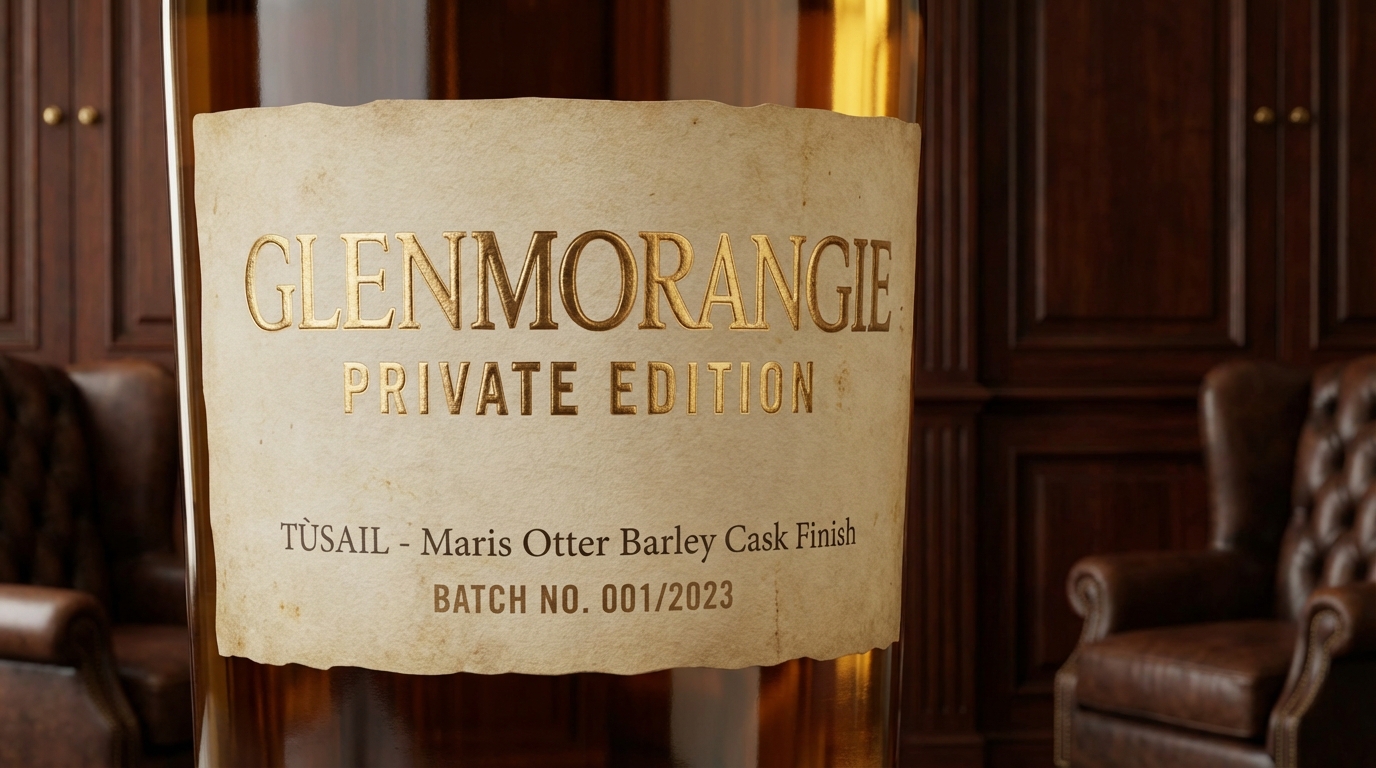
Concept: Triple-cask maturation in ex-sherry, ex-bourbon, and fresh French oak casks
Released: 2020 (2021 in some markets)
ABV: 46%
Moralta — meaning “great” or “noble” — returned to questions of wood science with an unusually complex cask strategy. Rather than a single cask type or a finish, Moralta was matured across three distinct wood types simultaneously: American ex-bourbon casks (the standard Glenmorangie maturation vessel), European oak ex-sherry casks, and freshly charred French oak casks.
Fresh French oak occupies an interesting position in whisky maturation. It is more commonly associated with Cognac production, where its tight grain structure and spice-forward character complement the grape-based spirit. In Scotch whisky, it is rarely used as a primary maturation vessel because its flavour contribution is intense and can easily overpower a delicate spirit. Lumsden used it as one element in a three-way marriage, allowing its contribution to be modulated by the other two wood types.
The result was a whisky of unusual structural complexity: the vanilla-bourbon sweetness, the dark dried-fruit weight from the sherry wood, and a savouriness — dried herbs, baking spice, subtle sandalwood — from the French oak. The three-part construction gave Moralta a layered quality that revealed different dimensions at different points in the drinking experience.
Collector interest: Growing. As one of the more recent Private Editions, Moralta is still within reach at retail in some markets, but allocated stock is tightening. Collectors building the complete series are actively seeking it.
The Private Edition programme has continued beyond Moralta, with each subsequent expression maintaining the same format and philosophy. Details of the most recent releases — including any expressions announced after the time of this writing — can be confirmed via the official Glenmorangie website or authorised retailers. The programme’s track record of genuine experimentation suggests that each forthcoming release will add something new to the series canon rather than simply repeating a successful formula.
The Private Edition’s value as a collectible rests on a simple, structural fact: once a release sells out, it is gone permanently.
Glenmorangie does not reissue previous Private Editions. Unlike the core range — where the same recipe is produced year after year — each Private Edition is a one-time event. The casks that produced it have been emptied. The unique combination of grain, yeast, cask, and timing that defined that whisky cannot be exactly reproduced. This is what separates the Private Edition from most annual releases in the industry.
For collectors, this creates a genuine secondary market. Bottles of Ealanta, Allta, Spìos, and Companta regularly appear at UK whisky auctions. Understanding what drives value in that market is essential if you are buying or selling.
The information below is provided for educational context only. This is not financial advice. Whisky values fluctuate based on market conditions, bottle provenance, and condition. Results may vary. Always verify current prices independently before making any purchase or sale decision. Whisky is not regulated as an investment product in the UK.
Narrative value. Ealanta’s World Whisky of the Year win gives it a story that every buyer understands immediately. Allta’s wild yeast origin is a compelling technical narrative. Whiskies with clear, memorable stories consistently outperform those without.
Condition and completeness. Original packaging, intact tax strips (on older bottles), and undamaged labels all affect price. A complete Private Edition set — all bottles in original boxes, in matching condition — commands a meaningful premium over individual bottles.
Position in the series. No. 1 (Sonnalta PX) and No. 10 (Allta) attract anniversary collectors. No. 4 (Ealanta) attracts award collectors. Position alone does not determine value, but it creates floors beneath which prices rarely fall.
Cross-category appeal. Spìos attracts American rye whiskey enthusiasts who might not normally pursue Scotch. Companta attracts Burgundy wine collectors. The Private Edition’s diversity of concepts creates diversity in its collector base.
For further context on what makes a whisky bottle valuable, see our guide to what makes a whisky bottle valuable. If you are trying to assess what a specific bottle in your collection might be worth, our whisky valuation guide covers the key variables.
Each Private Edition carries several identifying features that distinguish genuine bottles from fakes or mislabelled substitutes.
The programme has a consistent visual language. Every bottle carries:
The wax seal colour has varied across releases but remains consistent within each edition. Older editions (Sonnalta PX through Artein) used wax seals in deep burgundy or black. Later releases have used colours that complement the whisky inside.
Bottles sold at auction with accompanying purchase receipts, retailer provenance documentation, or original gift boxes attract meaningful premiums and sell with greater speed. If you are adding a Private Edition to a collection intended to hold long-term, retain all packaging.
For a broader framework on authenticating vintage and limited-release whisky, see our guide on how to authenticate vintage whisky.
The most expensive mistake in Private Edition collecting is buying the wrong bottle at the wrong price because you did not check the market first.
Not all Private Editions are equally scarce. Milsean and Bacalta, for example, were more widely distributed than Ealanta or Allta. Paying a heavy secondary market premium for a bottle that is still available at retail in other markets is a straightforward mistake to avoid with thirty minutes of research.
A Private Edition with a damaged label, missing wax seal, or evidence of poor storage (ullage below the shoulder, faded packaging) is worth significantly less than a pristine example. The Private Edition’s collectability depends partly on its presentation as a coherent, numbered series — compromised condition breaks that coherence.
Older Private Editions are not automatically more valuable than recent ones. Ealanta commands a premium because it won World Whisky of the Year, not simply because it was released in 2012. Finealta is rarer than Companta but commands lower prices because its story — peated Glenmorangie in oloroso casks — is less immediately compelling to the broader market. Value follows narrative and desirability, not release date.
If your goal is to build a complete numbered set, plan backwards from the hardest bottles to find. Ealanta and Allta should be acquired first, when they appear; they will only become harder to source. Milsean and Bacalta can wait. A set strategy built around acquiring the rarest pieces first will cost you less over time than acquiring in release order.
For a complete framework on building a rare whisky collection, see our ultimate whisky collecting guide and our guide to distilleries worth collecting.
As of 2024, at least twelve named Private Editions have been released, beginning with Sonnalta PX in 2009 and continuing annually. The programme is ongoing, with new releases typically announced in the latter part of each year.
Each Gaelic name describes the whisky’s defining character or concept. Allta means “wild” (for the wild yeast), Ealanta means “skilled” or “talented,” Spìos means “spice,” Bacalta means “baked,” and Milsean means “sweet things.” The names are chosen to reflect something genuine about the whisky rather than being purely decorative.
The Private Edition has a strong track record of critical credibility, technical innovation, and secondary market demand. Ealanta won World Whisky of the Year in 2013 and remains one of the most sought-after limited Scotch releases of that era. The range as a whole offers a coherent collecting thesis: a named, numbered annual series from a single distillery, each grounded in a specific idea. See our vintage Scotch whisky guide for broader context on what makes a limited series worth collecting.
Ealanta and Allta are consistently the most difficult to source on the secondary market and achieve the highest auction prices. Finealta is also scarce in terms of available stock but attracts a smaller collector audience. Availability changes as existing stocks deplete, so rarity rankings shift over time.
More recent releases (Moralta and later) may still be available through specialist retailers with strong relationships with the Glenmorangie Company. Editions from the first decade of the programme (Sonnalta through Allta) are unlikely to be found at retail and are generally only available on the secondary market.
The Private Edition is created by Dr Bill Lumsden, Glenmorangie’s Head of Whisky Creation, in collaboration with his team at the Tain distillery in the Scottish Highlands. Lumsden has been at the distillery since 1995 and oversees all aspects of production for the company.
Every Private Edition is bottled at 46% ABV, and all are non-chill-filtered. The 46% strength is deliberately chosen: it is high enough to preserve the natural oils and texture in the whisky, while remaining accessible without adding water in the glass.
Dr Bill Lumsden’s background is in fermentation science, and he has long believed that yeast strain significantly impacts the flavour of the finished whisky. Allta was the culmination of years of research into indigenous wild yeast found on the barley plants near the distillery, testing whether fermentation character could survive distillation and maturation to define the finished dram. The results confirmed that it could.
Store bottles upright (not on their side, unlike wine), away from direct light, and at a stable temperature — ideally between 15°C and 18°C. The seal on a whisky bottle does not require contact with liquid to remain effective. Avoid locations with significant temperature fluctuation, such as external walls or near radiators. See our guide on how to store whisky bottles for full detail.
Some Private Editions — Ealanta in particular — have increased significantly in value since their original release. However, whisky is not a regulated investment product, and secondary market values can fluctuate. Collector interest is not a guarantee of returns. If the primary motivation is financial rather than enjoyment or collection building, that context changes the risk profile considerably.
The core range (Original, Nectar d’Or, Quinta Ruban, Lasanta, Signet) consists of permanent expressions produced continuously. The Private Edition is a limited annual release, one per year, each exploring a concept — grain variety, yeast strain, cask type — that falls outside the core range brief. Core range bottles are always available; Private Editions are not.
Start with whichever is in the best condition and has no historical significance distinguishing it from the others in your set. If you have duplicates, open one and retain the other. Among single bottles with no duplicates, most collectors choose to open the most recently released bottle first and retain older, scarcer editions sealed.
The Glenmorangie Private Edition is the most coherent annual limited release programme in Scotch whisky — a numbered, named series driven by genuine experimentation rather than brand management.
If you are new to the range, start with the most recently released edition and work backwards from there, adding discontinued bottles as you find them. The easiest first step is to acquire whatever is currently in market at retail before allocation runs out.
If you are building the complete set, prioritise Ealanta and Allta — they are the hardest to source and their prices reflect that. Moralta and later releases are still accessible. The first-decade bottles (Sonnalta through Artein) require patience and a willingness to work the secondary market.
If you are a collector primarily interested in the historical record, understand that the Private Edition tells a story: from cask exploration in the early years, through grain variety and fermentation science in the later ones, a single distiller’s creative thinking made drinkable. That is worth pursuing on its own terms.
See the current Private Edition stock available at Glenbotal, or explore our guides to rare whisky collecting to continue building your knowledge.
Start Exploring Private Editions at Glenbotal →
Explore the full collection at Glenbotal — rare whisky sourced from private collectors across the UK and Europe.