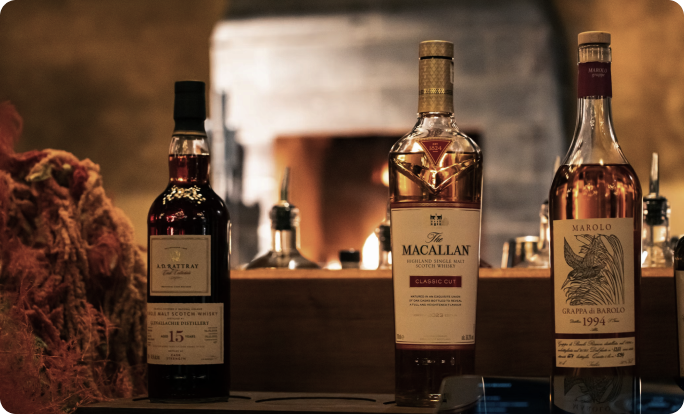
Highland Park launched its official Cask Strength series in 2020 — bottled without dilution, without chill-filtration, and without apology. Each release draws from the same sherry-seasoned oak casks that define Highland Park’s singular style, but delivers them at the strength they actually left the warehouse.
If you know Highland Park’s 12 Year Old or 18 Year Old, you know the house style: that rare and precise balance of maritime peat, heather honey, dried fruit, and oak spice that has made this Orkney distillery one of the most decorated in Scotland. The Cask Strength series does not change that style. It amplifies it. In this guide you will learn the full story of every numbered release, how cask strength changes the drinking experience, how these bottles perform in the collector market, and how to approach the series with the confidence of someone who has been paying attention.
There is no other distillery quite like Highland Park — because there is no other place quite like Orkney.
Sit with that geography for a moment. The Highland Park distillery sits on the outskirts of Kirkwall, the capital of the Orkney Islands — a windswept archipelago off the northern tip of mainland Scotland, closer to Bergen than it is to Glasgow. This is not a romantic marketing flourish. The latitude, the Atlantic gales, the lack of trees, the heather-covered moorland — these are not backdrop. They are ingredients.
The distillery traces its origins to around 1798, when a man named Magnus Eunson — reportedly a church officer who moonlit as an illicit distiller — operated a still on the site of what would become Highland Park. Official licensing came in 1826 when the distillery was taken over by John Robertson, and legal operation began in earnest.
The name itself tells you something: “Highland Park” references the high ground on which it sits, the Garson Moor above Kirkwall. There is nothing soft or low-country about this location. You are at the edge of the habitable world.
The distillery has changed ownership several times through its history, passing through the MacPherson family, the Gloag family, and eventually entering the Edrington Group portfolio in 1979 — where it has remained. Edrington also owns The Macallan, which gives some indication of the calibre of custodianship Highland Park has enjoyed in the modern era.
Orkney was under Norse rule until 1468, when it was pledged to the Scottish Crown as a dowry for the marriage of Margaret of Denmark to James III. That Viking heritage is not merely a branding exercise for Highland Park — it runs genuinely deep in Orcadian culture, language, and landscape.
Highland Park has leaned into this heritage through its Viking Legends series — limited releases named for Norse figures such as Odin, Thor, Loki, Valkyrie, and Freya — but the Viking identity is not merely cosmetic. Orkney’s Norse past shapes the local culture, the place names, and arguably the spirit of independence that has made Highland Park one of the last Scottish distilleries to malt its own barley on-site.
Highland Park is one of fewer than a dozen distilleries in Scotland that still performs floor malting on its own premises. The distillery malts approximately 20–30% of its total barley requirement in-house, using locally sourced heather-rich peat cut from the Hobbister Moor just south of Kirkwall.
That peat is key. Unlike the seaweed-and-brine peat of Islay, Hobbister peat is rich in heather, sedge, and ancient organic matter. The result is a phenolic character that is aromatic, floral, and slightly medicinal rather than intensely ashy or coastal. It is Highland Park’s signature — present but never overwhelming.
The remaining barley is sourced from mainland maltsters but specified to Highland Park’s own phenol requirement, ensuring consistency across the full production volume. This blend of home-malted and bought-in malt is another layer of complexity built into the spirit before a drop of water touches the still.
Ask a room full of experienced whisky drinkers to define Highland Park in one word and the answer will almost always be the same: balance.
Where Laphroaig is defined by intensity and The Macallan by richness, Highland Park is defined by equilibrium. Maritime smoke and heather peat sit alongside sherry-matured dried fruit. Heather honey and beeswax underpin the fruit. The wood contributes vanilla and spice without overwhelming. The result is a whisky that works from multiple angles — complex enough to hold the attention of serious collectors, approachable enough to convert people who claim they don’t like peated whisky.
The distillery matures spirit in a mix of sherry-seasoned European and American oak casks. The European oak — tight-grained Spanish oak from Jerez bodegas — contributes dark fruit, Christmas spice, and tannin structure. The American oak offers coconut, vanilla, and lighter citrus notes. Managing this combination across multiple maturation warehouses, over different periods, and with different spirit fills is what Highland Park’s master whisky maker does — and it is the foundation on which the Cask Strength series is built.
Cask strength — also called “barrel proof” in American usage — simply means the whisky is bottled at the proof it naturally reaches after maturation, without the addition of water to reduce it to a standard serving strength.
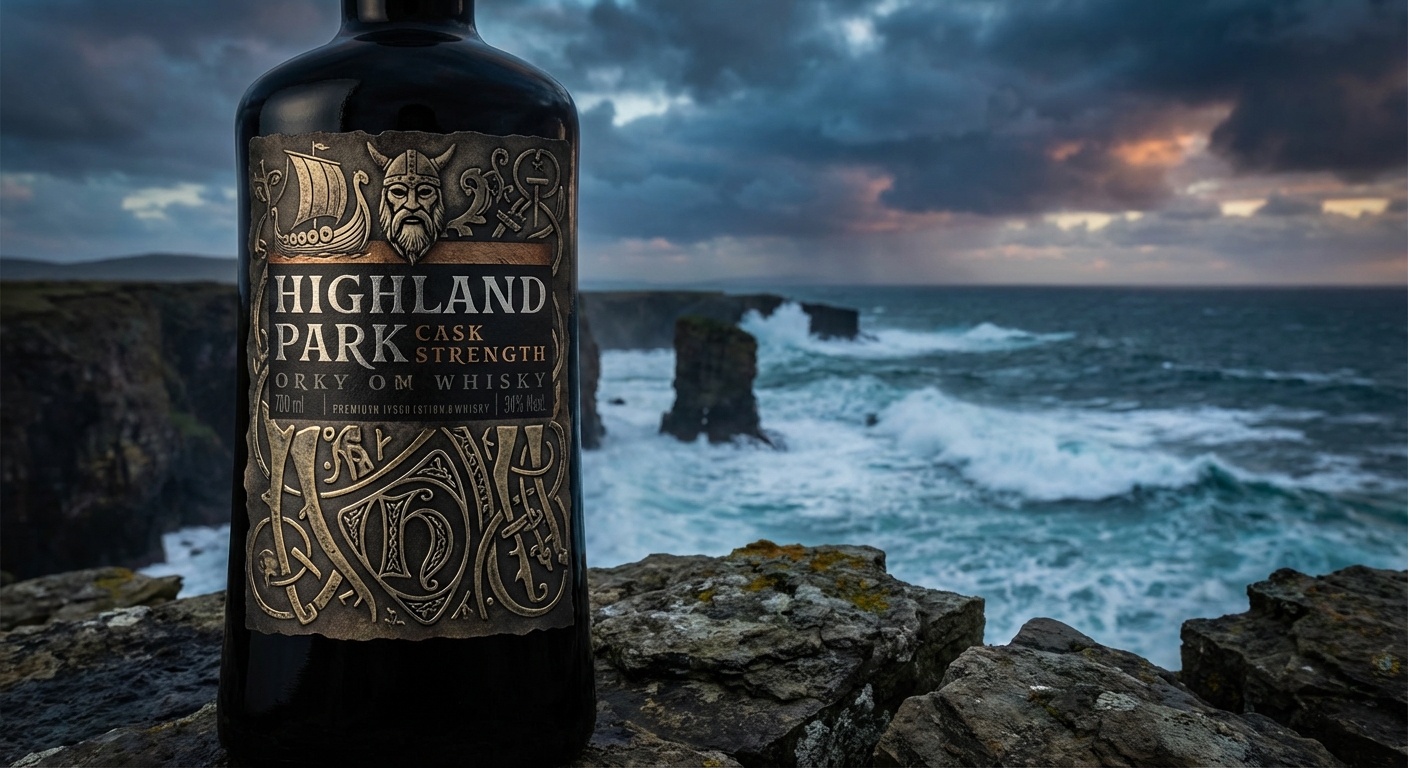
When a distiller fills a new-make spirit into a cask, it typically enters at around 63–70% ABV. Over the years of maturation, a proportion of the spirit evaporates through the porous oak walls — the so-called “angel’s share” — while the remainder interacts with the wood, concentrating flavour compounds and, depending on conditions, either increasing or decreasing in alcohol content.
In Scotland’s cool, damp climate, the alcohol tends to reduce over time. A whisky that entered a cask at 67% ABV might emerge at 56%, 58%, or 63% after fifteen or twenty years — depending on the warehouse, the cask, the position of that cask within the warehouse, and the specific years of climate it experienced.
Standard commercial releases dilute this down to 40%, 43%, or 46% to achieve a consistent, accessible bottling strength. That is not dishonest — it is a manufacturing choice that produces consistent, drinkable whisky at scale.
The difference is not merely alcoholic intensity — it is textural weight, flavour concentration, and aromatic complexity.
At 40% ABV, certain volatile aromatic compounds that are not fully soluble in a water-dominant solution are suppressed or absent. At cask strength — typically 55–65% ABV for most Scotch expressions — those compounds remain in solution, fully present on the nose and palate.
The practical result: heavier, oilier texture; more pronounced and complex aromatics; flavours that evolve as the glass warms; and a finish that can last for minutes rather than seconds.
Here’s the deal: cask strength does not mean “harder to drink.” It means more of everything. Experienced drinkers typically add a small quantity of room-temperature still water to open the whisky up — a process that genuinely unlocks additional layers of aroma and flavour that would be masked if that water were simply withheld.
From a collecting and valuation perspective, cask strength matters for several reasons:
For a deeper understanding of what drives secondary market value, see our guide to what makes a whisky bottle valuable.
Highland Park launched its official, numbered Cask Strength series in 2020 — a formalisation of the occasional cask strength releases that had appeared in limited markets for years beforehand.
Before 2020, cask strength releases from Highland Park were sporadic: a 56% ABV expression sold exclusively in Sweden and at the distillery in 375ml bottles; select travel retail offerings; and independent bottlings from the likes of Cadenheads, Douglas Laing, and Duncan Taylor drawing on Highland Park casks in their own inventories.
What changed in 2020 was the creation of a structured, numbered series — similar to what Aberlour had long done with A’bunadh, or what Batch 19 does for American bourbon collectors. The numbered format gives each release an identity, creates an implicit collection to complete, and signals to the market that this is an ongoing programme rather than a one-off experiment.
Every release in the Cask Strength series is bottled without added colour and without chill-filtration. That is stated policy, not incidental.
The cask composition for each release draws from Highland Park’s typical maturation programme: a combination of sherry-seasoned European oak and American oak casks, with sherry influence always prominent but the balance varying batch to batch. This approach allows the whisky maker to tune each release to a slightly different flavour profile within the recognisable Highland Park framework.
The series is not age-statement-led. Rather than guaranteeing a minimum age, Highland Park selects casks on quality and character — a non-age-statement philosophy that prioritises flavour over year-counts.
The Cask Strength series is positioned in the premium tier of Highland Park’s portfolio, above the core range but below the prestige aged expressions. Initial releases sold for approximately £55–£70 at retail in the United Kingdom, though secondary market prices have moved meaningfully above those levels for early releases as they have sold out.
The series is distributed internationally but in limited quantities. UK independent whisky specialists, distillery-focused collectors, and travel retail have been primary channels.
The numbered series format is a deliberate collector signal. When you create Release No. 1, you are telling the market that there will be a Release No. 2 — and that owning the complete set will, eventually, mean something.
This is the chapter serious collectors come for — the specifics on each numbered release.
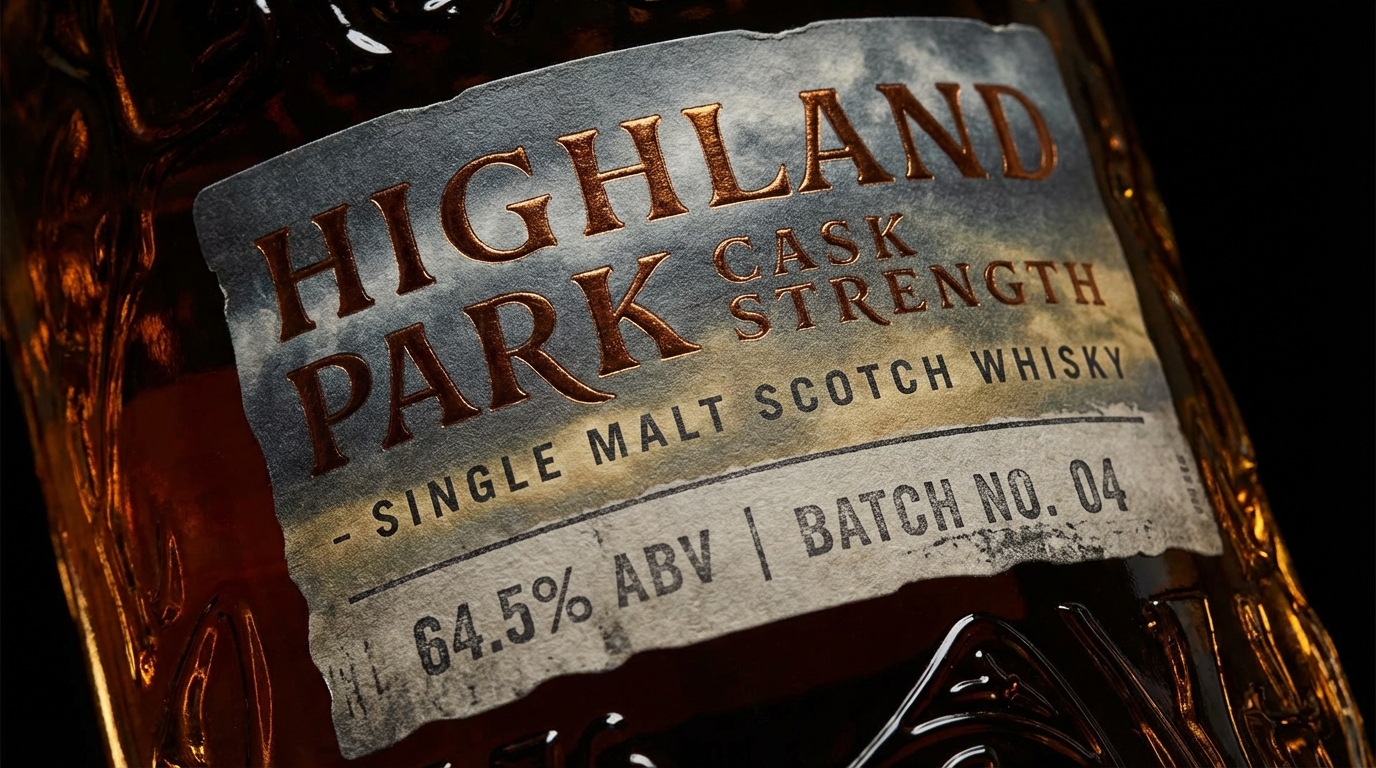
What follows is drawn from verified retail and specialist review sources. Where precise details vary slightly between sources, we present the most consistently cited information.
Disclaimer: Whisky values and availability change constantly. The details below reflect information available at time of writing and should not be taken as a guarantee of current retail price or auction value. Always verify with current market sources before making any purchasing or investment decision.
Strength: 63.5% ABV
Cask Types: Sherry-seasoned European and American oak casks
Colour: Rich amber with red-gold edges
Chill-filtration: None
Colouring: None added
The inaugural release set the template for what would follow. Bottled at 63.5% ABV — a genuine statement of intention — Release No. 1 arrived with all the hallmarks of Highland Park’s house character, magnified.
On the nose, expect dark dried fruit (prunes, sultanas), heather honey, and a gentle thread of coastal peat smoke that lifts through the sweetness. With water, beeswax and orange peel emerge prominently. The palate is dense and warming: Christmas cake, leather, dark chocolate, and cloves, with the peat note more structural than primary. The finish runs long and warming, with lingering oak spice, dried herbs, and a final smoke trace.
This was the release that confirmed the series had something genuine to offer — not just an extension product, but Highland Park operating at full expressive capacity.
Now sold out at original retail price; actively traded on the secondary market.
Strength: 63.9% ABV
Cask Types: Sherry-seasoned European and American oak
Colour: Deep amber
Chill-filtration: None
Colouring: None added
The second release arrived at 63.9% — fractionally higher than the inaugural bottling, reflecting the natural variation between cask selections. Both the nose and palate reward patience.
Initially, the nose offers toffee, caramelised heather honey, orange peel, and raisins, with a coastal background note that grounds the sweetness. The palate is where Release No. 2 opens up: charred notes and peat smoke arrive first, followed by layers of vegetal complexity — leafy, herbal, peppery — alongside tobacco hints, sweet caramel, and latte-like creaminess. The finish is long and drying, with liquorice, wood spice, and that distinctly Orcadian character of peat and heather honey together.
Now: this is a whisky that drinks very differently neat versus with a small addition of water. Neat it is genuinely intense — the 63.9% ABV is present and insistent. With five millilitres of still water in a standard dram, it relaxes into something considerably more layered and approachable.
Strength: 64.1% ABV
Cask Types: First-fill sherry-seasoned European oak, with a proportion of refill American oak
Colour: Deep amber-mahogany
Chill-filtration: None
Colouring: None added
The third release pushed the ABV slightly higher again and leaned more emphatically into the European oak character. The sherry influence here is noticeably forward compared to Releases 1 and 2 — the fruit is darker, the tannins more gripping, and the spice more prominent.
Nose: rich dark fruit (Morello cherry, prune, raisin), cloves, cinnamon stick, and underlying earthy peat. The heather note is present but more subdued than in earlier releases — the sherry framework is dominant on the nose. Palate: intense dried fruit, dark chocolate, walnut, black pepper, and a building warmth. The maritime character re-emerges on the mid-palate, offering a coastal counterpoint to the sherry richness. Finish: very long, with smoke, leather, dried fruit, and a persistent wood spice.
Release No. 3 is the most sherry-forward entry in the series and has attracted strong collector interest on that basis — particularly from those who prioritise the European oak side of Highland Park’s character.
Strength: 62.7% ABV
Cask Types: Sherry-seasoned European and American oak, with increased American oak contribution
Colour: Warm amber-gold
Chill-filtration: None
Colouring: None added
Release No. 4 represents the most accessible entry point in the series from a sheer drinking perspective — at 62.7% it is the lowest ABV in the numbered range, and the higher proportion of American oak creates a slightly lighter, more approachable profile that balances the heavier European oak character of earlier releases.
Nose: heather honey, vanilla, orange marmalade, baking spice, and a surprisingly delicate peat smoke note. Less immediately confrontational than Releases 2 and 3. Palate: medium-weight, with coconut and vanilla from the American oak leading, followed by dried apricot, toasted oak, malt, and a clean, almost refreshing peat note in the background. Finish: medium-long, with vanilla, orange peel, and drying wood spice.
For collectors building the complete numbered set, Release No. 4 provides welcome balance to the richer, heavier profile of the third release — proof that the series is deliberately composed to show range, not just intensity.
Strength: 63.3% ABV
Cask Types: Sherry-seasoned European and American oak
Colour: Rich amber
Chill-filtration: None
Colouring: None added
The fifth release returned to a more balanced sherry/American oak composition and a familiar ABV range. By this point, the series had established a recognisable vocabulary — the question for each new release is how the seasonal cask selection inflects the theme.
Release No. 5 has drawn comparison to the first release in its overall character: heather honey, dried fruit, smoke, and that characteristic maritime freshness working in close harmony. For collectors who found the sherry intensity of Release No. 3 a touch overpowering, No. 5 is a return to equilibrium.
Nose: warm heather honey, raisin, light smoke, orange peel, and vanilla. Palate: rounded, with dried fruit, beeswax, gentle peat, malt sweetness, and a building spice on the back of the tongue. Finish: long and warming, with heather, gentle smoke, and lingering oak.
The most recently released entry in the series at time of writing; still available from select UK independent retailers.
Before the numbered series, Highland Park released cask strength expressions in limited channels:
Distillery Exclusive / Sweden Release (c. 2013, 56% ABV): A 375ml bottling sold only at the distillery and through the Swedish state monopoly (Systembolaget). Scored 93 points by WhiskyCast reviewers at the time. Fruity and vibrant — banana, orange peel, vanilla, and coconut on the nose; chewy with orange peel, liquorice, and allspice on the palate. Now extremely rare.
Hobbister: A distillery-exclusive expression bottled at 51% ABV, referencing the Hobbister Moor peat source. Named specifically for the peat influence, it offers a more structured, peaty profile within the house style. Available only at the distillery visitor centre, making bottles rare in the secondary market.
The question collectors frequently ask is whether the Cask Strength series replaces the aged expressions or complements them. The answer, without ambiguity, is that it complements them — they are doing entirely different things.
The aged core range — 12 Year Old, 18 Year Old, 21 Year Old, 25 Year Old, 30 Year Old, and 40 Year Old — is built on the premise that time in oak creates specific transformations in flavour that younger spirit, regardless of strength, simply cannot replicate. Extended maturation in quality casks produces tertiary flavour compounds — leather, tobacco, old oak, rancio, deep dried fruit — that require years of slow extraction and chemical evolution.
The Cask Strength series, by contrast, is about intensity of a different kind: the directness and textural weight that comes from preserving the spirit at its natural proof.
Highland Park 12 Year Old (Viking Honour): Bottled at 40% ABV, the 12 is the gateway expression — balanced, accessible, consistent. Light smoke, heather honey, fruity, clean. It shows the house style in outline. The Cask Strength releases show it in full colour.
Highland Park 18 Year Old (Viking Pride): The 18 remains one of the most critically acclaimed whiskies in the world. Bottled at 43% ABV, it has won multiple awards and represents the house style at its most polished — the peat fully integrated, the sherry influence deep and harmonious. The Cask Strength series at its best approaches the complexity of the 18, but the 18’s eighteen years of maturation produce a depth that no cask strength bottling of younger spirit can replicate. They are different experiences.
Highland Park 21 Year Old: Bottled at 46% ABV for certain markets, the 21 is a step into serious collector territory. Richer, more complex, with the sherry influence very prominent. For collectors who love the sherry-forward character of Cask Strength Release No. 3, the 21 Year Old is worth serious attention.
Highland Park 25 Year Old: Bottled at 46% ABV, the 25 achieved a perfect 100 points at the Ultimate Spirits Challenge — a remarkably rare accolade. At this age level, the whisky moves into a different conversation entirely. The Cask Strength series does not compete here; these are different objects entirely.
Highland Park 30 and 40 Year Old: Prestige releases in very limited quantities, priced accordingly. These are long-term collector targets, not regular drinking whiskies. See our vintage Scotch whisky guide for context on how age-statement prestige releases behave in the collector market.
Here’s the deal: the Cask Strength series and the aged range answer different collector questions. The numbered Cask Strength releases are about building a set, tracking flavour evolution across annual releases, and accessing Highland Park’s core character at its most direct. The aged expressions are about maturation depth, the prestige of extended ageing, and the premium auction values that come with genuinely rare bottles.
The most coherent Highland Park collection holds both: a complete (or near-complete) Cask Strength numbered set alongside select aged expressions at 18, 21, and 25 years. For guidance on building a focused collection, see our ultimate whisky collecting guide.
Highland Park occupies a strong position in the collector market — consistently in the upper tier of secondary market performance for standard single malts, though some distance behind the extraordinary premiums commanded by Macallan and very rare aged expressions.
Understanding how the Cask Strength series fits into that broader picture requires looking at both the general Highland Park secondary market and the specific behaviour of the numbered releases.
Disclaimer: Whisky investment carries significant risk. Secondary market values fluctuate and past performance does not indicate future results. Nothing in this section constitutes financial or investment advice. Always seek independent guidance before making purchasing decisions based on expected value appreciation.
According to Wikipedia data, Highland Park ranked second in whisky auction sales in 2018, behind only The Macallan within the Edrington Group’s portfolio. That commercial strength reflects genuine collector demand at scale — not a niche following, but broad-based appreciation from collectors across multiple markets.
The distillery’s multiple “Best Spirit in the World” designations from F. Paul Pacult, and its four consecutive Ultimate Spirits Challenge Chairman’s Trophy victories, have embedded Highland Park as a prestige name in the global whisky conversation. Prestige drives secondary market performance.
Early numbered releases from any whisky series tend to perform best at auction — and the Highland Park Cask Strength series follows that pattern.
Release No. 1 — being the inaugural bottling of a new numbered series — commands a meaningful premium over its original retail price as bottles become increasingly scarce on the secondary market. Collectors completing the numbered set are prepared to pay above market rate for gaps in their collection, and this premium compounds over time as fewer bottles remain in private hands.
Releases 2 and 3 have similarly moved above their launch retail prices, with Release No. 3 showing particular strength given its distinctively sherry-forward profile — a characteristic that resonates with the large crossover audience between Highland Park collectors and Macallan sherry-cask enthusiasts.
For context on how to assess what your Highland Park bottles may be worth, see our whisky valuation guide.
Several factors work in combination for the Cask Strength numbered releases:
For a broader perspective on whisky collecting strategy, our guide on distilleries worth collecting covers Highland Park alongside Macallan, Springbank, and Bruichladdich.
Building a complete Highland Park Cask Strength collection requires a different approach from buying a single prestigious bottle — it demands consistent engagement with the market, knowledge of each release, and a long-term orientation.
Here is the practical framework:
The single most effective strategy for a numbered series is straightforward: buy every new release at retail on launch. Primary market price — typically £55–£75 for a Cask Strength numbered release — is always significantly below what you will pay on the secondary market once the release sells out.
Set up notifications with UK specialist retailers. Follow highland Park’s official channels. Engage with independent whisky communities that track launch dates. The first-to-know advantage is the collector’s primary edge in a market where premium releases sell out within days.
Cask strength whisky at 62–64% ABV is well-protected against premature oxidation, but proper storage still matters for long-term collection integrity. Store bottles upright in a dark, temperature-stable environment — not in direct sunlight, not next to a heat source, not in a garage subject to significant temperature fluctuation.
For detailed guidance, see how to store whisky bottles correctly — the principles that apply to standard expressions apply equally to cask strength collectibles.
Monitor auction results for Highland Park Cask Strength releases quarterly. This gives you an accurate picture of current secondary market values, which releases are most in demand, and whether the series as a whole is appreciating or plateauing.
The major UK whisky auction platforms — Whisky Auctioneer, Scotch Whisky Auctions, and Just Whisky Auctions — all provide searchable sold-price histories. Use them.
If you are building toward a complete numbered set, maintain a clear record of which releases you hold and which you need. For gaps in earlier releases — particularly No. 1 and No. 3 — be prepared to engage with the secondary market. Our guide on how much is my whisky worth provides valuation tools to ensure you are paying fair secondary prices.
Pro Tip: Buy two bottles of each new release when possible — one to open and explore, one to hold. A sealed, intact bottle will always command a premium over a partially consumed one on the secondary market.
The mistake that kills most collecting strategies is waiting. Numbered limited releases are not like fine wine, where a few years of patience opens a longer buying window. Once a Highland Park Cask Strength release sells out at retail, the window for primary market access closes permanently.
Some collectors focus on the secondary market because they perceive auction-sourced bottles as more exclusive or investment-grade. This is backwards.
Primary market retail price is where the value is captured. Secondary market purchases pay the premium that went into someone else’s pocket. Unless you are specifically filling a gap in a collection, buying on the secondary market before the primary market has cleared is expensive and unnecessary.
Collectors new to the series who start with Release No. 3 or 4 sometimes neglect the earlier numbered bottles. This leaves a collection that is incomplete in the one dimension — the sequential numbered set — that gives the series its collector logic.
The time to acquire Release No. 1 is now, not next year. Secondary market prices for inaugural releases in well-regarded numbered series only move in one direction over time.
Many people try a cask strength whisky neat and conclude that it is simply too aggressive. This is a technique problem, not a preference.
A small addition of still water — five to ten millilitres per 25ml dram — does not dilute the experience. It opens it up. The water softens the high-ABV volatile delivery, allowing the aromatic compounds to rise freely and the palate to receive flavour rather than heat. Any serious whisky retailer will tell you the same. Try it before forming a view.
The numbered series starting in 2020 is the most systematic release programme, but earlier cask strength expressions from Highland Park — including the 2013 Sweden/distillery-exclusive release and the Hobbister distillery exclusive — are genuinely rare pieces of Highland Park history.
If the goal is a comprehensive cask strength collection from this distillery, those pre-series bottles deserve attention. They represent the experimentation that preceded the numbered format.
As of 2025, there are at least five numbered releases in the official series, beginning with Release No. 1 in 2020. The series continues annually, with each new release bottled from a fresh cask selection. Earlier unofficial cask strength releases predate the numbered format.
Each numbered release varies, reflecting the natural variation between cask selections. Releases to date have ranged from approximately 62.7% ABV (Release No. 4) to 64.1% ABV (Release No. 3). No two releases are identical in strength.
No. All releases in the numbered Cask Strength series are bottled without chill-filtration and without added colour. This is a stated policy for the series and one of the primary reasons it appeals to collectors who prioritise flavour integrity.
This is a matter of personal preference. Release No. 3 is the most sherry-forward and has attracted the strongest critical attention for its cask depth. Release No. 1 is valued for its inaugural status. Release No. 4 is the most accessible in terms of drinking difficulty due to its lower ABV and higher American oak contribution.
They are different experiences. The 18 Year Old’s eighteen years of maturation produce a depth of character — particularly in terms of tertiary flavour development — that the Cask Strength series does not replicate. The Cask Strength series, by contrast, delivers Highland Park’s core character at far greater intensity and textural weight than the 43% ABV 18 Year Old. Both are worth having.
Specialist independent whisky retailers are the primary channel: look to established UK merchants rather than supermarkets or general off-licences. Later numbered releases are still available at primary retail price in some cases; earlier releases require secondary market sourcing.
Highland Park has a strong track record in the secondary market, and the numbered series format creates structural collector demand. However, whisky investment carries significant risk and past performance does not guarantee future returns. Never purchase whisky solely as an investment without independent financial advice.
Start by nosing the whisky neat in a tulip glass for two to three minutes. Take a small sip neat to assess the raw character. Then add five to ten millilitres of still, room-temperature water and nose again — the aromatic profile will change noticeably. Most experienced drinkers find cask strength Highland Park most rewarding with a modest water addition rather than neat.
Highland Park uses heather-rich peat from Hobbister Moor in Orkney — significantly different from Islay peat in character. The phenol specification for Highland Park’s home-malted barley is typically around 30–40 ppm (parts per million) phenols, but the peated character in the finished whisky is considerably gentler due to the nature of Orcadian peat and maturation.
Yes, to a degree. A cask strength whisky at 62–64% ABV is robust enough to remain stable in an opened bottle for an extended period — months to a year or more — because the high alcohol acts as a preservative. Flavours often integrate further as the whisky contacts a small amount of oxygen over time. Avoid leaving less than 20–25% of the bottle remaining, as at very low fill levels oxidation accelerates.
Yes. The major UK whisky auction platforms list Highland Park Cask Strength releases, including the numbered series. Release No. 1 in particular appears regularly at auction and consistently achieves premiums above its original retail price. Search current listings for live pricing.
Official distillery releases represent Highland Park’s own cask selections, blending philosophy, and quality assurance. Independent bottlings — from firms like Cadenheads, Gordon & MacPhail, or Douglas Laing — are single casks sourced from their own Highland Park inventories, often at different ages and strengths. Both have merit; the numbered official series carries the distillery’s brand guarantee and the collector mechanics of a sequential numbered format.
The Highland Park Cask Strength series is Highland Park doing what it has always done — finding that rare balance between peat, honey, dried fruit, and wood — but removing the compromise of dilution.
Each numbered release is a specific, finite, unrepeatable expression of a particular season’s cask selection from one of the world’s most geographically distinctive distilleries. They are not interchangeable with each other, and they are not interchangeable with the aged core range. They are their own thing.
What to do first: if you do not hold Release No. 5, acquire it while primary retail channels still have stock. It will not be there indefinitely.
What to do next week: track down Releases 1–4 through UK specialist retailers or the secondary market, and begin building the numbered set. The collector logic of a complete sequential series is hard to argue with.
What to aim for over the next twelve months: a complete numbered set alongside at least one aged expression — preferably the 18 Year Old — to understand the full range of what this distillery produces. That combination tells the whole Highland Park story.
Glenbotal sources rare Highland Park bottles — including Cask Strength releases — through a network of private collectors across the UK and Europe. See How to find what is currently available or Get Started with a free valuation on bottles you already hold.
Explore the full collection at Glenbotal — rare whisky sourced from private collectors across the UK and Europe.