One distillery. Planned in the 1950s. Construction began in 1962. First whisky produced in 1990. By the time SPEY filled its first cask, most of its contemporaries had been producing spirit for three decades.
There is no building project in the history of Scotch whisky quite like Speyside Distillery. What began as George Christie’s vision for a small, handcrafted distillery in the Scottish Highlands took nearly three decades to realise — and by the time the first spirit ran from the stills in 1990, the world had largely forgotten it existed. Today, with the distillery permanently closed as of 2025, every bottle of SPEY represents something genuinely irreplaceable: spirit from a producer that very few collectors have seriously considered, and even fewer have assembled into a coherent collection.
This guide covers the complete SPEY range, the distillery’s remarkable history, the collector case for acquiring bottles now, and what independent bottlings of Speyside spirit look like on the secondary market.
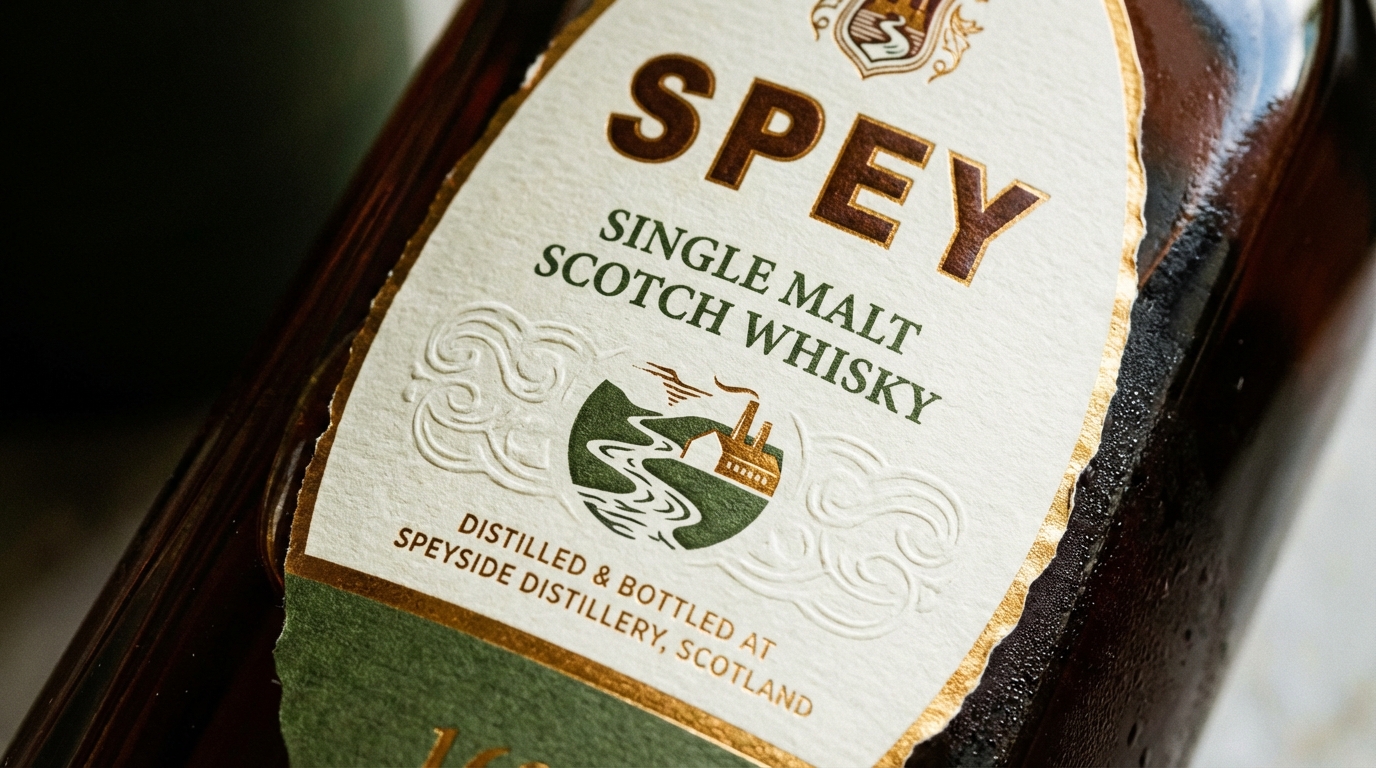
SPEY is the single malt Scotch whisky brand produced by Speyside Distillery, a small Highland operation located near Drumguish and Kingussie in the Cairngorms.
Despite carrying the Speyside name, the distillery sits technically in the Highland region — the southernmost of Speyside’s distilleries, drawing water from the River Tromie. The SPEY brand was introduced to give the distillery’s whisky a distinct commercial identity, separate from the generic regional descriptor, and it encompasses a surprisingly broad range of expressions for a producer of this scale.
The distillery was built around two small copper pot stills — a deliberate decision by founder George Christie, who was never interested in high-volume production. Annual capacity reached approximately 600,000 litres, placing Speyside among Scotland’s smallest distillers. What it lacked in scale it made up in character: a light, approachable house style with real complexity at older age statements.
Most whisky drinkers will not immediately recognise “SPEY” on a bottle. That unfamiliarity is the collector’s opportunity. The brand has never had the marketing budget of a Glenfiddich or a Macallan. It has no celebrity ambassador, no controversial ad campaign. What it has is a genuinely unusual production history, a small and dedicated following, and — now that the distillery has closed — a finite and dwindling supply of bottles.
In collecting terms, obscurity is not a weakness. It is frequently a predictor of future value. Many of the most sought-after single malts today — Brora, Port Ellen, Rosebank — were similarly overlooked during their producing years. The comparison is not exact, but the pattern is instructive.
Speyside Distillery appeared on the BBC television series Monarch of the Glen as the fictional “Lagganmore Distillery.” For a quiet, low-profile operation that had barely registered in the mainstream whisky press, this was a moment of unexpected exposure — and a reminder that the distillery existed in a part of the Scottish Highlands where whisky and landscape are inseparable.
No other distillery in Scotland took as long to build as Speyside. The gap between the first stone being laid and the first spirit running from the stills was, by any measure, extraordinary.
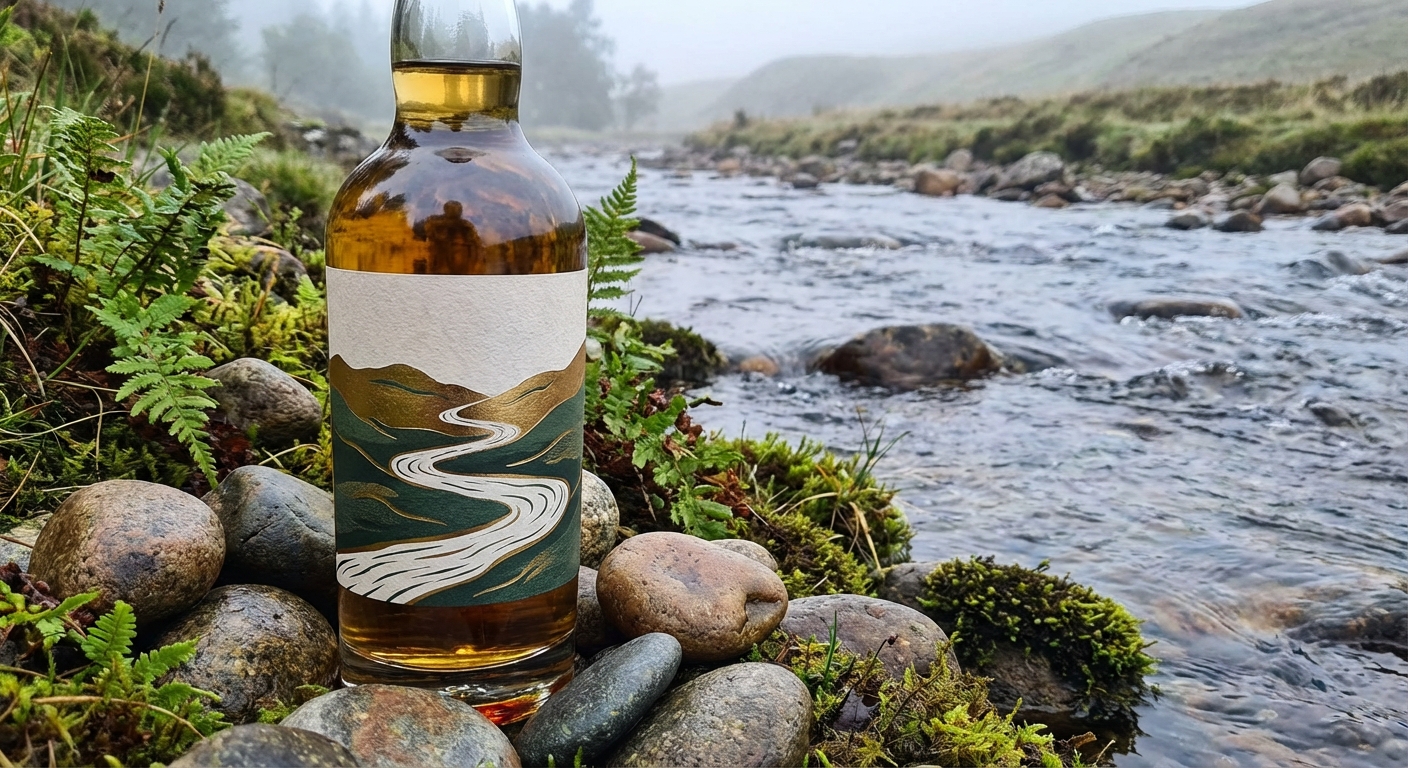
The story begins in the 1950s, when George Christie — a Scotsman with a lifelong passion for whisky and a stonemason’s eye for stone construction — first conceived the idea of building his own distillery. The site he identified was a historic barley mill near Drumguish, dating to the 1760s, in a remote stretch of the Cairngorms near the confluence of the River Tromie and the River Spey.
In 1962, Christie purchased the site and began conversion work alongside stonemason Alex Fairlie. The two men worked largely by hand, using traditional methods and local materials. Progress was slow by design — Christie was building something he intended to last, not something intended to meet a commercial deadline.
The buildings were gradually completed through the 1970s and early 1980s. Equipment was sourced, installed, and in some cases replaced. The mash tun eventually fitted was notably the last model produced by Newmill Engineering before that company closed — itself a piece of whisky history.
After nearly three decades of construction, the stills ran for the first time in 1990. By that point, Christie was in his sixties, and many of the distilleries that had been founded during Scotland’s post-war whisky boom had already been producing spirit for decades. Speyside was, in that sense, a late arrival to a very crowded room.
The gap between groundbreaking and first production — 1962 to 1990 — is the longest in recorded Scotch whisky history. Most distilleries in operation today were built and producing within a year of breaking ground.
The deliberateness of that timeline says something about Christie’s intentions. This was never a commercial venture in the conventional sense. It was a passion project executed with the patience and precision of a craftsman.
In 2012, Harvey’s of Edinburgh acquired ownership of the distillery. The Speyside Distillers Co. subsequently leased and operated the facility, maintaining production and developing the SPEY brand into the range known today.
The lease expired in 2025, and the distillery closed permanently. Glen Tromie distillery is planned for the site, but the spirit that George Christie built the distillery to produce is now definitively finished. No more SPEY from the original Drumguish stills. Every bottle in existence is now from a closed chapter.
When a distillery closes, the economics of its bottles change fundamentally. Supply is fixed. Demand, if the whisky has any merit at all, tends to increase as the story becomes better known. The distilleries that command the highest auction prices today — Brora, Port Ellen, Littlemill, St Magdalene — are almost exclusively from closed producers.
Speyside Distillery closed with minimal fanfare. That quiet exit, combined with the limited production volumes that defined the distillery throughout its life, means the total amount of SPEY whisky that will ever exist is considerably smaller than most collectors assume. For those paying attention, this is precisely the moment to be paying attention. For a broader view of which distilleries warrant a collector’s focus, distilleries worth collecting covers the landscape of closed and closing producers in detail.
The SPEY range covers more stylistic ground than most collectors expect from a distillery of this size.
From unaged entry-level expressions to aged statements finished in unusual casks, the range reflects an ambition to demonstrate the spirit’s versatility rather than simply bottle it at standard intervals. What follows is a guide to the principal expressions.
Trutina — Latin for “balance” — is the core no-age-statement expression in the SPEY range. It was designed to showcase the house style without the weight of extended maturation: light, cereal-forward, with fruit notes from ex-bourbon casks and a clean, approachable finish.
For collectors, Trutina is the reference point — the baseline against which the more complex expressions can be measured. It is also the most widely available expression in the range, which means it is the easiest to acquire and the one most likely to be encountered outside specialist circles. Its value as a collectible is modest relative to the aged and limited expressions, but it is an essential component of any serious SPEY collection.
Royal Choice is a vatted expression drawing on both ex-bourbon and ex-sherry casks, bottled at 40% ABV. The sherry influence adds dried fruit depth — raisin, fig, a hint of dark chocolate — to the lighter cereal notes that characterise the house style.
The name has a quietly patriotic ring that suits the brand’s positioning. Royal Choice is one of the more gift-oriented expressions in the range, which means it has had reasonable retail visibility in UK specialist outlets. For collectors building a complete SPEY set, it is a necessary inclusion.
Chairman’s Choice sits above Royal Choice in the prestige hierarchy, drawing on a higher proportion of sherry-matured stock and bottled at 40% ABV. The flavour profile is richer and more structured, with the fruit notes pushed further toward stone fruit and a more pronounced oak contribution from the sherry wood.
This is the expression that tends to convert uncommitted drinkers into SPEY advocates. The balance between the distillery’s naturally light spirit and the sherry-wood richness is well-judged, and it represents a stylistic achievement that collectors frequently underestimate until they open a bottle.
Tenné is one of the more distinctive expressions in the range, finished in tawny port casks after initial maturation in ex-bourbon wood. The name references the heraldic colour tawny — a warm amber-red — which accurately describes both the hue of the whisky and the flavour direction: ripe cherry, dried orange peel, a hint of marzipan, and a long, warming finish.
Port-finished whiskies from small producers are among the most interesting collecting targets in the current market. The relatively small amounts of tawny-finished stock available from a distillery that produced in modest volumes means that well-preserved bottles of Tenné will become harder to find as time passes.
Fumaré is the peated expression in the SPEY range — unusual for a Speyside-adjacent producer, where peat is far less common than on Islay. The name derives from the Latin for smoke, and the expression delivers a moderately peated profile layered over the distillery’s characteristic light, fruity base spirit.
The combination of gentle smoke with the orchard-fruit notes associated with Highland and Speyside production is genuinely interesting. Fumaré occupies a niche that is rarely filled: it is neither the aggressive peat bomb of an Octomore nor the barely-there smoke of a lightly peated expression. It is peated whisky from a distillery that was not primarily a peated producer, which gives it an idiosyncratic quality that collectors with broad palates tend to appreciate.
Beinn Dubh — Gaelic for “black mountain” — is the most visually distinctive expression in the SPEY range. Matured in ruby port casks, it takes on a deep, dark colour that is genuinely unusual in single malt Scotch whisky. The flavour profile follows the packaging: rich, dark fruit, blackcurrant, cherry, and a warm, almost syrupy finish.
This is the expression that gets the most attention from people encountering SPEY for the first time. The black bottle, the name, and the unusual port cask maturation make it a natural conversation piece. For collectors, Beinn Dubh’s distinctiveness — and the small production volumes associated with a distillery of this scale — make it one of the more interesting targets in the range.
SPEY Solera takes its name from the solera maturation method — a process of fractional blending where casks are never fully emptied, with new spirit continually added to a reserve of older whisky. This creates a continuous blend of different ages within a single cask system, adding complexity and consistency simultaneously.
Solera-method whiskies occupy an interesting category: they carry no single age statement because the whisky within them spans multiple vintages. The SPEY Solera demonstrates that the distillery was willing to experiment with production methods that few Scottish producers use, which adds another dimension to its appeal as a collectible curio.
The River Spey 25 Year Old is the prestige age-statement expression in the SPEY range and the most significant collectible in the core lineup. Twenty-five years in cask — from a distillery that only began production in 1990 — means this whisky was laid down in the mid to late 1990s, during the early years of the distillery’s operation.
At 25 years of age, the River Spey represents some of the oldest spirit to have come from Drumguish. The flavour profile is considerably more complex than the younger expressions: dried fruit, beeswax, spiced oak, and the kind of layered mid-palate that only extended maturation can produce. Production volumes are, by definition, small — this whisky required a quarter-century of patience, and there was never much of it to begin with.
For collectors building a serious SPEY set, the River Spey 25 Year Old is the apex expression. It is the most direct evidence of what George Christie’s deliberate, unhurried approach to distillation ultimately produced. For guidance on assessing the value of aged bottles like this one, what makes a whisky bottle valuable is worth reading before you buy or sell.
Beyond the core range, Speyside Distillery produced a number of limited expressions that are now effectively impossible to source through retail channels.
These include age-statement releases at 10, 12, and 18 years, produced in small batches and distributed through specialist UK retailers and export markets. The 18-year expression, in particular, represents a bridge between the accessible core range and the prestige of the River Spey 25 — aged spirit from the early production years, bottled before the distillery’s reputation had caught up with the quality of the liquid.
Speyside Distillery released a limited number of single cask expressions through specialist retailers and independent bottlers during its operational years. These single cask releases — typically bottled at cask strength, with no dilution or filtration — are the most direct expression of the distillery’s character and the most collector-relevant bottles in the range.
Single cask SPEY is genuinely rare. The distillery’s modest production volumes mean that any single cask release represents a significant percentage of the total production from a given year. Bottles from these releases, where they can be verified as authentic, are among the more interesting acquisitions available to a collector assembling a closed-distillery portfolio.
Like many small Scotch producers, Speyside Distillery produced exclusive expressions for specific export markets — notably Asia and the United States. These market-exclusive bottles occasionally appear on the secondary market in the UK, having been brought back by travellers or sourced through private import networks.
The most interesting of these are expressions that were never available through UK retail channels, making them effectively exclusive bottlings from the collector’s perspective. When they appear, they tend to be mispriced — either too cheaply by sellers unaware of their relative scarcity, or too expensively by sellers who overestimate demand. Understanding the range thoroughly is the prerequisite for identifying genuine opportunity.
Some of the most interesting bottles of spirit from Drumguish were not released by the distillery at all.
Independent bottlers — companies that purchase casks from distilleries and release the spirit under their own labels — have produced a number of bottlings of Speyside/SPEY spirit over the years. These bottles represent a different dimension of the collecting universe: spirit from the same stills, matured in casks chosen by a third party, bottled at a range of ages and strengths.
The major Scottish independent bottlers — companies such as Gordon & MacPhail, Signatory Vintage, Cadenhead’s, and Douglas Laing — have historically sourced casks from a wide range of distilleries including smaller producers. Bottles from these companies labelled as “Speyside Distillery” or, in some cases, “Drumguish” (the original working name for the site) can be found on the secondary market.
Gordon & MacPhail in particular has a long history of acquiring casks from small Highland and Speyside distilleries, often releasing them decades after the spirit was laid down. Their bottlings of Speyside spirit represent some of the oldest liquid available from the distillery outside the official range.
Independent bottlings of whisky from closed distilleries consistently attract collector premium. The combination of third-party curation, limited release quantities, and the irreplaceable source material makes them among the more defensible acquiring decisions in the rare whisky market.
When assessing an independent bottling of Speyside Distillery spirit, the key variables are: distillation date, age at bottling, cask type, bottler reputation, and batch size. A well-aged cask strength expression from a reputable independent bottler, distilled in the early to mid-1990s, is potentially more interesting than a younger official expression — both in drinking terms and in collector value terms.
The challenge is verification. Independent bottlings can be harder to authenticate than official releases, and labels from smaller or less well-known bottlers require more due diligence. For guidance on authenticating bottles before purchase, how to authenticate vintage whisky covers the fundamentals that apply across all producers and bottlers.
Before the SPEY brand was established, Speyside Distillery released whisky under the “Drumguish” label — named for the hamlet adjacent to the distillery site. Drumguish-labelled bottles are among the earliest commercially released expressions from the distillery and represent the production from the first few years after the stills ran for the first time in 1990.
These early bottles are collector’s items in their own right. They document the distillery’s debut — a producer that had taken thirty years to build, finally delivering its first commercial releases. Their age is compounded by their label-era significance: no new Drumguish bottles will ever exist, and the existing supply is in private hands, with no organised secondary market.
The case for collecting SPEY is essentially a contrarian case — and in whisky collecting, contrarian is usually where the value lives.
The major distilleries command major prices. Macallan, Glenfiddich, Bowmore, Ardbeg — these are markets with high liquidity, strong documentation, and pricing that reflects decades of collector attention. Buying into them requires significant capital and delivers returns that are increasingly compressed as demand matures.
SPEY is different. It is a closed distillery with a finite supply of bottles, a genuinely unusual production history, a range that demonstrates real stylistic breadth, and a profile that has been almost completely ignored by the mainstream whisky press. That combination is not a weakness in the collecting case. It is the collecting case.
Current secondary market pricing for SPEY expressions is, in most cases, close to original retail. The whisky has not yet been “discovered” in the way that drives price appreciation. That discovery moment — when a notable review, a specialist guide, or a change in market fashion draws attention to a previously overlooked producer — is the inflection point that collectors want to be ahead of.
The closed distillery status accelerates this dynamic. As existing stock is consumed — by drinkers who don’t know they’re holding something rare, by collectors who pick off individual bottles without building coherent holdings — the total supply decreases without replacement. The question for anyone considering a purchase now is whether the quality justifies the price. The River Spey 25 Year Old, the Beinn Dubh, and the limited single cask releases suggest the answer is yes. For a broader framework on assessing value in rare Scotch whisky, the vintage Scotch whisky guide covers the key considerations.
It is instructive to compare SPEY’s trajectory with that of other small, closed Scottish distilleries. Rosebank, the lowland distillery that closed in 1993, was essentially unknown outside Scotland during its operational years. Today it is among the most sought-after closed distilleries in the country, with bottles fetching multiples of their original retail price at specialist auction. St Magdalene, Littlemill, and Inverleven followed similar patterns.
None of these distilleries were obvious collecting targets while they were still operating or in the immediate years after closure. They became obvious in retrospect — when the supply had been consumed and the story had been told.
SPEY’s story is better than most. A distillery that took twenty-eight years to build, produced spirit for thirty-five years, and closed quietly in 2025 is an intrinsically interesting story. Stories drive collector demand.
The most defensible collecting strategy for SPEY is completeness: assembling one of every expression in the core range, supplemented by limited releases and one or two verified independent bottlings. This approach creates a coherent set that documents the distillery’s full creative output — something no new buyer will be able to replicate once certain expressions are exhausted.
The River Spey 25 Year Old is the hardest to source and the most critical to acquire. The Beinn Dubh and Tenné are the most distinctive. The Fumaré is the most unusual relative to the distillery’s context. Together, they tell a complete story. For those who have not yet thought through what a complete collection looks like, the ultimate whisky collecting guide is the starting point.
Note: Secondary market values and availability fluctuate. The analysis above reflects general market observations and should not be taken as financial advice. Always verify current pricing before making purchase decisions.
The most expensive mistake in collecting from closed distilleries is moving too slowly.
Closed distillery bottles do not replenish. The window for acquiring expressions at or near original retail pricing closes gradually, then suddenly. Collectors who waited for “the right moment” with Port Ellen or Brora will tell you the right moment turned out to be twenty years earlier.
The SPEY range spans considerable quality variation. The core no-age-statement expressions — Trutina, Royal Choice — are accessible whiskies at accessible prices, and their collector value is limited. The River Spey 25 Year Old, the single cask releases, and the early Drumguish-labelled bottles occupy a completely different tier.
Spending your SPEY budget on multiple bottles of Trutina when you could have secured one River Spey 25 is the kind of mistake that is easy to avoid in theory and surprisingly common in practice. Prioritise the expressions with age, limited production, or label-era significance. Build toward the rarer end of the range first.
Bottle condition matters in every segment of the rare whisky market, and SPEY is no exception. The major variables are fill level, label condition, and completeness of original packaging. A River Spey 25 Year Old in its original presentation box, with pristine labels and full fill, commands a meaningful premium over the same bottle without its box or with a damaged label.
When acquiring SPEY bottles privately or through secondary market channels, insist on photographs that document all four sides of the label, the fill level, and the box condition. Sellers who cannot or will not provide these photographs should be treated with caution.
Many collectors build SPEY collections from the official range alone, unaware that independent bottlings of Speyside spirit exist and that some of them are considerably more interesting than anything in the official lineup. The early Drumguish era, in particular, is better represented through independent bottlings than through official releases.
Building a complete picture of the distillery’s output requires looking beyond what was released under the SPEY brand. A collector who has assembled all seven core expressions but missed the Gordon & MacPhail Speyside bottling from the early 1990s has a less complete collection than they think.
SPEY is the single malt Scotch whisky brand produced at Speyside Distillery near Drumguish and Kingussie in the Scottish Highlands. The brand encompasses a range of expressions from entry-level no-age-statement bottles through to aged and limited-release expressions including the River Spey 25 Year Old. The distillery closed permanently in 2025, making all existing SPEY bottles from a finished production era.
Speyside Distillery sits near the hamlet of Drumguish, close to Kingussie in the Cairngorms National Park. Despite the Speyside name, the distillery is technically classified as a Highland distillery. It draws water from the River Tromie and is situated near the confluence of the Tromie and the River Spey, from which the flagship aged expression takes its name.
Construction began in 1962, following George Christie’s acquisition of the site. The first spirit was produced in 1990 — a gap of approximately twenty-eight years between groundbreaking and first production. This is widely considered the longest construction period in the recorded history of Scotch whisky distilleries.
No. The distillery’s operating lease expired in 2025 and it closed permanently. Glen Tromie distillery is planned for the site, but the Speyside Distillery operation as it existed — and the SPEY spirit as it was produced — has ended. All existing SPEY bottles represent the complete and finite output of the distillery.
Beinn Dubh (Gaelic for “black mountain”) is SPEY’s most visually distinctive expression — matured entirely in ruby port casks, which gives it a dark colour unusual in single malt Scotch. The flavour profile is rich with dark fruit, cherry, and blackcurrant. It is bottled under a distinctive black label and is one of the more collectible expressions in the range due to its unusual production method and the distillery’s limited total output.
Trutina is the entry-level no-age-statement expression, focused on balance and accessibility — light, fruity, and approachable. Chairman’s Choice draws on a higher proportion of sherry-matured stock, producing a richer, more structured flavour profile with dried fruit and stone fruit notes from the sherry wood. Chairman’s Choice is the more collector-relevant expression of the two.
Yes. Several reputable independent bottlers — including Gordon & MacPhail — have released bottlings of Speyside Distillery spirit over the years, sometimes labelled as “Speyside Distillery” and sometimes under the earlier “Drumguish” designation. These can be found on the secondary market and are often among the most interesting bottles available from the distillery, particularly the early Drumguish-era releases from the 1990s.
SPEY has received limited mainstream coverage compared to better-known Speyside producers. Secondary market pricing currently sits close to original retail for most expressions. As a now-closed distillery with finite supply, modest production volumes, and a genuinely unusual backstory, SPEY exhibits the characteristics that have historically preceded significant price appreciation in other closed distilleries. The undervaluation reflects a lack of collector attention rather than a lack of quality in the whisky itself.
Store all whisky bottles upright, away from direct light, at a consistent cool temperature. Unlike wine, whisky in a sealed bottle does not continue to mature — but light exposure and temperature fluctuations can degrade the spirit over time. Original presentation boxes provide important protection for the label and packaging, which are significant factors in secondary market value. For detailed guidance, the vintage Scotch whisky guide covers storage considerations for collectible bottles.
The River Spey 25 Year Old is the most significant expression in the official range, combining extended maturation with the distillery’s limited total production volumes. Among secondary market acquisitions, early Drumguish-labelled bottles and verified single cask expressions from independent bottlers are likely to command the strongest premiums as awareness of the distillery grows. For an assessment of current market values, how much is my whisky worth provides a framework for evaluating individual bottles.
SPEY expressions have received recognition at specialist whisky competitions including the International Wine and Spirit Competition (IWSC) and the International Spirits Challenge (ISC), where several expressions in the range have picked up medals. The Beinn Dubh and the Chairman’s Choice have both attracted positive attention from specialist reviewers, and the distillery maintained a quiet but consistent critical reputation throughout its operational years.
Fumaré is the peated expression in the SPEY range, taking its name from the Latin for smoke. It is unusual in the context of Highland and Speyside production, where peat is far less common than on Islay. Fumaré layers moderate smoke over the distillery’s characteristic light, fruit-driven base spirit, producing a profile that appeals to collectors with an interest in peated whisky from non-traditional peat producers.
SPEY is the closed distillery that almost no one is collecting yet — and that is precisely why it is worth collecting now.
The distillery’s story is exceptional: twenty-eight years to build, thirty-five years of production, a permanent closure in 2025. The range it produced is broader and more ambitious than its obscurity suggests: from the dark, port-matured Beinn Dubh to the quietly impressive River Spey 25 Year Old, these are whiskies that reward serious attention.
The collector’s window is open. Pricing has not yet moved to reflect the distillery’s closed status. The independent bottlings remain largely overlooked. The complete set is still achievable for a collector who moves deliberately and sources carefully.
This week, identify which SPEY expressions you are missing. The River Spey 25 Year Old and the Beinn Dubh are the priority acquisitions. In ninety days, the goal is a complete set from the core range, supplemented by at least one independent bottling or single cask expression. The story of this distillery is one of the more unusual in Scotland — and the bottles that carry it are diminishing every day.
See How to Build Your SPEY Collection at Glenbotal — rare bottles sourced from private collectors across the UK and Europe.
Secondary market prices fluctuate with demand and availability. The analysis in this guide reflects general market observations and historical context, not financial advice. Always verify current pricing before making purchase or sale decisions. Whisky values can fall as well as rise.
Explore the full collection at Glenbotal — rare whisky sourced from private collectors across the UK and Europe.