Since entering Diageo’s Special Releases programme, Talisker has produced some of the most decorated aged expressions in Scotland — with the 25 Year Old and 35 Year Old consistently drawing serious collector interest at auction.
Talisker is not just a great whisky. It is the whisky of the Isle of Skye — the only distillery on the island, shaped by salt air, volcanic rock, and a maritime character that no other Scottish distillery quite replicates. This guide covers every significant special and limited release in the Talisker catalogue: the full-strength aged releases from the Diageo Special Releases programme, Dark Storm, Wilder Seas, Port Ruighe, the Distillers Edition, Skye Festival editions, and the rarer distillery exclusives that occasionally surface at specialist retailers. By the end, you will know what to look for, what it should cost, and why certain bottles have quietly become must-haves for any serious peated whisky collection.
Chapter 1: Talisker and the Isle of Skye
Chapter 2: How Talisker’s Special Releases Work
Chapter 3: Diageo Special Releases — Every Talisker Entry
Chapter 4: The Core Limited Range
Chapter 5: Distillery Exclusives and Festival Editions
Chapter 6: Collector Values and What the Market Says
Chapter 7: Mistakes Collectors Make With Talisker
Chapter 8: Frequently Asked Questions
There is only one distillery on the Isle of Skye. That fact alone shapes every conversation about Talisker’s collectibility.
Skye is not a gentle island. It is a place of volcanic basalt ridges, Atlantic squalls, and a coastline that feels permanently at war with the ocean. Talisker’s home in Carbost, on the Minginish Peninsula, sits at the edge of Loch Harport — a sea loch that channels the weather in from the open Atlantic with little obstruction. The distillery drinks in that environment. Its spirit tastes like the place that made it.
Founded in 1830 by Hugh and Kenneth MacAskill, Talisker was producing whisky on Skye well before the railways reached the mainland Highlands. The MacAskills leased land from Clan MacLeod, a fact that still resonates in how the distillery positions itself — rooted, historic, inseparable from the landscape. Robert Louis Stevenson, no stranger to romantic projection, once called Talisker “the king o’ drinks” in verse, a line the brand has leaned on ever since with entirely justified confidence.
Talisker runs five stills — two wash stills and three spirit stills — an unusual configuration that was preserved faithfully after a catastrophic stillhouse fire in 1960 destroyed the original equipment. The replacement stills were built to identical specifications, preserving the distillery’s character almost exactly. The spirit stills carry distinctive “worm tubs” — an older-style condensing method using coiled copper pipes submerged in cold water — rather than the modern shell-and-tube condensers found at most contemporary distilleries. Worm tubs produce a heavier, more sulphurous new make spirit, which, paradoxically, contributes to the complex, meaty depth that defines aged Talisker.
The malted barley arrives at medium peating levels — typically 18 to 22 parts per million of phenols — enough to deliver clear maritime smoke without overwhelming the sweet, fruity base character. The water comes from springs on Cnoc nan Speireag (Hawk Hill), filtered through ancient Skye geology before it ever touches the grain.
Diageo launched the “Made by the Sea” campaign for Talisker a decade ago, and it stuck because it was genuinely accurate rather than aspirational. The maritime character in Talisker — the salt, the kelp, the briny iodine — is not a marketing invention. It comes from the casks breathing sea air in warehouses that sit metres from Loch Harport, absorbing the coastal atmosphere through decades of slow maturation. For collectors who prioritise terroir in their whisky — the genuine influence of place on flavour — Talisker is one of the clearest examples available.
The Talisker 18 Year Old won Best Single Malt in the World at the World Whiskies Awards in 2007, a result that accelerated global interest in the distillery’s aged expressions. The standard 10 Year Old took Double Gold at the 2015 San Francisco World Spirits Competition. These are not participation awards: they reflect the distillery’s genuine consistency and the quality of its core programme.
Talisker’s limited releases fall into two distinct pipelines — Diageo’s annual Special Releases programme, and the distillery’s own permanent and semi-permanent limited range — and understanding the difference changes how you approach collecting them.
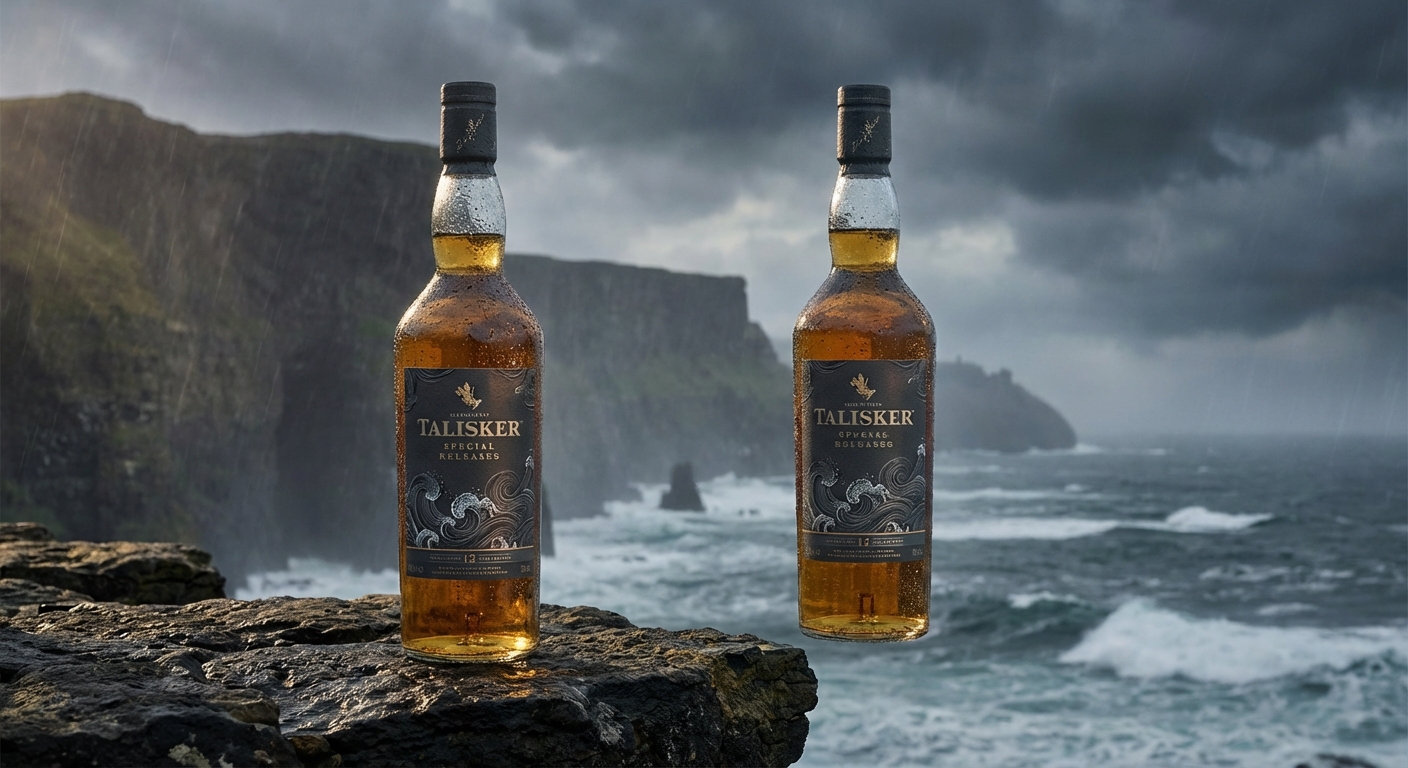
Diageo Special Releases is the company’s flagship annual programme. Launched in 2001, it selects exceptional casks from across the Diageo portfolio — Lagavulin, Brora, Caol Ila, Clynelish, Mortlach, and others — and bottles them at natural cask strength, without chill-filtration, often at older ages than anything available in the regular range. Talisker has appeared in the programme multiple times, typically as the standout island entry in a lineup otherwise dominated by Speyside and Islay names.
Each year’s Special Releases are announced in late summer or early autumn, with bottles reaching UK specialist retailers by October or November in time for the gifting season. Allocation is limited: individual retailers might receive as few as three to six bottles of a rare expression. The prices are set by Diageo at launch — often between £200 and £600 at release for aged expressions — but secondary market values can diverge significantly from those launch prices, particularly for older or higher-ABV bottlings that attract international collector interest.
The programme does not guarantee a Talisker entry every year. In some years, Talisker has featured prominently (with both 25-year and 30-year expressions in the same vintage); in others, it has sat out entirely. This irregularity is part of what makes the appearances valuable: there is no expectation of continuity, and when a well-aged Talisker does arrive in the programme, it commands attention.
Separately from the Diageo programme, Talisker maintains a permanent limited range that sits above the core 10 Year Old and Skye expressions. Storm, Dark Storm, 57° North, Port Ruighe, the Distillers Edition, and Wilder Seas all occupy this space. These are not special releases in the traditional sense — some have been in continuous production for years — but their limited distribution, distinctive cask profiles, and above-average ABVs give them genuine collector interest, particularly when discontinued.
The distinction matters: a Diageo Special Releases Talisker is a finite production run that will never be repeated. The limited range expressions can, in theory, return — but the market treats discontinued ones with similar scarcity logic.
The Diageo Special Releases appearances represent the highest ceiling of official Talisker bottlings available to collectors.
Talisker has entered the Diageo Special Releases programme at multiple ages across different years. What follows covers the most significant and widely documented entries.
The Talisker 25 Year Old has appeared in several vintages of the Diageo Special Releases programme and remains, for most collectors, the entry point for serious aged Talisker. Bottled at 45.8% ABV, the standard annual release is non-chill filtered and presented without colouring. It draws on long-matured American oak ex-bourbon casks, producing a whisky that layers the distillery’s signature pepper and maritime smoke over a more settled, honeyed base that only two and a half decades can deliver.
The tasting profile across different batches remains broadly consistent: the nose offers smoked caramel, dried orchard fruit, sea spray, and a distinctive tar-and-rope quality that experienced Talisker drinkers immediately recognise. On the palate, the 25 Year Old delivers more restraint than the 10 or 18 — the peat has softened, the oak integration is complete, the mouthfeel is rounded and substantial. The finish is long and warming, with signature white pepper arriving late.
Release pricing at UK retail typically ran from £175 to £250 depending on vintage year. Secondary market values for older batches — particularly pre-2015 releases — regularly reach £350 to £500+ at specialist auction.
The 30 Year Old is rarer than the 25, appearing in fewer Diageo Special Releases vintages and in smaller quantities. It has been bottled at varying ABVs depending on individual cask selection — typically between 53% and 57% at natural cask strength. This is an expression where the oak has had time to fully tame the distillery’s rawness without removing its identity: you can still taste Skye clearly, but through a layer of complexity that simply cannot be rushed.
Tasting notes across multiple batches emphasise a rich, almost sherried quality despite the predominant use of ex-bourbon casks — the effect of prolonged contact with well-seasoned American oak. Expect espresso, beeswax, smoked dried fig, and a long, spiced finish with hints of clove and toasted coconut. At cask strength, the addition of a few drops of water is strongly recommended: it opens the spirit considerably without reducing the character.
Secondary market values for the 30 Year Old vary widely by vintage and ABV. Clean, well-stored bottles regularly realise £600 to £1,100 at UK auction, with overseas collector interest — particularly from Asia and North America — pushing premium lots higher.
The 35 Year Old is exceptional in every sense of the word. Released in very limited quantities through the Diageo Special Releases programme, typically at natural cask strength between 54% and 58% ABV, it represents whisky laid down in the mid-to-late 1970s — spirit produced when the distillery’s character was somewhat different from the highly polished modern programme. Each batch carries its own personality, making year-to-year comparison a genuinely rewarding exercise for serious collectors.
These are not whiskies to drink casually. The nose is almost impossibly complex: dark fruits, maritime tar, old leather, smoked meat, and beneath it all, the unmistakeable signal of Skye. The palate is thick, waxy, and long — a full-tannin experience that rewards patience. The finish on a well-cellared 35 Year Old can extend for minutes rather than seconds.
Availability is genuinely scarce. The 35 Year Old commands £1,000 to £2,000+ at current auction prices for the most sought-after batches, with condition, provenance, and original packaging significantly affecting final price. Several independent bottlers have also released private casks from this age bracket, which are occasionally available at specialist retailers like Glenbotal.
See what makes a whisky bottle valuable for the full framework on assessing aged expressions.
In exceptional years, Diageo has released Talisker expressions beyond 40 years of age through the Special Releases programme or via ultra-premium bottlings. These are among the rarest items in the Talisker canon — effectively a once-in-a-generation proposition given the limited stocks of spirit laid down before the modern era. Spirit distilled in the 1960s and early 1970s sometimes appears through specialist channels and at major auction houses, representing Talisker from a production era that no longer exists.
Collectors should approach any 40+ Year Old Talisker with due diligence. These are bottles that warrant professional authentication, careful provenance checks, and realistic expectations about market liquidity. They are not investments for the impatient. For guidance on valuing expressions at this level, the how much is my whisky worth guide provides a reliable starting framework.
Disclaimer: Market values cited in this article reflect observed secondary market prices at the time of writing and are subject to change. Past auction performance is not a guarantee of future value. Glenbotal does not offer investment advice.
Talisker’s permanent and semi-permanent limited expressions are where most collectors begin — and where the brand’s stylistic range is most clearly displayed.
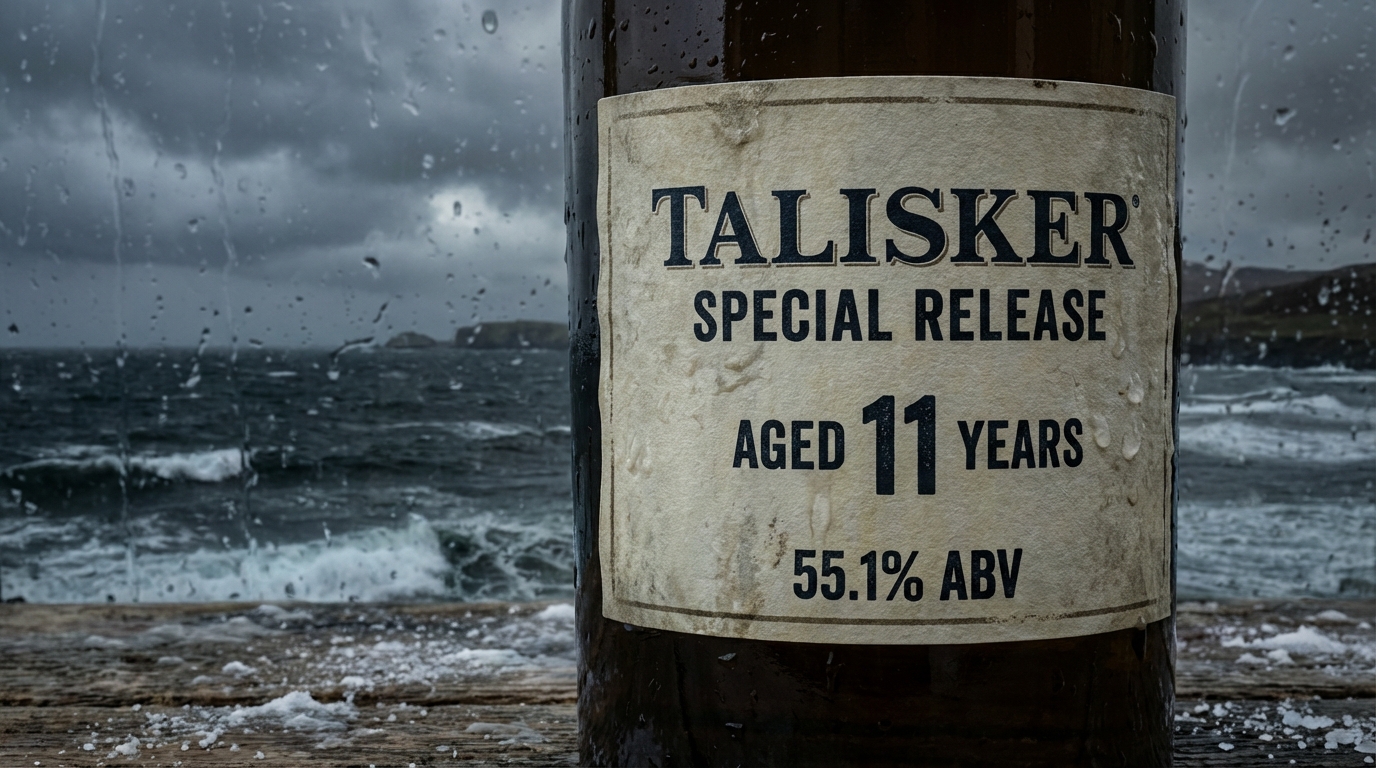
These expressions sit above the everyday 10 Year Old and Skye, occupy the middle of the portfolio, and have each developed their own following. Several have been discontinued or reformulated, which has created retrospective collector interest in older stocks.
Storm was introduced around 2013 as a no-age-statement expression designed to showcase the distillery’s more assertive, intense side. Bottled at 45.8% ABV, it uses a combination of American ex-bourbon and ex-cask European oak — the latter contributing darker, spicier notes than the standard 10 Year Old profile. The result is deliberately “stormier” than the flagship: more intense smoke, a heavier coastal quality, and a mouthfeel that is noticeably richer and more viscous.
Tasting notes run to: smoked toffee, bonfire embers, sea-soaked driftwood, cracked black pepper, and a long finish that leans heavily saline. Storm is positioned as an everyday “accessible intensity” expression rather than a collector piece, but discontinued batches and limited market variants (particularly Duty Free exclusives at higher ABVs) do attract specialist interest.
Current RRP: approximately £42–£55 in the UK. Available at most specialist retailers.
Dark Storm is Storm’s older sibling — a richer, more heavily charred variant produced using heavily charred casks rather than standard seasoned oak. Bottled at 45.8% ABV as the standard expression (though a cask strength variant has been available through specific channels), Dark Storm delivers an unmistakeably different character from Storm: more red fruit sweetness, a deeper caramel register, and smoke that presents as bonfire char rather than clean sea smoke.
This is the expression that tends to convert drinkers who find the standard Talisker range “too clean” in its maritime presentation. The heavier cask contribution rounds out some of the distillery’s sharper edges and creates a more accessible — though still characterful — profile that sits well in winter drinking. Dark Storm has become particularly popular in European markets and has achieved strong distribution in Duty Free channels globally.
Collector note: Dark Storm in cask strength format, when available, typically commands a premium of 30–50% over standard ABV bottles. Older limited runs in 1-litre Duty Free format are occasionally traded between collectors.
Port Ruighe (pronounced “Port Ree” — the name of Skye’s main town) is Talisker’s port cask finish, bottled at 45.8% ABV without age statement. The base spirit undergoes additional maturation in ruby port pipes, producing the most fruit-forward expression in the core Talisker range. The port influence is clear and generous: red berry fruit, dark cherry, and dried plum layer over the distillery’s signature pepper and coastal smoke to create something genuinely distinctive.
Port Ruighe divides opinion among purists who feel the port wood softens Talisker’s most defining characteristics, and those who find the combination opens up the distillery to a broader audience. Both views have merit. As a collector piece, Port Ruighe is interesting primarily in older or discontinued batches where the formulation differed from the current production run.
The expression is particularly notable for pairing well with dark chocolate and smoked meat — Talisker has capitalised on this through various food pairing promotions — which has expanded its reach beyond the traditional whisky audience.
The Distillers Edition series is one of Diageo’s most coherent and rewarding programmes across its Classic Malts range. For Talisker, the Distillers Edition takes the standard 10 Year Old and subjects it to an additional maturation period in Amoroso sherry casks — the sweeter, less tannic style of sherry seasoning that adds richness without overwhelming the underlying spirit.
Bottled at 45.8% ABV, the Distillers Edition is released with a vintage double-date on the label (distillation year and bottling year), making it a trackable annual series in its own right. The 2013 edition won Best Islands Single Malt at the World Whiskies Awards — a result that established this as more than just a sweetened version of the flagship. It has a character of its own: dried fruit, Seville orange peel, stewed plum, and the full Talisker pepper-and-salt backbone arriving undimmed through the sherry contribution.
For collectors, the Distillers Edition is a strong entry point. Earlier vintages (pre-2010) present differently from current releases due to minor changes in sherry cask sourcing and base spirit character. A matched set of consecutive years — perhaps a decade’s worth of bottles — is the kind of patient collecting project that rewards deeply over time.
See the dedicated guide to the Diageo Distillers Edition series for the full cross-distillery comparison.
57° North is a cask strength expression bottled at — as the name declares — 57.0% ABV exactly. This is not natural cask strength: the ABV is precisely calibrated to match the latitude of the Isle of Skye at 57 degrees north. It is a clever piece of branding that also happens to produce an excellent whisky. At full strength with no dilution, 57° North is intense: aggressive smoke, bold salt, concentrated fruit sweetness, and a long, spiced finish.
In distillery exclusive format, 57° North has been produced in limited runs with different cask profiles. The standard commercial release has been widely available, but the distillery’s own single-cask version (available only at Carbost) represents a genuinely different drinking experience.
Talisker’s strongest collector opportunities below the Diageo Special Releases tier come from the distillery itself — and from the Hebridean connections that generate limited annual editions.
Unlike Islay — which has the internationally known Fèis Ìle festival driving a concentrated release calendar each May — Skye’s Fèis an Eilein (Festival of the Island) is more dispersed, and the connection between the festival and Talisker’s special releases programme is less formalised. Nevertheless, the distillery has produced visitor-centre exclusives timed to coincide with local events and seasonal interest periods on the island, offering expressions available only at Carbost or through the distillery shop.
These editions have typically been presented at or near cask strength, using single casks or small batch selections that do not appear in the wider commercial range. They are produced in quantities measured in hundreds of bottles rather than thousands, and their distribution is genuinely limited to visitors and a small number of specialist retailers with direct distillery relationships.
What to look for: Talisker distillery exclusives released in the period 2015–2020 have shown strong secondary market appreciation, particularly those with clear single-cask provenance (individual cask number, distillation and bottling dates, and fill level on the label). These bottles are prime candidates for careful provenance assessment before purchase.
Wilder Seas represents Talisker’s collaboration with Parley for the Oceans — an environmental organisation that works to eliminate marine plastic pollution. Released in 2021 and followed by subsequent editions, Wilder Seas is bottled at 48.6% ABV and draws on a combination of ex-bourbon casks and virgin oak, producing a whisky that is simultaneously more approachable and more distinctive than the standard lineup.
The nose on Wilder Seas is noticeably lighter than Storm or Dark Storm — fresh sea air, white peach, vanilla, and gentle smoke — making it an accessible entry point for drinkers discovering Talisker through the environmental angle. On the palate, the virgin oak contribution adds structure and a light tannin grip that elevates what might otherwise be a straightforward expression. The finish brings the classic Talisker maritime signature: salt, pepper, and a long, clean fade.
A portion of proceeds from Wilder Seas supports Parley’s ocean plastic initiatives — positioning this expression squarely at the intersection of premium whisky collecting and conscious consumption. For collectors, the first-edition Wilder Seas bottles (identifiable by specific batch codes and original packaging) carry premium value over later production runs.
Released in 2023 as part of Talisker’s ongoing commitment to adventurous, limited production expressions, The Wild Explorador arrived as a no-age-statement expression bottled at a higher ABV than the core range. It drew on casks specifically selected for their maritime character — a curation exercise designed to maximise the Skye terroir in the glass. The expression was positioned as a distillery-exclusive and limited specialist retailer release, with production numbers not publicly confirmed.
This is the kind of expression that benefits from careful attention at release: bought on launch, documented carefully, and stored appropriately, it represents a snapshot of Talisker’s current production philosophy that will only become more interesting as the years pass.
The secondary market for Talisker special releases is active, internationally liquid, and increasingly driven by Asian and North American collector interest.
Understanding market values for Talisker requires separating the permanent limited range (where current retail prices serve as a reasonable floor) from the discontinued and one-off expressions (where auction data becomes the primary reference point).
The table below reflects observed secondary market ranges based on recent UK auction activity. These are indicative figures and will vary by condition, provenance, and timing.
| Expression | ABV | Secondary Market Range (GBP) |
|---|---|---|
| Talisker 25 Year Old (recent vintage) | 45.8% | £180–£280 |
| Talisker 25 Year Old (pre-2015 vintage) | 45.8% | £350–£550 |
| Talisker 30 Year Old (cask strength) | 53–57% | £600–£1,100 |
| Talisker 35 Year Old (cask strength) | 54–58% | £1,000–£2,200 |
| Talisker Distillers Edition (pre-2010) | 45.8% | £90–£150 |
| Talisker Distillers Edition (current) | 45.8% | £55–£80 |
| Talisker Storm (Duty Free cask strength) | 57%+ | £80–£130 |
| Talisker Dark Storm (cask strength) | 57%+ | £90–£160 |
| Talisker Port Ruighe (discontinued batches) | 45.8% | £70–£110 |
| Talisker 57° North (distillery exclusive) | 57% | £90–£180 |
Disclaimer: All market values are indicative only, based on observed secondary market data at time of writing. Whisky values fluctuate and results may vary. Always verify current prices with auction platforms before making purchasing decisions. This is not financial advice.
Several factors consistently push Talisker bottles above their launch price on the secondary market:
Age and scarcity: Expressions aged 30 years and above exist in genuinely finite quantities. There is no possibility of producing more Talisker 35 Year Old from the 1970s — those stocks are exhausted or near-exhausted. Scarcity is structural, not manufactured.
Cask strength and no-chill filtration: Collectors prize these technical characteristics because they represent the whisky in its most complete form. Any expression in the Diageo Special Releases programme will carry both.
Provenance and condition: A 35 Year Old in pristine original packaging with a full fill level will always command more than a battered bottle with a compromised seal. Storage matters; documentation matters.
Vintage year significance: In blind tasting comparisons, certain Talisker vintages — particularly mid-1990s and early-2000s distillate that was bottled at 25 years in the mid-2010s — have received exceptional ratings from the international whisky press, creating asymmetric demand for specific years.
For a deeper framework on valuing your collection, see how much is my whisky worth and the vintage Scotch whisky guide.
The most expensive collecting mistakes with Talisker are almost always avoidable — and most come from either moving too fast or waiting too long.
The Talisker 25 Year Old has been released annually for over a decade, and the quality varies more between vintages than most buyers realise. The batch selected in a given year reflects casks laid down 25 years earlier, and those casks were filled during a specific period of the distillery’s history with specific production variables. A 2010 release (using spirit from 1985) will present differently — sometimes dramatically so — from a 2022 release (using spirit from 1997). Buying “a Talisker 25” as a category rather than a specific vintage means you may be paying a premium for a bottle that the specialist community rates considerably below its siblings.
What to do instead: Research the specific vintage before purchasing. Major whisky review publications and specialist auction house catalogues carry year-by-year assessments.
The Distillers Edition is not widely perceived as a serious collector expression — its RRP puts it well within the casual gift range, and the Amoroso sherry finish has a reputation for accessibility rather than complexity. As a result, older vintages are systematically underpriced at auction relative to their actual quality and scarcity. A 2004 or 2005 Distillers Edition, properly stored, is a significantly different and rarer dram than the current release, but it often realises less at auction than a recent Storm because buyers do not think of it as a collector piece.
What to do instead: Build a small portfolio of older Distillers Edition vintages while they remain undervalued. The market will likely correct this mispricing as the overall collector base for Talisker matures.
Port Ruighe batches have varied in both cask mix and spirit maturation time across different production runs. Some retailer stocks are older than their current shelf presence suggests; others have been stored poorly. The 45.8% ABV does not change, but the fill level, the clarity of the spirit, and the storage conditions of any individual bottle can vary enough to affect both the drinking experience and any resale value. Unlike cask strength expressions — where the ABV is a reliable quality signal — a standard-strength expression like Port Ruighe requires more careful individual assessment.
What to do instead: Buy Port Ruighe from retailers with documented storage practices and a clear supply chain. Glenbotal sources from verified private collectors across the UK and Europe — see the full collection — which means provenance is established before the bottle changes hands.
The NAS debate in Scotch whisky is tired and largely settled: the absence of an age statement does not inherently mean a younger or lesser spirit. Storm, Dark Storm, and Wilder Seas are all compelling expressions that use the distillery’s best-available spirit for their particular profile, regardless of specific maturation time. Reflexive NAS aversion causes collectors to miss genuinely interesting bottles — and, occasionally, underpriced secondary market opportunities on discontinued NAS batches.
Not every limited Talisker release becomes valuable. Distillery exclusives produced in the thousands, Duty Free expressions with broad global distribution, and travel-retail variants may be described as “limited” by their packaging but represent no genuine scarcity. The Diageo Special Releases aged expressions are rare because the stocks simply do not exist to produce more. A Talisker 35 Year Old is rare in the way a 1970s Bordeaux grand cru is rare. A Duty Free Dark Storm in a special tin is limited in the way any promotional packaging is limited.
Learn what actually separates a rare bottle from a merely “limited” one in the what makes a whisky bottle valuable guide.
Among official distillery releases, the aged Diageo Special Releases expressions — particularly the 35 Year Old and any 40+ Year Old — represent the genuine ceiling of scarcity. Spirit distilled in the 1970s and bottled at 35 or more years of age exists in quantities that simply cannot be replenished. Beyond official releases, single-cask independent bottlings from the 1970s and early 1980s occasionally surface at specialist auction and represent some of the rarest Talisker available anywhere.
The Talisker 18 Year Old won Best Single Malt in the World at the World Whiskies Awards in 2007. This remains one of the highest-profile results in the distillery’s recent history and directly influenced collector and investor interest in Talisker aged expressions throughout the 2010s.
The Distillers Edition uses the same 10-year-old spirit as the standard flagship but undergoes additional maturation in Amoroso sherry casks. The Amoroso style — sweeter and less tannic than Oloroso — adds dried fruit richness, a gentle sweetness, and a darker colour without fundamentally altering the distillery’s signature pepper and maritime smoke. The 2013 edition won Best Islands Single Malt at the World Whiskies Awards.
We don’t offer investment advice, and whisky markets are volatile. What we can say is that Diageo Special Releases aged expressions from Talisker have shown consistent secondary market appreciation over the medium term, driven by finite stocks, strong brand recognition, and growing international demand — particularly from Asian collectors. The how much is my whisky worth guide gives a reliable framework for assessing any expression you hold.
Storm is bottled at 45.8% ABV and presents a more intense, assertive version of the Talisker house style. Expect smoked toffee, bonfire char, sea-soaked driftwood, and a prominent cracked-pepper finish. It is deliberately fuller-bodied than the 10 Year Old and uses a combination of American ex-bourbon and European oak to achieve a richer, darker profile.
Dark Storm is Storm’s more intensely cask-influenced sibling, matured in heavily charred oak to develop a deeper, more bourbon-adjacent character. Bottled at 45.8% ABV, it delivers more red fruit, caramel, and char alongside the standard maritime smoke notes. A cask strength variant has been produced in limited quantities through specialist channels and Duty Free.
Port Ruighe is finished in ruby port pipes after primary maturation in ex-bourbon casks. The port cask adds dark berry fruit, dried cherry, and a gentle sweetness that differentiates it clearly from the rest of the Talisker range. It is named after Portree, the main town on Skye, and pronounced “Port Ree.” Bottled at 45.8% ABV.
No. Talisker is the only distillery on the Isle of Skye, a separate island in the Inner Hebrides. It is located at Carbost on the Minginish Peninsula, on the shore of Loch Harport. It is often grouped with Islay distilleries in terms of flavour profile — peated, maritime, coastal — but Skye is a distinct island with its own geography and terroir.
Diageo Special Releases is an annual programme launched in 2001 that selects rare, aged, or unusual casks from across Diageo’s distillery portfolio and bottles them at natural cask strength, without chill-filtration. Releases are produced in limited quantities and sold through specialist retailers. Talisker has appeared in the programme multiple times, with entries ranging from 25 to over 40 years of age.
Older Diageo Special Releases and discontinued Talisker expressions are most reliably found through specialist rare whisky retailers, established UK auction houses (Whisky Auctioneer, McTear’s, Bonhams), and private collection specialists like Glenbotal, which sources directly from collectors across the UK and Europe.
“Made by the Sea” is Talisker’s core brand positioning, reflecting the genuine influence of its coastal Skye location on the character of the whisky. The distillery sits metres from Loch Harport, and the casks breathe sea air throughout maturation, developing the maritime salinity, kelp, and brine notes that characterise the distillery’s profile. It is an accurate descriptor, not simply a marketing phrase.
Store upright in a cool, dark location away from direct light and temperature fluctuations. Unlike wine, whisky does not benefit from being stored on its side — the high alcohol content can degrade the cork over time if in sustained contact with it. For expressions you intend to keep for years, consider using a sealed display case that controls humidity and protects against UV exposure. The how to store whisky bottles guide covers this in full.
Talisker is one of the most geographically distinctive single malts in Scotland, and its special releases are among the most consistently excellent offerings in the Diageo portfolio.
If you are starting a Talisker collection, the natural entry point is the Distillers Edition — trackable by vintage, undervalued at auction, and genuinely excellent to drink. From there, the 25 Year Old gives you Diageo Special Releases experience without the five-figure price tags of the older expressions. The 30 and 35 Year Olds are serious collector territory: worth buying on release, worth holding, and worth the due diligence required to buy them right.
For collectors interested in the broader context of Diageo’s island and coastal distilleries, see distilleries worth collecting for the full picture. If you are new to the special releases landscape, the Diageo Distillers Edition series guide provides an excellent cross-distillery comparison for building a coherent collection across multiple producers.
Talisker rewards patience. It rewards knowledge. And it rewards the collector who buys with conviction rather than buying to follow the crowd.
Explore the full collection at Glenbotal — rare whisky sourced from private collectors across the UK and Europe.