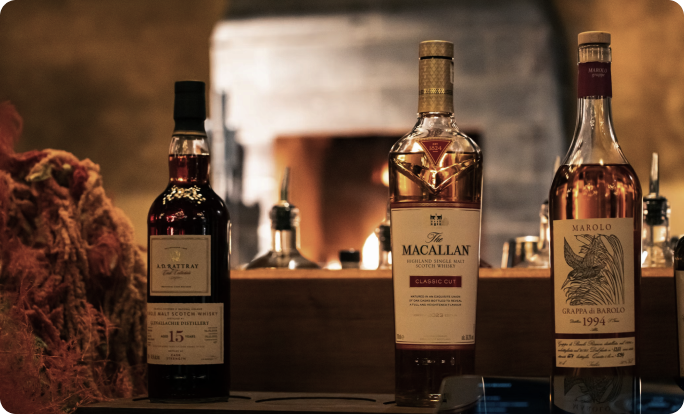
Finding a birth year whisky from the 1980s isn’t just about gifting a bottle — it’s about holding a piece of Scotch whisky’s most turbulent and consequential decade in your hands.
The 1980s produced some of the most sought-after Scotch whisky in existence — and very nearly destroyed the industry that made it. Overproduction left warehouses bursting and distilleries shuttering across Scotland, creating a generation of bottles that grew scarcer with every passing year. The very forces that threatened Scotch whisky’s survival are exactly what make 1980s expressions so compelling for collectors and gifters alike today. In this guide, we’ve curated eight of the finest birth year whiskies from that decade — real expressions distilled between 1980 and 1989 that carry genuine historical weight and exceptional character.
The 1980s were unlike any other decade in Scotch whisky’s long history. To understand why bottles from this era command such attention, you need to understand what happened — and why so many distilleries never made it out the other side.
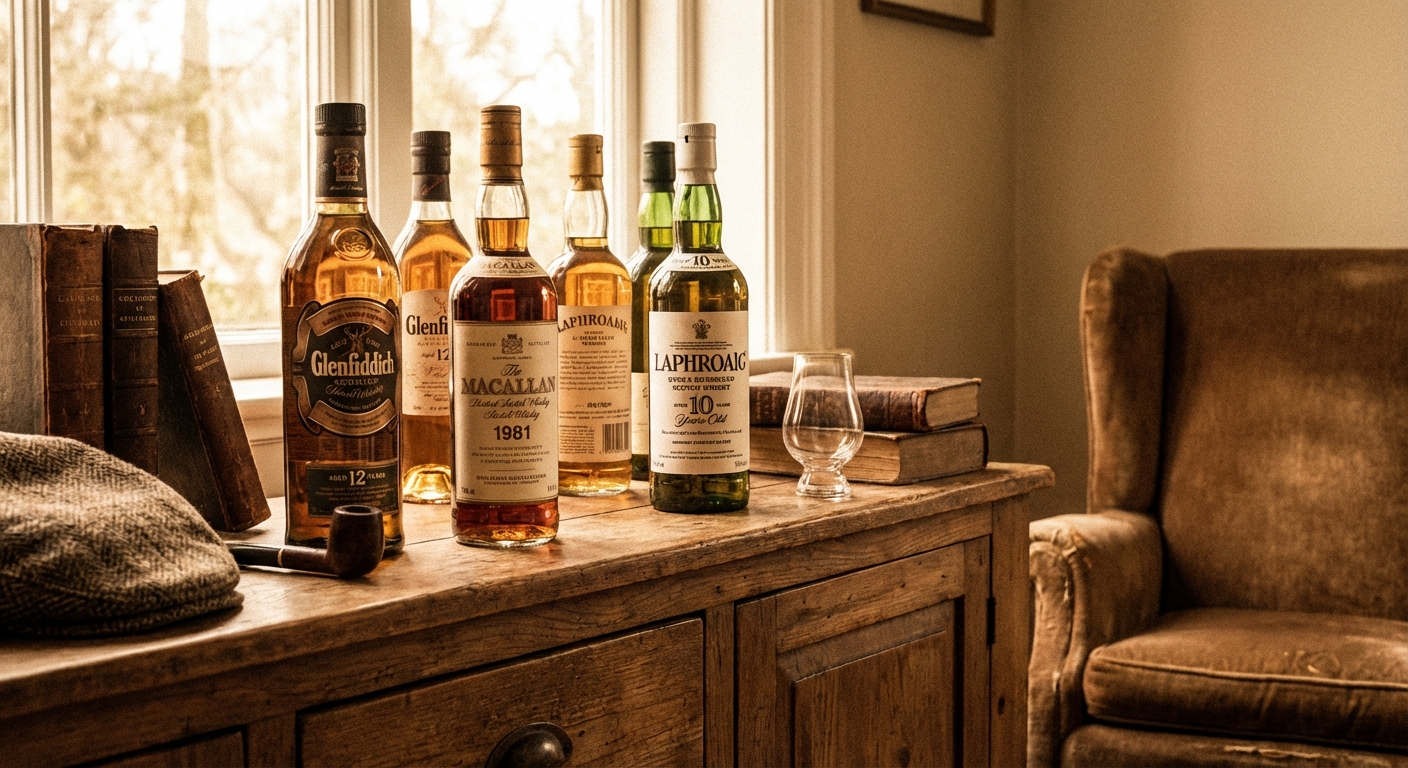
The 1970s were boom years for Scotch. Demand was rising, distilleries were expanding, and new capacity came online across Scotland. Then the market turned. By the early 1980s, producers were sitting on enormous stockpiles of maturing spirit with no buyers in sight — an oversupply so vast it became known as the “whisky loch.”
The scale of the response was staggering. Starting in 1981, distilleries across Scotland slashed production by roughly a third and kept it there for almost a decade. For some, that wasn’t enough.
The industry’s answer was painful and permanent: mothballing and closure. According to Wikipedia’s history of Scotch whisky, sixteen significant distilleries closed or were mothballed during this period, including Brora, Port Ellen, Banff, Convalmore, Dallas Dhu, Glen Albyn, Glenlochy, Glen Mhor, Glenugie, Glenury, Millburn, North Port, and St Magdalene. Several never reopened. Their stills were silent for good — or for decades.
When a distillery closes, it stops making whisky forever. The stocks it leaves behind age and diminish. Bottles trade hands through auctions and private collections. Each decade that passes, the supply shrinks further while the demand — driven by collectors who know what they have — continues to grow.
Port Ellen closed in 1983. Brora closed the same year. Ardbeg halted production in 1981. The bottles that exist from those distilleries’ final active years represent a hard, finite limit. No more will be made. Ever.
For birth year collectors, the stakes are even higher. If your birth year falls in the 1980s, the pool of available bottles is smaller than for almost any other decade of the twentieth century. Finding the right one is genuinely hard. Which is why having a specialist on your side matters.
Here’s the thing the crisis also produced: distilleries that survived the 1980s were forced to compete on quality. Sherry cask maturation was still the dominant style. The whisky that made it to bottle — whether 10, 15, 20 or 30 years later — often reflects a craft that modern, high-volume production can’t easily replicate. Many distillers from this era were still using traditional techniques, slower fermentations, and worm tub condensers. The flavour complexity in a well-preserved 1980s expression can be extraordinary.
This list was built around four criteria that matter most to collectors, gifters, and anyone searching for a birth year bottle from the 1980s:
We’ve focused on Scotch single malts, which dominate the birth year collector market and offer the greatest depth of character and historical interest for the 1980s decade.
| Bottle | Region | Distillery Status | Best For | Approx. Price Range |
|---|---|---|---|---|
| Glenfarclas Family Casks 1980s | Speyside | Open | Sherry lovers, gifters | £200–£600+ |
| Port Ellen 1982 (Diageo SR) | Islay | Closed 1983 | Serious collectors | £800–£2,500+ |
| Brora 1982 (Gordon & MacPhail) | Highland | Closed 1983 | Rare Highland character | £500–£1,500+ |
| Ardbeg 1980 (Independent) | Islay | Closed 1981 | Peated Islay devotees | £400–£1,200+ |
| Caol Ila 1984 (Signatory) | Islay | Open | Value-conscious Islay buyers | £180–£450 |
| Macallan 1984 Sherry Oak | Speyside | Open | Classic elegance | £300–£800+ |
| Springbank 1989 | Campbeltown | Open | Campbeltown character | £250–£700+ |
| Gordon & MacPhail Connoisseurs Choice 1980s | Various | Various | Accessible entry point | £120–£350 |
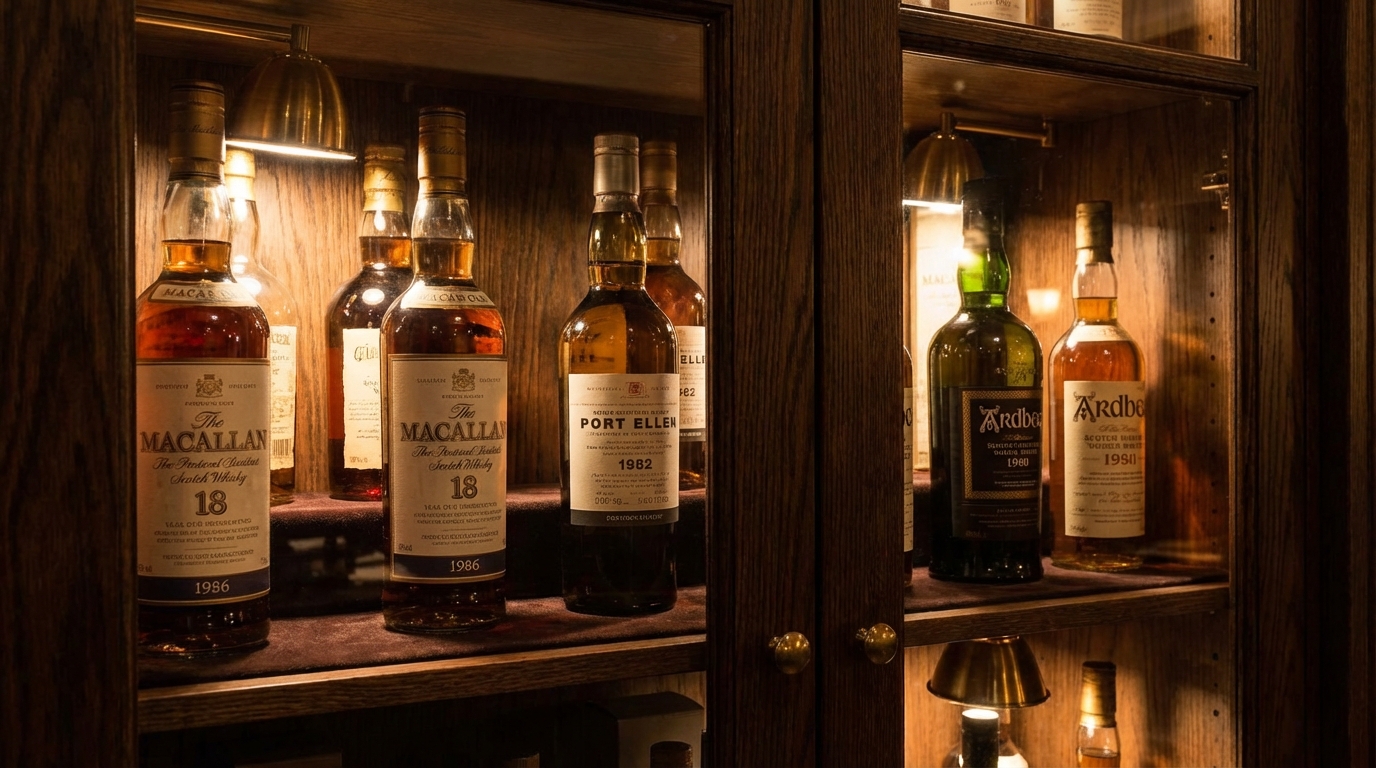
Prices reflect secondary market ranges and will vary by condition, provenance, and market timing. All prices are indicative only and do not constitute a formal valuation or guarantee of sale price. Disclaimer: Whisky prices fluctuate and past market performance is not a guarantee of future value. Glenbotal offers free valuations on any bottle in your collection.
If there is one 1980s birth year whisky that perfectly captures the traditional soul of Speyside, it’s a Glenfarclas Family Cask from this decade — single sherry cask, natural colour, cask strength, and utterly unrepeatable.
Glenfarclas has been owned by the Grant family since 1865 and is one of the last major distilleries to remain entirely independent and family-run. That independence shapes everything: no corporate production schedules, no compromises on sherry cask quality, no rush to bottle before the spirit is ready. The Family Casks series launched in 2007 and released a single cask bottling from every year between 1952 and 1994 — including the full span of the 1980s. Stock from the earliest years of the series has already sold through; what remains becomes rarer each year.
What makes it exceptional:
What to be aware of:
Price range: £200–£600+ depending on year and cask reference
Best for: Sherry devotees, Speyside collectors, gifters who want a bottle with genuine pedigree and family history behind it
Not ideal if: You’re looking for peated or coastal character — Glenfarclas is definitively a rich, sherry-forward Speyside
Port Ellen distillery closed permanently in 1983, making any bottle distilled there one of the most finite and consequential finds in all of Scotch whisky — and a 1982 expression represents the distillery’s final active year.
Port Ellen on the south coast of Islay was operational from 1966 until its closure during the whisky loch crisis. When it shut, its stills were removed — there was no plan to return. The stocks that remained aged quietly in Diageo’s warehouses for years before the company began releasing them as annual Special Releases in the early 2000s. Each release drew from diminishing reserves. A 1979 cask of Port Ellen sold at Sotheby’s in 2022 as part of a lot that realised £875,000 — a figure that illustrates what happens when supply is truly finite and demand is not.
What makes it exceptional:
What to be aware of:
Price range: £800–£2,500+ depending on age, volume, and release year
Best for: Advanced collectors, serious birth year buyers born in 1982 or early 1983, anyone building a closed-distillery portfolio
Not ideal if: You’re a first-time buyer or gifting for an occasion where subtlety matters more than prestige
Brora closed in 1983, and Gordon & MacPhail — the Elgin-based independent bottler with over 125 years of history — have been among the most important custodians of what little spirit remains from this legendary Highland distillery.
Brora, on Scotland’s far north coast in Sutherland, operated with a character unlike any other Highland distillery. Between 1969 and 1973, it produced heavily peated spirit to fill a supply gap caused by drought on Islay. The result was a range of expressions that sit between traditional Highland elegance and Islay-style smoke — uniquely complex, entirely unrepeatable. Gordon & MacPhail, founded in 1895 and recognised as one of the most prestigious independent bottlers in the industry, bought casks from Brora before closure and has bottled them over subsequent decades. Their 2023 International Whisky Competition win for the Connoisseurs Choice 1989 Mortlach shows the depth of their archive.
What makes it exceptional:
What to be aware of:
Price range: £500–£1,500+ depending on age statement and release
Best for: Birth year collectors born in 1982, Highland whisky devotees, collectors focused on closed-distillery bottlings
Not ideal if: You want a straightforward Islay peat bomb — Brora’s charm is its complexity, not its smoke intensity
Ardbeg halted production in 1981 and didn’t return to meaningful output until 1989 — meaning any whisky distilled at the distillery in 1980 comes from the very last vintage before the lights went out for nearly a decade.
Ardbeg on the southern coast of Islay is now one of the world’s most celebrated whisky distilleries, famous for its intensely peated, medicinal, and maritime single malts. But from 1981 to 1989, the distillery was essentially silent — a casualty of the same whisky loch crisis that claimed Port Ellen and Brora. The spirit made in 1980 sat in casks through the closure, ageing quietly while the industry tried to find its feet. Independent bottlers who held Ardbeg casks from this pre-closure period have released some exceptional expressions, typically through specialist auction or private sale.
What makes it exceptional:
What to be aware of:
Price range: £400–£1,200+ depending on bottler, age at bottling, and fill level
Best for: Birth year collectors born in 1980 or 1981, Islay devotees, collectors who want Ardbeg before the modern brand existed
Not ideal if: You’re new to heavily peated whisky — pre-closure Ardbeg is an uncompromising dram
For collectors who want genuine 1984 Islay character at a price point that won’t require a mortgage conversation, Caol Ila bottled by independent specialists like Signatory Vintage is one of the era’s most rewarding discoveries.
Caol Ila sits on the northern coast of Islay overlooking the Sound of Islay and Jura. Unlike Port Ellen and Ardbeg, it never closed — it kept producing through the whisky loch years, and much of its output during the 1980s went quietly into Johnnie Walker blends. But some casks were held back, and independent bottlers acquired them. The result: expressions that carry authentic Islay character — gentle smoke, coastal oil, soft citrus, and maritime minerals — at prices that reflect their relative availability compared to closed-distillery bottles.
Now here’s the deal: independent bottlings of Caol Ila from the mid-1980s represent some of the best value in the birth year collector market. They’re genuinely from the decade, genuinely from one of Islay’s great distilleries, and genuinely scarce — just not quite as scarce as the closed-distillery alternatives.
What makes it exceptional:
What to be aware of:
Price range: £180–£450 depending on age statement, bottler, and cask type
Best for: Birth year collectors born in 1984 seeking accessible Islay character, those new to independent bottlings, gifters with a mid-range budget
Not ideal if: You specifically need a distillery bottling — these are independent expressions, not official Caol Ila releases
The Macallan is arguably the most iconic name in birth year whisky collecting — and a Macallan distilled in 1984, matured in the sherry oak casks that defined the distillery’s golden era, is one of the most recognisable and gifted expressions from the entire decade.
In 1984, The Macallan was still producing exclusively in sherry oak casks sourced from Jerez de la Frontera in Spain. This approach — which the distillery maintained until introducing bourbon oak expressions in 2004 — creates a distinctive profile: rich dried fruit, toffee, ginger, Christmas spice, and a warmth that feels genuinely luxurious. Macallan’s 1926 vintage sold at auction for £2.1 million in November 2023, cementing its status as the most valuable whisky distillery in the world. A 1984 expression won’t reach those heights, but it carries the same heritage DNA.
What makes it exceptional:
What to be aware of:
Price range: £300–£800+ for independently bottled expressions; official releases command higher premiums
Best for: Gifters who want a name the recipient will recognise, Speyside enthusiasts, birth year collectors born in 1984 who want prestige alongside character
Not ideal if: You want a peated expression or something less mainstream — Macallan is the opposite of niche
Springbank is the only Scottish distillery to carry out every single step of production in-house, from malting the barley to bottling the spirit — and a 1989 expression from this fiercely independent Campbeltown producer is among the most authentic whiskies you can find from the decade’s final year.
Campbeltown was once Scotland’s whisky capital, with over thirty active distilleries. Today only three remain, with Springbank the most prominent. The Grant family who owns it has maintained a commitment to traditional production that borders on the stubborn: no shortcuts, no additives, no chill-filtration, no artificial colouring. The whisky that came out of Springbank in 1989 reflects exactly those values — two-and-a-half times distilled, lightly peated, matured in a mix of cask types that builds complexity over time. A 1989 Springbank is now approaching the 35-year mark. The transformation that happens to whisky over that kind of duration is remarkable.
What makes it exceptional:
What to be aware of:
Price range: £250–£700+ depending on cask type and age statement
Best for: Enthusiasts who want something genuinely distinctive, birth year collectors born in 1989, anyone exploring Campbeltown as a collecting focus
Not ideal if: You want a well-known brand name on the label — Springbank is for those who care more about what’s in the glass
Gordon & MacPhail’s Connoisseurs Choice range is the single most important gateway into 1980s birth year collecting — a series that covers dozens of distilleries and vintages, many now otherwise impossible to find.
Gordon & MacPhail was established in 1895 in Elgin, Moray, and has spent over 125 years acquiring and maturing casks from distilleries across Scotland. Their Connoisseurs Choice range is the accessible arm of that operation: reliable independent bottlings at prices that don’t require collector-level budgets. Across the 1980s, Gordon & MacPhail acquired casks from dozens of distilleries — some still open, some now closed — and bottled them as single malts under the Connoisseurs Choice label. Their 2023 International Whisky Competition win for the Connoisseurs Choice 1989 Mortlach confirms the quality still available from this era.
What makes it exceptional:
What to be aware of:
Price range: £120–£350 for most expressions; older or rarer distillery bottlings command more
Best for: First-time birth year buyers, gifters who want genuine 1980s provenance without paying closed-distillery premiums, collectors building breadth across the decade
Not ideal if: You specifically need a named distillery expression — Connoisseurs Choice works best when flexibility matters more than brand specificity
Finding a specific bottle distilled or bottled in the 1980s requires a different approach than buying a new release. Here’s what works.
1. Know what you’re looking for. Birth year whisky from the 1980s means either the distillation year (when the spirit was made) or the bottling year (when it was put in glass). For collectors, the distillation year carries more weight. For gifters, either can work — what matters is the connection to the decade.
2. Use a specialist retailer. General whisky retailers rarely stock expressions this old. Specialists like Glenbotal — with thousands of bottles sourced from private collectors across the UK and Europe — hold genuine vintage stock that doesn’t appear on high street shelves. Our birth year whisky guide covers exactly how the search process works.
3. Don’t wait. The 1980s pool is finite. Each year, more bottles are opened, broken, or absorbed into private collections. The expressions available today will not be available in five years at the same price — or at all. Our guide on how to find a birth year whisky walks through the timeline and what to expect.
4. Consider independent bottlers. Signatory Vintage, Gordon & MacPhail, Cadenhead’s, and Berry Bros. & Rudd all bottled extensively from 1980s casks. These expressions often fly under the radar compared to official distillery releases but offer equivalent quality — sometimes better.
5. Ask for a valuation first. If you already have a bottle from the 1980s and want to understand what it’s worth before buying or selling, Glenbotal offers free bottle valuations — a service that’s genuinely unusual in the specialist retail market.
The 1980s are the most historically significant decade in Scotch whisky’s modern era — and the most finite for collectors.
The 1980s gave the Scotch whisky industry its hardest decade and its most enduring legacy. The closures, the cutbacks, the mothballed stills — all of it created a generation of whisky that is now genuinely irreplaceable. If you’re searching for a birth year bottle from this decade, you’re not just buying whisky. You’re acquiring a physical record of an era that reshaped an entire industry.
For a serious collector born in the 1980s, a Port Ellen, Brora, or pre-closure Ardbeg is the definitive statement. For a gifter with a slightly more accessible budget, a Glenfarclas Family Cask, Macallan sherry oak, or Caol Ila independent bottling delivers exceptional quality with genuine historical provenance. And for those just beginning their search, the Gordon & MacPhail Connoisseurs Choice range remains the most practical entry point into the decade.
Whatever the birth year and whatever the budget, the starting point is the same: find a specialist who knows where these bottles actually are. Glenbotal has spent six years building the sourcing network — private collectors, UK and European estates, specialist auctions — to find exactly these expressions.
Browse the 1980s collection at Glenbotal → or contact the team directly for a free valuation or a bespoke sourcing request. These bottles don’t wait.
Get Started — Find Your 1980s Birth Year Bottle
The whisky loch crisis directly increased the value of surviving 1980s expressions by reducing the total volume of whisky produced during the decade. Distilleries slashed production by roughly a third from 1981 onwards, and sixteen significant producers closed entirely. Fewer bottles were made, fewer have survived, and the ones that remain carry the premium of genuine scarcity. For closed distilleries like Port Ellen and Brora, that scarcity is permanent.
The most significant closures included Port Ellen (1983), Brora (1983), Ardbeg (production halted 1981–1989), Banff, Convalmore, Dallas Dhu, Glen Albyn, Glenesk, Glen Flagler, Glenlochy, Glen Mhor, Glenugie, Glenury, Millburn, North Port, and St Magdalene. Several of these — including Banff, Convalmore, and St Magdalene — were demolished. Their whisky cannot be recreated.
Yes. Gordon & MacPhail Connoisseurs Choice bottlings from 1980s distillations often start below £200, and Caol Ila independent bottlings from the mid-1980s can be found in the £180–£350 range. These are genuine 1980s expressions — not approximations — at accessible price points. Our vintage Scotch whisky guide covers what to look for at each budget level.
The key is specificity: you need either the distillation year or the bottling year on the label. For independent bottlings, the distillation year is almost always stated. For official distillery releases, the vintage year or age statement will help you calculate the distillation year. Working with a specialist retailer with a private collector network — rather than a general retailer — gives you the best chance of finding a specific year like 1983 or 1987. See our guide on how to find a birth year whisky for a full walkthrough.
Absolutely — in many cases, it tastes better than it ever has. Well-stored Scotch whisky in a sealed bottle does not deteriorate over time the way opened bottles do. Spirits in glass don’t age further once bottled. A 1985 whisky bottled in 2005 at 20 years old will taste the same today as when it was bottled, assuming it has been stored upright, away from light and heat. The spirit itself will have developed that 20-year character permanently at the point of bottling.
A distillery bottling is officially released by the producing distillery under its own label — for example, The Macallan 18 Year Old. An independent bottling is released by a third-party company (Gordon & MacPhail, Signatory Vintage, Cadenhead’s) who purchased casks from the distillery and bottled them independently. In the 1980s, many distilleries sold surplus casks to independent bottlers. Those expressions often offer greater transparency (exact cask reference, distillation date, cask type) and can reflect a purer, unblended character — sometimes exceeding the quality of the official release.
The trend for genuinely rare 1980s expressions — particularly from closed distilleries — has been broadly upward over the long term. Bottles from Port Ellen, Brora, and pre-closure Ardbeg have seen significant appreciation. However, the rare whisky market is not linear: prices fluctuated between 2021 and 2024, and not every 1980s expression has risen equally. The clearest value appreciation is in bottles from distilleries that will never reopen or that have definitively exhausted their pre-closure cask stocks. Our whisky valuation guide explores the factors that drive long-term value.
Authentication involves checking several elements: the label typography and print quality consistent with the era, the capsule type (most 1980s bottles used metal foil, not plastic), the fill level (some ullage is normal in very old bottles — significant ullage may indicate a problem), and any tax stamps, which were required on UK spirits bottles until 1983. For high-value purchases, buying from a specialist with a documented chain of provenance — ideally with original purchase records — is the most reliable safeguard. Glenbotal can advise on authentication for any bottle you’re considering or already own.
Port Ellen and Brora sit at the top for investment-grade collecting due to permanent closure and finite remaining stocks. For character and accessibility, Glenfarclas and Springbank represent the best of the 1980s survivor distilleries. For Islay character at more accessible prices, Caol Ila independent bottlings punch well above their weight. The Macallan offers the most recognisable name for gifting purposes. And Gordon & MacPhail’s archive covers more of the decade’s surviving and closed distilleries than any other single bottler.
Yes. Glenbotal has spent six years building a sourcing network that includes private collectors across the UK and Europe — not just standard wholesale channels. If you’re looking for a specific distillery, vintage year, or bottler from the 1980s and can’t find it through general search, contact the team directly. The same applies to valuations: if you already own a bottle from the 1980s and want to understand what it’s worth, Glenbotal offers free valuations with no obligation to sell.
Region shapes everything. Speyside producers from the 1980s — Glenfarclas, Macallan, Glenfiddich — typically offer fruit-forward, sherry-influenced, non-peated character: dried fruit, toffee, spice, and warmth. Islay producers — Port Ellen, Ardbeg, Caol Ila, Bowmore — are defined by peat smoke, coastal brine, iodine, and medicinal notes. Campbeltown (Springbank) sits somewhere between: lightly peated, briny, and earthy with a complexity all its own. For birth year gifting, the recipient’s existing whisky preferences are the clearest guide to which region to target.
Explore the full collection at Glenbotal — rare whisky sourced from private collectors across the UK and Europe.