
A 1979 Port Ellen cask sold at Sotheby’s in 2022 for £875,000. A single bottle of Macallan 1926 changed hands for £2.1 million in November 2023. These are not anomalies — they are the going rate for the most revered liquid ever distilled in Scotland.
This guide covers everything a serious collector needs to understand about pre-millennium Scotch: what the term actually means, why the production era from roughly 1960 to the late 1990s is considered irreplaceable, which distilleries matter most, how to tell a genuine bottle from a fake, and what the market looks like today. Whether you are building a collection or considering your first significant purchase, the chapters ahead give you the full picture.
The term “pre-millennium” in whisky collecting refers to Scotch that was either distilled or bottled before the year 2000 — and the distinction between those two dates matters enormously.
A whisky distilled in 1978 and bottled in 2001 sits in a different position to one distilled and bottled in 1994. Collectors generally place higher weight on the distillation vintage, because it is the year of distillation that determines which production methods, which barley varieties, which copper geometry, and which cask policies shaped the liquid. Bottling date matters too — older bottlings carry original duty stamps and period labelling that serve as physical authentication — but the distillation vintage is the heart of the conversation.
In practical terms, the pre-millennium category breaks into two distinct eras.
The first is what collectors call the “lost distillery” segment: expressions from distilleries that closed permanently before 2000. Port Ellen, Brora, Rosebank, Convalmore, Banff, St Magdalene, Caperdonich — these names no longer produce a single drop of new spirit. Every existing bottle is all that will ever exist. When that stock is gone, it is gone absolutely.
Diageo has since reopened Port Ellen and Brora, but the whisky now emerging from those rebuilt stills is a different proposition entirely. It shares a postcode with the originals; it does not share their casks, their era, or the hands that made them. The originals cannot be reproduced.
The second segment covers pre-millennium bottles from distilleries still operating today — Springbank, Macallan, Highland Park, Glenfarclas, Glen Grant, and others. These are not “lost” in the same way, but a 1970 Springbank is still a fundamentally different whisky to a Springbank bottled today. The production methods, the cask sources, the local environment, and even the water have all evolved. Pre-millennium bottlings from living distilleries represent how those distilleries used to make whisky, which is part of their appeal.
Both segments command serious premiums. The question is what you are paying for — and the answer, in both cases, comes down to production methods.
If you ask any serious collector which distillation years they prize most, the answer converges quickly: the 1960s through the mid-1980s.
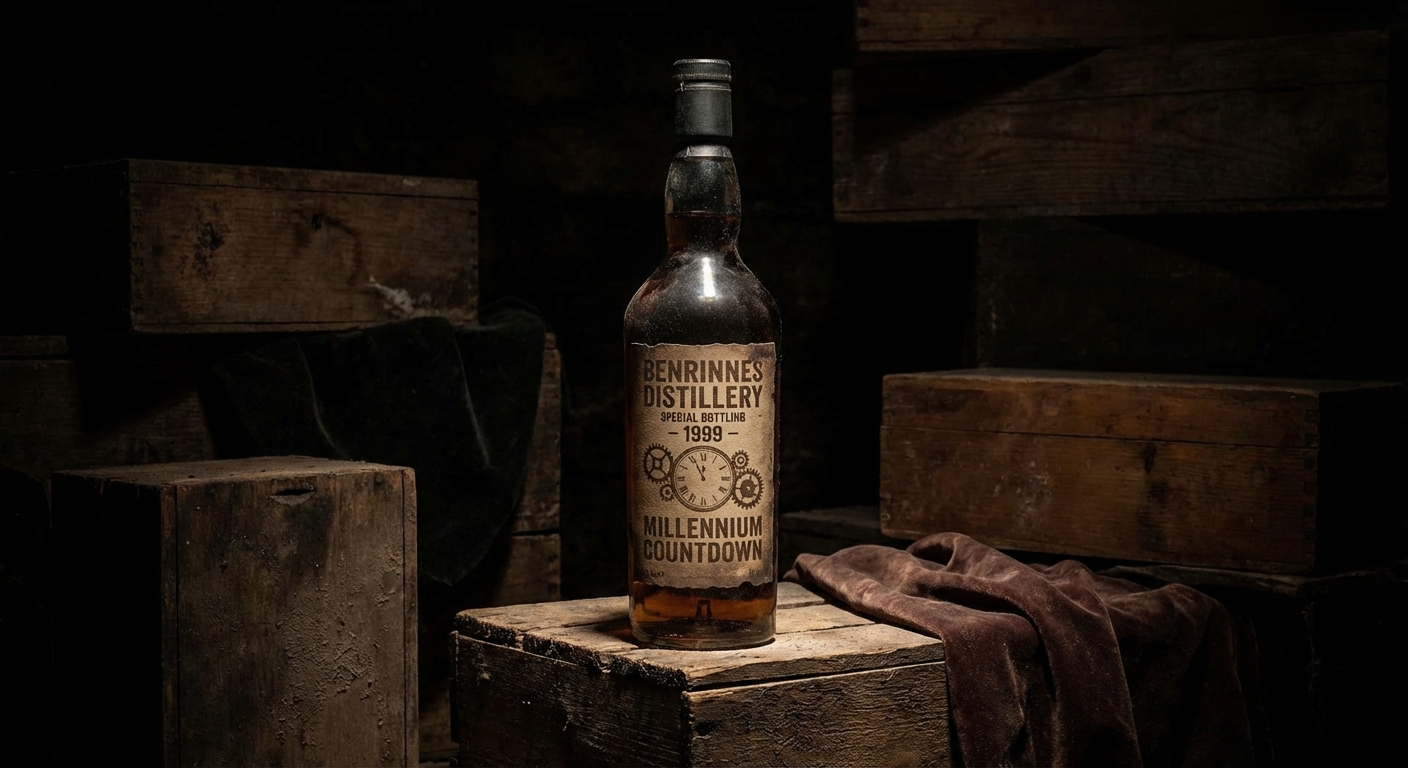
This was not a period of artisanal revival or calculated scarcity. It was simply how Scotch whisky was made. The industry was operating largely as it had for generations, with traditional equipment, traditional cask sources, and relatively little commercial pressure to standardise flavour profiles across a global market.
Here’s the deal: the very qualities that make these whiskies special today were not marketing decisions. They were the ordinary working practices of distilleries that had not yet been acquired by multinationals, had not yet optimised for throughput, and had not yet received consumer research telling them that lighter, more approachable profiles sold better on export markets.
The 1980s brought a brutal shakeout. Following overproduction in the 1970s, the Scotch whisky industry contracted sharply. Distilleries slashed production by roughly a third and kept it low for a decade. Dozens of facilities closed permanently. The Distillers Company Limited (DCL), which controlled much of the industry, was acquired by Guinness in 1986 in what became one of Britain’s most controversial corporate takeovers. Guinness later merged into Diageo.
This consolidation mattered for whisky quality because the new corporate owners optimised for consistency and cost efficiency. Steam-heated stills replaced direct coal or gas firing. Central maltings and industrial malting floors replaced on-site floor maltings. Ex-bourbon barrels from Kentucky, cheaper and more available than seasoned sherry butts from Jerez, became the default cask. Chill-filtration and caramel colouring (E150a) became standard tools for maintaining colour consistency in blends.
None of these changes were secret. But their cumulative effect was to produce a lighter, more consistent, commercially reliable whisky that was measurably different from what the same distilleries had been making a decade earlier.
The “whisky loch” — the vast overstock of the late 1970s — is a recurring reference point among collectors, and with good reason. The years 1968 to 1979 were marked by aggressive distillation runs as producers anticipated continued export demand that did not materialise as expected. The result was enormous volume of spirit laid down in good casks, under traditional conditions, which then aged quietly in bonded warehouses through the lean years of the 1980s.
Much of that whisky eventually became the celebrated old-age-statement releases of the 1990s and early 2000s — 25-year-old, 30-year-old, and 35-year-old expressions from distilleries that by then had completely changed their production practices. The liquid inside was from a different era. The labels were from a newer one.
That is, in essence, why the 1960s–1980s are the golden era. Not because anyone declared them special at the time, but because the conditions that produced that whisky no longer exist.
The technical differences between Scotch made in 1972 and Scotch made today are real, measurable, and directly linked to flavour.
Understanding them is not just academic — it changes how you assess a bottle, and it explains why collectors pay multiples for old expressions that cannot be replicated.
Floor malting is the process of spreading barley grains across a large stone or concrete floor, allowing them to germinate slowly over several days, then drying the germinated malt in a kiln — historically peat-fired. The maltster turns the grain by hand or with traditional rakes to control temperature and ensure even germination.
This process produces malt with a distinctive character: uneven, irregular, intensely aromatic. The slow germination and the manual control over peat smoke exposure allowed distilleries to create house styles that were genuinely unique to their site, their barley source, and their maltster’s skill.
Most Scottish distilleries abandoned floor maltings between the 1950s and 1980s. The economics were clear: industrial maltsters could produce consistent, high-yield malt at a fraction of the cost. Today, only a handful of distilleries maintain floor maltings at meaningful scale — Springbank, Balvenie, Highland Park, and Laphroaig among them, though even those now source additional malt externally.
The whiskies distilled from home-malted barley in the 1960s and 1970s carry a complexity that industrial malt simply does not produce in the same way. It is subtler than the peat debate — harder to point to in a tasting note — but identifiable to experienced palates as a richness at the base of the spirit.
For most of distilling history, the wash still (and sometimes the spirit still) was heated by direct flame applied to the copper exterior — originally coal, later gas. The effect is a slightly caramelised, nutty quality in the distillate from the thin layer of liquid closest to the heat source. This is called the Maillard reaction, the same process that creates crust on bread.
Steam heating, which replaced direct firing in most distilleries during the 1970s and 1980s, is more controllable, more energy-efficient, and less likely to scorch the wash. But it produces a lighter, cleaner spirit without that characteristic caramelised note.
Direct-fired stills are now extremely rare in Scotland. Glenfarclas and Springbank maintain them, but for most distilleries, the practice ended decades ago. Whiskies distilled over direct flame carry a depth at the spirit level that is structurally different from modern equivalents.
This is perhaps the most misunderstood distinction in vintage Scotch collecting. A modern “sherry finish” typically involves a whisky that has spent the majority of its maturation in ex-bourbon barrels, then been transferred to a sherry cask for a period of weeks to months to add colour and a layer of dried-fruit character.
Traditional sherry maturation was categorically different. Distilleries like Macallan, Glenfarclas, and the pre-1980s Springbank used casks that had been purpose-built in Jerez de la Frontera for Oloroso or Pedro Ximénez sherry, seasoned with actual sherry, and shipped to Scotland specifically for whisky. These casks were often used for a single fill, then refilled once or twice before being retired.
The difference in flavour is not subtle. Properly seasoned sherry butts impart an entirely different profile: dark chocolate, dried vine fruits, leather, old tobacco, a structural richness that comes from 18 months or more of active sherry living in that wood. A brief modern sherry finish adds a veneer. An old sherry butt adds a foundation.
The practice of sherry seasoning declined for two related reasons: the rising cost of genuine Jerez sherry casks, and changing regulatory pressure from Spanish cooperages limiting cask exports. By the late 1980s, most distilleries were already shifting primarily to ex-bourbon wood. Whiskies distilled before that shift are, by definition, the last from that tradition.
Pre-millennium whisky, particularly from independent bottlings, was rarely colour-adjusted or chill-filtered. Chill-filtration — chilling the spirit to near-freezing and passing it through a filter to remove fatty acids and esters — was introduced to prevent the slight cloudiness that occurs when whisky is diluted with cold water or ice. It improves shelf appearance but removes flavour compounds.
Similarly, caramel colouring (E150a) was used selectively in older expressions but was not yet the universal tool it became for maintaining colour consistency across batches. Pre-millennium bottles at natural cask strength, especially independent bottlings, typically arrived in the glass exactly as they came from the wood.
Production economics before the 1980s consolidation meant that distilleries often warehoused spirit for longer than was strictly necessary, waiting for market conditions to improve. This created a supply of exceptionally old whisky — 25, 30, even 40 years in cask — that simply does not exist in the same volumes today.
High-ABV bottlings at cask strength (often 55–60%+ ABV) from the 1970s and 1980s also reflect a different era’s preferences. These were collector and connoisseur expressions, not designed for casual consumption but for those who understood that dilution was the drinker’s prerogative.
Five distilleries dominate the conversation around pre-millennium collecting, each for distinct reasons.
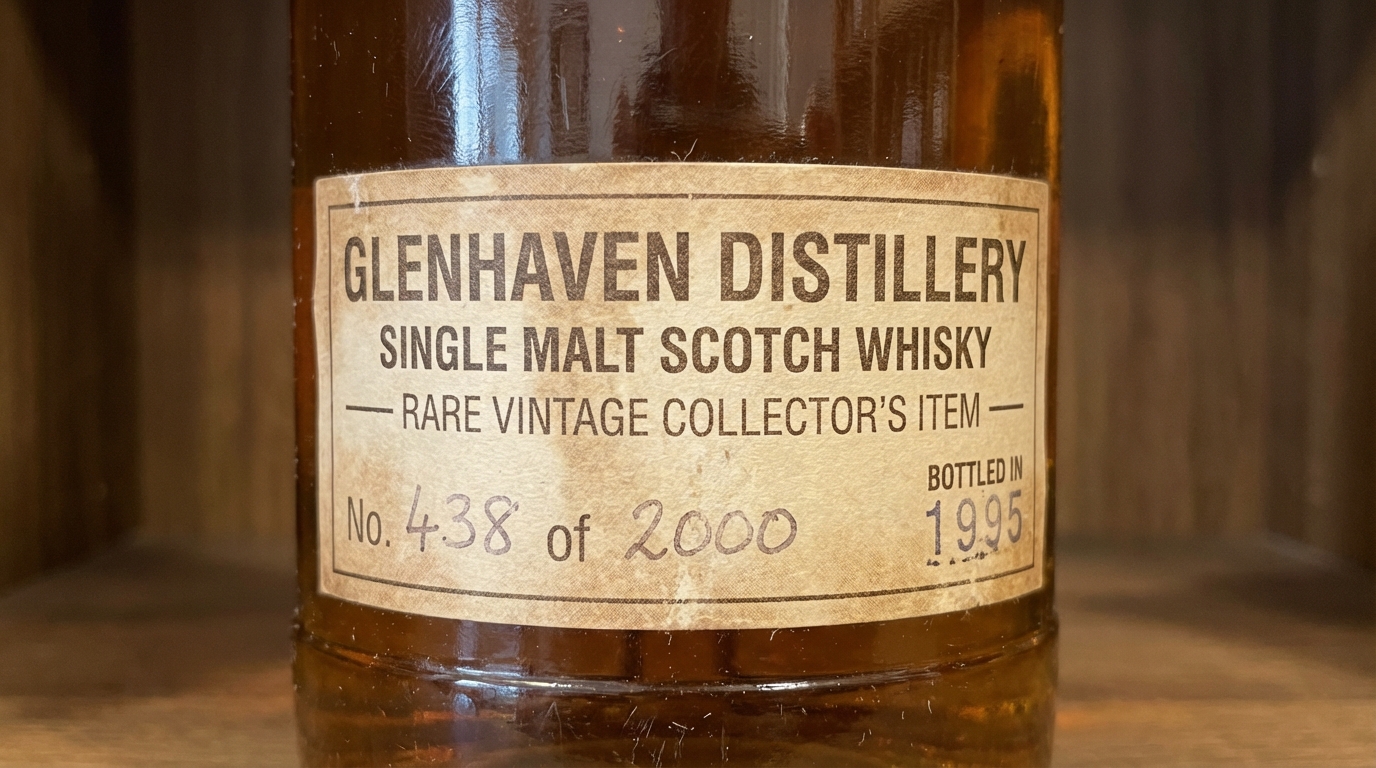
Their appeal is not interchangeable, and understanding what distinguishes each one changes how you approach the market.
The Macallan is the name most casual observers associate with rare Scotch, and for good reason. Pre-1980 Macallan was matured almost exclusively in first-fill Oloroso sherry casks from Jerez, producing a dark, densely fruited spirit that became the template against which all sherry-matured Scotch is measured.
The auction record for Macallan speaks for itself: a single bottle of the 1926 expression — 60 years old, distilled in 1926 and bottled in 1986 — sold at Sotheby’s in November 2023 for £2.1 million, establishing it as the most expensive bottle of whisky ever sold at auction. While most collectors will not operate at that level, pre-1980 Macallan 18-year-olds and 25-year-olds regularly trade in the four-to-five-figure range at auction.
What changed: following Highland Distillers’ acquisition in 1996 and Edrington’s takeover in 1999, Macallan progressively shifted toward a broader wood policy. The 2004 introduction of the Fine Oak range, which blended bourbon-cask and sherry-cask matured spirit, was symptomatic of a wider evolution. Pre-millennium Macallan is the last unambiguous expression of the all-sherry-cask tradition.
Port Ellen distillery on Islay operated from 1825 until its closure in 1983. When DCL mothballed it during the industry contraction, the stills were dismantled and the remaining stocks became finite. Diageo has since released a series of annual Special Releases from old Port Ellen casks — heavily allocated, limited to a few thousand bottles per year, and priced accordingly.
Port Ellen’s flavour profile is highly distinctive: maritime, medicinal, smoky in a coastal rather than agricultural way, with a waxiness and complexity that reflects both Islay terroir and 1970s production style. The most prized expressions are from distillation years 1975–1982, aged 20–35 years.
A 1979 Port Ellen single cask sold at Sotheby’s in 2022 for £875,000. Diageo’s Annual Releases regularly clear £2,000–£5,000+ per bottle at secondary market. Even the more accessible Special Releases from the late 1990s and early 2000s have appreciated significantly.
Port Ellen’s distillery reopened in March 2024, following a £185 million investment by Diageo, but the new spirit will not be mature for years. The original pre-1983 stock is entirely separate and will never be replenished.
Where Port Ellen is the Islay benchmark, Brora is the Highland equivalent — a distillery producing whisky that was almost accidental in its greatness. Originally named Clynelish, the distillery was founded in 1819. When a new Clynelish facility opened next door in 1967, the original building was renamed Brora and continued operating until 1983.
Between 1969 and 1973, Brora produced heavily peated whisky — reportedly to supplement Caol Ila supply during a period of blending demand. This four-year window of heavy peat production has become legendary. The resulting whisky, now aged 40–50 years and appearing in highly allocated releases, is among the most sought-after in the world.
The 1972 Brora 40-year-old, released in 2014, was at the time the most expensive single malt ever released by Diageo, with a retail price of £7,000. The distillery reopened in 2021 using the original refurbished pot stills, but the 1969–1983 era stock is irreplaceable.
Rosebank was established in Falkirk in 1840 and earned a reputation as the “King of the Lowlands” through its distinctive triple-distilled style. Where most Scotch is distilled twice, Rosebank passed its spirit through the copper three times, producing a lighter, more delicate whisky with extraordinary refinement. The whisky writer Michael Jackson called it “the finest example of a Lowland malt.”
The distillery was mothballed in 1993 — not due to poor quality but due to the cost of environmental upgrades required to meet European effluent standards. Pre-1993 Rosebank is the category’s standard for Lowland elegance, and its absence from production for three decades has made pre-closure bottles increasingly scarce.
Now: Rosebank has reopened under Ian Macleod Distillers, but again — the original stocks and the original liquid are a separate entity from the modern revival.
Springbank is the only Scottish distillery to perform every step of production on-site: malting the barley on traditional stone floors, distilling, maturing, and bottling all within Campbeltown. It never abandoned floor maltings. It never switched to steam-only heating. It never adopted chill-filtration or caramel colouring as default practices.
This makes pre-millennium Springbank something unusual: a collector’s item from a distillery that is, in many respects, still operating as it did in 1970. Pre-millennium bottles are sought less for lost production methods (which Springbank largely retained) and more for the specific expressions, the bottling houses, and the extraordinary aged inventory from a period when Campbeltown had almost been written off as a whisky region.
Licensed since 1828, Springbank is one of the last survivors of what was once a 30-distillery town. Pre-millennium bottles — particularly the 1960s and 1970s vintages from independent bottlers — are among the finest examples of the old Campbeltown style: full-bodied, complex, slightly briny, and deeply satisfying.
A genuine pre-millennium bottle carries physical evidence of its era — and knowing what to look for is the first line of defence against the counterfeit market.
Authentication is not foolproof without laboratory analysis, but a thorough visual examination will catch the vast majority of fakes circulating at auction and in private sales. Here is what to examine.
Bottles sold in the UK market before 1993 required a paper duty stamp (officially a “Customs & Excise label”) applied across the capsule or under the foil, indicating that excise duty had been paid. These stamps went through several design changes across the twentieth century.
The basic rule: if a bottle claims to be pre-1993 and bears a UK duty stamp, that stamp’s design should be consistent with the relevant period. If no duty stamp is present on a bottle that was purportedly sold in the UK market before 1993, that absence requires explanation.
Duty stamps were abolished for spirits in 1992. Bottles bottled after that date, or destined for export markets, may not carry them — which is why their absence alone is not proof of inauthenticity, but their presence, correctly formatted for the era, adds significant authenticity support.
Label printing technology, design conventions, and the graphic style of whisky labels changed significantly across the twentieth century. Pre-millennium labels were typically letterpress or lithographic printed on heavier stock. They show specific fonts, border styles, and distillery graphic languages that can be cross-referenced against period documentation.
Key checks: the typeface should be consistent with period production. The paper should show appropriate ageing (yellowing, slight foxing on old examples) without artificial simulation. Ink should be stable and not show signs of reprinting over an original.
For well-documented expressions — Macallan 18, Brora Annual Releases, Port Ellen Special Releases — reference images exist in collector databases. Gordon & MacPhail, Signatory, and other independent bottlers have kept detailed records that can be cross-checked.
Lead capsules were the standard for quality Scotch whisky bottles until the late 1980s and early 1990s, when health concerns led to a progressive shift toward aluminium foil and then plastic capsules. A bottle claiming a 1970s bottling date should carry a lead capsule — heavier, with a distinct patina, and with a weight and feel distinguishable from aluminium.
Lead capsule condition matters: they should show consistent oxidation across the surface rather than isolated spots, which can suggest tampering. The capsule should seat firmly on the bottle neck without gaps.
Evaporation through the cork over decades — known as ullage — is a normal characteristic of old bottles. A genuine 40-year-old bottle typically shows some evaporation (the “angel’s share”), though the degree varies considerably by storage conditions. A very old bottle showing suspiciously high fill levels warrants examination; so does one with ullage dramatically greater than typical for the claimed age and conditions.
For official distillery bottlings and major independent bottler releases, batch numbers and distillery records can often be verified. Diageo’s Special Releases, Gordon & MacPhail’s records, and other documented series allow provenance to be traced. When purchasing significant bottles, requesting documentary provenance — purchase receipts, storage history, auction lot sheets — is standard practice in the serious collector market.
Pro Tip: For high-value purchases, consider engaging a specialist authentication service. Rare Whisky 101 and academic institutions including the University of Glasgow have developed spectroscopic analysis methods that can verify the age of the liquid in a sealed bottle without opening it.
The pre-millennium Scotch market has produced some of the most dramatic auction results in the history of any collectible category.
Whisky values can go down as well as up. Past auction results are not a guarantee of future performance.
The Macallan 1926 (60 Years Old) — one of only 40 bottles ever released — sold for £2.1 million at Sotheby’s in November 2023, setting the all-time record for a single bottle of whisky at auction. This was not an isolated result: in 2018, a different bottle of the same expression sold for £1.2 million. The trajectory over five years is illustrative of the category’s direction.
Port Ellen: annual Diageo Special Releases from the 1970s-vintage stock have appreciated steadily. The 20th Annual Release (a 40-year-old, distilled 1979) had a recommended retail price of £2,500 on release and cleared significantly above that on secondary markets.
Brora: the 2014 release of the 40-year-old 1972 Brora was priced at £7,000 at retail and is now a significant multiple of that in private sales.
Not all pre-millennium Scotch trades at stratospheric levels. The premiums cluster around specific attributes:
Distillation vintage is the primary driver. Expressions from the 1960s, 1970s, and early 1980s — the heart of the golden era — command significantly higher prices than 1990s distillations.
Provenance of the cask matters enormously. First-fill sherry butt expressions from Macallan, Glenfarclas, or Mortlach will command more than a refill bourbon hogshead of similar age. The cask type is usually evident from colour and flavour, but official documentation confirms it.
Independent bottler releases from respected houses — Gordon & MacPhail, Signatory, Cadenhead’s — carry their own premium for specific distillery vintages, particularly closed distilleries where independent bottlers were sometimes the only route to market.
Natural cask strength bottlings are favoured over reduced and chill-filtered expressions from the same era. They carry more of the original spirit character and are seen as more authentic representations.
Complete and original condition — original box, original tissue, full labels — adds meaningfully to value. A perfect pre-millennium bottle in its original presentation commands 20–40% more than the same bottle without packaging.
The secondary market for rare Scotch has grown considerably over the past decade. Platforms including Whisky Auctioneer, Scotch Whisky Auctions, Hart Brothers, and the major auction houses (Sotheby’s, Bonhams, Christie’s) have all increased their whisky operations.
According to the Knight Frank Luxury Investment Index, rare whisky has been among the top-performing alternative investment assets over the past decade, though performance has varied year to year and the market is not uniformly positive for all categories.
To see how individual bottles are tracking in today’s market, Rare Whisky 101 maintains auction data across major platforms.
For guidance on assessing what a specific bottle in your possession might be worth, see our guide to how much your whisky is worth and what makes a whisky bottle valuable.
The pre-millennium Scotch market has a counterfeiting problem that grows in direct proportion to auction values.
When a bottle of whisky is worth £2,000, the incentive to fake it is modest. When it is worth £200,000, the economics of sophisticated counterfeiting become compelling. The market is now dealing with increasingly sophisticated fakes, and collectors need to understand the landscape.
The most common form of counterfeiting involves refilling genuine old bottles. An authentic 1970s bottle, with its original label, capsule, and closure, is sourced at a lower price point — perhaps because the original contents have been consumed. The bottle is then refilled with younger whisky, recorked, and recapsulated.
A less sophisticated version involves fabricating period labels and applying them to old bottles whose original labels have been removed. Label printing technology has improved to the point where convincing reproductions can be produced without specialist equipment.
A 2017 study by researchers at the University of Glasgow, working with analytical chemistry, developed spectroscopic methods capable of detecting whiskies younger than claimed through analysis of the liquid’s chemical composition without opening the bottle. This research, subsequently applied commercially, confirmed that a significant percentage of bottles examined from the rare vintage market contained misrepresented spirit.
Macallan is the most counterfeited whisky in the world, largely because it is the most valuable. The combination of high brand recognition, extensive documentation of genuine examples, and extreme auction values makes it both the most targeted and — paradoxically — one of the better-documented expressions to authenticate if you have access to proper reference material.
Known fakes circulate primarily in Asian secondary markets, though examples have appeared in European auctions. Reputable auction houses employ authentication processes, but private sales remain the highest-risk environment.
The practical steps are straightforward, though not infallible:
Buy through reputable channels: established auction houses with authentication processes, specialist retailers with documented provenance policies, or direct from verified private collectors with full purchase history.
Request provenance documentation. A genuine old bottle held in private storage for decades should have some form of purchase or storage trail. A bottle appearing from nowhere with no documentation warrants scrutiny.
Know the telltale signs: capsule weight and oxidation, label paper quality, fill level consistency with claimed age, duty stamp format for UK-market pre-1992 bottles.
For significant purchases above £5,000, professional authentication is worth the cost. The University of Glasgow spectroscopic analysis method has been commercialised and is available through specialist authentication services.
Never buy on price alone. If a 1969 Brora is available at significantly below its established market rate, that price differential deserves a structural explanation — not excitement.
In the context of Scotch whisky collecting, pre-millennium refers to whisky that was either distilled or bottled before the year 2000. Distillation vintage is the primary reference point because it determines which production methods shaped the liquid. A whisky distilled in 1978 and bottled in 2004 is still considered a pre-millennium expression by most collectors.
The 1960s to mid-1980s represent a period when most Scottish distilleries were still operating with traditional methods: floor maltings, direct-fired stills, genuine sherry-seasoned casks from Jerez, extended warehousing, and no chill-filtration or artificial colouring as defaults. Industry consolidation and commercialisation in the 1980s changed most of these practices. The liquid produced before those changes cannot be reproduced.
Port Ellen (closed 1983), Brora (closed 1983), and Rosebank (closed 1993) are the three most significant. Convalmore, St Magdalene, Banff, and Caperdonich are also prized. Each distillery had a distinctive flavour profile shaped by its specific geography, equipment, and production approach — and none of that can be recreated, even with the physical plant rebuilt.
Sherry seasoning refers to casks purpose-built in Jerez, Spain, that have been used to mature genuine sherry wine before being shipped to Scotland for whisky maturation. These differ from modern “sherry finish” casks, which are typically ex-bourbon barrels given a brief period in sherry wood. Properly seasoned sherry butts impart a depth and structural richness — dark fruit, chocolate, tobacco, old leather — that a short sherry finish cannot replicate.
The key authentication markers are: UK duty stamps (required on UK-market bottles pre-1992, abolished in 1993); period-appropriate label typography and paper; lead capsule (standard through the late 1980s, heavier and differently textured than modern aluminium); fill level consistent with the claimed age and storage history; and documentary provenance from the point of original purchase. For high-value purchases, professional spectroscopic analysis is available. Always verify provenance before any significant purchase.
A bottle of Macallan 1926 (60 Years Old) — one of only 40 known bottles — sold at Sotheby’s in November 2023 for £2.1 million, the highest price ever achieved for a single bottle of whisky at public auction. A 1979 Port Ellen single cask sold for £875,000 at Sotheby’s in 2022, the highest price achieved for a non-Macallan single malt at that point.
The long-term auction data suggests that rare pre-millennium Scotch has performed well as a collectible asset over the past decade. However, whisky values can go down as well as up. Past auction results are not a guarantee of future performance. The market is not uniformly positive across all categories — some expressions have appreciated dramatically while others have stagnated. Collecting with purchase enjoyment as the baseline is a sounder approach than pure speculation. Always verify current market rates before buying or selling.
An official bottling comes directly from the distillery or its owner under the distillery’s own label. An independent bottling comes from a specialist bottler — such as Gordon & MacPhail, Signatory Vintage, Cadenhead’s, or Douglas Laing — who purchased casks from the distillery and bottled them independently, often at natural cask strength without chill-filtration. Independent bottlings of closed distilleries are now among the most sought-after pre-millennium expressions.
The most reliable entry points are reputable auction platforms (Whisky Auctioneer, Scotch Whisky Auctions), specialist retailers with documented provenance, and established private sales through collector communities. Start with well-documented expressions from living distilleries before moving into the closed-distillery market, where authentication complexity and price points are higher. Read auction records, learn the specific expressions you are targeting, and be patient.
Springbank is distinctive because it retained traditional methods — floor maltings, on-site bottling, no chill-filtration — through the period when other distilleries modernised. Pre-millennium Springbank in excellent condition should show a medium amber colour (it is never caramel-adjusted), high ABV for cask strength expressions, and the characteristic Campbeltown profile: full-bodied, slightly brinish, with dried fruit and light smoke. Look for original Springbank bottlings and independent releases from Cadenhead’s (who maintained a close relationship with the distillery) as anchor expressions.
They are made to be drunk. The most significant expressions — the record-setting Macallan, the rarest Port Ellen annual releases — will be opened rarely if at all, but a well-preserved 1980s single malt from a good independent bottling is very much a drinking whisky. Many collectors approach pre-millennium Scotch with a “buy two” philosophy: one to hold, one to open. There is no obligation to preserve every bottle; the liquid was made to be enjoyed.
Pre-millennium Scotch whisky is the category’s irreplaceable record — the last physical evidence of how Scotland made whisky before industrial efficiency changed the equation.
The distilleries are mostly gone or transformed. The floor maltings are largely decommissioned. The sherry cooperages of Jerez no longer supply Scotland at the same scale. The direct-fired stills have been replaced. The cask policies have changed. The industry that produced these bottles was operating in a different economic world with different materials, different priorities, and different pressures.
What remains is the liquid. And the liquid, in the best cases, is extraordinary.
If you are new to this category, start by reading our complete guide to vintage Scotch whisky and our focused guides on the best vintage whiskies of the 1970s and the best vintage whiskies of the 1980s. These will orient you within the broader market and help you identify the expressions most relevant to your interests.
If you are ready, See How the Glenbotal collection is sourced and what is currently available — bottles from private collectors across the UK and Europe, with provenance documentation, condition notes, and the kind of detail that serious collectors need before making a significant purchase.
The window on this category only closes in one direction. Every bottle opened, every collection dispersed, every year of additional ageing in storage — all of it reduces the supply. The question is not whether pre-millennium Scotch is worth collecting. The question is when you decide to start.
Explore the full collection at Glenbotal — rare whisky sourced from private collectors across the UK and Europe.