
Unlike most “vintage whisky” guides that list bottles you’ll never actually find, this article focuses on 1970s expressions that are genuinely still available — through specialist retailers, private collections, and independent bottlers with remaining stock.
The 1970s produced some of the most celebrated whisky ever distilled in Scotland — and for collectors who know where to look, a meaningful number of those bottles are still out there to be found. These are not theoretical acquisitions or auction pipe dreams. They are expressions that, right now, sit in the cellars of specialist retailers, private collections, and independent bottlers with stock they have held for decades. The window, however, is closing. Each year that passes, another cask is emptied, another collection dispersed, another bottle that will never be replenished. If you have been considering adding a genuine 1970s vintage Scotch to your collection — or simply want to know what is still genuinely findable — this guide is written for you.
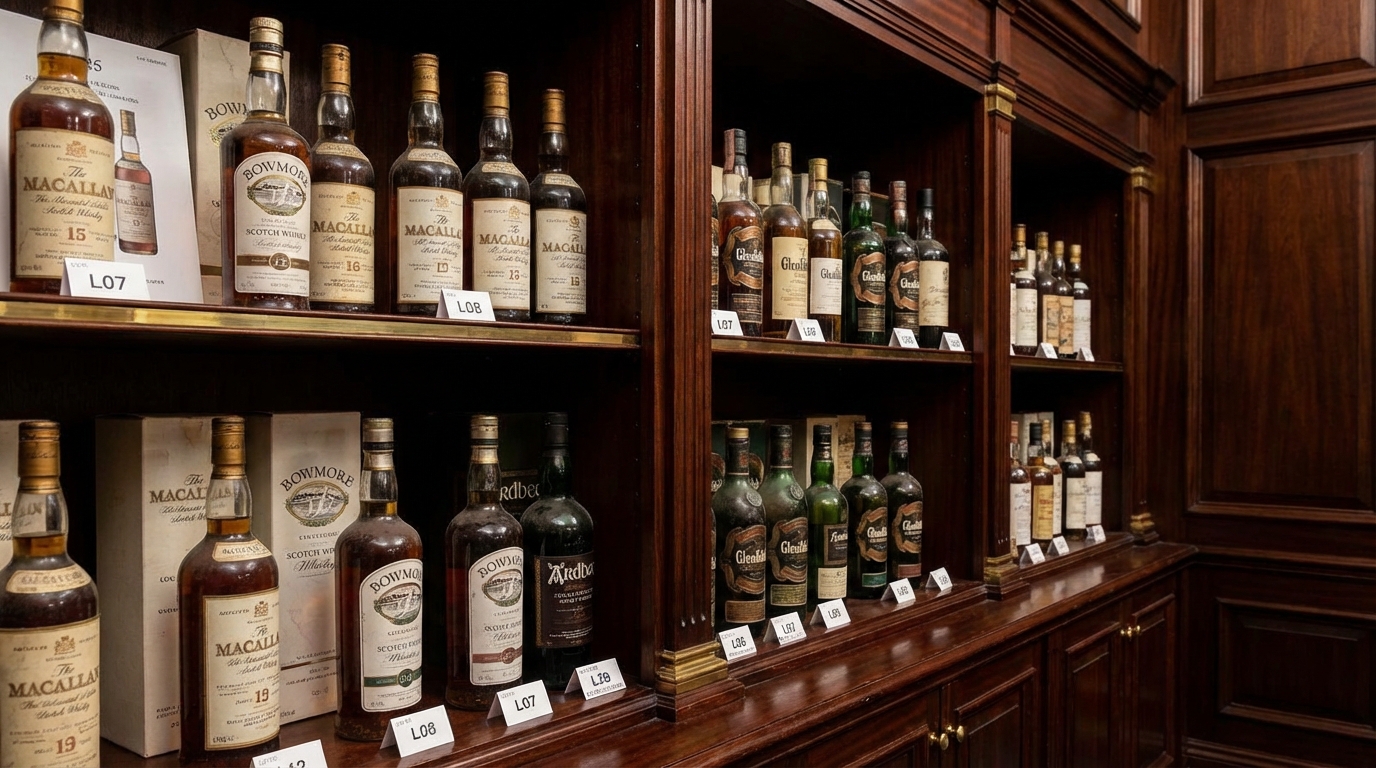
The 1970s occupy a particular place in the history of Scotch whisky that is difficult to overstate. Distilleries across Speyside, the Highlands, and Islay were operating at full capacity in the early part of the decade, producing whisky using methods — worm-tub condensers, direct-fired stills, floor maltings — that have since been phased out at many sites or dramatically scaled back. The spirit that came from those stills in 1971 or 1975 was shaped by physical infrastructure, water sources, and working practices that simply no longer exist in the same form. That is not sentimentality. It is materially reflected in the flavour profile of these whiskies, which collectors describe as heavier, oilier, and more complex than their modern equivalents — a direct consequence of how the spirit was made.
The industry-wide contraction of the early 1980s — sometimes called the “whisky loch” period, when chronic overproduction led to mass closures — created a permanent scarcity in 1970s stock. Distilleries including Rosebank, Brora, Port Ellen, and Littlemill were mothballed or demolished before their 1970s distillate ever fully reached the collector market at scale. What remained in cask when those sites closed either passed to new owners or was released in limited quantities by independent bottlers over the following decades. Much of that stock is now gone. What persists is, by definition, rare — and its rarity will only deepen.
Data from specialist whisky auction houses consistently shows that bottles distilled in the 1970s have outperformed those from later decades in secondary market appreciation over the past fifteen years. Expressions from closed distilleries like Brora and Port Ellen have seen hammer prices rise into five and six figures. Even less celebrated 1970s expressions — Speyside single malts from independent bottlers, for example — have moved well ahead of inflation. For collectors who understand the market, this is not a speculative punt. It is a reflection of genuine scarcity meeting genuine demand.
Despite all of the above, there is still stock to be found. Specialist retailers with deep sourcing networks — including those who work directly with private collectors across the UK and Europe — continue to surface bottles that were bought decades ago and held privately. For a collector acting now, in 2026, a genuine 1970s vintage expression remains an attainable acquisition. In five years, the same cannot be confidently said. For context on how the broader vintage whisky market works, our complete guide to vintage Scotch whisky is a useful starting point.
To appear in this guide, a bottle or expression had to meet four criteria.
Active availability. The expression had to be findable through specialist channels right now — not theoretically possible to acquire, but genuinely in stock somewhere that a motivated buyer could access. This ruled out many otherwise exceptional bottles that have simply ceased to circulate.
Verified 1970s provenance. Vintage year or cask distillation date had to be documented, either through official distillery records, independent bottler certificates, or established auction house records. Undocumented claims were excluded.
Collector-grade quality. Each bottle in this list is recognised within the collector community as a worthwhile expression — not just old for the sake of being old, but genuinely distinguished by flavour profile, distillery reputation, or historical significance.
Representative price range. We have included expressions across a meaningful price band — from accessible entry points around £200 to serious investment-grade bottles above £1,000 — so that collectors at different stages of their journey can find something relevant.
| Expression | Distillery Region | Bottler Type | Approx. Price Range | Best For |
|---|---|---|---|---|
| Glenfarclas Family Casks 1970s | Speyside | Official | £800–£3,000+ | Serious collector |
| Gordon & MacPhail Connoisseurs Choice 1970s | Speyside / Highlands | Independent | £300–£1,200 | Informed enthusiast |
| Cadenhead’s 1970s Bottlings | Various | Independent | £250–£900 | IB depth & provenance |
| The Glenlivet Cellar Collection 1970s | Speyside | Official | £500–£1,500 | Official release collector |
| Longmorn 1970s G&M | Speyside | Independent | £200–£600 | Speyside value |
| Mortlach 1970s | Speyside | Independent | £350–£1,000 | Hidden-gem hunter |
| Tomintoul 1970s | Speyside | Independent | £180–£500 | Entry-point vintage |
| Blair Athol 1970s | Highland | Independent | £300–£800 | Highland rarity seeker |
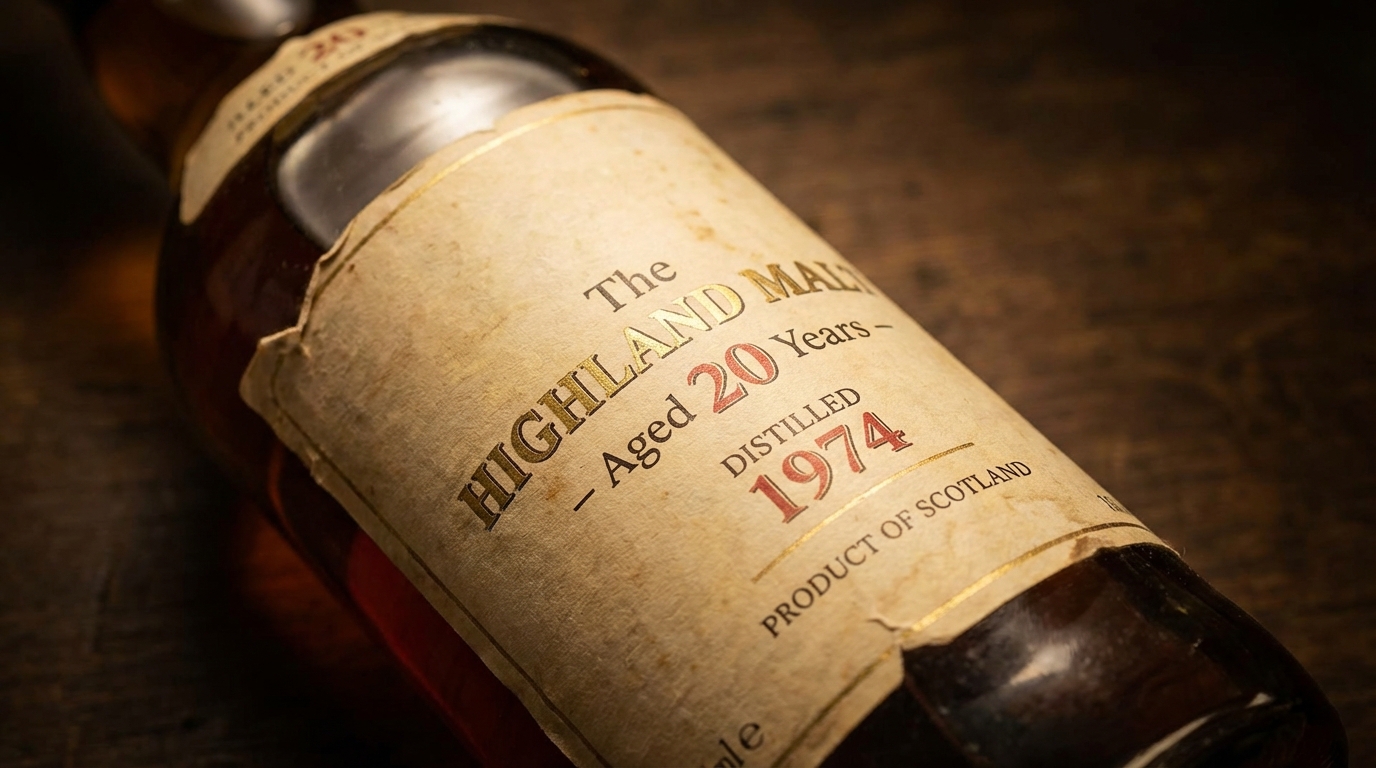
The Glenfarclas Family Casks series is the most consistently available source of genuine 1970s vintage single malt from a fully operational distillery — and it represents one of the finest arguments for why family ownership in Scotch whisky matters.
The Grant family has owned Glenfarclas since 1865 and has never sold the distillery. That continuity meant that when the whisky loch hit and other proprietors were offloading casks at whatever the market would bear, Glenfarclas simply waited. The result is a series of single-cask releases — Family Casks — that draw on stock from 1954 onwards, including a substantial number of 1970s vintages bottled at cask strength and presented in signed, numbered bottles.
What makes these bottles stand out:
What to bear in mind:
Price range: £800–£3,000+ depending on vintage year and cask type
Best for: Collectors who want a documented, single-family distillery with full provenance and a bottle that can only appreciate as stock runs out
Not ideal if: You are looking for an accessible entry price into 1970s vintage — the Family Casks reward serious investment
For a full deep-dive on the Glenfarclas Family Casks series, see our dedicated guide: Glenfarclas Family Casks: 43 Years of Single Cask Collecting.
Gordon & MacPhail is the institution that has done more to preserve 1970s vintage Scotch than any other single organisation — and their Connoisseurs Choice range remains one of the most reliable ways to encounter that decade’s spirit.
Founded in 1895 and based in Elgin, at the heart of Speyside, Gordon & MacPhail have spent over a century filling casks directly at distilleries and ageing them in their own warehouses. In the 1970s, they were filling casks at dozens of distilleries — including many that would later close. Those casks have been released gradually over the decades, and while a great deal of the original stock has now been bottled, the Connoisseurs Choice range continues to surface 1970s expressions from distilleries including Linkwood, Glenrothes, Caol Ila, Mortlach, and others.
What makes these bottles stand out:
What to bear in mind:
Price range: £300–£1,200 for most expressions; closed-distillery releases command significantly more
Best for: Enthusiasts who want documented independent bottler provenance and access to a broad range of 1970s distillery styles
Not ideal if: You are specifically seeking a closed-distillery release at a modest price — those are now, in most cases, beyond the accessible range
William Cadenhead & Co, founded in Aberdeen in 1842, is Scotland’s oldest independent bottler — and their 1970s releases carry an authenticity of provenance that is difficult to match.
Where Gordon & MacPhail built their reputation on long maturation in their own warehouses, Cadenhead’s approach has always been defined by a strict policy of no colouring and no chill-filtration. Their 1970s bottlings — presented as they are, at cask strength or natural dilution — offer some of the most unmediated expressions of what that decade’s distillate actually tastes like. A Cadenhead’s Springbank 1970s or a Glen Grant from the same era is not a commercially smoothed product. It is the spirit as close to its original form as fifty-odd years in oak will allow.
What makes these bottles stand out:
What to bear in mind:
Price range: £250–£900 for most expressions; original-presentation antique bottlings command significantly more
Best for: Collectors who prioritise the independent bottler tradition and want the most transparent expression of the distillate possible
Not ideal if: You are seeking a polished, presentation-ready gifting bottle — Cadenhead’s positioning is resolutely for the enthusiast
The Glenlivet Cellar Collection represents one of the most significant official distillery vintage programmes in Scotch whisky — and its 1970s releases offer a direct line from one of Speyside’s most historic sites to the collector of today.
The Glenlivet, licensed in 1824 and the first legally licensed distillery in the Scottish Highlands, has periodically released vintage expressions from its own cask archive through the Cellar Collection series. Bottlings from the 1970s — including expressions distilled in 1970, 1973, and 1976 that have appeared over the years — represent official distillery provenance at its most unimpeachable. These are not independent bottler releases from purchased casks; they are the distillery’s own stock, released under the distillery’s own authority.
What makes these bottles stand out:
What to bear in mind:
Price range: £500–£1,500 depending on vintage year and condition
Best for: Collectors who want official distillery provenance and a bottle that is immediately recognisable to a broad audience
Not ideal if: You are prioritising value per pound of quality — independent bottler expressions from the same era often deliver comparable quality at a lower price
Longmorn is one of Speyside’s most consistently admired distilleries among serious collectors — and yet it remains significantly less expensive than its more famous neighbours, making 1970s Gordon & MacPhail releases one of the most compelling value propositions in vintage Scotch.
Operating since 1894 in the heart of Speyside, Longmorn has never had the marketing budget or global profile of Glenfiddich or The Macallan. What it has had is a reputation among blenders and independent bottlers as one of the region’s finest raw materials — complex, honeyed, with a waxy, orchard-fruit character that ages exceptionally well. Gordon & MacPhail have bottled Longmorn from the 1970s on multiple occasions, and these releases consistently attract strong scores from serious tasting panels while remaining accessible in relative terms.
What makes these bottles stand out:
What to bear in mind:
Price range: £200–£600 for most expressions
Best for: Collectors who prioritise quality and value, and are prepared to back a distillery on merit rather than name recognition
Not ideal if: You are buying principally for investment resale, where better-known distilleries offer stronger secondary market support
Mortlach is the most important distillery that most whisky drinkers have never heard of — and its 1970s expressions, available through independent bottlers, represent some of the most distinctive and complex Scotch from the entire decade.
Situated in Dufftown, the self-proclaimed whisky capital of Scotland, Mortlach has operated since 1823 and holds a unique production character derived from its unusual partial triple-distillation process — a method so idiosyncratic that it has never been successfully replicated at any other site. The “Mortlach Meatiness” — a savoury, umami-rich, powerfully structured spirit character — is unlike anything else in Speyside. Aged for forty-plus years in quality sherry or refill casks, as the independent bottler releases from the 1970s typically represent, this distillery character evolves into something extraordinary.
What makes these bottles stand out:
What to bear in mind:
Price range: £350–£1,000
Best for: The serious collector who wants the most singular, distinctive Speyside expression the 1970s can offer
Not ideal if: You prefer elegant, lighter Speyside styles — Mortlach’s power and weight is a very specific pleasure
If you want to experience what genuine 1970s vintage Scotch tastes like without committing to a four-figure purchase, Tomintoul is the distillery most likely to offer that access point at a relatively approachable price.
Founded in 1964 and one of the newer distilleries in the Livet valley, Tomintoul built its reputation on a gentle, light Speyside style — “the gentle dram” as it was known — that proved extremely popular with blenders throughout the 1970s. Independent bottler releases from this era, particularly from Gordon & MacPhail, appear with reasonable regularity and tend to be priced below the more celebrated Speyside names despite offering forty-plus years of genuine age. For a collector building their first 1970s vintage acquisition, or seeking to understand how the decade differs from modern expressions, Tomintoul provides an accessible and educational starting point.
What makes these bottles stand out:
What to bear in mind:
Price range: £180–£500
Best for: Collectors new to 1970s vintage whisky, or those building breadth across the decade without exhausting their acquisition budget on a single bottle
Not ideal if: You are buying to impress — Tomintoul’s name will not carry the room the way Glenfarclas or Glenlivet will
Blair Athol is a Perthshire distillery with a history stretching back to 1798 — and its independent bottler releases from the 1970s offer a glimpse into a Highland single malt style that has become increasingly rare as the distillery’s production has been almost entirely absorbed by Bell’s blended whisky.
Situated in Pitlochry, Blair Athol has operated under various owners but has been part of the Diageo portfolio since the Bell’s acquisition. The vast majority of its production has always gone into blended whisky, which means single malt bottlings — particularly vintage expressions from independent bottlers — are genuinely scarce. The 1970s releases that have emerged from Cadenhead’s and Gordon & MacPhail represent a style of Highland whisky that the modern consumer rarely encounters: robust, full-bodied, with characteristic Highland earthiness alongside ripe fruit and a warming, persistent finish.
What makes these bottles stand out:
What to bear in mind:
Price range: £300–£800
Best for: The collector who wants genuine Highland provenance from the 1970s and is prepared to seek out a less-celebrated name for superior value
Not ideal if: You require a distillery name with broad market recognition for secondary market resale purposes
The single most important factor in finding genuine 1970s vintage whisky is the sourcing network of the retailer you use.
A mainstream retailer — even a well-stocked one — will rarely carry more than a handful of expressions that qualify. The bottles that remain from the 1970s largely sit in private collections: cellars, bonded warehouses, and storage facilities belonging to collectors who bought wisely decades ago. When those collections come to market, they tend to surface through specialist retailers who have cultivated those relationships over years.
There are three primary channels through which 1970s vintage whisky reaches buyers today.
Specialist rare whisky retailers with active private collector networks are the most reliable source for bottles that are not appearing at public auction. These retailers know where the collections are, have the relationships to offer fair valuations, and can surface stock that never reaches the open market. Glenbotal operates precisely this model — sourcing from private collectors across the UK and Europe, with free valuations for collectors looking to sell, and a curated selection that reflects genuine sourcing expertise rather than simply buying from the same wholesale channels as everyone else.
Whisky auction houses — including Whisky Auctioneer, Scotch Whisky Auctions, and Lyon & Turnbull — hold regular sales that include 1970s vintage expressions. The advantage is transparency of pricing; the disadvantage is competition, which pushes hammer prices above what a direct specialist retailer transaction would cost, and the two-to-four-week auction cycle if you need something quickly.
Direct from independent bottlers — Gordon & MacPhail, Cadenhead’s, and others occasionally release 1970s stock directly through their own shops and online channels. These are typically announced in advance and sell quickly. Building a relationship with these bottlers directly, or following specialist whisky news services, is the most reliable way to be first in the queue.
For guidance on assessing what a bottle in your collection might be worth before you buy or sell, our whisky valuation guide covers the key factors that drive price.
The 1970s was the last full decade before the whisky loch closures reshaped the industry — making it the most historically significant era for collectors who care about production methods and distillery character.
Genuine availability still exists — but it requires a specialist retailer with real private collector sourcing, not a mainstream shop with a “vintage” filter on their website.
Independent bottlers are the primary gatekeepers — Gordon & MacPhail, Cadenhead’s, and the Glenfarclas Family Casks programme are the three most reliable routes to documented 1970s provenance.
Price appreciation has been material and is ongoing — collectors who acquired 1970s expressions five or ten years ago have seen strong gains; the same case applies to acquisitions made today relative to the next five to ten years.
The window is closing, not opening — every year that passes without action reduces the available stock. The collector who acts in 2026 will have significantly more choice than the one who waits until 2030.
For a broader framework on building a collection that includes vintage expressions, our ultimate whisky collecting guide covers strategy, storage, and valuation in depth.
The best 1970s vintage whiskies still available to buy are not hypothetical acquisitions for a future generation of collectors. They exist right now, in specialist inventories and private collections across the UK and Europe, accessible to buyers who know where to look and have the right retailer on their side.
If you are a serious collector building a portfolio with long-term appreciation in mind, the Glenfarclas Family Casks or Gordon & MacPhail’s remaining 1970s expressions from closed distilleries represent the strongest combination of provenance, quality, and scarcity. If you are entering the 1970s vintage category for the first time — or want to understand the decade’s character before committing significant capital — Tomintoul and Longmorn offer genuine vintage Scotch at prices that remain, for now, approachable.
What these expressions share is an irreplaceability that no new release can match. The spirit in these bottles was distilled by people using equipment that no longer exists, in a Scotland that no longer exists, producing a whisky that will never be made again. That is what you are acquiring when you buy a genuine 1970s vintage.
Explore Glenbotal’s current selection of 1970s vintage and rare Scotch whisky at glenbotal.co.uk. With over six years sourcing from private collectors across the UK and Europe, thousands of bottles in stock, and free valuations for sellers, we are one of the most active specialist retailers in the UK for exactly these kinds of bottles. If you do not see what you are looking for listed, contact us directly — our private collector network often holds stock that has not yet reached the site.
See How We Source Rare Whisky | Get Started with a Free Valuation
Price ranges shown in this article are approximate and based on specialist retail and secondary market data as of early 2026. Prices change frequently — verify current rates with your chosen retailer before purchasing. This article is for informational purposes and does not constitute financial or investment advice. Results may vary.
The 1970s represent the last full decade in which Scotland’s major distilleries were operating at scale using pre-industrial production methods — including worm-tub condensers, direct-fired stills, and in many cases floor maltings — that produce a heavier, oilier spirit than modern column condensers allow. The industry contraction of the early 1980s, which closed dozens of distilleries, means that 1970s stock from those sites is finite and irreplaceable. The combination of production method, distillery character, and genuine scarcity makes this decade uniquely compelling for collectors.
Prices vary significantly depending on the distillery, the bottler, the vintage year, and the cask type. Entry-level 1970s expressions from independent bottlers covering less-celebrated distilleries can be found from around £180–£300. Mid-range expressions from quality distilleries with good provenance typically range from £400–£900. Serious collector pieces — Glenfarclas Family Casks, Gordon & MacPhail closed-distillery releases, or cask-strength expressions from Brora or Port Ellen — can reach £1,500 to £5,000 or more. Auction results for the most celebrated 1970s expressions have occasionally exceeded five figures.
The most consistently celebrated 1970s distilleries among collectors include Glenfarclas (for ongoing Family Casks availability), Gordon & MacPhail’s Linkwood and Longmorn releases, Mortlach for heavyweight Speyside character, and — at the premium end — the closed distilleries: Brora (Highland), Port Ellen (Islay), and Rosebank (Lowlands). For collectors interested in comparing decades, our guide to the best vintage whiskies from the 1980s provides a useful companion reference.
Yes — but availability requires specialist sourcing rather than a visit to a mainstream retailer. Bottles from the 1970s continue to emerge from private collections as long-term holders decide to sell, and specialist retailers with active private collector networks surface this stock regularly. The key is working with a retailer who has genuine sourcing relationships, rather than assuming the secondary market is exhausted. That said, availability is depleting year by year, and the range of expressions accessible at any given moment is narrower today than it was five years ago.
Authenticating a 1970s bottle involves several layers of verification. The label design, bottle shape, and closure type should be consistent with documented production from that era — Gordon & MacPhail, Cadenhead’s, and the major distilleries all have well-documented label chronologies. The fill level and ullage should be appropriate for the stated age. For independent bottler releases, the bottler’s own records (where accessible) provide the primary chain of custody. Reputable specialist retailers will only stock bottles with verifiable provenance; when in doubt, a free valuation service — such as the one Glenbotal offers — can confirm authenticity before a purchase decision is made.
For quality per pound, Longmorn 1970s releases from Gordon & MacPhail consistently represent strong value — the distillery’s quality is recognised by blenders and serious collectors, but the lack of consumer brand profile keeps prices below comparable Speyside expressions. Tomintoul 1970s expressions offer an even lower entry price for genuine vintage provenance. Both are worth seeking out before rising collector interest narrows the gap with more famous names.
Official distillery bottlings are released by the distillery itself from its own cask archive, with full distillery authority and documentation. Independent bottler releases — from companies like Gordon & MacPhail, Cadenhead’s, Signatory, and others — are from casks purchased directly from the distillery (often in the 1970s themselves) and matured in the independent bottler’s own warehouses before release. Both are entirely legitimate and well-respected. The key difference is house style: Gordon & MacPhail, for example, introduce a specific maturation character from their Elgin warehouses that experienced collectors recognise as a distinct dimension of quality. Neither is inherently superior — they are different expressions of the same base spirit.
Independent auction data consistently shows that whisky from the 1970s has significantly outperformed inflation over the past decade. Expressions from closed distilleries (Brora, Port Ellen, Rosebank) have seen price appreciation of several hundred percent in some cases since 2010. Broader 1970s independent bottler releases have appreciated more modestly — typically well ahead of inflation but without the dramatic spikes of the headline names. The overall trajectory reflects a simple market dynamic: demand from collectors globally is rising while supply is structurally fixed and declining. For detailed context on what drives whisky values, see our whisky valuation guide.
This is genuinely a personal question with no universally correct answer. From a purely financial standpoint, the trajectory of 1970s prices suggests that keeping well-provenanced bottles in good condition continues to reward patience. From a collector’s perspective, however, the purpose of whisky is ultimately to be experienced — and there is an argument that a bottle of fifty-year-old Scotch that has reached its peak expression deserves to be opened and appreciated rather than stored indefinitely. Many serious collectors resolve this by acquiring two bottles where possible: one to open and one to hold. If you have a single bottle and are uncertain, a free valuation from a specialist retailer is a useful first step before committing to either decision.
Specialist rare whisky retailers with active private collector sourcing are the strongest option for 1970s vintage stock — they have access to bottles that never reach the general market. Whisky auction houses offer transparency of pricing and broad selection during sale periods. Direct from independent bottlers (Gordon & MacPhail in Elgin, Cadenhead’s in Edinburgh) is reliable for new bottlings from remaining stock. For a retailer that combines private collector sourcing with a curated in-stock selection and free valuations, Glenbotal is one of the UK’s most active specialist channels for exactly this type of bottle — with six years in the market and a private collector network across the UK and Europe.
Explore the full collection at Glenbotal — rare whisky sourced from private collectors across the UK and Europe.