Glenmorangie has been refining cask finishing techniques for over three decades — longer than most distilleries have even acknowledged the practice exists.
This guide covers every significant rare and unusual cask finish edition Glenmorangie has produced — from the groundbreaking Private Edition series to the Barrel Select Releases that replaced it. If you collect unusual whisky, this is the distillery to know.
Whether you’re building a collection around discontinued expressions or deciding which current release deserves shelf space, this guide gives you the full picture: the casks, the flavours, the scarcity, and what serious collectors are paying attention to right now.
Glenmorangie didn’t invent cask finishing, but they turned it into a science.
In the early 1990s, when most Scotch distilleries were still content to fill ex-bourbon barrels and wait, Glenmorangie’s Dr Bill Lumsden — then a young wood scientist at the distillery — was conducting experiments that would reshape how the industry thought about maturation. His first port wood finish in 1994 was met with scepticism in some quarters and something approaching reverence in others. Within a decade, finishing had become one of whisky’s defining trends.
The label “House of Cask Finishing” is one Glenmorangie wears without apology. It reflects a genuine philosophy: that the oak a spirit rests in during its final phase of maturation is not an afterthought but a creative act. Lumsden, who became Head of Distilling and Whisky Creation before his retirement, described finishing as composing with flavour rather than simply managing it.
Not every spirit takes a second cask well. Glenmorangie benefits from two structural advantages.
First, the stills. At 8 metres tall, Glenmorangie’s copper pot stills are among the tallest in Scotland. Height equals reflux — heavier, oilier compounds fall back before they can carry over into the spirit. The result is a remarkably clean, light, and floral new make that functions almost like a blank canvas. It absorbs the character of whatever wood it rests in without fighting it.
Second, the distillery controls its own wood supply. Glenmorangie sources American white oak from a handful of specific forests in the Missouri Ozarks, having the staves air-dried for at least two years before coopering. These “designer casks” are tailored for the spirit from the outset, meaning the whisky entering a finish cask is already immaculately conditioned.
Dr Lumsden’s approach was shaped by formal academic training in biochemistry and fermentation science — not in distilling folklore. He approached cask selection empirically, tracking what specific previous contents did to the spirit at a molecular level.
His findings led him to conclusions that are now broadly accepted: that the residue clinging to a cask’s inner walls after its primary contents are emptied (called the “first fill effect”) is what drives most of the flavour transformation. A cask that held Calvados brandy carries over apple esters, terpenic compounds, and specific aldehydes. A Malaga wine cask contributes dried fruit phenols and a characteristic sweetness derived from Pedro Ximénez and Moscatel grapes.
The choice of finish cask isn’t decorative — it’s a precise flavour decision. And nobody at Glenmorangie makes that decision without understanding what it will do to the spirit at a chemical level.
Cask finishing is the practice of moving a matured whisky into a second, previously used cask for a further period — typically months to a few years — to add a layer of flavour.
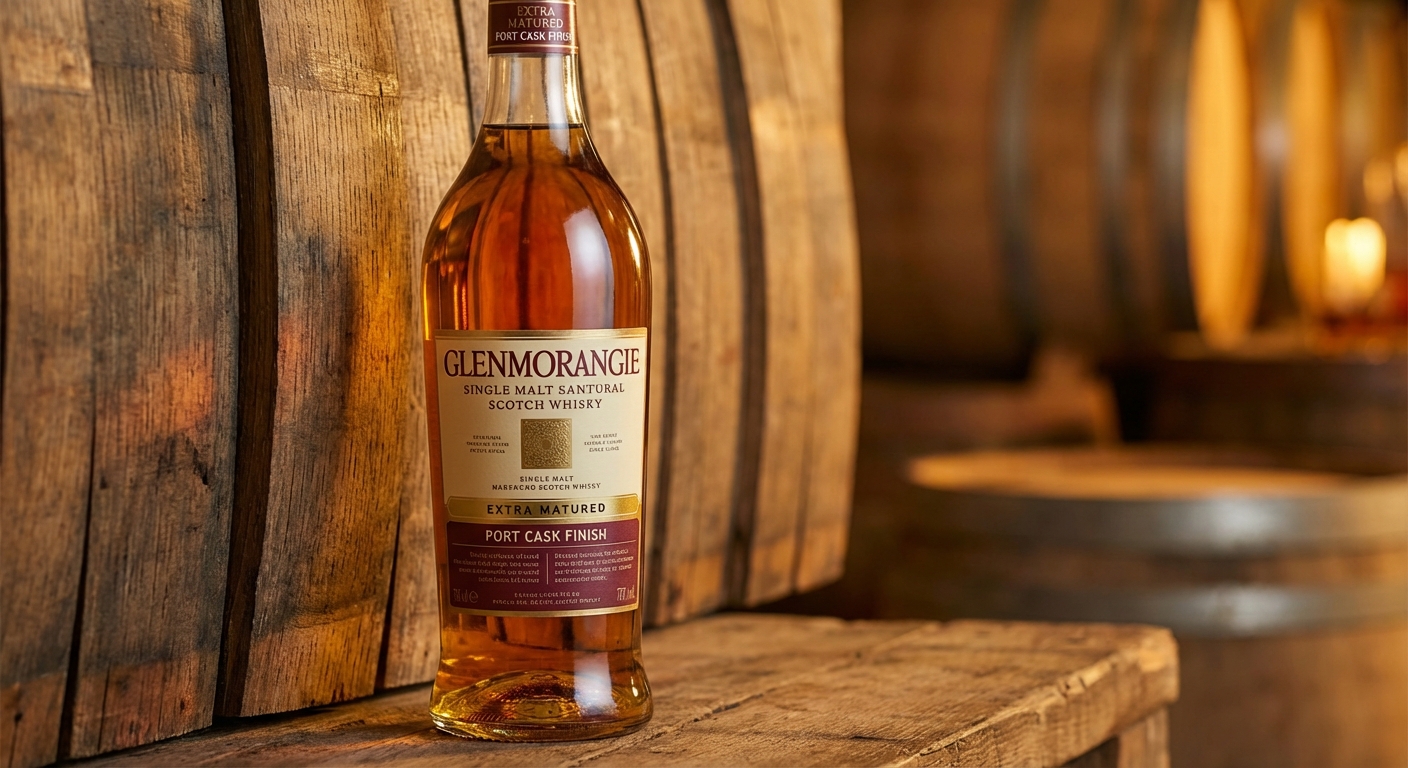
Think of primary maturation as the structural work: building the whisky’s body, integrating the new make character, drawing out vanilla and toffee from the oak. Finishing is the seasoning — applied with precision at the end to lift, transform, or intensify specific flavour notes.
The distinction matters because finishing does not fundamentally change what a whisky is. A 10-year Glenmorangie that spends its final 18 months in a Calvados cask does not become a Calvados-flavoured spirit. It becomes a richer, more complex version of itself, with the apple-orchard brightness of the Normandy brandy woven through its existing character.
Several variables determine how successful a finish becomes.
Cask quality. A first-fill finish cask — one used only once before for its original purpose — imparts more flavour than a rejuvenated or third-fill cask. Glenmorangie’s Barrel Select Releases are designed around sourcing genuinely quality first-fill finishing casks, often from prestigious producers in the relevant region.
Duration. Too short and the finish is a whisper. Too long and it overwhelms the base spirit entirely, which is rarely the goal. For most Glenmorangie expressions, finish periods run from around 18 months to just under three years.
Spirit weight. Glenmorangie’s lighter, high-reflux spirit picks up influence faster and more evenly than heavier distillates. A finish that might need three years to penetrate a Springbank or a Glenfarclas might achieve the same result at Glenmorangie in eighteen months.
These terms are sometimes used interchangeably but describe different things.
A finish is sequential: primary maturation in one cask, then a secondary period in another. A double maturation (as used for expressions like Lasanta and Quinta Ruban) typically involves a longer, more integrated second maturation where both casks might be used at different points — or the whisky spends a significant portion of its life in each. The Private Edition series and Barrel Select Releases are almost all finishes in the strict sense: long primary maturation in American oak, short transformative period in a specialist cask.
If you want to understand Glenmorangie’s rare finishes, start with the core range.
The standard finishing range — Lasanta (Oloroso sherry), Quinta Ruban (ruby port), and Nectar D’Or (Sauternes) — tells you how the distillery thinks about finishing. Each adds a distinct but recognisable overlay onto the same base spirit. Lasanta brings dried fruit and spice. Quinta Ruban brings dark chocolate and berry richness. Nectar D’Or brings honeyed, citrus-tinged sweetness. The rare editions work on the same principle but venture into less charted territory.
The Barrel Select Release series launched in 2020 as Glenmorangie’s dedicated platform for unusual finishing experiments — and its most directly collector-focused range.
Where the Private Edition series (covered in Chapter 4) ran to a fixed annual format, the Barrel Select Releases are more targeted: each bottling explores a single, unusual finish cask type in depth. The naming is straightforward, the ABV is consistently 46%, and the format is deliberately accessible — 70cl, not limited to a few thousand bottles globally.
That said, these are not widely stocked expressions. Retailers with access sell through quickly, and discontinued editions have already started appearing at secondary market premiums.
Here is the deal: this is the series to watch if you’re a serious Glenmorangie collector.
The first Barrel Select Release introduced collectors to one of whisky’s most unusual finish casks.
Malaga is a fortified wine from the province of Málaga in southern Spain, produced primarily from Pedro Ximénez and Moscatel grapes — the same varieties that appear in some of the world’s most celebrated dessert wines. The regulatory council for Málaga wine oversees two designations of origin, and the best expressions are aged using a solera-style system that concentrates their dried fruit and raisin character over years.
The Glenmorangie Malaga Cask Finish was bottled at 46% ABV. The finish introduces a distinctive layer of dark dried fruit — figs, dates, and Muscat raisins — over the distillery’s characteristic fresh citrus and vanilla base. The result is a whisky with an unusual sweet-and-savoury tension: the lightness of Glenmorangie’s Highland spirit meeting the concentrated richness of southern Spanish wine country.
This was discontinued after its initial release, making surviving bottles collector items. Secondary market values for discontinued limited Glenmorangie expressions can rise substantially within two to three years of discontinuation.
Note: Secondary market values for whisky are variable and results may vary. This is not financial advice. Always verify current pricing through recent auction results before purchasing for investment purposes.
The second Barrel Select Release reached for one of the most prestigious finish casks available: ex-Cognac barrels from the Grande Champagne region of France.
Cognac — produced from distilled white wine, predominantly Ugni Blanc grapes — is aged in Limousin or Tronçais oak, both of which are known for their tight grain and high tannin contribution. A first-fill Cognac cask therefore brings two distinct influences: the residual brandy character (elegant stone fruit, floral notes, subtle rancio) and the distinctive tannin profile of French forest oak.
The Glenmorangie Cognac Cask Finish, also bottled at 46% ABV, is notably different from the Malaga edition. Where the Malaga version leans sweeter and more opulent, the Cognac finish adds a drier, more structured complexity. Tasters frequently note orchard fruits, almond, white pepper, and a finish that extends considerably longer than the standard core range.
The combination of France’s most respected brandy region and the tallest stills in the Highlands is, on paper, an unusual pairing. In practice it works with an elegance that surprised even those who follow Glenmorangie closely.
Amontillado — the bridge between fino and oloroso sherry — brings a nutty, oxidative complexity that sits in a category entirely its own.
Amontillado sherry begins its life as fino, protected under a layer of flor (a film of yeast). When the flor dies or is killed off, the wine is fortified and begins an oxidative phase, developing a hazelnut, almond, and dried amber character that is distinct from both the yeasty freshness of fino and the dark fruit richness of oloroso.
The Glenmorangie Amontillado Cask Finish, released in 2023 at 46% ABV, is perhaps the most nuanced of the Barrel Select series. The nutty, oxidative quality of the cask adds a savoury depth to the distillery’s naturally sweet spirit — a pairing that rewards attention. Notes of roasted hazelnuts, orange peel, and dried apricot have been noted alongside Glenmorangie’s characteristic floral character.
Palo Cortado is the rarest classification in the sherry hierarchy — and it produces one of the most distinctive finishing casks available.
A true Palo Cortado is a sherry that began life as a fino, lost its flor like an amontillado, but then developed in the direction of oloroso — acquiring the richness and body of the latter while retaining the finesse of the former. Authentic Palo Cortado is rare; much of what is sold commercially is blended to approximate the style. Glenmorangie sourced finishing casks from producers working with the genuine classification.
The resulting whisky, also released in 2023 at 46% ABV, combines the structural complexity of the amontillado finish with a deeper, richer body. Dark dried fruit, walnut oil, and tobacco leaf notes appear alongside the lighter, floral core of the Glenmorangie spirit. This is a more demanding dram — one that benefits from time in the glass.
The 2024 Barrel Select Release ventures to Normandy, France, for a finish cask type with almost no precedent in Scotch whisky.
Calvados is an apple brandy produced in the Normandy region under strict AOC regulations). The finest examples — particularly from the Pays d’Auge sub-region, which requires double pot distillation — spend years in Limousin or Normandy oak casks, developing a complex character of cooked apple, dried apricot, vanilla, and a distinctive cidery terpene note.
The Glenmorangie Calvados Cask Finish, bottled at 46% ABV, is the most unusual entry in the Barrel Select series. The apple notes introduced by the Calvados cask are not aggressive — they are woven subtly through the whisky’s existing peachy, floral character. The result is an orchard-bright single malt: lifted, fragrant, and with a finish that carries green apple and blossom long after the glass is empty.
This is the current flagship of the Barrel Select series and available at £75 from the distillery directly. Given the pattern of the previous releases, collectors who want it would be well advised not to wait.
Pro Tip: Each Barrel Select Release appears to have a limited production run with no guarantee of continuation. The Malaga and Cognac editions are already discontinued. If the pattern holds, the Calvados finish will not be produced indefinitely.
Between 2009 and 2019, Glenmorangie released ten annual Private Editions — each a distinct experiment in cask, grain, or process.
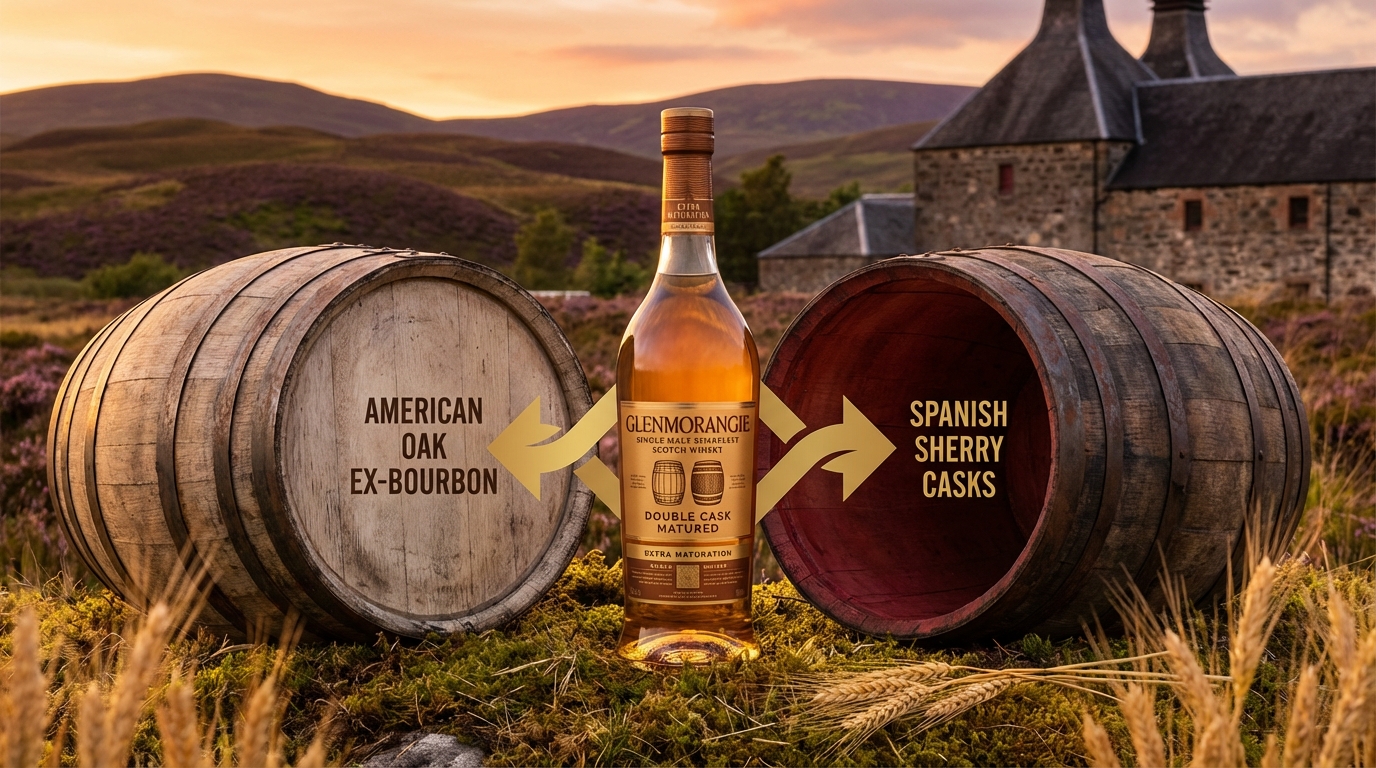
This series is now complete. All ten expressions are discontinued, and the entire run represents one of the most ambitious single-distillery experimental programmes in modern Scotch whisky history. Collectors who assembled the complete set during the release period are sitting on something genuinely rare. Individual bottles — particularly the earliest releases and the most unusual experiments — are now commanding meaningful secondary market premiums.
Here is a full guide to the series:
The first Private Edition, Sonnalta PX, was finished in Pedro Ximénez sherry casks. PX is the richest, darkest sherry available — a thick, syrupy dessert wine made from sun-dried grapes. The finish adds black raisin, dark chocolate, and fig notes to the classic Glenmorangie character. At 46% ABV, it was the statement of intent that proved the series had serious ambition.
Finealta was an experiment in Glenmorangie’s own history. The distillery uncovered an archive recipe for a lightly peated expression and applied it here, finishing in Oloroso sherry casks. The result — smoky, spiced, and richly sherried — is one of the most singular expressions in the entire run.
Artein introduced wine-region finishing to the Private Edition.
Super Tuscan wines — blends of Sangiovese with Cabernet Sauvignon or Merlot, outside the traditional DOC classifications — produce distinctive red wine casks. The finish adds red berry fruit, dried herbs, and a gentle tannic grip. Artein remains one of the most food-friendly expressions Glenmorangie has produced.
No finish cask here. Ealanta was matured entirely in first-fill virgin American white oak — a bold experiment that strips out all the mellowing effect of a previously used barrel. The result is an intensely sweet, almost Bourbon-adjacent whisky: rich vanilla, coconut oil, and tropical fruit. Ealanta won the Jim Murray’s Whisky Bible World Whisky of the Year award in 2014, which drove significant secondary market demand.
Two wine cask finishes in one bottle. Companta used a combination of Côtes du Rhône and Grand Cru Burgundy casks — both Pinot Noir-heavy appellations — to create a layered red fruit and spice character. It remains one of the more complex Private Editions.
Tùsail was a grain experiment rather than a cask one: the distillery revived its use of Maris Otter barley, an old heritage variety with a richer, nuttier flavour profile than modern high-yield barleys. Matured in American oak without a specialist finish, it demonstrated that Glenmorangie’s experimental range was genuinely interested in every variable — not just the wood.
Milsean (Scots Gaelic for “sweet things”) was finished in Portuguese red wine casks — specifically casks previously holding a red wine from the Douro Valley. The result is berry-rich, with dark cherry and jam notes balanced by the distillery’s characteristic fresh citrus.
Bacalta used sun-matured Malmsey Madeira casks — one of the most distinctive finish casks in the entire Private Edition run.
Malmsey Madeira, the sweetest of the four Madeira classifications, is aged in a unique way: the barrels are heated in estufagem chambers that accelerate oxidation and create a characteristic caramel, roasted nut, and coffee character. The resulting whisky has an unusual intensity — simultaneously sweet and oxidative — that stands apart from anything else in the series.
The first Private Edition to use rye casks, Spios was aged exclusively in ex-rye whiskey barrels — a first for Glenmorangie. American rye imparts spice, dried herb, and a distinctive pepper character that interacts with the distillery’s floral spirit in unexpected ways.
The final Private Edition was the most experimental. Allta used a wild yeast strain discovered growing on barley in the fields surrounding the Tain distillery — the first time Glenmorangie had used a wild strain rather than a cultivated one. The result was a distinctive, slightly spicy, more rustic spirit that hinted at what Scottish whisky might have tasted like in earlier centuries.
For more detail on the full Private Edition catalogue, see our dedicated guide: The Glenmorangie Private Edition Range: Every Release Reviewed.
Beyond the experimental series, Glenmorangie maintains a prestige range that represents the distillery’s most technically accomplished and collector-sought expressions.
The Signet is Glenmorangie’s most ambitious permanent expression. It blends whisky matured from a proportion of heavily roasted “chocolate malt” barley — more commonly associated with dark beer production than Scotch — with older single malt matured in a variety of cask types including small batch American oak.
The result is unlike anything else in the distillery’s range: espresso coffee, dark chocolate, Christmas cake, and warm spice, with the base distillery character still detectable underneath. The Signet has been in production since 2008 and has developed a devoted collector following. At around £120-130 in the current market, it remains one of the better-value prestige expressions from any major distillery.
The Grand Vintage range represents Glenmorangie’s vintage-dated expressions — bottles carrying a specific distillation year rather than a simple age statement. The Grand Vintage Malt 1990, bottled in 2019 as a 29-year-old, is the most celebrated example.
For collectors interested in vintage-dated Scotch, the Grand Vintage series sits alongside expressions from Glenfarclas Family Casks and Diageo’s Special Releases as one of the few ongoing programmes producing genuinely aged, single-vintage malt. Our guide to vintage Scotch whisky covers how to assess and compare these expressions.
The 18 Years Old — matured in American oak with approximately 30% finished in Oloroso sherry — serves as the flagship of the core range for serious collectors. At 43% ABV it is approachable, but at around £70 it represents excellent value for an 18-year expression from a distillery with this reputation.
The 25 Years Old, recently released as “The Altus,” represents the distillery’s top tier. Aged a quarter of a century in American oak with additional cask influence at the upper end of the range, this is a collector-grade bottling that will only become more sought-after as age-stated expressions at this level grow scarcer.
The “A Tale of” series — launched with A Tale of Cake in 2020 and including A Tale of Winter, A Tale of The Forest, and A Tale of Tokyo — sits between the core and experimental ranges. These are limited annual releases with unusual flavour stories, aimed at a slightly broader audience than the Barrel Select Releases.
A Tale of Tokyo (2023), finished in Mizunara and Oloroso casks, is the most collectible entry: Mizunara oak from Japan is notoriously difficult to work with (it is porous and prone to leaking) and imparts distinctive sandalwood and incense notes that appear in no other European whisky programme. It is the rare instance of Glenmorangie venturing outside its European wood sourcing network entirely.
The case for collecting Glenmorangie’s rare finishing editions rests on three factors: demonstrable quality, documented scarcity, and a collector community that already understands the value.
The entire Private Edition series (2009-2019) is discontinued. All ten releases have been out of production for at least six years. Of these, Ealanta (2012, World Whisky of the Year 2014), Bacalta (2017, Malmsey Madeira), and Allta (2019, wild yeast) consistently attract the strongest secondary market interest.
Among the Barrel Select Releases, the Malaga Finish (2020) and Cognac Finish (2021) are no longer in standard production. The Amontillado and Palo Cortado editions (2023) appear to have been transitional releases rather than permanent additions.
Secondary market premiums on discontinued limited editions typically emerge from three conditions: recognised quality at launch (critical scores, enthusiast attention), finite bottling quantities, and time elapsed since discontinuation.
Glenmorangie’s rare editions meet all three criteria for the better examples. The distillery has significant global recognition, its experimental releases are covered by specialist press and community enthusiasts, and the production runs are genuinely limited.
Our guide to what makes a whisky bottle valuable covers the mechanics in full. The short version: a whisky bottle that was £60 at launch and is now selling for £150-200 at auction has followed a pattern seen repeatedly with discontinued Glenmorangie expressions.
Disclaimer: Whisky values are not guaranteed and results may vary. This is not financial advice. Always verify current market prices independently before purchasing for investment purposes.
Now: which series should a collector prioritise?
Private Edition bottles are already history. You can only buy them on the secondary market, and prices reflect that. The series is coherent as a complete set, but assembling ten bottles — several of which are now trading well above original retail — requires significant investment.
The Barrel Select Releases offer a different proposition: you can still buy some of them at original retail. The Calvados Finish (2024) is currently available. The pattern of discontinuation in the series suggests that a disciplined collector who buys one or two bottles of each release at launch is better positioned than someone trying to catch up later.
For context on how distillery-specific collecting works as a strategy, our guide to distilleries worth collecting covers Glenmorangie alongside the other key names.
Glenmorangie is not the only distillery experimenting with unusual finishes, but it is the most systematic. The Diageo Distillers Edition series (covered here) applies finishing across multiple distilleries with impressive consistency. Bruichladdich’s experimental programme ventures further into unusual grains and terroir experiments. But no other Scottish distillery has devoted the same resources, track record, and institutional knowledge to finishing specifically.
The depth of the programme — from the science (Dr Lumsden’s biochemical approach) to the sourcing (direct relationships with Calvados producers, sherry bodegas, and Cognac négociants) — makes Glenmorangie’s rare editions the benchmark against which other finished whiskies are measured.
The biggest mistake collectors make is treating all Glenmorangie limited releases as interchangeable.
They are not. The Private Edition series and the Barrel Select Releases are distinct programmes with different availability, different collector profiles, and different secondary market dynamics.
Every collector who missed the Malaga Cask Finish at retail (£60-65 at launch) and then saw it trading above £100 on the secondary market knows this feeling. The pattern is consistent: Glenmorangie releases a Barrel Select edition, it receives positive press, it sells through at specialist retailers, it disappears from standard availability.
The Calvados Finish (2024) is currently available. If history is a guide, it will not be indefinitely. The collector who buys now at £75 is better positioned than the one who waits.
A Private Edition bottle in perfect condition — original box, no label damage, fill level at shoulder or above — is worth materially more than the same release stored poorly. This sounds obvious but is frequently ignored.
When sourcing older Private Edition bottles, ask about storage conditions. Bottles that have been exposed to direct light or significant temperature variation will have compromised contents, whatever the label says. Our guide on how to authenticate vintage whisky covers this in detail.
The 18 Years Old and the Signet are not “just” standard expressions. They are respected, consistent, and genuinely collectable benchmarks. Collectors who dismiss them in favour of chasing every new limited release often underestimate how well these expressions hold and appreciate over time.
A Signet purchased today at £125 is a different proposition to one purchased ten years from now, if the expression is ever reformulated, discontinued, or significantly price-adjusted.
Glenmorangie’s experimental releases prove that age alone does not determine quality.
Ealanta, the 2012 Private Edition, carried no age statement and used virgin American oak — not a prestigious old cask. It won World Whisky of the Year. Allta, the 2019 release, used wild yeast and standard casks. Both outscored expressions with much older age statements at launch.
If you’re assessing Glenmorangie finishes purely on age statement, you’re missing the point of the programme entirely.
If you have a bottle from the Private Edition series and are unsure of its current value or whether it is worth selling, professional valuation is available. Our free whisky valuation guide walks through the process of assessing what a bottle is currently worth on the secondary market.
The Barrel Select Release is Glenmorangie’s ongoing series of limited edition whiskies, each finished in an unusual or rare cask type. Launched in 2020 with the Malaga Cask Finish, the series has since included Cognac (2021), Amontillado (2023), Palo Cortado (2023), and Calvados (2024) finishes. All are bottled at 46% ABV in 70cl bottles.
The Private Edition series ran from 2009 to 2019, producing one annual experimental release per year — some cask finishes, some grain experiments, some process innovations. The Barrel Select Release series replaced it in 2020 with a tighter focus: each release explores a single unusual finishing cask. Both series are limited, but the Barrel Select Releases have generally been more widely available at launch.
The Malaga Cask Finish (2020) is no longer in standard production and is not available from the distillery directly. Remaining bottles appear on the secondary market through specialist retailers and auction platforms. Prices have risen above original retail.
Calvados is an apple brandy from Normandy, France. A first-fill Calvados cask retains residual apple esters, terpenic compounds, and the specific aldehydes associated with apple distillates. These compounds add an orchard-bright quality to the whisky — cooked apple, dried apricot, and a subtle blossom note — without overwhelming the base spirit’s character.
The label reflects Glenmorangie’s position as a pioneer and specialist in secondary maturation. The distillery’s cask finishing programme dates to the early 1990s, predating most industry interest in the practice. Dr Bill Lumsden’s scientific approach to cask selection and his direct sourcing of unusual finishing casks from European wine and spirits regions formalised the distillery’s reputation as the benchmark for this style.
Among discontinued Private Edition releases, Ealanta (2012) — which won Jim Murray’s World Whisky of the Year in 2014 — and Bacalta (2017), finished in Malmsey Madeira casks, consistently attract the strongest secondary market interest. Allta (2019), the final release in the series using wild yeast, is also highly sought by collectors completing the run. Values vary; always verify current pricing against recent auction results before making any purchase decision.
The Signet is one of the better-value prestige expressions from any major Scottish distillery. Its use of chocolate malt and complex cask maturation makes it genuinely unusual, and consistent quality has built a devoted collector following. At current retail prices it represents reasonable value relative to comparable prestige expressions.
Both are Spanish and both add dried fruit character, but they work differently. Oloroso sherry — made from Palomino grapes and aged oxidatively — brings dark fruit, walnut, and spice. Malaga wine, made primarily from Pedro Ximénez and Moscatel grapes, brings a sweeter, more raisin-rich and honeyed character with less of the tannic structure associated with Oloroso. The Malaga finish on Glenmorangie tends to be perceived as more opulent and confection-like.
Palo Cortado is one of the rarest sherry classifications — a wine that began as a fino but developed the body and richness of an oloroso. First-fill Palo Cortado casks contribute dark dried fruit, walnut oil, tobacco, and a structural complexity that sits between the nutty oxidative character of amontillado and the full richness of oloroso. The Glenmorangie Palo Cortado Cask Finish (2023) is considered among the more complex entries in the Barrel Select series.
For Private Edition and discontinued Barrel Select Release bottles, secondary market values are tracked through specialist whisky auction platforms. Our guide to assessing whisky value covers the main methods and platforms. For an informal estimate, cross-reference recent sold prices on at least two auction platforms rather than relying on a single listing.
The Barrel Select Releases are bottled at 46% ABV, which is above the threshold at which non-chill filtration is typically applied. At 46% and above, whisky retains natural esters and aromatic compounds that would otherwise be stripped by cold filtration — so the Barrel Select series benefits from this naturally. This is one of the reasons the finishes express so clearly in the glass.
Both are French spirit finishes, but the two styles are quite different. Cognac is a grape brandy — the cask brings orchard fruit, floral notes, and the distinctive rancio character of aged grape distillate, plus the tannin structure of Limousin oak. Calvados is an apple brandy — the cask brings orchard-fruit brightness, apple esters, and blossom notes with a fresher, less structured profile. Most tasters find the Cognac finish more complex and the Calvados finish more fragrant and lifted.
Glenmorangie’s rare cask finish editions represent the most systematically developed finishing programme in Scottish whisky.
Start with the Barrel Select Releases currently available — the Calvados Finish is the live opportunity. If you can source a Malaga or Cognac edition at reasonable secondary market prices, either would make a strong addition to a collection focused on unusual finishes. For Private Edition deep dives, Ealanta and Bacalta are the benchmark bottles to prioritise.
The distillery’s commitment to this programme shows no sign of waning. Each Barrel Select Release advances the conversation about what Scotch can absorb from the world’s great cask traditions. For collectors who find that conversation interesting, this is the distillery to follow closely.
See the Glenmorangie Collection at Glenbotal — and if you already have a bottle you’re considering selling, Get Started with a free valuation.
Explore the full collection at Glenbotal — rare whisky sourced from private collectors across the UK and Europe.