Cardhu is the distillery that built Johnnie Walker — yet it remains one of the most undervalued collector’s malts in all of Speyside.
If you know Speyside whisky, you know Cardhu deserves more attention than it gets. This guide covers every special and limited release the distillery has produced — the Diageo Special Releases editions, the NAS expressions, older vintage casks, and the independent bottlings that serious collectors quietly acquire while everyone else is watching Glenfarclas and Macallan. By the end, you’ll understand exactly why Cardhu’s most interesting bottles represent some of the strongest value in Speyside right now.
Most collectors overlook Cardhu. That is precisely why it matters.
Speyside has no shortage of celebrated distilleries. Macallan draws auction record-hunters. Glenfarclas attracts the patient traditionalists. Glenfiddich has the international name recognition. Into this crowded room walks Cardhu — quietly, without much fanfare — and sits down at the table with something genuinely compelling to offer.
Here’s the deal: Cardhu is the primary malt behind Johnnie Walker. Not a contributor. Not a blending component. The primary malt. For more than 130 years, Diageo’s flagship blend has relied on Cardhu’s characteristic light, fruity, mildly heathery Speyside profile as its backbone. That relationship tells you something fundamental about the distillery’s quality and consistency.
Yet when it comes to single malt status, Cardhu rarely features in the same conversations as its Speyside neighbours. Collectors who are drawn beyond the obvious names — who are looking at which distilleries are worth collecting before the market notices — increasingly find Cardhu on that list.
There is a measurable disconnect between Cardhu’s importance to Scotch whisky history and what its bottles currently command at auction or on the secondary market. A 1980s vintage Cardhu will consistently trade below comparable Speyside distilleries of the same era, even when the liquid quality stands up.
This gap is not because the whisky is inferior. It is because the story hasn’t been told loudly enough.
When stories catch up with substance — as they did with Daftmill, Springbank, and more recently Glenfarclas’s Family Casks — prices move. Collectors who enter early benefit most.
Being owned by Diageo means Cardhu receives exceptional cask management and consistent production standards. It also means the distillery benefits from Diageo’s annual Special Releases programme — one of the most watched limited-edition series in Scotch whisky. When Cardhu appears in that series, it reaches audiences who might never have considered the distillery for their collection.
Cardhu’s story is unlike any other in Scottish whisky — it begins not with a laird or a merchant, but with a farmer’s wife running a covert operation on Mannoch Hill.
In 1824, John Cumming obtained a legal licence to distil on his farm at Cardow, above the River Spey near Archiestown in Moray. But it was his wife, Helen Cumming, who built the operation into something real. She managed the day-to-day running of the farm distillery, sold whisky through the farmhouse window, and — in a detail that perfectly captures the era — kept a system of warning flags to alert neighbouring illicit distillers when excise officers were approaching.
When officers did come calling, Helen would reportedly throw flour over herself and claim to be in the middle of baking bread.
This is not merely colourful anecdote. Helen Cumming was, in practice, the person running a commercial whisky operation at a time when women had virtually no formal role in industry. She is recognised today as one of the first — and arguably the first — woman to run a licensed whisky distillery in Scotland. That history matters to modern collectors and enthusiasts who value provenance alongside liquid quality.
The distillery passed to Elizabeth Cumming — John and Helen’s daughter-in-law — and it was Elizabeth who transformed Cardhu’s scale and legacy. In 1885, she relocated the entire distillery to new land, tripling production capacity. In a detail that whisky historians love, she sold the old copper pot stills to William Grant, who used them to found Glenfiddich.
In 1893, Elizabeth Cumming sold the distillery to John Walker and Sons — the company that would become the world’s best-selling Scotch whisky brand. The Walker family retained the Cumming family in daily management for decades.
By 1925 the distillery had joined The Distillers Company, which became Guinness in 1986 and then Diageo through the 1997 merger with Grand Metropolitan.
No account of Cardhu is complete without the 2003 controversy. Diageo, responding to surging international demand — particularly in Spain — quietly switched Cardhu from single malt to a vatted (blended) malt product while keeping broadly similar packaging. The industry reaction was swift and sharply negative. The Scotch Whisky Association, individual distillers, and the whisky press all protested.
Diageo modified the labelling and ultimately restored single malt production by 2006. The episode is a footnote in Cardhu’s history, but it underscores two important facts: the distillery’s liquid was in genuine global demand, and Diageo recognises it as important enough to protect.
Understanding the standard range tells you what the distillery’s house style actually is before you start tracking special releases.
Cardhu’s core expressions are all bottled at 40% ABV. The range has evolved over time, but the current lineup reflects Diageo’s positioning of Cardhu as an accessible Speyside with genuine depth.
The 12 Year Old is Cardhu’s calling card. Matured entirely in ex-bourbon casks, it presents the distillery’s characteristic profile: light heather honey on the nose, fresh orchard fruit on the palate, with a clean, mildly spiced finish. At 40% ABV it is approachable rather than challenging.
From a collector standpoint, the 12 Year Old in older bottlings — particularly those from the late 1980s through mid-1990s — carries genuine interest. Cardhu’s house style was slightly fuller and more sherried during that period, and bottles from those decades occasionally surface in private collections. If you want a primer on what makes older bottlings worth acquiring, the vintage Scotch whisky guide covers the key indicators.
At 40% ABV, the 18 Year Old is where Cardhu’s maturation depth becomes properly evident. Longer time in ex-bourbon casks gives richer dried fruit, toffee apple, and a more substantial mouthfeel. It’s the expression most likely to convert a casual Cardhu drinker into someone who starts looking for older stock.
The 18 Year Old has not always been consistently available. Periods of lower production in the 1980s and early 1990s created gaps in older age-statement expressions, meaning bottles from certain vintages are genuinely difficult to source.
Gold Reserve is a no-age-statement expression positioned between the 12 and 18 Year Old in terms of flavour complexity. Diageo blends several vintages to achieve consistency rather than a fixed age statement. The profile leans into Cardhu’s honeyed, fruity character with a slightly more pronounced sweetness than the 12.
The Game of Thrones tie-in edition — produced in collaboration with HBO for the television series — is the most widely recognised special packaging variant of Gold Reserve. As whisky/media crossover collectibles go, it has less collector interest as a liquid story than as a cultural artefact, but it sold in large enough volumes that surviving sealed examples in perfect packaging do appear at auction.
Amber Rock sits apart from the rest of the range. The liquid is matured initially in ex-bourbon casks, then moved to heavily toasted casks for a secondary maturation period. This additional step introduces vanilla, gentle spice, and a warmer oak influence that the standard range lacks.
At 40% ABV, Amber Rock is not a cask-strength experience. But it represents Diageo’s willingness to experiment with the Cardhu house style — and that experimentation has become more pronounced in the Special Releases programme.
The Diageo Special Releases programme is one of the most scrutinised limited-edition series in Scotch whisky, and Cardhu has featured in it directly.
Each year, Diageo selects a small number of distilleries from its portfolio for the Special Releases collection. The series is bottled at cask strength, presented with minimal filtration, and drawn from casks selected for their exceptional character. Distilleries rotate in and out of the series — appearing for one year, then potentially not again for several years. This scarcity structure is part of what makes individual releases compelling to collectors.
Cardhu’s 2020 appearance in the Diageo Special Releases programme produced an 11 Year Old bottled at 56% ABV. Where the core range presents Cardhu’s character in polished, accessible form, this release showed what happens when the same distillery fills casks at higher strength and bottles without dilution.
The nose led with tart tropical fruit — pineapple, green apple, citrus — alongside a distinctive freshness atypical of older Speyside expressions. On the palate the entry was sweet, developing into a burst of white pepper and chilli heat. Water opened the fruit further. The finish was long, spiced, with lingering citrus notes. Industry reviewers awarded the release 93 points.
This release sold out quickly in the UK. It represents exactly the type of Cardhu that collectors interested in the distillery’s full range of expression should prioritise sourcing while secondary market prices remain reasonable.
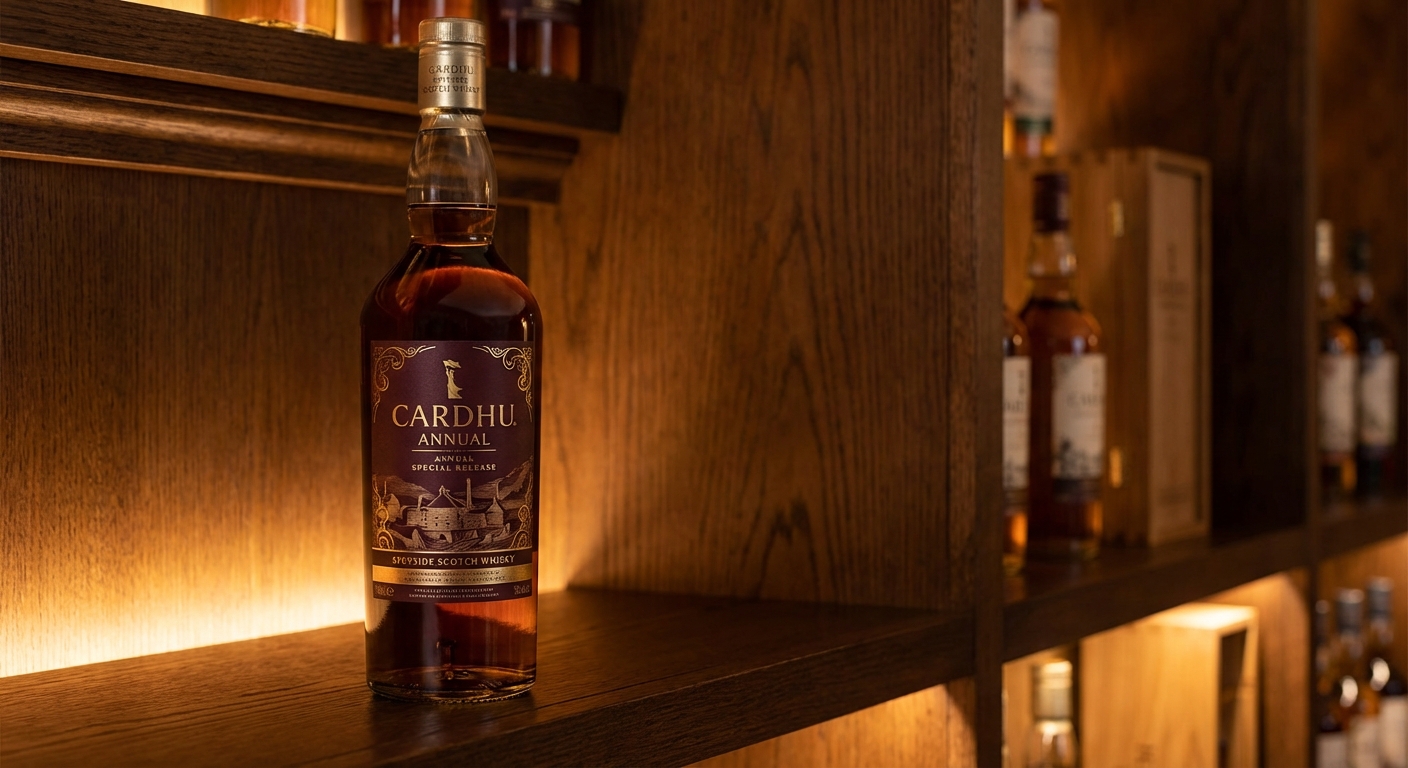
The 2022 Special Release took a markedly different direction. A 16 Year Old matured for its full life in Speyside and then finished in Jamaican rum-seasoned casks, bottled at 58% ABV.
The rum finish is immediately evident. The nose offers tropical fruits, dried flowers, and a faint jasmine note — something almost unusual for a Speyside expression. The palate is rich: pineapple, banana, warm baking spices, honey, and vanilla, with oak appearing only at the edges. The finish extends long, fruity, with persistent spice and subtle oak structure. WhiskyCast rated this release 94 points.
The rum cask angle is the talking point here. It divides opinion — traditionalists prefer to see Cardhu without intervention; others argue it demonstrates the distillery’s flexibility. Either way, at 58% ABV from 16 years of ex-bourbon plus rum cask influence, this is not a casual dram. It’s a serious release that rewards attention.
Key point for collectors: Both Diageo Special Releases editions demonstrate Cardhu’s range at cask strength. The 2020 showed the distillery’s natural fruit-forward profile unleashed. The 2022 showed how well it takes additional cask influence. Together they make the case for Cardhu as a genuinely versatile distillery, not simply a blending component.
Cardhu has not been a fixture in the Special Releases programme. Its appearances are notable in part because they are infrequent. The programme typically features distilleries that have been producing exceptional casks not suited to the standard range — casks that reward the higher price point the Special Releases command. When Cardhu appears, it signals that the team at Diageo has identified something worth pulling out.
Collectors who track the Diageo Distiller’s Edition series will recognise this dynamic — scarcity within an annual series drives secondary market interest in a way that standard expressions cannot replicate.
Disclaimer: Secondary market prices for whisky change frequently — always verify current rates with a specialist before making purchasing decisions. Past price performance is not indicative of future value. All valuations are estimates only.
Beyond the official range, Cardhu’s most interesting bottles come from independent bottlers who have purchased casks directly and produced low-volume single cask releases.
Independent bottlers occupy a crucial role in the rare whisky ecosystem. They purchase casks from distilleries — often years or decades in advance — and produce their own bottlings under the distillery name. These releases are typically small (often 200–600 bottles from a single cask), bottled at natural cask strength, and not diluted or coloured.
Duncan Taylor’s Rare Auld series has produced a Cardhu 1984 vintage bottling, representing over 30 years in cask before release. The Rare Auld series is widely respected for drawing from old inventory at natural cask strength with minimal intervention. A Cardhu from 1984 predates the 2003 controversy, predates major production changes, and represents the distillery at a time when its output fed both Johnnie Walker and a quietly growing international single malt market.
Bottles of this vintage are genuinely rare. When they appear at auction, they tend to trade at prices that feel historically undervalued compared to equivalent-age Glenfarclas or Glendronach from the same period.
Signatory Vintage is one of the most reputable independent bottlers working with older Speyside stock. A 1975 Cardhu bottled by Signatory represents the distillery’s production during a period when the whisky industry was operating largely for blending purposes — single malt demand had not yet reached the levels that would come in the 1990s and 2000s.
Casks from this era were simply held until they had something to say. A 1975 Cardhu bottled 20–25 years later would have spent an extraordinarily long time in oak, producing a completely different character from anything in the current official range: dried fruits, leather, dark spice, and the deep oxidative notes that extended cask contact brings.
These bottles are rare enough that finding one in good condition is itself the research project. For guidance on assessing older bottles before purchasing, the resources in what makes a whisky bottle valuable are worth reading alongside any vintage acquisition.
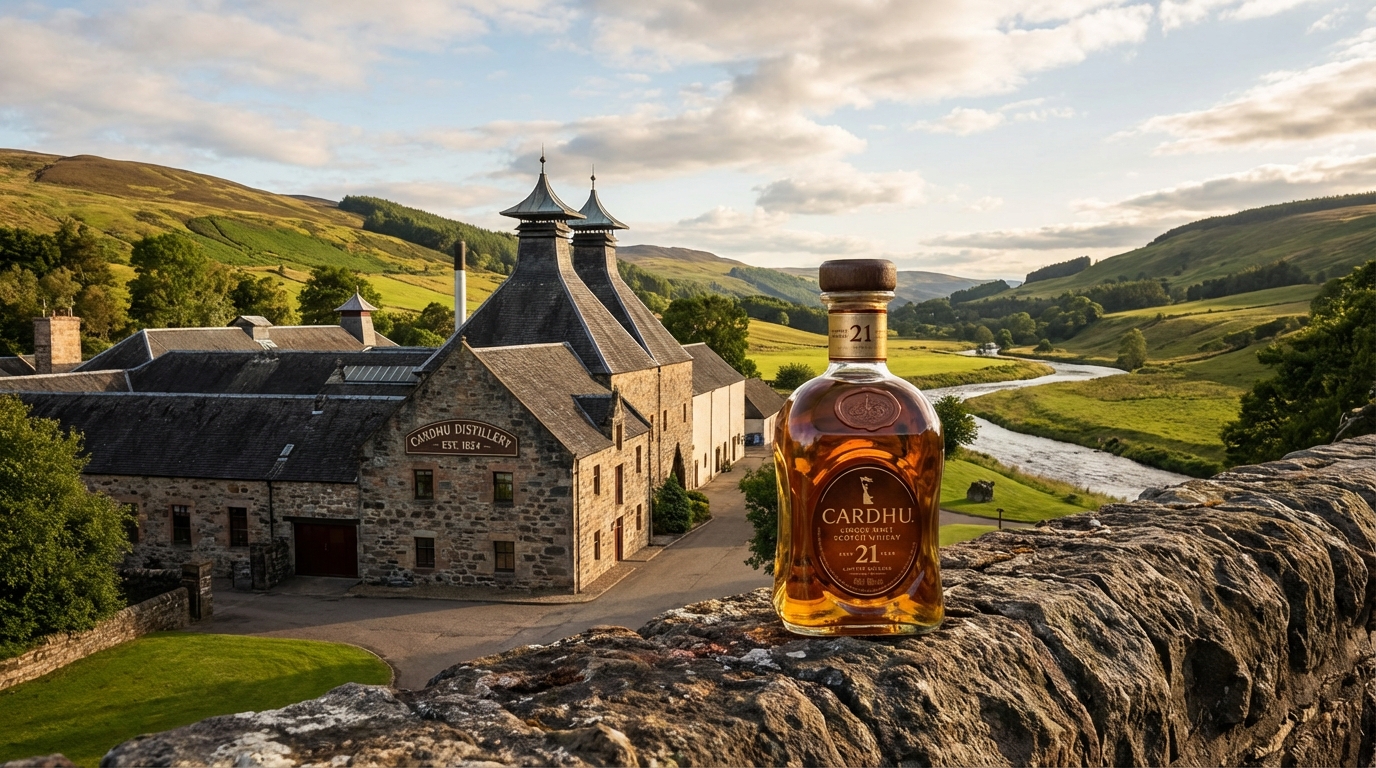
In 2013, Diageo released a Cardhu 21 Year Old at 54.2% ABV. This occupies an interesting position: an official older age statement release from the distillery, bottled at above-standard strength, in a period before Cardhu had appeared in the formal Special Releases programme.
The 21 Year Old represents the upper end of what the official range has offered. At 54.2% it brings substantially more texture and density than the 40% expressions, with the additional years showing in dried fruit complexity and oak integration.
Sealed bottles of this release have become noticeably harder to find in the UK and European secondary market. Those that do appear command a premium that reflects both the age and the limited production run — though pricing still lags behind comparable aged Speyside expressions from more trophy-hunted distilleries.
The Scotch Malt Whisky Society (SMWS) has periodically released single cask Cardhu expressions under its own numbering system (SMWS distillery numbers do not publish the source distillery by name on the label, but the society’s tasting notes and cask details confirm origin). These releases are members-only at point of sale but appear on the secondary market. SMWS releases are typically small-batch, single cask, natural colour, non-chill-filtered, and bottled at cask strength — making them among the most technically pure expressions of any distillery available.
The collector opportunity in Cardhu is specific and time-limited: the distillery’s secondary market prices have not caught up with the quality and historical significance of its older bottles.
Speyside as a region commands a premium across whisky collecting. Macallan is the obvious outlier at the very top. Glenfarclas Family Casks, Aberlour A’bunadh, and Glenfiddich’s experimental series each have strong collector followings with prices to match. Cardhu sits beneath all of these in secondary market terms — not because the whisky is worse, but because the story has not yet been told as effectively.
The parallel that many experienced collectors draw is with Highland versus Speyside whisky collecting dynamics: certain distilleries are priced on their story as much as their liquid, and the story premium can compress or expand quickly when collector attention shifts.
Based on current secondary market patterns, several specific Cardhu releases appear undervalued relative to their quality:
The 2020 Diageo Special Release (11 Year Old, 56% ABV): Scored 93 points at cask strength from a cask programme selected by Diageo’s whisky specialists. Priced at release well below equivalent scored expressions from more fashionable Speyside distilleries.
The 2022 Diageo Special Release (16 Year Old, 58% ABV): A 94-point release with a distinctive rum cask finish. The rum influence may reduce demand from traditionalists, but it also makes this one of the most distinctive Cardhu expressions available in the modern era. Long-term, unusual official releases from major distilleries tend to appreciate as the category matures.
The 21 Year Old (2013, 54.2% ABV): An older official release at above-standard strength, now largely absent from primary market. As supplies tighten, prices for surviving sealed bottles should move.
Pre-2000 independent bottlings: Duncan Taylor, Signatory, and other bottlers working with Cardhu casks from the 1970s and 1980s produced releases that are largely invisible in mainstream collector conversations. This is an opportunity, not an oversight.
For context on how to value any specific bottle before purchasing or selling, the how much is my whisky worth guide covers the key variables: age statement, ABV, condition, provenance, and current auction trends.
Diageo manages its portfolio with commercial precision. Cardhu receives investment: the core range is regularly refreshed, the Special Releases appearances are carefully curated, and the distillery’s history — particularly Helen Cumming’s story — is increasingly featured in Diageo’s wider brand communications. This is not a distillery being neglected. It is a distillery whose collector profile has yet to match the corporate profile.
When that gap closes — and historically it does — the bottles that represent today’s secondary market become tomorrow’s sought-after acquisitions.
Legal disclaimer: All assessments of collector demand, market value, and investment potential are editorial opinions only. Whisky is a consumable commodity. Values fluctuate. Bottles should be purchased primarily for enjoyment and knowledge. For formal valuations, consult a specialist.
The most common errors in building a Cardhu collection are the same mistakes collectors make across Speyside — compounded by assumptions about the distillery that don’t hold.
The logic goes: if the distillery’s output is primarily used in blends, it can’t be interesting as a single malt. This is backwards. The reason a distillery’s malt is used in flagship blends is precisely because its character is consistent, high quality, and distinctive. Johnnie Walker’s master blenders have chosen Cardhu for over a century because it delivers something irreplaceable.
Single malt expressions from distilleries central to famous blends — Cardhu, Clynelish (which anchors Johnnie Walker Gold), Linkwood (which feeds many Diageo blends) — consistently surprise tasters who encounter them on their own terms.
The 12 Year Old and 18 Year Old are worth understanding. They are not, by themselves, a collection. The Cardhu bottles with genuine medium-to-long-term appreciation potential are the Special Releases editions, the official older age statement expressions (21 Year Old), and the pre-2000 independent bottlings. If you’re thinking about starting a single distillery collection, the core range is the foundation, not the structure.
A Cardhu 1984 from Duncan Taylor Rare Auld in excellent condition — original box, high fill level, no label damage — is worth materially more than the same bottle in poor condition. The whisky market has become far more condition-sensitive as mainstream collectors enter it.
Photograph every significant bottle before storage. Keep original packaging. Store appropriately: away from direct light, at stable temperature, ideally upright. The guidance in how to store whisky bottles applies to Cardhu as much as any other distillery.
Amber Rock and Gold Reserve carry no age statement. Neither does that make them inherently less interesting than the 12 Year Old. NAS expressions are blended to a flavour profile, not a minimum age — and sometimes the liquid in an NAS expression is considerably older than the stated age of a standard expression from the same distillery.
The relevant question is always: does the whisky deliver? Cardhu’s NAS core expressions are made to be drunk. They are not typically the collector focus. But assuming all NAS Cardhu is young or thin does collectors a disservice.
The 12 Year Old and 15 Year Old are produced in significant volume and available through normal retail channels. Paying secondary market premiums for either is unnecessary. Save the acquisition budget for the genuine rarities: the Special Releases, the older vintage expressions, and the independent single cask bottlings.
Yes — particularly for collectors interested in undervalued Speyside expressions. Cardhu’s historical significance as the backbone of Johnnie Walker, its genuine production quality, and its relatively low secondary market profile compared to Glenfarclas or Glenfiddich make it a compelling collector proposition.
Yes. Cardhu has appeared at least twice in the Diageo Special Releases programme: a 2020 release of an 11 Year Old at 56% ABV, and a 2022 release of a 16 Year Old at 58% ABV finished in Jamaican rum-seasoned casks. Both received strong critical scores of 93 and 94 points respectively.
The Diageo Special Releases editions are the strongest collector picks from the official range. For the secondary market, the 2013 21 Year Old at 54.2% ABV and pre-2000 independent bottlings from Duncan Taylor and Signatory represent the most compelling single-bottle acquisitions.
The 2022 release was finished in Jamaican rum-seasoned casks, giving it a tropical, aromatic profile — pineapple, banana, baking spices — that is distinct from the distillery’s standard house style. At 58% ABV it shows significant density and length, and was rated 94 points by WhiskyCast reviewers.
Helen Cumming was the wife of John Cumming, who obtained the first licence for the Cardhu farm distillery in 1824. Helen ran the day-to-day operations of the distillery and is recognised as one of the first women to manage a licensed whisky operation in Scotland. Her story is central to Cardhu’s identity and increasingly prominent in the distillery’s official communications.
Amber Rock is a no-age-statement expression that undergoes double maturation — first in ex-bourbon casks, then in heavily toasted casks. The result is a warmer, more vanilla-forward Cardhu with gentle spice. It sits apart from the standard age-statement range and is positioned as an approachable introduction to the distillery’s character.
Vintage Cardhu from independent bottlers — particularly Duncan Taylor’s Rare Auld 1984 and Signatory’s 1975 vintage — are genuine collector items. They trade below comparable-age expressions from Glenfarclas or Glendronach, which collectors increasingly view as a market opportunity. Condition and provenance have a significant effect on value. Always verify current rates with a specialist before making acquisition decisions, as secondary market prices fluctuate.
Cardhu is lighter and more fruit-forward than heavily sherried Speyside expressions like Glenfarclas or Aberlour. Its house style emphasises heather honey, fresh orchard fruit, and mild floral notes. At cask strength, it develops significantly more spice and texture. The Highland vs Speyside whisky overview covers regional comparisons in more detail.
The Game of Thrones edition was produced in large volumes as a mainstream media tie-in. It has limited collector interest from a liquid standpoint. As a piece of pop culture memorabilia in perfect original condition, sealed examples appear at auction — but this is a different conversation from collecting Cardhu for whisky quality.
The 2020 release was bottled at 56% ABV and the 2022 release at 58% ABV. Both were cask strength, non-chill-filtered releases — consistent with how the Diageo Special Releases programme presents expressions across its portfolio.
Whisky should be purchased primarily for appreciation of quality, history, and craft. That said, the market dynamics for Cardhu’s limited releases are constructive: prices are low relative to quality, secondary market awareness is increasing, and Diageo’s continued selection of Cardhu for its prestige Special Releases programme reinforces the distillery’s credentials. Any collector considering bottles with potential appreciation upside should read the what makes a whisky bottle valuable guide before making acquisition decisions. Past performance is not indicative of future returns.
Within Diageo’s Speyside portfolio, Cardhu occupies a distinct position: it produces lighter, more approachable spirit than distilleries like Mortlach, which has a meaty, heavy-bodied character. As a collector’s distillery, Cardhu is less established than Lagavulin or Talisker within the Diageo stable, but its appearances in the Special Releases programme signal that Diageo considers it capable of producing exceptional casks worth showcasing. That creates the same collector dynamic in miniature that has driven appreciation for other Diageo Special Releases distilleries over time.
Cardhu is the distillery that built one of the world’s most recognised whiskies — and it is asking to be discovered as a single malt in its own right.
The core range tells you what the distillery can do in polished, accessible form. The Diageo Special Releases editions — the 11 Year Old at 56% in 2020, the 16 Year Old rum cask finish at 58% in 2022 — show what happens when Cardhu operates without compromise. And the independent bottlings from Duncan Taylor, Signatory, and the SMWS reveal a deeper, older archive of the distillery’s character that the mainstream market hasn’t yet properly priced.
Helen Cumming ran a covert operation on Mannoch Hill with flour on her hands and a warning flag system to protect her neighbours. Two centuries later, the distillery she built is sitting patiently in the secondary market, waiting for collectors to notice it before the broader audience does.
The bottles worth acquiring are the Special Releases editions from 2020 and 2022, sealed examples of the 2013 21 Year Old, and pre-2000 independent cask-strength bottlings where provenance and condition are strong. If you’re building a Speyside collection designed to reward knowledge rather than following the crowd, Cardhu belongs in it.
See the full Cardhu collection at Glenbotal — or Get Started with a free valuation if you already hold bottles you want appraised.
Explore the full collection at Glenbotal — rare whisky sourced from private collectors across the UK and Europe.