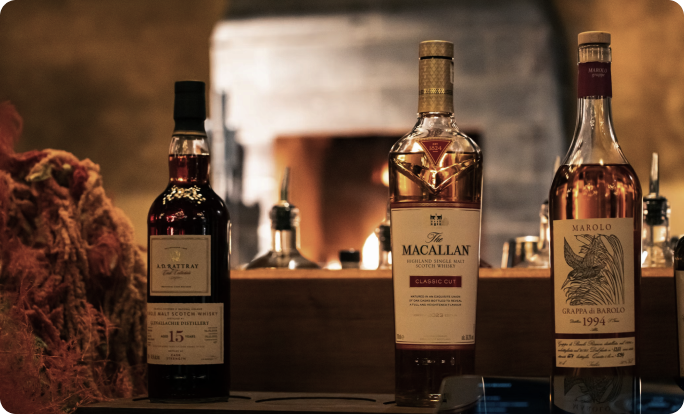
The channel you choose to sell through can be worth more — or cost more — than any fee printed on any platform’s website.
In this guide, you’ll see every realistic option for selling rare whisky in the UK laid out honestly — with actual fees, realistic timelines, and clear guidance on which bottles suit which routes.
The rare whisky secondary market is deep, fragmented, and genuinely rewarding if you approach it correctly. The same bottle — same distillery, same vintage, same condition — can achieve meaningfully different outcomes depending entirely on where and how you sell it. A bottle that fetches £800 through the wrong channel might reach £1,200 through the right one. The difference isn’t luck. It’s information.
Most private sellers in the UK make this decision without a clear framework. They default to what they’ve heard of, or accept the first valuation they receive without context. This guide removes the guesswork.
Here’s what we’ll cover: five distinct selling routes, what they cost in fees and time, which bottle types they suit, and the honest pros and cons of each.
Whisky values can go down as well as up. This article is for informational purposes only and does not constitute financial advice.
Specialist whisky dealers — retailers who focus on rare, collectable, and vintage Scotch — buy bottles directly from private collectors and resell them through their own networks. The process is straightforward: you request a valuation, the dealer assesses your bottle’s current market value, makes an offer, and if you accept, arranges collection or delivery and pays you directly. No auction cycle, no listing, no waiting.
The speed advantage here is real. A good specialist dealer can take you from initial enquiry to payment in days, not weeks. For sellers who want a clean transaction without the administrative overhead of auction submission, this is often the most efficient route.
Glenbotal buys rare and collectable whisky directly from private collectors across the UK and Europe. Their free valuation service covers single bottles through to full collections — send photographs and basic details, and their specialists will give you a current market assessment with no obligation to sell and no fees attached.
None to the seller. A specialist dealer makes their margin on resale, not through commission charged to you. There are no listing fees, no seller’s premium, and no payment processing deductions. What they offer is what you receive.
Typically two to five business days from initial enquiry to payment, assuming the bottle checks out on receipt. For collections requiring broader assessment, allow slightly longer for the valuation process.
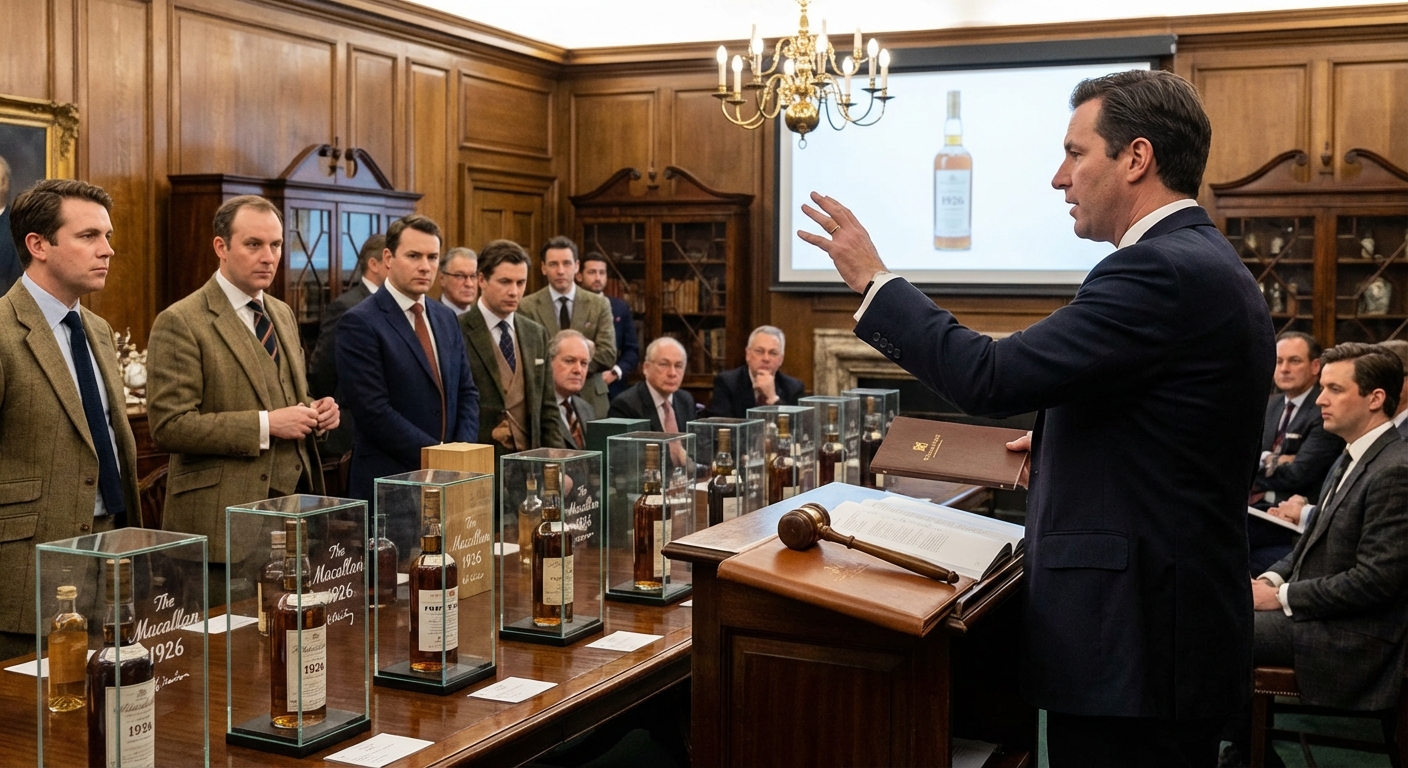
The UK has a well-developed whisky auction ecosystem, ranging from traditional fine wine and spirits auction houses to dedicated online whisky platforms. The major players include Scotch Whisky Auctions, Whisky.Hammer, and established fine art and antiques houses like Bonhams and McTear’s, which run periodic specialist whisky sales.
The process: you submit your bottle for inclusion in an upcoming auction, the house assigns an estimate, the bottle is listed with a start price, bidders compete over the auction period, and the hammer price is recorded. Payment to you typically arrives within 14 to 28 days of the auction closing, minus any applicable seller’s fees.
The appeal of auction is competitive upside. When bidder demand is strong and your bottle has genuine collector appeal, prices can exceed estimates by a meaningful margin. Conversely, if bidder interest is thin or timing is poor, results can disappoint.
Now: the fee picture matters enormously here and varies considerably between platforms.
Fee structures differ significantly between platforms. Based on current published rates:
Scotch Whisky Auctions charges £8 per bottle (including miniatures) plus an optional £10 reserve fee per lot, with 0% seller’s commission — making it one of the most cost-effective auction routes for regular-value bottles.
Whisky.Hammer charges a £5 + VAT listing fee per lot, a £10 + VAT reserve fee if required, and a tiered seller’s commission based on hammer price:
All commission and service fees are subject to 20% VAT.
Traditional auction houses (Bonhams, McTear’s) typically charge seller’s commission in the range of 10–15% for whisky lots, though their auction cycles run less frequently and are better suited to very high-value single lots or prestigious collections.
Fees change — always verify current rates on official platform pages before committing to a sale.
Four to eight weeks end-to-end is a reasonable expectation. This covers: the gap between submission and the next available auction slot, the auction period itself (typically one to two weeks), and the post-auction payment processing window. If you submit just after an auction closes, you may wait three to four weeks before your bottle even goes live.
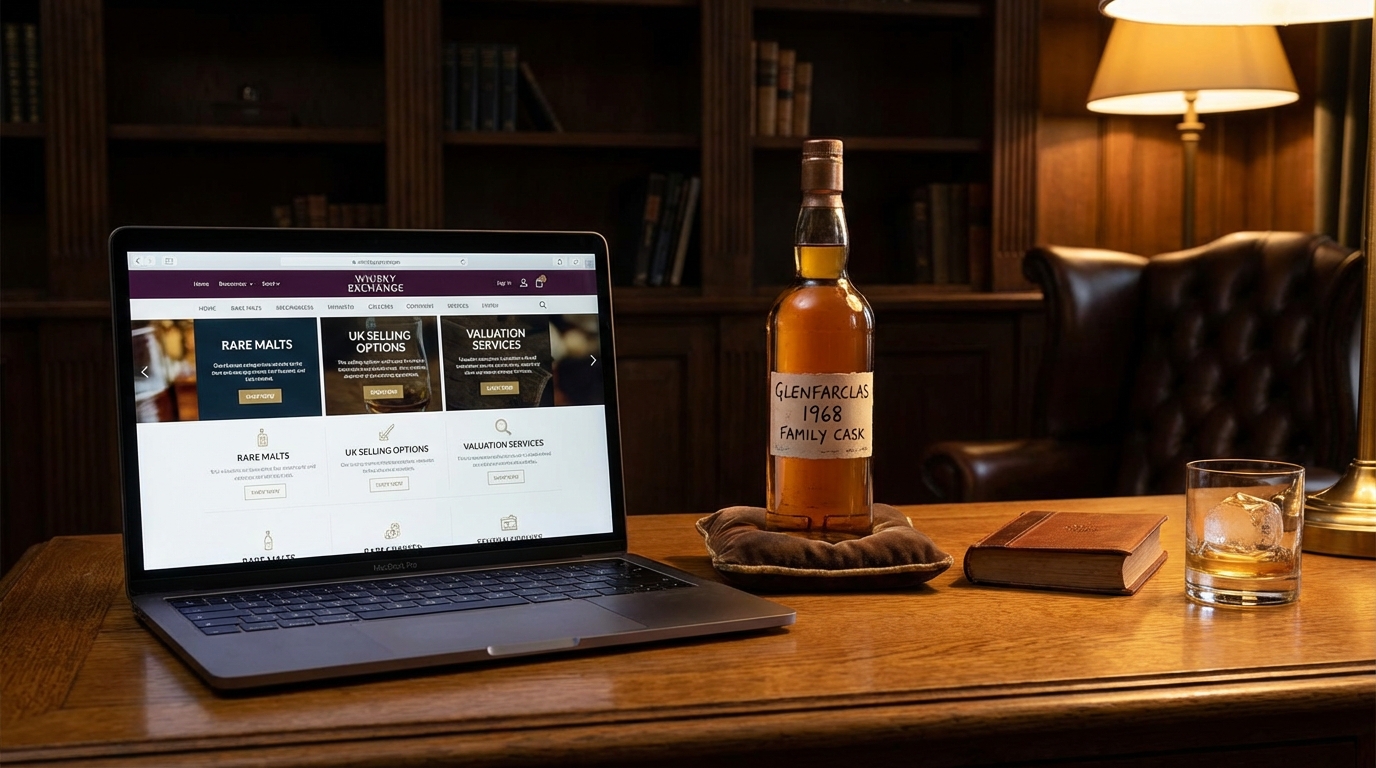
General online marketplaces — primarily eBay and Catawiki — allow private sellers to list whisky bottles directly to a broad consumer audience. eBay operates as a fixed-price or auction-style listing; Catawiki positions itself as a curated auction platform for specialist collectables, with expert review before lots go live.
The mechanics are simple enough: you create a listing, set a price or starting bid, photograph your bottle, and wait for a buyer. Payment typically processes within a few days of sale.
Here’s the deal: the audience breadth is a genuine asset for common expressions but a liability for genuinely rare bottles. Serious whisky collectors who spend four or five figures on a single bottle do not typically browse eBay for their next acquisition. The buyer pool on general marketplaces skews toward casual buyers, gift shoppers, and bargain hunters — not the specialist collector community where premium prices are made.
eBay charges a final value fee of 12.8% on the total sale amount (as of 2025 rates for collectables categories), plus a fixed fee of 30p per order. There are also optional listing upgrade fees. Payment processing is included in the final value fee structure.
Catawiki charges sellers a commission on the hammer price; rates vary by category but typically fall in the range of 12.5–20% for spirits and wines. Catawiki also adds a buyer’s premium on top, which affects perceived value and bidder behaviour.
VAT applies where relevant, and neither platform reimburses shipping costs, which the seller bears.
Variable, but potentially fast. A well-priced eBay listing can sell within days. A Catawiki listing must pass expert review first, then sit in an upcoming auction cycle. Slower than a specialist dealer, faster than many traditional auction houses.
For any bottle worth more than a few hundred pounds, the risk-adjusted return from online marketplaces compares unfavourably to specialist alternatives. Understanding what makes a whisky bottle valuable helps clarify when marketplace listings make sense and when they don’t.
A private sale is a direct transaction between seller and buyer — no intermediary, no platform, no commission. You agree a price privately and complete the sale between yourselves. This might happen through an existing collector network, a whisky club, a personal introduction, or a direct approach to a known collector.
No route offers a higher theoretical margin than a well-executed private sale. With no fees on either side, the price you agree is the price you receive. In practice, achieving this requires: knowing a buyer who wants your specific bottle, agreeing on a fair price without a market reference, completing a secure transaction, and managing delivery and insurance yourself.
That’s a significant set of conditions to meet. For sellers who already move in active collector circles — attending distillery events, participating in whisky communities, maintaining relationships with fellow enthusiasts — a private sale is often a natural and practical option. For everyone else, finding a genuine buyer for a specific bottle is harder than it sounds.
None, by definition — though the seller typically bears shipping, insurance, and any escrow or payment processing costs if used.
Entirely variable. If you know the buyer, a sale can complete in 24 hours. If you need to find one, it could take weeks or never materialise.
Private sale works best as a complement to a broader selling strategy rather than a starting point for most collectors. If you’re considering this route, getting a professional valuation first — so you know what a realistic asking price looks like — is essential. Our guide to how to sell rare whisky in the UK covers the practical preparation steps in more detail.
A small but growing number of platforms position themselves at the intersection of whisky retail and investment — including Whisky.Hammer’s broader ecosystem, and data and advisory services such as Rare Whisky 101, which tracks secondary market indices and provides valuation and consultancy services for private collectors, estates, and financial institutions.
These platforms serve a different need than straightforward bottle sales. Rare Whisky 101, for example, publishes the Apex 1000 index — tracking the value movement of the 1,000 most traded rare whisky bottles — and provides professional valuation reports and market intelligence. This is useful context for sellers trying to understand timing, but it is not itself a sales channel.
For actual transactions, some investment-adjacent platforms do facilitate sales or connect sellers with buyers, but the market here is less standardised than auction houses or specialist dealers. The buyer pool is typically institutional or high-net-worth individual collectors — which can mean stronger pricing for the right bottles, but a less predictable process.
The investment platform space is worth understanding as context, not necessarily as a primary selling route for most private sellers. It’s most relevant if you hold a portfolio of high-value bottles (individual values of £1,000+) and are willing to engage a more consultative process.
Varies significantly by platform and service. Valuation services from firms like Rare Whisky 101 are fee-based. Transaction fees where applicable depend on the specific platform and arrangement. There is no universal fee structure across this category.
Longer and less predictable than specialist dealers or standard auction houses. These channels are not optimised for quick turnaround.
If you’re at the point where you’re treating a whisky collection as a financial asset and want professional market intelligence alongside a sale, understanding your bottles’ current values is the logical starting point. Glenbotal’s free whisky valuation service covers the kind of bottles that attract investment-level attention.
| Selling Route | Typical Fees | Time to Sale | Best Bottle Type | Price Ceiling | Effort Required |
|---|---|---|---|---|---|
| Specialist dealer (e.g. Glenbotal) | None to seller | 2–5 business days | Single bottles, collectable expressions, predictable demand | Competitive market rate | Low |
| Scotch Whisky Auctions | £8/bottle + £10 reserve (if used), 0% commission | 4–6 weeks | Any collectable bottle, mid-range values | Market rate + upside | Medium |
| Whisky.Hammer | £5 listing + tiered commission (2.5–20%) + VAT | 4–8 weeks | Mid to high-value bottles (£1,000+) | Higher potential for right bottles | Medium |
| Traditional auction (Bonhams, McTear’s) | ~10–15% seller’s commission | 6–12 weeks | Very high-value, prestigious lots | High ceiling for rare lots | Medium–High |
| eBay | ~12.8% final value fee + 30p | Days to 2 weeks | Common/mid-range expressions | Lower — general buyer pool | Medium |
| Catawiki | ~12.5–20% commission | 2–4 weeks | Recognisable collectables | Mid-range | Medium |
| Private sale | None | Days or indefinitely | Any — if buyer exists | Theoretically highest | High |
| Investment platforms | Variable | Weeks to months | High-value collections (£1,000+/bottle) | Premium for right bottles | High |
Fees correct as of research date. Always verify current rates on official platform pages before committing.
Choosing the right route is less about personal preference and more about matching the bottle’s characteristics to the channel’s strengths. Here’s how to think about it.
If your bottle is a single malt from a sought-after or closed distillery — Port Ellen, Brora, Rosebank, Springbank limited releases, Karuizawa — and it’s in excellent condition with original packaging, the auction route deserves serious consideration alongside a specialist dealer offer. Competitive bidding can push prices meaningfully above the expected market value when demand is strong. Get a specialist valuation first so you have a baseline before you decide.
If you have a solid but not exceptional bottle — a well-regarded 18-year or 21-year from a major distillery, a quality independent bottling, a limited but not ultra-rare release — a specialist dealer typically offers the best combination of return and efficiency. The fee structure is clean, the process is fast, and the price you receive reflects genuine market value rather than the vagaries of a particular auction day.
If your collection runs to ten or more bottles, consider a mixed strategy. Auction-worthy bottles to a specialist auction, the rest to a direct buyer. A specialist dealer who also understands the auction market — or who can advise on which route suits each piece — is invaluable at this stage.
If speed is the priority, specialist dealers win every time. Auction cycles are not designed for urgency.
If you’re uncertain whether your bottles are worth selling — whether they’re genuinely collectable or simply bottles you’ve accumulated — start with how much is my whisky worth and follow up with a free professional valuation. There’s no cost to finding out, and it will save you from choosing a channel before you understand what you’re selling.
For a deeper understanding of what drives value in the first place, our vintage Scotch whisky guide covers distillery provenance, age statements, bottling format, and why some expressions command multiples of others.
A specialist dealer buys your bottle directly and pays you a fixed price. An auction house lists your bottle for bidding and takes a percentage of whatever it achieves. Dealers are faster and carry no seller fees; auctions offer the possibility of competitive upside but involve longer timelines and fees that reduce net return.
Fees vary by platform. Scotch Whisky Auctions currently charges £8 per bottle plus an optional £10 reserve fee, with 0% seller’s commission. Whisky.Hammer charges a £5 + VAT listing fee and tiered commission from 2.5% to 20% depending on hammer price, plus VAT on all fees. Traditional houses like Bonhams and McTear’s typically charge 10–15% seller’s commission. Always verify current rates before committing — these change.
Through a specialist dealer, typically two to five business days from enquiry to payment. Through auction houses, four to eight weeks end-to-end. Through online marketplaces, days to a fortnight if priced correctly. Private sales are entirely variable.
It depends on the bottle. Auction can outperform for genuinely rare, in-demand expressions where competitive bidding adds value. For most bottles — including excellent quality expressions that lack the profile to generate a bidding war — a specialist dealer typically offers a better outcome once fees and time are factored in.
A mixed strategy often works best for collections. Have the collection professionally valued to understand which bottles suit auction and which don’t, then sell accordingly. Specialist dealers will often purchase a full collection at once, which simplifies the process considerably if speed matters.
For common or low-value expressions, yes. For genuinely rare bottles, rarely. The buyer pool on general marketplaces is less targeted, prices achieved tend to be lower, platform fees run to 12–20%, and the risk of disputes or fraud is higher. The risk-adjusted return rarely justifies using eBay for bottles worth several hundred pounds or more.
Bottles from closed or highly collectible distilleries (Port Ellen, Brora, Karuizawa, Rosebank), limited numbered releases, cask-strength independent bottlings, and expressions with a strong collector following. These are the bottles most likely to attract competitive bidding. What makes a whisky bottle valuable explains the key factors in detail.
Request a free valuation from a specialist dealer who actively buys bottles — this gives you a current market value with no obligation attached. Glenbotal offers free whisky valuations for any collectable or rare expression: send photographs of the front label, back label, fill level, seal, and packaging, and their team will provide a market assessment within one to two business days.
Potentially. Under DAC7 regulations (in force since 2024), HMRC receives transaction data from online selling platforms. Capital gains tax may apply if your bottle has appreciated significantly since purchase, though annual allowances and personal circumstances affect whether any liability arises. For high-value collections, seek independent tax advice before completing sales.
Bottles should have an intact seal, a fill level of at least three-quarters full (higher is better), and labels that are clean and largely undamaged. Original packaging significantly increases value. Severely damaged labels, significant ullage, or broken seals reduce marketability through specialist channels, though very rare bottles may retain value even with condition issues. A specialist can advise quickly once they’ve seen photographs.
Yes, though logistics and regulations add complexity. Major auction platforms ship internationally and handle the administrative burden. For direct sales, you’ll need to research import regulations and duty implications for the destination country, and shipping insurance for high-value bottles becomes essential. Most specialist dealers focus on UK transactions.
Rare Whisky 101 is primarily a market intelligence and valuation service — they publish secondary market indices, provide professional appraisals, and offer consultancy. They do not operate a standard retail selling channel in the way auction houses or dealers do. Their services are most relevant for collectors who want professional market data to inform timing and pricing decisions rather than for straightforward one-off bottle sales.
The UK rare whisky market rewards sellers who understand their options. Each route — specialist dealers, auction houses, online marketplaces, private sales, and investment platforms — has genuine strengths and genuine trade-offs. None is universally superior, but each suits a different type of bottle and a different type of seller.
Here’s the honest summary: for most private UK sellers with one to five collectable bottles, a specialist dealer offers the best combination of speed, simplicity, and competitive return — particularly once auction fees and waiting time are factored into the equation. Auction is the right call when you have a bottle that can generate real bidding interest, you’re not time-pressured, and the maths work in your favour after fees. Online marketplaces serve a purpose for common expressions where the specialist route isn’t warranted. Private sale and investment platforms are for specific circumstances.
The one thing that cuts across every route: know what your bottle is worth before you decide anything. It takes minutes. It costs nothing. And it means every conversation you have with an auction house, a dealer, or a buyer starts from a position of knowledge rather than guesswork.
Get Started with a free whisky valuation from Glenbotal — send your bottle details and receive a current market assessment with no obligation to sell.
Explore the full collection at Glenbotal — rare whisky sourced from private collectors across the UK and Europe.