The Glenlivet was the world’s first legally licensed distillery in the Livet valley. Two hundred years later, it is one of the most layered, most discussed, and — in the right expressions — most rewarding distilleries a collector can pursue.
This hub brings together every resource you need: core range foundations, the ultra-rare Cellar Collection, single casks, collector strategy, and guidance on where to find genuine bottles. Work through the themes in order, or jump straight to the section that matters most right now.
Start with the Core Range or jump to collector strategy.
“George Smith obtained his licence in 1824 — making The Glenlivet the first legally licensed distillery in the Livet valley. Every bottle carries that provenance.”
Glenlivet’s collector case rests on three pillars: historical primacy, stylistic consistency, and genuine scarcity at the top end.
The distillery’s founding story is not marketing mythology. George Smith applied for his licence in the year following the Excise Act of 1823, becoming the first in the valley to distil legally — a decision so controversial that he reportedly carried pistols for protection against hostile illicit operators. That act of commercial courage established a reputation for quality that spread so quickly across Scotland that dozens of other distilleries began appending “Glenlivet” to their own names. A High Court ruling in 1884 settled the matter: only Smith’s distillery could call itself The Glenlivet. (Source: Wikipedia — The Glenlivet)
The second pillar is the whisky itself. Glenlivet’s house style — floral, honeyed, medium-bodied, with a signature Speyside elegance — is immediately recognisable and uncommonly consistent across decades of production. That consistency makes vertical comparisons exceptionally rewarding: a 1967 vintage and a 1980 bottling share a recognisable DNA despite half a generation of difference in the cask.
The third pillar is real scarcity. While the 12 Year Old is widely available, the Cellar Collection vintages are numbered in the hundreds. Single-cask releases from independent bottlers surface and disappear within days. The Winchester Collection and the bicentenary Eternal Collection — including 55- and 56-year-old expressions released to mark the 2024 bicentenary — exist in quantities that make serious Macallan releases look plentiful. The Glenlivet distillery was founded in 1824 and remains one of Scotch whisky’s most significant heritage sites, now owned by Chivas Brothers, a subsidiary of Pernod Ricard.
None of this is a guarantee of appreciation. Bottles are for drinking or holding, not for speculation. But for a collector who wants depth, history, and a distillery still capable of surprises, Glenlivet is one of the most compelling cases in Speyside.
Disclaimer: past auction prices and market values mentioned in this guide are for informational purposes only. Whisky values can fall as well as rise, and nothing here constitutes financial or investment advice.
| Expression | Type | Age / Vintage | Collector Priority |
|---|---|---|---|
| Cellar Collection 1959 | Vintage single cask | ~40+ years | Exceptional |
| Cellar Collection 1964 | Vintage single cask | ~35+ years | Exceptional |
| Cellar Collection 1972 | Vintage single cask | ~28+ years | Very High |
| Cellar Collection 1980 | Vintage single cask | ~20+ years | High |
| Winchester Collection Vintage 1967 | Limited release | ~50+ years | Very High |
| Eternal Collection 55-Year-Old (2024) | Bicentenary limited | 55 years | Exceptional |
| Eternal Collection 56-Year-Old (2024) | Bicentenary limited | 56 years | Exceptional |
| 25 Year Old (current) | Core range | 25 years | Medium |
| 18 Year Old (older bottlings, pre-2010) | Core range | 18 years | Medium–High |
| Nàdurra Cask Strength (first-release batches) | Cask strength NAS | NAS | Medium |
| Master Distiller’s Reserve | Single cask | Various | High |
| Independent bottler single casks (1970s–1980s) | Third-party bottling | Various | High–Very High |
Disclaimer: rarity and collector interest are not guarantees of future value. Prices fluctuate and past auction results are not indicative of future performance.
What you’ll learn: How the five core age-statement expressions — 12, 15, 18, 21, and 25 Year Old — differ in character, which represent the best entry points for new collectors, and why certain older core-range bottlings command more than their current retail counterparts.
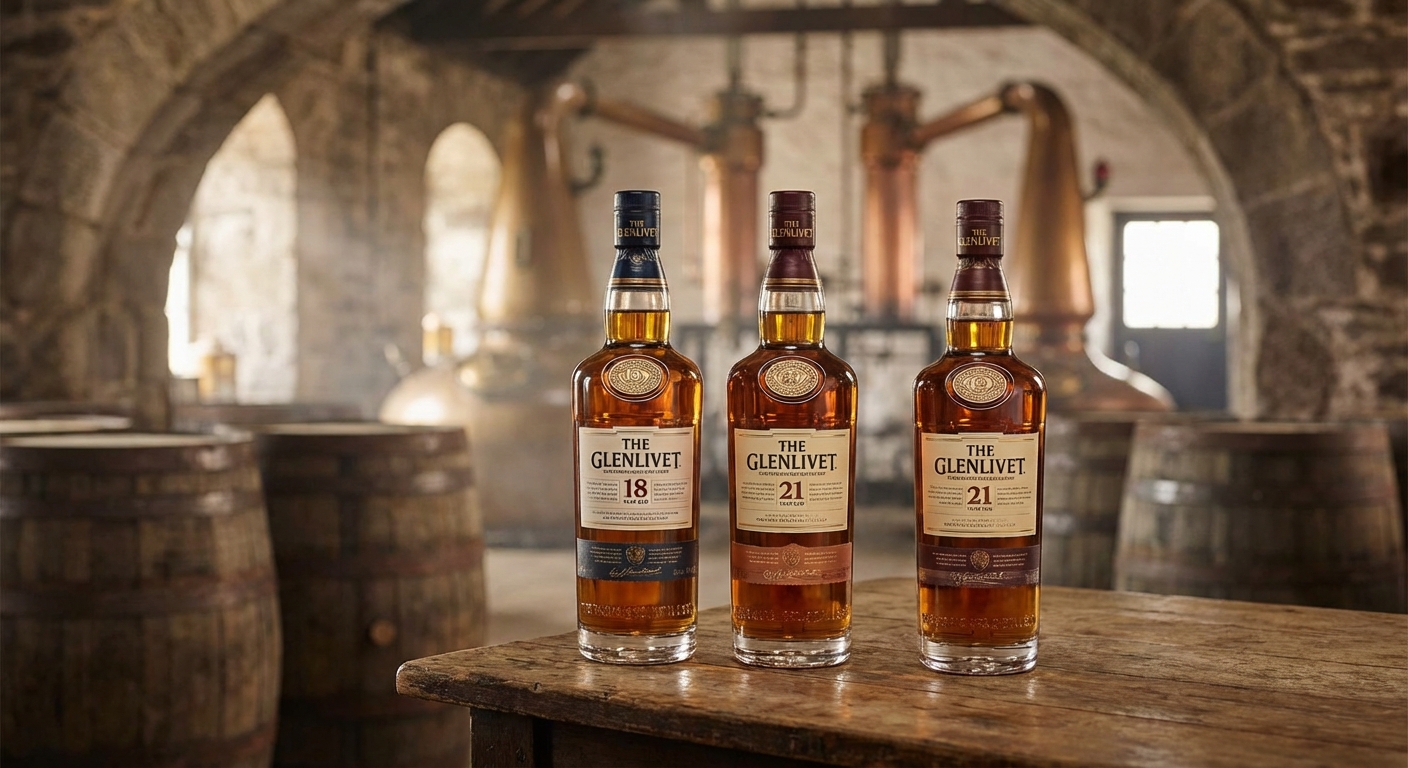
The core range is where every Glenlivet collection starts. Each expression illustrates how time and oak work together on Glenlivet’s signature spirit: the transition from the 12’s citrus-fresh brightness, through the 15’s French oak creaminess, into the 18’s richer dried-fruit depth, and finally the sherry-influenced complexity of the 25. The 21 Year Old Archive occupies an interesting middle position — aged in a combination of cask types with enough complexity to satisfy collectors who find the 25 too sherried.
Older bottlings of the 18 and 25 — particularly those distilled and bottled before 2010 — have attracted meaningful attention at auction, partly because production methods and cask selection have evolved over the decades. If you encounter a pre-2000 bottling of the 18 Year Old, it is worth examining closely before passing by.
3 Resources
What you’ll learn: The complete story of the Cellar Collection series — which vintages were released, how production years affect flavour, what numbered bottles exist, and which remain genuinely findable versus those that have largely disappeared into private cellars.
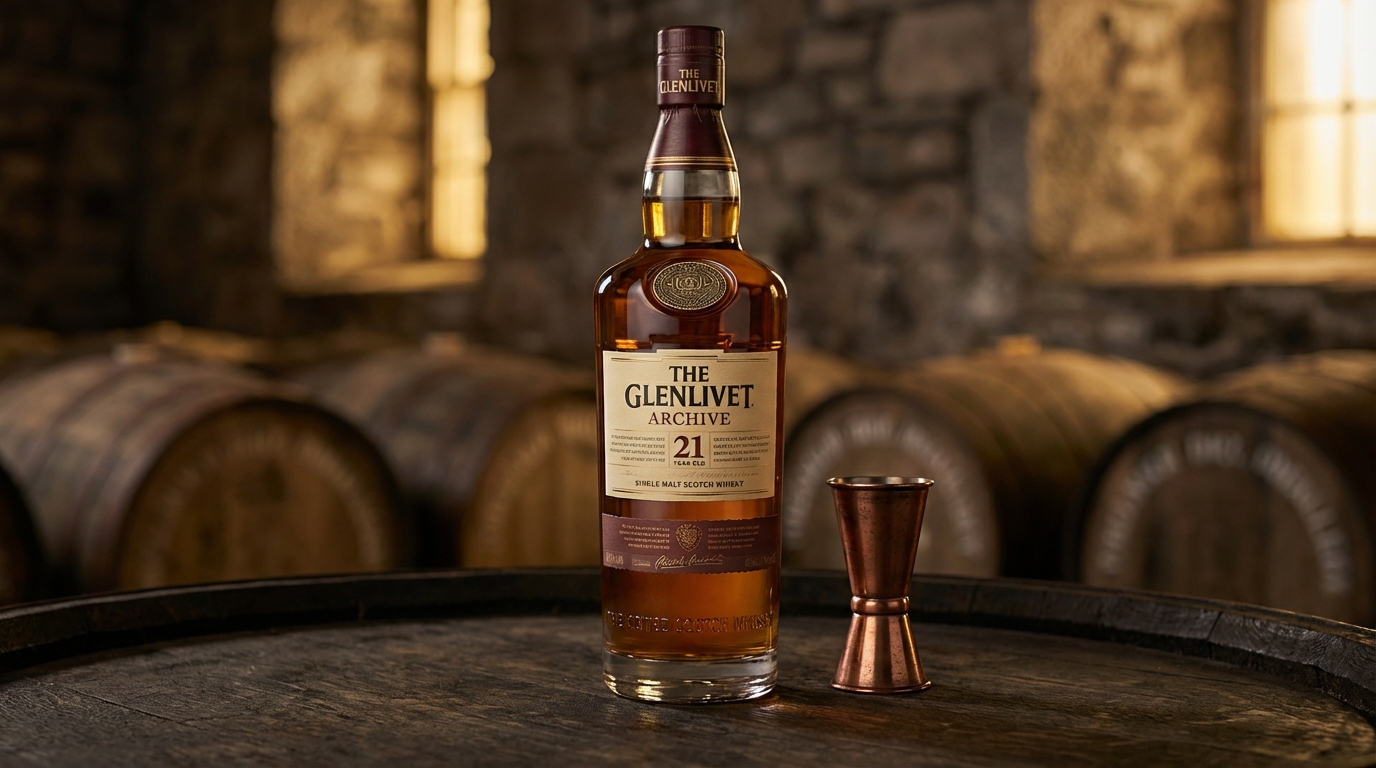
The Cellar Collection is the crown of Glenlivet collecting. Launched around the year 2000, the series drew on casks laid down decades earlier at the Minmore warehouses — single-vintage spirit, bottled at natural cask strength without chill-filtration, with each release limited to a few hundred individually numbered bottles. Distillation years span from 1959 through to 1983, meaning the oldest releases were already more than four decades old when they first appeared on the market.
Here’s the deal: there is no comparable series of this depth anywhere else in Speyside. The Cellar Collection predates the current collector market’s obsession with vintage single malts, which means early buyers acquired these bottles at a fraction of what they now trade for in specialist auction rooms.
Finding any of these today requires patience, network, and often a direct approach to private sellers. Retail channels largely exhausted their stock years ago.
1 Resource
What you’ll learn: Where non-age-statement expressions like Founder’s Reserve, Captain’s Reserve, and Caribbean Reserve sit in the collector ecosystem — what the enthusiast community thinks of them, whether any deserve a place in a serious collection, and how to read NAS releases intelligently.
Non-age-statement Glenlivet splits collector opinion more sharply than almost any other topic. The purist case is straightforward: without an age statement, you have no baseline for the spirit’s development. Founder’s Reserve replaced the 12 Year Old in some markets without the transparency a serious collector expects.
The counterargument is more nuanced. Captain’s Reserve — finished in Cognac casks — offers a genuinely distinctive flavour profile that has found its audience. Caribbean Reserve uses rum-cask finishing to create something genuinely different from the standard Speyside template. Neither is a collector priority by conventional metrics, but both illustrate Glenlivet’s willingness to experiment, which is itself useful context for understanding where the distillery is heading.
Now: the collector consensus is clear enough. NAS expressions occupy the bottom tier of a Glenlivet collection. They can be drunk and enjoyed, but they do not build collection value in the way that aged, single-vintage, or limited-release expressions do.
2 Resources
What you’ll learn: How to identify and evaluate official Glenlivet single-cask releases and Master Distiller’s Reserve bottlings — what information matters on the label, how to compare them against independent bottler releases, and which cask types have historically produced the most interesting results.
Single-cask Glenlivet operates at a different level from the core range. Every variable that matters to a collector — cask number, distillation date, bottling date, cask type, outturn — is printed on the label. You can trace a bottle’s entire maturation history and compare it to other releases from the same year or warehouse.
The Master Distiller’s Reserve releases have attracted particular attention because they showcase Glenlivet’s warehouse team at their most selective — these are the casks that stood out rather than the ones that met a consistent house profile.
Independent bottlers add another dimension. Companies like Gordon & MacPhail, Signatory, and Cadenhead’s have bottled Glenlivet single casks over decades, and some of their older releases — particularly 1970s and early 1980s distillations — now trade at significant premiums over similar-era official bottlings. The key variable is cask type: ex-sherry casks from that era tend to produce the most complex and sought-after results.
3 Resources
What you’ll learn: A frank framework for building a Glenlivet collection that balances depth, budget, and long-term satisfaction — including which expressions are currently undervalued, which have likely peaked, and how a Glenlivet collection fits alongside holdings in Macallan, Glenfiddich, and other Speyside distilleries.
The best part? Glenlivet offers genuine collector arbitrage at the moment — because its commercial success as a volume brand has suppressed enthusiasm among certain collectors who associate wide availability with lower prestige. That perception is wrong when applied to the Cellar Collection and the single casks. Availability of the 12 Year Old says nothing about the availability of a 1964 vintage.
What to prioritise now: Cellar Collection bottles where they surface privately. Older core-range bottlings from the 1990s and early 2000s, particularly the 18 and 25. Gordon & MacPhail and Signatory independent bottlings from distillation years prior to 1985.
What looks undervalued: The 21 Year Old Archive relative to the 18 and 25. Captain’s Reserve in the context of finished expressions more broadly. First-release Nàdurra batches, which are beginning to attract retrospective interest.
What may have peaked: Standard NAS expressions acquired speculatively. Recent limited editions that were produced in higher volumes than initially apparent.
Building a Glenlivet collection alongside Macallan and Glenfiddich creates a compelling Speyside triptych — but each distillery rewards different collector instincts. See how Macallan and Glenfiddich compare before deciding where to concentrate your budget.
Disclaimer: none of the above constitutes investment advice. Collector interest and market values are opinions based on available information and can change without notice. Always conduct your own research before acquiring bottles for any purpose.
4 Resources
What you’ll learn: The practical channels for sourcing rare Glenlivet — from specialist UK retailers and auction platforms to private collector networks, estate sales, and how to evaluate condition and provenance before committing to a purchase.
Finding a Cellar Collection bottle or a pre-2000 aged expression is not a passive exercise. The bottles are not sitting on supermarket shelves.
The primary channels, in rough order of reliability:
Specialist retailers focus on rare and vintage Scotch and maintain ongoing relationships with private sellers. This is where Glenbotal operates — sourcing across the UK and Europe from private collectors, estate cellars, and specialist intermediaries. Authenticity is verified, condition is documented, and provenance is traceable.
Auction platforms — including Scotch Whisky Auctions, Whisky Auctioneer, and Hart Davis Hart for higher-value lots — provide price transparency that is genuinely useful even when you are not bidding. Watching Glenlivet results over several months gives you a real market education.
Private collector networks reward patience and genuine engagement. The collector community is smaller and more connected than it appears from the outside. Attending whisky shows, joining tasting groups, and developing a reputation as a serious buyer opens doors that catalogues do not.
Question is: how do you verify what you’re buying? Label condition, fill level, capsule integrity, and provenance documentation all matter. A bottle of Cellar Collection 1964 with a damaged label and unknown provenance is a very different proposition from one with its original packaging, a traceable purchase history, and a fill level that speaks to good storage.
See our guide to whisky authentication and whisky valuation before making any significant purchase.
2 Resources
Yes — particularly at the vintage and single-cask level. The Cellar Collection vintages, older core-range bottlings, and independent bottler releases from the 1970s and 1980s represent genuine depth. The widely available core range is not a collector priority, but the upper tier of Glenlivet is genuinely rare and historically significant.
The Glenlivet was the first legally licensed distillery in the Livet valley following the Excise Act of 1823. George Smith obtained his licence in 1824, making him the pioneer of legal distillation in the region. The distillery has traded on — and fully earned — that distinction ever since.
The Cellar Collection is a series of ultra-limited, single-vintage Glenlivet bottlings, each drawn from a specific distillation year between 1959 and 1983, bottled at cask strength without chill-filtration, and released in numbered editions of a few hundred bottles. It is the most collectible series the distillery has produced. Read the full guide here.
Macallan’s collector market is larger, more liquid, and commands higher headline prices for its top expressions. Glenlivet, particularly the Cellar Collection, offers comparable historical depth at lower entry points — which some collectors view as an opportunity. The two distilleries reward different collector approaches. See the full comparison.
The 55- and 56-year-old Eternal Collection releases from the 2024 bicentenary are the highest-profile recent bottlings, produced in very limited quantities. Among secondary-market expressions, Cellar Collection vintages from the 1950s and 1960s — particularly the 1959 and 1964 — have achieved the highest auction prices. Values vary by condition and provenance. Always verify current market prices before buying or selling.
Generally not as primary collector targets. Founder’s Reserve, Captain’s Reserve, and Caribbean Reserve have their merits as drinking whiskies, but they lack the age transparency and scarcity that drive collector demand. Exceptions exist for early release batches that have been retired, but this is niche territory.
Cask strength means the whisky has been bottled at the natural alcohol level of the cask, without the addition of water to reduce it to a standard bottling strength. For Cellar Collection releases, this preserves the full concentration of flavour compounds developed over decades of maturation. The alcohol level varies by vintage and cask, typically ranging from around 45% to over 55% ABV.
Specialist rare whisky retailers, Scottish auction houses, and private collector networks are the most reliable sources. Glenbotal sources bottles from private collectors across the UK and Europe, with provenance verification on all acquisitions. Major auction platforms including Scotch Whisky Auctions and Whisky Auctioneer also list Glenlivet regularly.
Store bottles upright, away from direct light and significant temperature fluctuation. Whisky in a sealed bottle does not continue to mature, but poor storage — particularly strong light or dramatic temperature swings — can degrade the spirit over time. Original packaging and capsule integrity matter significantly to future value. See our full storage guide.
The current 25 Year Old is a quality expression and an accessible introduction to the distillery’s character at extended age. For collectors, older bottlings of the 25 — particularly pre-2010 releases — offer more interest than the current version, partly due to evolving cask selection. If budget allows, the Cellar Collection is the more compelling collector investment of time and research.
The Winchester Collection is a range of premium, limited-edition Glenlivet expressions produced in very small quantities, featuring high-aged and single-vintage whiskies. The Vintage 1967 expression — with bottle design by Bethan Gray — is among the most recognisable releases in the series. Winchester Collection bottles appear occasionally at specialist auction and retail.
Examine label typography, capsule condition, fill level, and any serial or batch numbers against known reference bottlings. Provenance documentation — original purchase receipts, cellar records, or chain of custody — significantly strengthens authenticity. For high-value acquisitions, consider professional authentication. Read our full authentication guide.
The Glenlivet is not the most fashionable name in the collector market right now — and that is precisely what makes it interesting. Its commercial ubiquity at the 12 Year Old level has created a perception gap: many collectors overlook a distillery that, at the Cellar Collection and single-cask level, offers some of the deepest vintage inventory in Speyside.
The fundamentals are compelling. The world’s first legally licensed distillery in the Livet valley. A house style consistent enough across six decades that vertical comparisons are genuinely instructive. A bicentenary that produced 55- and 56-year-old expressions in 2024. A Cellar Collection series of single-vintage, cask-strength bottlings that exists nowhere else in this form.
The collector opportunity is in the gap between the brand’s mass-market reputation and the genuine rarity of its top expressions.
This guide is for informational purposes only. This is not financial advice and results may vary. Always verify current market prices and always conduct your own due diligence before acquiring bottles for any purpose. Whisky values can fall as well as rise.
Explore rare Glenlivet bottles at Glenbotal — or request a free valuation if you have Glenlivet bottles you’re considering selling.
Explore the full collection at Glenbotal — rare whisky sourced from private collectors across the UK and Europe.