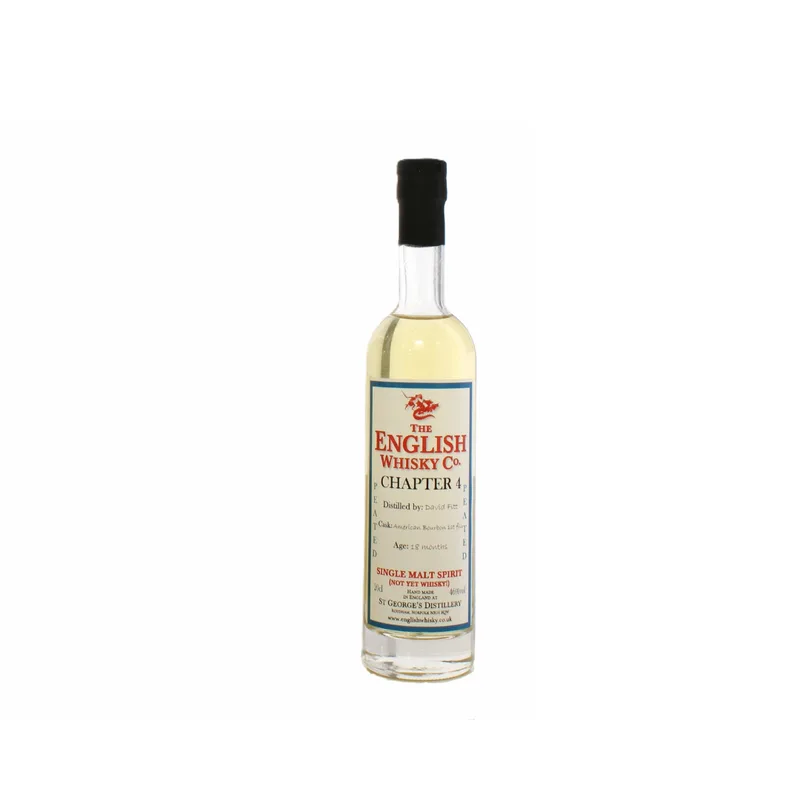
The English Whisky Company – Chapter 4 (Peated, 18 Months) (20cl, 46%)
20cl / 46% (OUT OF STOCK)

If you like this whisky, you will also like these
- Distillery
- St. George's Distillery
- Region
- England
- Bottle Size
- 20cl
- ABV
- 46%
Chapter 4 delivers the distillery’s early experiment with peat, matured for 18 months in first-fill American bourbon wood. Though still too young to be called whisky, this spirit drink captures the raw, smoky energy of its Highland-inspired ambition. Bold, earthy smoke wraps around fresh citrus zest and toasted oak, revealing flashes of complexity even at this early stage. Bottled at 46% ABV, it’s a compelling introduction to English peated spirit with future promise.
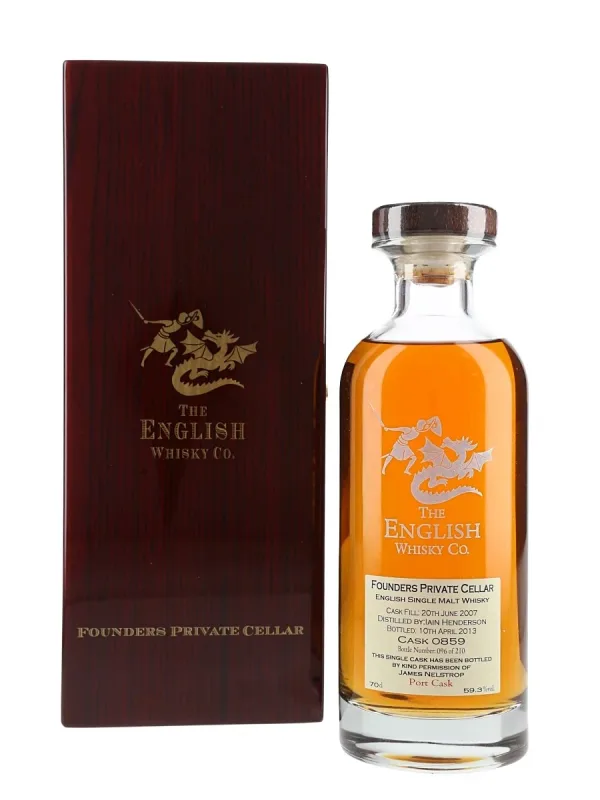
At‑a‑Glance Specifications
- Producer/Distillery: The English Whisky Co. (St George’s Distillery), Norfolk
- Style: Peated single malt spirit (sub‑3 years of maturation)
- Maturation: First‑fill American bourbon casks; early batches documented at 18 months, others at c. 22 months
- ABV & Size: 46% ABV, typically 70cl
- Positioning: Early era ‘Chapter’ release—distillery‑exclusive / limited distribution; a milestone in modern English whisky’s rebirth.
Provenance & Regulatory Note
Launched in the late 2000s as the distillery came online, ‘Chapter 4’ introduced the peated house style before the spirit reached legal ‘whisky’ age. Because it was under three years old at bottling, it was sold as ‘peated single malt spirit’ rather than whisky. Multiple small batches exist with slight maturation differences (e.g., ~18 months vs ~22 months), all at 46%.
Liquid Profile Signals
A youthful but characterful peat style: bonfire smoke and kiln notes over sweet cereal, pear‑drop esters, vanilla and light spice from first‑fill bourbon. Despite the youth, enthusiast reviews often note a bigger palate presence than the numbers suggest, with a clean, modern cask signature and a lightly phenolic finish.
Market & Collectability
• Category significance: early English peated malt from the UK’s modern pioneer; historically interesting as a ‘pre‑whisky’ release.
• Pricing: secondary values vary by batch/box condition; documented hammers can be modest versus contemporary English single malts, reflecting the sub‑3‑year status. Retail asks for scarce boxed examples can be higher—driven by early‑era provenance rather than age.
• Sourcing tip: confirm batch maturation (months), cask statement, and whether the carton and paperwork are present.
Collector Takeaway
A snapshot of England’s whisky renaissance in its formative stage. Best acquired for historical completeness and brand verticals rather than as a trophy bottle; price discipline recommended.