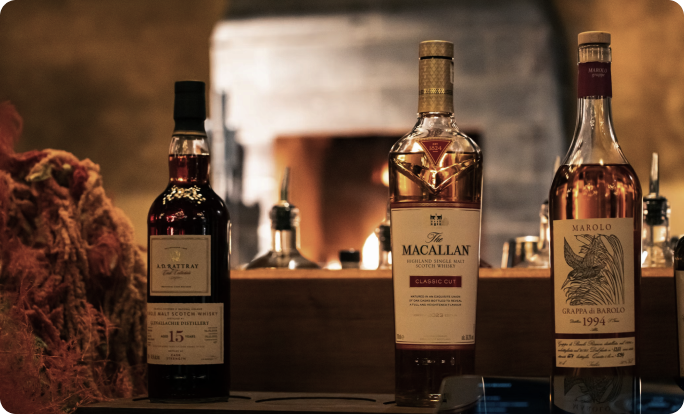
In November 2023, a single bottle of Macallan 1926 sold at Sotheby’s for £2.1 million — making it the most expensive bottle of whisky ever sold at auction. Yet bottles from the same distillery, bottled just a few years later, sell for a few hundred pounds. The difference isn’t luck. It’s a combination of specific, learnable factors.
After six years sourcing rare whisky from private collectors across the UK and Europe, and valuing thousands of bottles, we’ve seen firsthand what separates a £200 bottle from a £20,000 one. These are the 7 factors that determine value — and most people only know two of them.
Most collectors fixate on age. A handful know to look for limited editions. But the full picture is more nuanced, and understanding it properly is what gives serious collectors — and sellers — a genuine edge in this market.
Let’s start with factor one. It’s the foundation that every other factor builds on.
The name on the label is the single most powerful driver of collector demand — and some distillery names carry a premium that no amount of age or rarity can fully replace.
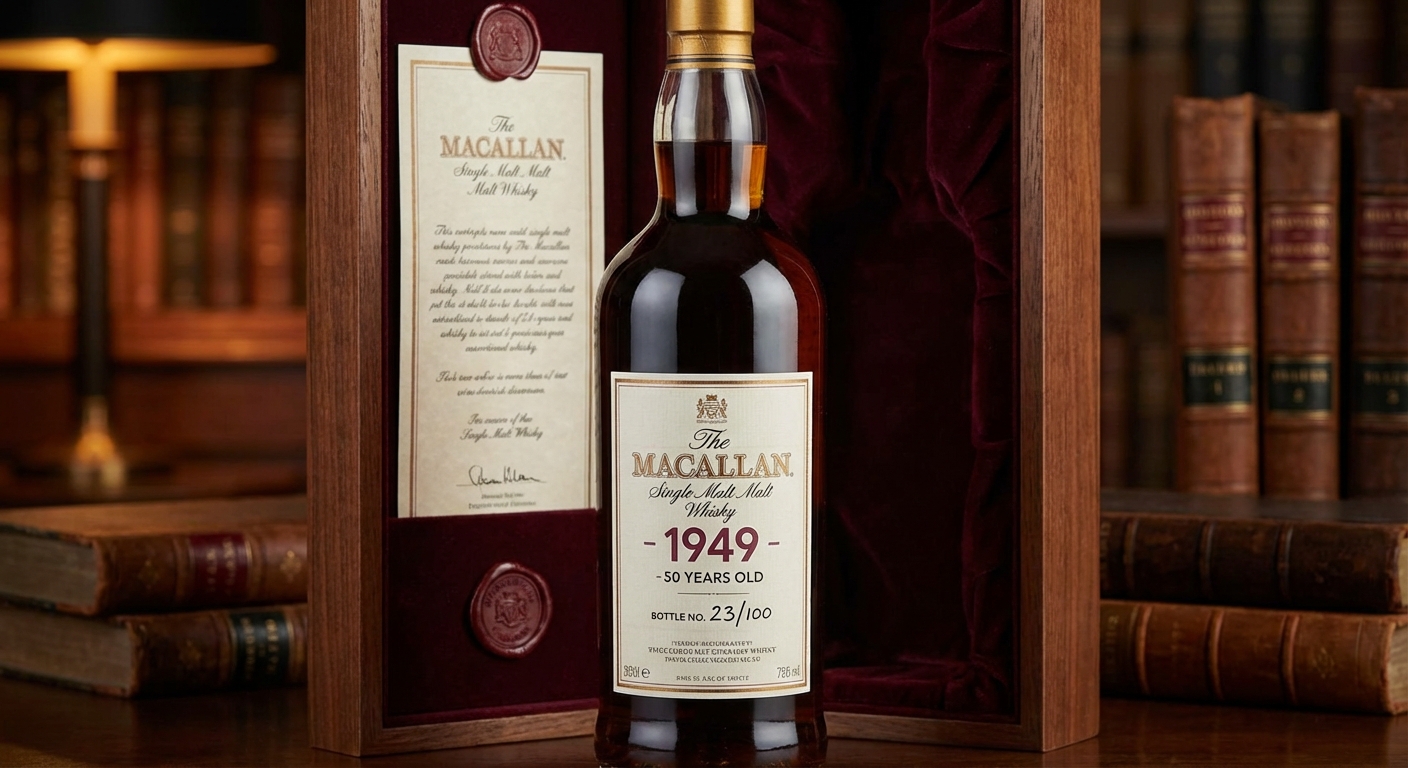
Collectors are buyers who trade on trust. When a name like Macallan, Dalmore, or Springbank appears on a bottle, there is an established community of buyers who will compete for it at auction. That competition is what drives price. Unknown or low-profile distilleries may produce excellent whisky, but without an audience of motivated collectors, prices stay flat.
Here’s the deal:
The Macallan 1926 Fine and Rare series is the clearest evidence in the market. Bottled from a single cask laid down in 1926, it was aged 60 years before release — but similar 60-year-old expressions from lesser-known distilleries have sold for a fraction of the price. The Macallan name alone adds a multiplier that no other factor can match. When that bottle sold at Sotheby’s in 2023 for £2.1 million, it set a world record not just because of age — but because of the name on the label.
Other consistently high-performing distilleries include Dalmore (particularly its Constellation and Trinitas series), Springbank (especially single casks and limited runs), Glenfarclas (Family Casks series), and Brora (the closed distillery premium applies here). Closed distilleries command a natural scarcity that drives prices further.
Here’s how to apply it:
Pro Tip: Distillery reputation is not static. Craft distilleries that were obscure a decade ago — Daftmill, Kilchoman in its early years — now command strong secondary market prices. Watch for distilleries gaining critical acclaim before the broader market catches on.
Age adds value, but only when it is rare for that distillery — a 30-year-old from a prolific producer is less exciting than a 21-year-old from one that rarely releases at that age.
The assumption that older always equals more valuable is one of the most common misconceptions in whisky collecting. Age adds value through two mechanisms: genuine rarity (older spirit requires more warehouse space, more patient capital, and more risk), and flavour complexity (extended maturation in quality casks produces characteristics that younger whisky simply cannot replicate). But neither mechanism works in isolation from the distillery’s release history.
Now:
A 25-year-old Glenfarclas Family Cask is considered a serious collector’s bottle. A standard 25-year-old from a major blending house that releases thousands of cases annually tells a different story. The age statement is only meaningful in context. Contrast that with a 21-year-old from Springbank — a distillery that produces limited quantities and rarely releases aged expressions — which can command prices that outpace 30-year-old bottles from more prolific producers.
There is also the quality threshold to consider. Spirit that has been over-matured in an exhausted cask, or that spent too long in a mediocre barrel, does not benefit from the extra years. Experienced collectors look for age combined with cask quality, not age alone.
Here’s how to apply it:
Pro Tip: NAS (No Age Statement) bottles from the right distillery can outperform age-stated bottles at auction. Macallan’s Sherry Oak 12 NAS expressions from the 1980s and early 1990s regularly exceed the price of stated-age bottles from the same era because of their rarity and flavour profile.
Numbered releases, named series, and single cask bottlings create a finite universe of bottles — and finite supply with sustained demand produces price growth.
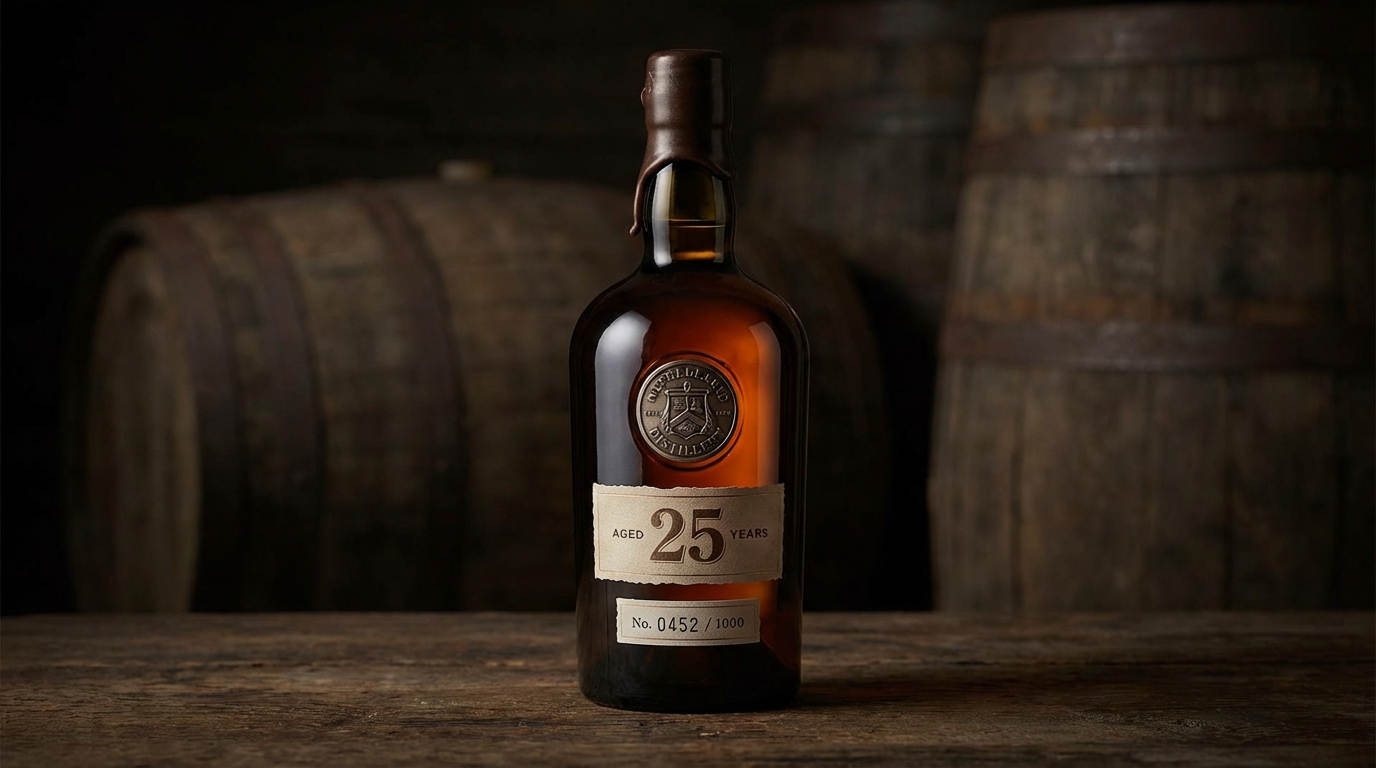
When a distillery releases a bottle as part of a named series — Macallan’s Edition No.1 through No.6, Glenmorangie’s Private Edition series, Bruichladdich’s Black Art — it signals intentional scarcity. These releases are produced in defined quantities, often numbered individually, and discontinued once sold. That combination creates exactly the conditions collectors and investors look for: a specific object with a documented history and a known ceiling on supply.
Here’s the deal:
The Macallan Edition No.1, released in 2015 at a retail price of approximately £55, was trading at over £400 on secondary markets within three years. Edition No.6, released in 2018, followed a similar trajectory. Both were limited productions, numbered, and tied to a named series with a beginning and an end. Compare that to an undated, unnamed standard release from the same distillery — solid whisky, but no collector’s premium.
Single cask bottlings take this further. A bottle drawn from a single barrel that yielded 200–300 bottles, with the cask number printed on the label, is objectively irreplaceable. Once the cask is empty, that specific expression is gone. That is the definition of scarcity, and the market prices it accordingly.
Here’s how to apply it:
Pro Tip: First releases in a named series (Edition No.1, Black Art 1.1, First Edition) consistently outperform subsequent releases at auction, because the first is always rarest in hindsight. If you hold a first edition of a now-established series, its value deserves close attention.
A bottle in perfect condition with a high fill level is worth significantly more than the same expression with a damaged label or reduced fill — condition is not cosmetic, it is structural to value.
Collectors buying at auction are, in many cases, buying sealed bottles they may never open. The condition of the bottle and its contents is therefore the most direct proxy for quality. Fill level matters because even sealed bottles lose a small amount of whisky to evaporation over decades — a phenomenon distillers call the “angel’s share.” As the ullage (the air gap between the liquid and the cork) increases, so does the perceived risk of oxidation and quality degradation.
Here’s the deal:
Auction houses including Bonhams and Christie’s use a standardised fill-level terminology: “into neck,” “upper shoulder,” “mid shoulder,” and “low shoulder.” A bottle with a fill level of “into neck” commands a meaningful premium over the same expression at “mid shoulder.” For a rare 40-year-old Scotch, the difference between an into-neck fill and a mid-shoulder fill can represent thousands of pounds in price variance at auction. The label condition adds to this — a torn, stained, or faded label signals poor storage and reduces buyer confidence.
The capsule (the foil or wax seal over the cork) is equally important. An intact, undamaged capsule confirms the bottle has never been opened and that the seal has not been compromised. Any signs of tampering, re-sealing, or capsule damage will suppress price.
Here’s how to apply it:
Pro Tip: A bottle with a damaged label but perfect fill level can sometimes be submitted to specialist auction houses who will assess on total condition. Label damage is recoverable in value terms if every other factor is strong — but fill level is non-negotiable.
The box, tin, certificate of authenticity, and accompanying booklets can add 20–40% to a bottle’s value — because packaging is part of what collectors are buying.
This surprises many first-time sellers. The whisky itself is in the bottle — why would a cardboard box matter? The answer lies in collector psychology and the secondary market ecosystem. Serious collectors are curating objects, not just acquiring liquid. A complete set — bottle, original box, certificate, booklet, and any accessories like a miniature or tasting notes — represents the full experience the distillery intended. Incomplete sets signal careless storage and reduce buyer confidence.
Here’s the deal:
For premium releases — Dalmore’s Constellation series, Glenfiddich’s Grand Series, Macallan’s Masters of Photography — the presentation box is designed as part of the product. Some boxes are made from leather, crystal, or hand-finished wood, and have value as objects in their own right. At auction, the catalogue description for a complete Dalmore Constellation (which originally retailed for £8,000–£12,000 per set) will note the presence or absence of the wooden cabinet, the tasting notes, and the accompanying documentation. A missing certificate on a £5,000 bottle can realistically suppress the final bid by £500–£1,500.
Certificates of authenticity matter most for distillery exclusives and very limited single cask releases, where the certificate links the specific bottle to its documented cask origin. This is the whisky equivalent of provenance paperwork in fine art.
Here’s how to apply it:
Pro Tip: For bottles you are storing as collectibles (rather than for drinking), keep the original packaging flat and un-assembled in a cool, dry place — this prevents the cardboard from warping or discolouring and preserves the presentation set in near-mint condition.
What a whisky was matured in — and the documented history of where it came from — is one of the most powerful quality signals in the collector market.
Cask type is the dominant flavour driver in Scotch whisky maturation. The Scotch Whisky Association notes that the cask accounts for up to 70% of a whisky’s final flavour, colour, and character. Collectors who understand this know that a first-fill sherry cask expression from a prestigious distillery is a fundamentally different — and typically more sought-after — product than a refill bourbon cask expression from the same year and distillery.
Here’s the deal:
Sherry cask maturation — particularly first-fill oloroso and PX (Pedro Ximénez) sherry casks — commands the highest premiums in the collector market. The Macallan’s reputation was built almost entirely on its sherry cask expressions, and secondary market prices for confirmed first-fill sherry cask Macallans consistently outperform equivalent bourbon cask expressions. A 1980s Macallan “Sherry Oak” bottling, confirmed as first-fill, regularly achieves four-figure sums at auction for standard 70cl bottles.
Port pipe finishes (used by Glenmorangie in its Quinta Ruban, and by Dalmore), Madeira drum finishes, and Sauternes cask finishes also attract collector premiums — particularly when documented in the distillery’s official release notes. Refill casks (casks used for a third or fourth fill) contribute far less flavour and carry no collector premium. The distinction matters.
Provenance — the documented chain of ownership from distillery to present day — adds an additional layer of value for very old bottles. A 1960s or 1970s bottling that can be traced to a named private cellar or original retailer purchase is considered more trustworthy than one with a gap in its history.
Here’s how to apply it:
Pro Tip: Some distilleries now document full cask histories on their labels or websites — Glenfarclas Family Casks, for instance, include the cask number, fill date, bottling date, and number of bottles per cask. This transparency is itself a value signal, and these expressions are specifically sought by provenance-conscious collectors.
The same bottle can be worth dramatically different amounts depending on when you sell it — because whisky values are driven by supply and demand in a market that shifts over time.
Rare whisky is not a static asset. Prices respond to collector trends, media coverage, distillery events, anniversary releases, and broader economic conditions. A bottle that sits unsold for five years and then appears in the same year that its distillery celebrates a centenary can attract a bidding war. The same bottle listed the year after a glut of similar expressions hit the market may sell for half the price.
Here’s the deal:
The rare whisky investment index tracked by Knight Frank showed rare whisky outperforming art, jewellery, and classic cars over a 10-year horizon, with some indices recording triple-digit percentage gains between 2010 and 2020. That period saw a surge in demand from Asian collectors — particularly from China, Hong Kong, and Taiwan — which drove Macallan prices to levels that surprised even experienced market participants. When that demand softened in the early 2020s, prices for some expressions corrected noticeably. The collectors who understood market timing sold at the peak. Those who held have generally recovered that ground over time.
Scotch whisky exports reached over £6 billion in 2022, reflecting the sustained global appetite for premium Scotch. That macro tailwind supports the long-term collector market — but short-term pricing still fluctuates with supply events. When a distillery announces a new age-statement release in a category where collectors previously relied on secondary market bottles, existing holders of those expressions sometimes see prices fall.
Here’s how to apply it:
Pro Tip: Scarcity created by circumstance — a fire at a warehouse, a distillery closing, a recalled batch — can create sudden and dramatic value spikes for surviving stock. Stay connected to whisky news through forums and specialist retailers to catch these moments early.
Whisky values can rise and fall. This article is for informational purposes only and does not constitute financial advice.
No single factor makes a whisky bottle valuable in isolation. The most sought-after bottles in the world score highly across multiple dimensions simultaneously — and understanding how these factors compound is what separates a skilled collector from a casual buyer.
Consider two hypothetical bottles. Bottle A is a 25-year-old single malt from a well-regarded but mid-tier distillery: decent age, standard release, modest packaging, refill cask. Bottle B is a 21-year-old from Springbank, released as a single cask in a named series, first-fill sherry cask, complete with original wooden box and certificate, in pristine condition. Bottle B will command a higher price every time — not because of age, but because it scores well across distillery reputation, limited edition status, cask type, condition, and packaging simultaneously.
When valuing any bottle, work through all seven factors as a checklist. Award weight to each one that applies: a bottle with a famous distillery name (Factor 1), a meaningful age statement (Factor 2), limited edition status (Factor 3), perfect fill level and condition (Factor 4), complete original packaging (Factor 5), a documented first-fill sherry cask (Factor 6), and timing that aligns with peak collector demand (Factor 7) is an exceptional bottle. Most bottles will score on three or four factors — and that still represents a meaningful secondary market proposition.
The compound effect also works in reverse. A bottle with a prestigious distillery name but poor fill level, no packaging, and a vague cask history will underperform its potential. Condition, documentation, and timing are the factors most within a seller’s control — they reward careful storage and informed decision-making over the long term.
If you are holding a bottle and asking what makes it valuable, start with distillery reputation — it is the foundation on which every other factor is built. From there, work through the remaining six: age in context, limited edition status, condition and fill level, original packaging, cask provenance, and market timing. The bottles that score highest across all seven are the ones that attract the strongest bids.
At Glenbotal, we have been sourcing and valuing rare whisky from private collectors across the UK and Europe for six years. We offer free bottle valuations — if you want to know what your bottle is worth, or whether now is the right time to sell, we are happy to take a look with no obligation.
Get Started with a Free Bottle Valuation at Glenbotal
An opened bottle retains value if the fill level remains high and the bottle has been resealed properly. However, opened bottles typically achieve 20–50% less at auction than sealed equivalents, because buyers cannot verify the integrity of the liquid or rule out evaporation and oxidation. Some very rare expressions — where any surviving bottle is sought after — can still attract strong interest even when opened.
No. Age adds value only when it is rare for that distillery and that style of whisky. A 30-year-old from a distillery with a large annual production run may be worth less than a 21-year-old from a small-batch producer that rarely releases aged expressions. Age must be assessed alongside distillery reputation, cask quality, and production volume to have meaningful value implications.
Yes — significantly. For premium and ultra-premium releases, the original packaging (box, tin, certificate, booklet) can add 20–40% to the final sale price. Auction catalogues note the presence or absence of packaging explicitly, and many collectors will not bid on incomplete sets for high-value bottles. Keep all original packaging stored safely alongside the bottle.
A bottle of The Macallan 1926 Fine and Rare 60-Year-Old sold at Sotheby’s in November 2023 for £2.1 million, making it the most expensive bottle of whisky ever sold at auction. The same vintage had previously sold for £1.5 million in 2019 and $54,000 in 2007 — demonstrating how dramatically values can compound over time for the right bottle.
Some expressions do appreciate, particularly bottles from prestigious distilleries with limited production. The rare whisky market has outperformed many traditional asset classes over the past two decades, and Scotch whisky exports exceeded £6 billion in 2022 — reflecting sustained global demand. However, not all bottles appreciate, and some segments of the market have seen price corrections. Past performance is not a reliable guide to future value. This is for informational purposes only and does not constitute financial advice.
Macallan, Dalmore, Springbank, Glenfarclas, and closed distilleries such as Brora, Port Ellen, and Rosebank have historically demonstrated the strongest secondary market performance. Distilleries with defined limited series — Bruichladdich Black Art, Laphroaig Cairdeas, Aberlour A’bunadh batch releases — also tend to hold value well when production quantities are genuinely limited.
Cask strength bottlings (typically 55–65% ABV) are generally preferred by collectors over reduced-strength expressions, because cask strength is unfiltered and undiluted — closer to the original spirit from the cask. For many collector-focused expressions, cask strength is standard. However, ABV alone is not a primary value driver — it is one quality signal among several.
A damaged, torn, or heavily faded label will suppress value, but it is rarely an outright dealbreaker for a genuinely rare bottle. Auction houses assess total condition holistically. A bottle with a damaged label but perfect fill level, intact capsule, and complete packaging may still attract serious bids — but at a discount to an equivalent bottle in pristine condition. The more common the expression, the more label condition matters, because buyers can afford to wait for a better specimen.
Whisky Auctioneer, Scotch Whisky Auctions, and the Rare Whisky 101 database all publish historical auction results. Search by distillery name, expression, and age statement to find comparable sales. For very specific bottles, including cask numbers or edition numbers in your search will return the most relevant comparisons. This research forms the basis of any reliable valuation.
Rare whisky can be a rewarding long-term hold for collectors who understand the market — but it is an illiquid, specialist asset class that requires knowledge, careful storage, and patience. It is not suitable as a core financial investment. The market has produced strong returns for informed collectors, but has also seen corrections, and individual bottles can significantly underperform expectations. This article is for informational purposes only and does not constitute financial advice. Always take independent financial advice before treating any collectible as a financial investment.
Glenbotal’s free valuations are typically completed within 24–48 hours. You provide photographs of the bottle, label, capsule, fill level, and any original packaging, and our team — drawing on six years of market data and a private collector network across the UK and Europe — provides a current market assessment. There is no obligation to sell, and no charge for the valuation.
Explore the full collection at Glenbotal — rare whisky sourced from private collectors across the UK and Europe.