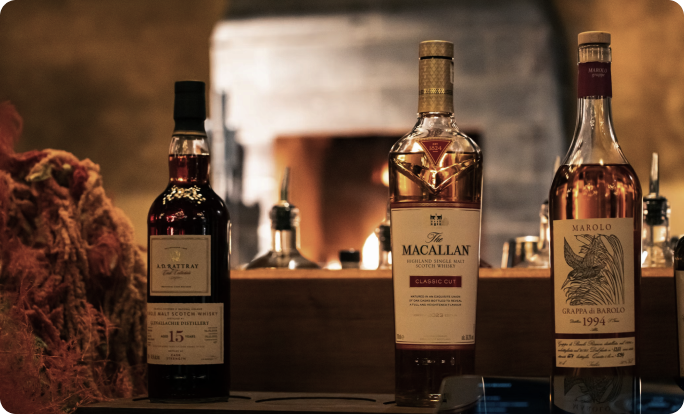
Scotland is home to over 140 malt and grain distilleries — yet finding a genuine, authenticated bottle from a specific birth year remains one of the hardest tasks in whisky collecting.
You know the bottle you’re looking for. A whisky distilled in the year someone was born — a 60th birthday, a milestone anniversary, a gift that means more than anything bought off a supermarket shelf. The problem is that most searches end in frustration: dead ends, inflated prices, or bottles that turn out to be nothing like what was promised.
After six years in rare whisky, with thousands of bottles sourced from private collectors across the UK and Europe, we’ve helped hundreds of customers find exactly what they were looking for — even for birth years going back to the 1950s. We know this search intimately.
Here’s exactly what I’m going to show you: how to define the right bottle, which distilleries to focus on, how to verify what you’re buying, and where the elusive stock actually lives.
Most people type the year into Google and get nowhere.
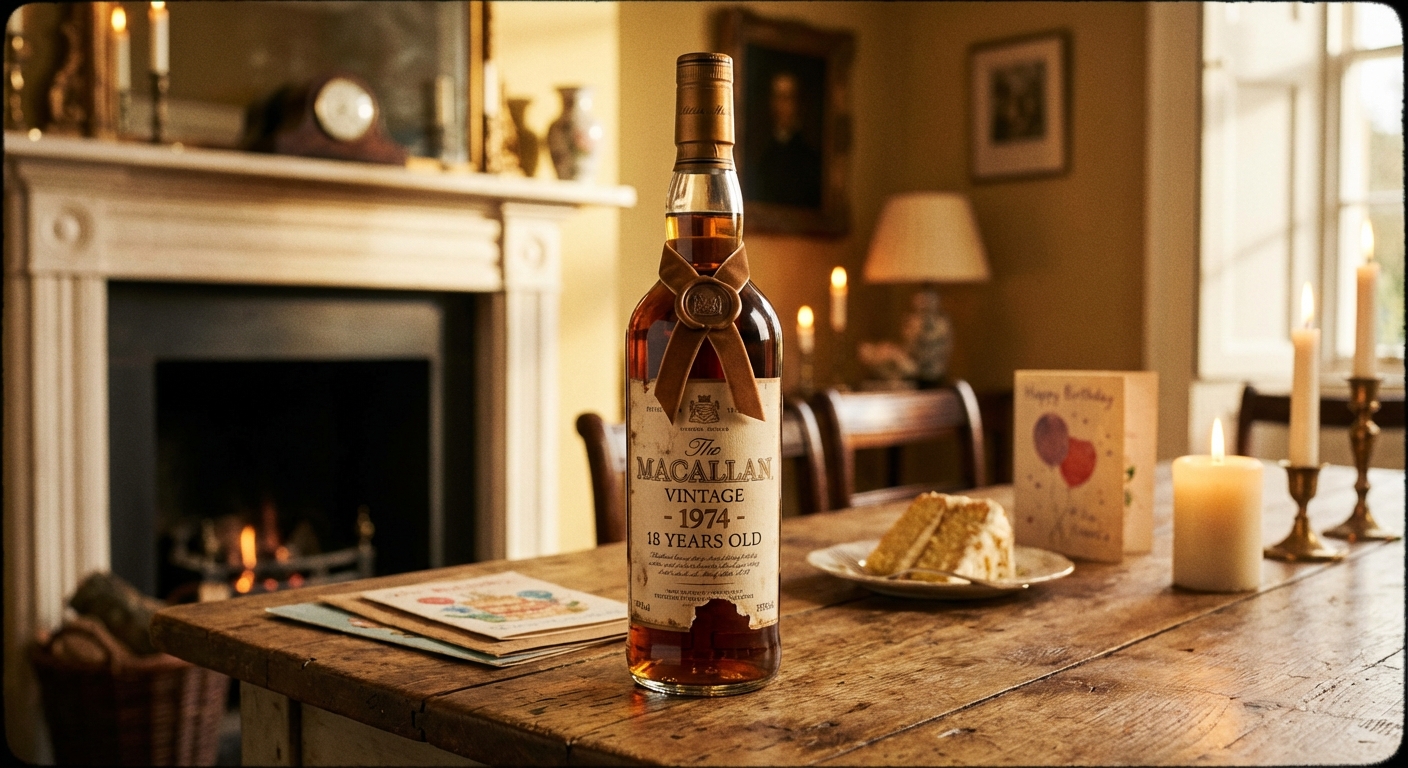
The results are either generic gift guides, auction listings with no stock, or retailers showing “out of stock” on the one bottle that looked right. And the deeper you search, the more confusing it gets — bottles listed as “distilled 1972” that were actually bottled recently, or “vintage” labels that are more marketing than meaning.
The real problem is that searching by year alone ignores how Scotch whisky actually works.
Scotch is matured in oak casks for a minimum of three years under UK law — and the good stuff sits for far longer. A whisky described as being from a birth year could have been distilled that year, bottled that year, or aged for decades before release. Each has a different meaning, a different rarity, and a different price.
Here’s the deal: most online retailers don’t hold meaningful stock of bottles from the 1960s, 1970s, or 1980s. The bottles that do exist are held by private collectors, specialist retailers, and auction houses — and they don’t always show up in a Google search. The search itself requires knowing where to look, not just what to look for.
A “birth year” whisky is a bottle that connects to a specific year in a meaningful way. But that connection can take several forms, and understanding the difference matters.
This is the truest form. The spirit was made in the year you’re looking for. It may have been aged for 12, 20, or 40 years before being bottled — but the liquid inside was produced in that year. These are the most sought-after and typically the hardest to find.
Some collectors accept bottles that were released or bottled in the birth year, even if the spirit itself is older. A 12-year-old Scotch bottled in 1985 contains whisky distilled in 1973 — but if the label says 1985, and the bottle lived through that era, it carries that year’s story. These are more available and often more affordable.
Certain distilleries release special expressions tied to specific years — limited runs, commemorative bottlings, or annual releases. If one of these coincides with a birth year, that bottle becomes particularly meaningful for a collector.
The most meaningful gift is almost always a bottle distilled in the birth year. That’s the liquid that was maturing while the person was growing up — the spirit that shares its origin year with theirs.
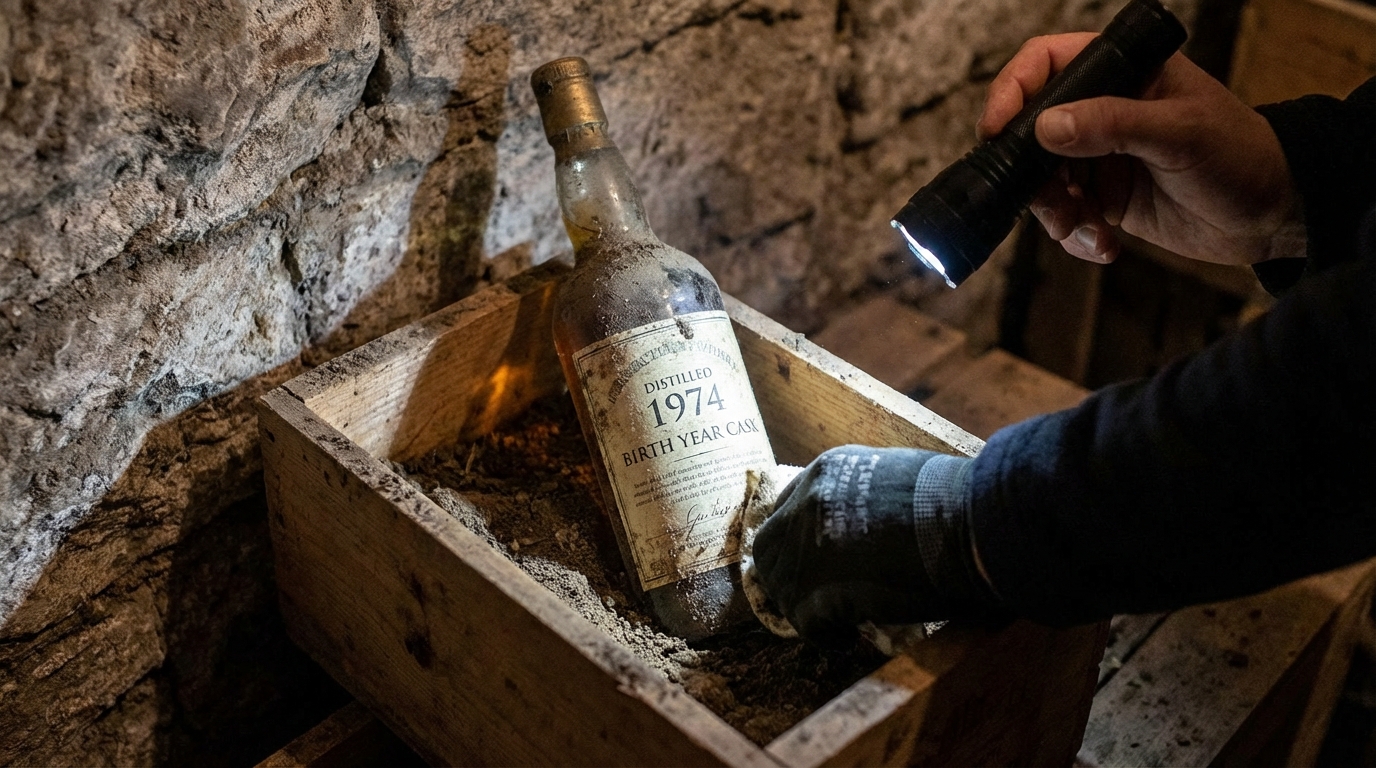
The first thing to establish is what era you’re searching in — because availability varies dramatically by decade.
Bottles from the 1980s are reasonably findable. Distilleries were producing at high volumes, and many of those casks were bottled over the following two to three decades. The Scotch Whisky Association notes that Scotland’s distilleries were among the most active producers in the world throughout the 1970s and 1980s, with dozens of independent bottlers releasing single cask expressions throughout that period.
Bottles from the 1970s are harder. The 1970s saw a whisky loch — an oversupply that led many distilleries to mothball or close. Paradoxically, those that did produce created some of the most sought-after expressions available today, but the supply is finite and shrinking.
Bottles from the 1960s are genuinely rare. Very few distilleries were bottling single malts for the retail market in this era, and those that have survived in collectible condition are held almost exclusively by private collectors and specialist retailers.
Anything from the 1950s or earlier exists at auction level — museum-grade whisky that demands both serious budget and serious authentication.
Once you’ve established the decade, you can be realistic about what’s achievable and at what price.
Not every distillery is equally represented across all birth years. Some were prolific; others were dormant. Choosing wisely will multiply your chances of success.
For birth years in the 1960s and 1970s, the most reliable distilleries to search are those that produced consistently and whose independent bottlings have survived:
For birth years in the 1980s, the search widens considerably:
Now: the distillery matters less than finding authenticated stock. Once you’ve identified the right candidates for the birth year, the search moves to sourcing.
Here’s something most buyers don’t realise: the same birth year can exist across hundreds of expressions. A whisky distilled in 1972 might have been bottled as a 12-year-old in 1984, a 21-year-old in 1993, a 30-year-old in 2002, or an independent bottling at any age in between.
Each of those bottles contains liquid from 1972 — but they’ll differ in character, in price, and in availability.
Older official bottlings (bottled close to the distillation year) tend to have more of that era’s character — lighter spirits, different cask types, pre-refrigeration filtration practices that gave the whisky a different texture. They’re typically more expensive and harder to find.
Independent bottlings — releases by companies like Gordon & MacPhail, Berry Bros & Rudd, or Signatory — often represent exceptional value. These bottlers purchased casks directly from distilleries and released them under their own labels. A Gordon & MacPhail bottling of a 1960s Speyside single malt is absolutely the real thing, despite not bearing the distillery’s own label.
Recent official releases of older vintages — a distillery releasing a 40-year-old in 2014 would contain 1974 spirit, for example — are sometimes the best combination of authenticity, condition, and provenance.
Most mainstream retailers don’t carry meaningful vintage stock. Their inventory skews towards currently-produced expressions — what’s available from the distillery right now, not what was made 40 years ago.
Where genuine birth year stock lives:
Specialist rare whisky retailers. This is the most reliable starting point. Retailers who focus exclusively on rare and hard-to-find bottles — rather than general wine merchants who also carry whisky — tend to hold the stock that matters. Look for retailers with physical inventory, transparent descriptions, and provenance information on the bottle page.
Private collector networks. A significant portion of rare whisky in the UK exists in private hands — collectors who have held bottles for years and occasionally sell. The challenge is reaching them. Retailers who actively source from private collectors (rather than solely through wholesale channels) access stock that simply isn’t listed anywhere publicly.
Specialist whisky auctions. Platforms like Scotch Whisky Auctions, Whisky Auctioneer, and Bonhams carry rare vintage stock — but prices include buyer’s premiums, provenance can be harder to verify, and specific birth years aren’t always available when you need them.
Where not to search:
Generic e-commerce marketplaces carry risk — provenance is unverifiable, and counterfeit or compromised bottles do circulate. If a price looks dramatically below market, that’s a signal, not an opportunity.
Authenticity is the single most important step — and the one most buyers skip.
Vintage whisky has a counterfeit problem. Older bottles, particularly those with high values, have been faked. Even bottles that aren’t deliberately counterfeit can have provenance issues: improper storage, damaged seals, or topped-up bottles (where evaporated spirit has been replaced with another whisky).
The Scotch Whisky Regulations 2009 — the primary legal framework governing the industry — set strict requirements for what can be sold as Scotch whisky, but those protections apply to new production, not to bottles already in circulation. Verification of older bottles falls to the buyer, the seller, and any independent authentication.
Here’s what to check before any purchase:
Seal integrity. The original capsule or cork seal should be intact and show no signs of tampering. Ullage (the gap between the liquid and the cork) is normal in older bottles but should be consistent with age — excessive ullage in a bottle only a few decades old warrants scrutiny.
Label condition. Old labels show age naturally — some fading, possible foxing — but should be genuine period labels. Check that typefaces, distillery logos, and stated ages match known versions for that release.
Bottle shape and glass. Each era used different bottle shapes. A bottle claimed to be from the 1960s should match 1960s-era glassware — most specialists can identify anomalies immediately.
Seller provenance. A reputable seller should be able to describe where the bottle came from. “Acquired from a private collection in Scotland” is more credible than “sourced from various suppliers.” If a seller can’t or won’t explain provenance, that’s a concern.
Third-party valuation. Some retailers — including Glenbotal — offer free bottle valuations, which confirm market value and implicitly confirm the bottle’s authenticity and condition before purchase. It’s worth using this service even if you’re buying rather than selling: a valuation tells you whether what you’re paying reflects what you’re getting.
A bottle labelled “bottled 1985” does not contain spirit from 1985. It contains spirit that was already aged by 1985 — typically at least three years old, often twelve or more. If you want spirit from a specific birth year, look for the distillation date, not the bottling date.
A current release labelled “25 Year Old” does contain spirit from 25 years ago — but it changes every year. A “25 Year Old” released in 2025 contains spirit from 2000, not the stated age. This confuses many buyers. If the distillation year matters, confirm it explicitly.
The right bottle at the right price is meaningless if it isn’t authentic. Buying the cheapest listing for a rare year almost always carries risk. Rare whisky has a market price — if something is significantly below that, there’s a reason.
Birth year whisky is not a product that gets more available over time. Every bottle sold or opened is one fewer in existence. Bottles from the 1970s and 1960s disappear from the market faster than they can be replenished. Waiting for a better price or a more convenient moment has a real cost.
The best stock isn’t on Amazon or even the major wine merchants. Specialist rare whisky retailers maintain inventories that general retailers simply don’t carry — and private sourcing networks add stock that never appears in any public listing until a customer asks.
Even a thorough search sometimes yields nothing for a specific birth year. This is more common for earlier decades, for very specific distillery requests, or for years that coincided with periods of low production.
Here’s what to do.
Extend the search by one to two years. Whisky from 1963 and whisky from 1961 will be virtually indistinguishable in character, and both tell the same era’s story. For gifting purposes, a bottle from within two years of a birth year is almost always warmly received.
Ask a specialist to search their network. Some bottles never appear in public listings. A specialist retailer with a private collector network can put out a request and often surface stock that simply isn’t findable online. Glenbotal’s network spans private collectors across the UK and Europe — if a bottle from a specific year is circulating in the market, we often know about it before it’s listed anywhere.
Explore independent bottlings of that era. If the birth year distillation is unavailable under a distillery’s own label, independent bottlers may have released the same era’s spirit under their own. These bottles are equally authentic, often exceptional quality, and sometimes better value.
Consider a different expression type. A blended Scotch from the birth year is far more available than single malts. Blends were the dominant whisky category for most of the twentieth century — finding a bottle of a well-known blend (Johnnie Walker, Chivas Regal, Famous Grouse) from a specific year is considerably more achievable, and carries its own historical weight.
Consult our birth year whisky guide for a full breakdown of what’s available by decade, which distilleries have the deepest archives, and realistic price expectations for each era.
Finding a birth year whisky is a more specific task than most people realise — and a more rewarding one when done properly. The right bottle isn’t just a drink. It’s a piece of evidence that a particular year existed, that craft was applied to it, and that someone held onto it long enough for you to find it now.
Start with the decade. Identify the right distilleries. Understand the difference between distillation and bottling years. Verify before you buy. And if the exact bottle proves elusive, talk to someone who knows where the private stock actually lives.
Glenbotal has been sourcing rare and hard-to-find whisky for six years, with thousands of bottles in stock and a private collector network across the UK and Europe. If you’re looking for a specific birth year, browse the collection at glenbotal.co.uk or get in touch directly — finding elusive bottles is exactly what we do.
Browse the Birth Year Collection — See How We Source Rare Bottles
It depends on the year and how specific you are about the distillery. For birth years in the 1980s, a good specialist can often confirm available stock within a day or two. For the 1970s, expect a search of one to two weeks if you’re open to independent bottlings. For the 1960s and earlier, it may take longer, and the search benefits from engaging a retailer with a private collector network who can put out active requests on your behalf.
This is common, especially for earlier decades. The best approach is to extend the search by one to two years — whisky distilled in 1963 versus 1961 will carry the same era’s character. You can also explore independent bottlings, which often carry spirit from the right era under a bottler’s label rather than the distillery’s. Our birth year whisky guide covers alternatives in detail.
Prices change with market conditions — always verify current availability and pricing with a specialist before purchasing.
Prices vary considerably by decade and distillery. A single malt from the 1980s might range from £80 to £400 depending on distillery, age, and condition. Bottles from the 1970s typically start around £200 and rise steeply for well-known distilleries. Anything from the 1960s should be treated as a collector’s purchase — expect £400 to several thousand pounds for authenticated expressions. For a realistic assessment, consult our whisky valuation guide or request a free valuation directly.
For 1960s and 1970s birth years, Glenfarclas (which releases Family Casks going back to 1952), The Glenlivet (Cellar Collection from 1959 to 1983), and Highland Park are among the most consistently available. Gordon & MacPhail’s independent bottlings cover dozens of Speyside distilleries from this era. For the 1980s, The Macallan, Glenfiddich, GlenDronach, and Springbank are strong starting points. See our guides to 1960s birth year whiskies, 1970s, and 1980s for detailed distillery recommendations.
Yes — though it requires a specialist search and a realistic budget. Glenfarclas Family Casks, Gordon & MacPhail releases, and certain auction finds do surface from this era. The liquid must have been stored properly (upright, away from light, at stable temperature) throughout its life to remain in drinkable and collectable condition. When purchasing, provenance verification is essential: seal integrity, label authenticity, and seller background should all be confirmed. Our vintage Scotch whisky guide covers what to look for in older bottles.
Authentication involves checking several elements: the seal should be intact with no signs of tampering; the label should be period-correct with appropriate aging (natural fading is fine, obvious reprints are not); the bottle shape should match the era’s glassware; the stated age, distillation year, and bottling information should be internally consistent; and the seller should be able to explain provenance. For high-value purchases, consider requesting a free valuation — at Glenbotal we assess bottles for market value and condition before purchase, which serves as an implicit authenticity check.
The distilled (or distillation) year is when the spirit was made and put into cask — this is the year that defines the whisky’s birth year relevance. The bottled year is when it was transferred from cask to bottle and released. A 12-year-old Scotch bottled in 1984 was distilled in 1972. Both years appear on some labels; on others, only one is stated. For birth year gifting, always confirm the distillation year rather than assuming the label date refers to when the spirit was made.
It’s consistently one of the most personal gifts in the whisky world. Unlike a standard bottle, a birth year whisky is specific to one person — it carries a story, a rarity, and a connection that generic gifts don’t. It works particularly well for significant birthdays (50th, 60th, 70th), retirement, and milestone anniversaries. The fact that these bottles are genuinely hard to find adds to their weight as a gift — it signals that real effort went into finding it. For guidance on framing and presenting it, see our birth year whisky guide.
Significantly, yes — though not always in the direction you might expect. Older Scotch whiskies often have different character profiles from modern releases: lighter in body, with different ester profiles that reflect pre-industrial fermentation practices, and often with notes of wax, dried fruit, and old oak that are harder to replicate in newer production. Very old whiskies (40+ years) can also show excessive oakiness if over-aged in active casks. The sweet spot for most birth year collectors tends to be 20 to 35 years of age. For a deeper dive, our vintage Scotch whisky guide covers how era affects flavour.
Any year before 1960 is extremely rare and almost exclusively available at specialist auction. Among more recent decades, years that coincided with the whisky industry’s overproduction crisis (roughly 1975 to 1985) can be paradoxically hard to find in authentic condition — so much was made that much was also poorly stored or consumed. The hardest single years to source in bottled condition with verified provenance tend to be the very early 1960s and anything pre-war. For a detailed look at what’s available by decade, see our guides to 1960s and 1970s birth year whiskies.
Our ultimate whisky collecting guide covers everything from starting a collection to understanding value, storage, and when to buy or sell. For the valuation side specifically — including how to assess what your existing bottles are worth — see our whisky valuation guide.
Explore the full collection at Glenbotal — rare whisky sourced from private collectors across the UK and Europe.