
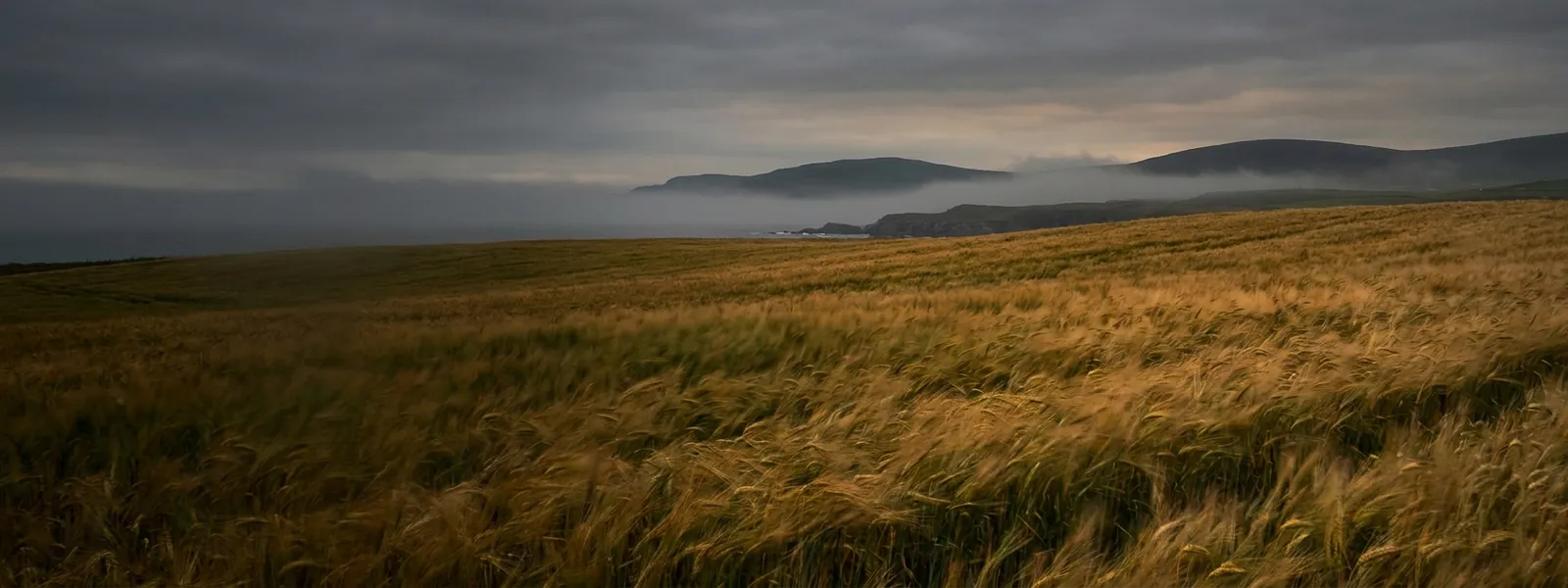
Springbank Local Barley is an annual limited release of cask strength Campbeltown single malt, distilled each year from barley that a local farmer grows for the distillery in or around Campbeltown.[18] The modern series began in 2016 with a 16 year old distilled in 1999, and by the end of 2025 it had reached eleven releases, from an 8 year old to that first 16 year old.[1][16]
This guide covers every modern release in order, with its farm, barley variety, casks, strength and bottle count, then explains where the name comes from and what to check before you buy a bottle.
Chapter 1
What is Springbank Local Barley?
It is Springbank's yearly cask strength release made only from barley grown on a farm near the distillery.
Springbank Local Barley is a limited edition Campbeltown single malt released about once a year by Springbank, the family-owned distillery of J & A Mitchell & Co.[19] Each year a local farmer is commissioned to grow barley for the distillery, and the whisky is distilled from that crop alone.[18]
Springbank describes the series as a grain to glass limited edition. The farm, the barley variety, the casks and the age all change from one batch to the next, so no two releases taste the same.[18]
Every release so far has been bottled at cask strength, without chill filtration or added colouring.[10] The strengths run from 51.6% for the 10 year old bottled in 2021 to 58.1% for the 8 year old released in 2025.[13][17]
| Distillery | Springbank, Campbeltown (J & A Mitchell & Co) |
|---|---|
| Modern series began | 2016, with a 16 year old distilled in September 1999 |
| Releases so far | 11 (2016 to 2025) |
| Ages | 8, 9, 10, 11, 13 and 16 years |
| Barley varieties | Prisma, Bere, Belgravia and Optic |
| Strength | Cask strength, from 51.6% to 58.1% |
| Bottles per release | 8,000 to 15,000 |
| Original Local Barley | Single casks from 1965 and 1966, bottled in the 1990s and in 2001 |
| Available at Glenbotal | 74 bottles today |
What this guide counts as a release
This guide lists the modern series that began in 2016: eleven bottlings, each with a printed age statement, a named farm and a run of several thousand bottles.[1][16] Those are the bottles most people mean when they say Local Barley today.
The original Local Barley whiskies from 1965 and 1966 are covered in the history chapter, but they are not listed as releases here. They were single casks, each with its own cask number and strength, bottled over many years, so they do not form a fixed list of editions.[1][16]
A 14 year old distilled in 1999 for the Springbank Society's tenth anniversary is also left out. It came from the same 1999 stock as the first modern release, but it was a members' bottling, not part of the annual series.[1]
Why the barley matters at Springbank
Springbank malts its own barley on traditional floors at the distillery, which is unusual in Scotland today. The Local Barley releases go one step further by using a crop grown within a few miles of Campbeltown.[10][18]
The 10 year old released in 2019, for example, was made from Optic barley grown at High Cattadale Farm in Southend, at the southern tip of the Kintyre peninsula. It was floor-malted and lightly peated at the distillery to around 12 to 15 ppm before distillation.[10]
Chapter 2
From the 1960s casks to the 2016 revival
The name goes back to a handful of legendary 1965 and 1966 casks; the modern series revived the idea fifty years later.
Local Barley is one of the most famous names in Springbank's history, and the modern releases deliberately borrow it.[1] The sections below follow the story from the 1960s casks to the eleventh release in 2025.
The original Local Barley
The first whiskies to carry the name were single casks distilled in 1965 and 1966 from locally sourced barley and bottled in the 1990s.[1] WhiskyNotes places them in a run of cask numbers in the 440s to 510s, and one example is a 32 year old from 1966, cask 496, bottled in 1998 at 55.1%.[1][20]
A small group of 1965 casks followed as single cask bottlings in 2001.[16] Many other single casks bottled between 1988 and 2000 did not print Local Barley on the front label at all, but named the farms the barley came from on the back.[16]
Those old bottles became highly sought after. When the series returned in 2016, The Whiskey Wash noted that the older bottles were collectable and could change hands for thousands of dollars.[3]
Why there was a long gap
Springbank closed in 1979 because of the poor state of the UK economy and did not reopen until 1989.[19] Whisky distilled in the 1960s was therefore some of the oldest stock the distillery could bottle in the 1990s.
The 16 year old that restarted the series was distilled in September 1999, ten years after the reopening.[2] One cask of that 1999 spirit had already been bottled in 2014 for the tenth anniversary of the Springbank Society.[1]
Five releases planned, then more
The 16 year old was announced early in 2016 as 9,000 bottles at 54.3%, distilled from barley grown at Low Machrimore Farm in Southend, a few miles outside Campbeltown.[1][3] It was presented as the first of five annual releases, with the age expected to change each year.[2]
Four more followed: an 11 year old in early 2017, a 10 year old late in 2017, a 9 year old in 2018 and a second 10 year old in 2019.[9][10] At the time the 2019 bottling was described as the fifth and final release of the planned set.[10]
The series did not stop there. WhiskyNotes reported in 2022 that Local Barley had carried on beyond the five planned releases, and six more editions followed between 2020 and 2025, two of them in 2025.[13][16]
Bigger runs and new farms
From 2020 the barley came from Glencraigs Farm, which supplied Belgravia barley for four releases in a row.[11][16] For the 10 year old bottled in 2021 the distillery raised the run to 15,000 bottles, the largest so far.[12][13]
The 2025 releases moved to new farms and back to Bere, an old Scottish barley first used in the series in 2017. The 8 year old came from High Ranachan Farm, and the 10 year old from Clochkiel Farm.[17][18]
Chapter 3
Every release, in order
Eleven releases from 2016 to 2025, each with its own farm, barley, casks and strength.
The releases below are in the order they came out. The year shown is the edition year used on the market, which is often the year after bottling: the 8 year old was bottled in December 2024 but sold as the 2025 release.[17][16]
Strength is the quickest way to tell two releases of the same age apart, because each one was bottled at its own cask strength.[10]
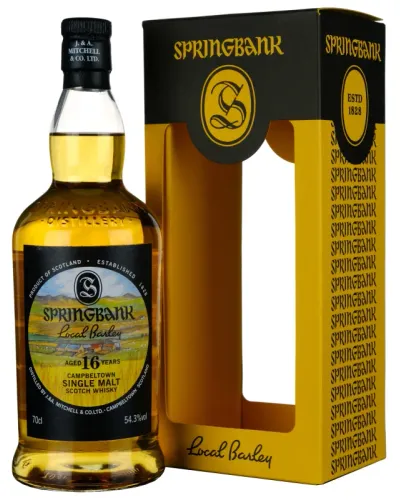
Springbank Local Barley 16 Year Old 1999
10 bottles available at Glenbotal
The 16 year old opened the modern series in 2016. It was distilled in September 1999 from Prisma barley grown at Low Machrimore Farm near Southend, matured in 80% bourbon and 20% European oak sherry casks, and bottled in January 2016 at 54.3%.
It is still the oldest release in the series, and 9,000 bottles were made. A cask from the same 1999 stock had been bottled two years earlier as a 14 year old for the Springbank Society.
- Distillery
- Springbank
- Age
- 16 years (distilled September 1999)
- ABV
- 54.3%
- Bottle size
- 70cl
- Cask type
- 80% American oak bourbon, 20% European oak sherry
- Released
- 2016
- Number of Bottles Produced
- 9,000
Tasting notes
- Nose
- Sweet and salty at first, then shortbread, vanilla, pear drops and raisins.
- Palate
- Sweet and rounded, with buttery tablet, soft fruit, mineral touches and a very gentle peat.
- Finish
- A little more peat as it fades, with light sweets and lemon peel.
The 6 lowest-priced of 10 bottles.
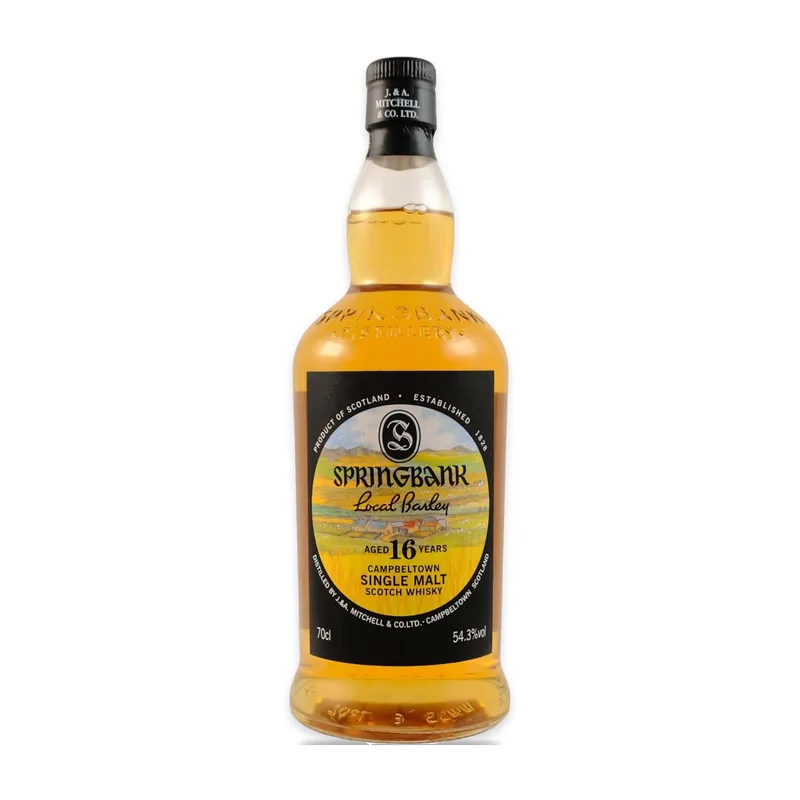
Springbank – Local Barley 16 Year Old
75cl / 54.3%
US$1,349.00
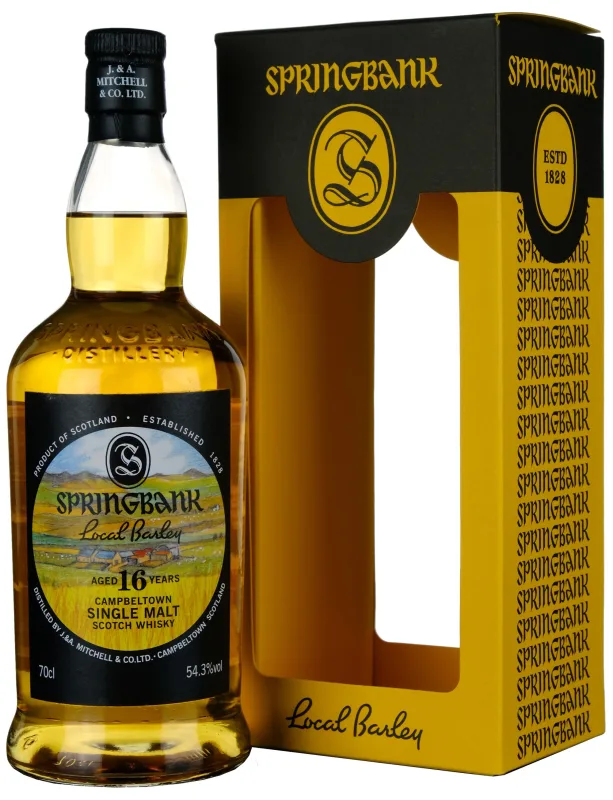
Springbank – 1999-2016 16 Year Old Local Barley
70cl / 54.3%
US$1,539.00
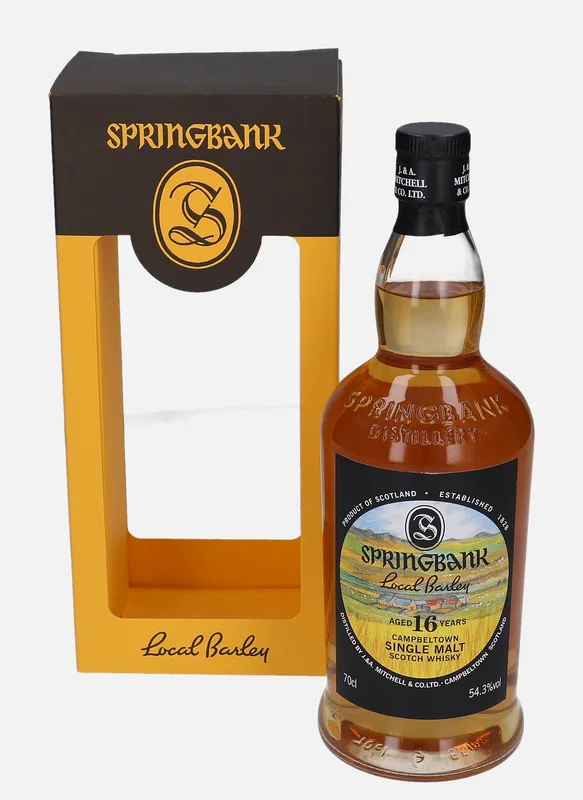
Springbank – 1999 16 Year Old Local Barley
70cl / 54.3%
US$1,959.00
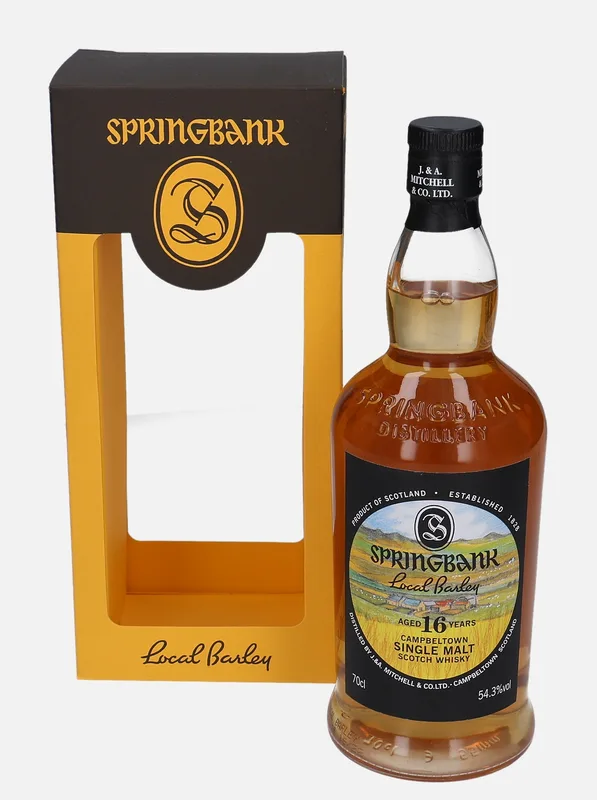
Springbank – 1999 16 Year Old Local Barley
70cl / 54.3%
US$2,049.00
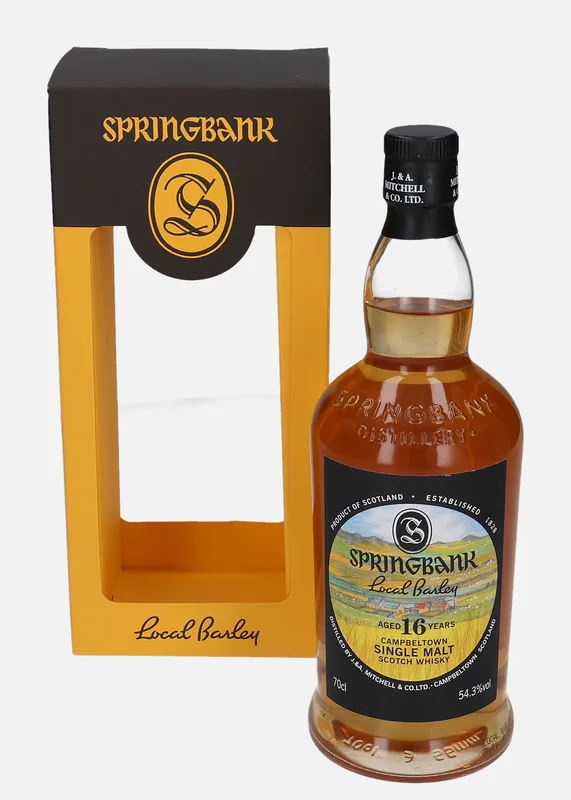
Springbank – 1999 16 Year Old Local Barley
70cl / 54.3%
US$2,049.00
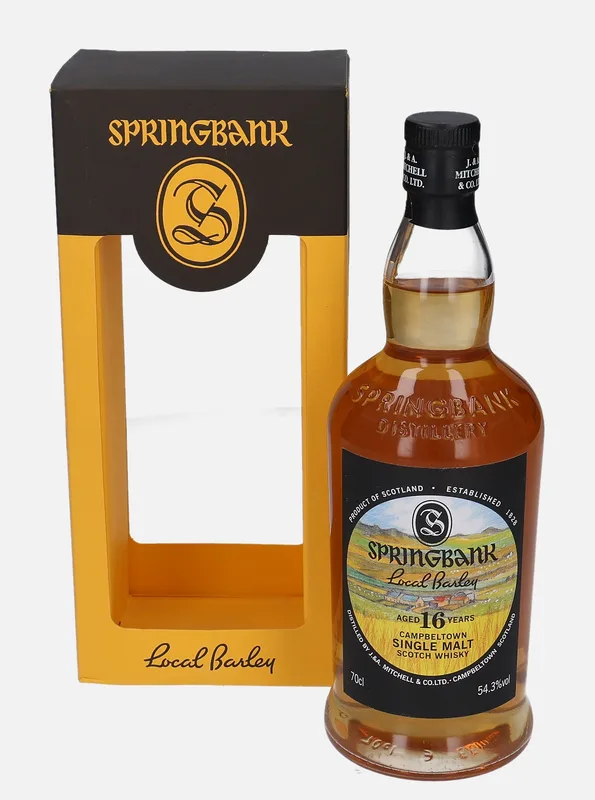
Springbank – 1999 16 Year Old Local Barley
70cl / 54.3%
US$2,049.00
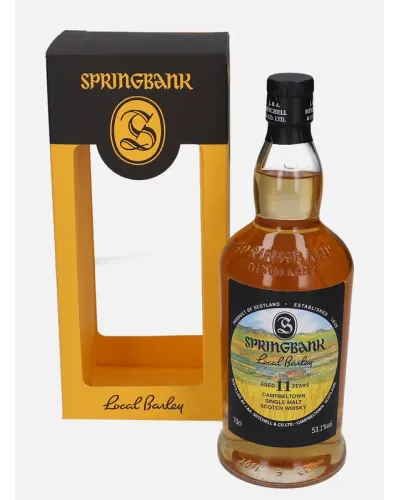
Springbank Local Barley 11 Year Old 2006
3 bottles available at Glenbotal
The second release was an 11 year old distilled in February 2006 from Bere barley grown at Aros Farm on the Kintyre peninsula. It matured in bourbon casks and was bottled in February 2017 at 53.1%.
Bere is an old barley variety, and this was the first Local Barley made from it. Compared with the 16 year old it is lighter in peat and oil, and more about citrus, marmalade and honey.
- Distillery
- Springbank
- Age
- 11 years (distilled February 2006)
- ABV
- 53.1%
- Bottle size
- 70cl
- Cask type
- bourbon casks
- Released
- 2017
- Number of Bottles Produced
- 9,000
About 9,000 bottles, as announced; no exact final count published.
Tasting notes
- Nose
- Orange marmalade and honey with mineral notes, banana and salted caramel.
- Palate
- Creamy, with sweet grapes, honeycomb, marshmallow, a pinch of salt, liquorice and a little peat.
- Finish
- Nutty and buttery, with almonds, hazelnuts and walnuts.
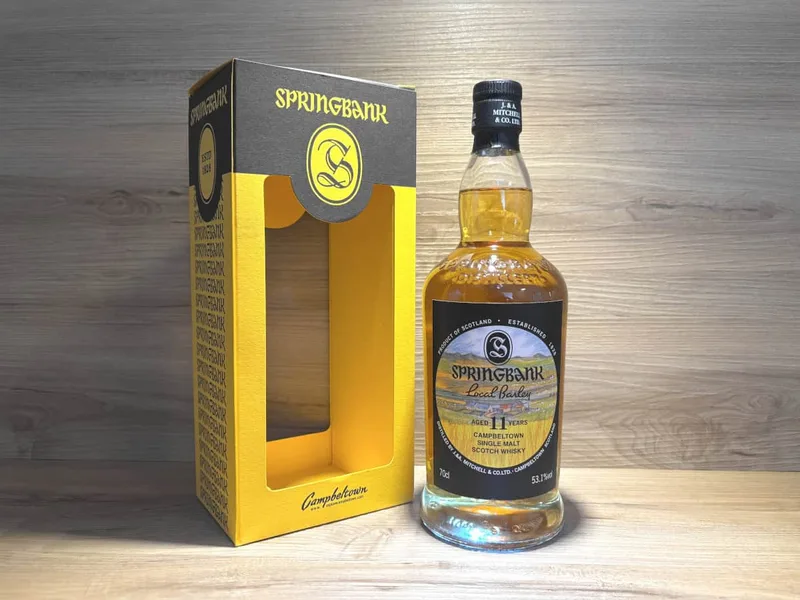
Springbank – Local Barley 11 Year Old 2006
70cl / 53.1%
US$609.00
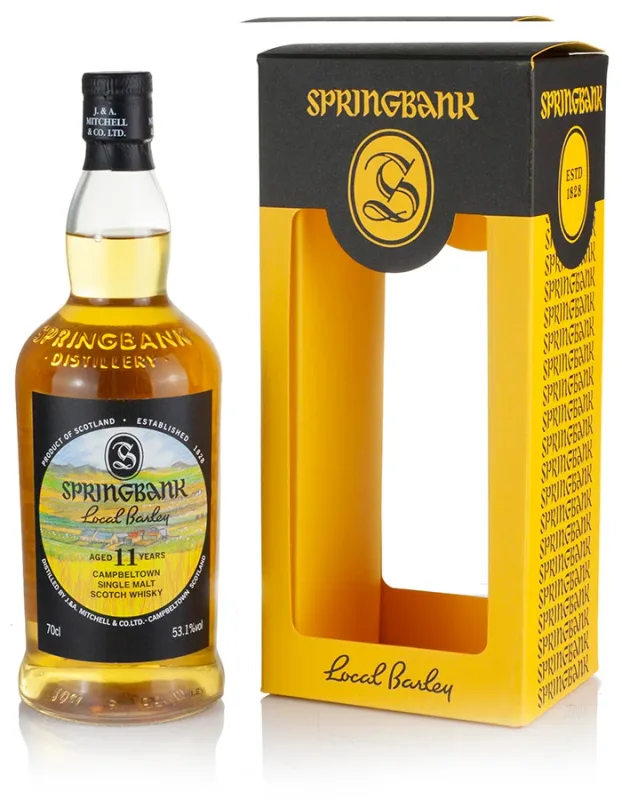
Springbank – 11 Year Old 2006 Local Barley
US$619.00
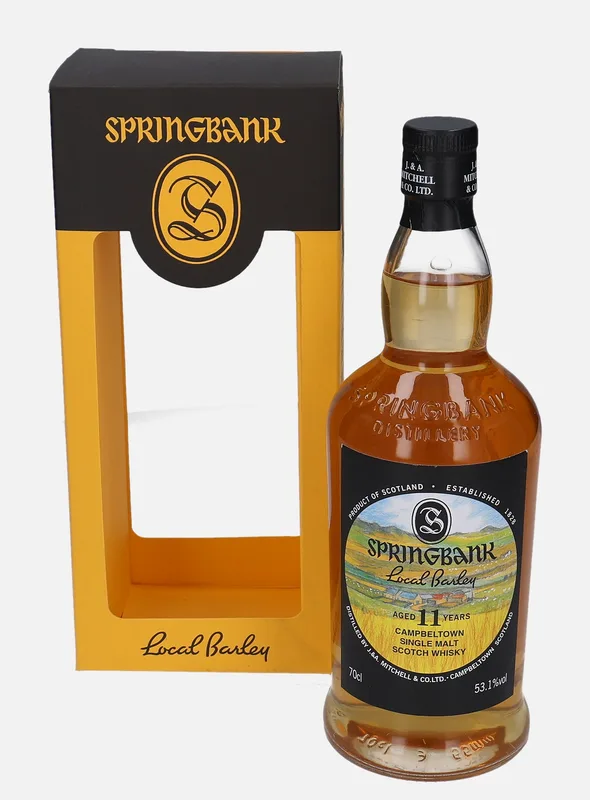
Springbank – 2006 11 Year Old Local Barley
70cl / 53.1%
US$729.00
Springbank Local Barley 10 Year Old 2007
5 bottles available at Glenbotal
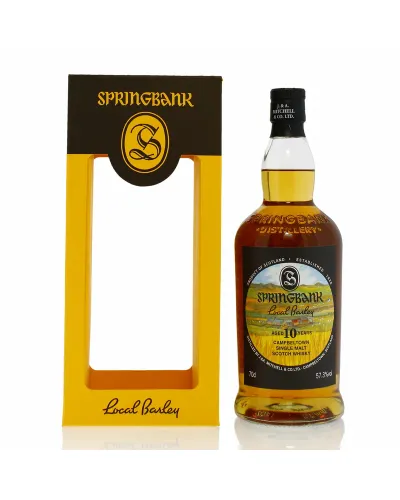
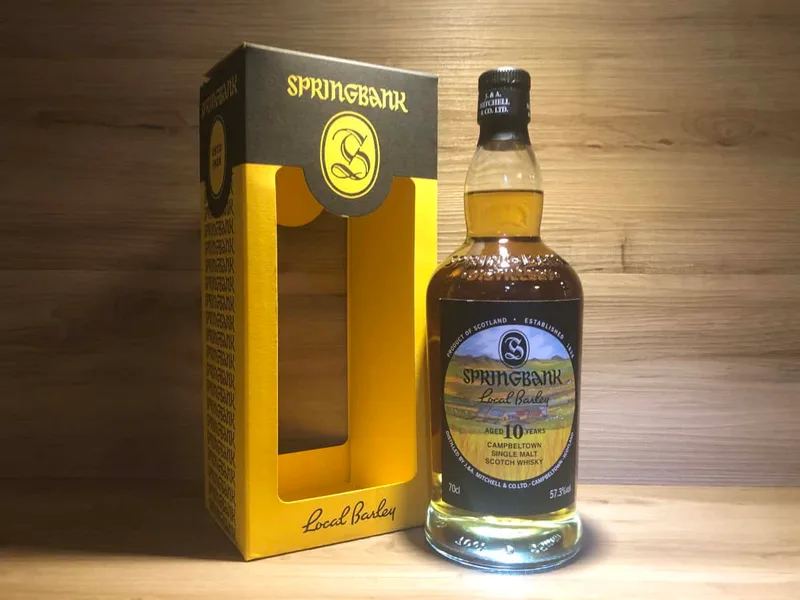
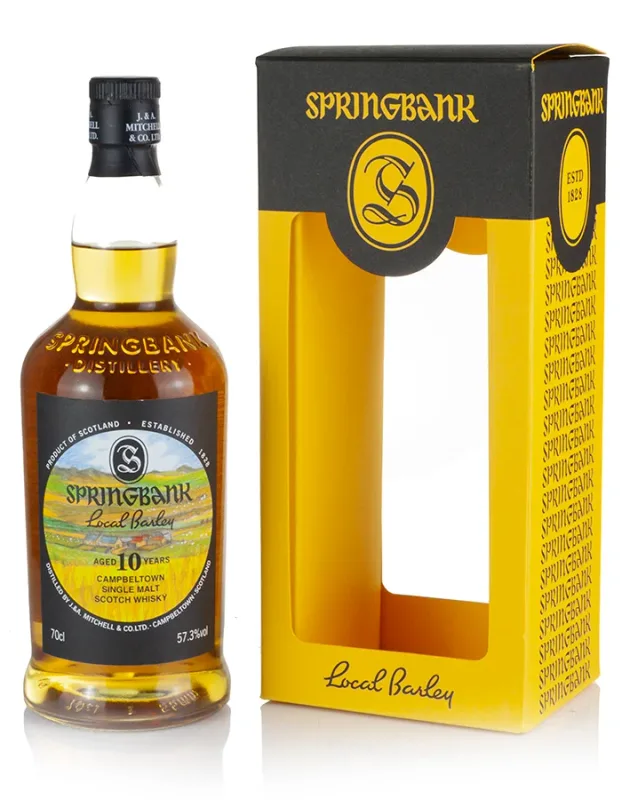
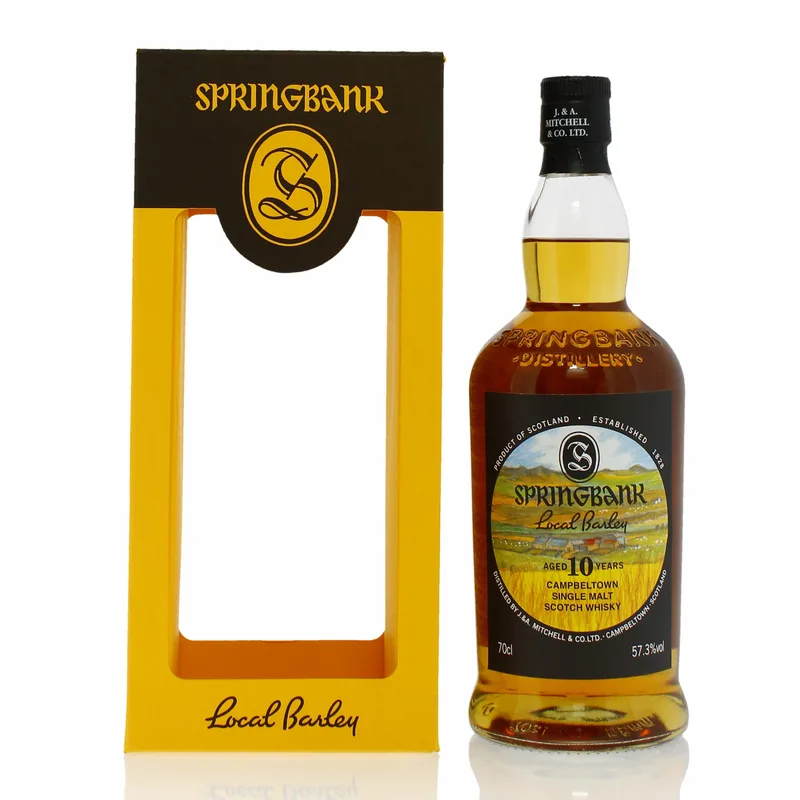
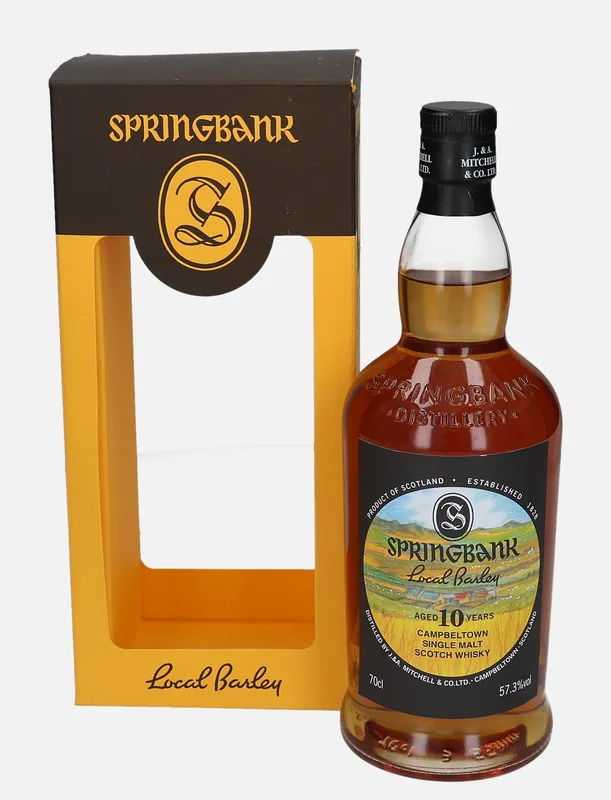
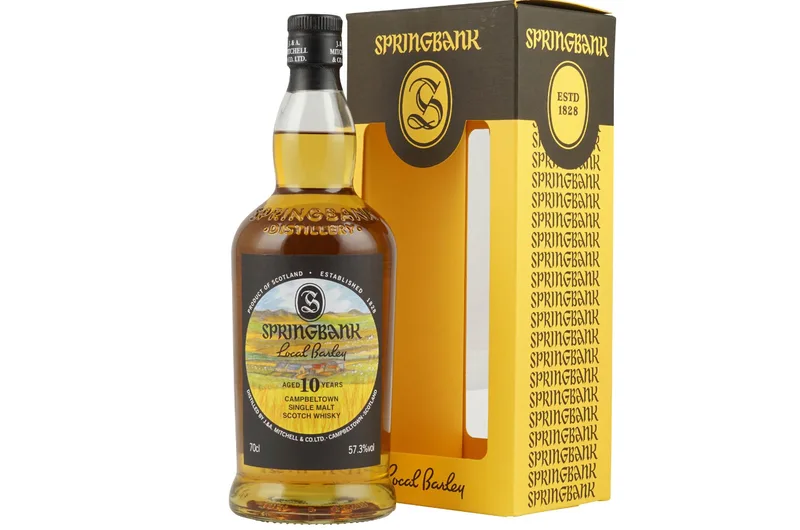
The third release, and the second of 2017, was a 10 year old distilled in 2007 from Belgravia barley grown at West Back Farm, about 6 km from the distillery. It matured in 70% bourbon and 30% sherry casks and was bottled in November 2017 at 57.3%.
It was the first Local Barley made from Belgravia, a more modern variety than the barley used before. At 57.3% it is the strongest of the five 10 year olds, which makes it easy to tell apart from the 2019 release that looks almost identical.
- Distillery
- Springbank
- Age
- 10 years (distilled 2007)
- ABV
- 57.3%
- Bottle size
- 70cl
- Cask type
- 70% bourbon, 30% sherry
- Released
- 2017
- Number of Bottles Produced
- 9,000
Tasting notes
- Nose
- Vanilla, lemon zest and honey with orange peel, a little spice and a wisp of smoke.
- Palate
- Sweet honey, vanilla and pineapple, then peeled orange, apricot, mild smoke and a touch of coffee.
- Finish
- Caramel and raisins with a slight bitterness and a little sea salt.
Springbank – Local Barley 2017 10 Year Old
70cl / 57.3%
US$619.00
Springbank – 10 Year Old 2007 Local Barley (November 2017)
US$619.00
Springbank – 2007 10 Year Old Local Barley
70cl / 57.3%
US$689.00
Springbank – 2007 10 Year Old Local Barley
70cl / 57.3%
US$849.00
Springbank – 10 Year Old Local Barley 2007
70cl / 57.3%
US$2,259.00
Springbank Local Barley 9 Year Old 2009
10 bottles available at Glenbotal
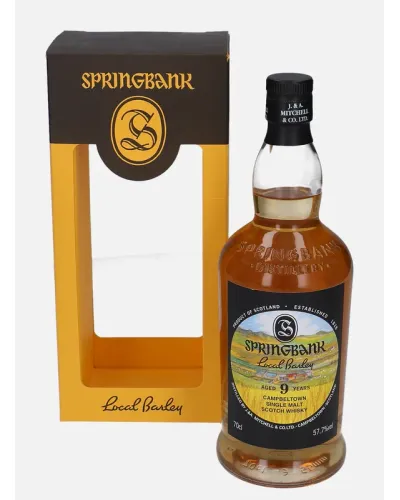
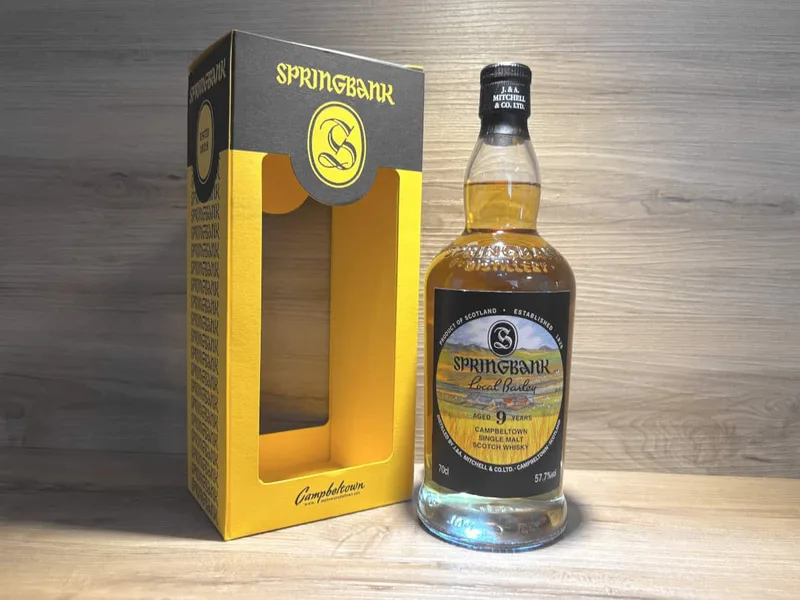
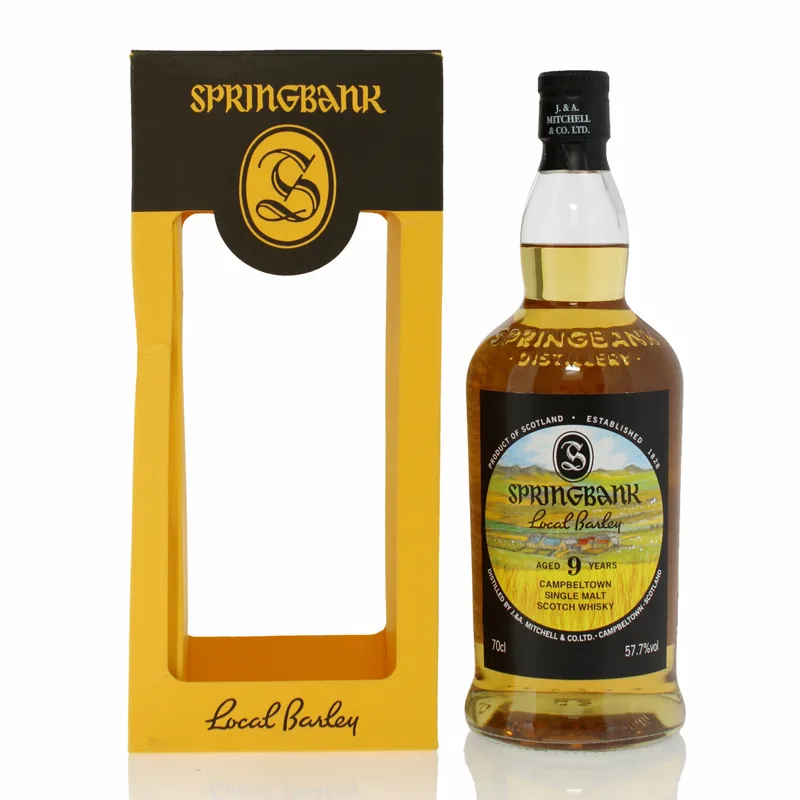
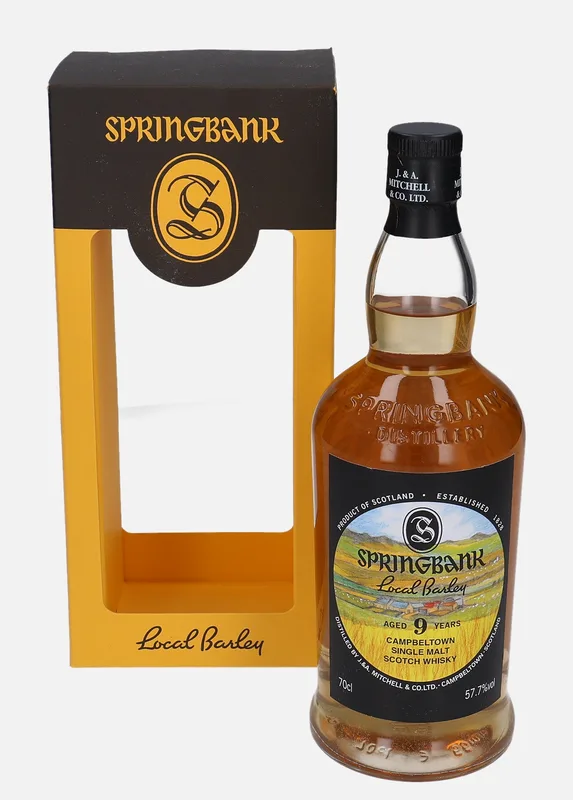
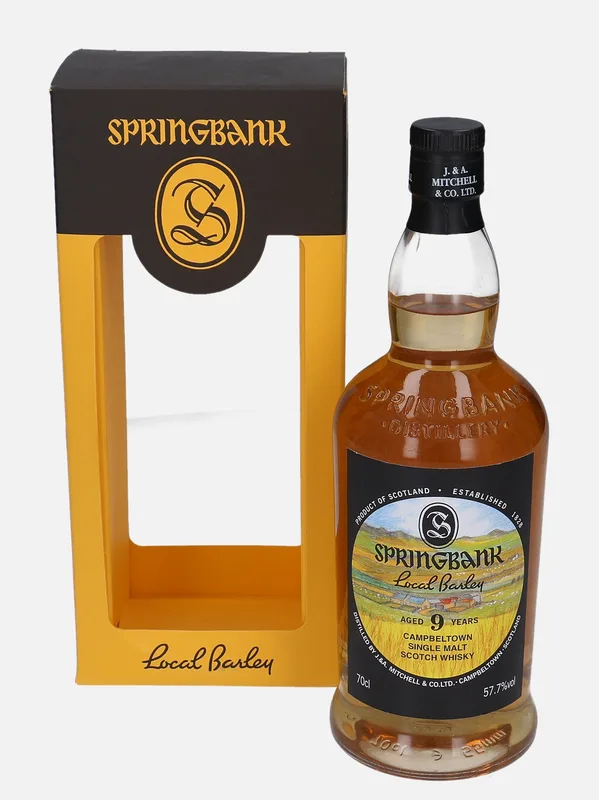
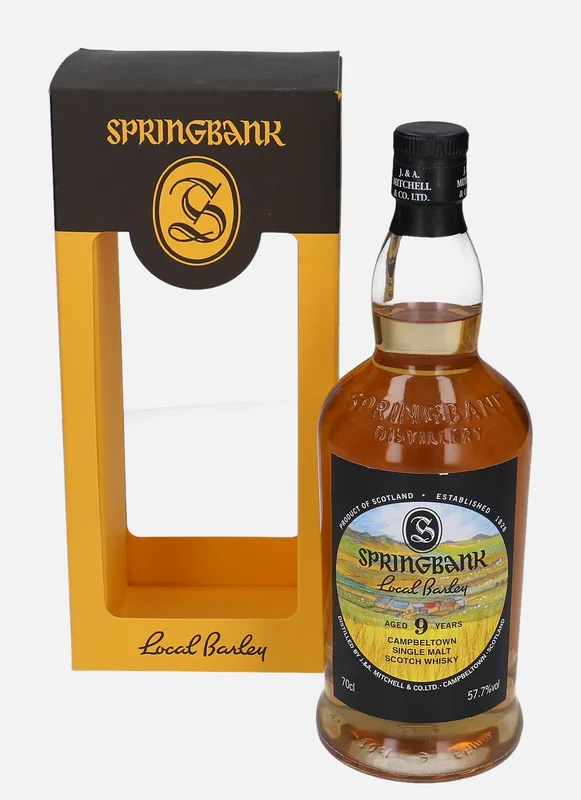
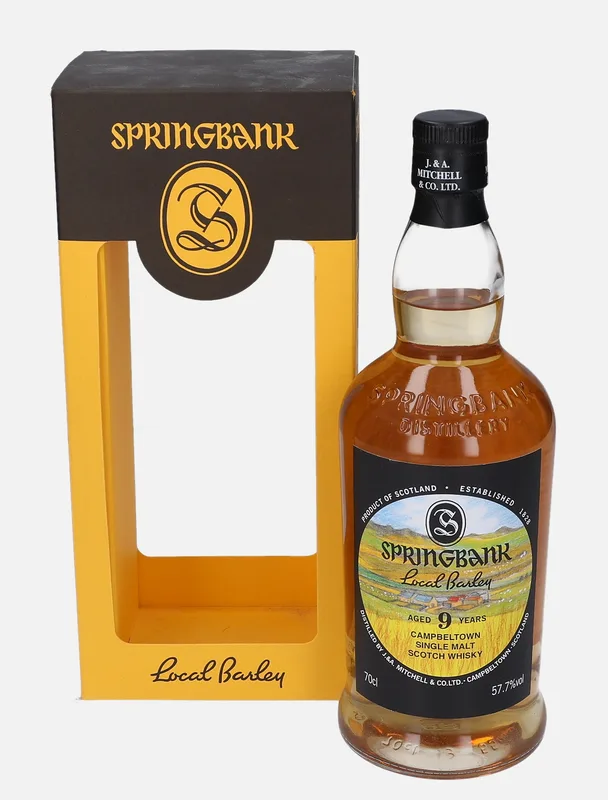
The 9 year old of 2018 is the fourth release. It was distilled in July 2009 from Optic barley grown at High Cattadale Farm, matured in 80% bourbon and 20% sherry casks and bottled on 18 October 2018 at 57.7%.
It is the only 9 year old in the series, and 9,700 bottles were made. Its spirit comes from the same month's distillation as the 10 year old released a year later.
- Distillery
- Springbank
- Age
- 9 years (distilled July 2009)
- ABV
- 57.7%
- Bottle size
- 70cl
- Cask type
- 80% bourbon, 20% sherry
- Released
- 2018
- Number of Bottles Produced
- 9,700
Tasting notes
- Nose
- Biscuit and malt with freshly grated nutmeg, peaty spice and salted peanuts.
- Palate
- Rich honey and biscuits with apricot, quince and a hint of smoke.
- Finish
- Long, with macadamia nuts, pear, sultanas and a little salty sea air.
The 6 lowest-priced of 10 bottles.
Springbank – Local Barley 2018 9 Year Old
70cl / 57.7%
US$609.00
Springbank – 2009 9 Year Old Local Barley
70cl / 57.7%
US$649.00
Springbank – 2009 9 Year Old Local Barley
70cl / 57.7%
US$729.00
Springbank – 2009 9 Year Old Local Barley
70cl / 57.7%
US$729.00
Springbank – 2009 9 Year Old Local Barley
70cl / 57.7%
US$729.00
Springbank – 2009 9 Year Old Local Barley
70cl / 57.7%
US$729.00
Springbank Local Barley 10 Year Old 2009
3 bottles available at Glenbotal
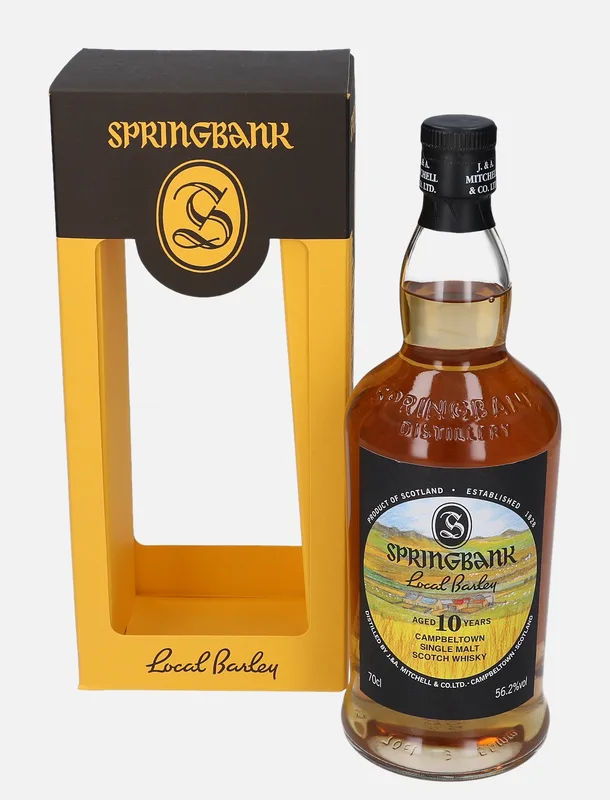
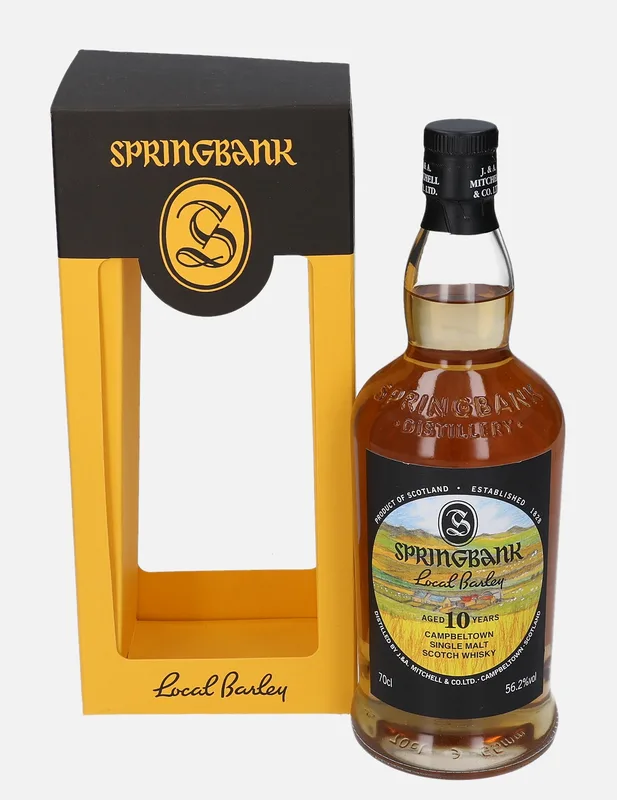
The fifth release was a second 10 year old, distilled in July 2009 from Optic barley grown at High Cattadale Farm in Southend. The barley was floor-malted and lightly peated at the distillery, and the spirit matured in 77% bourbon, 20% sherry and 3% port casks before 9,000 bottles were released in October 2019 at 56.2%.
It was presented at the time as the last of the five planned releases. Next to the 2017 10 year old it looks almost the same, so the 56.2% strength is the easiest way to recognise it.
- Distillery
- Springbank
- Age
- 10 years (distilled July 2009)
- ABV
- 56.2%
- Bottle size
- 70cl
- Cask type
- 77% bourbon, 20% sherry, 3% port
- Released
- 2019
- Number of Bottles Produced
- 9,000
Tasting notes
- Nose
- Honey, malt and nutmeg with orange, a roasted note, spice and a little charcoal.
- Palate
- Sweet honey and vanilla, then pineapple, papaya, passion fruit, apricot and quince over fading campfire smoke.
- Finish
- Caramel, raisins and exotic fruit with a touch of sea salt.
Springbank – 2009 10 Year Old Local Barley
70cl / 56.2%
US$759.00
Springbank – 2009 10 Year Old Local Barley
70cl / 56.2%
US$799.00
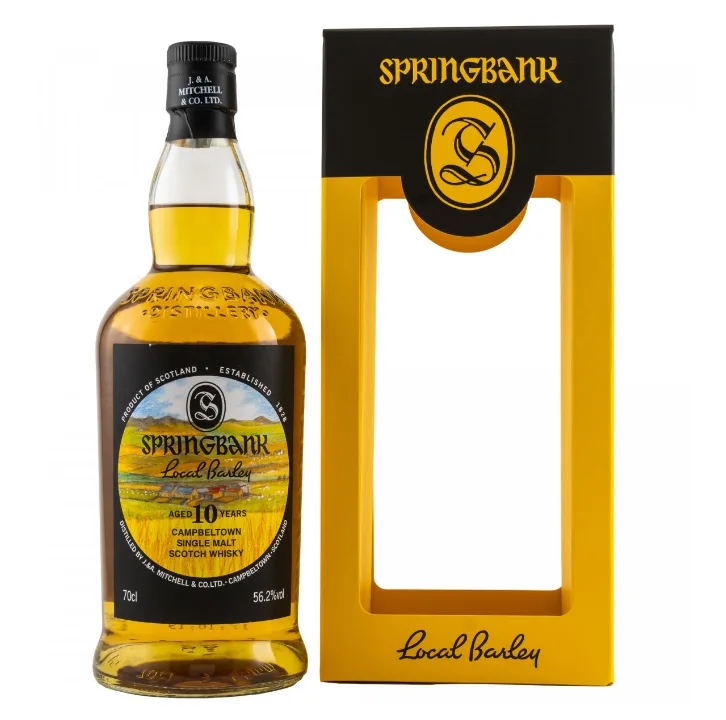
Springbank – 10 Year Old Local Barley 2019
70cl / 56.2%
US$2,259.00
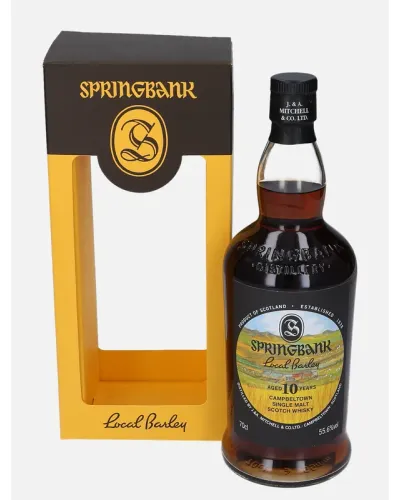
Springbank Local Barley 10 Year Old 2010
6 bottles available at Glenbotal
The 2020 edition is the only Local Barley matured entirely in oloroso sherry casks. It was distilled in 2010 from Belgravia barley grown at Glencraigs Farm, bottled in December 2020 at 55.6%, and reached the market around March 2021.
It was the first release from Glencraigs Farm, which went on to supply the next three. The sherry casks give it a much darker colour than the other 10 year olds, and 8,500 bottles were made.
- Distillery
- Springbank
- Age
- 10 years (distilled 2010)
- ABV
- 55.6%
- Bottle size
- 70cl
- Cask type
- 100% oloroso sherry
- Released
- 2020
- Number of Bottles Produced
- 8,500
Tasting notes
- Nose
- Rich and nutty, with raisins, plums, dark chocolate, espresso beans and walnuts.
- Palate
- Creamy and elegant, with crème brûlée, orange zest, sweet spice and a hint of nutmeg.
- Finish
- Very long and sweet, with maraschino cherries, caramel and a salty sea note.
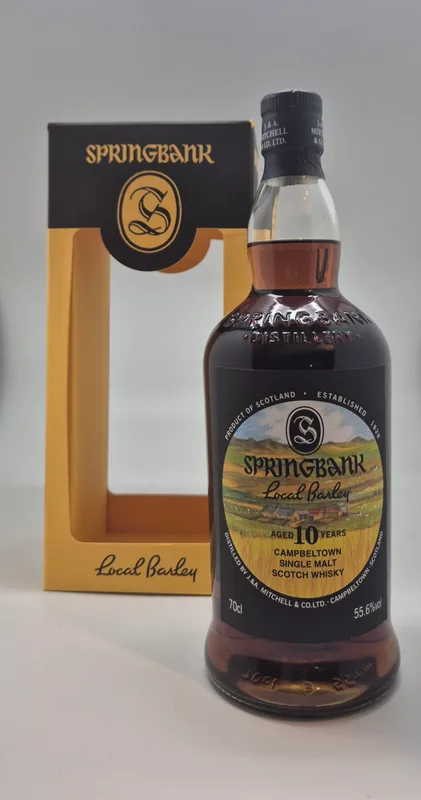
Springbank – Local Barley 10y 2010
US$1,139.00
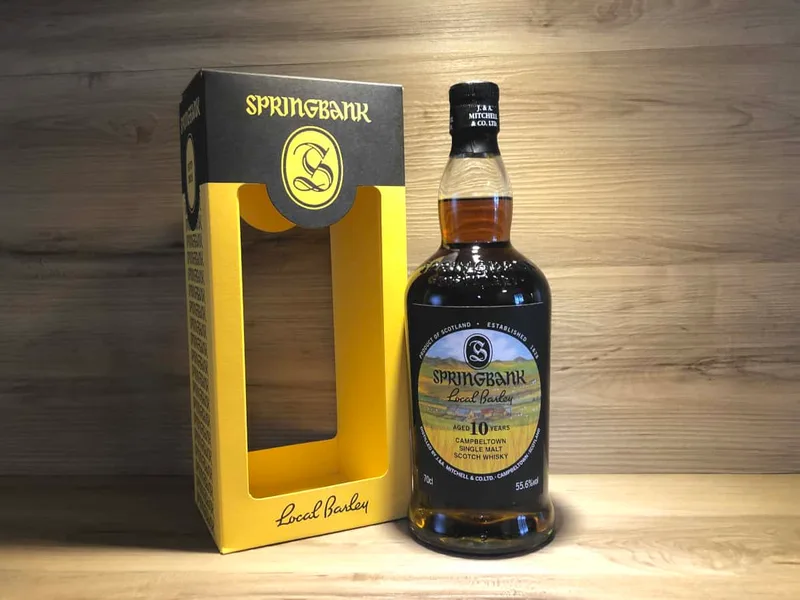
Springbank – Local Barley Oloroso 2020 10 Years
70cl / 55.6%
US$1,219.00
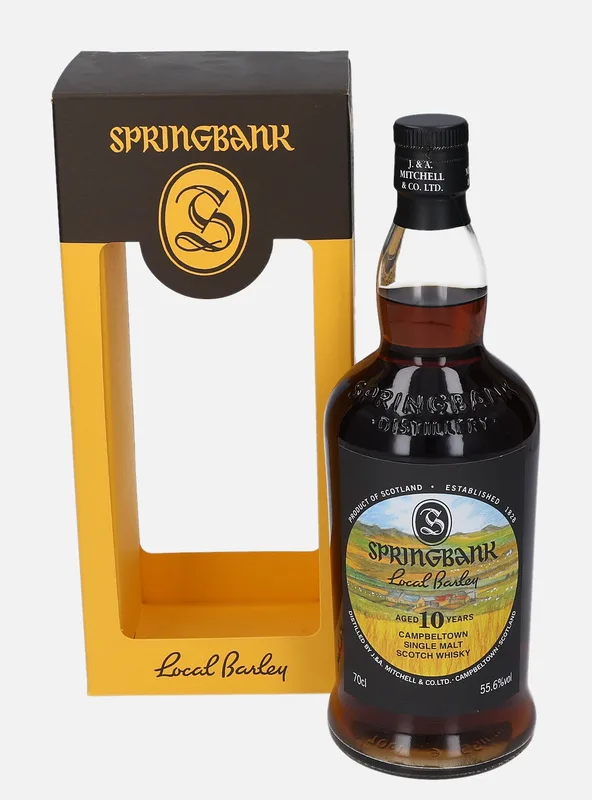
Springbank – 2010 10 Year Old Local Barley
70cl / 55.6%
US$1,649.00
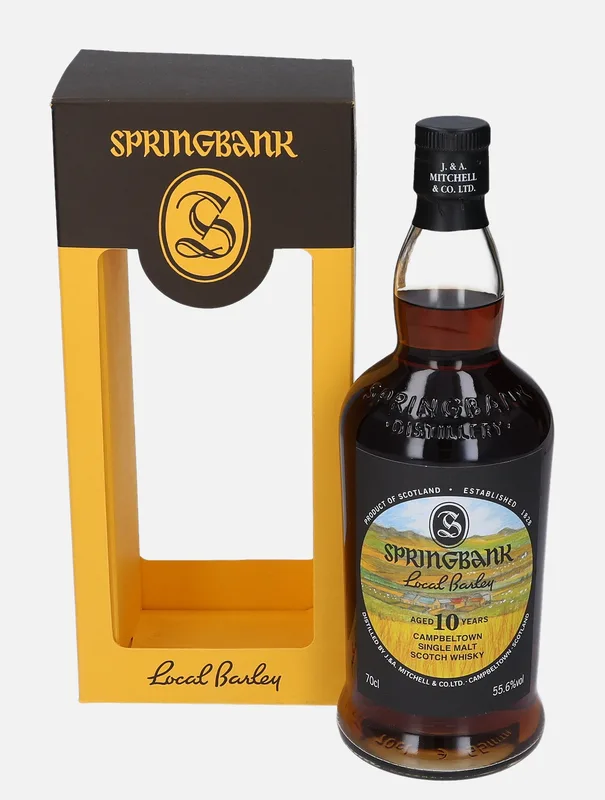
Springbank – 2010 10 Year Old Local Barley
70cl / 55.6%
US$1,649.00
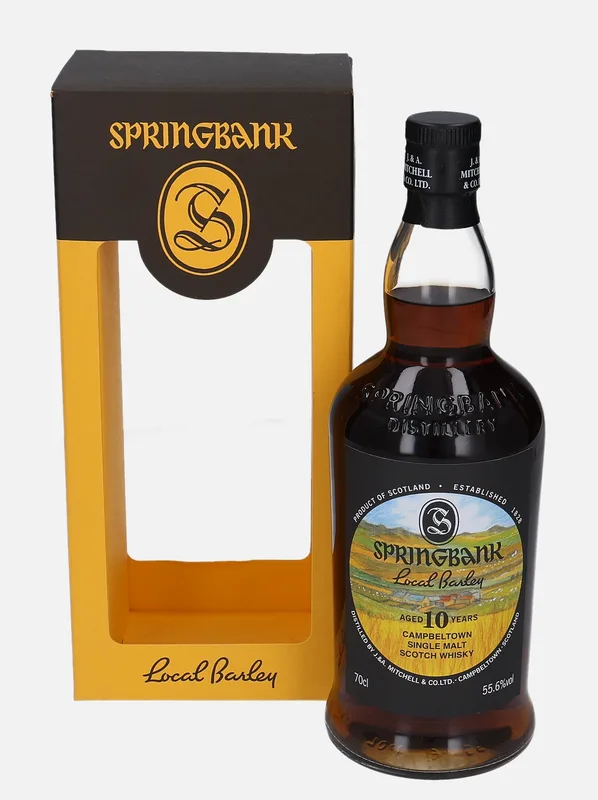
Springbank – 2010 10 Year Old Local Barley
70cl / 55.6%
US$1,649.00
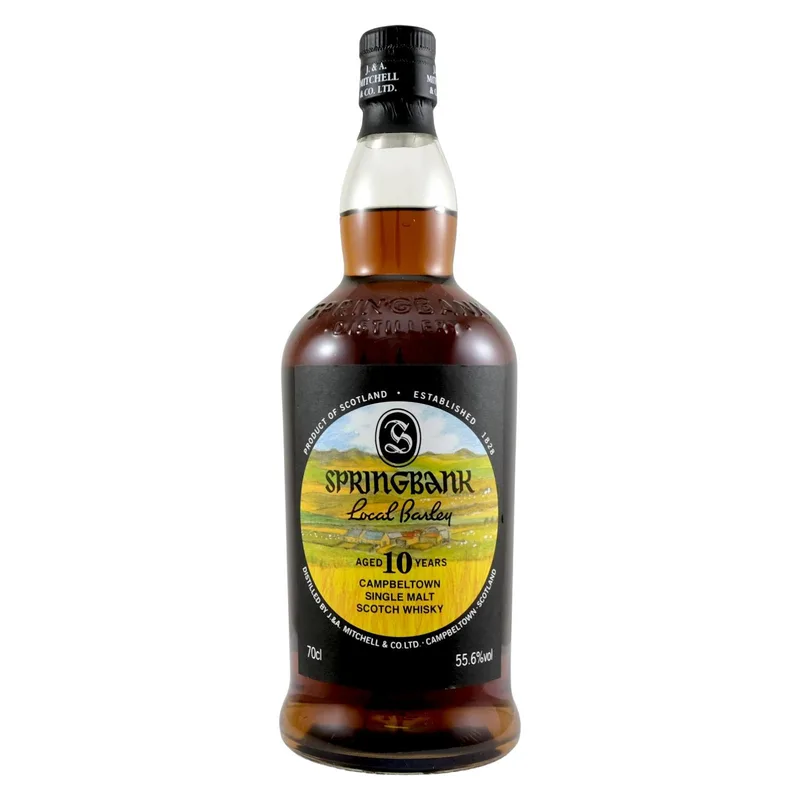
Springbank – Local Barley 2010 10 Years
70cl / 55.6%
US$1,849.00
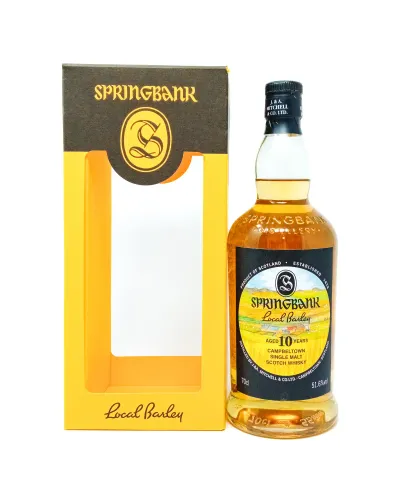
Springbank Local Barley 10 Year Old 2011
7 bottles available at Glenbotal
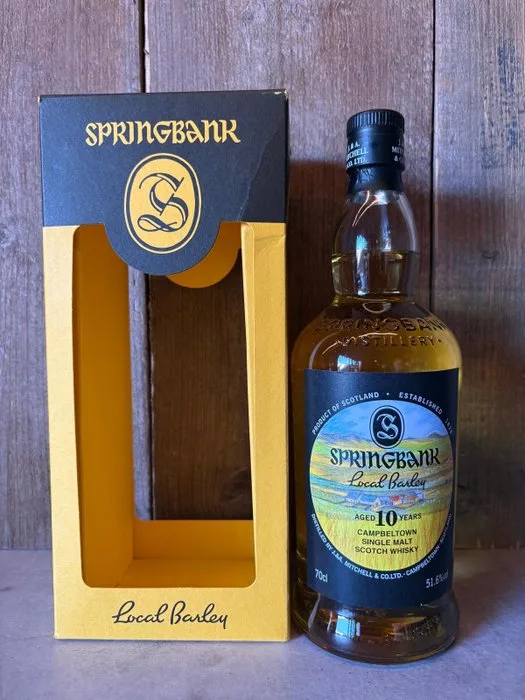
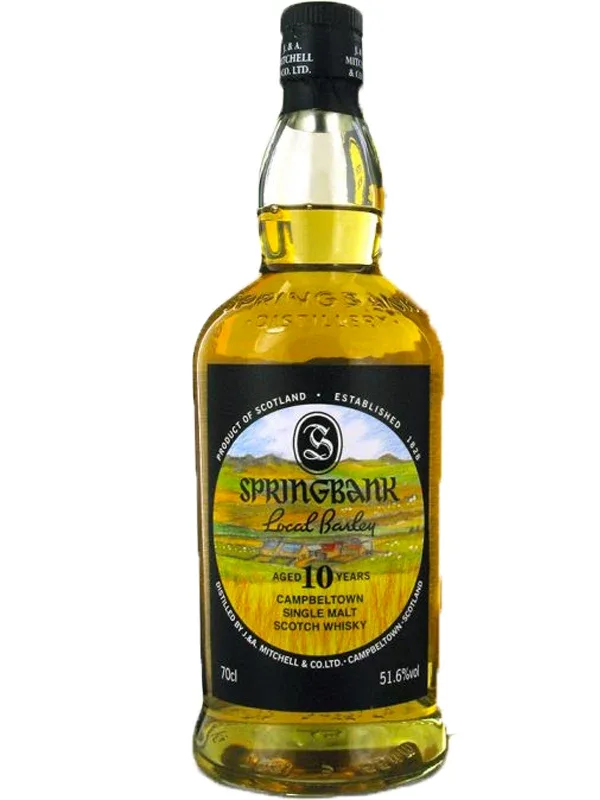
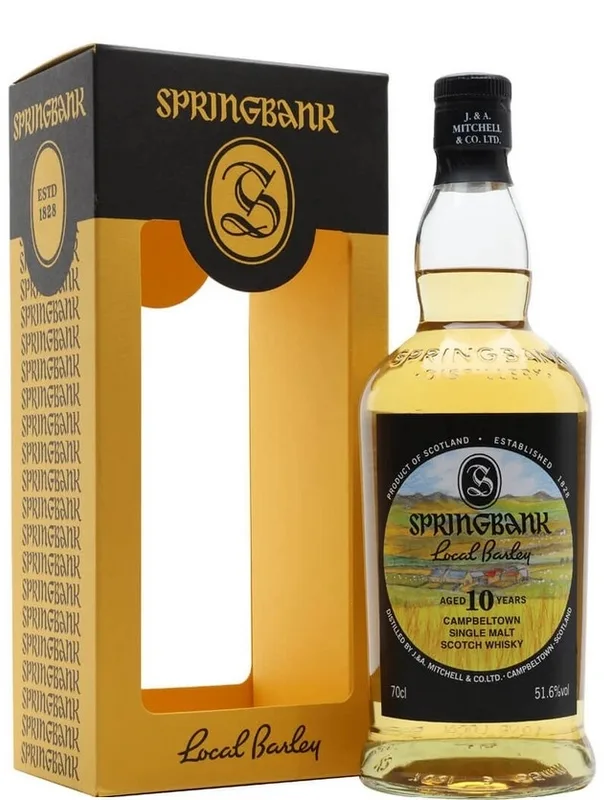
The 2022 release is a 10 year old distilled in 2011 from Belgravia barley grown at Glencraigs Farm. It matured in ex-bourbon casks only and was bottled on 14 December 2021 at 51.6%, the lowest strength in the series.
Springbank raised the run to 15,000 bottles for this release, the largest Local Barley so far at the time. It is the bourbon-cask counterpart to the all-sherry 2020 edition from the same farm.
- Distillery
- Springbank
- Age
- 10 years (distilled 2011)
- ABV
- 51.6%
- Bottle size
- 70cl
- Cask type
- ex-bourbon casks
- Released
- 2022
- Number of Bottles Produced
- 15,000
Tasting notes
- Nose
- Apple and orange zest with dried apricot, cinnamon, nutmeg and toasted oak.
- Palate
- Creamy, with vanilla, honeyed almonds, barley sugar and a little ginger.
- Finish
- Long, with soft salted caramel and gentle citrus zest.
The 6 lowest-priced of 7 bottles.
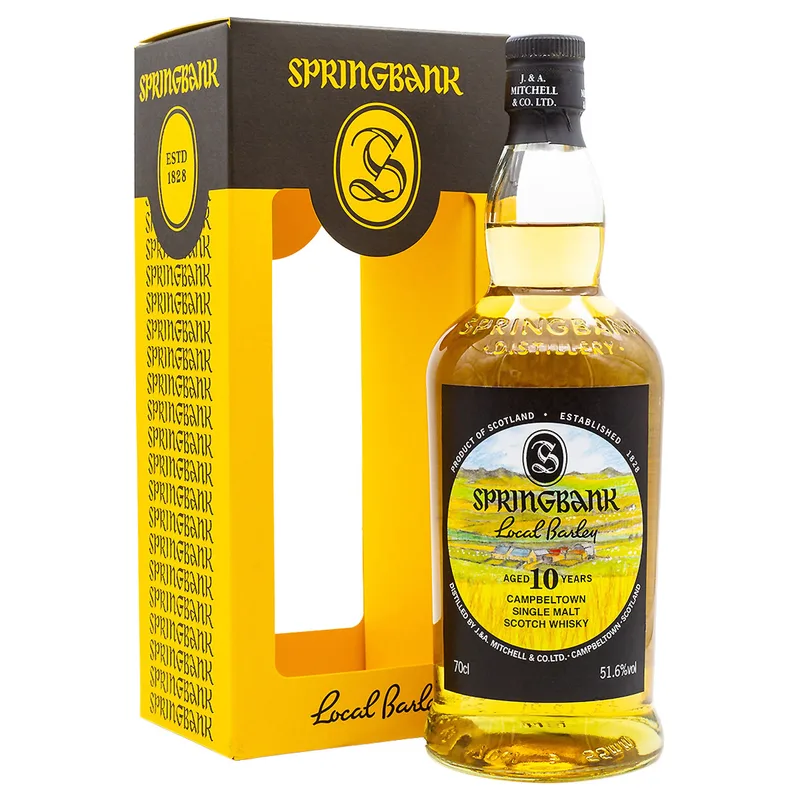
Springbank – Local Barley 10 Year Old 2011/2021
70cl / 51.6%
US$489.00
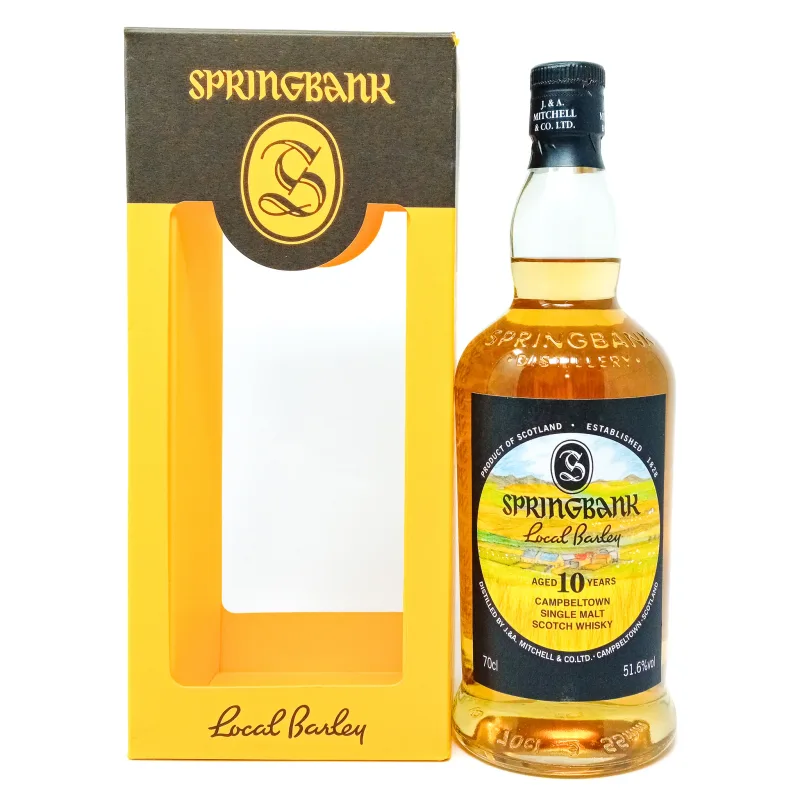
Springbank – Local Barley 2011 10 Year Old
51.6%
US$569.00
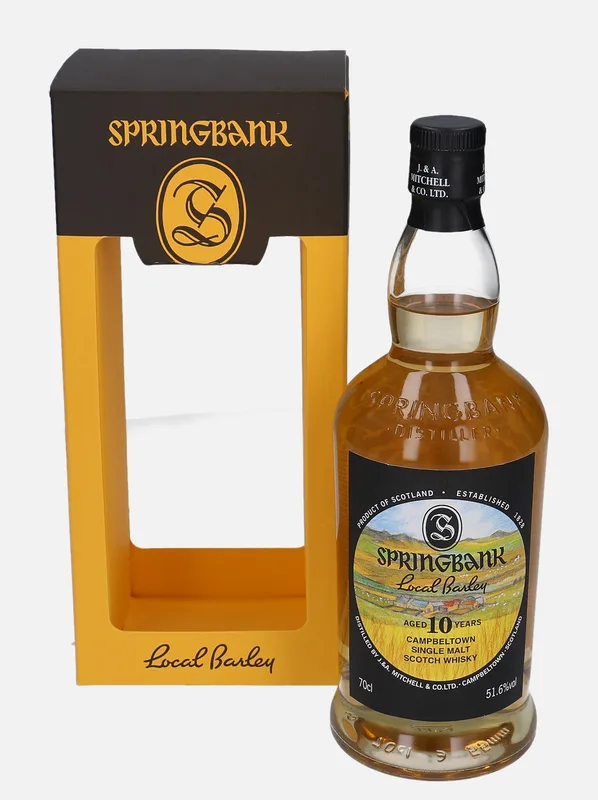
Springbank – 2011 10 Year Old Local Barley
70cl / 51.6%
US$679.00
Springbank 2011 10 years old Local Barley - b. 2021 - 70cl
70cl / 51.6%
US$689.00
Springbank – Local Barley 10 Year Old 2022
75cl / 51.6%
US$829.00
Springbank – Local Barley 10 Year Old 2022
70cl / 51.6%
US$979.00
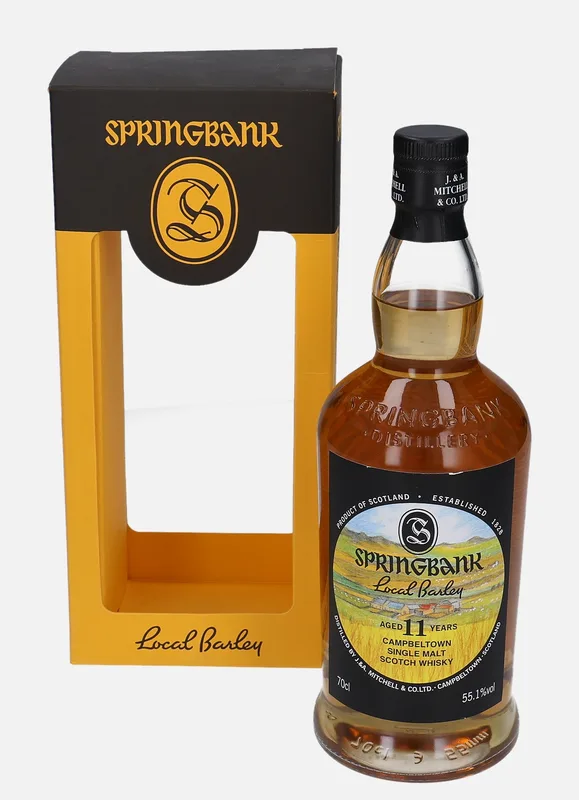
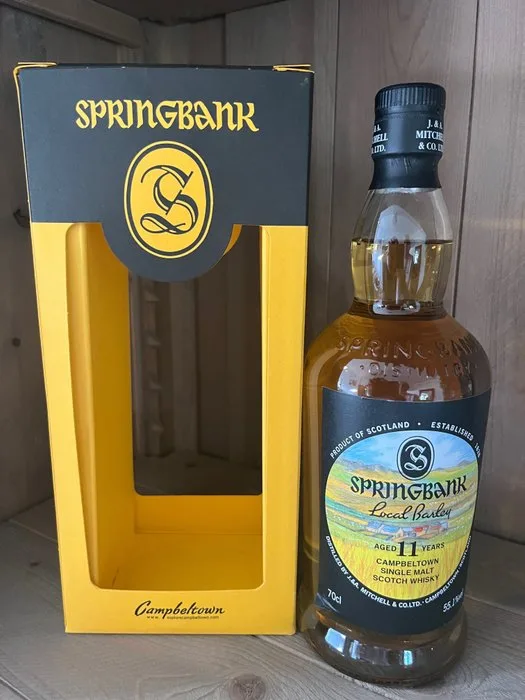
Springbank Local Barley 11 Year Old 2011
9 bottles available at Glenbotal
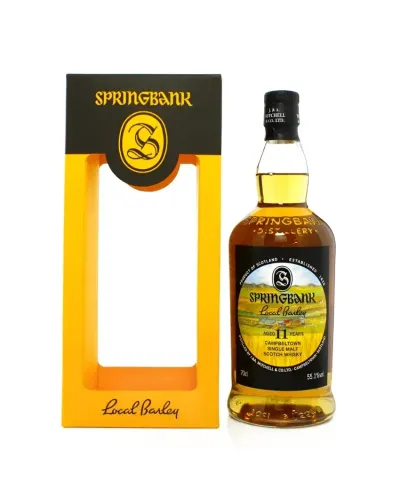
The 2023 release is an 11 year old distilled in May 2011 from Belgravia barley grown at Glencraigs Farm, the same vintage and barley as the 2022 release. It was bottled in December 2022 at 55.1%, and 15,000 bottles were made.
What sets it apart is the cask mix: 55% sherry, 35% bourbon and 10% rum casks, the first rum casks used in the series.
- Distillery
- Springbank
- Age
- 11 years (distilled May 2011)
- ABV
- 55.1%
- Bottle size
- 70cl
- Cask type
- 55% sherry, 35% bourbon, 10% rum
- Released
- 2023
- Number of Bottles Produced
- 15,000
Tasting notes
- Nose
- Fruity, with papaya, mango and lemon over a subtle floral note.
- Palate
- Lemon carries through with manuka honey and pear, then a salty, mineral edge.
- Finish
- Gentle peat smoke.
The 6 lowest-priced of 9 bottles.
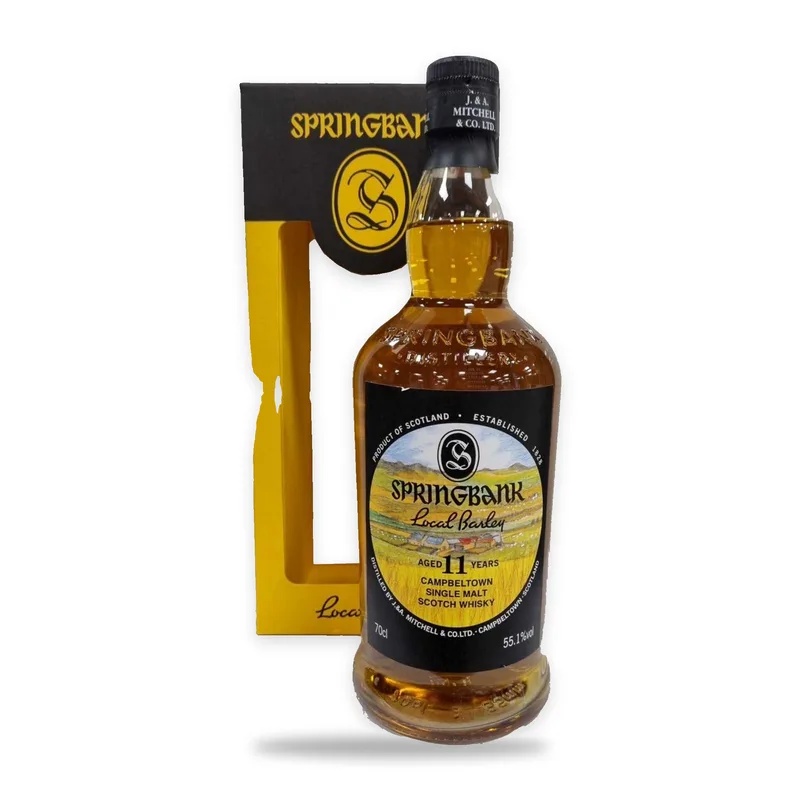
Springbank – 11 Year Old Local Barley, Edition 2023
70cl / 55.1%
US$519.00
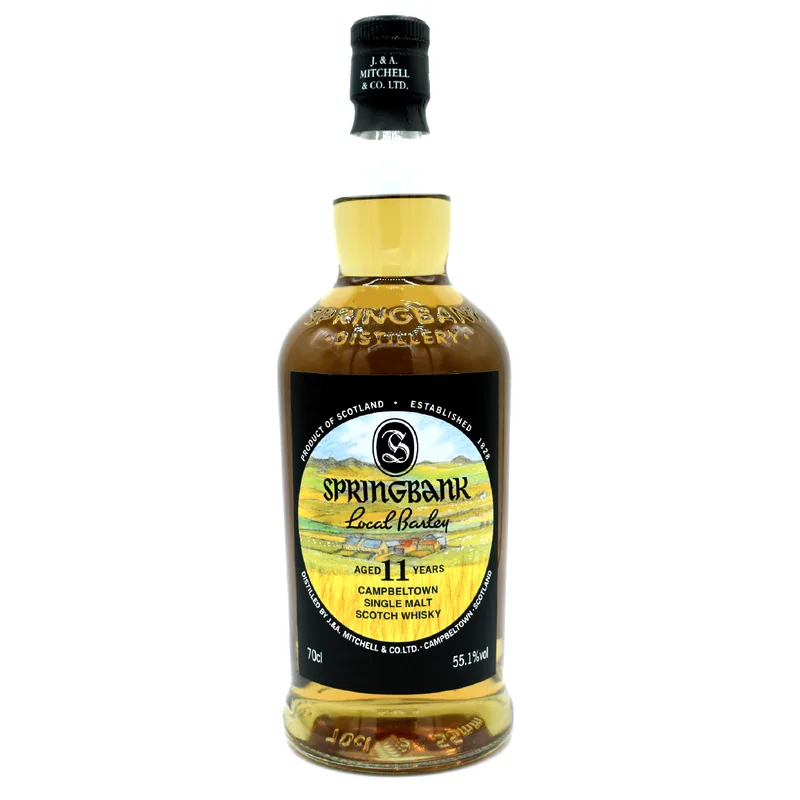
Springbank – 11 Years Local Barley 2022
US$569.00
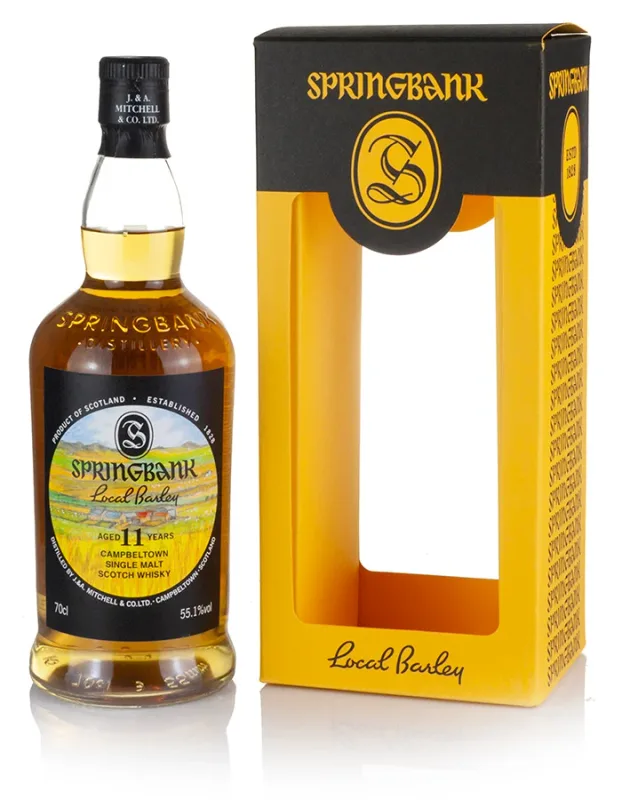
Springbank – 11 Year Old 2011 Local Barley
US$619.00
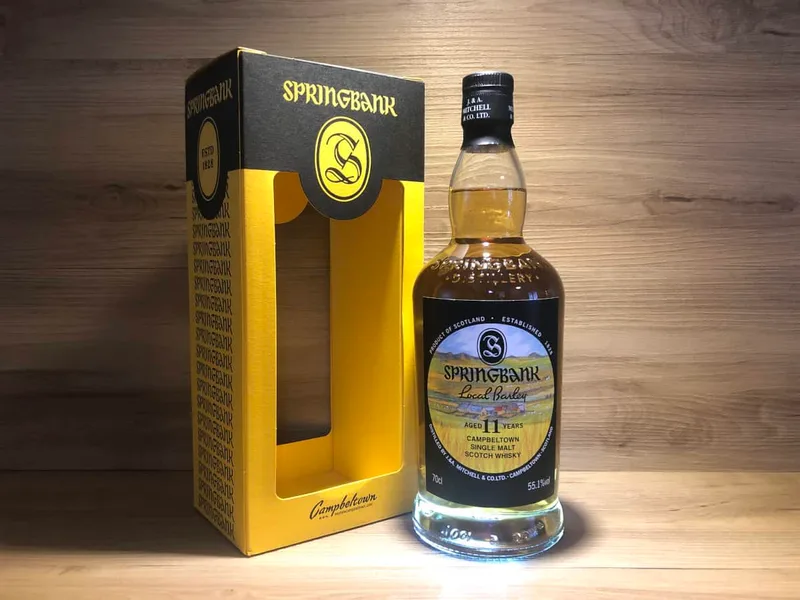
Springbank – Local Barley 2023 11 Year Old
70cl / 55.1%
US$649.00
Springbank – 2011 11 Year Old Local Barley
70cl / 55.1%
US$649.00
Springbank 2011 11 years old Local Barley - b. 2022 - 70cl
70cl / 55.1%
US$689.00
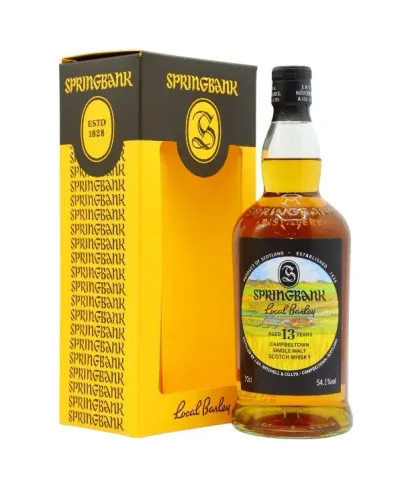
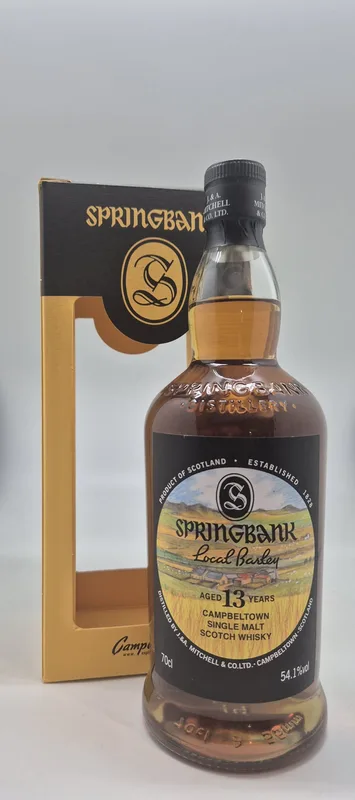
Springbank Local Barley 13 Year Old 2010
7 bottles available at Glenbotal
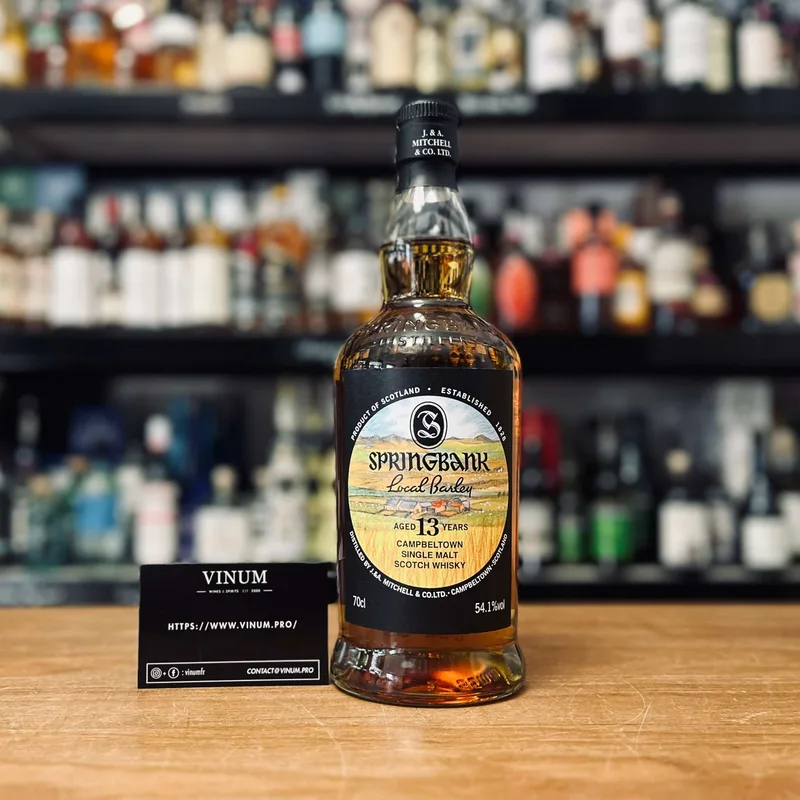
The 2024 release is a 13 year old distilled in June 2010 from Belgravia barley grown at Glencraigs Farm. It matured in 60% bourbon and 40% sherry casks and was bottled in December 2023 at 54.1%.
It is the second oldest release after the 16 year old, and the last of four in a row from Glencraigs Farm. The run was smaller again, at 8,400 bottles.
- Distillery
- Springbank
- Age
- 13 years (distilled June 2010)
- ABV
- 54.1%
- Bottle size
- 70cl
- Cask type
- 60% bourbon, 40% sherry
- Released
- 2024
- Number of Bottles Produced
- 8,400
Tasting notes
- Nose
- Fruity, with ripe bananas, boiled sweets and cinnamon.
- Palate
- Thick and oily, peppery and malty, then strawberries and Parma violets.
- Finish
- Subtle peat smoke, wine gums and toasted oats, drying gently.
The 6 lowest-priced of 7 bottles.
Springbank – Local Barley 2010 13 Year Old
US$649.00
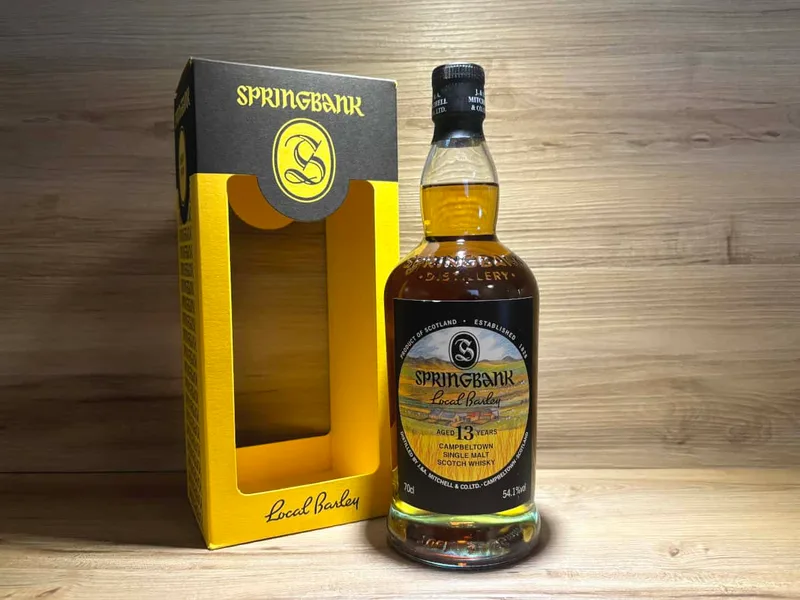
Springbank – Local Barley 13 Years 2024
70cl / 54.1%
US$689.00
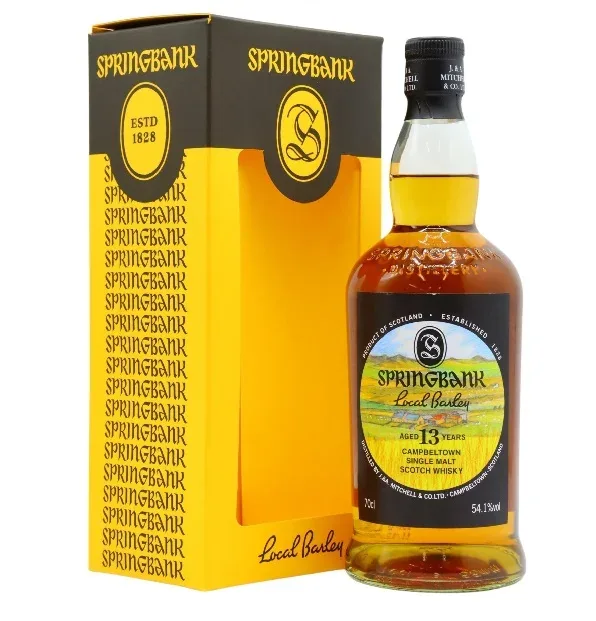
Springbank – Local Barley 13 Year Old 2024
54.1%
US$709.00
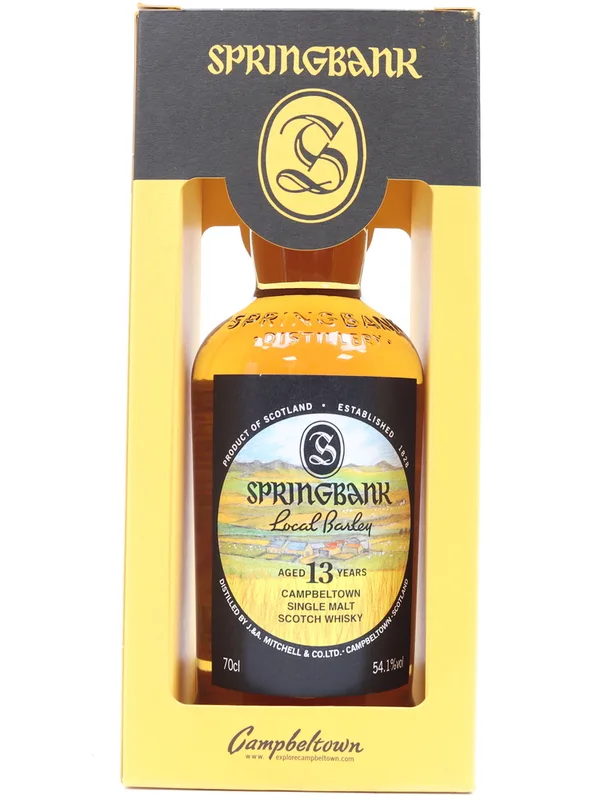
Springbank – Local Barley 13 Year Old 2010
70cl / 54.1%
US$919.00
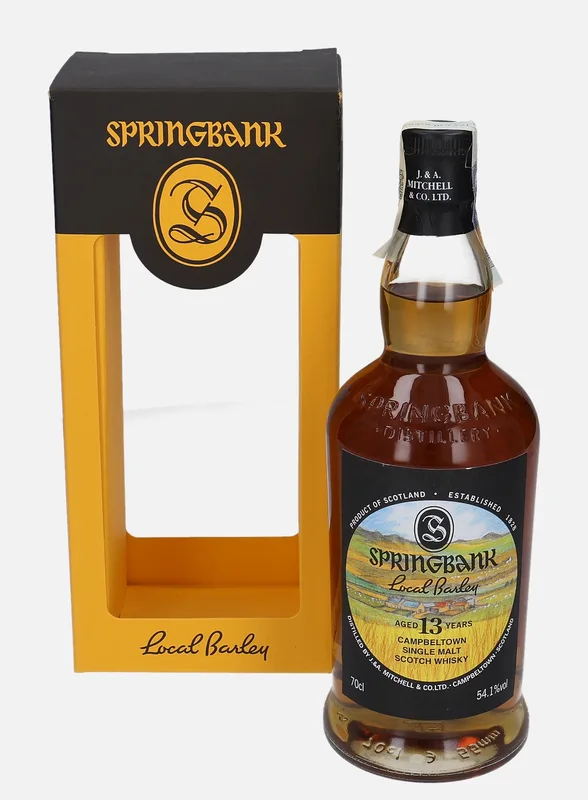
Springbank – 2010 13 Year Old Local Barley
70cl / 54.1%
US$959.00
Springbank – 13 Year Old Local Barley
US$1,039.00
Springbank Local Barley 8 Year Old 2016
8 bottles available at Glenbotal
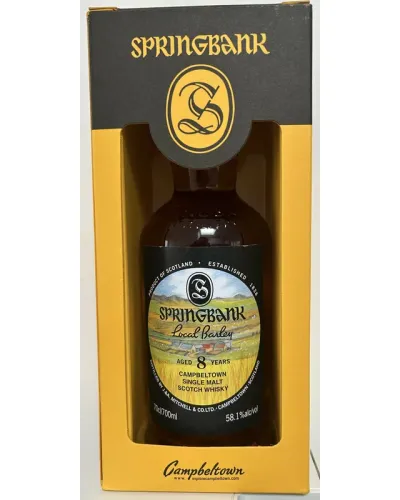
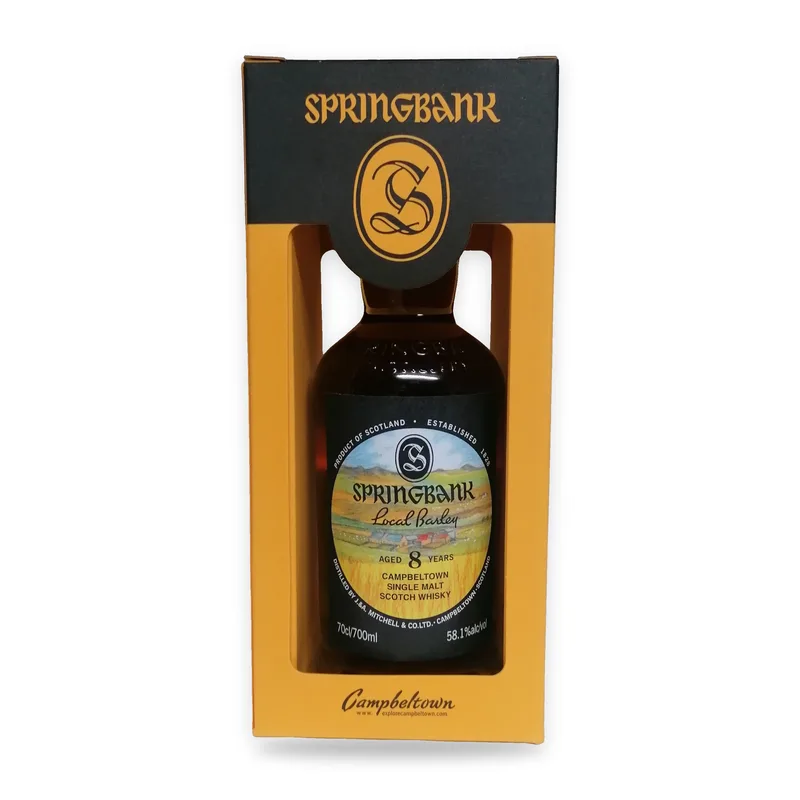
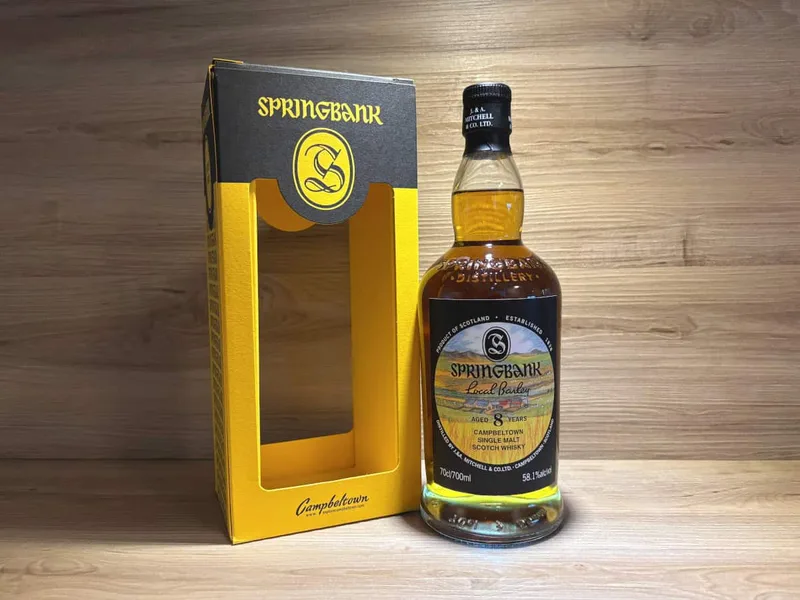
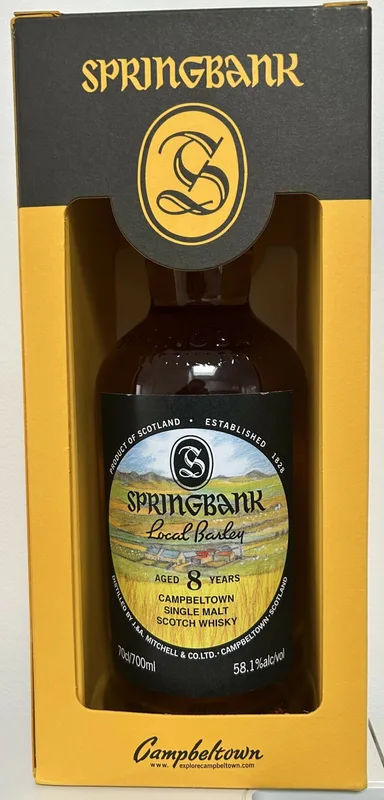
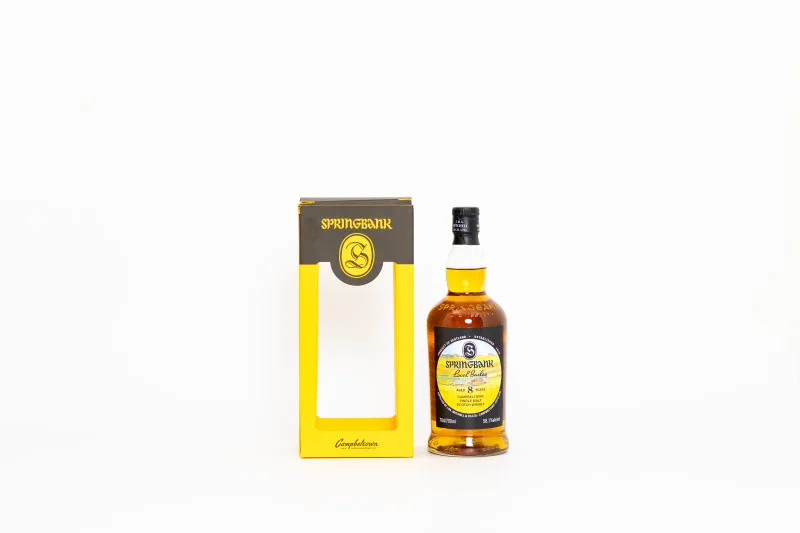
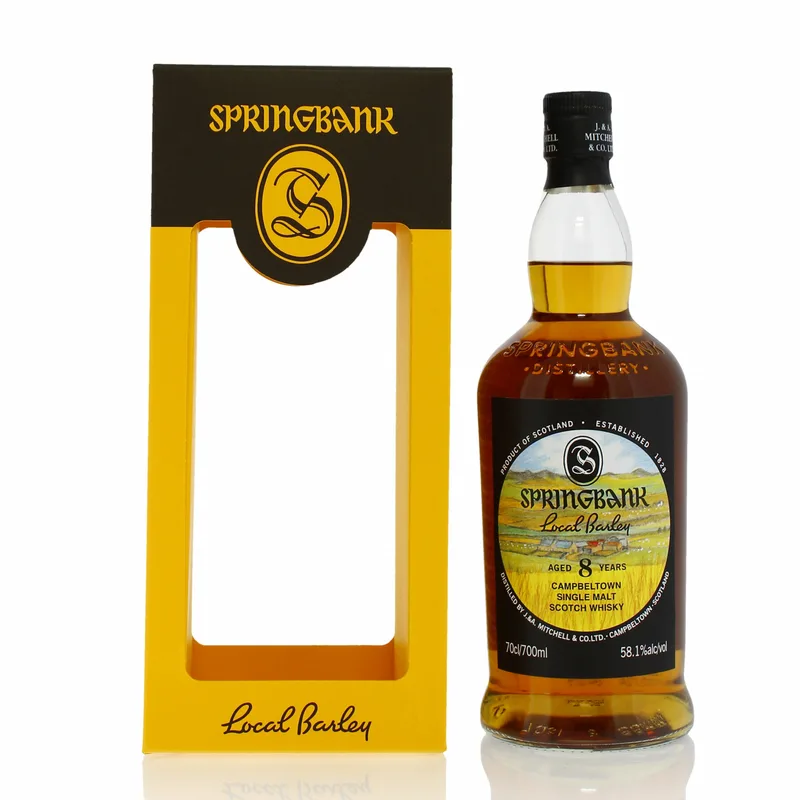
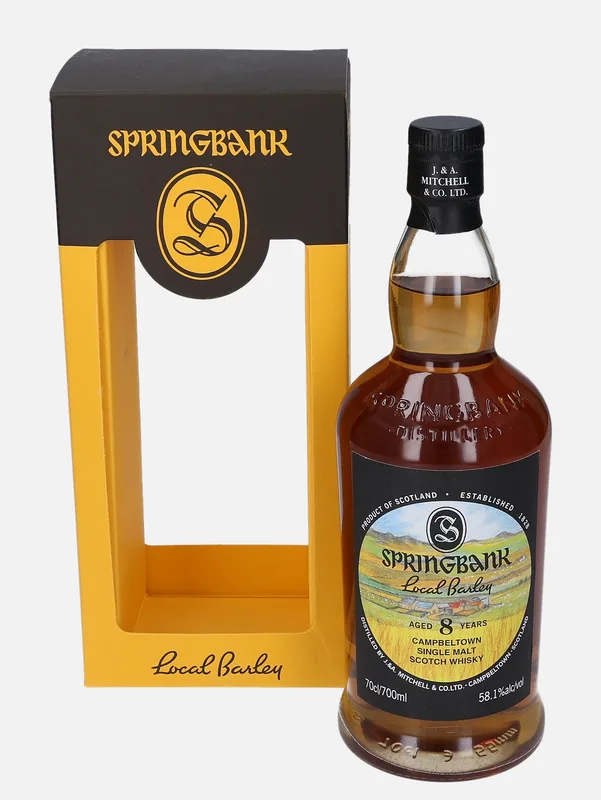
The youngest Local Barley so far is this 8 year old, distilled in July 2016 from Bere barley grown at High Ranachan Farm near Campbeltown. It matured in equal parts bourbon and sherry casks and was bottled in December 2024 at 58.1%, the highest strength in the series.
It was launched early in 2025, so it is known as the 2025 release, and 13,500 bottles were made. It was the first Bere barley release since the 11 year old of 2017.
- Distillery
- Springbank
- Age
- 8 years (distilled July 2016)
- ABV
- 58.1%
- Bottle size
- 70cl
- Cask type
- 50% bourbon, 50% sherry
- Released
- 2025
- Number of Bottles Produced
- 13,500
Tasting notes
- Nose
- Cracked black pepper, cigar box and a little sage.
- Palate
- Buttery shortbread and salted caramel with a herbal touch of basil.
- Finish
- Long and sweet, with toffee to the fore.
The 6 lowest-priced of 8 bottles.
Springbank – Local Barley 8 Year Old 2025
70cl / 58.1%
US$399.00
Springbank – Local Barley 8 Year Old 2025 Edition
70cl / 58.1%
US$399.00
Springbank – 8 Year Old Local Barley
70cl / 58.1%
US$439.00
Springbank – Local Barley 8 Year Old 2025 Release
US$449.00
Springbank – 2016 8 Year Old Local Barley
70cl / 58.1%
US$489.00
Springbank – 2016 8 Year Old Local Barley
70cl / 58.1%
US$559.00
Springbank Local Barley 10 Year Old 2015
6 bottles available at Glenbotal
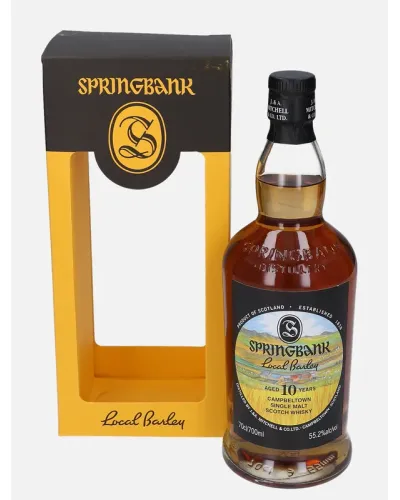
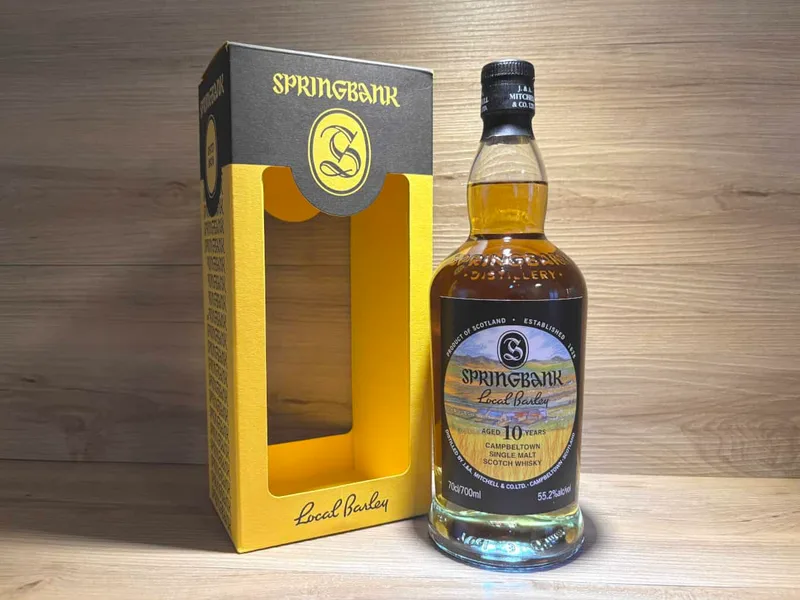
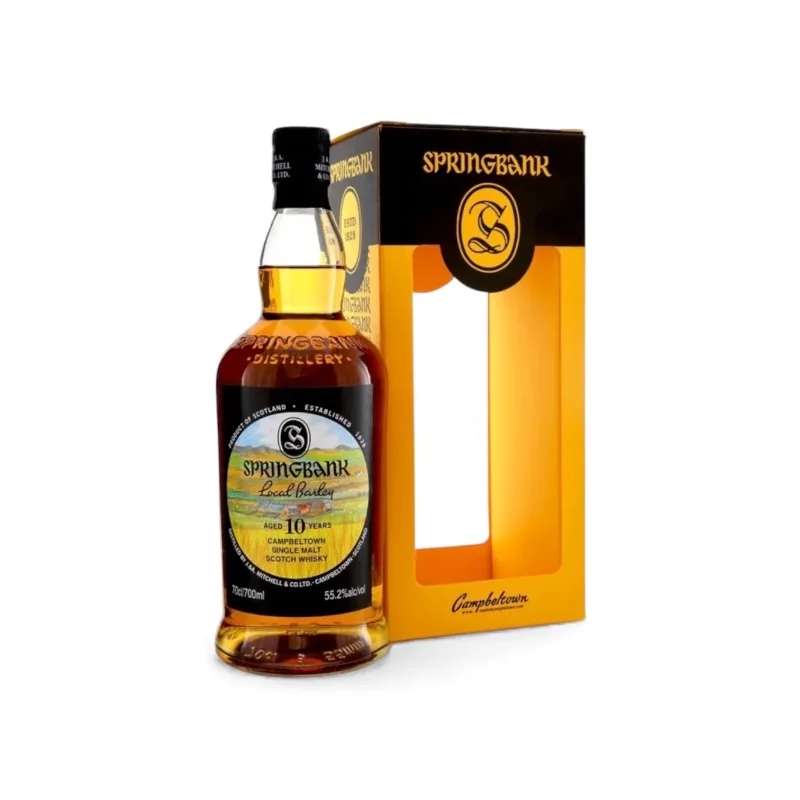
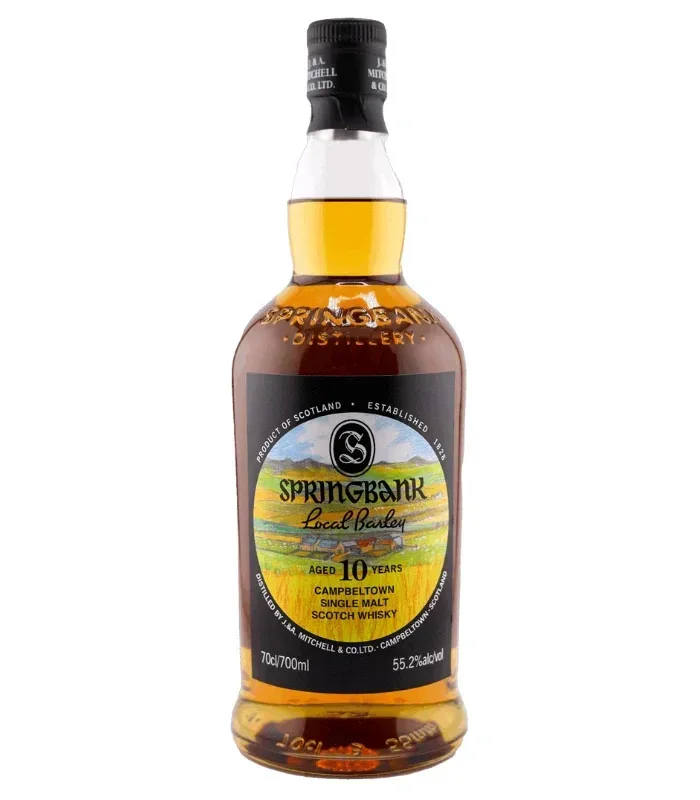
The eleventh release is a 10 year old distilled in July 2015 from Bere barley grown at Clochkiel Farm, the first time this farm has supplied the series. It matured in 60% bourbon and 40% sherry casks and was bottled in October 2025 at 55.2%.
It is the second Local Barley of 2025, and 8,000 bottles were made. It is one of the most savoury releases in the series, with dried fruit on the nose and mushroom, soy and liquorice on the palate.
- Distillery
- Springbank
- Age
- 10 years (distilled July 2015)
- ABV
- 55.2%
- Bottle size
- 70cl
- Cask type
- 60% bourbon, 40% sherry
- Released
- 2025
- Number of Bottles Produced
- 8,000
Tasting notes
- Nose
- Fig rolls, date syrup, plums and star anise.
- Palate
- Savoury, with shiitake mushroom, tamari soy sauce, burdock and liquorice.
- Finish
- Campfire ash and treacle molasses.
Springbank – Local Barley 10 Year Old 2015 / 2025 55.2%
70cl / 55.2%
US$449.00
Springbank – 10 Year Old Local Barley 2025
55.2%
US$459.00
Springbank – Local Barley 10 Year Old 2025 Edition
70cl / 55.2%
US$559.00
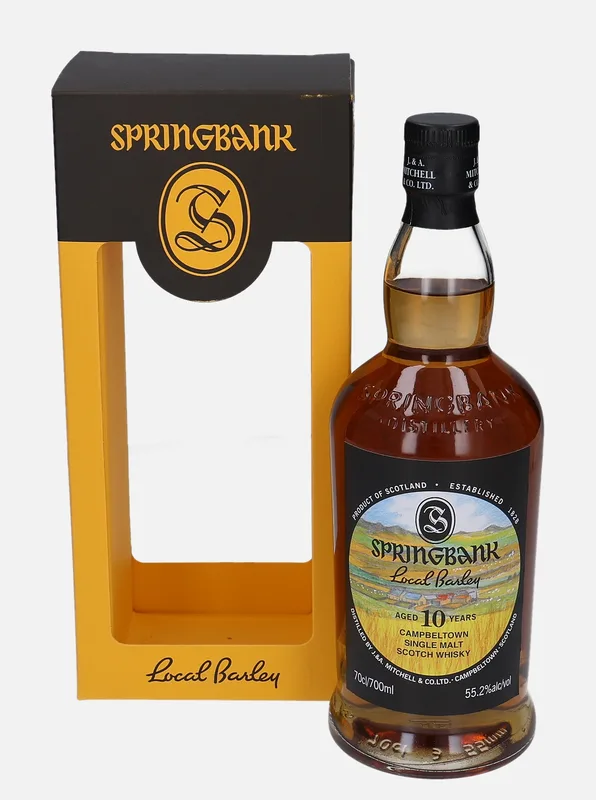
Springbank – 2015 10 Year Old Local Barley
70cl / 55.2%
US$619.00
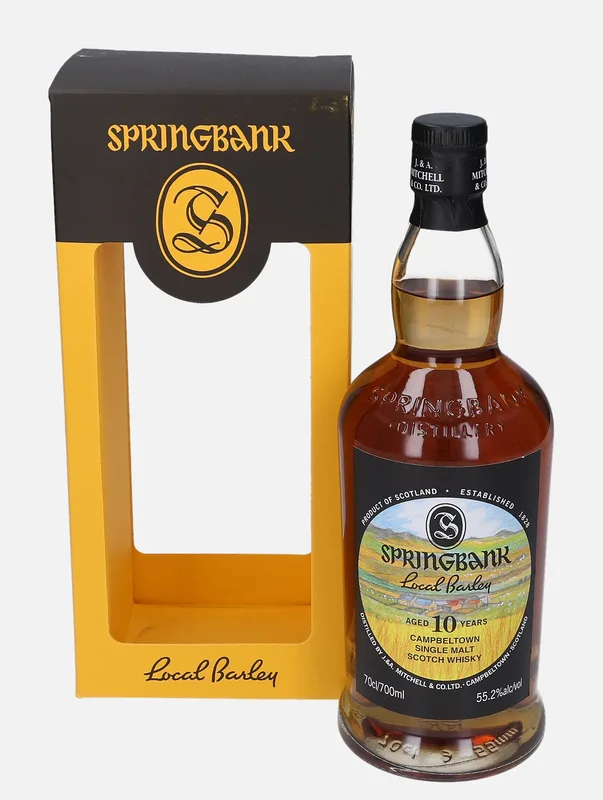
Springbank – 2015 10 Year Old Local Barley
70cl / 55.2%
US$619.00
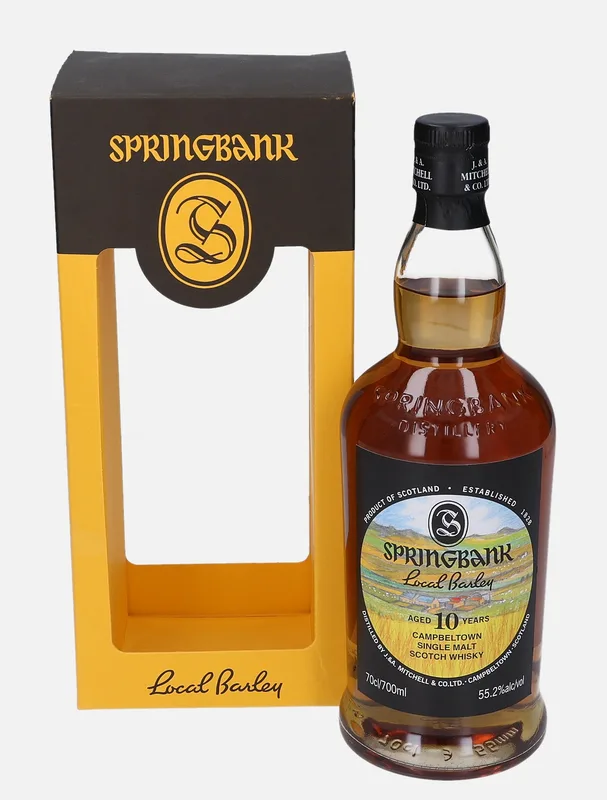
Springbank – 2015 10 Year Old Local Barley
70cl / 55.2%
US$619.00
Chapter 4
The farms and barley behind each release
Seven farms and four barley varieties so far, all within a few miles of Campbeltown.
The farm and the barley variety are what make each Local Barley different before the casks have any say. The table puts them side by side with the cask recipe of each release.[16][18]
| Release | Farm | Barley | Casks |
|---|---|---|---|
| 16 year old (2016) | Low Machrimore Farm, Southend | Prisma | 80% bourbon, 20% European oak sherry |
| 11 year old (2017) | Aros Farm | Bere | Bourbon |
| 10 year old (2017) | West Back Farm | Belgravia | 70% bourbon, 30% sherry |
| 9 year old (2018) | High Cattadale Farm | Optic | 80% bourbon, 20% sherry |
| 10 year old (2019) | High Cattadale Farm | Optic | 77% bourbon, 20% sherry, 3% port |
| 10 year old (2020) | Glencraigs Farm | Belgravia | 100% oloroso sherry |
| 10 year old (2022) | Glencraigs Farm | Belgravia | Bourbon |
| 11 year old (2023) | Glencraigs Farm | Belgravia | 55% sherry, 35% bourbon, 10% rum |
| 13 year old (2024) | Glencraigs Farm | Belgravia | 60% bourbon, 40% sherry |
| 8 year old (2025) | High Ranachan Farm | Bere | 50% bourbon, 50% sherry |
| 10 year old (2025) | Clochkiel Farm | Bere | 60% bourbon, 40% sherry |
Bere, the old barley
Bere is an old barley variety, and Springbank has used it in three releases: the 11 year old of 2017 from Aros Farm, and both 2025 releases.[4][17][18] WhiskyNotes found the 2017 Bere release sweet and floral on the nose, with orange marmalade, and lighter in peat and oil than the 16 year old.[5]
The 2025 10 year old is the first release from Clochkiel Farm. Springbank's notes for it are unusually savoury, with mushroom, soy sauce and liquorice on the palate.[18]
Belgravia and the Glencraigs years
Belgravia, a more modern variety than the earlier choices, was first used for the 10 year old of 2017 from West Back Farm, about 6 km from the distillery.[7] Glencraigs Farm then grew Belgravia for every release from 2020 to 2024.[16]
Because those four releases share a farm and a variety, the casks and the age do most of the talking. They run from an all-oloroso 10 year old to an all-bourbon 10 year old, an 11 year old with the series' first rum casks and a 13 year old.[11][13][15][16]
Optic and Prisma
Optic barley from High Cattadale Farm went into two releases distilled in July 2009: the 9 year old of 2018 and the 10 year old of 2019.[8][10] They share a distillation month, so the age and the strength tell them apart.
Prisma, a spring barley, appears only once, in the 16 year old that opened the series. It was grown at Low Machrimore Farm in the south of the Kintyre peninsula.[2]
Chapter 5
What to check before you buy a bottle
Match the age, the strength and the edition year on the label, then look at the box and the fill.
Several Local Barley releases share an age statement, so the age alone does not identify a bottle. There are five different 10 year olds and two 11 year olds in the series.[16][10]
Ask for clear photos of the front and back labels and of the box before you commit.
Read the strength
Each release has its own cask strength, printed on the front label. The five 10 year olds are 57.3% (2017), 56.2% (2019), 55.6% (2020), 51.6% (2022) and 55.2% (2025).[6][10][11][12][18]
The two 11 year olds are 53.1% (2017) and 55.1% (2023).[4][14] A bottle whose strength does not match its claimed edition needs an explanation.
Check the distillation year and the farm
The back label names the farm the barley came from, and listings usually give the distillation year. A 10 year old distilled in 2007 is the 2017 release, while one distilled in 2015 is the 2025 release.[6][16]
The farm is a useful second check. Clochkiel Farm, for example, appears only on the 2025 10 year old.[18]
The box and the fill level
Every modern release comes in a yellow and dark brown Springbank carton with Local Barley written across the front. Ask whether the box is the original one and check it for crushing, tears or water marks.
These bottles date from 2016 onwards, so the whisky should sit high in the neck. A low level, a damaged capsule or any sign of leaking around the cork is a reason to ask more questions.
Storage history
Ask how the bottle has been kept. Whisky is best stored upright, away from heat and direct sunlight, because spirit resting against the cork can damage it over time.
A bottle kept in its box, upright, at a steady room temperature is the one you want.
Chapter 6
Mistakes collectors make with this series
Most mix-ups come from shared ages, edition years that differ from bottling years, and older bottles that share the name.
Local Barley titles are written in many different ways, with the distillation year, the bottling year or the edition year in front. The mistakes below are the ones most likely to lead to the wrong bottle.[16]
There are five different 10 year old Local Barley releases, bottled at 57.3%, 56.2%, 55.6%, 51.6% and 55.2%.
Treating a 10 year old as one whisky
A search for a Local Barley 10 year old brings up five releases from four farms and three barley varieties.[16] They range from an all-oloroso sherry cask whisky to an all-bourbon one, so they taste very different.[11][13]
Always confirm the distillation year or the strength before you treat two 10 year old bottles as the same whisky.
Mixing up the edition year and the bottling year
Most recent releases were bottled in December and sold the following year. The 10 year old bottled on 14 December 2021 is known as the 2022 release, and the 13 year old bottled in December 2023 is the 2024 release.[13][16]
The 2020 edition is a further twist. It was bottled in December 2020 but the bottles reached the market around March 2021.[11]
Expecting a 1960s Local Barley from a modern label
The modern releases share the name with the 1965 and 1966 single casks, but nothing else.[1] An old Local Barley is a single cask with a vintage and a cask number, while a modern one has an age statement and a farm on its label.
If a listing calls a modern bottle a 1966 or quotes a cask number for it, something is wrong.
Counting the Springbank Society bottling as a release
The 14 year old from 1999 bottled in 2014 for the Springbank Society's tenth anniversary is often listed next to the series. It was a members' bottling from the same stock as the 2016 release, not one of the annual editions.[1]
Frequently asked questions
What is Springbank Local Barley?
A limited cask strength Springbank single malt released about once a year, distilled only from barley that a farmer near Campbeltown grows for the distillery. The farm, barley variety, casks and age change with each release.
How many Local Barley releases are there?
Eleven in the modern series by the end of 2025: the 16 year old (2016), 11 and 10 year olds (2017), 9 year old (2018), 10 year olds of 2019, 2020 and 2022, 11 year old (2023), 13 year old (2024), and an 8 year old and a 10 year old in 2025.
When did the modern series start?
In 2016, with a 16 year old distilled in September 1999 from Prisma barley grown at Low Machrimore Farm, bottled at 54.3% in a run of 9,000 bottles.
Was Local Barley meant to be a series of five?
Yes. The 2016 release was announced as the first of five annual bottlings, and the 2019 10 year old was described as the last of them. The series then carried on, with six more releases from 2020 to 2025.
What were the original Local Barley whiskies?
Single casks distilled in 1965 and 1966 from locally grown barley and bottled in the 1990s, with a few 1965 casks bottled in 2001. Each has its own cask number and strength, which is why this guide does not list them as releases.
Which farms have grown the barley?
Low Machrimore, Aros, West Back, High Cattadale, Glencraigs, High Ranachan and Clochkiel, all near Campbeltown. Glencraigs supplied four releases in a row, from 2020 to 2024.
How do I tell the 10 year old releases apart?
By strength and distillation year: 57.3% (2007, released 2017), 56.2% (2009, released 2019), 55.6% (2010, the all-oloroso 2020 edition), 51.6% (2011, released 2022) and 55.2% (2015, released 2025).
Which Local Barley is the strongest?
The 8 year old released in 2025, at 58.1%. The lowest strength is 51.6%, for the 10 year old bottled in December 2021.
Which releases used Bere barley?
Three: the 11 year old of 2017 from Aros Farm, the 8 year old of 2025 from High Ranachan Farm and the 10 year old of 2025 from Clochkiel Farm.
Is Local Barley peated?
Lightly, like most Springbank. The 2019 10 year old, for example, was floor-malted and peated at the distillery to around 12 to 15 ppm.
Why is the 2022 release bottled in 2021?
Most recent releases were bottled in December and sold the following year. The 10 year old bottled on 14 December 2021 went on sale in 2022 and is known as the 2022 release.
Is the Springbank Society 14 year old part of the series?
No. It was distilled in 1999 from the same stock as the 2016 release and bottled in 2014 for the Society's tenth anniversary, but it was a members' bottling, not one of the annual editions.
How should I store a Local Barley bottle?
Upright, in its box, at a steady room temperature and out of direct sunlight. Keeping the spirit off the cork protects both the cork and the whisky.
Can I buy a bottle from the Springbank Local Barley at Glenbotal?
Yes. Today we have 74 bottles from this collection (Springbank Local Barley 16 Year Old 1999, Springbank Local Barley 11 Year Old 2006, Springbank Local Barley 10 Year Old 2007, Springbank Local Barley 9 Year Old 2009, Springbank Local Barley 10 Year Old 2009, Springbank Local Barley 10 Year Old 2010, Springbank Local Barley 10 Year Old 2011, Springbank Local Barley 11 Year Old 2011, Springbank Local Barley 13 Year Old 2010, Springbank Local Barley 8 Year Old 2016, Springbank Local Barley 10 Year Old 2015). For any other release, use "Find me this bottle" on this page: we usually find one in 2 to 3 weeks.
The bottom line
Local Barley is eleven different whiskies under one name, so the age, the strength and the farm on the label are what identify a bottle.
Check those three against the release details in this guide before you buy, then look at the box and the fill level. Remember that five releases are 10 year olds and that the edition year is often the year after bottling.
If the release you want is not listed right now, use Find my bottle and tell us the age and edition year you are after. We can look for one for you, and we usually find one within two to three weeks.
For the rest of the distillery's range, see our Springbank page, its heavily peated sister Longrow, or browse all Scottish single malts.
Sources
- New: Springbank 16 Years 'Local Barley' (31 January 2016), WhiskyNotes
- Springbank 16 Year Old 'Local Barley' (6 April 2016), WhiskyNotes
- Springbank Local Barley Scotch Truly a Local Grain Affair (8 February 2016), The Whiskey Wash
- New: Springbank 11 Years 'Local Barley' (7 January 2017), WhiskyNotes
- Springbank 11 Year Old 'Local Barley' (9 May 2017), WhiskyNotes
- New: Springbank Local Barley 10 Years (7 October 2017), WhiskyNotes
- Springbank 10 Year Old 'Local Barley' (18 July 2018), WhiskyNotes
- New: Springbank Local Barley 9 Years (6 October 2018), WhiskyNotes
- Springbank 9 Year Old 'Local Barley' (19 February 2019), WhiskyNotes
- Springbank Local Barley 10 Year Old (2019) Whisky Review (19 July 2020), Peated Perfection
- New: Springbank Local Barley 2020 (24 October 2020), WhiskyNotes
- Springbank Local Barley 2022 (5 February 2022), WhiskyNotes
- Springbank 10 Years 'Local Barley' (2021) (22 March 2022), WhiskyNotes
- Springbank Local Barley 2023 (17 December 2022), WhiskyNotes
- Springbank 11 Years 'Local Barley' (2022) (15 June 2023), WhiskyNotes
- 7 + 1 Springbank Local Barley (29 May 2026), More Drams, Less Drama
- Springbank 8 Years 'Local Barley' (2025) (8 July 2025), WhiskyNotes
- Springbank Local Barley 10yo 2025, Springbank Distillers
- Springbank distillery, Wikipedia
- Springbank Local Barley: new vs old (2018), Whiskyfun
Last checked 17 November 2026.